Skip to Content Facebook Feature Image

Trump says US struck Islamic State targets in Nigeria after group targeted Christians

News

Trump says US struck Islamic State targets in Nigeria after group targeted Christians
News

News

Trump says US struck Islamic State targets in Nigeria after group targeted Christians

2025-12-26 16:19 Last Updated At:16:20

WEST PALM BEACH, Fla. (AP) — President Donald Trump said Thursday that the U.S. launched a “powerful and deadly" strike against Islamic State forces in Nigeria, after spending weeks accusing the West African country's government of failing to rein in the persecution of Christians.

In a Christmas evening post on his social media site, Trump did not provide details or mention the extent of the damage caused by the strikes in Sokoto state.

A Defense Department official, who insisted on anonymity to discuss details not made public, said the U.S. worked with Nigeria to carry out the strikes, and that they'd been approved by that country's government.

Nigeria's Ministry of Foreign Affairs said the cooperation included exchange of intelligence and strategic coordination in ways “consistent with international law, mutual respect for sovereignty and shared commitments to regional and global security."

Trump said the airstrikes were launched against Islamic State militants “who have been targeting and viciously killing, primarily, innocent Christians.” Residents and security analysts have said Nigeria's security crisis affects both Christians, predominant in the south, and Muslims, who are the majority in the north.

“Terrorist violence in any form, whether directed at Christians, Muslims or other communities, remains an affront to Nigeria's values and to international peace and security," Nigeria’s Ministry of Foreign Affairs said.

Nigeria is battling multiple armed groups, including at least two affiliated with the Islamic State — an offshoot of the Boko Haram extremist group known as the Islamic State West Africa Province in the northeast, and the less-known Lakurawa group prominent in the northwestern states like Sokoto where the gangs use large swathes of forests connecting states as hideouts.

Security analysts said the target of the U.S. strikes could be the Lakurawa group, which in the last year has increasingly become lethal in the region, often targeting remote communities and security forces.

“Lakurawa is a group that is actually controlling territories in Nigeria, in Sokoto state and in other states like Kebbi,” said Malik Samuel, a Nigerian security researcher at Good Governance Africa. “In the northwest, there has been the incursion of violent extremist groups that are ideologically driven," he said, blaming the incursion on the near absence of the state and security forces in hot spots.

Nigeria’s government has previously said in response to Trump’s criticisms that people of many faiths, not just Christians, have suffered attacks at the hands of extremists groups.

Trump ordered the Pentagon last month to begin planning for potential military action in Nigeria to try and curb the so-called Christian persecution. The State Department recently announced it would restrict visas for Nigerians and their family members involved in killing Christians there.

And the U.S. recently designated Nigeria a “country of particular concern” under the International Religious Freedom Act.

Trump said the U.S. defense officials had “executed numerous perfect strikes, as only the United States is capable of doing" and added that “our Country will not allow Radical Islamic Terrorism to prosper.”

Nigeria’s population of 220 million is split almost equally between Christians and Muslims. The country has long faced insecurity from various fronts including the Boko Haram extremist group, which seeks to establish its radical interpretation of Islamic law and has also targeted Muslims it deems not Muslim enough.

But attacks in Nigeria often have varying motives. There are religiously motivated ones targeting both Christians and Muslims, clashes between farmers and herders over dwindling resources, communal rivalries, secessionist groups and ethnic clashes.

The U.S. security footprint has diminished in Africa, where military partnerships have either been scaled down or canceled. U.S. forces likely would have to be drawn from other parts of the world for any larger-scale military intervention in Nigeria.

Trump has nonetheless kept up the pressure as Nigeria faced a series of attacks on schools and churches in violence that experts and residents say targets both Christians and Muslims.

Defense Secretary Pete Hegseth posted Thursday night on X: “The President was clear last month: the killing of innocent Christians in Nigeria (and elsewhere) must end.”

Hegseth said that U.S. military forces are “always ready, so ISIS found out tonight — on Christmas” and added, “More to come…Grateful for Nigerian government support & cooperation” before signing off, “Merry Christmas!”

Associated Press writer Konstantin Toropin contributed from Washington, and Chinedu Asadu from Abuja, Nigeria.
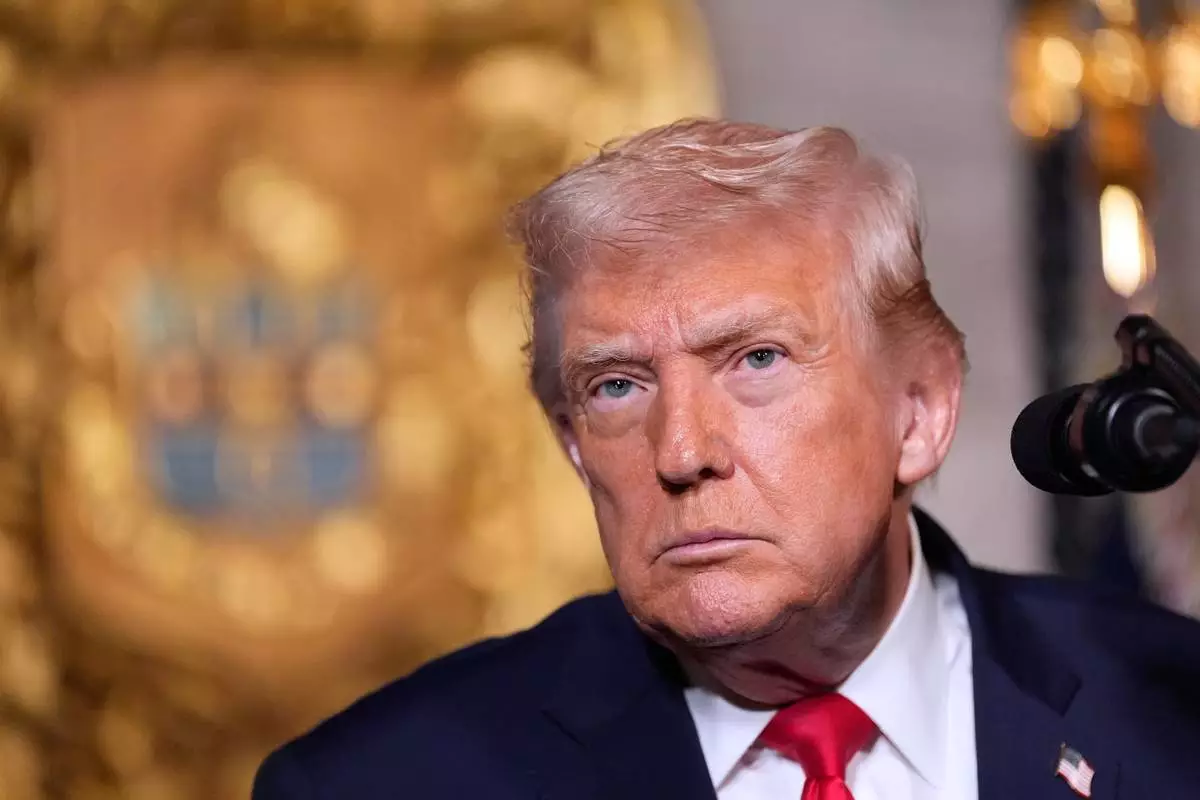
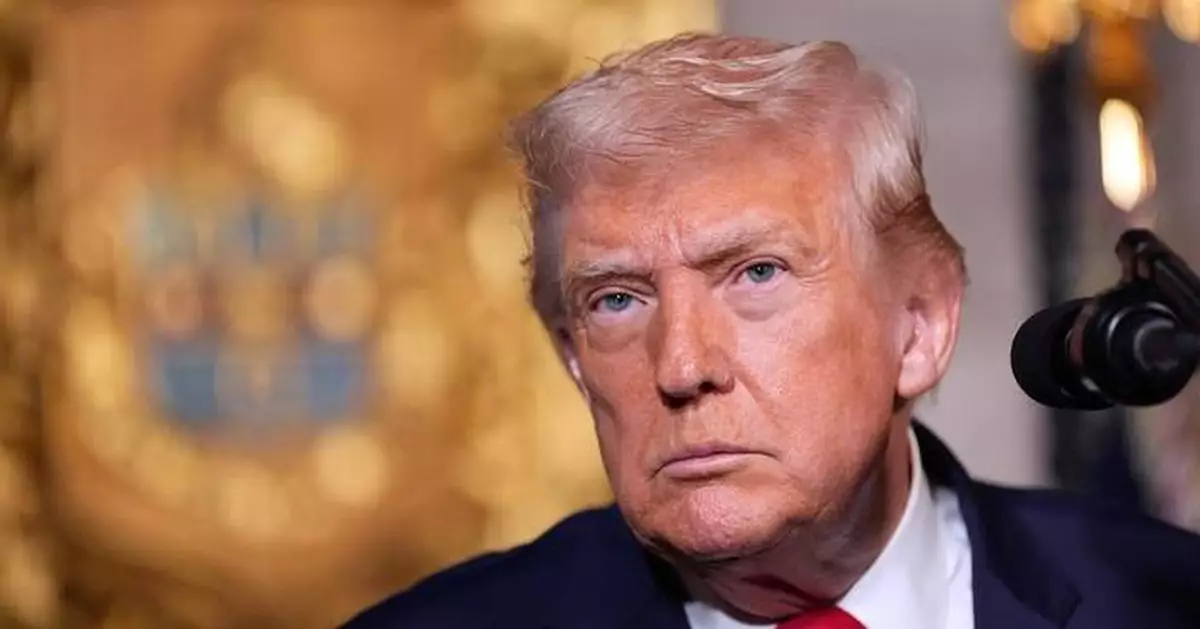
President Donald Trump speaks at his Mar-a-Lago club, Monday, Dec. 22, 2025, in Palm Beach, Fla. (AP Photo/Alex Brandon)
President Donald Trump speaks at his Mar-a-Lago club, Monday, Dec. 22, 2025, in Palm Beach, Fla. (AP Photo/Alex Brandon)
SEOUL, South Korea (AP) — An independent counsel on Friday demanded a 10-year prison term for South Korea’s ousted President Yoon Suk Yeol in the first of seven criminal cases related to his ill-fated attempt to impose martial law in 2024 and other allegations that flared when he was in office.

The first of Yoon's trials to wrap up covers charges including his defiance of authorities’ attempts to investigate and detain him. Yoon denies all charges and his lawyers have argued that the detainment warrant was invalid and illegal.

The court is expected to render a verdict as early as next month.

Yoon faces other trials on accusations ranging from corruption and favor trading to rebellion, a grave charge that is punishable by life imprisonment or execution. The rebellion trial is also nearing an end.

Yoon’s martial law enactment brought armed troops into Seoul streets and triggered South Korea's most serious political crisis in decades.

Martial law lasted only a few hours, as lawmakers managed to enter the National Assembly and voted to lift his decree. Yoon was impeached by the opposition-controlled parliament later in December 2024 before he was formally dismissed as president upon an Constitutional Court ruling in April.

On Friday, independent counsel Cho Eun-suk’s team requested the Seoul Central District Court to sentence Yoon to 10 years in prison on charges of obstruction of official duties, abuse of power, falsification of official documents and destruction of evidence.

Yoon holed up at his residence and hindered authorities' attempts to execute a warrant for his detention for weeks after his impeachment. The standoff caused worries about physical clashes between Yoon's presidential security service and those attempting to detain him and further deepened a national divide.

Park Eok-su, a senior investigator on Cho’s team, called Yoon's actions “an unprecedented obstruction of official duties” during Friday's court session.

Yoon also faces charges that he sidestepped a legally mandated full Cabinet meeting before declaring martial law, and that he fabricated documents including the martial law proclamation and ordered data deleted from phones used by those involved in his martial law imposition.

Yoon has denied those charges and maintained that his decree was meant to draw public support of his struggle against the main liberal opposition Democratic Party, which impeached some of his top officials and obstructed his agenda.

Wrapping up a six-month probe last week, Cho’s team said Yoon plotted for over a year to impose martial law to eliminate his political rivals and monopolize power.

Yoon's other trials deal with charges like the ex-leader ordering drone flights over North Korea to deliberately stoke tensions and justify his plans to declare martial law and committing perjury in the trial of his prime minster. Yoon also faces charges that he tried to manipulate the investigation into a marine’s drowning in 2023 and received free opinion surveys from an election broker in return for a political favor.

Yoon has said he wasn't informed of such drone flights and denied wrongdoing in the influence-peddling scandal.

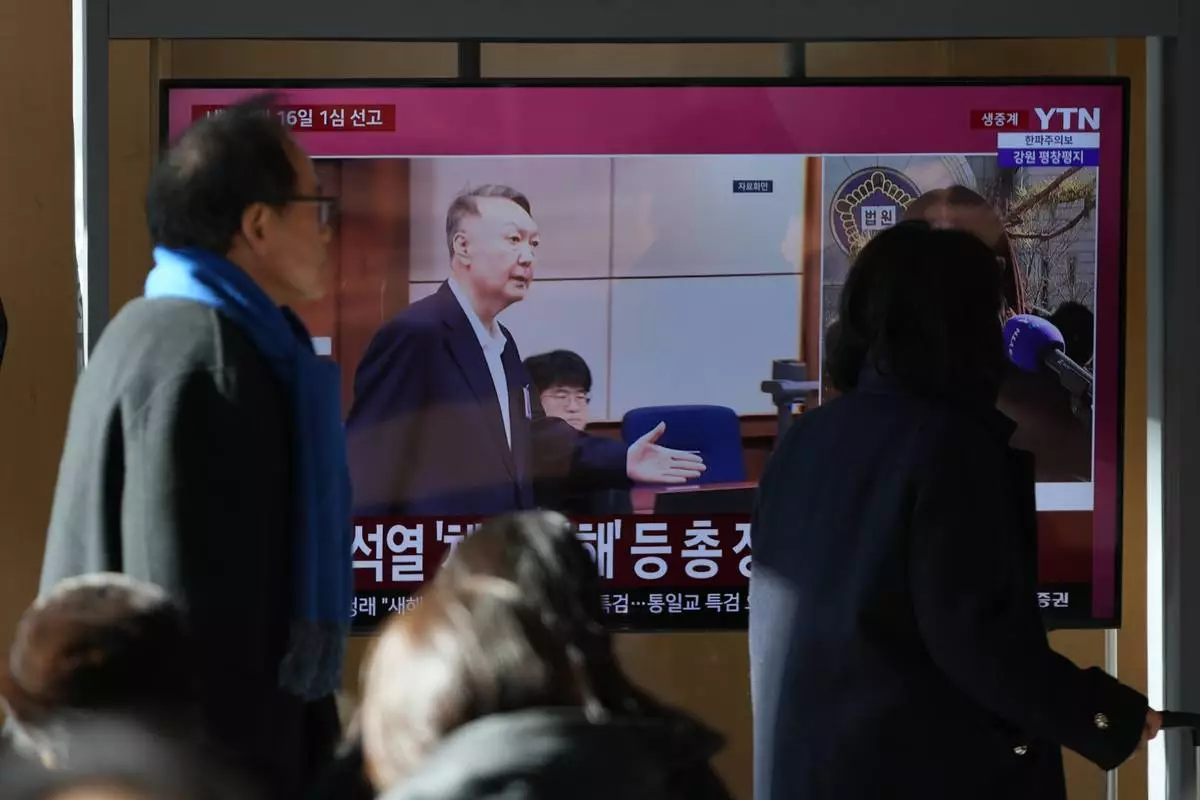
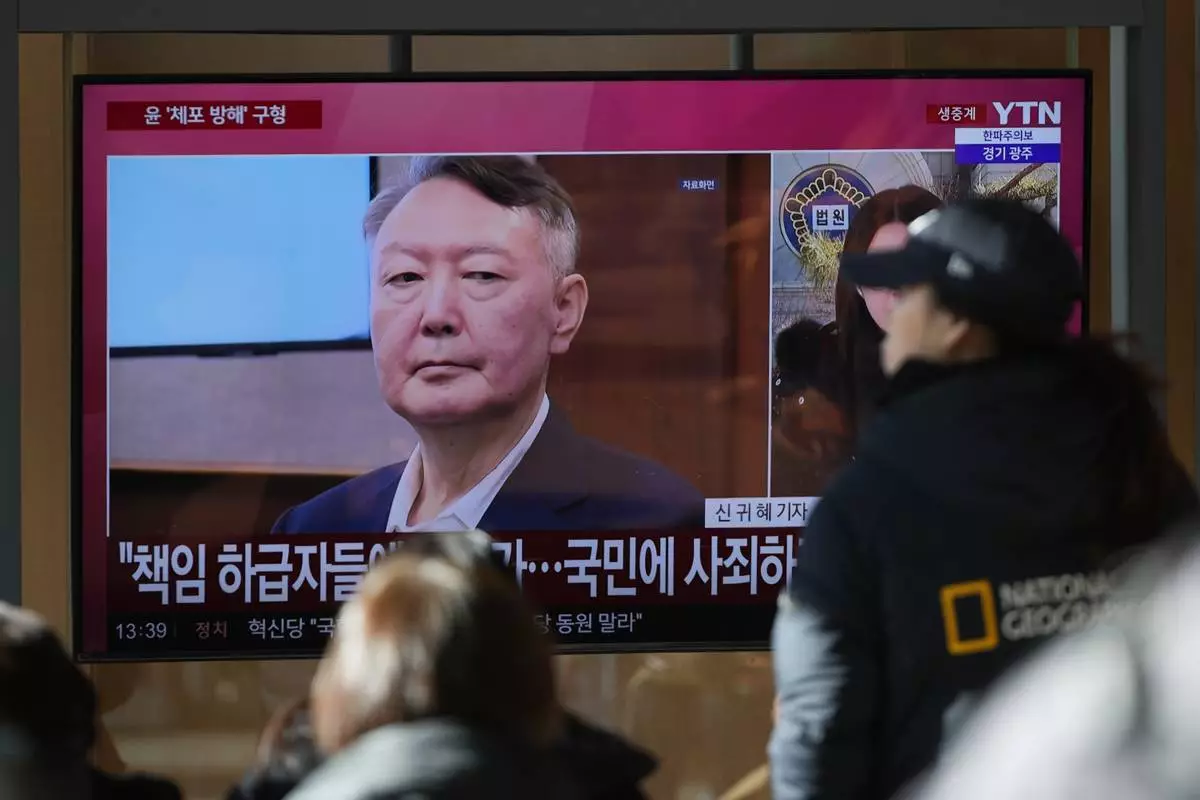
A TV screen shows a file footage of South Korea's ousted President Yoon Suk Yeol during a news program at the Seoul Railway Station in Seoul, South Korea, Friday, Dec. 26, 2025. (AP Photo/Lee Jin-man)

A TV screen shows a file footage of South Korea's ousted President Yoon Suk Yeol during a news program at the Seoul Railway Station in Seoul, South Korea, Friday, Dec. 26, 2025. (AP Photo/Lee Jin-man)

A TV screen shows a file footage of South Korea's ousted President Yoon Suk Yeol during a news program at the Seoul Railway Station in Seoul, South Korea, Friday, Dec. 26, 2025. (AP Photo/Lee Jin-man)

A TV screen shows a file footage of South Korea's ousted President Yoon Suk Yeol during a news program at the Seoul Railway Station in Seoul, South Korea, Friday, Dec. 26, 2025. (AP Photo/Lee Jin-man)

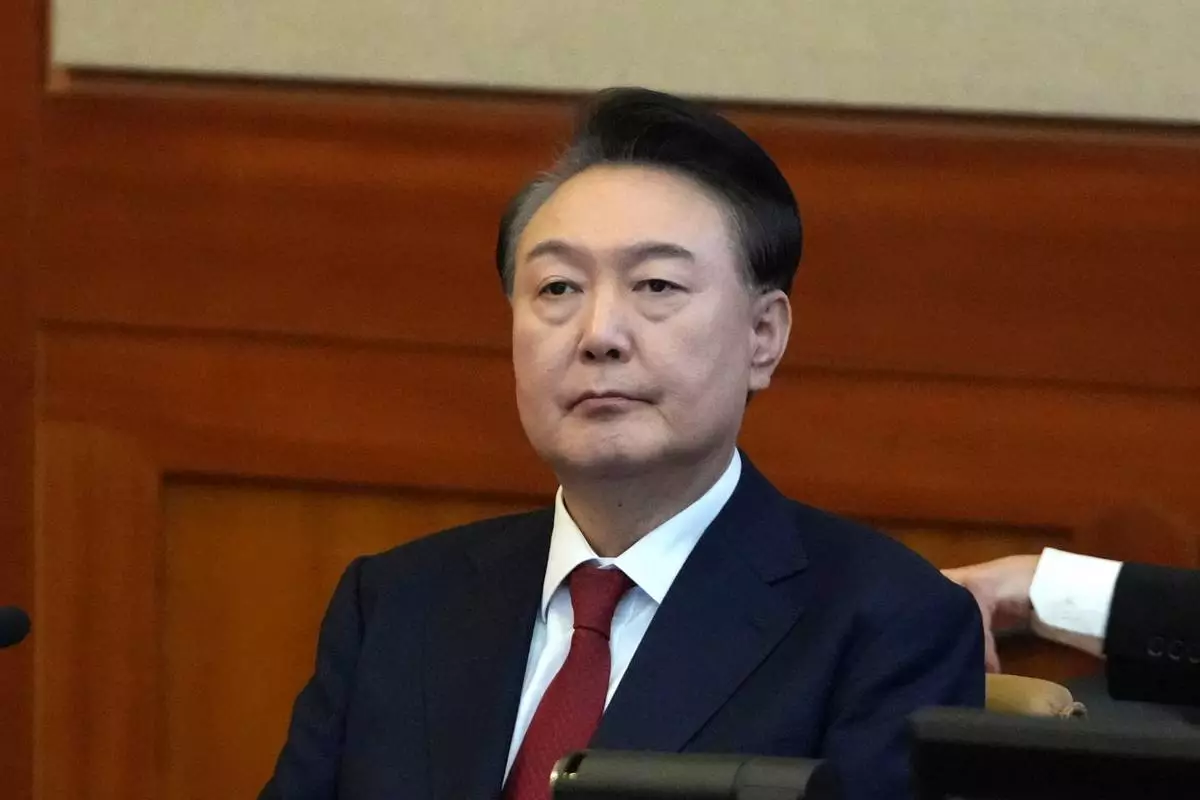
FILE - South Korea's impeached President Yoon Suk Yeol attends a hearing of his impeachment trial at the Constitutional Court in Seoul, South Korea, Feb. 11, 2025. (AP Photo/Lee Jin-man, Pool, File)

FILE - South Korea's impeached President Yoon Suk Yeol attends a hearing of his impeachment trial at the Constitutional Court in Seoul, South Korea, Feb. 11, 2025. (AP Photo/Lee Jin-man, Pool, File)

Recommended Articles