Skip to Content Facebook Feature Image

Beijing's revived alley blends heritage with modern life

China

China

China

Beijing's revived alley blends heritage with modern life

2025-06-03 16:17 Last Updated At:19:17

In Beijing's historic core, a once-dilapidated alley has found new life, merging centuries-old architecture with innovative design to bring both past and present to light.

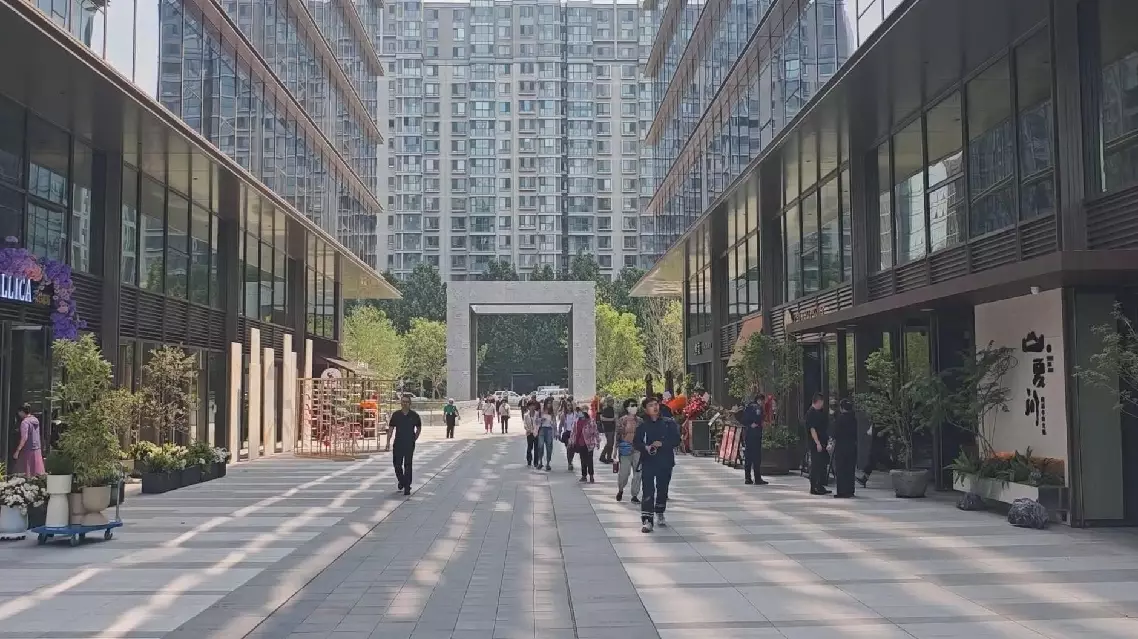
A major heritage renewal project in Beijing's Xicheng District, the Dajixiang or Daji Alley, has made its official debut, welcoming residents and visitors to a modern twist on a historic neighborhood.

The renovation, hailed as a flagship urban regeneration effort following Beijing's central axis gaining UNESCO World Heritage status, preserves the alley's traditional Siheyuan courtyard architecture while integrating modern functionality.

"It used to look so run-down, but after the renovation, it's so comfortable now," said a local resident.

Situated in the central functional zone of Beijing, the area still preserves a large number of historical buildings dating back to the Ming and Qing dynasties (1368-1912). Therefore, the biggest challenge facing the renovation project was how to restore the historic buildings to their original appearance.

"The approach was to 'restore the old as it was'. We spent enormous time and effort combing through historical records and invited national-level heritage experts to guide us," said Wang Pu, chief designer of the Zhonghai Dajixiang urban renewal project.

Wang's team adopted a "one house, one solution" plan to guide the restoration of immovable relics and fragile structures. They employed digital technologies to scan and catalogue architectural components to ensure precise rebuilding based on historical materials.

"We carried out demolition, restoration and construction simultaneously, while using eagle-eye imaging to digitally map buildings' original forms. That helped us tackle clashes in design ideas and complex craftsmanship with accurate references," said Sun Qilin, the project director.

Beyond rebuilding, the team stressed the importance of making history tangible and engaging. By revitalizing six protected courtyards into free museums showcasing Silk Road art, the calligraphy of Kang Youwei (1858-1927), a political thinker and reformer in China of the late Qing Dynasty, and other rotating exhibitions, developers are bridging heritage with everyday experience.

"We update our cultural exhibits every two months within the core area of the ancient structures. These immersive experiences enrich the project with cultural depth and also spark commercial vitality. We're creating a new model where culture and tourism are truly integrated," said Zhang Xin, a representative from Beijing New City Company.
Beijing's revived alley blends heritage with modern life
Beijing's revived alley blends heritage with modern life
Beijing's revived alley blends heritage with modern life

Beijing's revived alley blends heritage with modern life

Based on preliminary results released recently, four ancient sites in the Yangtze River Basin have been shortlisted for the final evaluation of China's top 10 archaeological discoveries of 2025.

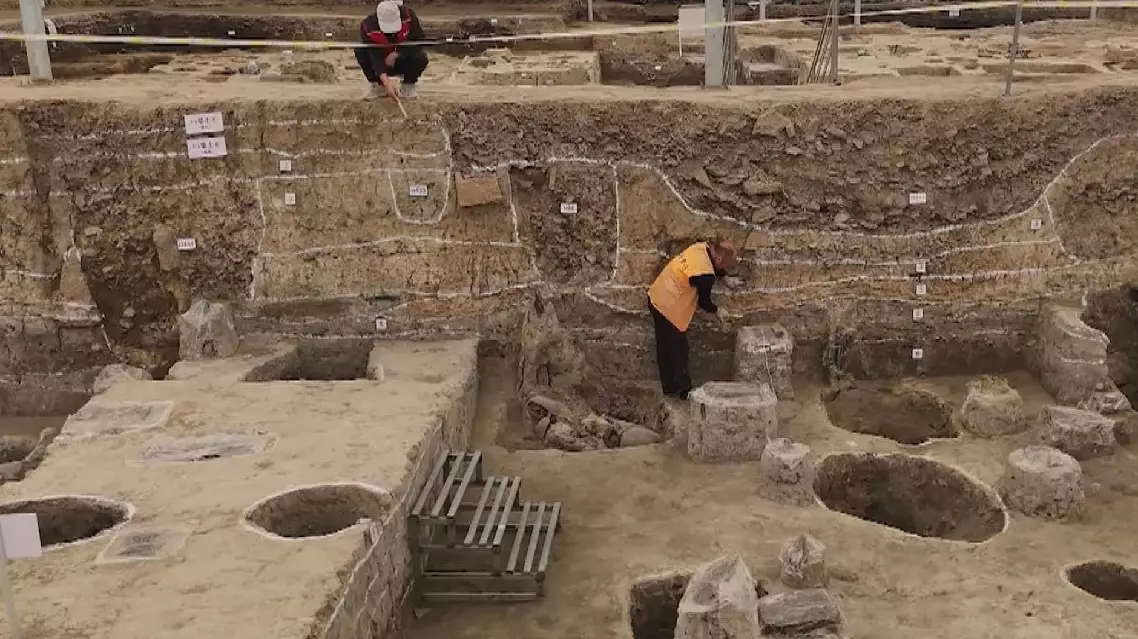
The four sites span from prehistoric times to the Han Dynasty (202 BC-AD 220) and the Six Dynasties period (222-589). Together, they offer evidence of early human activity as well as remnants of ancient capitals at their peak.

The Chuandong Site is located in Puding County, southwest China's Guizhou Province. Last year, large quantities of artifacts made of stone, bone, and horn were unearthed there, indicating prehistoric human activity dating back more than 55,000 years.

The Shenduntou Site, a typical Zhou Dynasty (1046BC-256BC) copper smelting site in the lower Yangtze River region in east China's Anhui Province, was part of the early Wu Kingdom's official industrial system. It holds great significance for the study of the development of bronze civilization in the Yangtze River basin.

Another shortlisted site, the Jinan City Site, lies in the northern suburbs of Jingzhou City, central China's Hubei Province. Covering an area of approximately 16 square kilometers, it is the largest capital city site from the pre-Qin period (before 221 B.C.) in southern China.

Outside the ancient city, multiple other sites and tombs have been discovered, spanning a total area of over 1,000 square kilometers. The sheer scale of the city ruins and surrounding burial grounds reflect the social landscape of the ancient Chu State at the height of its power.

The final shortlisted site comprises the remains of the capital of the ancient Yue State and the Kuaiji Commandery from the Han to the Six Dynasties period, located in the city of Shaoxing in east China's Zhejiang Province.

This site provides important clues for understanding the layout of the Yue capital and its ritual system. It also offers key evidence for studying the continuity of Chinese civilization and the development of construction techniques in southern China's wetland area.

The unique humid climate and extensive river systems of the Yangtze River Basin have shaped the distinctive cultural character of these sites, reinforcing the view that the Yangtze River Basin is a vital part of the diverse yet unified pattern of Chinese civilization.

Four sites in Yangtze River Basin shortlisted for final evaluation of China's top 10 archaeological discoveries of 2025

Four sites in Yangtze River Basin shortlisted for final evaluation of China's top 10 archaeological discoveries of 2025

Recommended Articles