Over 110 newly unearthed treasures from northwest China's Shaanxi province, including additions to the famous Terracotta Warriors and chariot horses, are making their North American debut at the Bowers Museum in the U.S. state of California.
The "World of the Terracotta Warriors: New Archaeological Discoveries in Shaanxi in the 21st Century!" exhibition showcases 115 invaluable artifacts, highlighting key recent archaeological findings from Shaanxi province, spanning from the late Neolithic period to the Qin Dynasty (221-207 B.C.).
Many treasures are being displayed overseas for the first time, allowing visitors to journey through time and explore the magnificent history of Chinese civilization.
"The timing is that there are new discoveries in the last ten years, and it brings the history back even further than 2,000 years, it goes back 3,000 and plus," said Dr. Sean O'Harrow, president of Bowers Museum.
"The archaeological exhibition involves the Terracotta Warriors Museum, or the (Archaeological Mausoleum) Site Museum, as well as other places in the whole province, continuing almost every day. What we're doing here is to showcase some of the most exciting new discoveries over the past two decades," said Jiao Tianlong, chief curator of Bowers Museum. "The No. 1 and No. 2 sets of bronze chariots and horses are the largest, most complex structure, and most complete harness system bronze chariot and horse artifacts discovered to date, and are hailed as the 'Crown of Bronze'. These were also the most challenging exhibits to install. To ensure their safety during transport, all detachable parts were individually packaged and reassembled in the exhibition hall. The reassembly of these two chariot and horse replicas took a total of five days," said a staff member from the Emperor Qinshihuang's Mausoleum Site Museum in China.
The exhibition opened on May 24 and will run through Oct 19.
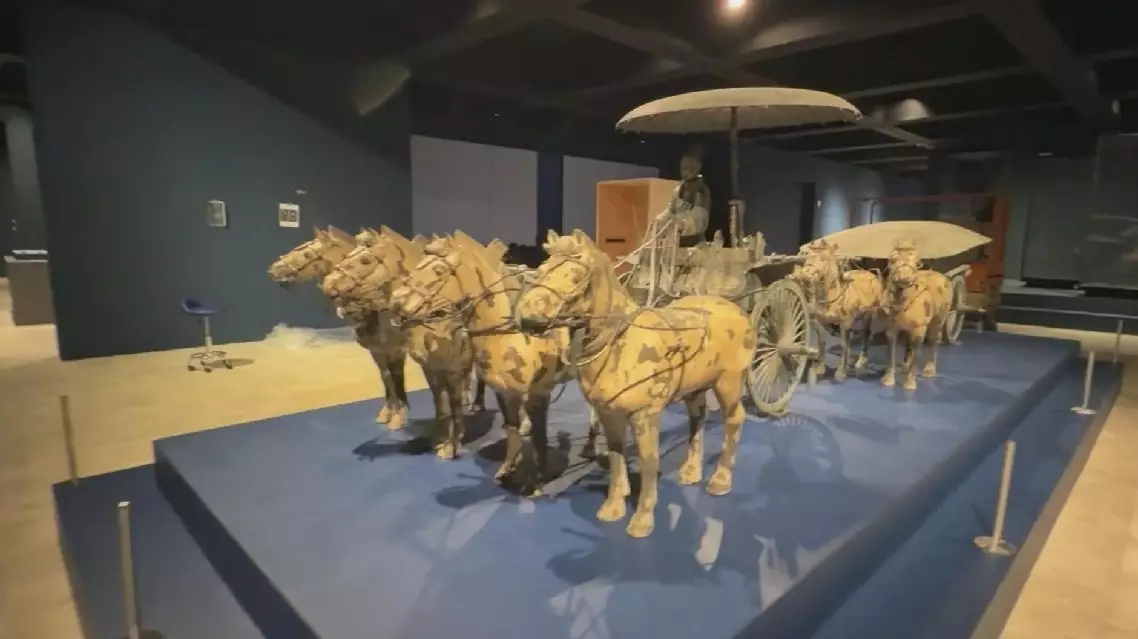
Terracotta Warriors exhibition in California showcases new discoveries from ancient China
The Houthis in Yemen are ready to coordinate countermeasures with Iran in response to a U.S. blockade on the Strait of Hormuz, a top adviser said on Tuesday, warning that the Bab al-Mandab Strait could also be blocked if red lines are crossed.
The United States imposed a blockade on the Strait of Hormuz to prevent ships from accessing Iranian ports, which took effect after the Iran-U.S. peace talks, held in Pakistan's capital Islamabad late last week, failed to yield a deal to end the war that the Unite States and Israel launched against Iran on Feb. 28. A two-week ceasefire is set to expire next week.
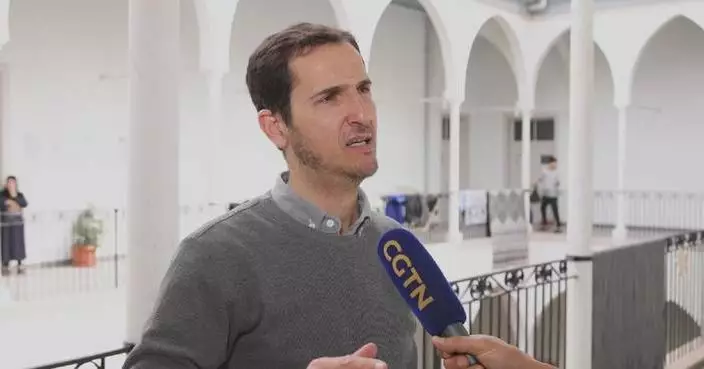
In an interview with China Global Television Network (CGTN) in Sanaa on Tuesday, Mohammed Taher Anam, an advisor to Yemen's Houthi Supreme Political Council, said these unilateral American actions must be rejected and confronted, so that the United States does not later impose blockades on other countries.
"We reject this blockade and call for confronting it through various means. We are also waiting for Iranian measures and are ready to take similar steps in our region," said Anam.
He said that the Bab al-Mandab Strait and nearby areas can be blocked at any time if red lines are crossed. They are coordinating with their Iranian allies and closely monitoring developments he said, and, at the right moment, they are ready to expand the confrontation against the U.S. and its allies.
The Bab el-Mandeb Strait, a strategic chokepoint linking the Suez Canal and the Red Sea with the Gulf of Aden, serves as a vital corridor for global trade, particularly oil and gas shipments between Europe and Asia.
"We remain ready to take any measures. We are coordinating with our allies in Iran and with friendly countries around the world if needed. One possible step is imposing a blockade against the American blockade. The Americans think they can impose a blockade on the Strait of Hormuz, but this is very difficult. We know Iranian missiles can reach up to 1,000 kilometers to target American ships, keeping them far from the Strait of Hormuz. If the U.S. continues on this path, we in Yemen can take similar steps to Iran, and the Americans will suffer greatly," said Mohammed.
The Houthi group, which has controlled Yemen's capital Sanaa and most northern provinces since late 2014, has voiced full solidarity with Iran since the U.S.-Israeli strikes against the Islamic Republic started.
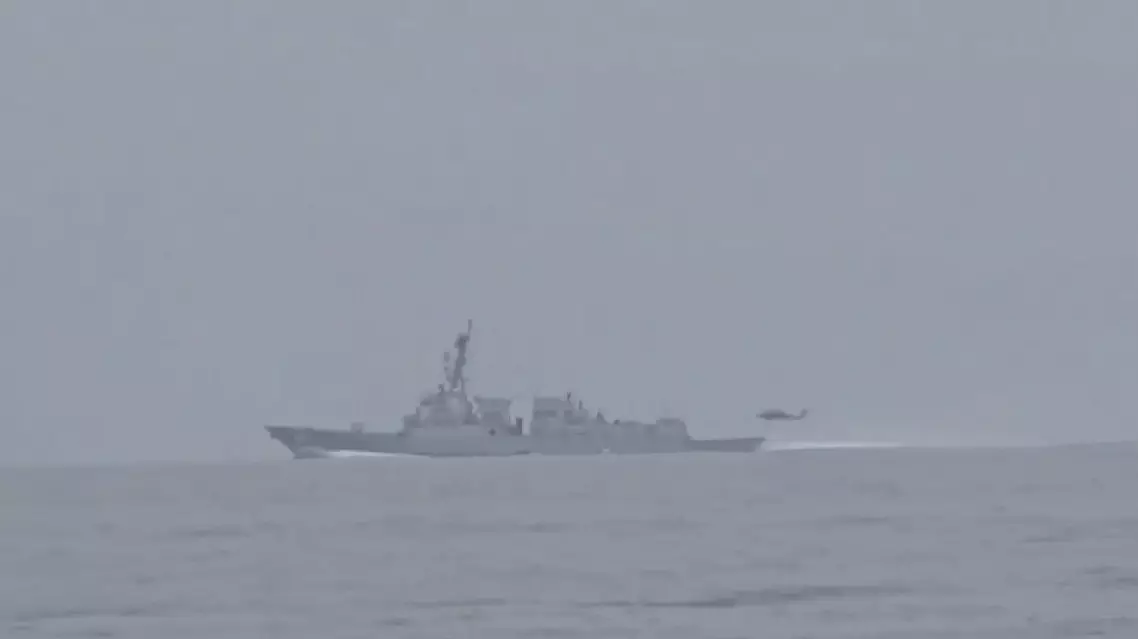
Houthi official warns of possible key Red Sea strait closure as U.S. continues Hormuz blockade