Skip to Content Facebook Feature Image

Syria will give inspectors immediate access to suspected former nuclear sites, UN watchdog tells AP

News

Syria will give inspectors immediate access to suspected former nuclear sites, UN watchdog tells AP
News

News

Syria will give inspectors immediate access to suspected former nuclear sites, UN watchdog tells AP

2025-06-05 05:10 Last Updated At:05:21

DAMASCUS, Syria (AP) — Syria's new government has agreed to give inspectors from the United Nations’ nuclear watchdog access to suspected former nuclear sites immediately, the agency’s head told The Associated Press on Wednesday.

The International Atomic Energy Agency’s director-general, Rafael Mariano Grossi, spoke in an exclusive interview in Damascus, where he met with President Ahmad al-Sharaa and other officials.

He also said al-Sharaa expressed an interest in pursuing nuclear energy for Syria in the future, adding, “Why not?”

The agency’s aim is “to bring total clarity over certain activities that took place in the past that were, in the judgment of the agency, probably related to nuclear weapons,” Grossi said. He described the new government as “committed to opening up to the world, to international cooperation” and said he is hopeful of finishing the inspection process within months.

An IAEA team in 2024 visited some sites of interest while former President Bashar Assad was still in power. Since the fall of Assad in December, the IAEA has been seeking to restore access to sites associated with Syria's nuclear program.

Syria under Assad is believed to have operated an extensive clandestine nuclear program, which included an undeclared nuclear reactor built by North Korea in eastern Deir el-Zour province.

The IAEA described the reactor as being “not configured to produce electricity” — raising the concern that Damascus sought a nuclear weapon there by producing weapons-grade plutonium.

The reactor site only became public knowledge after Israel, the Mideast’s only nuclear power, launched airstrikes in 2007 destroying the facility. Syria later leveled the site and never responded fully to the IAEA’s questions.

Grossi said inspectors plan to return to the reactor in Deir el-Zour as well as to three other related sites. Other sites under IAEA safeguards include a miniature neutron source reactor in Damascus and a facility in Homs that can process yellow-cake uranium.

“We are trying to narrow down the focus, to those or that one that could be of a real interest,” he said.

While there are no indications that there have been releases of radiation from the sites, he said, the watchdog is concerned that “enriched uranium can be lying somewhere and could be reused, could be smuggled, could be trafficked.”

He said al-Sharaa — who has courted Western governments since taking power — had shown a “very positive disposition to talk to us and to allow us to carry out the activities we need to.”

Apart from resuming inspections, Grossi said the IAEA is prepared to transfer equipment for nuclear medicine and to help rebuild the radiotherapy, nuclear medicine and oncology infrastructure in a health system severely weakened by nearly 14 years of civil war.

“And the president has expressed to me he’s interested in exploring, in the future, nuclear energy as well,” Grossi said.

A number of other countries in the region, including Saudi Arabia, the United Arab Emirates, Egypt and Jordan, are pursuing nuclear energy in some form. Grossi said Syria would most likely be looking into small modular reactors, which are cheaper and easier to deploy than traditional large ones.

Regarding the ongoing negotiations between the United States and Iran for a deal over Tehran’s nuclear program, Grossi said he has been in “constant contact” with the parties.

“They are negotiating, it’s not us, but it is obvious that the IAEA will have to be the guarantor of whichever agreement they come to,” he said.

While there continue to be major areas of contention between the two sides — particularly over uranium enrichment — Grossi said he is encouraged that they are negotiating directly, and he believes both sides are serious about reaching a deal.

“I think they both want an agreement, which doesn’t mean that it’s easy to get, but, simple and obvious as this may sound, having two sides that want an agreement is an enormous advantage,” he said. “In my long diplomatic career, I have participated in negotiations where it was not necessarily the case that the sides wanted an agreement.”

Associated Press writer Jon Gambrell in Dubai, United Arab Emirates, contributed to this report.
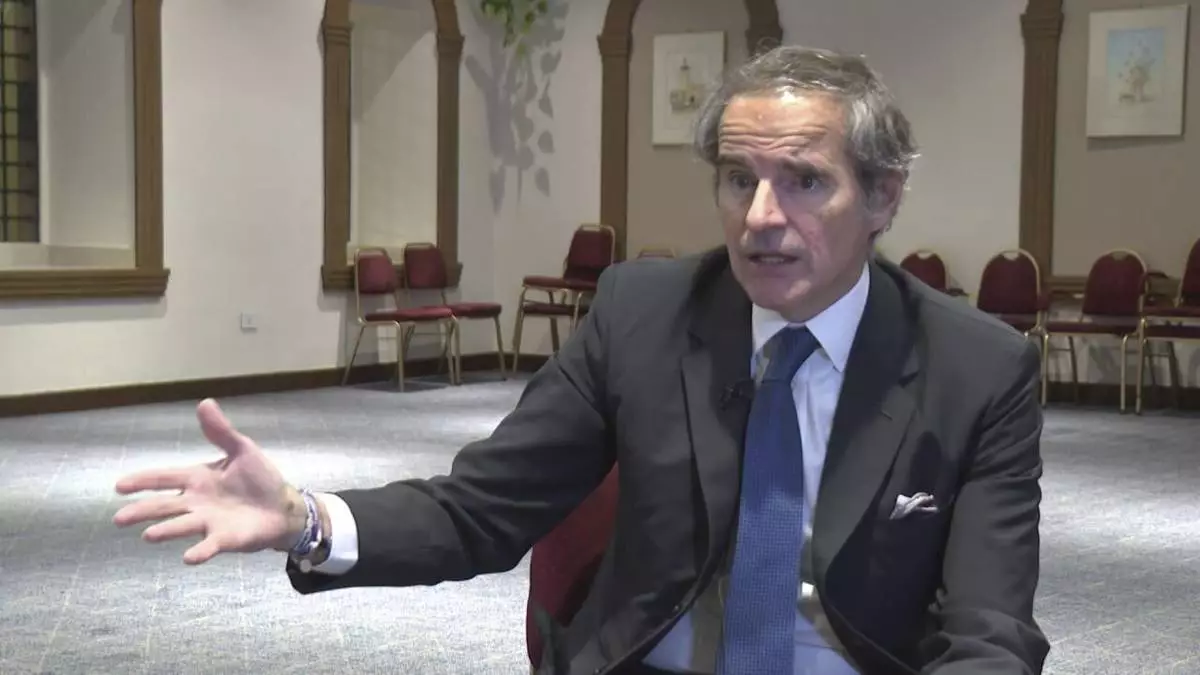
This screen grab from video shows International Atomic Energy Agency Director General Rafael Mariano Grossi giving an interview in Damascus, Syria, Wednesday, June 4, 2025. (AP Photo/Abdelrahman Shaheen)
This screen grab from video shows International Atomic Energy Agency Director General Rafael Mariano Grossi giving an interview in Damascus, Syria, Wednesday, June 4, 2025. (AP Photo/Abdelrahman Shaheen)
MILWAUKEE (AP) — Four years after showing up late for the Beijing Olympics and missing one of his races because of a case of COVID-19, U.S. long track speedskater Casey Dawson is enjoying what he jokingly terms his “villain arc,” peaking at the right time ahead of the Milan Cortina Games.

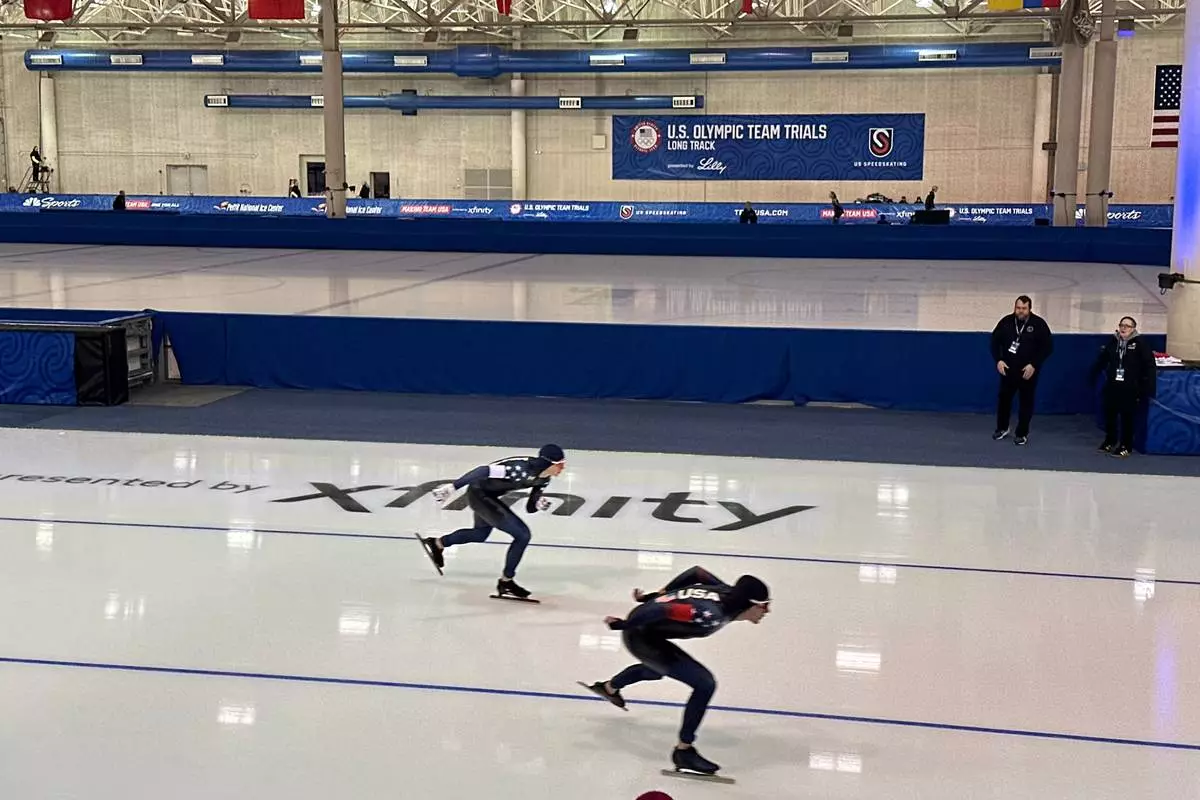
Dawson secured a spot for next month in the men's 5,000 meters — an event he was forced to skip in 2022 while sick — by winning at that distance at the U.S. Olympic trials in 6 minutes, 12.857 seconds on Friday night.

“I actually got COVID two or three weeks before going to the competition. Tested positive for 50 straight tests,” said Dawson, a 25-year-old from Park City, Utah. “Couldn’t go over to the Games. I missed the opening ceremonies. Missed the 5,000 meters. Showed up 12 hours before my 1,500 meters. So I kind of got a little screwed over from that point of view. But this time around, I’m just looking forward to getting there smoothly and just getting a little bit of redemption.”

And then, with a chuckle, Dawson added: “It’s kind of fun to have, like, my villain arc, I would call it. Just coming back and having some fun.”

Ethan Cepuran was about 6 1/2 seconds back Friday, finishing next in 6:19.335.

The last American man to medal in the 5,000 at an Olympics was Chad Hedrick at the 2006 Turin Games.

Dawson already had secured the lone U.S. place for Milan in the men’s 10,000 — a race not being contested at these trials — and also will be part of the trio for men’s team pursuit at the Olympics.

Dawson, Cepuran and Emery Lehman took the bronze in that event in Beijing four years ago, set the world record in 2024 and claimed gold in the team pursuit at the world championships in March.

In the other race Friday, the women's 3,000, Greta Myers won in 4:06.799. As of now, the United States does not have a berth in Milan for that distance, but one of its athletes could end up in the field if another country relinquishes an opening.

“It's hard to wait,” said Myers, a 21-year-old from Lino Lakes, Minnesota. “But I'm very hopeful. I think it's at least a 50-50 chance that it'll happen.”

The U.S. Olympic roster for long track won't become official until the four-day trials at the Pettit National Ice Center wrap up on Monday. One element that could come into play is that the Americans are allowed to bring a maximum of eight men and six women to these Winter Games.

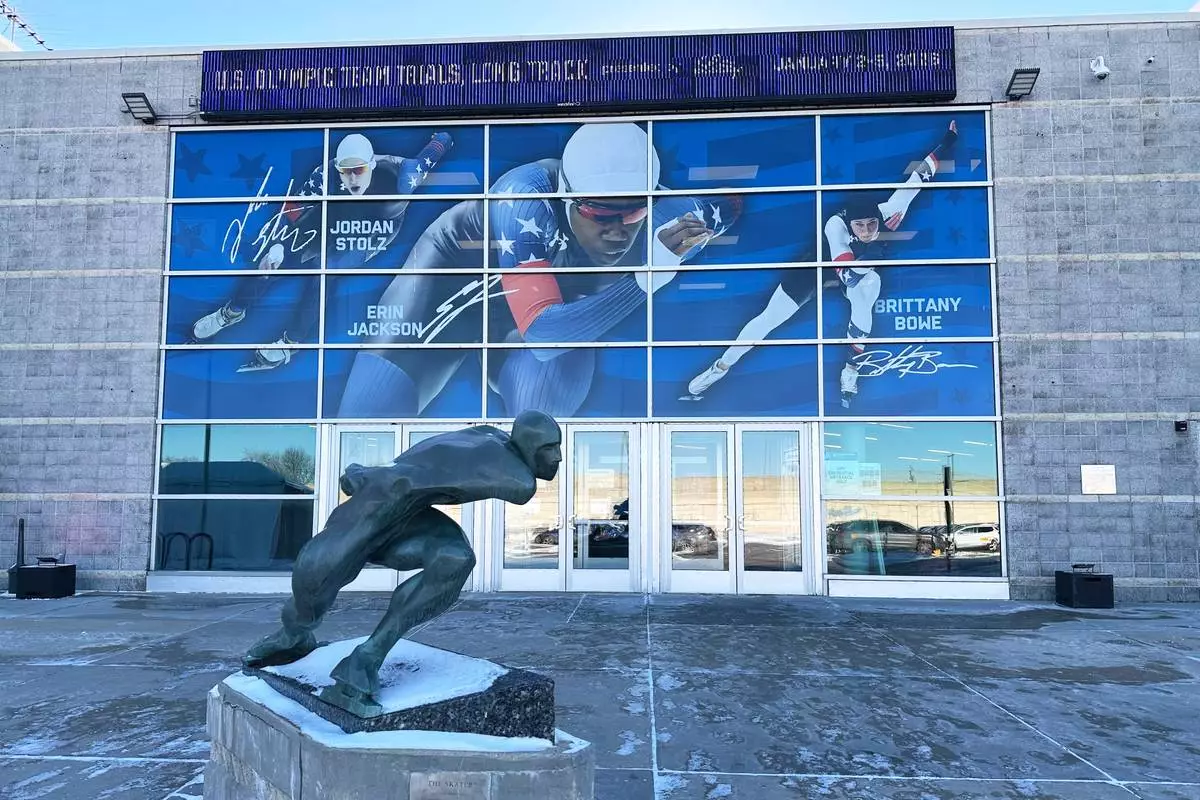
The biggest star of the team — and the sport — is scheduled to make his trials debut Saturday in the men's 1,000 meters: Jordan Stolz. The 21-year-old from Kewaskum, a town about 40 miles north of Milwaukee, is not just competing at home this week; he's racing at the same rink where he first began taking lessons as a kid.

He made his Olympic debut at age 17 in Beijing four years ago, finishing 13th in the 500 and 14th in the 1,000.

At both the 2023 and 2024 world championships, Stolz earned titles in each of the 500, 1,000 and 1,500 meters.

He's already pre-qualified for the Olympics based on performances at those three distances. All he really needs to do to lock down berths on the squad for the Feb. 6-22 Milan Cortina Games is show up at the starting line this week.

The 500 and 1,500 are slated for Sunday, and the mass start is Monday.

AP Winter Olympics: https://apnews.com/hub/milan-cortina-2026-winter-olympics

Casey Dawson, of Park City, Utah, right, and Ethan Cepuran, of Glen Ellyn, lllinois, left, compete in the men's 5,000 meters at the U.S. Olympic trials for long track speed skating at the Pettit National Ice Center in Milwaukee, Friday, Jan. 2, 2026. (AP Photo/Howard Fendrich)

Casey Dawson, of Park City, Utah, right, and Ethan Cepuran, of Glen Ellyn, lllinois, left, compete in the men's 5,000 meters at the U.S. Olympic trials for long track speed skating at the Pettit National Ice Center in Milwaukee, Friday, Jan. 2, 2026. (AP Photo/Howard Fendrich)

The Pettit National Ice Center is seen in Milwaukee on Friday, Jan. 2, 2026, the first day of the U.S. Olympic trials for long track speedskating. (AP Photo/Howard Fendrich)

The Pettit National Ice Center is seen in Milwaukee on Friday, Jan. 2, 2026, the first day of the U.S. Olympic trials for long track speedskating. (AP Photo/Howard Fendrich)

Recommended Articles