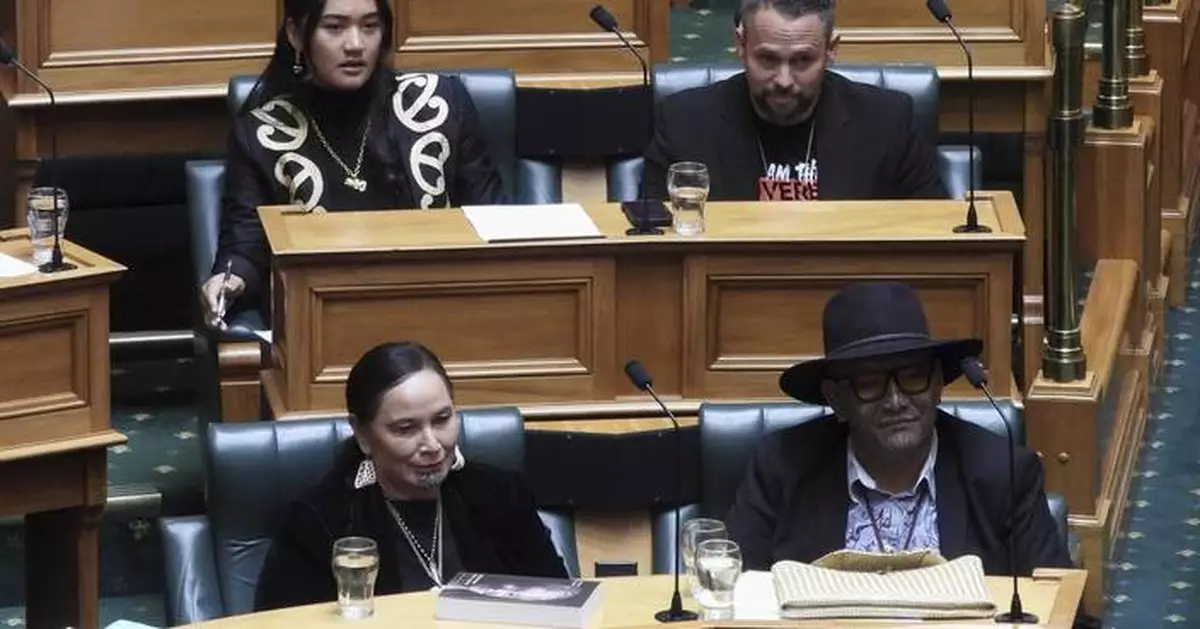
WELLINGTON, New Zealand (AP) — New Zealand legislators voted Thursday to enact record suspensions from Parliament for three lawmakers who performed a Māori haka to protest a proposed law.
Hana-Rāwhiti Maipi-Clarke received a seven-day ban and the leaders of her political party, Debbie Ngarewa-Packer and Rawiri Waititi, were barred for 21 days. Three days had been the longest ban for a lawmaker from New Zealand’s Parliament before.
Click to Gallery
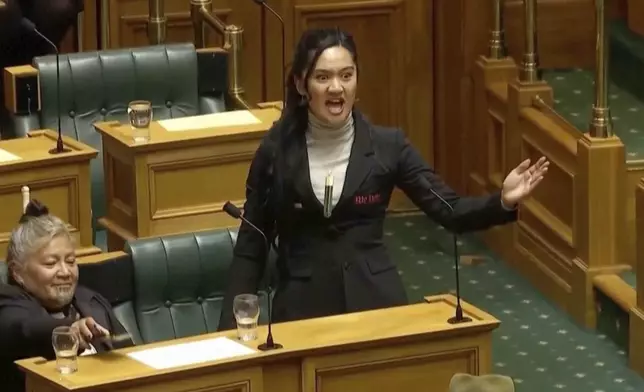
CORRECTS DATE TO NOV. 14, 2024, NOT MAY 15, 2025 - In this image from video provided by the New Zealand Parliament TV, lawmaker Hana-Rāwhiti Maipi-Clarke performs a Māori haka to protest a proposed law during a session of Parliament in Wellington, New Zealand, on Nov. 14, 2024, (New Zealand Parliament TV via AP)
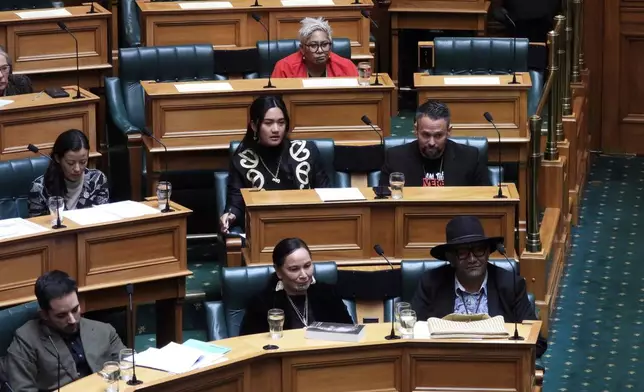
New Zealand lawmakers, Hana-Rāwhiti Maipi-Clarke, center at second row, Debbie Ngarewa-Packer, center in front row, and Rawiri Waititi, bottom right, who received lengthy suspensions from Parliament for a protest haka they performed last November, watch as other legislators debate their proposed bans in Wellington, New Zealand Thursday, June 5, 2025. (AP Photo/Charlotte Graham-McLay)
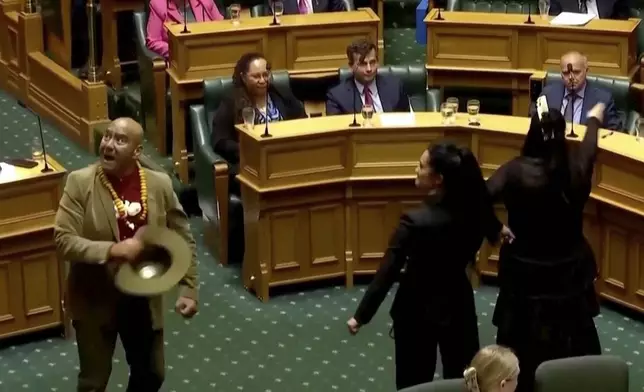
In this image from video provided by New Zealand Parliament TV, lawmakers, from foreground left, Rawiri Waititi, Hana-Rāwhiti Maipi-Clarke and Debbie Ngarewa-Packer perform a Māori haka to protest a proposed law during a session of Parliament in Wellington, New Zealand, on Nov. 14, 2024, (New Zealand Parliament TV via AP)
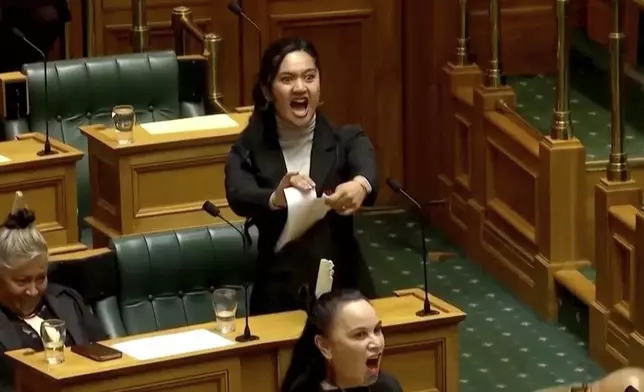
In this image from video provided by New Zealand Parliament TV, lawmaker Hana-Rāwhiti Maipi-Clarke tears papers as she performs a Māori haka to protest a proposed law during a session of Parliament in Wellington, New Zealand, on Nov. 14, 2024, (New Zealand Parliament TV via AP)
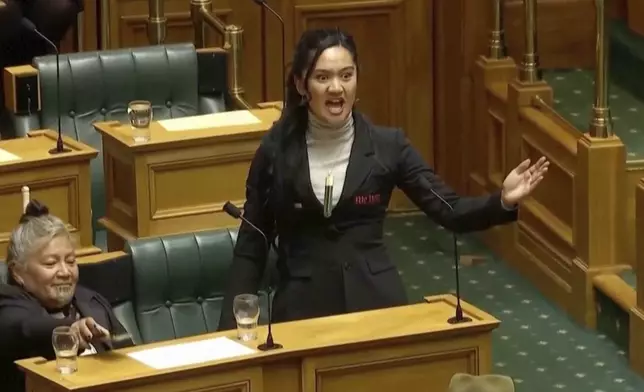
This image from May 15, 2025 video shows New Zealand lawmaker Hana-Rāwhiti Maipi-Clarke performing a Māori haka to protest a proposed law in Parliament, in Wellington, New Zealand, (New Zealand Parliament TV via AP)
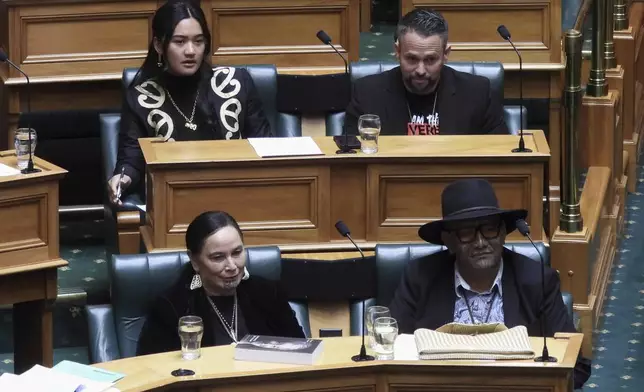
New Zealand lawmakers Hana-Rāwhiti Maipi-Clarke, top left, Debbie Ngarewa-Packer, bottom left, and Rawiri Waititi, bottom right, watch as other legislators debate their proposed bans in parliament in Wellington on Thursday, June 5, 2025. (AP Photo/Charlotte Graham-McLay)
The lawmakers from Te Pāti Māori, the Māori Party, performed the haka, a chanting dance of challenge, in November to oppose a widely unpopular bill, now defeated, that they said would reverse Indigenous rights.
The protest drew global headlines and provoked months of fraught debate among lawmakers about what the consequences for the lawmakers' actions should be and the place of Māori culture in Parliament.
A committee of the lawmakers’ peers in April recommended the lengthy bans. It said the lawmakers were not being punished for the haka, but for striding across the floor of the debating chamber toward their opponents while doing it.
Judith Collins, the committee chair, said the lawmakers' behavior was egregious, disruptive and potentially intimidating.
Maipi-Clarke, 22, rejected that description Thursday, citing other instances when legislators have left their seats and approached opponents without sanction. The suspended legislators said they are being treated more harshly than others because they are Māori.
“I came into this house to give a voice to the voiceless. Is that the real issue here?” Maipi-Clarke asked Parliament. “Is that the real intimidation here? Are our voices too loud for this house?”
Inside and outside Parliament, the haka has increasingly been welcomed as an important part of New Zealand life. The sacred chant can be a challenge to the viewer but is not violent.
As Māori language and culture have become part of mainstream New Zealand in recent years, haka appear in a range of cultural, somber and celebratory settings. They also have rung out in Parliament to welcome the passage of high-profile laws.
Some who decried the protest haka in Parliament cited its timing, with Maipi-Clarke beginning the chant as votes were being tallied and causing a brief suspension of proceedings. She has privately apologized for the disruption to Parliament's Speaker, she said Thursday.
A few lawmakers urged their peers to consider rewriting rules about what lawmakers could do in Parliament to recognize Māori cultural protocols as accepted forms of protest. One cited changes to allow breastfeeding in the debating chamber as evidence the institution had amended rules before.
Normally the parliamentary committee that decides on punishments for errant lawmakers is in agreement on what should happen to them. But panel members were sharply divided over the haka protest and the lengthy punishments were advanced only because the government has more legislators in Parliament than the opposition.
One party in the government bloc wanted even longer suspensions and had asked the committee if the Māori party lawmakers could be jailed. Most in opposition rejected any punishment beyond the one-day ban Maipi-Clarke already served.
Speaker Gerry Brownlee urged lawmakers last month to negotiate a consensus and ordered a free-ranging debate that would continue until all agreed to put the sanctions to a vote. But no such accord was reached after hours of occasionally emotional speeches in which opposition lawmakers accused the government of undermining democracy by passing such a severe punishment on its opponents.
While the bans were certain to pass, even as the debate began Thursday it remained unclear whether opposition lawmakers would filibuster to prevent the suspensions from reaching a vote. By evening, with no one's mind changed, all lawmakers agreed the debate should end.
Every government lawmaker voted for the punishments, while all opposition members voted against them.
Thursday's debate capped a fraught episode for race relations in New Zealand, beginning with the controversial bill that the Māori Party lawmakers opposed.
The measures would have rewritten principles in the country's founding document, a treaty between Māori tribal leaders and representatives of the British Crown signed at the time New Zealand was colonized.
The bill's authors were chagrined by moves from Parliament and the courts in recent decades to enshrine the Treaty of Waitangi's promises. Opponents warned of constitutional crisis if the law was passed and tens of thousands of people marched to Parliament last November to oppose it.
Despite growing recognition for the treaty, Māori remain disadvantaged on most social and economic metrics compared to non-Māori New Zealanders.
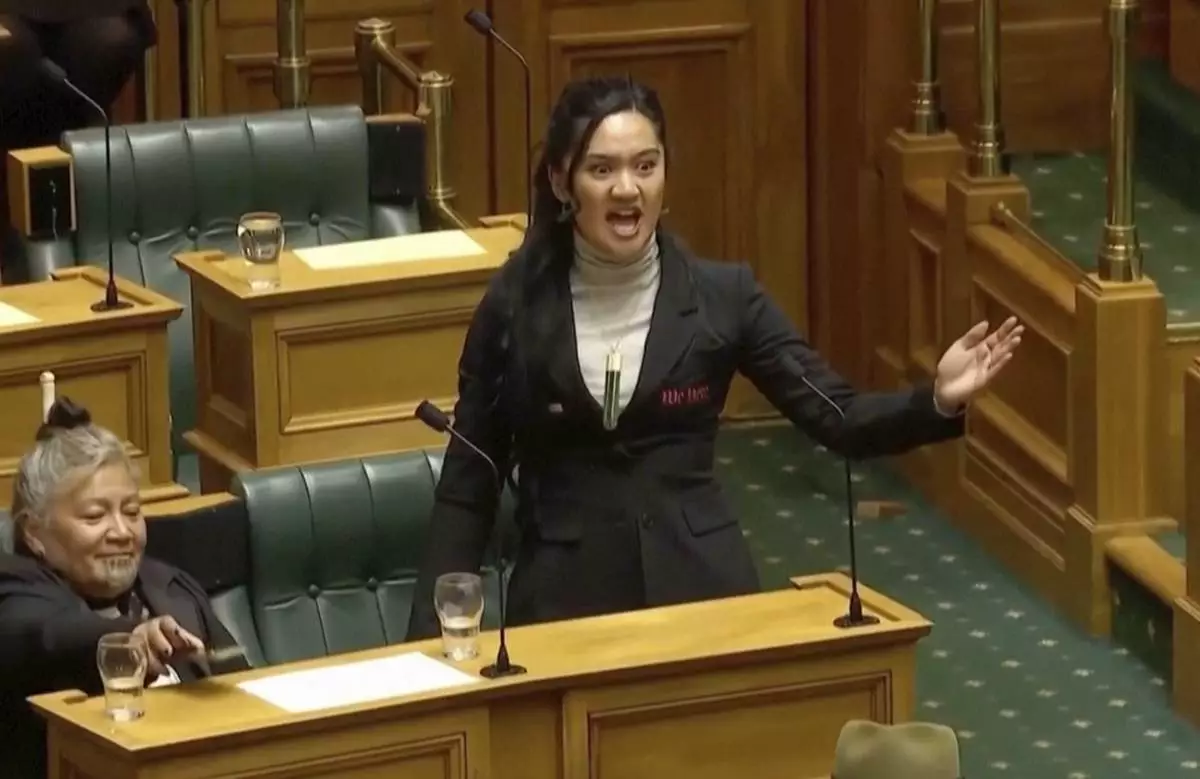
CORRECTS DATE TO NOV. 14, 2024, NOT MAY 15, 2025 - In this image from video provided by the New Zealand Parliament TV, lawmaker Hana-Rāwhiti Maipi-Clarke performs a Māori haka to protest a proposed law during a session of Parliament in Wellington, New Zealand, on Nov. 14, 2024, (New Zealand Parliament TV via AP)
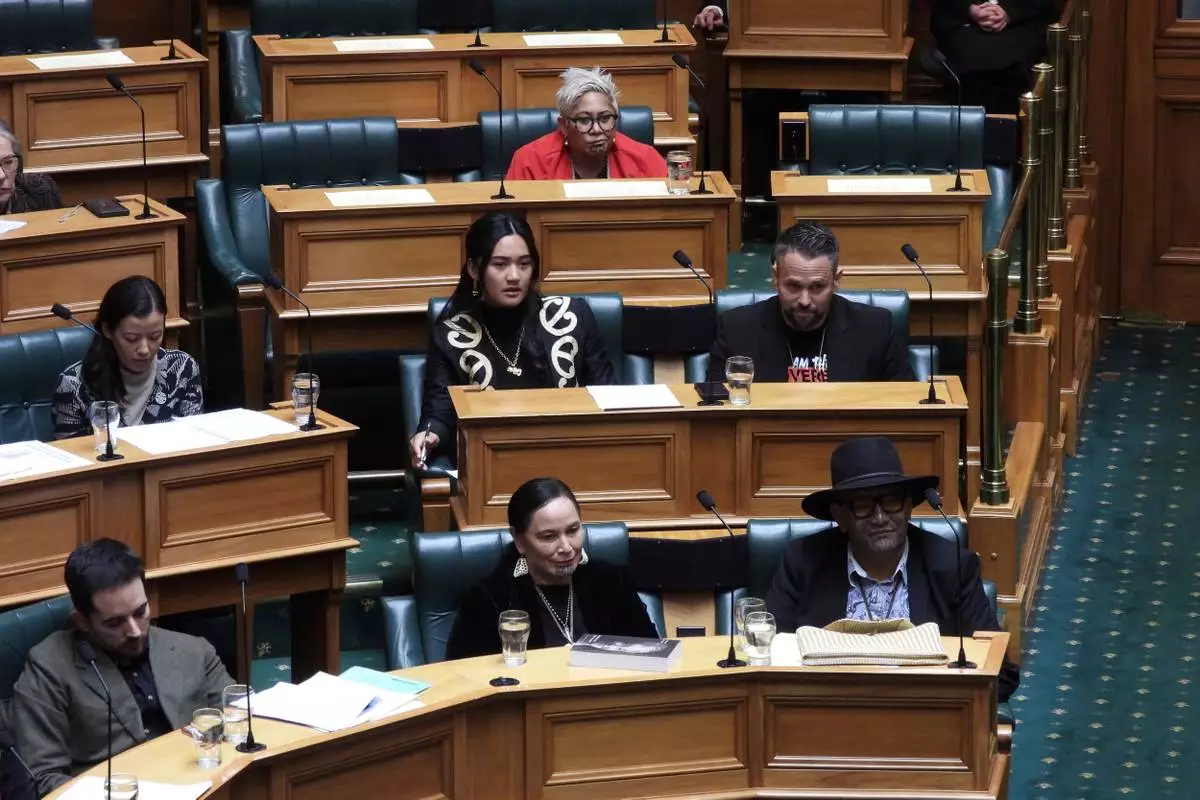
New Zealand lawmakers, Hana-Rāwhiti Maipi-Clarke, center at second row, Debbie Ngarewa-Packer, center in front row, and Rawiri Waititi, bottom right, who received lengthy suspensions from Parliament for a protest haka they performed last November, watch as other legislators debate their proposed bans in Wellington, New Zealand Thursday, June 5, 2025. (AP Photo/Charlotte Graham-McLay)
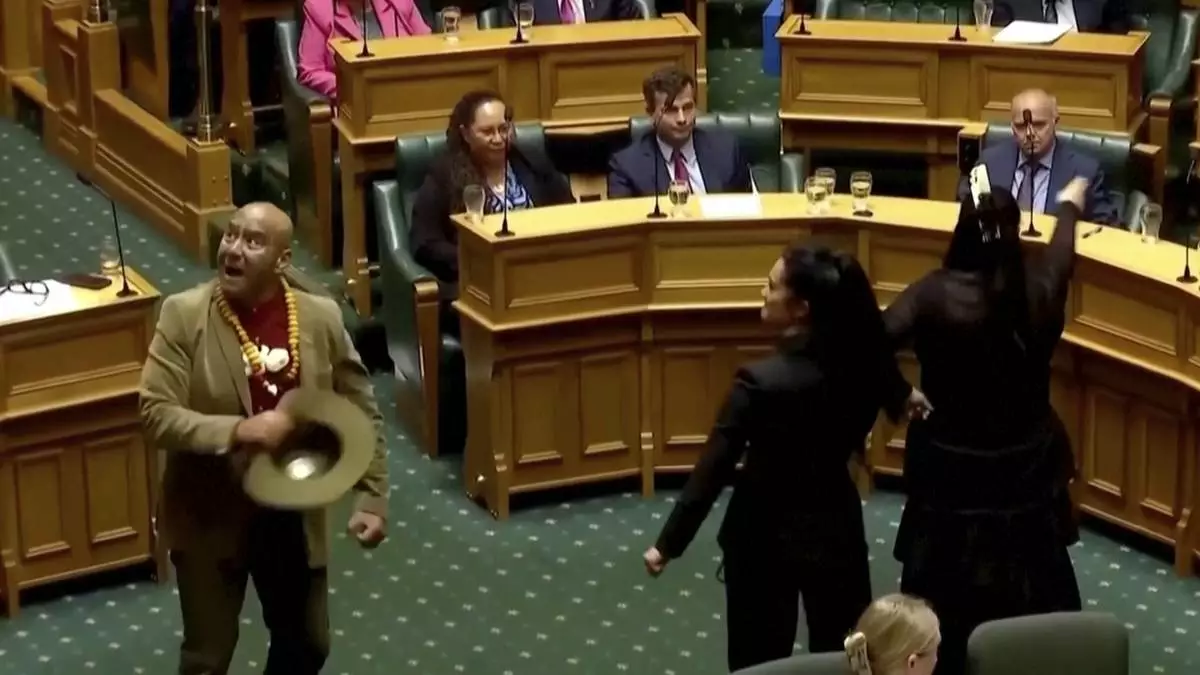
In this image from video provided by New Zealand Parliament TV, lawmakers, from foreground left, Rawiri Waititi, Hana-Rāwhiti Maipi-Clarke and Debbie Ngarewa-Packer perform a Māori haka to protest a proposed law during a session of Parliament in Wellington, New Zealand, on Nov. 14, 2024, (New Zealand Parliament TV via AP)
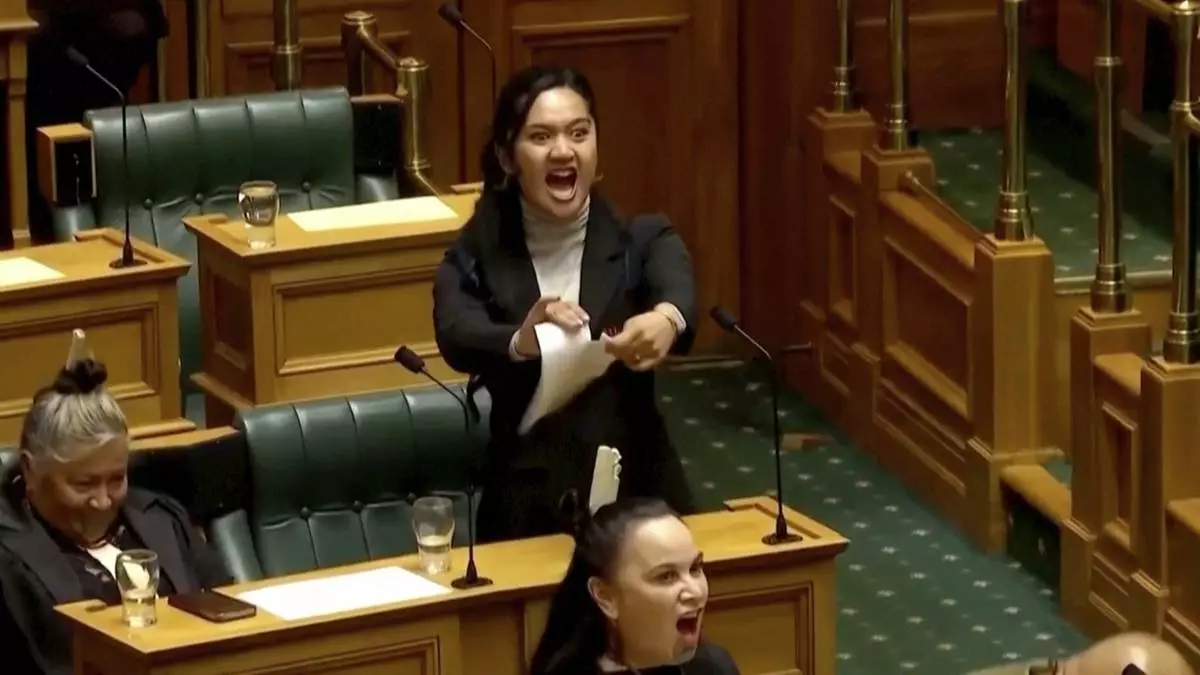
In this image from video provided by New Zealand Parliament TV, lawmaker Hana-Rāwhiti Maipi-Clarke tears papers as she performs a Māori haka to protest a proposed law during a session of Parliament in Wellington, New Zealand, on Nov. 14, 2024, (New Zealand Parliament TV via AP)
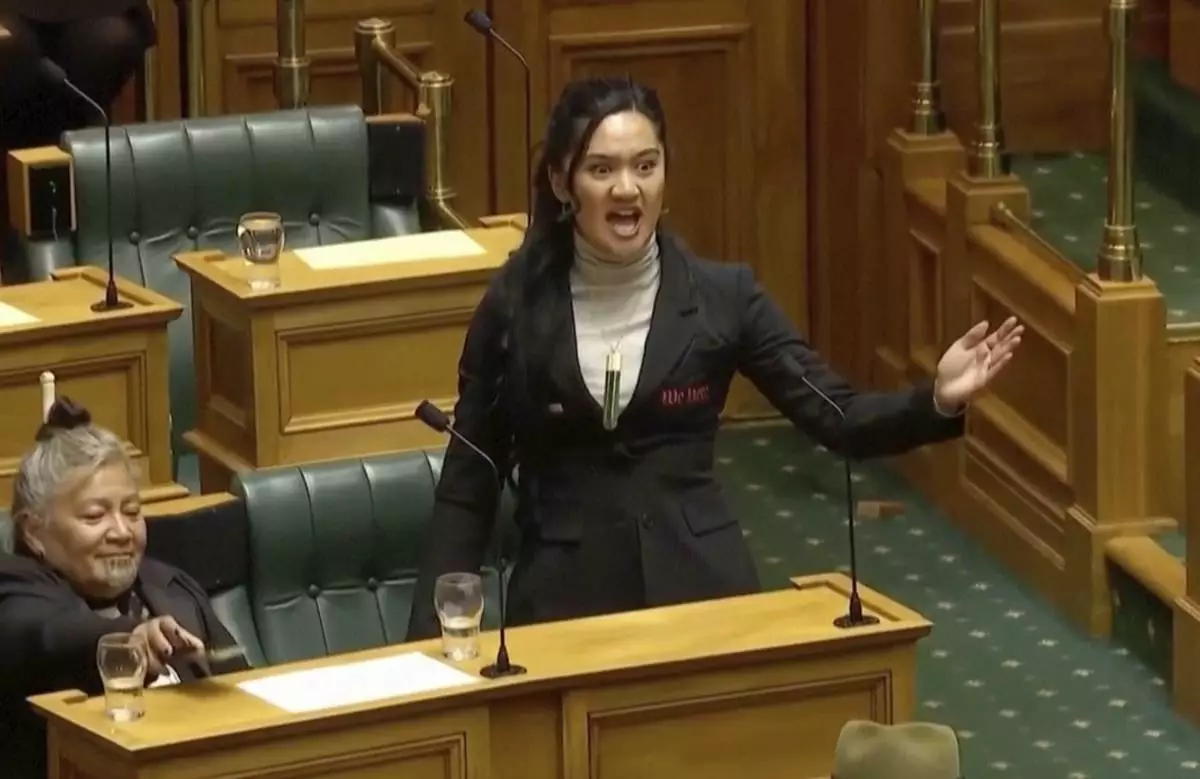
This image from May 15, 2025 video shows New Zealand lawmaker Hana-Rāwhiti Maipi-Clarke performing a Māori haka to protest a proposed law in Parliament, in Wellington, New Zealand, (New Zealand Parliament TV via AP)
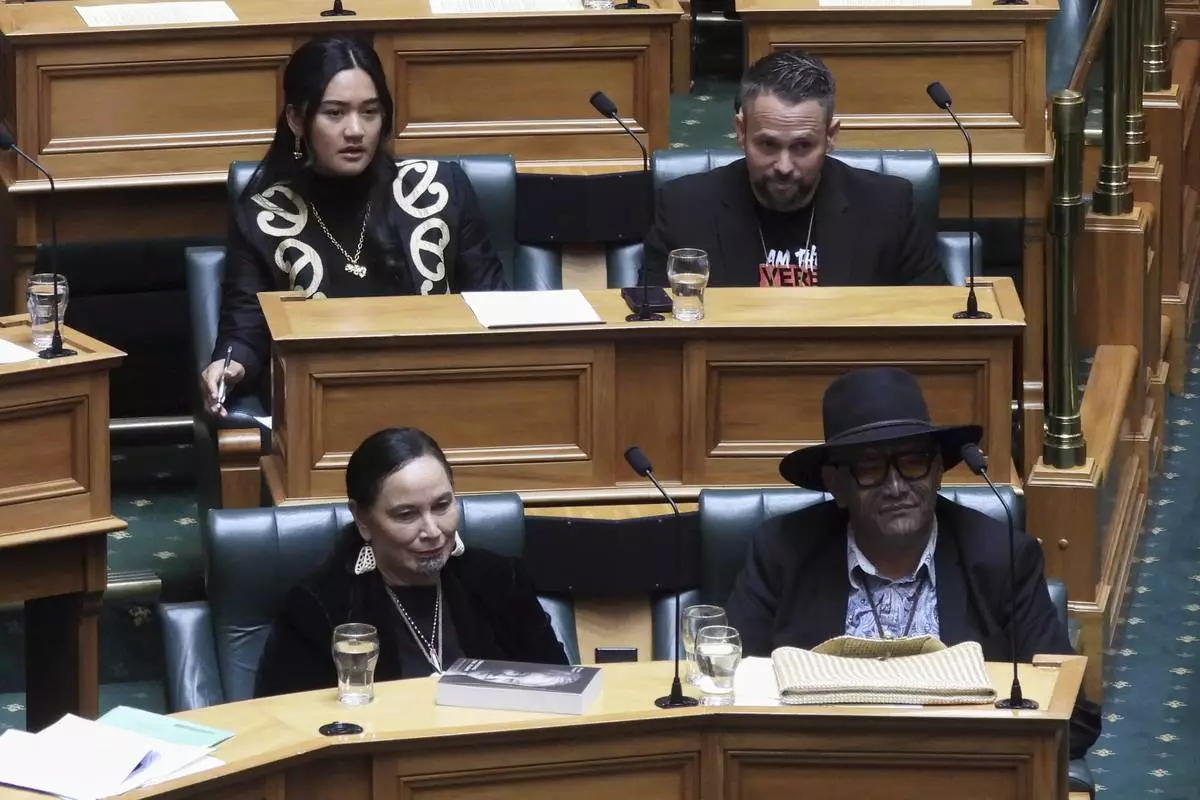
New Zealand lawmakers Hana-Rāwhiti Maipi-Clarke, top left, Debbie Ngarewa-Packer, bottom left, and Rawiri Waititi, bottom right, watch as other legislators debate their proposed bans in parliament in Wellington on Thursday, June 5, 2025. (AP Photo/Charlotte Graham-McLay)