Skip to Content Facebook Feature Image

China sees steady improvement in eco-environmental quality: Bulletin

China

China

China

China sees steady improvement in eco-environmental quality: Bulletin

2025-06-05 17:30 Last Updated At:18:07

China has reported steady improvement across various ecological and environmental indicators in 2024, according to a report released by the Ministry of Ecology and Environment on Thursday.

During the National Event on the Environment Day 2025 held in southwest China's Chongqing Municipality, the Ministry of Ecology and Environment, along with multiple departments, jointly released the 2024 Report on the State of the Ecology and Environment in China. The World Environmental Day is observed on June 5.

According to the report, in 2024, the average density of PM2.5 in 339 Chinese cities at or above the prefecture level stood at 29.3 micrograms per cubic meter, down 30.2 percent from 2016. The proportion of days with good air quality in these cities reached 87.2 percent, up 4.1 percentage points compared to 2016.

Statistics from the past nine years show that national air quality is generally better during the months of July, September, October, and November compared to other months. Since 2016, the proportion of monitored sections with fairly good surface water quality -- at or above Grade III in the country's five-tier water quality system -- has increased year on year, reaching 90.4 percent in 2024, surpassing the 90 percent threshold for the first time. Meanwhile, the share of surface water below Grade V, the lowest level, has continued to decrease.

The main streams of the Yangtze River and the Yellow River have maintained Grade II water quality for five and three consecutive years, respectively.

According to monitoring data from 2024, the compliance rate of centralized drinking water sources in cities at or above the prefecture level reached 96 percent, while the compliance rate in county-level cities and towns was 93.7 percent. This effectively ensures the safety of drinking water for urban and rural residents.

In 2024, the overall quality of seawater in China's jurisdictional waters remained stable, with over 80 percent of the nearshore waters meeting good water quality standards.

The monitoring results of 2024 indicate that during the swimming season and peak tourism periods, out of the 32 monitored bathing beaches nationwide, 19 met the good water quality standards, making them suitable for swimming and other sea-related activities.

In 2024, the overall natural ecological condition in China remained stable, with the national ecological quality index (EQI) standing at 59.95. The comprehensive ecological quality was categorized as Grade II, indicating a state of good ecological quality.

Since 2021, China's EQI has consistently remained in the good range, indicating rich biodiversity, high coverage of natural ecosystems, and complete ecological structure and functions.

China sees steady improvement in eco-environmental quality: Bulletin

China sees steady improvement in eco-environmental quality: Bulletin

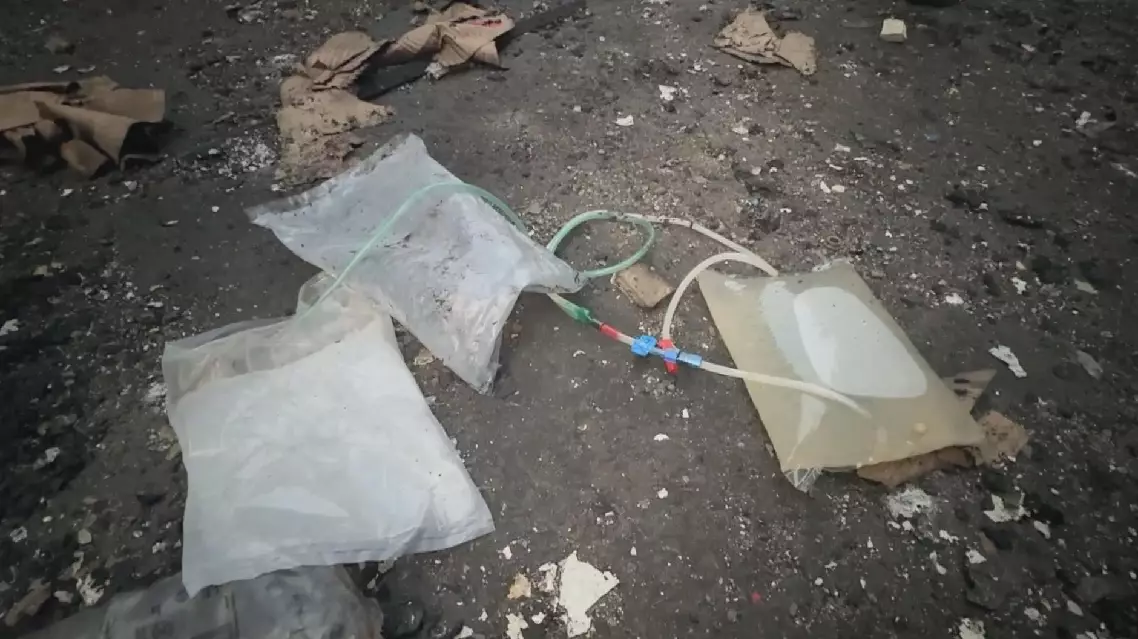
A major port in northern Venezuela came under U.S. airstrikes in the early hours of January 3, which caused extensive damage to civilian infrastructure, destroyed critical medical supplies in a warehouse, and severely impacted centuries-old cultural heritage sites, according to local residents.

The La Guaira Port, a vital hub for imports that support daily life in the region, was heavily damaged during the attack.

Large quantities of medical supplies stored at the port were destroyed. A historic cultural building dating back for some 300 years was also badly damaged by the bombardment.

Residents living near the port recalled the terrifying scenes as explosions shook nearby neighborhoods.

Humberto Bolivar, who lives in a community separated from the port by only a main road, said the blast waves shattered his home's windows, while stray shrapnel struck the water tank on his roof. According to reports, three missiles were fired at the port that night.

Bolivar said that beyond material losses, he is most concerned about the psychological impact on his children, who remain too frightened to leave their home days after the attack.

"The United States invaded our country. The children were frightened. This is not good for them, because it leaves some children with psychological trauma. They do not want to go to school or leave the house, because they are afraid that something worse might happen. We truly do not want this to happen to our country," he said.

Apart from civilian facilities, local cultural heritage site was also affected.

The La Guaira state government building, a structure with nearly 300 years of history and once served as the site of Venezuela's first national customs office, was struck by the force of the explosions.

Windows of the building were shattered, and furniture scattered across the floor.

"As people of La Guaira, we feel deep pain. Our cultural heritage has been bombed. We are living in constant anxiety and suffering, and life can no longer be the same as it was before," said a local named Henry Cumares.

The U.S. side has claimed the airstrikes targeted warehouses allegedly used to store narcotics. However, locals refuted such accusation.

"According to what Donald Trump said, they bombed this place using the excuse that the warehouses here were used to store drugs at the port. But based on the video released by our governor, these warehouses that were burned contained medicine for kidney patients and foods. Many people depend on these supplies to survive. I think the bombing is extremely despicable," said a local resident named Alejandro Capriles.

US strike hits Venezuelan port, wrecking medical supplies, heritage building

US strike hits Venezuelan port, wrecking medical supplies, heritage building

Recommended Articles