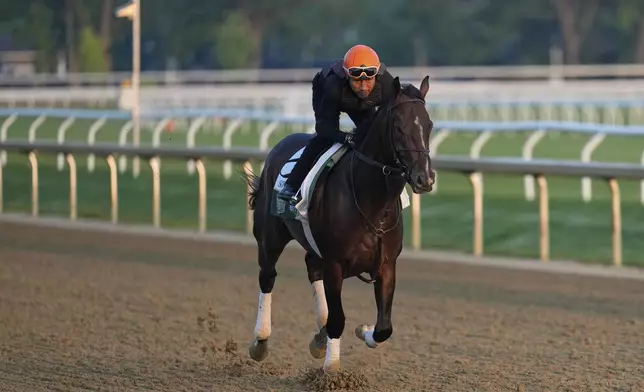
SARATOGA SPRINGS, N.Y. (AP) — For a second consecutive year, the Belmont Stakes is being run at historic Saratoga Race Course in upstate New York, creating a buzz in the city that closes off Broadway downtown with the sport's spotlight shining.
Saratoga itself is a draw for avid fans, given the track’s place in horse racing history and a nod to its roots, but the debate continues about how to keep the Triple Crown relevant for a casual audience.
Click to Gallery
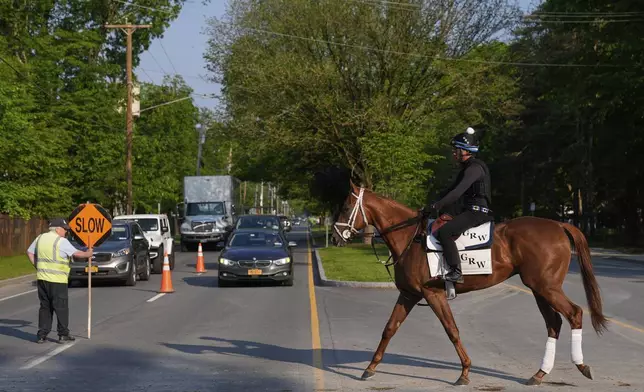
Car traffic is halted so a horse can cross the street at Saratoga Race Track in Saratoga Springs, N.Y., Thursday, June 5, 2025. (AP Photo/Seth Wenig)
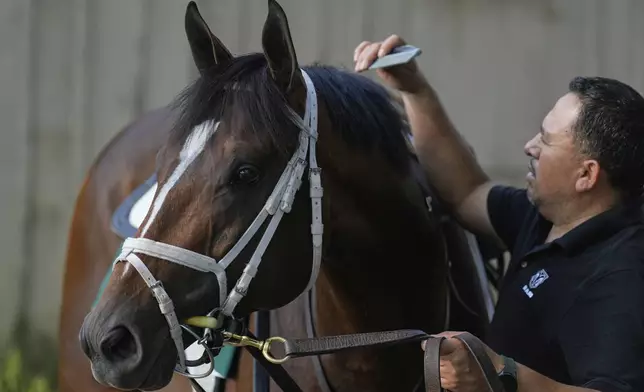
Uncaged is groomed at the Saratoga Race Track, before Saturday's running of the Belmont Stakes horse race, in Saratoga Springs, N.Y., Thursday, June 5, 2025. (AP Photo/Seth Wenig)
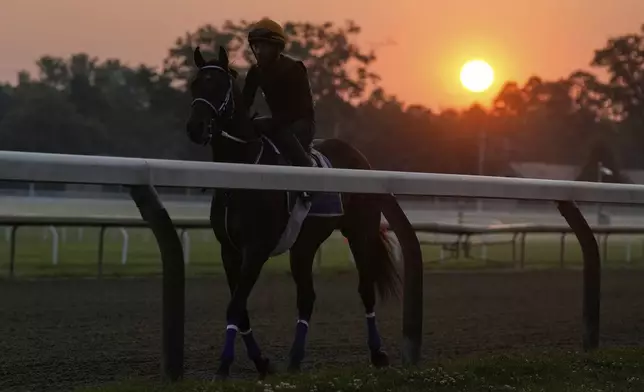
The sun rises over training horses at the Saratoga Race Track, before running of the Belmont Stakes horse race, in Saratoga Springs, N.Y., Thursday, June 5, 2025. (AP Photo/Seth Wenig)
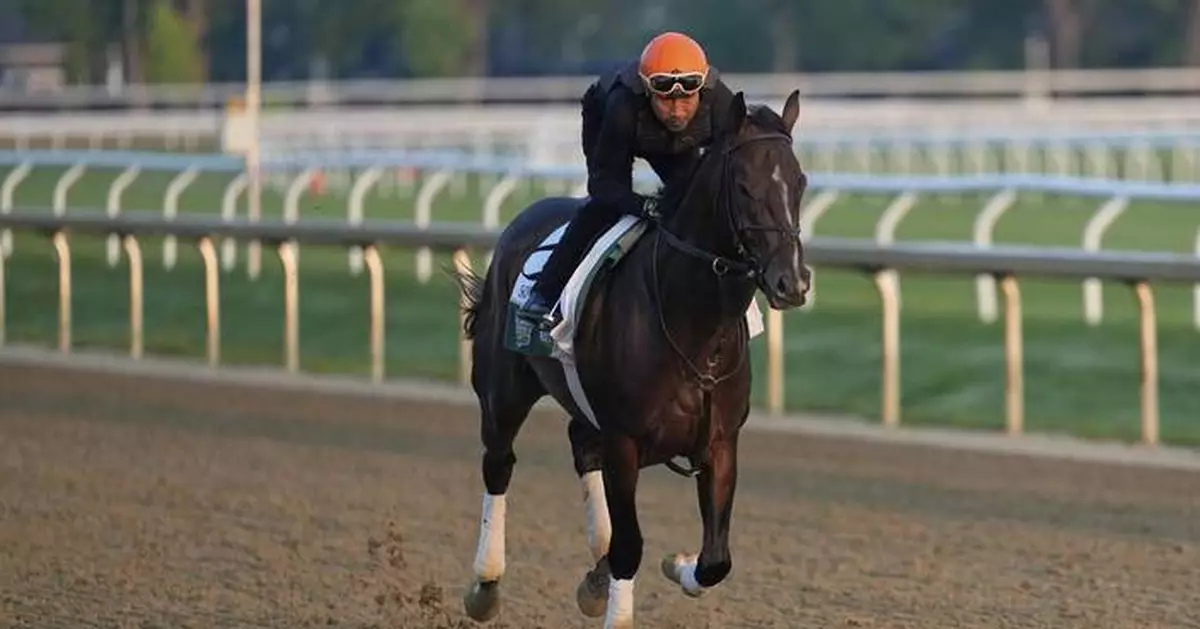
Sovereignty trains before the running of the Belmont Stakes horse race in Saratoga Springs, N.Y., Thursday, June 5, 2025. (AP Photo/Seth Wenig)
Horse racing is one of the oldest sports in the nation, dating back to before the Declaration of Independence. But unlike then, horse racing now has to compete for attention in a crowded sports landscape.
Racetracks like Saratoga have attempted to make the weekend a spectacle, with bands and activities throughout the races in hopes of showing the greatness of horse racing and what a day at the track looks like.
“It’s a great day out, lots of excitement,” said Michael Banahan of Godolphin, who owns Kentucky Derby winner and Belmont contender Sovereignty. “There are a lot of things that go on during the race week, as well. … I think just some people that hadn’t seen that before are beginning to enjoy that."
The outreach extends beyond the track. Places like America's Best Racing are working to educate casual fans about everything from betting to how well horses are taken care of and what to expect on race day.
It has connected with celebrities and influencers to get them involved in horse racing. That most recently included TikTok star Griffin Johnson, who was given a small ownership stake in Derby and Preakness horse Sandman.
Johnson showed himself getting ready for the races, bathing Sandman and showing what the colt does on his off day. Through this, the combined accounts of ABR and Johnson totaled 268 million-plus impressions and 111 million views.
“It’s great to have another young horse racing fan in the room,” said ABR’s director of digital marketing, Rachel Miller. "But, obviously, the same formula isn’t going to work forever. It’s going to reach a point where maybe Griffin’s involvement in racing may stall out or Sandman’s not racing anymore. There are just so many unknown variables, especially in this sport, and that’s one of the harder sells.”
There’s another option to draw more viewers, but it’s controversial.
Ever since Sovereignty didn’t run in the Preakness Stakes, forfeiting a shot at the Triple Crown to rest up for the Belmont, there have been conversations about spreading out the three legs beyond the current gap of two weeks, then three weeks.
Banahan believes spacing out the legs for more rest could attract higher-caliber horses, with more of a chance of the Kentucky Derby winner running, raising interest.
“I’m not too sure if that’ll be the case or not,” Banahan said. “I think the quality of racing is probably what draws people in. I think if we get better horses in all those races, I think they’ll get the casual to tune into those as well. Good competition, good horses in there, that happens by having a little more time between to rest. That’ll be good for us.”
Not everyone agrees that extending the time in between races would increase viewership. Trainer Chad Brown, who has Hill Road in the Belmont, thinks extending the time in between races actually will hurt the Triple Crown.
“I think if you start spreading it out, you run the risk of losing everyone’s attention, too,” Brown said. “That’s a long time for everyone to be invested in watching how this turns out. I think that the average sports fan moves on from sport to sport throughout the year. I think we have to be happy that we have some of them just for the Triple Crown, even if we can’t get them all the way through the bigger stuff. I think extending events runs risks for that.”
AP horse racing: https://apnews.com/hub/horse-racing
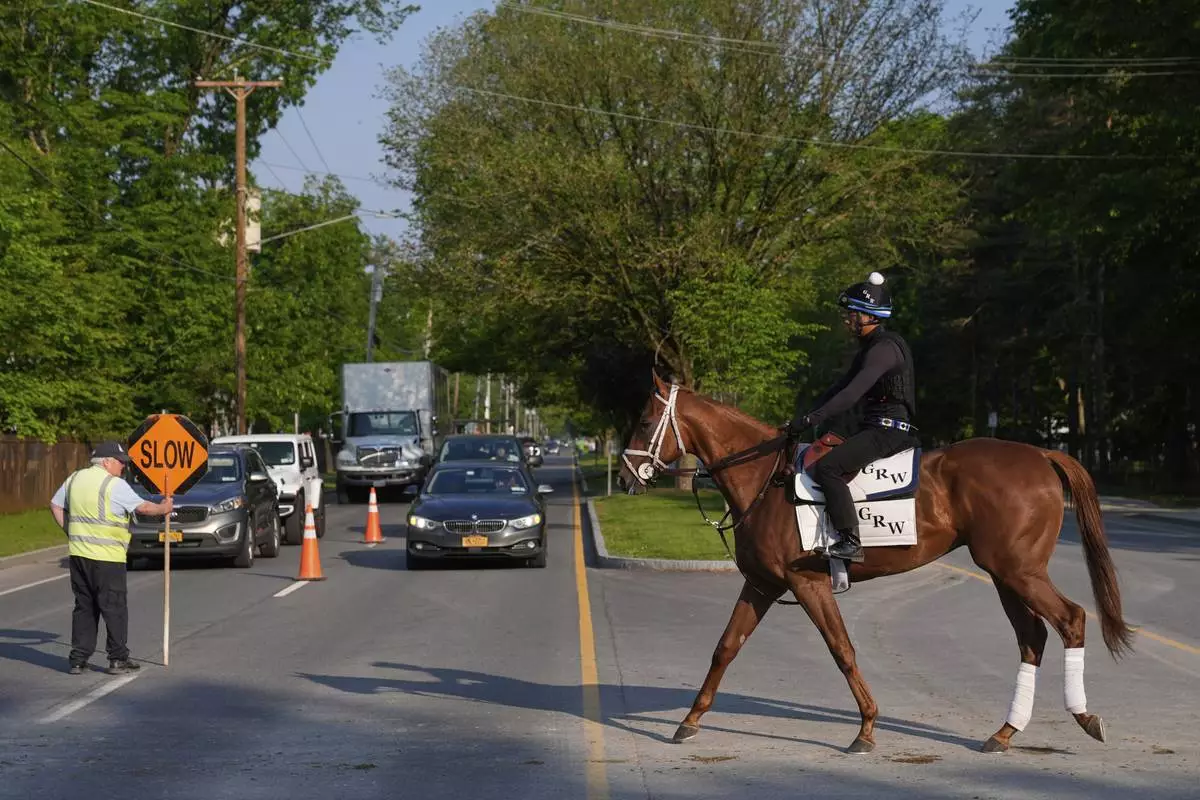
Car traffic is halted so a horse can cross the street at Saratoga Race Track in Saratoga Springs, N.Y., Thursday, June 5, 2025. (AP Photo/Seth Wenig)
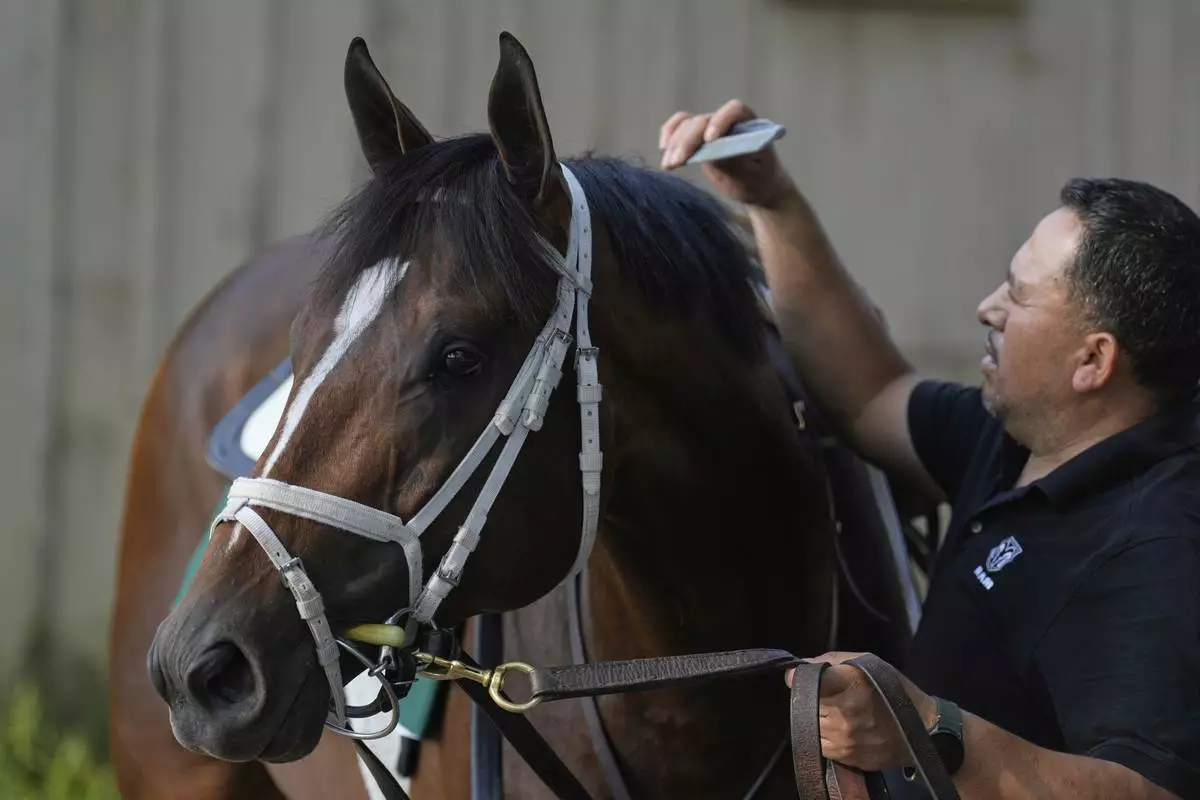
Uncaged is groomed at the Saratoga Race Track, before Saturday's running of the Belmont Stakes horse race, in Saratoga Springs, N.Y., Thursday, June 5, 2025. (AP Photo/Seth Wenig)
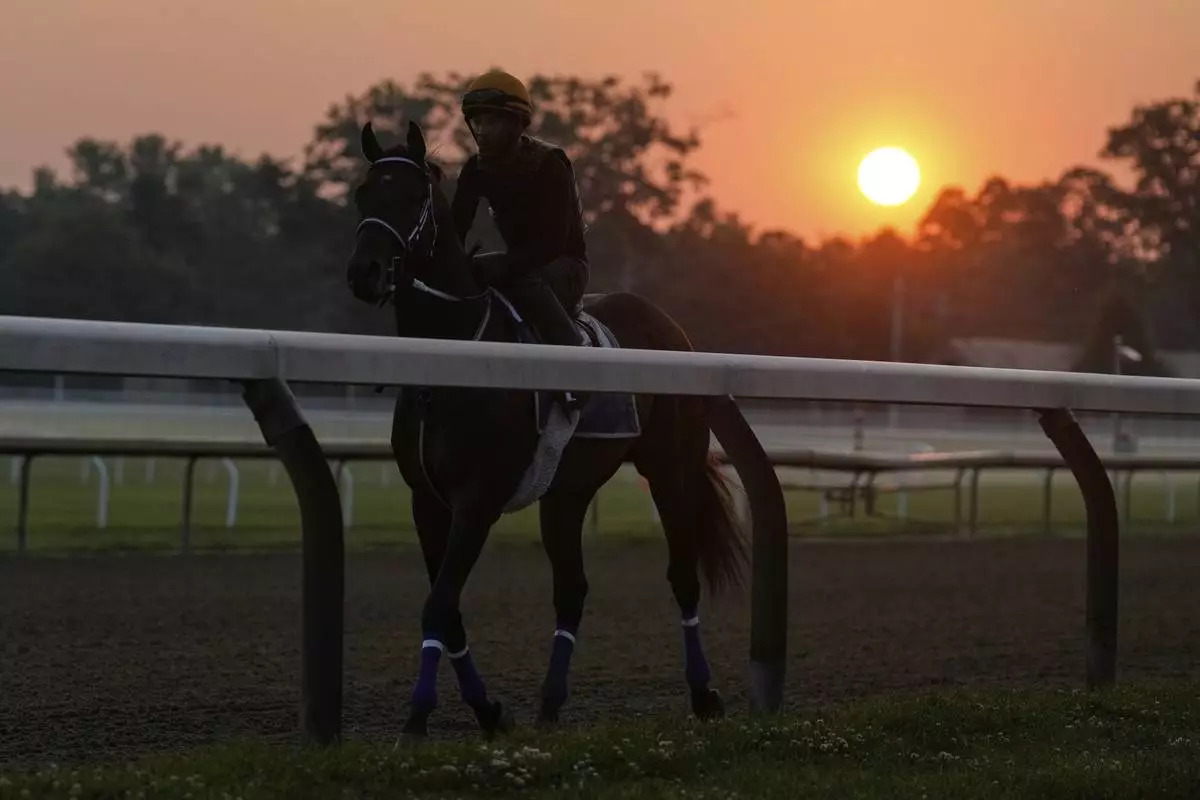
The sun rises over training horses at the Saratoga Race Track, before running of the Belmont Stakes horse race, in Saratoga Springs, N.Y., Thursday, June 5, 2025. (AP Photo/Seth Wenig)
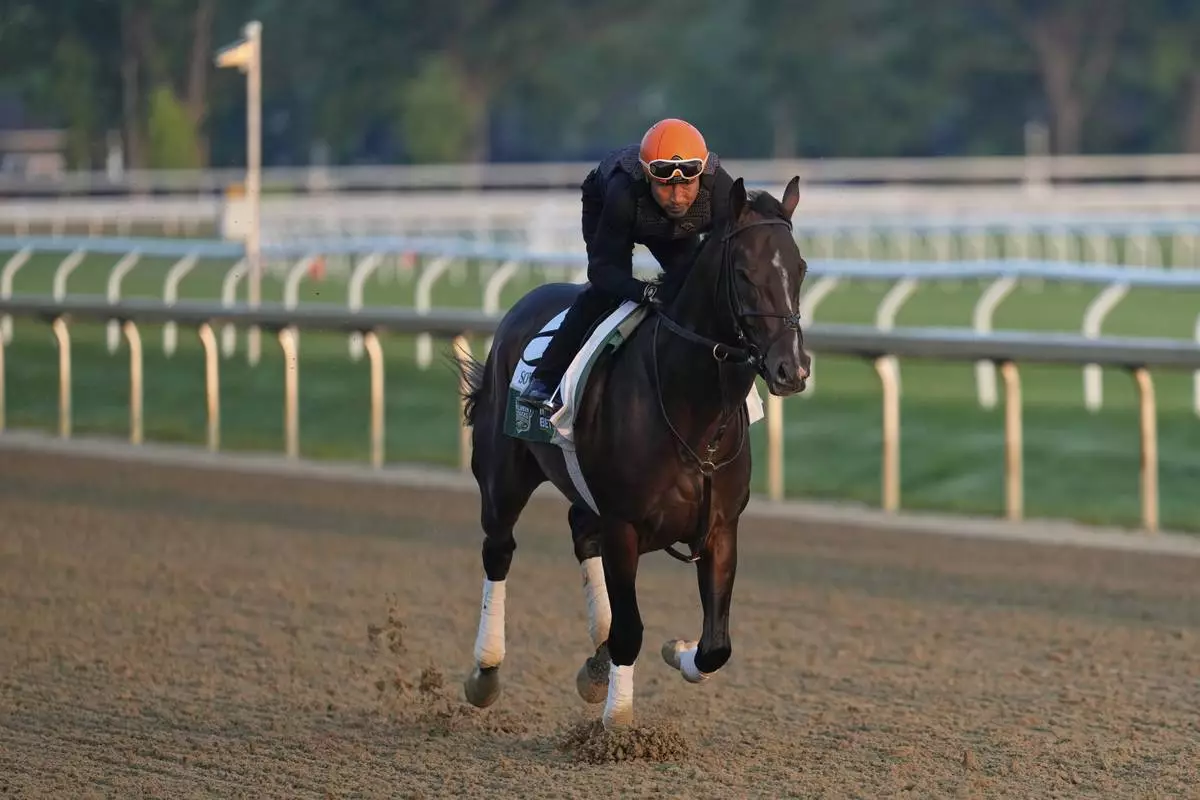
Sovereignty trains before the running of the Belmont Stakes horse race in Saratoga Springs, N.Y., Thursday, June 5, 2025. (AP Photo/Seth Wenig)
HAVANA (AP) — As U.S. seizures of Venezuela-linked oil tankers surge, concerns grow in Cuba about whether the island’s government and economy will survive.
Experts warn that a sudden halt in Venezuelan oil shipments to Cuba could lead to widespread social unrest and mass migration following the stunning U.S. military raid that resulted in the capture of former President Nicolás Maduro.
“I’d be lying if I told you that I don’t want to leave the country,” said 16-year-old Cuban student Amanda Gómez. “We’re all thinking about leaving, from the youngest to the oldest.”
Long before the Jan. 3 attack, severe blackouts were sidelining life in Cuba, where people endured long lines at gas stations and supermarkets amid the island's worst economic crisis in decades.
The lack of Venezuelan oil could push Cuba over the brink, experts say.
“This will take an already dire situation to new extremes,” said Michael Galant, senior research and outreach associate at the Center for Economic and Policy Research in Washington, D.C. “This is what a collapsing economy looks like.”
Galant said he believes that’s the goal of the Trump administration: “to cause such an indiscriminate suffering in the civilian population as to instigate some sort of uprising, regime change.”
“This sort of besiegement of Cuba is very intentional. Will it work from their perspective? I think that the Cuban people have experienced suffering for a very long time, and the Cuban government is very well versed in how to handle these situations,” Galant said. “I think it’s very difficult to predict what will and will not spark actual regime instability. From the perspective of (U.S. Secretary of State Marco ) Rubio, it’s a sort of wait them out. … There’s always a breaking point.”
From 2020 to 2024, Cuba saw its population drop by 1.4 million, which experts largely attribute to migration spurred by the worsening crisis.
Juan Carlos Albizu-Campos, a Cuban economist and demographics expert, noted that while Cubans with means have already left, migration will continue.
“Fuel is a factor that affects everything,” he said. “People are going to feel that they are in worse conditions, and people who hadn’t considered leaving will feel the need to do so.”
At the Spanish embassy in Havana on Friday, Ernesto Macías, a 53-year-old doctor, stood in line behind dozens of people to request a family member visa for his daughter, having already obtained his Spanish citizenship.
“I wouldn’t want Cuba to be invaded or anything like that. I hope it doesn’t happen, but I’m sure people will continue to emigrate because there is no other way,” he said.
Cuba’s gross domestic product has fallen 15% in the last six years, and President Miguel Díaz-Canel noted in December that there was a 4% decrease in 2025 alone.
Although the Cuban economy never fully recovered after the fall of the Soviet Union in the 1990s, it experienced relative prosperity between 2000 and 2019, fueled by a boom in tourism and exports of services, nickel, rum and tobacco.
Then the COVID-19 pandemic hit, and coupled with a radical increase in U.S. sanctions under Trump’s second administration to pressure for political change – stifling every imaginable sector – Cuba’s crisis erupted with force.
Through it all, Cuba remained dependent on Venezuela for oil, receiving an estimated 35,000 barrels a day from the South American country before the U.S. attacked, along with some 5,500 barrels daily from Mexico and roughly 7,500 from Russia, according to Jorge Piñón, of the Energy Institute at the University of Texas at Austin, who tracks shipments using oil tracking services and satellite technology.
Even with all those shipments, blackouts persisted, experts noted.
“An indefinite shutdown of the electrical system, which is no longer so impossible to imagine, can be envisioned under a total suspension of oil shipments from Venezuela, which seems to be the current strategy of the American government,” said Jorge Duany, with the Cuban Research Institute at Florida International University.
“It would lead us to imagine the possibility of mass protests,” he said.
Andy S. Gómez, retired dean of the School of International Studies and senior fellow in Cuban Studies at University of Miami, said that even if protests do occur, he doesn’t envision the downfall of Cuba while Raúl Castro is still alive and running the military.
“Are they concerned? You bet,” Gómez said. “They’re not well armed; their equipment is outdated.”
But Gómez noted that civilians aren’t armed, and that it’s unlikely one of the three factions of Cuba’s army would break with the ruling elite.
“At the end of the day, someone is going to have to take the big pill, and it’s either going to be Díaz-Canel or (Prime Minister) Manuel Marrero Cruz for not being able to solve the problems,” Gómez said.
On Friday, U.S. forces seized their fifth tanker as part of a wider push by Trump’s administration to control the distribution of Venezuela’s oil products globally.
It’s not clear if any of the seized tankers were bound for Cuba, but experts believe any obstruction in the supply line would be a shock given the fragility of the island’s economy.
As the uncertainty continues, Gómez said Cuba only has one card to play with the U.S.: mass migration.
“I don’t think that Cubans are going to provoke the United States at this time,” he said, adding that Cuban authorities “can absolutely control that.”
“Cuban military forces are on high alert,” he said.
Gómez added that even if the worsening crisis does lead to unrest and the ouster of a top government official, that person would likely be replaced by a well-known figure.
“It would just be a continuation of the government,” he said, adding that he doesn’t believe it would bother a majority on the island. “The Cuban people only care about one thing right now, unfortunately….they want to put food on the table, have electricity, have a place to live, have a job and then what do we do about the government.”
Coto reported from San Juan, Puerto Rico. Associated Press reporter Milexsy Durán in Havana contributed to this report.
Follow AP’s coverage of Latin America and the Caribbean at https://apnews.com/hub/latin-america
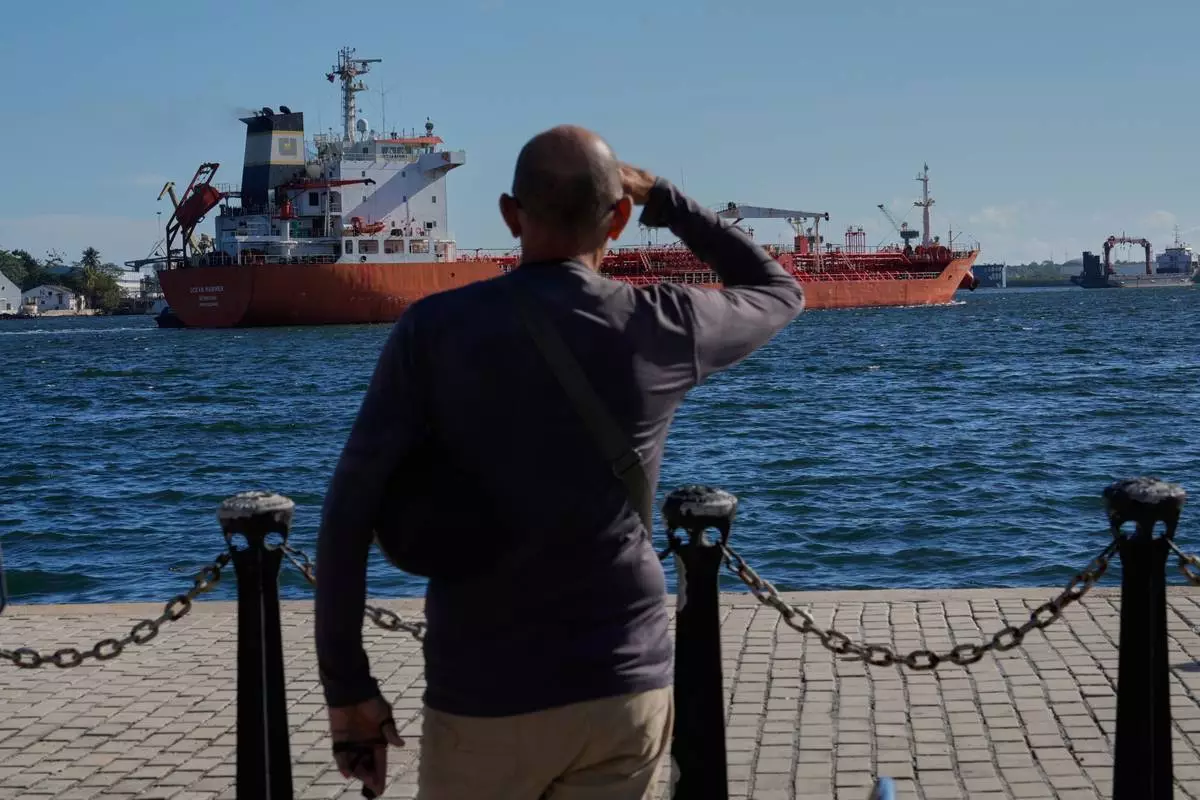
A person watches the oil tanker Ocean Mariner, Monrovia, arrive to the bay in Havana, Cuba, Friday, Jan. 9, 2026. (AP Photo/Ramon Espinosa)