Skip to Content Facebook Feature Image

A battered Cuba braces for aftershocks as US seizures of oil tankers linked to Venezuela surge

News

A battered Cuba braces for aftershocks as US seizures of oil tankers linked to Venezuela surge
News

News

A battered Cuba braces for aftershocks as US seizures of oil tankers linked to Venezuela surge

2026-01-10 13:25 Last Updated At:13:31

HAVANA (AP) — As U.S. seizures of Venezuela-linked oil tankers surge, concerns grow in Cuba about whether the island’s government and economy will survive.

Experts warn that a sudden halt in Venezuelan oil shipments to Cuba could lead to widespread social unrest and mass migration following the stunning U.S. military raid that resulted in the capture of former President Nicolás Maduro.

“I’d be lying if I told you that I don’t want to leave the country,” said 16-year-old Cuban student Amanda Gómez. “We’re all thinking about leaving, from the youngest to the oldest.”

Long before the Jan. 3 attack, severe blackouts were sidelining life in Cuba, where people endured long lines at gas stations and supermarkets amid the island's worst economic crisis in decades.

The lack of Venezuelan oil could push Cuba over the brink, experts say.

“This will take an already dire situation to new extremes,” said Michael Galant, senior research and outreach associate at the Center for Economic and Policy Research in Washington, D.C. “This is what a collapsing economy looks like.”

Galant said he believes that’s the goal of the Trump administration: “to cause such an indiscriminate suffering in the civilian population as to instigate some sort of uprising, regime change.”

“This sort of besiegement of Cuba is very intentional. Will it work from their perspective? I think that the Cuban people have experienced suffering for a very long time, and the Cuban government is very well versed in how to handle these situations,” Galant said. “I think it’s very difficult to predict what will and will not spark actual regime instability. From the perspective of (U.S. Secretary of State Marco ) Rubio, it’s a sort of wait them out. … There’s always a breaking point.”

From 2020 to 2024, Cuba saw its population drop by 1.4 million, which experts largely attribute to migration spurred by the worsening crisis.

Juan Carlos Albizu-Campos, a Cuban economist and demographics expert, noted that while Cubans with means have already left, migration will continue.

“Fuel is a factor that affects everything,” he said. “People are going to feel that they are in worse conditions, and people who hadn’t considered leaving will feel the need to do so.”

At the Spanish embassy in Havana on Friday, Ernesto Macías, a 53-year-old doctor, stood in line behind dozens of people to request a family member visa for his daughter, having already obtained his Spanish citizenship.

“I wouldn’t want Cuba to be invaded or anything like that. I hope it doesn’t happen, but I’m sure people will continue to emigrate because there is no other way,” he said.

Cuba’s gross domestic product has fallen 15% in the last six years, and President Miguel Díaz-Canel noted in December that there was a 4% decrease in 2025 alone.

Although the Cuban economy never fully recovered after the fall of the Soviet Union in the 1990s, it experienced relative prosperity between 2000 and 2019, fueled by a boom in tourism and exports of services, nickel, rum and tobacco.

Then the COVID-19 pandemic hit, and coupled with a radical increase in U.S. sanctions under Trump’s second administration to pressure for political change – stifling every imaginable sector – Cuba’s crisis erupted with force.

Through it all, Cuba remained dependent on Venezuela for oil, receiving an estimated 35,000 barrels a day from the South American country before the U.S. attacked, along with some 5,500 barrels daily from Mexico and roughly 7,500 from Russia, according to Jorge Piñón, of the Energy Institute at the University of Texas at Austin, who tracks shipments using oil tracking services and satellite technology.

Even with all those shipments, blackouts persisted, experts noted.

“An indefinite shutdown of the electrical system, which is no longer so impossible to imagine, can be envisioned under a total suspension of oil shipments from Venezuela, which seems to be the current strategy of the American government,” said Jorge Duany, with the Cuban Research Institute at Florida International University.

“It would lead us to imagine the possibility of mass protests,” he said.

Andy S. Gómez, retired dean of the School of International Studies and senior fellow in Cuban Studies at University of Miami, said that even if protests do occur, he doesn’t envision the downfall of Cuba while Raúl Castro is still alive and running the military.

“Are they concerned? You bet,” Gómez said. “They’re not well armed; their equipment is outdated.”

But Gómez noted that civilians aren’t armed, and that it’s unlikely one of the three factions of Cuba’s army would break with the ruling elite.

“At the end of the day, someone is going to have to take the big pill, and it’s either going to be Díaz-Canel or (Prime Minister) Manuel Marrero Cruz for not being able to solve the problems,” Gómez said.

On Friday, U.S. forces seized their fifth tanker as part of a wider push by Trump’s administration to control the distribution of Venezuela’s oil products globally.

It’s not clear if any of the seized tankers were bound for Cuba, but experts believe any obstruction in the supply line would be a shock given the fragility of the island’s economy.

As the uncertainty continues, Gómez said Cuba only has one card to play with the U.S.: mass migration.

“I don’t think that Cubans are going to provoke the United States at this time,” he said, adding that Cuban authorities “can absolutely control that.”

“Cuban military forces are on high alert,” he said.

Gómez added that even if the worsening crisis does lead to unrest and the ouster of a top government official, that person would likely be replaced by a well-known figure.

“It would just be a continuation of the government,” he said, adding that he doesn’t believe it would bother a majority on the island. “The Cuban people only care about one thing right now, unfortunately….they want to put food on the table, have electricity, have a place to live, have a job and then what do we do about the government.”

Coto reported from San Juan, Puerto Rico. Associated Press reporter Milexsy Durán in Havana contributed to this report.

Follow AP’s coverage of Latin America and the Caribbean at https://apnews.com/hub/latin-america
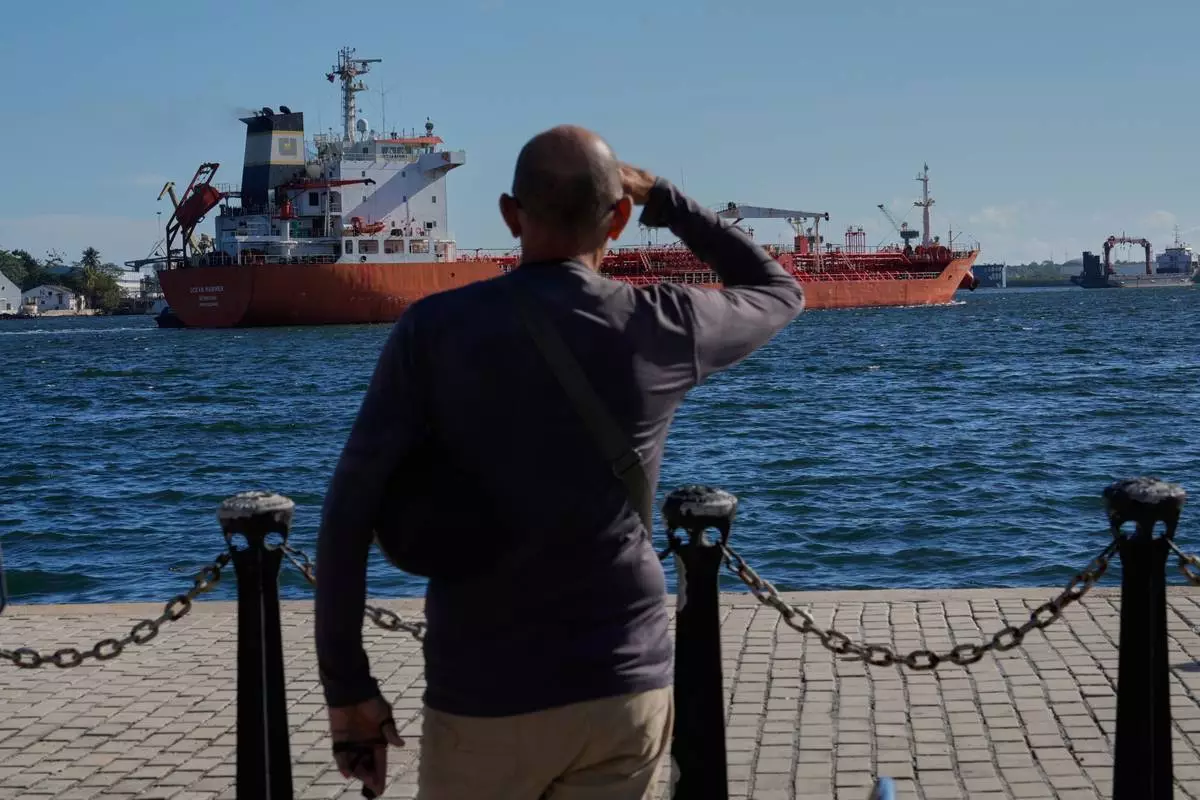
A person watches the oil tanker Ocean Mariner, Monrovia, arrive to the bay in Havana, Cuba, Friday, Jan. 9, 2026. (AP Photo/Ramon Espinosa)
A person watches the oil tanker Ocean Mariner, Monrovia, arrive to the bay in Havana, Cuba, Friday, Jan. 9, 2026. (AP Photo/Ramon Espinosa)
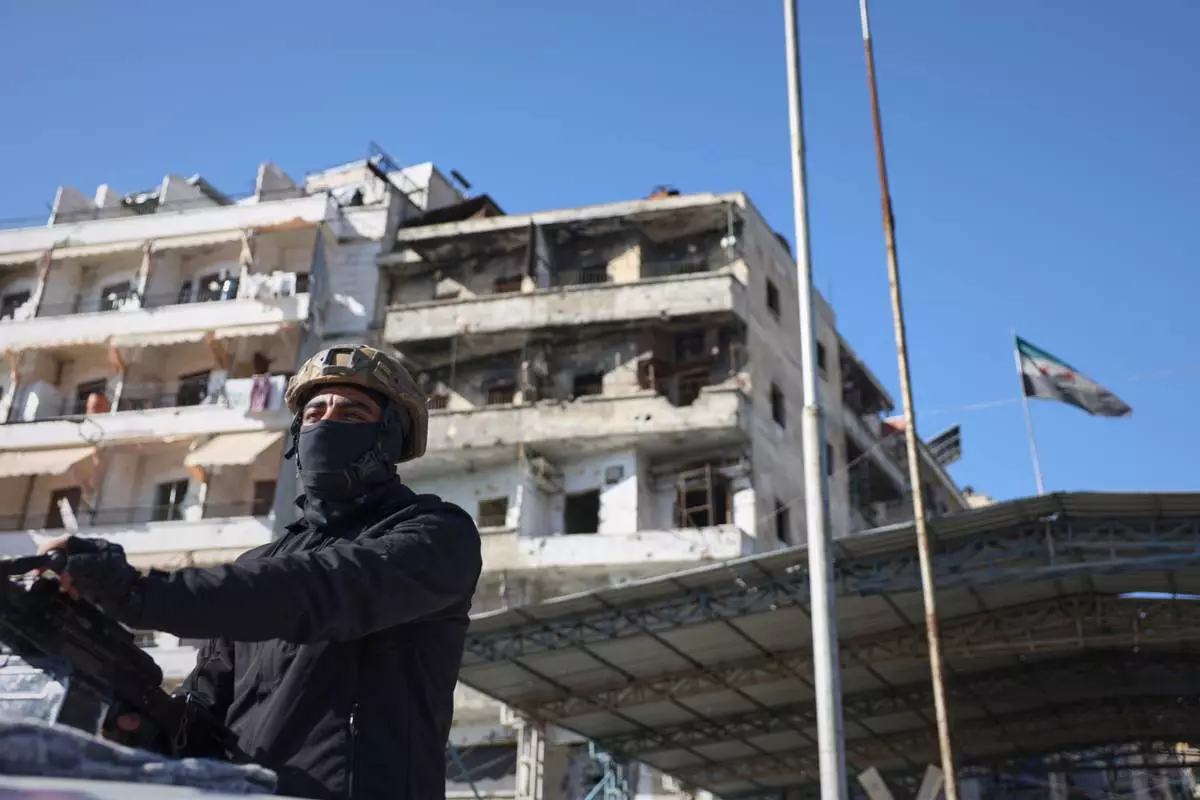
ALEPPO, Syria (AP) — Syrian security forces began deploying Saturday in a neighborhood in the northern city of Aleppo after days of intense clashes with Kurdish fighters that killed and wounded dozens.

During the day, several drone strikes were reported in Aleppo, Syria's largest city, leading authorities to stop civilian flights at Aleppo International Airport until further notice, state TV said.

The fighting between the two sides is the most intense since the fall of then-President Bashar Assad in December 2024. At least 22 people were killed in five days of clashes and more than 140,000 were displaced.

U.S. Special Envoy to Syria Tom Barrack held talks in Damascus Saturday with top officials, including President Ahmad al-Sharaa, and called on all parties to cease hostilities and return to dialogue.

“Violence risks undermining the progress achieved since the fall of the Assad regime and invites external interference that serves no party’s interests,” Barrack said in comments posted on X. “We urge all parties to exercise maximum restraint, immediately cease hostilities, and return to dialogue,” he added, saying that fighting undermines the deal reached in March between the government and the Kurdish leadership.

He said recent developments in Aleppo were “deeply concerning,” and Washington's objective “remains a sovereign, unified Syria — at peace with itself and its neighbors — where equality, justice, and opportunity are extended to all its people.”

Syria’s state news agency SANA reported that two Kurdish fighters blew themselves up while surrounded by security forces without inflicting casualties, as gunfire was still heard in the neighborhood of Sheikh Maqsoud around noon Saturday.

On Saturday afternoon, an explosive drone hit the Aleppo Governorate building shortly after two Cabinet ministers and a local official held a news conference on the developments in the city, state TV said. There was no immediate word on casualties.

Syria’s state TV aired the footage, which allegedly showed the drone exploding in the building, and blamed Kurdish fighters for the attack. The main Kurdish-led force in the country denied the reports, saying its fighters did not attack a civilian target.

From the early hours, Syrian security forces were sweeping the neighborhood after calling on residents to stay home for their own safety.

Hundreds of people who fled the neighborhood days earlier were waiting at Sheikh Maqsoud’s entrances to be allowed in once the military operations are over.

Clashes broke out Tuesday in the predominantly Kurdish northern neighborhoods of Sheikh Maqsoud, Achrafieh and Bani Zaid, after the government and the Syrian Democratic Forces, the main Kurdish-led force in the country, failed to make progress on how to merge their forces into the national army. Security forces have since captured Achrafieh and Bani Zaid.

Kurdish forces said at least 12 civilians were killed in the Kurdish-majority neighborhoods in the five days of fighting, while government officials reported at least 10 civilians were killed in the surrounding government-controlled areas.

Syria’s Information Minister Hamza al-Mustafa told state TV that Kurdish fighters used civilian buildings including hospitals and clinics during the fighting. Each side has accused the other of starting the violence and of deliberately targeting civilian neighborhoods and infrastructure, including ambulance crews and hospitals.

The Kurdish-led Democratic Autonomous Administration of North and East Syria, which controls much of Syria’s northeast, said that security forces targeted Khaled Fajr Hospital in Sheikh Maqsoud, putting the lives of patients and paramedics in danger. It called on the international community to intervene to force government forces to stop shelling.

State TV reported that at least one security member was wounded when a drone fired by the SDF struck the neighborhood.

Associated Press journalists said bursts of gunfire could be heard as government-deployed drones flew over Sheikh Maqsoud.

The Syrian military declared the neighborhood a “closed military zone” since Friday night as it launched a “clearing operation.”

On Friday, Barrack discussed the developments in Syria with Jordan's Foreign Minister Ayman Safadi in Amman. The U.S. envoy said Jordan offered support to efforts aimed at consolidating the ceasefire and the peaceful withdrawal of Kurdish fighters from Aleppo.

Associated Press writer Bassem Mroue contributed to this report from Beirut.

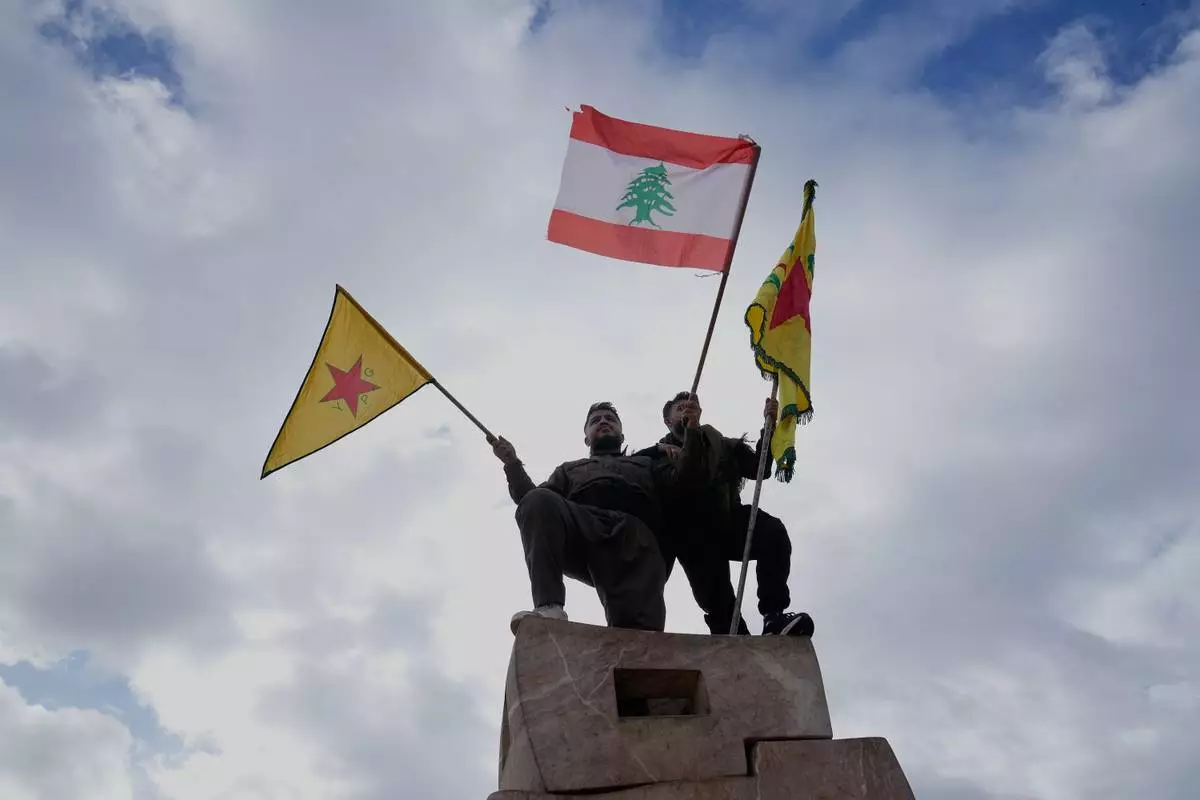
Kurdish citizens wave their group and Lebanese flags during a protest against the Syrian government military operation in Aleppo, in front the United Nations headquarters in Beirut, Lebanon, Saturday, Jan. 10, 2026. (AP Photo/Hussein Malla)

Kurdish citizens wave their group and Lebanese flags during a protest against the Syrian government military operation in Aleppo, in front the United Nations headquarters in Beirut, Lebanon, Saturday, Jan. 10, 2026. (AP Photo/Hussein Malla)

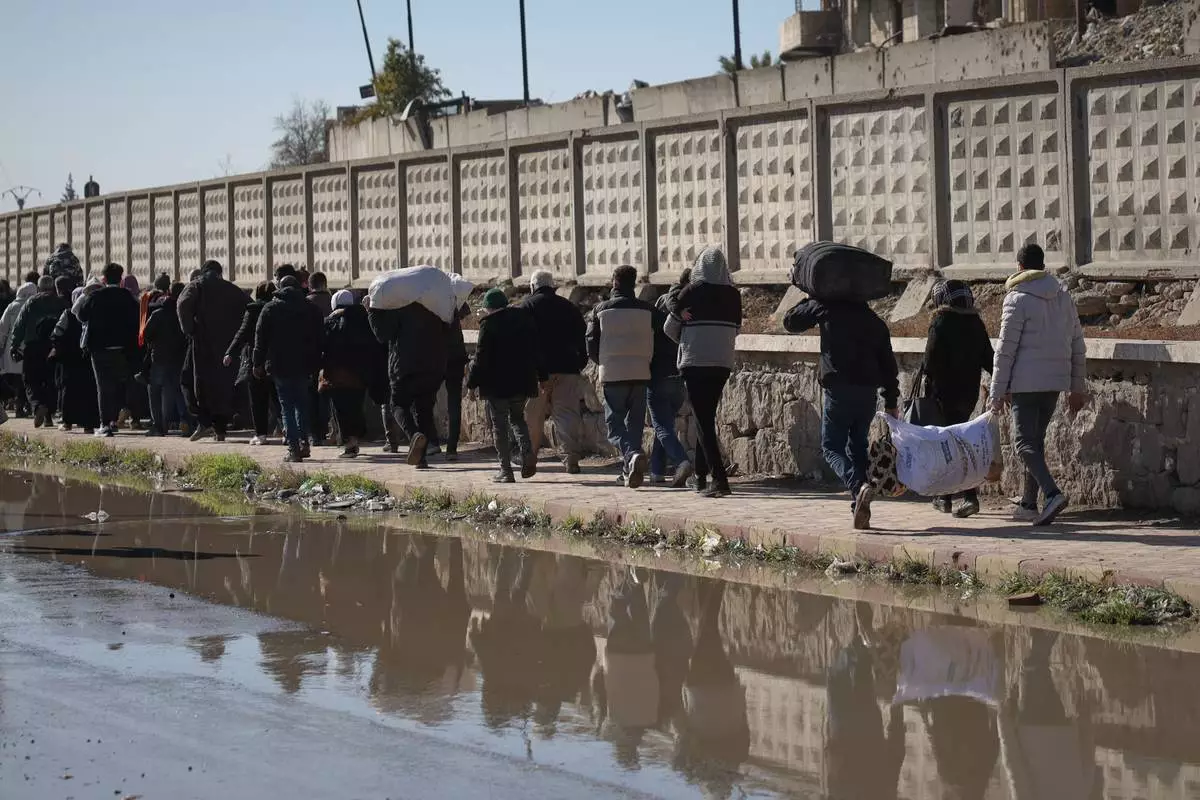
Civilians evacuate an area of the Sheikh Maqsoud neighborhood, where clashes between government forces and Kurdish fighters have been taking place in the northern city of Aleppo, Syria, Saturday, Jan. 10, 2026. (AP Photo/Omar Albam)

Civilians evacuate an area of the Sheikh Maqsoud neighborhood, where clashes between government forces and Kurdish fighters have been taking place in the northern city of Aleppo, Syria, Saturday, Jan. 10, 2026. (AP Photo/Omar Albam)

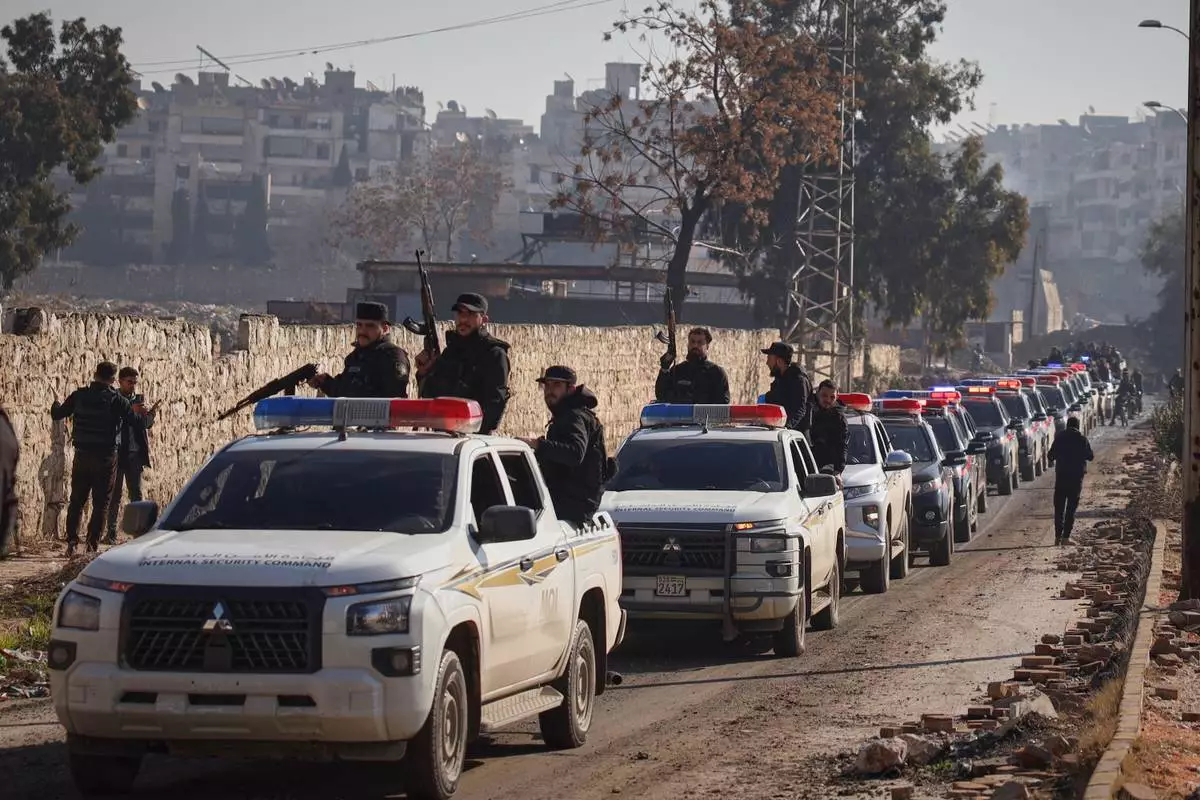
A Syrian police convoy secures the area just outside the Sheikh Maqsoud neighborhood, where clashes between government forces and Kurdish fighters have been taking place in the northern city of Aleppo, Syria, Saturday, Jan. 10, 2026. (AP Photo/Omar Albam)

A Syrian police convoy secures the area just outside the Sheikh Maqsoud neighborhood, where clashes between government forces and Kurdish fighters have been taking place in the northern city of Aleppo, Syria, Saturday, Jan. 10, 2026. (AP Photo/Omar Albam)

A Syrian police convoy gathers in the Sheikh Maqsoud neighborhood, where clashes between government forces and Kurdish fighters have been taking place in the northern city of Aleppo, Syria, Saturday, Jan. 10, 2026. (AP Photo/Omar Albam)

A Syrian police convoy gathers in the Sheikh Maqsoud neighborhood, where clashes between government forces and Kurdish fighters have been taking place in the northern city of Aleppo, Syria, Saturday, Jan. 10, 2026. (AP Photo/Omar Albam)

Recommended Articles