PROVIDENCE, R.I. (AP) — President Donald Trump’s pick to be the next U.S. surgeon general has repeatedly said the nation’s medical, health and food systems are corrupted by special interests and people out to make a profit at the expense of Americans’ health.
Yet as Dr. Casey Means has criticized scientists, medical schools and regulators for taking money from the food and pharmaceutical industries, she has promoted dozens of health and wellness products — including specialty basil seed supplements, a blood testing service and a prepared meal delivery service — in ways that put money in her own pocket.
A review by The Associated Press found Means, who has carved out a niche in the wellness industry, set up deals with an array of businesses.
In her newsletter, on her social media accounts, on her website, in her book and during podcast appearances, the entrepreneur and influencer has at times failed to disclose that she could profit or benefit in other ways from sales of products she recommends. In some cases, she promoted companies in which she was an investor or adviser without consistently disclosing the connection, the AP found.
Means, 37, has said she recommends products that she has personally vetted and uses herself. She is far from the only online creator who doesn’t always follow federal transparency rules that require influencers to disclose when they have a “material connection” to a product they promote.
Still, legal and ethics experts said those business entanglements raise concerns about conflicting interests for an aspiring surgeon general, a role responsible for giving Americans the best scientific information on how to improve their health.
“I fear that she will be cultivating her next employers and her next sponsors or business partners while in office,” said Jeff Hauser, executive director of the Revolving Door Project, a progressive ethics watchdog monitoring executive branch appointees.
The nomination, which comes amid a whirlwind of Trump administration actions to dismantle the government’s public integrity guardrails, also has raised questions about whether Levels, a company Means co-founded that sells subscriptions for devices that continuously monitor users’ glucose levels, could benefit from this administration’s health guidance and policy.
Though scientists debate whether continuous glucose monitors are beneficial for people without diabetes, U.S. Health Secretary Robert F. Kennedy Jr. has promoted their use as a precursor to making certain weight-loss drugs available to patients.
The aspiring presidential appointee has built her own brand in part by criticizing doctors, scientists and government officials for being “bought off” or “corrupt” because of ties to industry.
Means' use of affiliate marketing and other methods of making money from her recommendations for supplements, medical tests and other health and dietary products raise questions about the extent to which she is influenced by a different set of special interests: those of the wellness industry.
Means earned her medical degree from Stanford University, but she dropped out of her residency program in Oregon in 2018, and her license to practice is inactive. She has grown her public profile in part with a compelling origin story that seeks to explain why she left her residency and conventional medicine.
“During my training as a surgeon, I saw how broken and exploitative the healthcare system is and left to focus on how to keep people out of the operating room,” she wrote on her website.
Means turned to alternative approaches to address what she has described as widespread metabolic dysfunction driven largely by poor nutrition and an overabundance of ultra-processed foods. She co-founded Levels, a nutrition, sleep and exercise-tracking app that can also give users insights from blood tests and continuous glucose monitors. The company charges $199 per year for an app subscription and an additional $184 per month for glucose monitors.
Means has argued that the medical system is incentivized not to look at the root causes of illness but instead to maintain profits by keeping patients sick and coming back for more prescription drugs and procedures.
“At the highest level of our medical institutions, there are conflicts of interest and corruption that are actually making the science that we’re getting not as accurate and not as clean as we’d want it,” she said on Megyn Kelly's podcast last year.
But even as Means decries the influence of money on science and medicine, she has made her own deals with business interests.
During the same Megyn Kelly podcast, Means mentioned a frozen prepared food brand, Daily Harvest. She promoted that brand in a book she published last year. What she didn’t mention in either instance: Means had a business relationship with Daily Harvest.
Influencer marketing has expanded beyond the beauty, fashion and travel sectors to “encompass more and more of our lives,” said Emily Hund, author of “The Influencer Industry: The Quest for Authenticity on Social Media.”
With more than 825,000 followers on Instagram and a newsletter that she has said reached 200,000 subscribers, Means has a direct line into the social media feeds and inboxes of an audience interested in health, nutrition and wellness.
Affiliate marketing, brand partnerships and similar business arrangements are growing more popular as social media becomes increasingly lucrative for influencers, especially among younger generations. Companies might provide a payment, free or discounted products or other benefits to the influencer in exchange for a post or a mention. But most consumers still don’t realize that a personality recommending a product might make money if people click through and buy, said University of Minnesota professor Christopher Terry.
“A lot of people watch those influencers, and they take what those influencers say as gospel,” said Terry, who teaches media advertising and internet law. Even his own students don’t understand that influencers might stand to benefit from sales of the products they endorse, he added.
Many companies, including Amazon, have affiliate marketing programs in which people with substantial social media followings can sign up to receive a percentage of sales or some other benefit when someone clicks through and buys a product using a special individualized link or code shared by the influencer.
Means has used such links to promote various products sold on Amazon. Among them are books, including the one she co-wrote, “Good Energy"; a walking pad; soap; body oil; hair products; cardamom-flavored dental floss; organic jojoba oil; a razor set; reusable kitchen products; sunglasses; a sleep mask; a silk pillowcase; fitness and sleep trackers; protein powder and supplements.
She also has shared links to products sold by other companies that included “affiliate” or “partner” coding, indicating she has a business relationship with the companies. The products include an AI-powered sleep system and Daily Harvest, for which she curated a “metabolic health collection.”
On a “My Faves” page that was taken down from her website shortly after Trump picked her, Means wrote that some links “are affiliate links and I make a small percentage if you buy something after clicking them.”
It's not clear how much money Means has earned from her affiliate marketing, partnerships and other agreements. Daily Harvest did not return messages seeking comment, and Means said she could not comment on the record during the confirmation process.
Means has raised concerns that scientists, regulators and doctors are swayed by the influence of industry, oftentimes pointing to public disclosures of their connections. In January, she told the Kristin Cavallari podcast “Let’s Be Honest” that “relationships are influential.”
“There’s huge money, huge money going to fund scientists from industry," Means said. "We know that when industry funds papers, it does skew outcomes.”
In November, on a podcast run by a beauty products brand, Primally Pure, she said it was “insanity” to have people connected to the processed food industry involved in writing food guidelines, adding, “We need unbiased people writing our guidelines that aren’t getting their mortgage paid by a food company.”
On the same podcast, she acknowledged supplement companies sponsor her newsletter, adding, “I do understand how it’s messy.”
Influencers who endorse or promote products in exchange for payment or something else of value are required by the Federal Trade Commission to make a clear and conspicuous disclosure of any business, family or personal relationship. While Means did provide disclosures about newsletter sponsors, the AP found in other cases Means did not always tell her audience when she had a connection to the companies she promoted. For example, a “Clean Personal & Home Care Product Recommendations” guide she links to from her website contains two dozen affiliate or partner links and no disclosure that she could profit from any sales.
Means has said she invested in Function Health, which provides subscription-based lab testing for $500 annually. Of the more than a dozen online posts the AP found in which Means mentioned Function Health, more than half did not disclose she had any affiliation with the company.
Means also listed the supplement company Zen Basil as a company for which she was an “Investor and/or Advisor.” The AP found posts on Instagram, X and on Facebook where Means promoted its products without disclosing the relationship.
Though the “About” page on her website discloses an affiliation with both companies, that’s not enough, experts said. She is required to disclose any material connection she has to a company anytime she promotes it.
Representatives for Function Health did not return messages seeking comment through their website and executives' LinkedIn profiles. Zen Basil's founder, Shakira Niazi, did not answer questions about Means' business relationship with the company or her disclosures of it. She said the two had known each other for about four years and called Means' advice “transformational,” saying her teachings reversed Niazi's prediabetes and other ailments.
“I am proud to sponsor her newsletter through my company,” Niazi said in an email.
While the disclosure requirements are rarely enforced by the FTC, Means should have been informing her readers of any connections regardless of whether she was violating any laws, said Olivier Sylvain, a Fordham Law School professor who was previously a senior adviser to the FTC chair.
“What you want in a surgeon general, presumably, is someone who you trust to talk about tobacco, about social media, about caffeinated alcoholic beverages, things that present problems in public health,” Sylvain said, adding, “Should there be any doubt about claims you make about products?”
Means isn’t the first surgeon general nominee whose financial entanglements have raised eyebrows.
Jerome Adams, who served as surgeon general from 2017 to 2021, filed federal disclosure forms that showed he invested in several health technology, insurance and pharmaceutical companies before taking the job — among them Pfizer, Mylan and UnitedHealth Group. He also invested in the food and drink giant Nestle.
He divested those stocks when he was confirmed for the role and pledged that he and his immediate family would not acquire financial interest in certain industries regulated by the Food and Drug Administration.
Vivek Murthy, who served as surgeon general twice, under Presidents Barack Obama and Joe Biden, made more than $2 million in COVID-19-related speaking and consulting fees from Carnival, Netflix, Estee Lauder and Airbnb between holding those positions. He pledged to recuse himself from matters involving those parties for a period of time.
Means has not yet gone through a Senate confirmation hearing and has not yet announced the ethical commitments she will make for the role.
Hund said that as influencer marketing becomes more common, it is raising more ethical questions, such as what past influencers who enter government should do to avoid the appearance of a conflict.
Other administration officials, including Homeland Security Secretary Kristi Noem and Centers for Medicare and Medicaid Services Administrator Dr. Mehmet Oz, have also promoted companies on social media without disclosing their financial ties.
“This is like a learning moment in the evolution of our democracy,” Hund said. “Is this a runaway train that we just have to get on and ride, or is this something that we want to go differently?”
Swenson reported from New York.
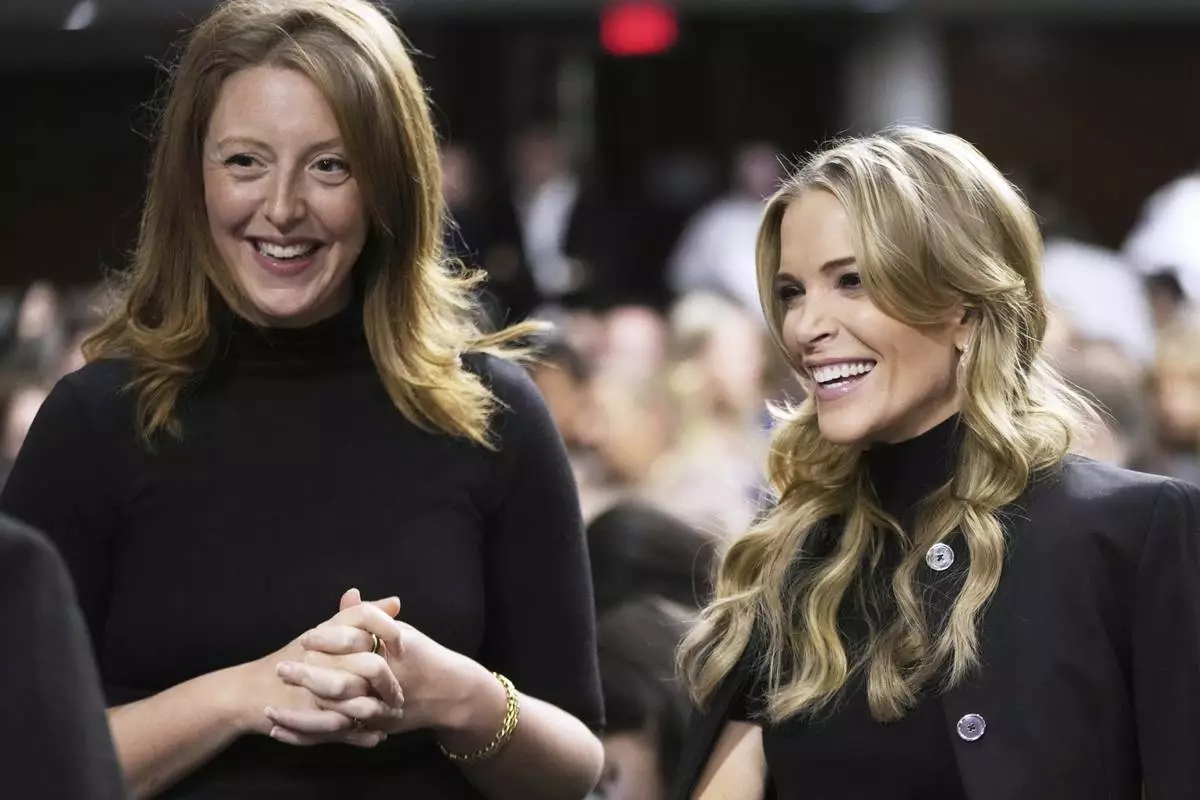
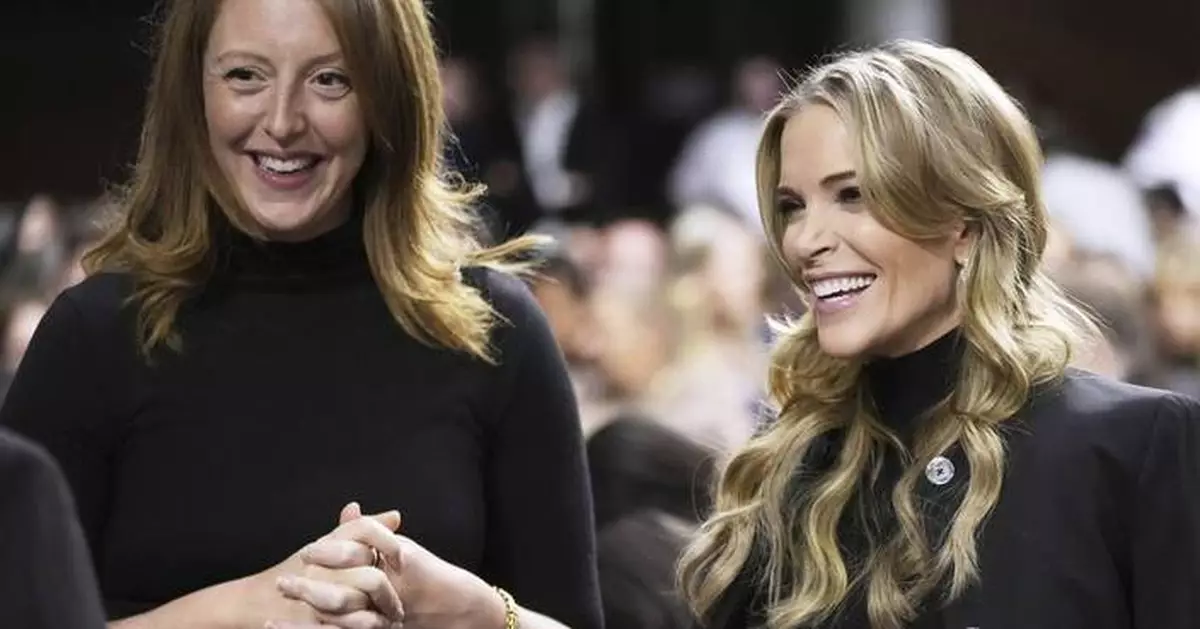
FILE - Dr. Casey Means, a wellness influencer, left, and journalist Megyn Kelly, attend a confirmation hearing for Robert F. Kennedy Jr. for the Secretary of Health and Human Services post, at the Capitol in Washington, Jan. 29, 2025. (AP Photo/Ben Curtis, File)