The ongoing 2025 Shanghai International Carbon Neutrality Expo in Technologies, Products, and Achievements is geared towards providing Chinese enterprises with practical solutions to overcome challenges in the global expansion of their green products. The three-day expo at the Shanghai New International Expo Center showcases a variety of forums and trade matchmaking sessions, while presenting a diverse array of cutting-edge green and low-carbon technologies.
A key highlight at the expo is Shanghai Technology Exchange's latest product, which provides quick valuations for enterprises' green technologies using big data. Qualifying technologies are highlighted in green, and their real-time valuations are displayed. "This product enables quick valuations for green technologies and fosters connections with financial and trading scenarios, thereby facilitating synergy between the green financial system and the industrial system," said Jiang Chen, assistant to the president of Shanghai Technology Exchange. Shanghai Technology Exchange has previously facilitated over 10 billion yuan (around 1.4 billion U.S. dollars) in intellectual property pledge financing, with a significant portion involving green technologies. This latest product establishes a dedicated green-tech financing platform. Spanning an area of 40,000 square meters, the expo has attracted the participation of over 300 well-known enterprises from 15 countries and regions, including Germany, the Netherlands, Japan, Sweden, Spain, and Britain.
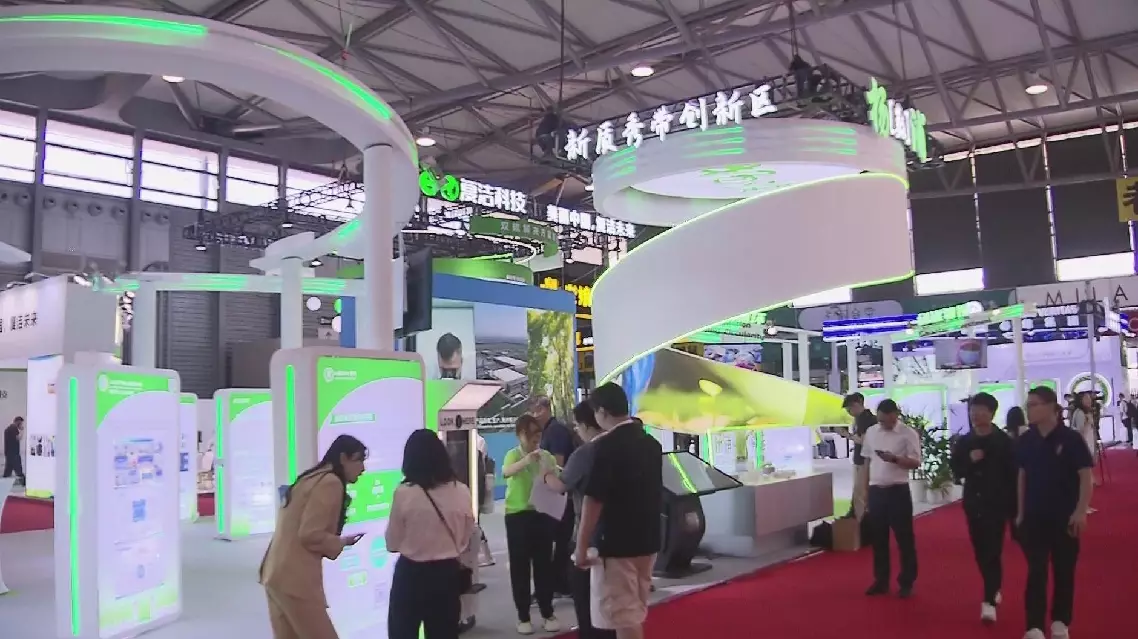
Carbon Neutrality Expo in Shanghai propels China's green tech for global expansion
The year 2026 marks the 65th anniversary of diplomatic relations between China and Laos as well as the Year of China-Laos Friendship, presenting important opportunities for the development of bilateral relations, Chinese Foreign Minister Wang Yi said on Tuesday.
Wang, also a member of the Political Bureau of the Communist Party of China Central Committee, made the remarks when meeting with Lao Deputy Prime Minister Saleumxay Kommasith, who is visiting China as special envoy of Thongloun Sisoulith, general secretary of the Lao People's Revolutionary Party (LPRP) Central Committee and president of Laos.
Wang welcomed Saleumxay to visit China, saying the visit fully reflects the high level of the China-Laos community with a shared future and will further enhance the strategic mutual trust between the two sides.
Wang called on both sides to strengthen inter-governmental institutional dialogues, enhance the quality and efficiency of China-Laos railway connectivity, jointly build an upgraded version of the China-Laos Economic Corridor, and deliver more tangible outcomes in advancing regional connectivity.
China will leverage its strengths to align development strategies with Laos, boost whole-industry-chain cooperation in minerals, electricity and other sectors, deepen human resources development, and support Laos in economic transformation and industrial growth, he said.
Saleumxay, also a member of the Political Bureau of the LPRP Central Committee, said Laos is willing to maintain close high-level exchanges with China, jointly hold successful celebration activities for the 65th anniversary of diplomatic relations, and deepen cooperation in areas such as connectivity, energy and minerals.
Saleumxay expressed appreciation for China's stance and role in major international and regional affairs, saying Laos is ready to strengthen coordination and cooperation with China.
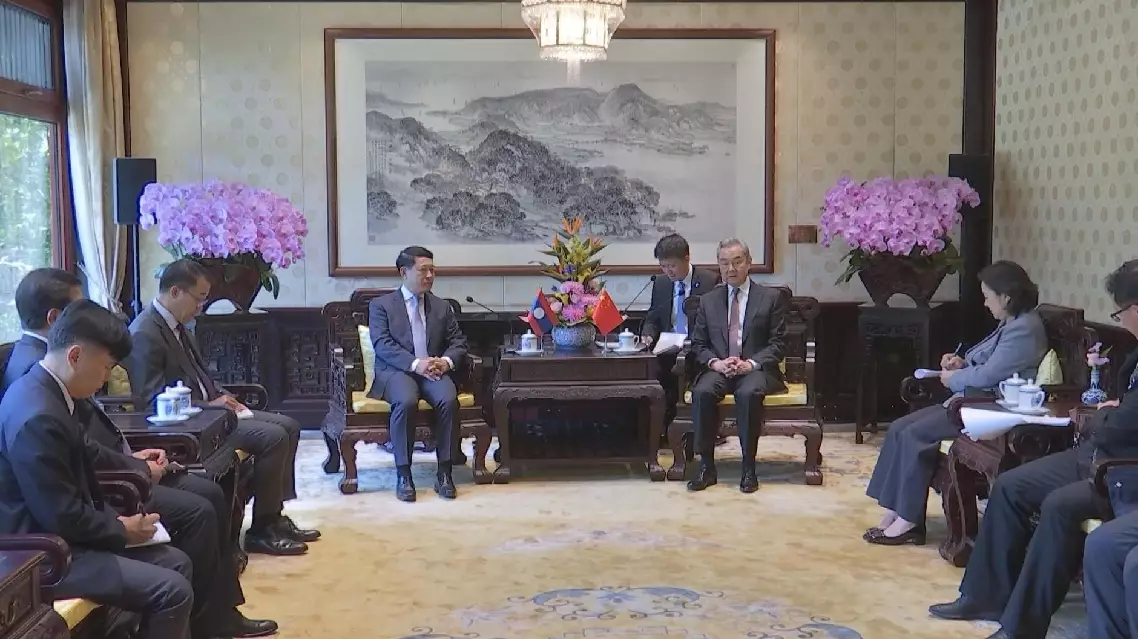
China-Laos ties face important opportunities in 2026: Chinese FM