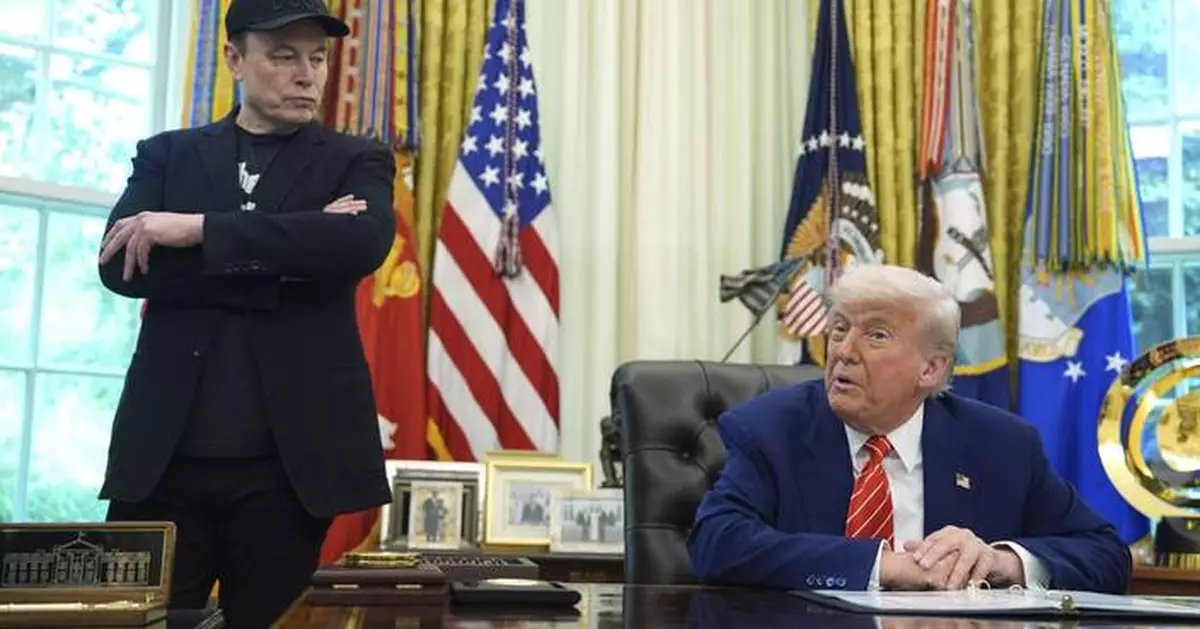
The blowup between the president of the United States and the world's richest man has played out on social media in real time, the latest, perhaps ultimate example of how X has become Elon Musk's personal platform, his own reality show where anyone can tune in to watch the mercurial twists and turns of his unpredictable personality.
And tune in they did.
The feud has birthed countless memes, hot takes and speculation, with some X users bringing out the popcorn emojis while rejoicing that the site has returned to its “fun” roots — back when it was called Twitter. While it's not yet clear if the feud will have any permanent effects on X's audience size or advertising business, its owner reposted a meme late Thursday suggesting that, at least for now, it was good for getting active users to tune into the platform. CEO Linda Yaccarino agreed.
“X operates as a personality-driven platform, and Musk’s high-profile conflicts can fuel engagement at least in the short term,” said Sarah Kreps, director of Cornell University’s Tech Policy Institute. “The platform has leaned into spectacle as a growth strategy, and controversy often drives traffic.”
President Donald Trump, of course, posted through the breakup on his own personal platform, Truth Social with three updates targeting Musk directly on Thursday. But Truth Social's audience is just a fraction of X's, and social media experts at this stage don't see it siphoning the former Twitter's user base as a result of the feud. Trump was banned from Twitter in 2021 following the Jan. 6 riots on the Capitol and he returned more than 2.5 years later after Musk reinstated his account. On X, he has nearly 106 million followers — compared with less than 10 million on Truth Social, where he's continued to post following the feud — at least 10 times on Friday.
“It’s a niche platform with limited reach outside Trump’s core base,” Kreps said. “That said, if Trump were to fully re-engage there and disengage from X entirely, it could fragment the right-wing audience somewhat. But barring major user migration, X still dominates in political discourse.”
Trump hasn't indicated that he'd leave X — and Musk hasn't said he'd consider banning him — but the president has not posted on the site since June 3, although the official White House account has continued to send updates.
According to Mobile app analytics firm Sensor Tower, X and Truth Social both saw mobile app usage skyrocket on Thursday as the Musk-Trump blowup played out on the two men's respective social platforms. U.S. mobile app active users on X between 2 p.m. and 6 p.m. Eastern were up 54%, while Truth Social saw a fivefold increase. Overall, Sensor Tower estimates that X's audience is about 100 times larger than Truth Social's.
On BlueSky, meanwhile, many users seemed to delight in watching the drama unfold on the platform they (mostly) left behind, posting screenshots from X, Truth Social as well as their own share of memes and commentary. But the site, which has welcomed users disillusioned with Musk's politics and policies on X, is unlikely to become a huge draw for Trump die-hards.
“It’s too early to measure any long-term shifts in user behavior, but political audiences on X have tended to be resilient, even in the face of controversy,” Kreps said. “Trump supporters are unlikely to abandon the platform en masse unless there’s sustained antagonism or a perceived shift in content moderation policy. Right now, this looks more like a personality clash than an ideological break so user migration feels speculative at this stage.”
As for X's advertising business, Emarketer analyst Jasmine Enberg said she doubts the feud will have a material effect.
“Advertisers who were spending small sums on the platform due to Musk’s proximity to Trump may rethink their commitments,” she said. “At the same time, the breakup between Musk and Trump hasn’t eliminated the threat of legal or business repercussions given the FTC investigation into the alleged ad boycott, so there’s still incentive for those brands to stay.”
According to The New York Times, which cited unnamed sources, the Federal Trade Commission is investigating whether roughly a dozen advertising and advocacy groups violated antitrust law by coordinating boycotts among advertisers that didn't want their brands to appear next to hateful or other objectionable content.
In the end, Musk “remains a divisive figure, regardless of his position in the White House,” Enberg said, and any efforts by X to make the platform less divisive — such as a recent program designed to elevate content that people agree on —“can only go so far with brands and consumers if he continues to use X as his own personal megaphone to amplify controversial content.”
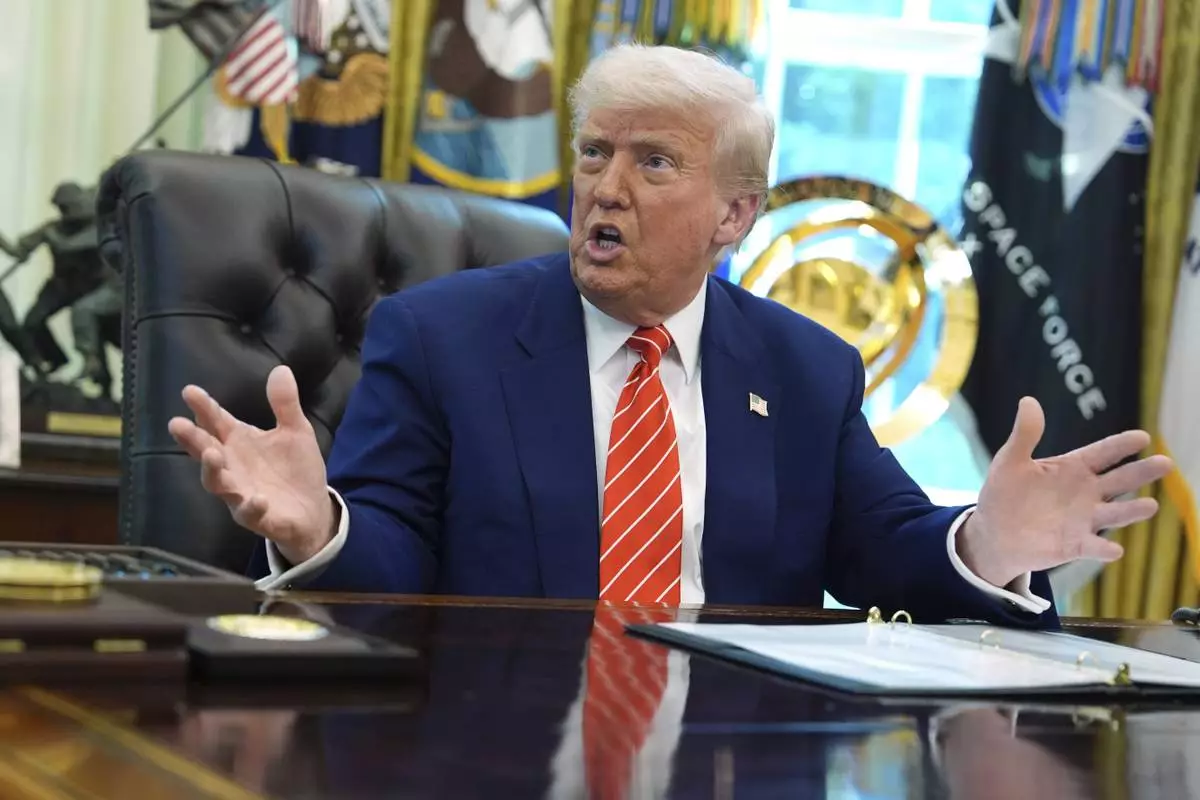
President Donald Trump speaks during a news conference with Elon Musk in the Oval Office of the White House, Friday, May 30, 2025, in Washington. (AP Photo/Evan Vucci)
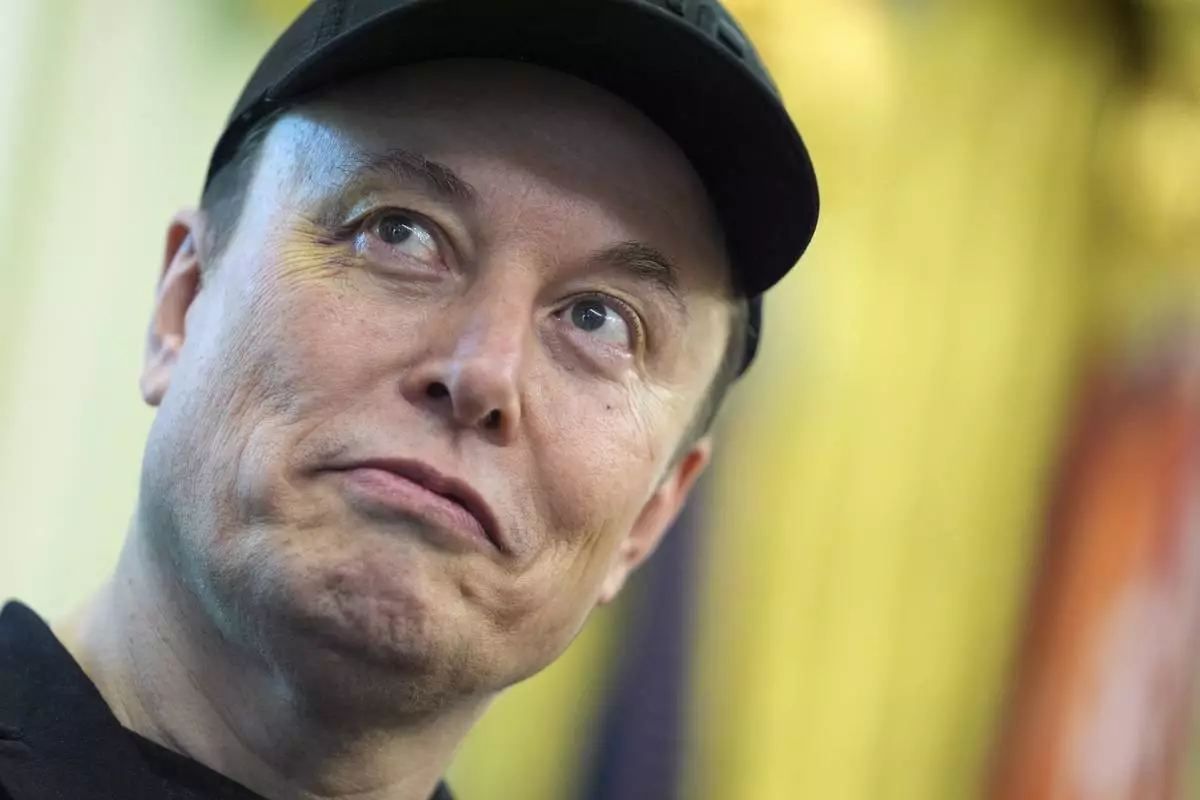
Elon Musk listens as President Donald Trump speaks during a news conference in the Oval Office of the White House, Friday, May 30, 2025, in Washington. (AP Photo/Evan Vucci)

FILE - President Donald Trump, right, speaks during a news conference with Elon Musk in the Oval Office of the White House, Friday, May 30, 2025, in Washington. (AP Photo/Evan Vucci, File)
It's not just about sending federal law enforcement officers into Minnesota.
President Donald Trump's administration is also lashing out at the state by threatening to withhold billions in federal money, much of it intended to help low-income families with food aid, health care and child care — and with a new lawsuit against the state.
Trump's administration has struck out at Democratic-run states broadly, but it's made a prime example of Minnesota, where the president last month called the state's Somali population “garbage," targeting it with actions not seen elsewhere.
The administration has not spelled out its exact plans in most cases, and it's not clear if some of the money will actually stop flowing — or, if so, when.
Trump's administration has unleashed a wave of threats to halt the flow of some federal funds to other states, too — including federal funds to “sanctuary cities” that limit cooperation with federal immigration officials and their states.
Minnesota has been singled out in some cuts as Trump repeatedly criticizes Gov. Tim Walz over fraud in federal programs. Walz, the 2024 Democratic vice presidential nominee and a high-profile Trump critic, ended his campaign this month for a third term, saying he couldn't run a campaign while fending off the attacks and running the state.
Minnesota is pushing back in courts or otherwise.
Here's a look at the planned freezes in Minnesota.
The Agriculture Department said it’s freezing funding in the state and its largest city, Minneapolis — but without laying out many details. Agriculture Secretary Brooke Rollins said in a social media post Jan. 9 announcing the action: “No more handouts to thieves!”
In a letter to Walz and Minneapolis Mayor Jacob Frey, she cited a major fraud case involving a USDA-funded pandemic relief program that broke in 2022 in which 78 people have been charged — and 57 convicted.
Rollins said she was suspending all current and future awards to the city and state and told them to provide payment justifications for all transactions since Jan. 20, 2025, the day Trump returned to office. The justifications would be required to receive future money, too.
Rollins said the awards at risk total more than $129 million but did not specify which programs are included. Her department has not clarified whether the amount includes payments that go to individuals, or just those to government entities.
Based on the figure from Rollins, the freeze would not appear to include funds for the Supplemental Nutrition Assistance Program, which helps about 1 in 12 Minnesota residents buy groceries. Minnesota residents received more than $850 million through that program in 2024. Still, a Minnesota Department of Children, Youth and Families website says the department is analyzing any impacts to SNAP.
It also appears the National School Lunch Program, which provides and subsidizes school meals, is not included. Minnesota was expected to receive more than $240 million in that program in the budget year that ended Sept. 30.
The Agriculture Department also runs programs aimed at food producers, including disaster aid and price supports.
Minnesota Agriculture Commissioner Thom Peterson said at a news conference Wednesday that it's not clear exactly which programs might lose funding, but the state has started receiving notices from some pauses, including to a University of Minnesota poultry testing lab. He said that leaves uncertainty about who would pay if avian influenza is found at a farm and birds must be removed.
The Centers for Medicare and Medicaid Services also told Minnesota last week that it intends to withhold $515 million every three months from 14 Medicaid programs that were deemed high risk after rejecting a corrective action plan the federal government demanded because of fraud allegations.
The programs identified as high risk include adult companion services, residential treatment services and nonemergency medical transportation.
The amount to be withheld is equivalent to one-fourth of the federal money for those programs.
On a call with reporters Tuesday, state Department of Human Services said they were mounting an administrative appeal to the freeze.
They said the department has been emphasizing anti-fraud measures for more than a year and questioned the federal action, which they said is unlike anything they've found in other states.
“Minnesota cannot absorb the loss of more than $2 billion in annual funding for these programs without catastrophic consequences for the people we serve,” Temporary Human Services Commissioner Shireen Gandhi said, adding that the state can’t find other examples of similar federal decisions.
“It's not corrective action,” she said. “It's a punitive action.”
The U.S. Department of Health and Human Services told Minnesota in late December that it was freezing funds in the child Care and Development Block Grant, which subsidizes child care for low-income families, telling the state that it had to submit attendance records and other information before the money would flow again.
Last week, the Trump administration said it was halting payments of the child care money, along with temporary aid for Temporary Assistance for Needy Families, which provides job training and cash assistance, and the Social Services Block Grant, which funds a variety of social services, for Minnesota and four other states where Democrats lead the government.
The five states — along with Minnesota, California, Colorado, Illinois and New York — sued. Advocates and officials warned that stopping the childcare subsidy would put many daycare providers at risk of layoffs of closures. And those could put the families of all their clients in binds, not just those who rely on the subsidies.
Last week, a federal judge ruled that the administration cannot block the money for now.
The federal administration on Wednesday unleashed another line of attack on the Minnesota state government.
The U.S. Department of Justice sued the state government in federal court over its affirmative action hiring requirements. The lawsuit seeks to end programs intended to diversify the government workforce, claiming “Minnesota requires its hiring managers to jump through additional hoops to hire employees with disfavored skin colors or sex chromosomes."
The lawsuit also seeks money for employees and prospective employees who were impacted.
The state attorney general's office said it would respond in court.

A person confronts a U.S. Border Patrol officer Wednesday, Jan. 14, 2026, in Minneapolis. (AP Photo/Adam Gray)

Gov. Tim Walz speaks during a news conference on Tuesday, Jan. 6, 2026 at the Coliseum Building in Minneapolis. (Alex Kormann/Star Tribune via AP)
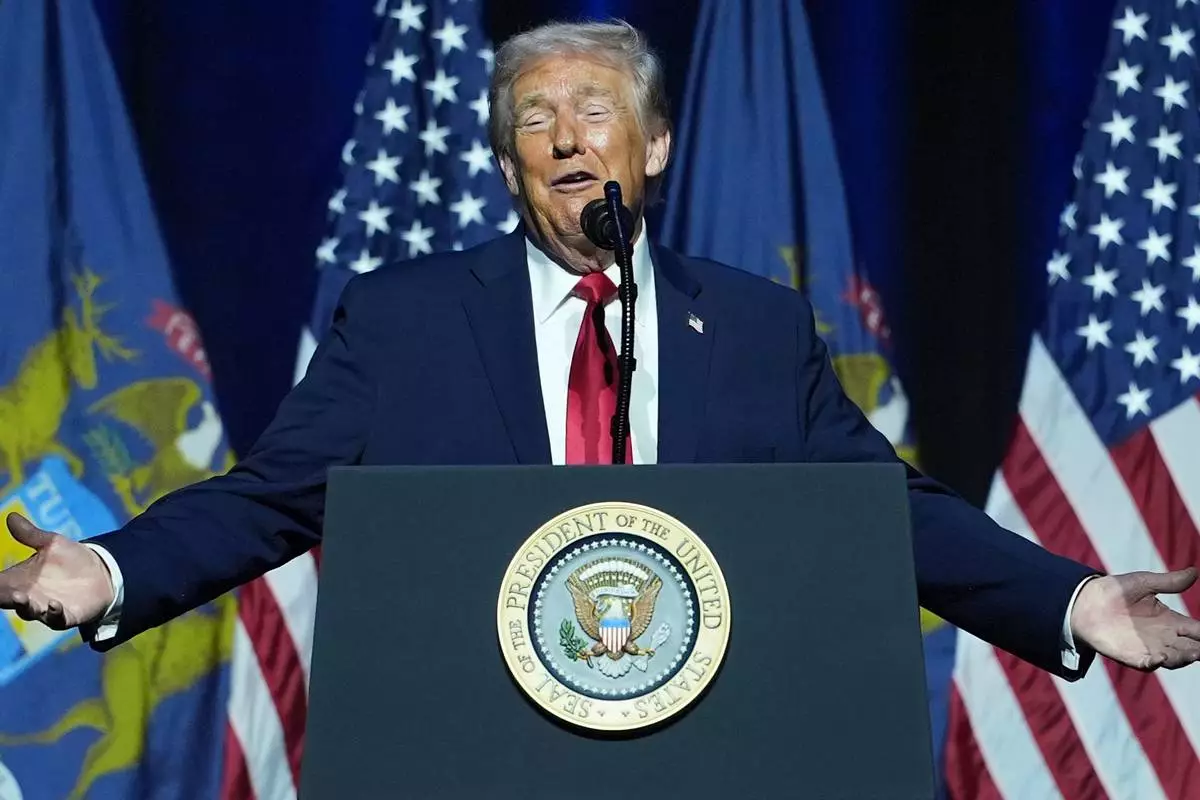
President Donald Trump delivers remarks to the Detroit Economic Club at the MotorCity Casino Hotel, Tuesday, Jan. 13, 2026, in Detroit. (AP Photo/Evan Vucci)