WHITTIER, Alaska (AP) — Squeezed between glacier-packed mountains and Alaska's Prince William Sound, the cruise-ship stop of Whittier is isolated enough that it's reachable by just a single road, through a long, one-lane tunnel that vehicles share with trains. It's so small that nearly all its 260 residents live in the same 14-story condo building.
But Whittier also is the unlikely crossroads of two major currents in American politics: fighting over what it means to be born on U.S. soil and false claims by President Donald Trump and others that noncitizen voter fraud is widespread.
Click to Gallery
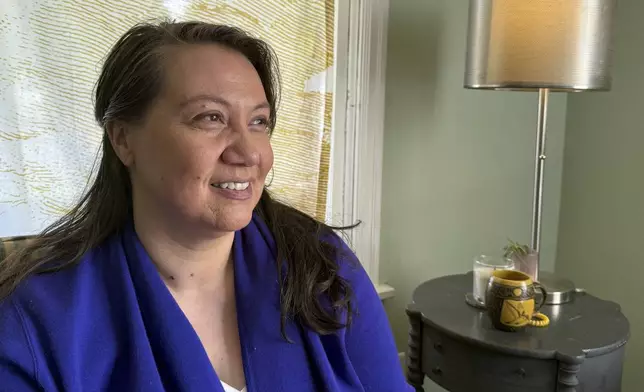
Siniva Bennett, board chair of the Samoa Pacific Development Corporation, sits in her home in Portland, Ore., Monday, May 19, 2025. (AP Photo/Claire Rush)
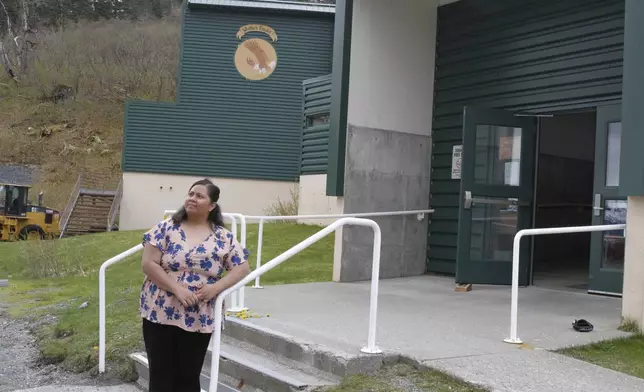
Tupe Smith poses for a photo outside the school in Whittier, Alaska, May 13, 2025. She was elected to the school board in 2023 but a week later was told she could not serve because as a native of American Samoa, she is a U.S. national but not a U.S. citizen. (AP Photo/Mark Thiessen)
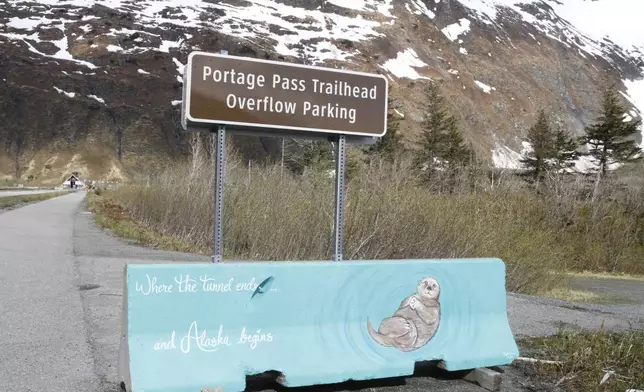
A sign is displayed along the road in Whittier, Alaska, on May 13, 2025, that says "Where the tunnel ends and Alaska begins." (AP Photo/Mark Thiessen)
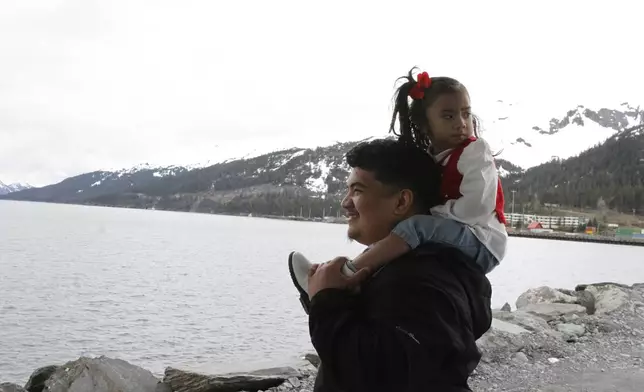
Michael Pese and his daughter Cataleya survey Blackstone Bay in Whittier, Alaska, May 13, 2025. (AP Photo/Mark Thiessen)
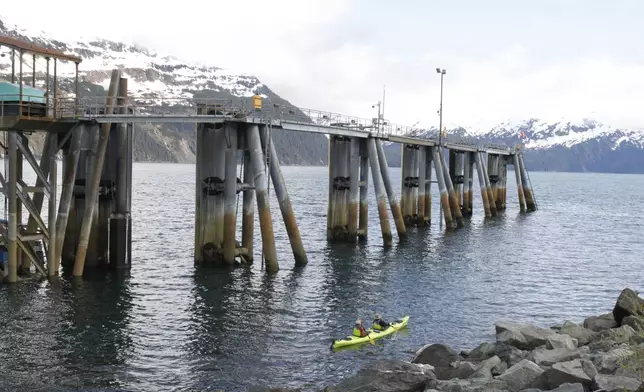
HOLD FOR STORY - Two people kayak around Blackstone Bay in Whittier, Alaska on May 13, 2025. (AP Photo/Mark Thiessen)
A poster with the slogan "Anchored in Kindness, Whittier, AK" is displayed in the city building in Whittier, Alaska, May 13, 2025. (AP Photo/Mark Thiessen)
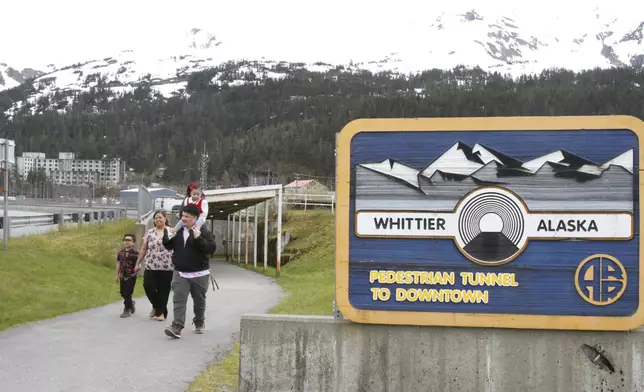
Michael Pese, with daughter Cataleya on his shoulders, and his wife, Tupe Smith, with their son Maximus exit a pedestrian tunnel underneath Whittier, Alaska, May 13, 2025. (AP Photo/Mark Thiessen)
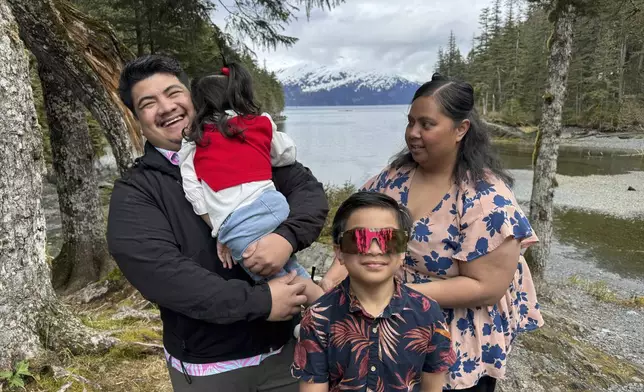
Michael Pese and his wife, Tupe Smith, pose for a photo with their son Maximus and daughter Cataleya in Whittier, Alaska, May 13, 2025. (AP Photo/Mark Thiessen)
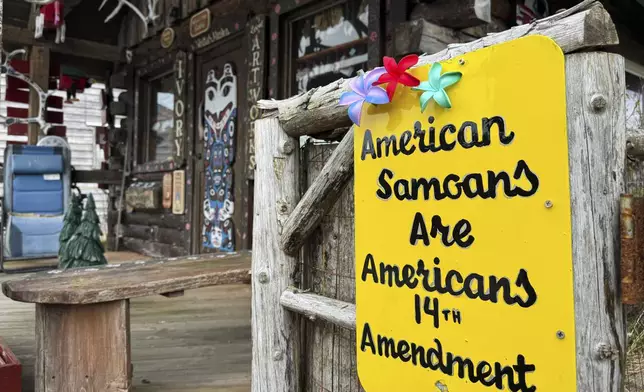
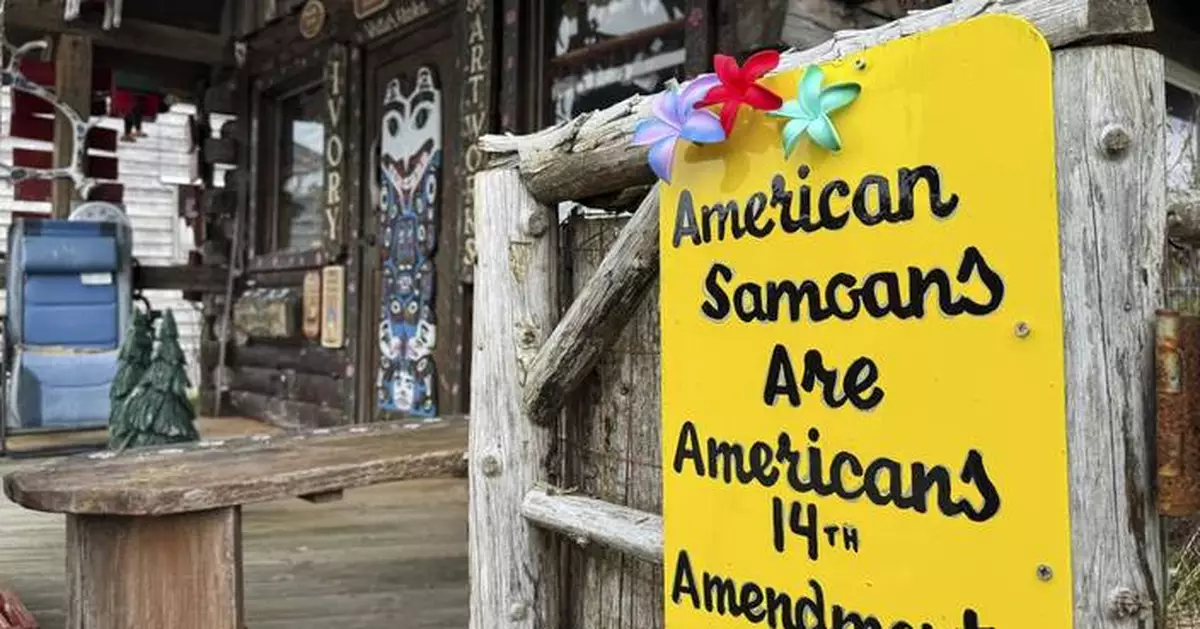
A sign supporting citizenship for American Samoans is posted outside the Log Cabin Gifts store on the waterfront in Whittier, Alaska, May 13, 2025. (AP Photo/Mark Thiessen)
In what experts describe as an unprecedented case, Alaska prosecutors are pursuing felony charges against 11 residents of Whittier, most of them related to one another, saying they falsely claimed U.S. citizenship when registering or trying to vote.
The defendants were all born in American Samoa, an island cluster in the South Pacific roughly halfway between Hawaii and New Zealand. It's the only U.S. territory where residents are not automatically granted citizenship by virtue of having been born on American soil, as the Constitution dictates.
Instead, by a quirk of geopolitical history, they are considered “U.S. nationals” — a distinction that gives them certain rights and obligations while denying them others. American Samoans are entitled to U.S. passports and can serve in the military. Men must register for the Selective Service. They can vote in local elections in American Samoa but cannot hold public office in the U.S. or participate in most U.S. elections.
Those who wish to become citizens can do so, but the process costs hundreds of dollars and can be cumbersome.
“To me, I’m an American. I was born an American on U.S. soil,” said firefighter Michael Pese, one of those charged in Whittier. “American Samoa has been U.S. soil, U.S. jurisdiction, for 125 years. According to the supreme law of the land, that’s my birthright.”
The status has created confusion in other states, as well.
In Oregon, officials inadvertently registered nearly 200 American Samoan residents to vote when they got their driver's licenses under the state's motor-voter law. Of those, 10 cast ballots in an election, according to the Oregon Secretary of State's office. Officials there determined the residents had not intended to break the law and no crime was committed.
In Hawaii, one resident who was born in American Samoa, Sai Timoteo, ran for the state Legislature in 2018 before learning she wasn't allowed to hold public office or vote. She had always considered it her civic duty to vote, and the form on the voting materials had one box to check: “U.S. Citizen/U.S. National.”
“I checked that box my entire life,” she said.
She also avoided charges, and Hawaii subsequently changed its form to make it more clear.
Amid the storm of executive orders issued by Trump in the early days of his second term was one that sought to redefine birthright citizenship by barring it for children of parents who are in the U.S. unlawfully. Another would overhaul how federal elections are run, among other changes requiring voters to provide proof of citizenship.
Courts so far have blocked both orders. The Constitution says that “all persons born or naturalized in the United States, and subject to the jurisdiction thereof, are citizens of the United States.” It also leaves the administration of elections to the states.
The case in Whittier began with Pese's wife, Tupe Smith. After the couple moved to Whittier in 2018, Smith began volunteering at the Whittier Community School, where nearly half of the 55 students were American Samoan — many of them her nieces and nephews. She would help the kids with their English, tutor them in reading and cook them Samoan dishes.
In 2023, a seat on the regional school board came open and she ran for it. She was the only candidate and won with about 95% of the vote.
One morning a few weeks later, as she was making her two children breakfast, state troopers came knocking. They asked about her voting history.
She explained that she knew she wasn't allowed to vote in U.S. presidential elections, but thought she could vote in local or state races. She said she checked a box affirming that she was a U.S. citizen at the instruction of elections workers because there was no option to identify herself as a U.S. national, court records say.
The troopers arrested her and drove her to a women's prison near Anchorage. She was released that day after her husband paid bail.
“When they put me in cuffs, my son started crying," Smith told The Associated Press. "He told their dad that he don’t want the cops to take me or to lock me up.”
About 10 months later, troopers returned to Whittier and issued court summonses to Pese, eight other relatives and one man who was not related but came from the same American Samoa village as Pese.
One of Smith's attorneys, Neil Weare, grew up in another U.S. territory, Guam, and is the co-founder of the Washington-based Right to Democracy Project, whose mission is “confronting and dismantling the undemocratic colonial framework governing people in U.S. territories.”
He suggested the prosecutions are aimed at “low-hanging fruit” in the absence of evidence that illegal immigrants frequently cast ballots in U.S. elections. Even state-level investigations have found voting by noncitizens to be exceptionally rare.
“There is no question that Ms. Smith lacked an intent to mislead or deceive a public official in order to vote unlawfully when she checked ‘U.S. citizen’ on voter registration materials,” he wrote in a brief to the Alaska Court of Appeals last week, after a lower court judge declined to dismiss the charges.
Prosecutors say her false claim of citizenship was intentional, and her claim to the contrary was undercut by the clear language on the voter application forms she filled out in 2020 and 2022. The forms said that if the applicant did not answer yes to being over 18 years old and a U.S. citizen, “do not complete this form, as you are not eligible to vote.”
The unique situation of American Samoans dates to the 19th century, when the U.S. and European powers were seeking to expand their colonial and economic interests in the South Pacific.
The U.S. Navy secured the use of Pago Pago Harbor in eastern Samoa as a coal-refueling station for military and commercial vessels, while Germany sought to protect its coconut plantations in western Samoa. Eventually the archipelago was divided, with the western islands becoming the independent nation of Samoa and the eastern ones becoming American Samoa, overseen by the Navy.
The leaders of American Samoa spent much of the late 19th and early 20th centuries arguing that its people should be U.S. citizens. Birthright citizenship was eventually afforded to residents of other U.S. territories — Puerto Rico, the U.S. Virgin Islands, Guam and the Northern Mariana Islands. Congress considered it for American Samoa in the 1930s, but declined. Some lawmakers cited financial concerns during the Great Depression while others expressed patently racist objections, according to a 2020 article in the American Journal of Legal History.
Supporters of automatic citizenship say it would particularly benefit the estimated 150,000 to 160,000 nationals who live in the states, many of them in California, Hawaii, Washington, Oregon, Utah and Alaska.
“We pay taxes, we do exactly the same as everybody else that are U.S. citizens,” Smith said. “It would be nice for us to have the same rights as everybody here in the states.”
But many in American Samoa eventually soured on the idea, fearing that extending birthright citizenship would jeopardize its customs — including the territory’s communal land laws.
Island residents could be dispossessed by land privatization, not unlike what happened in Hawaii, said Siniva Bennett, board chair of the Samoa Pacific Development Corporation, a Portland, Oregon-based nonprofit.
“We’ve been able to maintain our culture, and we haven’t been divested from our land like a lot of other indigenous people in the U.S.,” Bennett said.
In 2021, the 10th U.S. Circuit Court of Appeals declined to extend automatic citizenship to those born in American Samoa, saying it would be wrong to force citizenship on those who don't want it. The Supreme Court declined to review the decision.
Several jurisdictions across the country, including San Francisco and the District of Columbia, allow people who are not citizens to vote in certain local elections.
Tafilisaunoa Toleafoa, with the Pacific Community of Alaska, said the situation has been so confusing that her organization reached out to the Alaska Division of Elections in 2021 and 2022 to ask whether American Samoans could vote in state and local elections. Neither time did it receive a direct answer, she said.
“People were telling our community that they can vote as long as you have your voter registration card and it was issued by the state,” she said.
Finally, last year, Carol Beecher, the head of the state Division of Elections, sent Toleafoa’s group a letter saying American Samoans are not eligible to vote in Alaska elections. But by then, the voting forms had been signed.
“It is my hope that this is a lesson learned, that the state of Alaska agrees that this could be something that we can administratively correct,” Toleafoa said. “I would say that the state could have done that instead of prosecuting community members.”
Bohrer reported from Juneau, Alaska, and Johnson from Seattle. Claire Rush in Portland, Oregon, and Jennifer Sinco Kelleher in Honolulu contributed to this report.
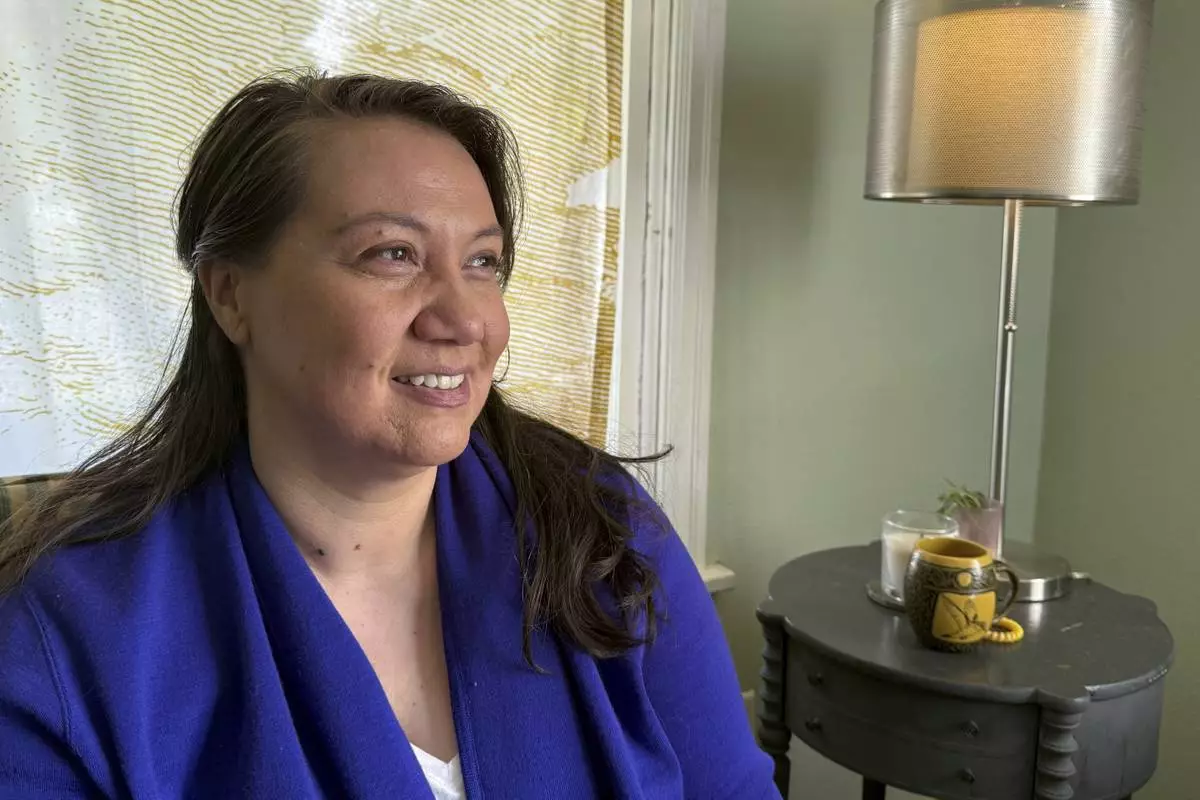
Siniva Bennett, board chair of the Samoa Pacific Development Corporation, sits in her home in Portland, Ore., Monday, May 19, 2025. (AP Photo/Claire Rush)
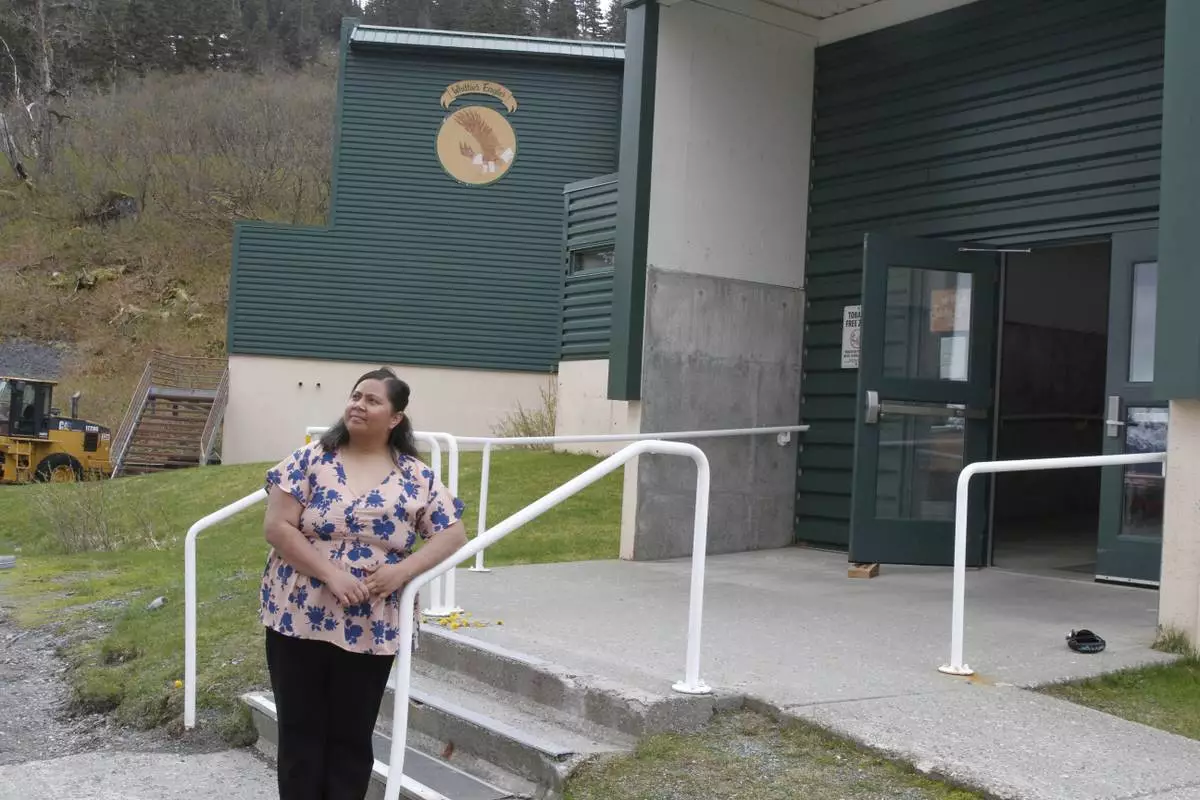
Tupe Smith poses for a photo outside the school in Whittier, Alaska, May 13, 2025. She was elected to the school board in 2023 but a week later was told she could not serve because as a native of American Samoa, she is a U.S. national but not a U.S. citizen. (AP Photo/Mark Thiessen)
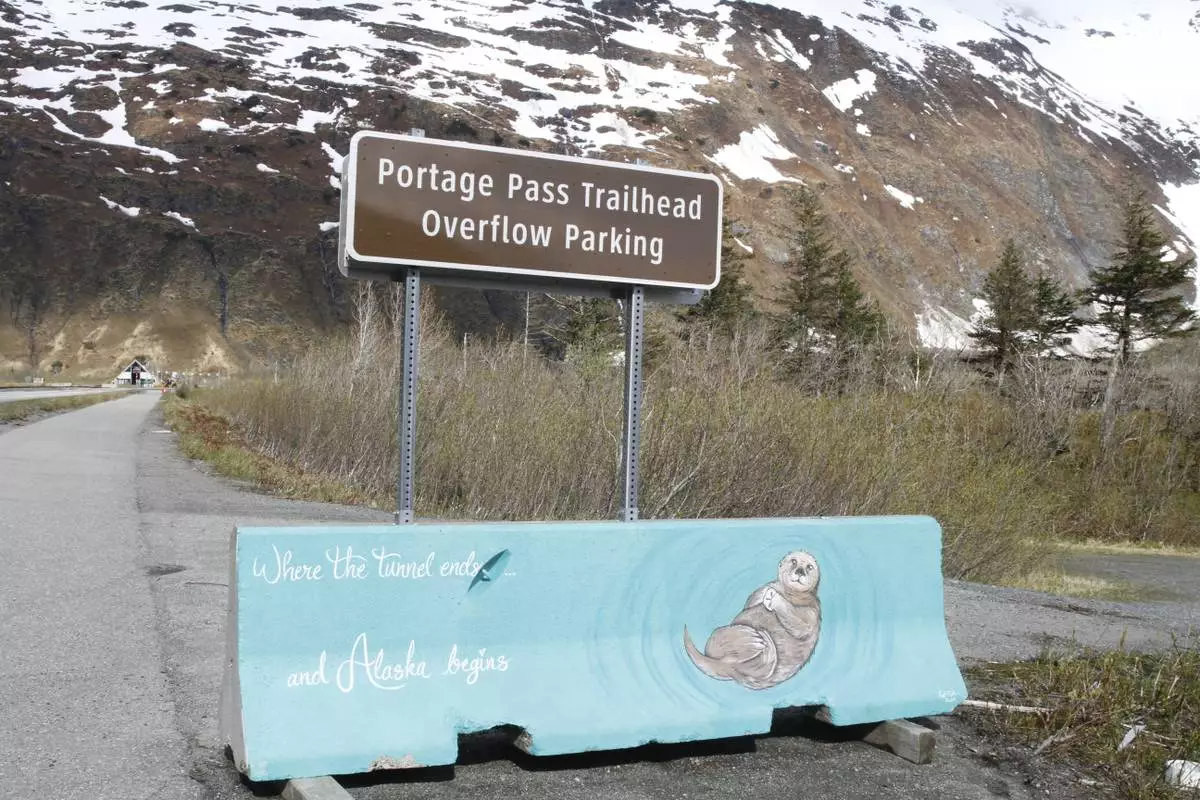
A sign is displayed along the road in Whittier, Alaska, on May 13, 2025, that says "Where the tunnel ends and Alaska begins." (AP Photo/Mark Thiessen)
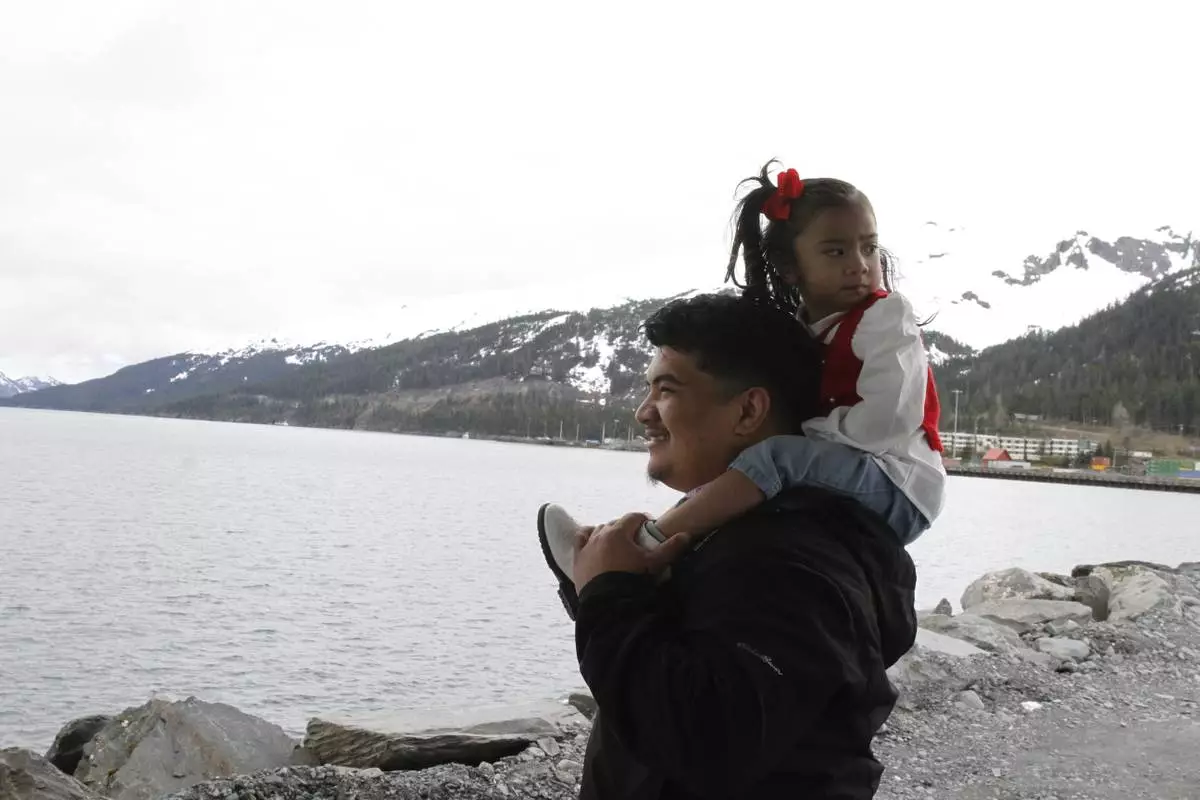
Michael Pese and his daughter Cataleya survey Blackstone Bay in Whittier, Alaska, May 13, 2025. (AP Photo/Mark Thiessen)
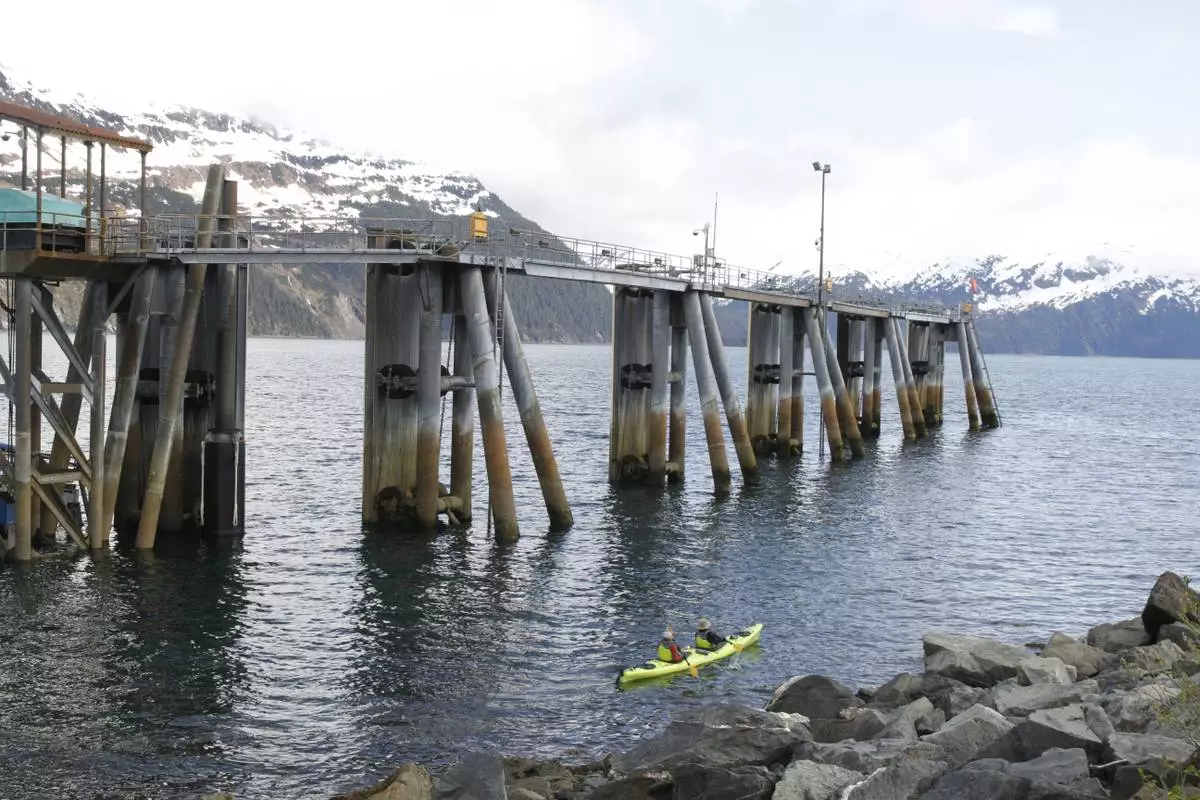
HOLD FOR STORY - Two people kayak around Blackstone Bay in Whittier, Alaska on May 13, 2025. (AP Photo/Mark Thiessen)
A poster with the slogan "Anchored in Kindness, Whittier, AK" is displayed in the city building in Whittier, Alaska, May 13, 2025. (AP Photo/Mark Thiessen)
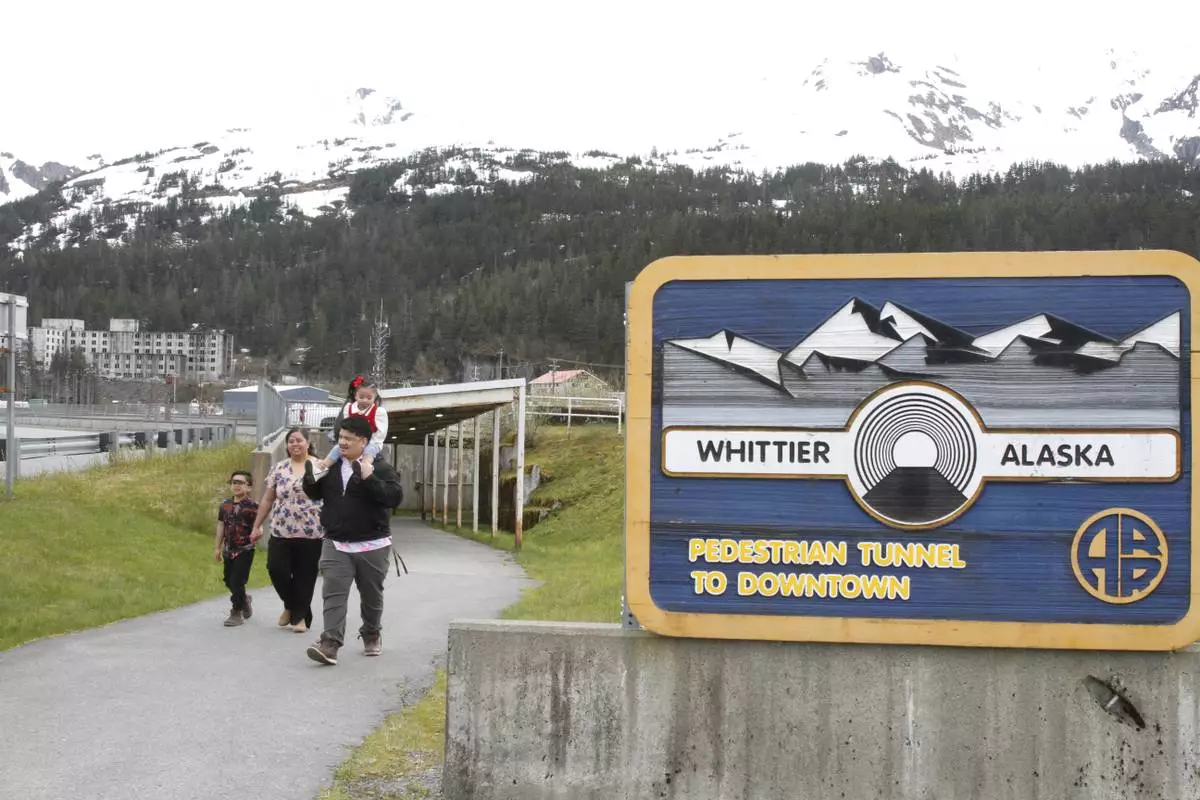
Michael Pese, with daughter Cataleya on his shoulders, and his wife, Tupe Smith, with their son Maximus exit a pedestrian tunnel underneath Whittier, Alaska, May 13, 2025. (AP Photo/Mark Thiessen)
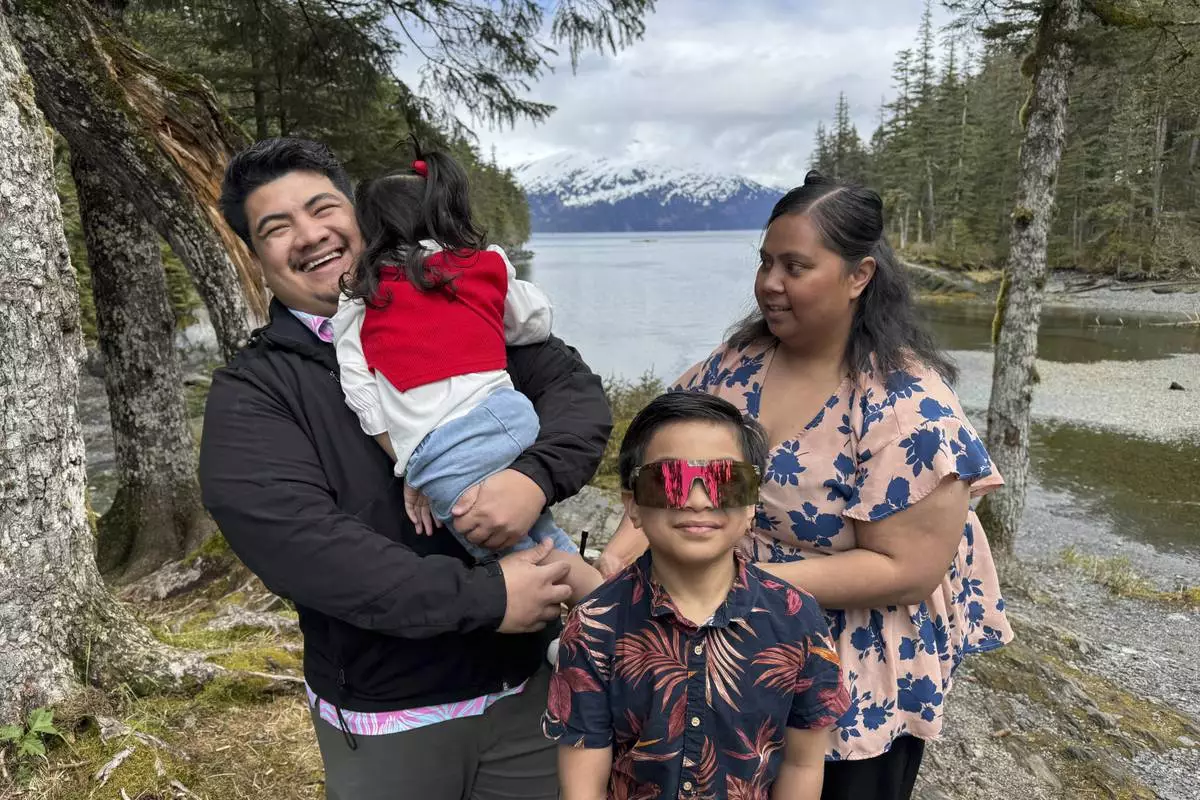
Michael Pese and his wife, Tupe Smith, pose for a photo with their son Maximus and daughter Cataleya in Whittier, Alaska, May 13, 2025. (AP Photo/Mark Thiessen)
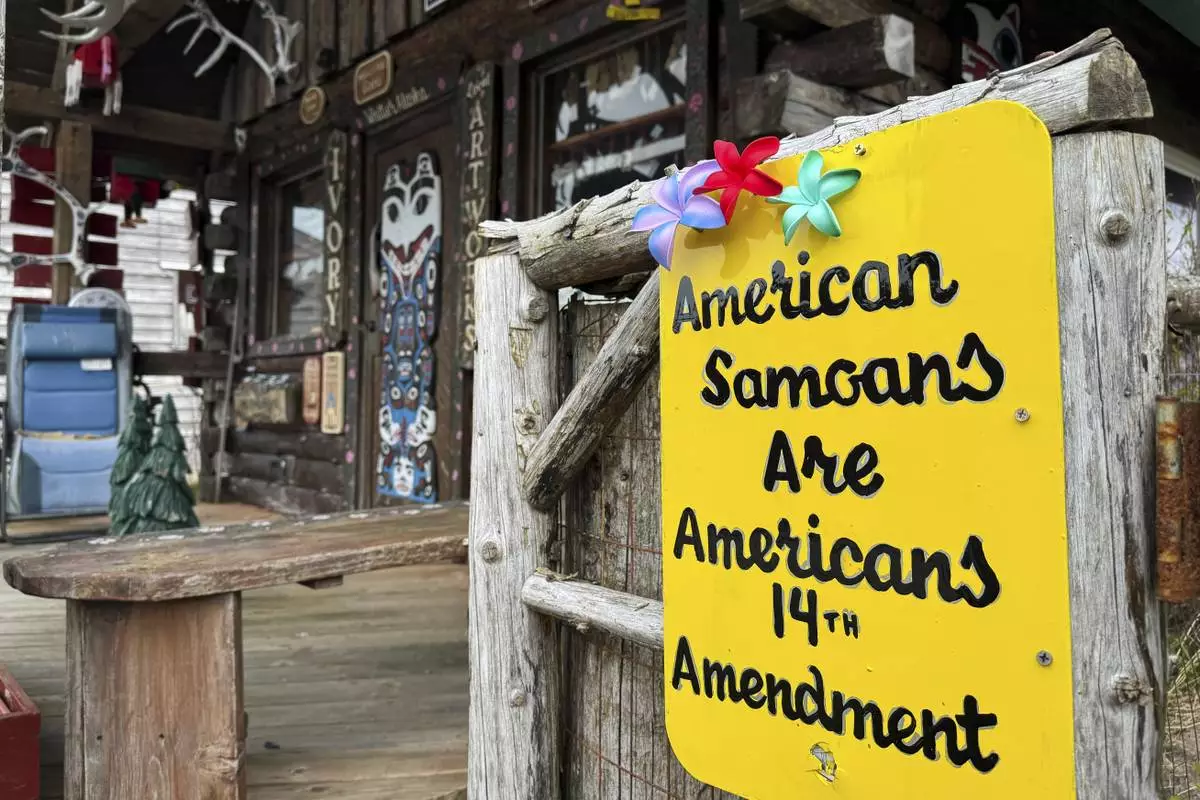
A sign supporting citizenship for American Samoans is posted outside the Log Cabin Gifts store on the waterfront in Whittier, Alaska, May 13, 2025. (AP Photo/Mark Thiessen)