East China's metropolis Shanghai is stepping up its efforts to deploy more advanced technologies in an increasing number of smart nursing homes to provide all-day care to elders typically exposed to various health risks.
Home to over 70 smart nursing homes so far, Shanghai, with a relatively larger share of aging population compared with other Chinese cities, now aims to have at least 100 smart nursing homes by the end of this year.
The rapid development of China's artificial intelligence (AI) technology and its robotics sector have been encouraging more Chinese cities to innovate the elderly care industry.
Currently, a growing number of nursing homes are upgrading their services with advanced technologies and the landscape of the whole industry is changing as well, with caregivers now focusing on providing the essential services to elders, which are unlikely to be replaced by machines in the short term.
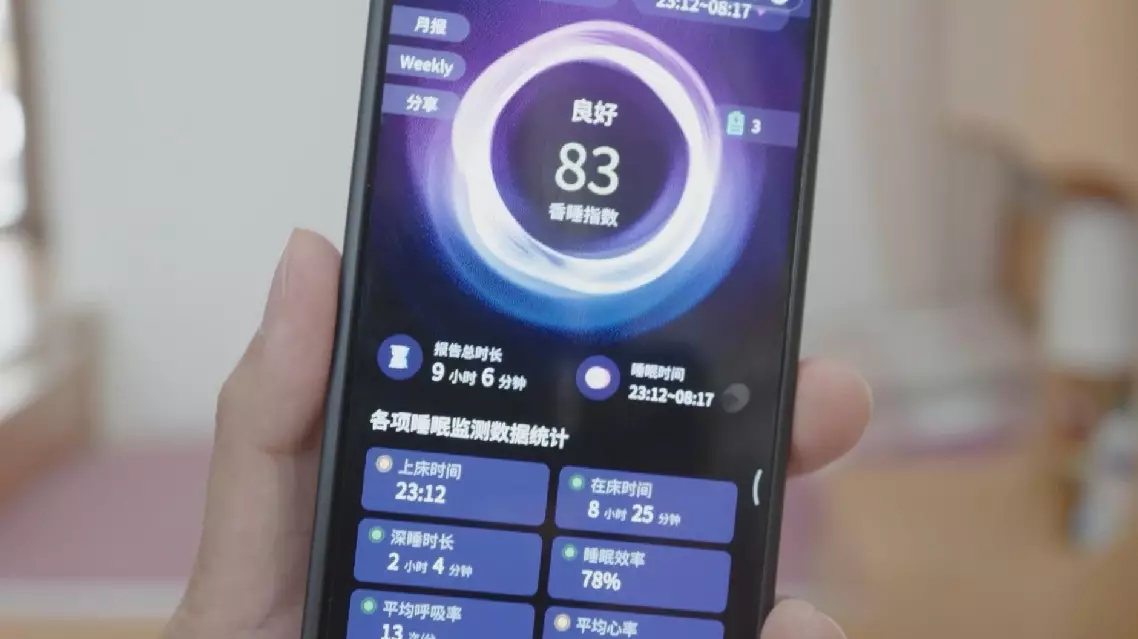
At a smart nursing home in Shanghai, a type of intelligent mattress has been collecting the senior residents' health data like sleep quality and heart rate. The data can be shared in real time with their relatives so that they will be informed of the elder's health conditions in a timely manner.
The caregivers at the nursing home can also make targeted plans for their senior customers with the help of the collected data that is timely displayed on a giant screen.
"The health data of all the 199 elders on this floor is displayed on this screen and we can see immediately if they are in good status or if they are exposed to some health risks. Once any alarming data is detected, we can manage the situation as soon as possible," said Gao Wanjie, operations manager of the smart nursing home.
The washrooms at the nursing home are also carefully designed to meet the needs of the residents. The lights, which are equipped with motion sensors, can alert caregivers if a senior remains motionless for a long period of time or falls accidentally.
"I have heart disease and if I suffer a heart attack, the medical staff can come to my aid immediately. I think the light helps us a lot," said Shen Yiying, one of the nursing home's senior residents.
"The advanced technologies free our caregivers from non-essential administrative burdens so that they can spend more time with the elders. And this is our fundamental purpose of adopting this smart system. All we want is to better serve the elders," said Gao.
Technologies make elderly care services smarter at Shanghai's nursing homes
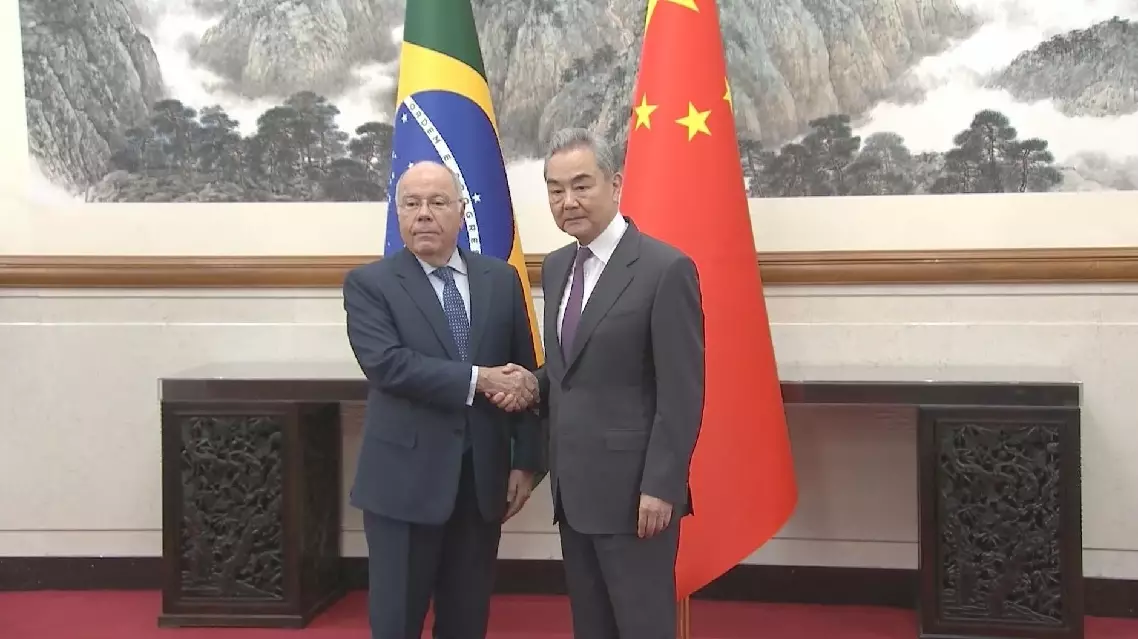
China has always been a reliable friend to Latin American and Caribbean countries and stands ready to work with regional countries, including Brazil, to further deepen and expand overall China-Latin America cooperation, Chinese Foreign Minister Wang Yi said on Monday.
Wang, also a member of the Political Bureau of the Communist Party of China Central Committee, made the remarks during the fifth China-Brazil Foreign Ministerial-Level Comprehensive Strategic Dialogue with Brazilian Foreign Minister Mauro Vieira in Beijing.
Wang said that in recent years, under the strategic guidance of the two heads of state, China-Brazil relations have become increasingly global, strategic and far-reaching in influence.
"Practical cooperation across all fields has been steadily upgraded, and the two peoples have never been closer," he added.
Wang said the two sides should fully implement the important consensus reached by the two heads of state, continue to advance the building of a China-Brazil community with a shared future, jointly counter various external challenges, and build greater synergy for each other's modernization drives and the unity and self-improvement of Global South countries.
Noting that China appreciates the Brazilian government's long-standing commitment to the one-China principle, Wang said China supports Brazil in safeguarding its national sovereignty, upholding independence and autonomy, and achieving greater development.
The two sides should advance exchanges and cooperation in culture, education, tourism, sports, sub-national areas, youth, media and other fields, Wang said, adding that it is important to strengthen communication and coordination under multilateral mechanisms including the United Nations and BRICS, earnestly implement the four major global initiatives, and promote the development of a more just and equitable global governance system.
Vieira stated that Brazil will always adhere to the one-China principle. He said Brazil looks forward to consolidating strategic mutual trust with China, deepening practical cooperation, cementing public support for bilateral ties, and achieving common prosperity.
Noting that both Brazil and China are important forces championing multilateralism and free trade, Vieira said Brazil is ready to work with China to enhance multilateral coordination, jointly advance the reform of the global governance system, uphold the authority of the United Nations, and promote international fairness and justice.
China ready to work with Brazil to further expand overall China-Latin America cooperation: Chinese FM
China ready to work with Brazil to further expand overall China-Latin America cooperation: Chinese FM