China's largest volcanic island is ramping up its environmental protection efforts through sustainable practices like waste reduction and recycling to preserve its ecosystems and promote eco-friendly tourism.
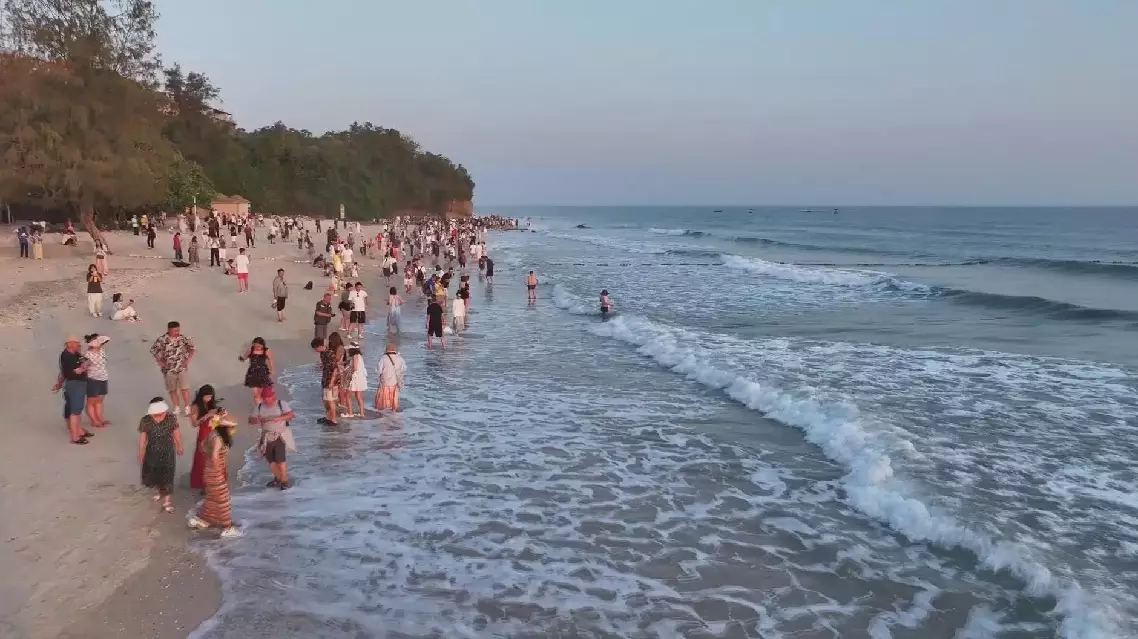
Guangxi Zhuang Autonomous Region's Weizhou Island, located in the Beibu Gulf of the South China Sea, is also the youngest volcanic island in China. It is renowned for unique coastal landscapes, rich marine ecology, and the quaint charm of its fishing villages. A national geological park was established on the island in 2004.
In 2010, the island received about 1.2 million visitors, and by 2024, the number had risen to over 2.2 million.
The surge in the number of tourists has put immense pressure on the small island, which covers only 25 square kilometers, with waste management being the most pressing issue.
Kitchen waste makes up 60 percent of the total garbage on Weizhou Island. Local beds and breakfasts (BnBs) are addressing the issue by using ecological composting to process its organic waste.
"This small bin can process up to one ton of kitchen waste within three months. The compost is used for planting flowers and grass in the yard. Sometimes, villagers come to ask for some to use in their fields," said Xu Xiaochen, a BnB owner.
The island is encouraging all residents to participate in its zero-waste initiative.
Currently, over 50 "zero-waste" demonstration sites are established across the island, and more than 400 restaurants have undergone green transformation.
"We encourage all residents, visitors, and businesses to enhance resource recycling while reducing practices that harm the environment. By doing so, we can create an ecological island where humans and nature live in harmony," said Zhang Shi, an official with the Weizhou Island Tourism Management Committee.
China's largest volcanic island ramps up environmental protection efforts
Nicaragua's co-foreign minister Valdrack Jaentschke has warned that militarism must never be allowed to rise again, as Japan's recent moves to lift its arms export ban and revise the pacifist Constitution continue to draw international concern.
This year marks the 80th anniversary of the opening of the Tokyo Trials, where Japan's Class-A war criminals from World War II were brought to justice.
In an interview with China Global Television Network (CGTN), Valdrack Jaentschke voiced his concern that today's world order is being undermined by interventionism and other challenges.
"It is necessary for us to remember that after the end of World War II, countries worked hard to build a new international order based on international law. However, regrettably, more than 80 years later, we are seeing that this once explored and attempted order is being challenged by interventionism, a confrontational mindset, and tendencies like 'might makes right.' These are precisely the conditions that gave rise to fascism and militarism in the past, which ultimately led to the tragedy of World War II," he said.
He said the international community has a responsibility to pursue a new international order -- one fundamentally grounded in peace.
"Looking back at the history more than eight decades ago and comparing it with today's reality, it is our responsibility to recognize that the world should, and must, build a new international order that is more just, fairer, rooted in international law, based on a logic of mutual benefit and shared success, and fundamentally grounded in peace," said the minister.
"Today, as we revisit the Tokyo Trials, it is meant to remind the world that such a tragedy must never be repeated -- and that we must do everything in our power to prevent it from happening again. We must stop that dark world -- born from militarism, interventionism, and fascism -- from ever returning," he said.

Nicaraguan FM warns of militarism revival