China's extensive consumer goods trade-in program has made significant progress, driving sales growth of home appliances and delivering tangible benefits to consumers.
In southwest China's Sichuan Province, the consumption subsidies for trade-ins have revitalized the local consumer market.
For example, in Yilong County of the province, consumer Deng Furong was able to purchase an air conditioner at a much lower price due to this program.
"The original price was 3,500 yuan (about 486.82 U.S. dollars), but with a deduction of 1,200 yuan at checkout, I paid only 2,300 yuan," said Deng.
These discounts have stimulated consumer spending. This year, the range of home appliance available for trade-in policies in Yilong have expanded to 18 categories, up from just eight last year, contributing to a consumption boost exceeding 70 million yuan.
In Quxian County, consumers who purchase eco-friendly smart new home appliances such as televisions, refrigerators, and air conditioners receive a one-time subsidy of 10 percent off the actual transaction price. Additionally, merchants offer another 10 percent trade-in subsidy, which has sparked enthusiasm among consumers for new purchases.
"Our sales of home appliances have significantly increased. Previously, we sold only five or six such air conditioners daily, but now our average is about 10 units one day," said Xiao Jianguo, a local home appliance salesman.
In the first five months of this year, physical stores in Quxian sold more than 10,000 units of home appliances, mobile phones and other electronic devices, resulting in total consumption surpassing 40 million yuan. Residents benefited from various subsidies amounting to over 5 million yuan.
The rural areas of Tianshui City of northwest China's Gansu Province have experienced a surge in consumption due to the trade-in policy, with local merchants offering additional subsidies to draw in more consumers.
In an electrical appliance store in Qinzhou District of Tianshui, sales staff are actively promoting home appliances and explaining the trade-in policy to the villagers.
"I want to buy a refrigerator and it costs over 4,000 yuan. Thanks to the farmer subsidy, it now costs just over 3,000 yuan. It feels like a great deal, so I bought one," said Wang Linfang, a local villager.
"Our turnover has increased by about 40 percent over the same period last year, and the villagers have a good understanding of the trade-in policy," said Wang Xingguo, manager of a local home appliance sales store.
As of June 2, Qinzhou has allocated approximately 10.4 million yuan in subsidies for various consumer goods including home appliances, digital products and automobiles, directly stimulating consumption exceeding 75 million yuan.
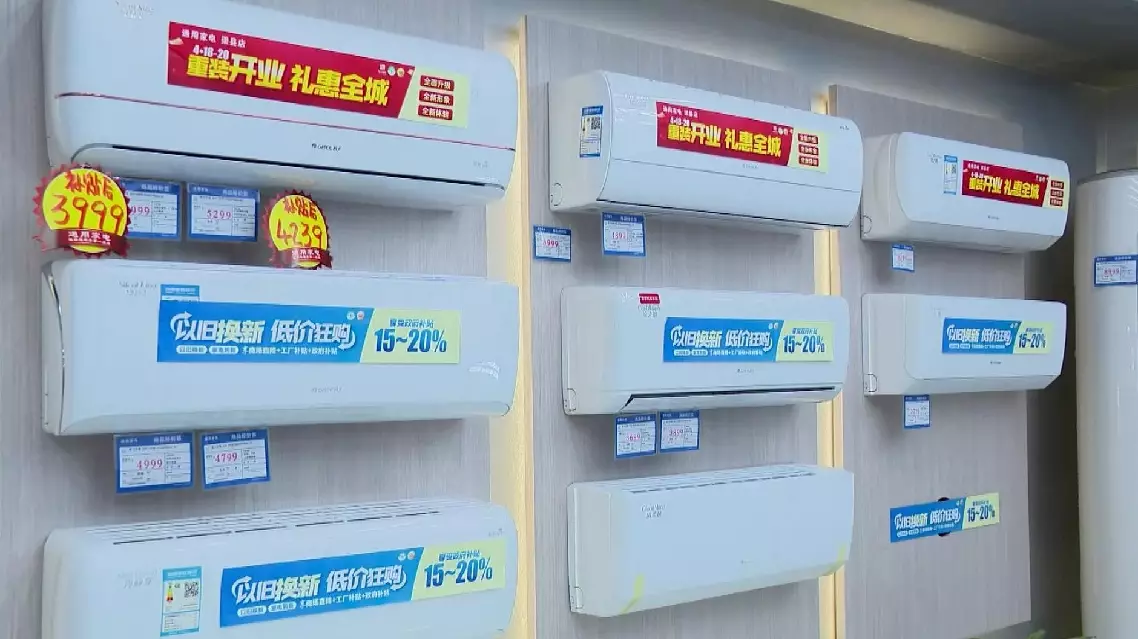
China's consumer goods trade-in program drives sales of home appliances