Skip to Content Facebook Feature Image

Shoppers are wary of digital shelf labels, but a study found they don't lead to price surges

ENT

Shoppers are wary of digital shelf labels, but a study found they don't lead to price surges
ENT

ENT

Shoppers are wary of digital shelf labels, but a study found they don't lead to price surges

2025-06-10 00:34 Last Updated At:00:40

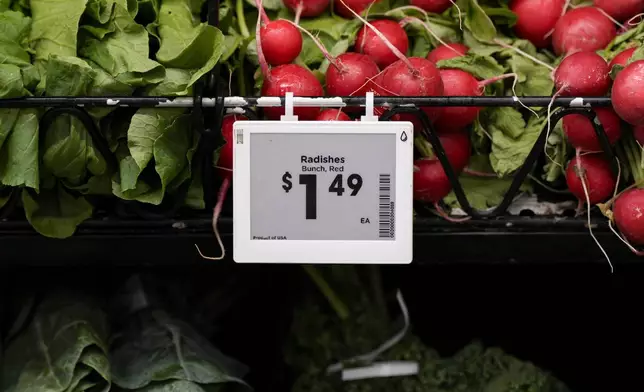
Digital price labels, which are rapidly replacing paper shelf tags at U.S. supermarkets, haven’t led to demand-based pricing surges, according to a new study that examined five years' worth of prices at one grocery chain.

But some shoppers, consumer advocates and lawmakers remain skeptical about the tiny electronic screens, which let stores change prices instantly from a central computer instead of having workers swap out paper labels by hand.

More Images
Electronic grocery labels are displayed at a Kroger grocery store, in Monroe, Ohio, Nov. 13, 2024. (AP Photo/Jeff Dean)
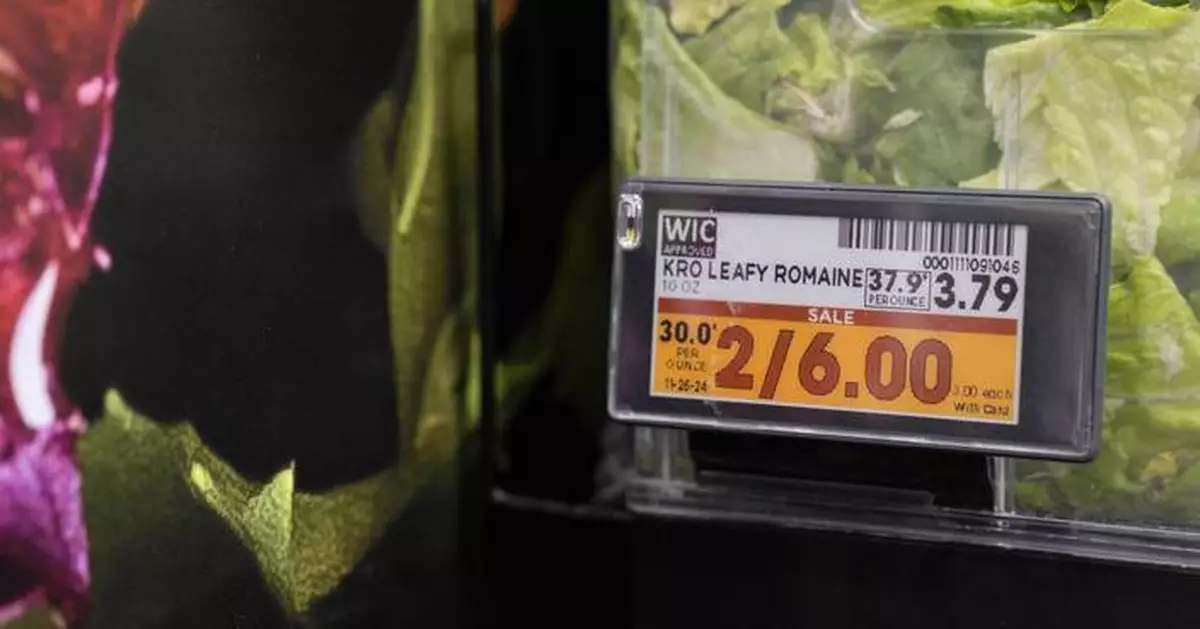
Electronic grocery labels are displayed at a Kroger grocery store, in Monroe, Ohio, Nov. 13, 2024. (AP Photo/Jeff Dean)
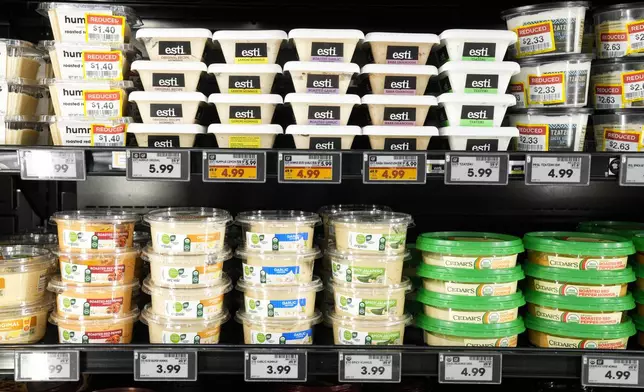
Electronic grocery labels are displayed at a Kroger grocery store, in Monroe, Ohio, Nov. 13, 2024. (AP Photo/Jeff Dean)
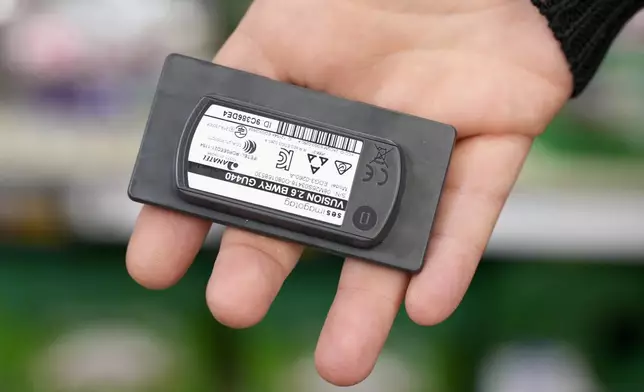
Electronic grocery labels are displayed at a Kroger grocery store, in Monroe, Ohio, Nov. 13, 2024. (AP Photo/Jeff Dean)
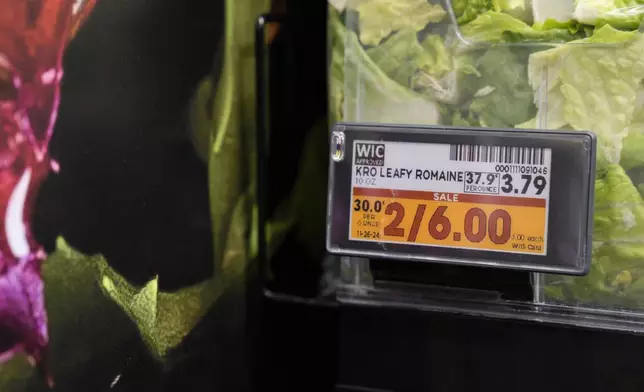
Electronic grocery labels are displayed at a Kroger grocery store, in Monroe, Ohio, Nov. 13, 2024. (AP Photo/Jeff Dean)

Electronic grocery labels are displayed at a Kroger grocery store, in Monroe, Ohio, Nov. 13, 2024. (AP Photo/Jeff Dean)

Electronic grocery labels are displayed at a Kroger grocery store, in Monroe, Ohio, Nov. 13, 2024. (AP Photo/Jeff Dean)

Electronic grocery labels are displayed at a Kroger grocery store, in Monroe, Ohio, Nov. 13, 2024. (AP Photo/Jeff Dean)

Electronic grocery labels are displayed at a Kroger grocery store, in Monroe, Ohio, Nov. 13, 2024. (AP Photo/Jeff Dean)

Electronic grocery labels are displayed at a Kroger grocery store, in Monroe, Ohio, Nov. 13, 2024. (AP Photo/Jeff Dean)

“It’s corporations vs. the humans, and that chasm between us goes further and further,” said Dan Gallant, who works in sports media in Edmonton, Canada. Gallant's local Loblaws supermarket recently switched to digital labels.

Social media is filled with warnings that grocers will use the technology to charge more for ice cream if it’s hot outside, hike the price of umbrellas if it’s raining or to gather information about customers.

Democratic U.S. Sens. Elizabeth Warren of Massachusetts and Bob Casey of Pennsylvania fired off a letter to Kroger last fall demanding to know whether it would use its electronic labels as part of a dynamic pricing strategy.

Lawmakers in Rhode Island and Maine have introduced bills to limit the use of digital labels. In Arizona, Democratic state Rep. Cesar Aguilar recently introduced a bill that would ban them altogether.

The bill hasn’t gotten a hearing, but Aguilar said he’s determined to start a conversation about digital labels and how stores could abuse them.

“Grocery stores study when people go shopping the most. And so you might be able to see a price go down one day and then go up another day,” Aguilar told The Associated Press.

Researchers say those fears are misplaced. A study published in late May found “virtually no surge pricing” before or after electronic shelf labels were adopted. The study was authored by Ioannis Stamatopoulos of the University of Texas, Austin, Robert Evan Sanders of the University of California, San Diego and Robert Bray of Northwestern University

The researchers looked at prices between 2019 and 2024 at an unnamed grocery chain that began using digital labels in October 2022. They found that temporary price increases affected 0.005% of products on any given day before electronic shelf labels were introduced, a share that increased by only 0.0006 percentage points after digital labels were installed.

The study also determined that discounts were slightly more common after digital labels were introduced.

Economists have long wondered why grocery prices don’t change more often, according to Stamatopoulos. If bananas are about to expire, for example, it makes sense to lower the price on them. He said the cost of having workers change prices by hand could be one issue.

But there’s another reason: Shoppers watch grocery prices closely, and stores don’t want to risk angering them.

“Selling groceries is not selling a couch. It’s not a one-time transaction and you will never see them again,” Stamatopoulos said. “You want them coming to the store every week.”

Electronic price labels aren’t new. They’ve been in use for more than a decade at groceries in Europe and some U.S. retailers, like Kohl's.

But they’ve been slow to migrate to U.S. grocery stores. Only around 5% to 10% of U.S. supermarkets now have electronic labels, compared to 80% in Europe, said Amanda Oren, vice president of industry strategy for North American grocery at Relex Solutions, a technology company that helps retailers forecast demand.

Oren said cost is one issue that has slowed the U.S. rollout. The tiny screens cost between $5 and $20, Oren said, but every product a store sells needs one, and the average supermarket has 100,000 or more individual products.

Still, the U.S. industry is charging ahead. Walmart, the nation's largest grocer and retailer, hopes to have digital price labels at 2,300 U.S. stores by 2026. Kroger is expanding the use of digital labels this year after testing them at 20 stores. Whole Foods is testing the labels in nearly 50 stores.

Companies say electronic price labels have tremendous advantages. Walmart says it used to take employees two days to change paper price labels on the 120,000 items it has in a typical store. With digital tags, it takes a few minutes.

The labels can also be useful. Some have codes shoppers can scan to see recipes or nutrition information. Instacart has a system in thousands of U.S. stores, including Aldi and Schnucks, that flashes a light on the digital tag when Instacart shoppers are nearby to help them find products.

Ahold Delhaize’s Albert Heijn supermarket chain in the Netherlands and Belgium has been testing an artificial intelligence-enabled tool since 2022 that marks down prices on its digital labels every 15 minutes for products nearing expiration. The system has reduced more than 250 tons of food waste annually, the company said.

But Warren and Casey are skeptical. In their letter to Kroger, the U.S. senators noted a partnership with Microsoft that planned to put cameras in grocery aisles and offer personalized deals to shoppers depending on their gender and age.

In its response, Kroger said the prices shown on its digital labels were not connected to any sort of facial recognition technology. It also denied surging prices during periods of peak demand.

“Kroger’s business model is built on a foundation of lowering prices to attract more customers,” the company said.

Aguilar, the Arizona lawmaker, said he also opposes the transition to digital labels because he thinks they will cost jobs. His constituents have pointed out that grocery prices keep rising even though there are fewer workers in checkout lanes, he said.

“They are supposed to be part of our community, and that means hiring people from our community that fill those jobs," Aguilar said.

But Relex Solutions' Oren said she doesn't think cutting labor costs is the main reason stores deploy digital price tags.

“It’s about working smarter, not harder, and being able to use that labor in better ways across the store rather than these very mundane, repetitive tasks,” she said.

AP Writers Anne D'Innocenzio in New York and Sejal Govindarao in Phoenix contributed.
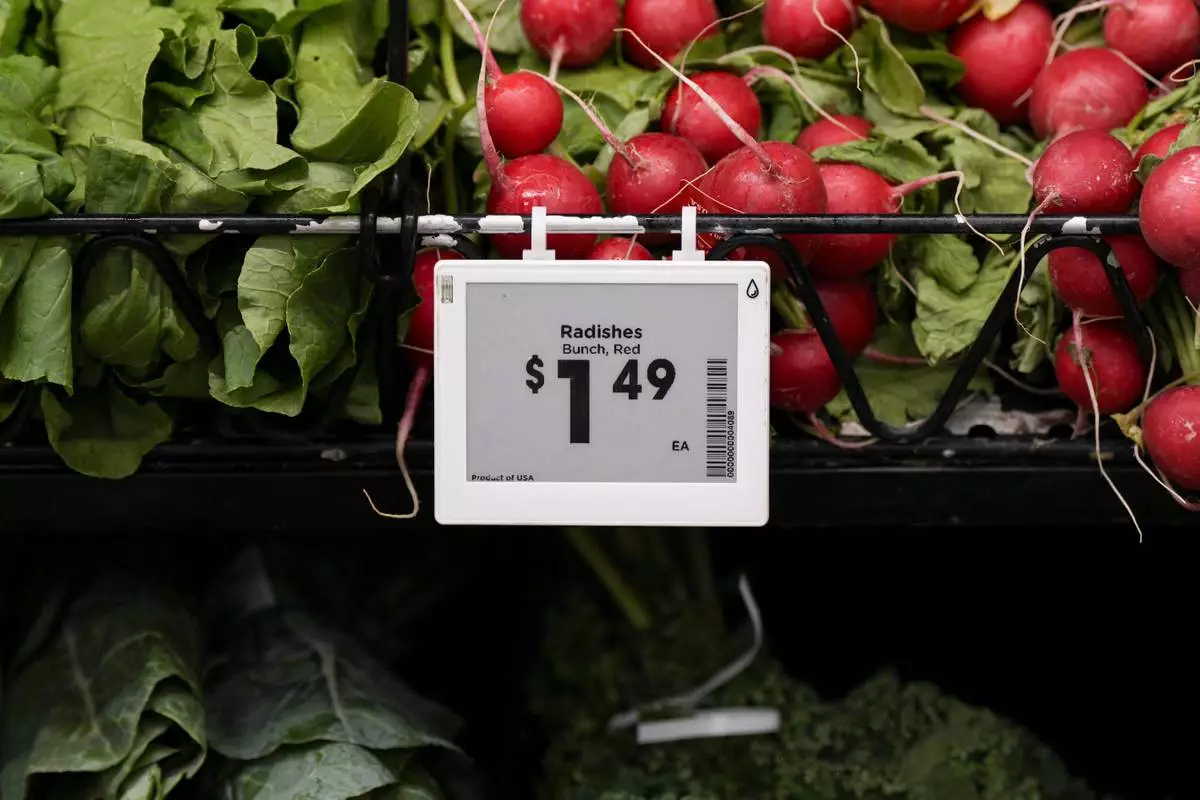
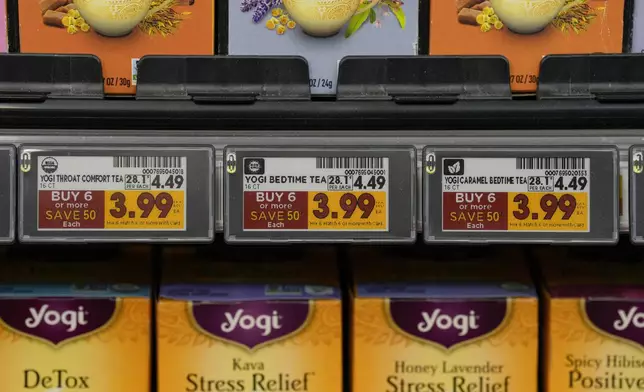
Electronic grocery labels are displayed at a Kroger grocery store, in Monroe, Ohio, Nov. 13, 2024. (AP Photo/Jeff Dean)

Electronic grocery labels are displayed at a Kroger grocery store, in Monroe, Ohio, Nov. 13, 2024. (AP Photo/Jeff Dean)
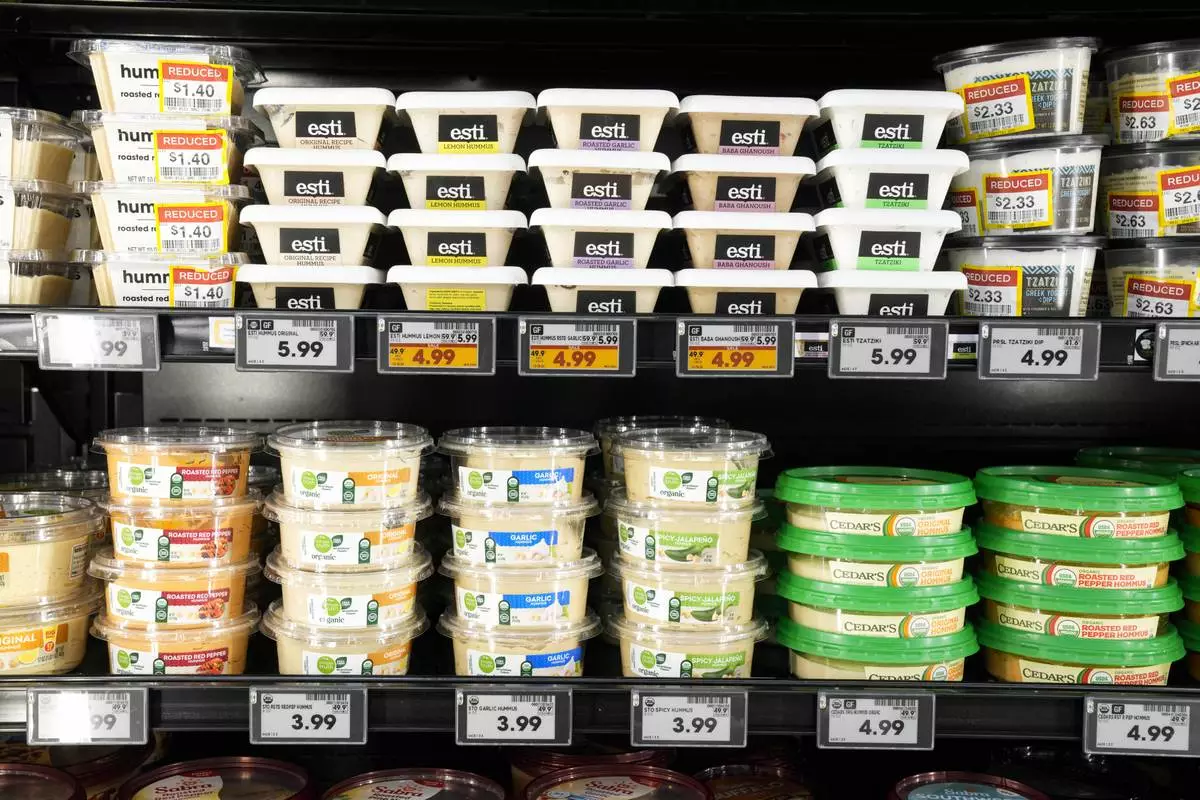
Electronic grocery labels are displayed at a Kroger grocery store, in Monroe, Ohio, Nov. 13, 2024. (AP Photo/Jeff Dean)

Electronic grocery labels are displayed at a Kroger grocery store, in Monroe, Ohio, Nov. 13, 2024. (AP Photo/Jeff Dean)
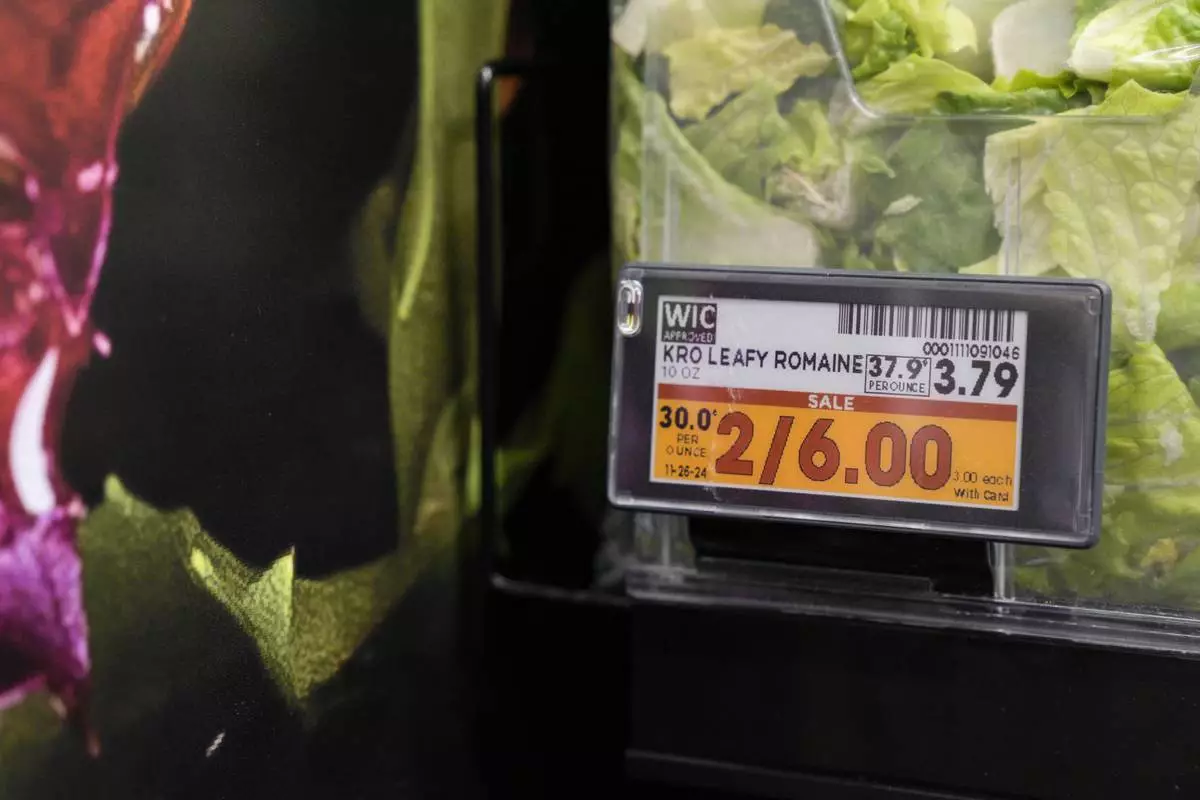
Electronic grocery labels are displayed at a Kroger grocery store, in Monroe, Ohio, Nov. 13, 2024. (AP Photo/Jeff Dean)

Electronic grocery labels are displayed at a Kroger grocery store, in Monroe, Ohio, Nov. 13, 2024. (AP Photo/Jeff Dean)
Electronic grocery labels are displayed at a Kroger grocery store, in Monroe, Ohio, Nov. 13, 2024. (AP Photo/Jeff Dean)

Electronic grocery labels are displayed at a Kroger grocery store, in Monroe, Ohio, Nov. 13, 2024. (AP Photo/Jeff Dean)
Electronic grocery labels are displayed at a Kroger grocery store, in Monroe, Ohio, Nov. 13, 2024. (AP Photo/Jeff Dean)
Electronic grocery labels are displayed at a Kroger grocery store, in Monroe, Ohio, Nov. 13, 2024. (AP Photo/Jeff Dean)
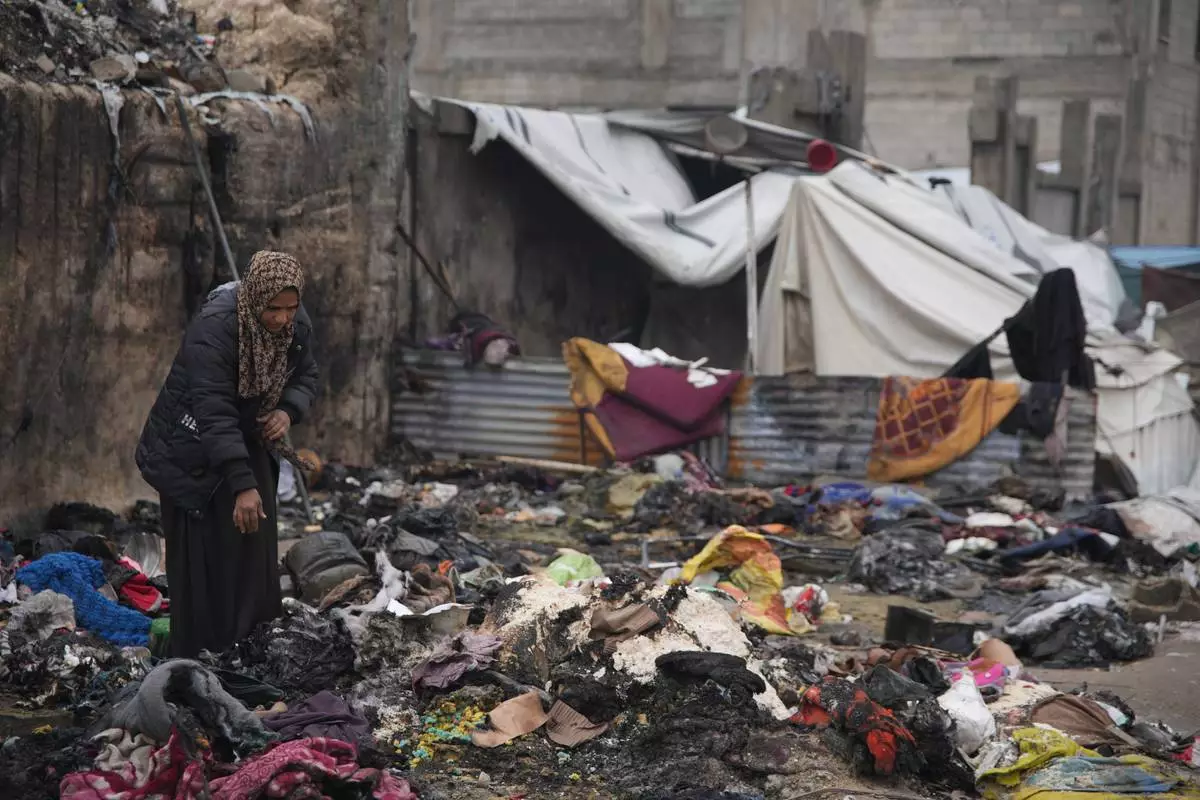
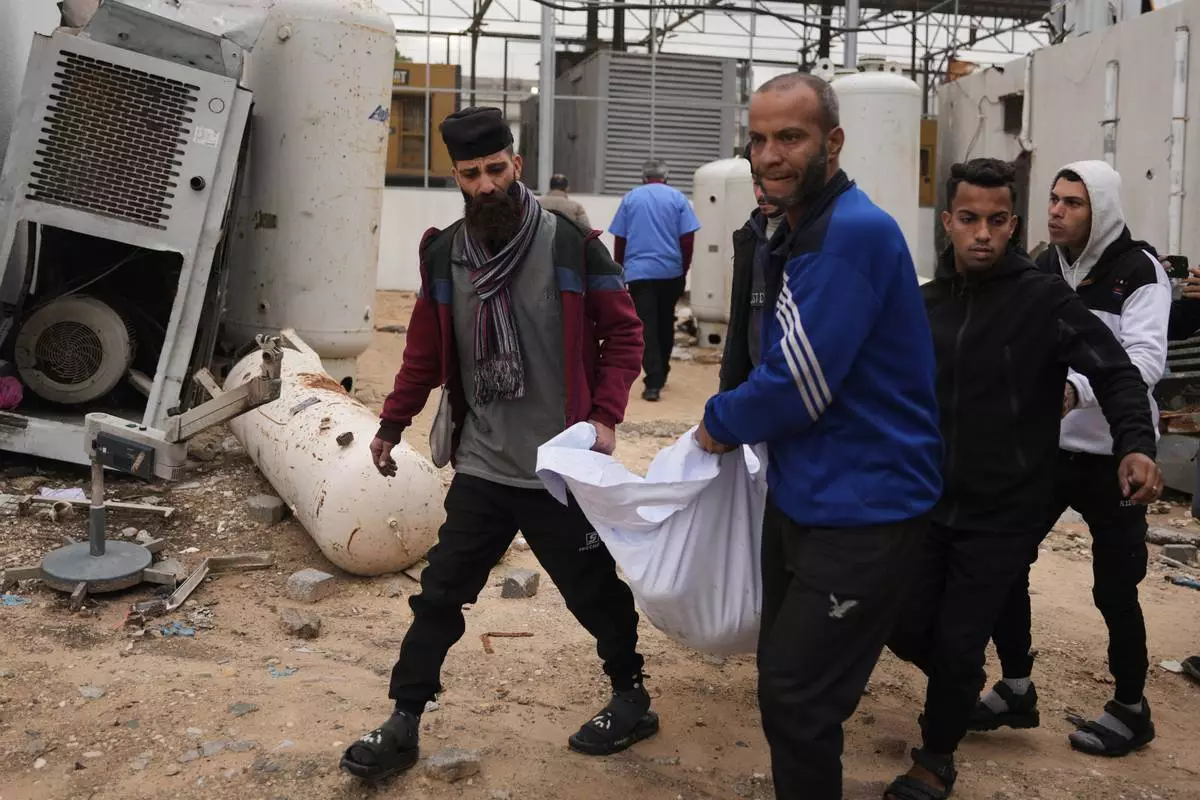
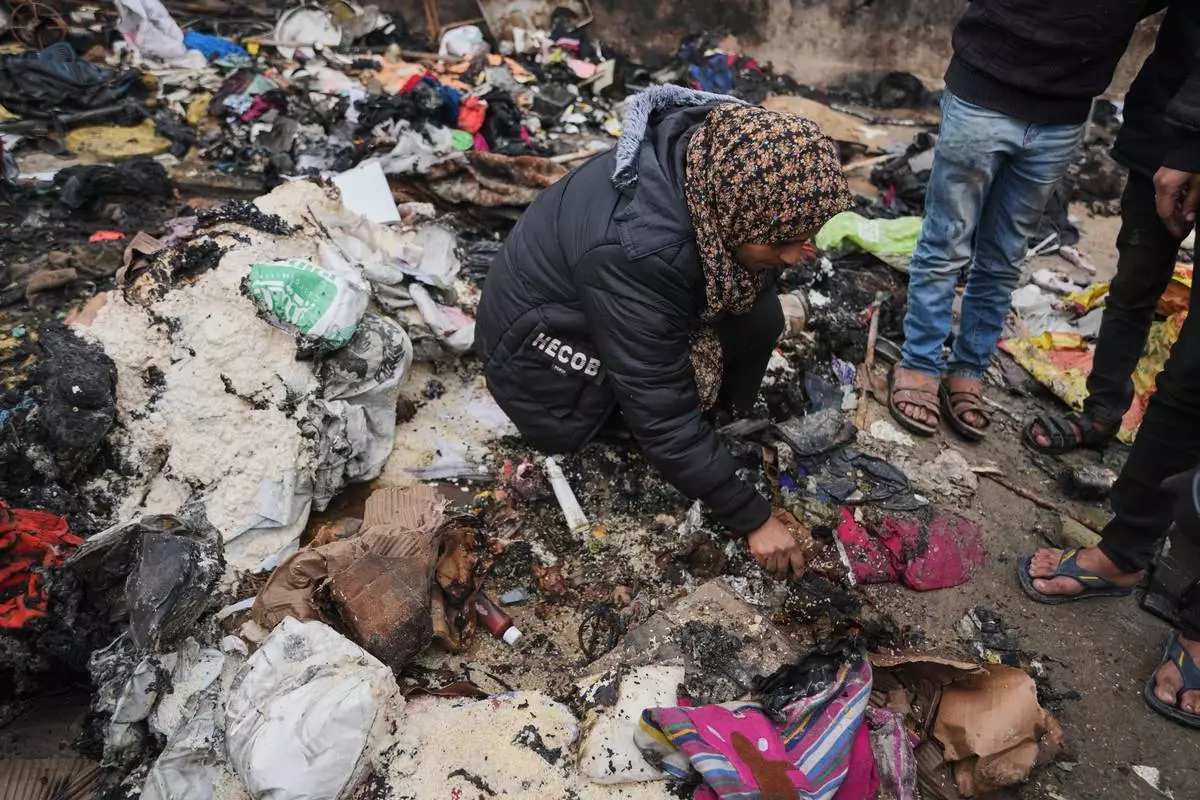
DEIR AL BALAH, Gaza Strip (AP) — A grandmother and her 5-year-old grandson burned to death in Gaza when their tent caught fire while cooking, as thousands of Palestinians endure colder weather in makeshift housing.

The nylon tent in Yarmouk caught fire Thursday night while a meal was being prepared, a neighbor said. A hospital official said that two Palestinian men were killed by Israeli gunfire on Friday in Gaza.

The shaky 12-week-old ceasefire between Israel and the Hamas militant group has largely ended large-scale Israeli bombardment of Gaza. But Palestinians are still being killed by Israeli forces, especially along the so-called Yellow Line that delineates areas under Israeli control.

On Friday, American actor and film producer Angelina Jolie visited the Rafah border crossing between Egypt and the Gaza Strip.

Over the past few weeks, cold winter rains have repeatedly lashed the sprawling tent cities, causing flooding, turning Gaza’s dirt roads into mud and causing damaged buildings to collapse.

Aid groups say not enough shelter materials are getting into Gaza during the truce. Figures recently released by Israel’s military suggest it hasn’t met the ceasefire stipulation of allowing 600 trucks of aid into Gaza a day, though Israel disputes that finding.

Israel has said throughout the war that Hamas was siphoning off aid supplies, preventing the population in Gaza from receiving them. Last month, the World Food Program said that there have been “notable improvements” in food security in Gaza since the ceasefire.

Palestinians have long called for mobile homes and caravans to be allowed in to protect them against living in impractical and worn out tents.

Jolie met with members of the Red Crescent on the Egyptian side of the Rafah border crossing and then visited a hospital in the nearby city of Arish to speak with Palestinian patients on Friday, according to Egyptian officials.

Her visit sought to raise support for the displaced and humanitarian workers in the crises in Gaza as well as in Sudan, Jolie's team said in a statement.

“What needs to happen is clear: the ceasefire must hold, and access must be sustained, safe and urgently scaled up so that aid, fuel and critical medical supplies can move quickly and consistently, at the volume required,” Jolie said about Gaza.

Reopening the crossing, which would allow Palestinians to leave Gaza — especially the ill and wounded who could get specialized care unavailable in the territory — has been contentious. Israel has said that it will only allow Palestinians to exit Gaza, not enter, until militants in Gaza return all the hostages they took in the attack on Oct. 7, 2023, which triggered the war. The remains of one hostage are still in Gaza.

Israel also says Palestinians wanting to leave Gaza will have to get Israeli and Egyptian security approval. Egypt, meanwhile, says it wants the crossing immediately opened in both directions, so Palestinians in Egypt can enter Gaza. That’s a position rooted in Egypt’s vehement opposition to Palestinian refugees permanently resettling in the country.

For more than two decades until 2022, Jolie was a special envoy to the U.N. refugee agency.

On Friday, the foreign ministers of Arab and Muslim countries, including Egypt, Qatar and Saudi Arabia, expressed concern about Gaza's humanitarian situation.

The situation has been “compounded by the continued lack of sufficient humanitarian access, acute shortages of essential life-saving supplies, and the slow pace of the entry of essential materials," according to the joint statement.

The Palestinian death toll from the war is at least 71,271, according to Gaza's Health Ministry, which doesn't distinguish between militants and civilians in its count. The Israel-Hamas war began with the Hamas-led Oct. 7 attack in southern Israel that killed about 1,200 people and saw 251 taken hostage.

On Friday, two Palestinian men were killed in separate incidents by Israeli gunfire in the Khan Younis area of southern Gaza, a hospital official said. Israel's military said troops operating in the southern Gaza Strip killed a person who “crossed the Yellow Line and approached the troops, posing an immediate threat to them."

Meanwhile, Israel continues operating in the occupied West Bank.

On Friday, the Palestinian Prisoners media office said that Israel carried out numerous raids across the territory, including the major cities of Ramallah and Hebron. Nearly 50 people were detained, following the arrest of at least 50 other Palestinians on Thursday, most of those in the Ramallah area.

Israel's military said there were arrests made of people “involved in terrorist activity." Last week, a Palestinian attacker rammed his car into a man and then stabbed a young woman in northern Israel, killing both of them, police said.

The Palestinian Prisoner’s Society says that Israel has arrested 7,000 Palestinians in the West Bank and Jerusalem this year, and 21,000 since the war began. The number arrested from Gaza isn't made public by Israel.

Find more of AP’s Israel-Hamas coverage at https://apnews.com/hub/israel-hamas-war

Fatima Abu al-Bayd inspects what remains of her mother's tent after her mother, Amal Abu Al-Khair, and grandchild, Saud, were killed when it caught fire overnight at the Yarmouk displacement camp in Gaza City, Friday, Jan. 2, 2026. (AP Photo/Jehad Alshrafi)

Fatima Abu al-Bayd inspects what remains of her mother's tent after her mother, Amal Abu Al-Khair, and grandchild, Saud, were killed when it caught fire overnight at the Yarmouk displacement camp in Gaza City, Friday, Jan. 2, 2026. (AP Photo/Jehad Alshrafi)

CORRECTS BYLINE TO EMAD ELGEBALY - American actor and film producer Angelina Jolie, front left, greets Red Crecent workers during her visit to the Rafah border crossing between Egypt and the Gaza Strip in Rafah, Egypt, Friday, Jan. 2, 2026. (AP Photo/Emad Elgebaly)

CORRECTS BYLINE TO EMAD ELGEBALY - American actor and film producer Angelina Jolie, front left, greets Red Crecent workers during her visit to the Rafah border crossing between Egypt and the Gaza Strip in Rafah, Egypt, Friday, Jan. 2, 2026. (AP Photo/Emad Elgebaly)

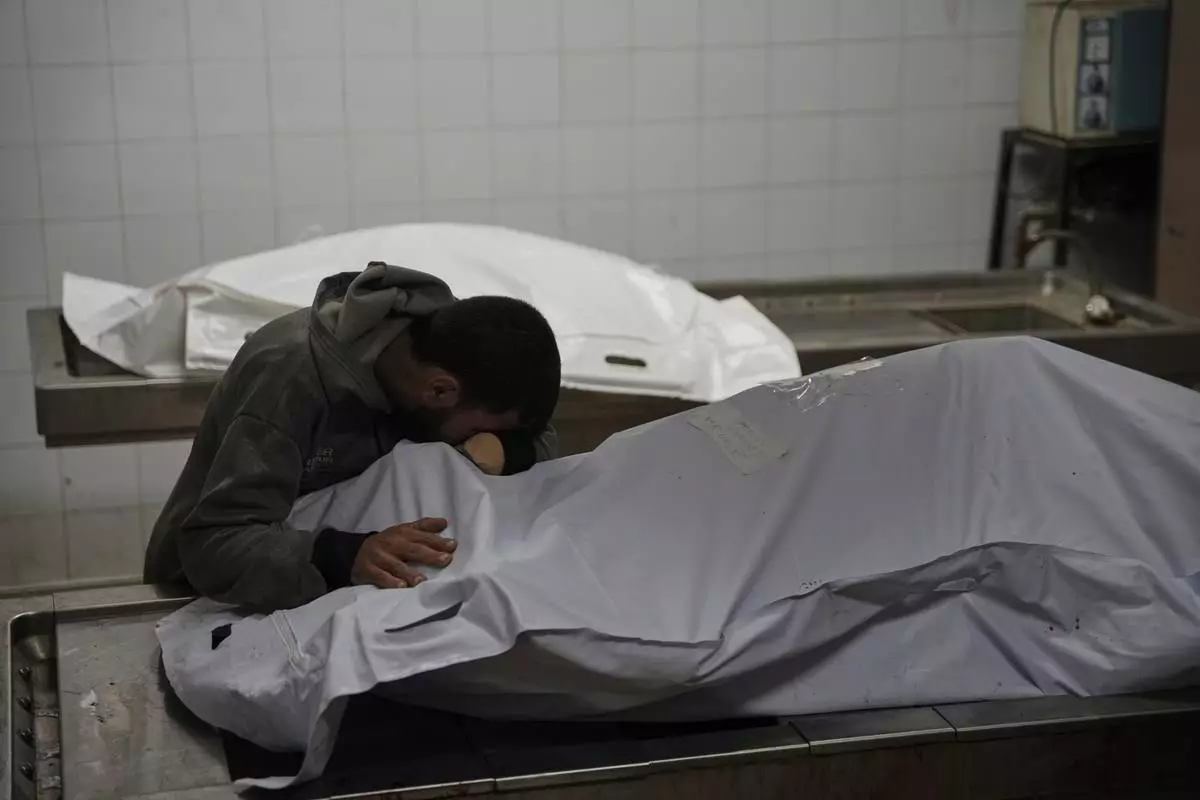
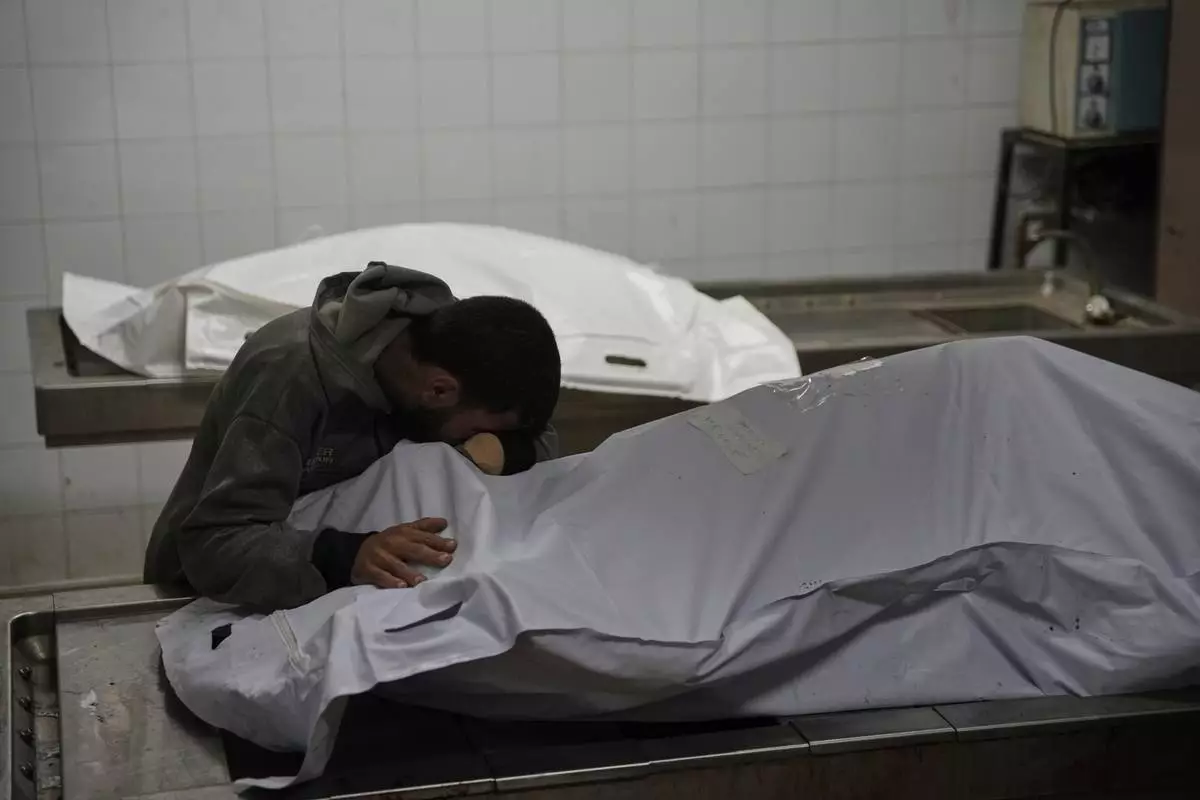
Magdi Abu Al-Khair bids farewell to his mother Amal Abu Al-Khair at Al-Shifa Hospital in Gaza City, Friday, Jan. 2, 2026, after she and her grandchild Saud were killed when their tent caught fire overnight at the Yarmouk displacement camp. (AP Photo/Jehad Alshrafi)

Magdi Abu Al-Khair bids farewell to his mother Amal Abu Al-Khair at Al-Shifa Hospital in Gaza City, Friday, Jan. 2, 2026, after she and her grandchild Saud were killed when their tent caught fire overnight at the Yarmouk displacement camp. (AP Photo/Jehad Alshrafi)

American actor and film producer Angelina Jolie, front left, greets Red Crecent workers during her visit to the Rafah border crossing between Egypt and the Gaza Strip in Rafah, Egypt, Friday, Jan. 2, 2026. (AP Photo/Mohamed Arafat)

American actor and film producer Angelina Jolie, front left, greets Red Crecent workers during her visit to the Rafah border crossing between Egypt and the Gaza Strip in Rafah, Egypt, Friday, Jan. 2, 2026. (AP Photo/Mohamed Arafat)

The bodies of Amal Abu Al-Khair and her grandchild, Saud, are transferred to Al-Shifa Hospital in Gaza City after they were killed when their tent caught fire overnight at the Yarmouk displacement camp, Friday, Jan. 2, 2026. (AP Photo/Jehad Alshrafi)

The bodies of Amal Abu Al-Khair and her grandchild, Saud, are transferred to Al-Shifa Hospital in Gaza City after they were killed when their tent caught fire overnight at the Yarmouk displacement camp, Friday, Jan. 2, 2026. (AP Photo/Jehad Alshrafi)

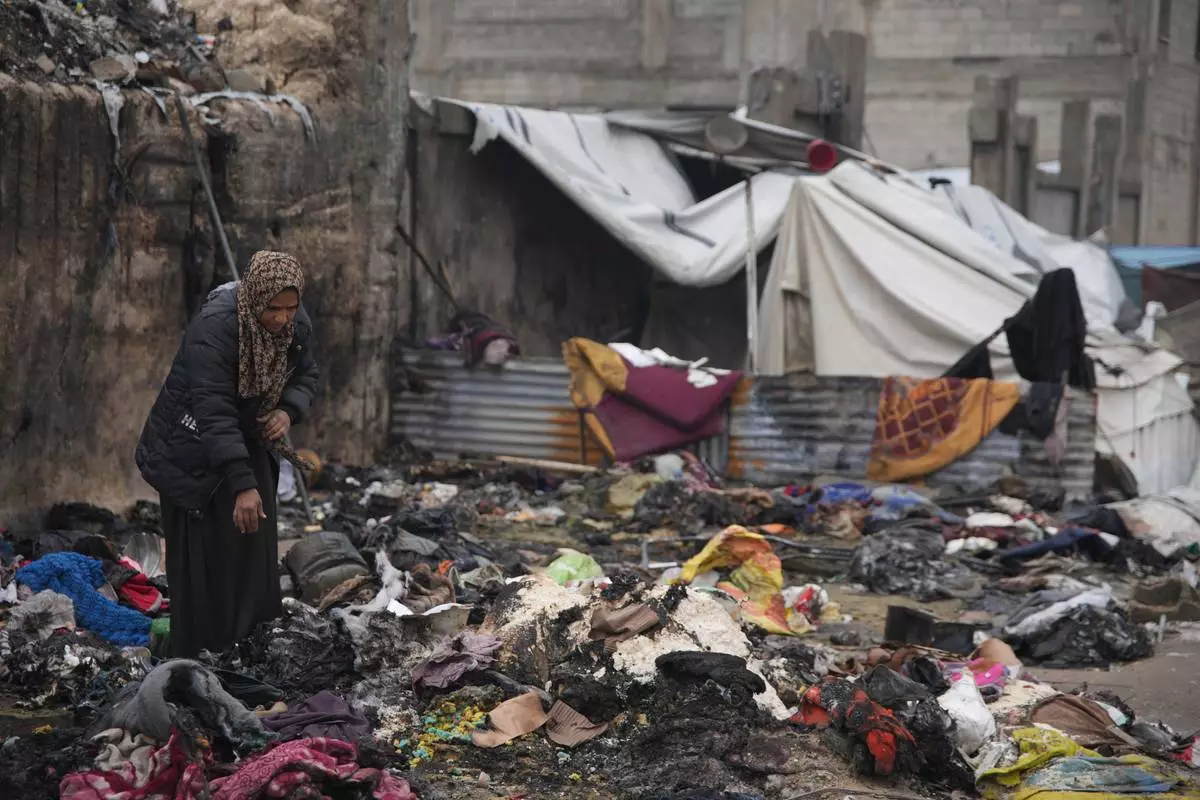
Fatima Abu al-Bayd inspects what remains of her mother's tent after her mother, Amal Abu Al-Khair, and grandchild, Saud, were killed when it caught fire overnight at the Yarmouk displacement camp in Gaza City, Friday, Jan. 2, 2026. (AP Photo/Jehad Alshrafi)

Fatima Abu al-Bayd inspects what remains of her mother's tent after her mother, Amal Abu Al-Khair, and grandchild, Saud, were killed when it caught fire overnight at the Yarmouk displacement camp in Gaza City, Friday, Jan. 2, 2026. (AP Photo/Jehad Alshrafi)

Fatima Abu al-Bayd inspects what remains of her mother's tent after her mother, Amal Abu Al-Khair, and grandchild, Saud, were killed when it caught fire overnight at the Yarmouk displacement camp in Gaza City, Friday, Jan. 2, 2026. (AP Photo/Jehad Alshrafi)

Fatima Abu al-Bayd inspects what remains of her mother's tent after her mother, Amal Abu Al-Khair, and grandchild, Saud, were killed when it caught fire overnight at the Yarmouk displacement camp in Gaza City, Friday, Jan. 2, 2026. (AP Photo/Jehad Alshrafi)

Magdi Abu Al-Khair bids farewell to his mother, Amal Abu Al-Khair, after she and her grandchild, Saud, were killed when their tent caught fire overnight at the Yarmouk displacement camp, at Al-Shifa Hospital in Gaza City, Friday, Jan. 2, 2026. (AP Photo/Jehad Alshrafi)

Magdi Abu Al-Khair bids farewell to his mother, Amal Abu Al-Khair, after she and her grandchild, Saud, were killed when their tent caught fire overnight at the Yarmouk displacement camp, at Al-Shifa Hospital in Gaza City, Friday, Jan. 2, 2026. (AP Photo/Jehad Alshrafi)

Recommended Articles