BAGHDAD (AP) — Tensions have escalated between Iraq’s central government in Baghdad and the semiautonomous Kurdish region in the country’s north in a long-running dispute over the sharing of oil revenues.
The central government has accused the Kurdish regional authorities of making illegal deals and facilitating oil smuggling. Baghdad cut off funding for public sector salaries in the Kurdish region ahead of the Eid al-Adha holiday. Kurdish authorities called the move “collective punishment” and threatened to retaliate.
It’s the latest flare-up in a long-running dispute between officials in Baghdad and Irbil, the seat of the Kurdish regional government, over sharing of oil revenues. In 2014, the Kurdish region decided to unilaterally export oil through an independent pipeline to the Turkish port of Ceyhan.
The central government considers it illegal for Irbil to export oil without going through the Iraqi national oil company and filed a case against Turkey in the International Court of Arbitration, arguing that Turkey was violating the provisions of the Iraqi-Turkish pipeline agreement signed in 1973.
Iraq stopped sending oil through the pipeline in March 2023 after the arbitration court ruled in Baghdad’s favor. Attempts to reach a deal to restart exports have repeatedly stalled.
Last month, Prime Minister Masrour Barzani of the Iraqi Kurdish regional government traveled to Washington, where he inked two major energy deals with U.S. companies. The federal government in Baghdad then sued in an Iraqi court, asserting that it was illegal for the regional government to make the deals without going through Baghdad.
The Iraqi Ministry of Finance announced a decision last month to halt funding for salaries of public sector employees in the Kurdish region. The move sparked widespread outrage in Irbil, triggering strong political and public reactions.
The ministry said in a statement that the decision was due to the Kurdish regional authorities’ “failure to hand over oil and non-oil revenues to the federal treasury, as stipulated in the federal budget laws.” It added that any transfer of funds would be conditional on “the region’s commitment to transparency and financial accountability.”
The federal Ministry of Oil accused Irbil of failing to deliver crude oil produced in the region’s fields to the ministry for export through the state-run SOMO company, which it said had led to massive financial losses amounting to billions of dollars.
The ministry warned that “continued non-compliance jeopardizes Iraq’s international reputation and obligations, forcing the federal government to reduce oil production in other provinces to stay within Iraq’s OPEC quota — which includes Iraqi Kurdish production, regardless of its legality.”
Baghdad has also accused Irbil of smuggling oil out of the country. An Iraqi official who spoke on condition of anonymity because he was not authorized to comment publicly said the government had tracked 240 cases of illegal border crossings from Iraq’s Kurdish region into Iran between Dec. 25, 2024, and May 24, 2025, aimed at smuggling oil derivatives.
The Kurdish region’s Ministry of Natural Resources in a statement called those allegations “a smokescreen to distract from widespread corruption and smuggling in other parts of Iraq. The KRG agreed to sell its oil through SOMO, opened an escrow account, and handed over revenues — yet Baghdad failed to meet its financial obligations.”
It accused the federal government of being responsible for the halt in oil exports via Turkey due to the lawsuit it filed in 2023 and said the Kurdish region had delivered over 11 million barrels of oil to the Ministry of Oil without receiving any financial compensation.
The ministry accused Baghdad of “violating the constitution and pursuing a deliberate policy of collective punishment and starvation against the people" of the Kurdish region through the halt in funding for salaries.
Barzani in a statement on the eve of the Eid al-Adha holiday described the withholding of salaries as an “unjust and oppressive decision” and a “policy of mass starvation” comparable to the chemical attacks and “genocide” launched by Iraq’s former longtime strongman ruler, Saddam Hussein, against the Kurds.
The Iraqi Kurdish people "have resisted with steadfastness and courage in the face of all forms of pressure and tyranny” and “regret was the fate of the tyrants," he said.
In the meantime, residents of the Kurdish region feel caught in the middle of the yearslong political dispute once again.
Saman Ali Salah, a public school teacher from the city of Sulaimaniyah, said the salary cutoff comes at a particularly bad time for him — his daughter was hit by a car 40 days ago and is still in the hospital. He blamed both Baghdad and Irbil for the situation.
“All the money I had was spent on transportation from the house to the hospital and I haven’t paid my rent for the past two months," Salah said. “I don’t know what to do. All I can say is that God will take revenge on these so-called officials on Judgement Day.”
Associated Press reporter Salam Salim in Irbil, Iraq, contributed to this report.
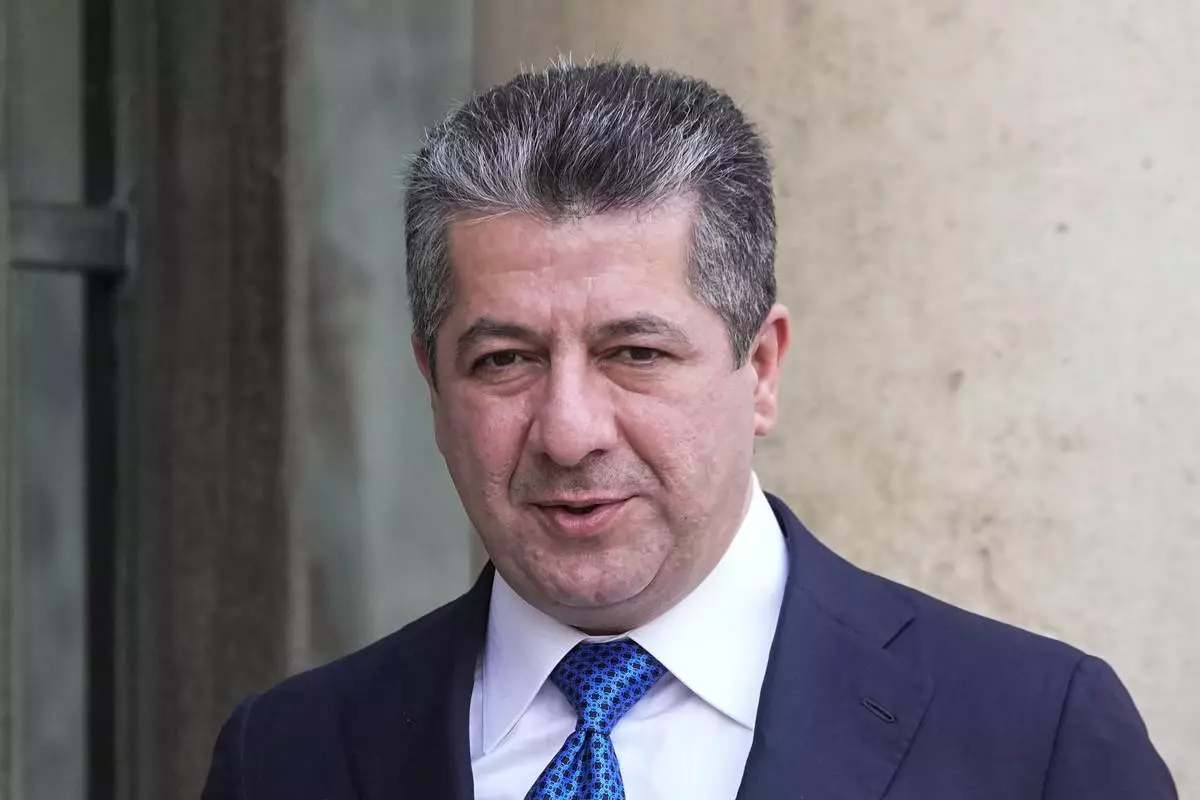
FILE - Prime Minister of the semi-autonomous Kurdish-controlled region in northern Iraq Masrour Barzani, arrives at the Elysee Palace in Paris to meet French President Emmanuel Macron, Thursday, Feb. 16, 2023. (AP Photo/Michel Euler, File)
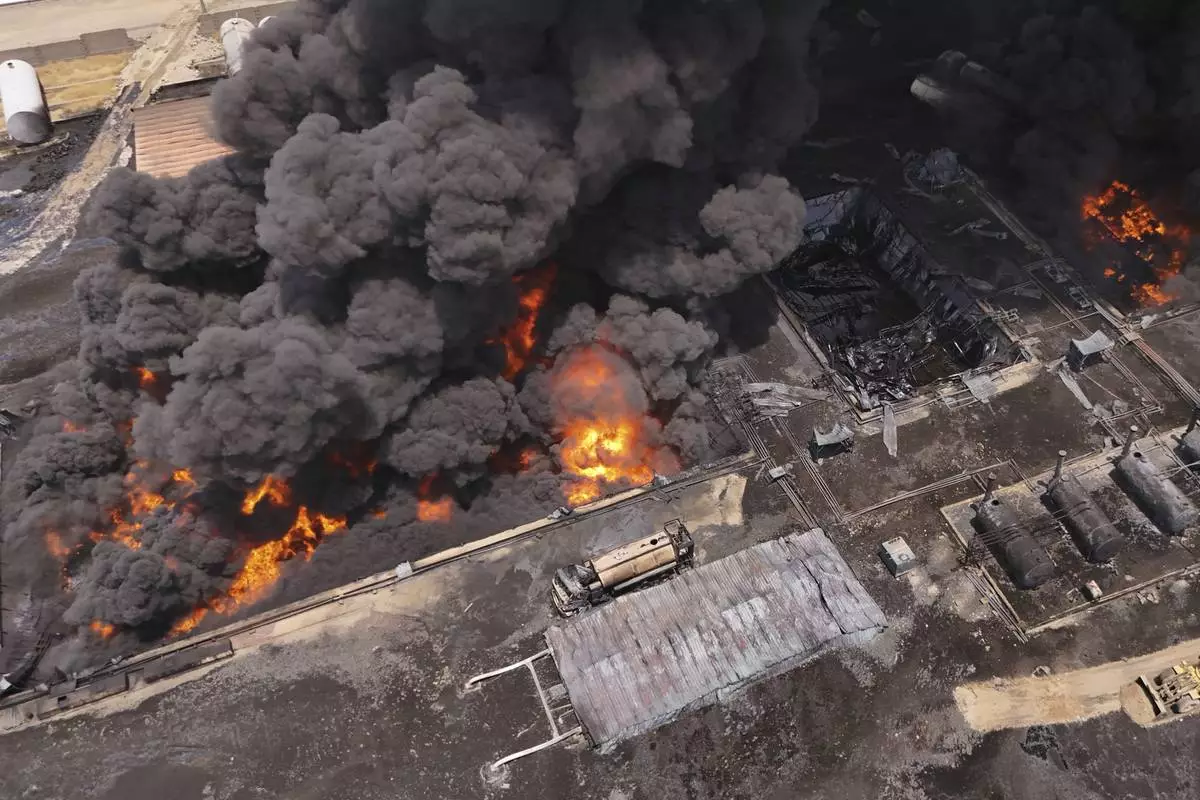
FILE - An oil refinery burns outside Irbil, Iraq, Thursday, June 13, 2024. (AP Photo/Bilind Tahir/Rudaw, File)