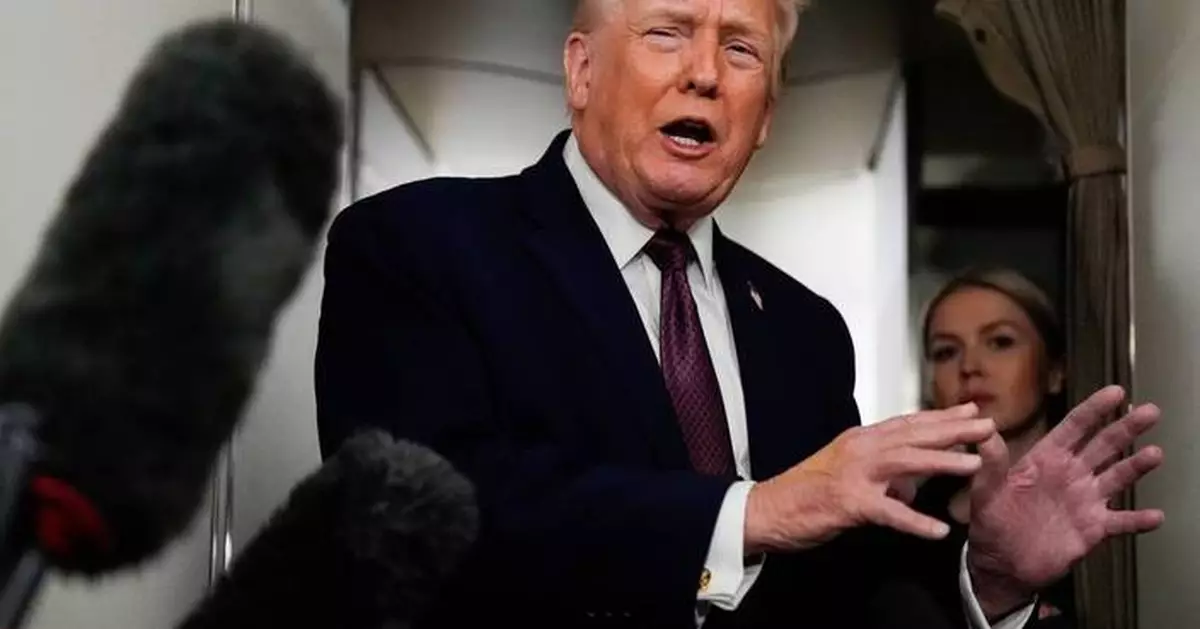
DETROIT (AP) — President Donald Trump will travel to Michigan on Tuesday to promote his efforts to boost U.S. manufacturing, trying to counter fears about a weakening job market and worries that still-rising prices are taking a toll on Americans' pocketbooks.
The day trip will include a tour of a Ford factory in Dearborn that makes F-150 pickups, the bestselling domestic vehicle in the U.S. The Republican president is also set to address the Detroit Economic Club at the MotorCity Casino.
November's off-year elections in Virginia, New Jersey and elsewhere showed a shift away from Republicans as public concerns about kitchen table issues persist. In their wake, the White House said Trump would put a greater emphasis on talking directly to the public about his economic policies after doing relatively few events around the country earlier in his term.
The president has suggested that jitters about affordability are a “hoax” unnecessarily stirred by Democrats. Still, though he's imposed steep tariffs on U.S. trading partners around the world, Trump has reduced some of them when it comes to making cars — including extending import levies on foreign-made auto parts until 2030.
Ford announced last month that it was scrapping plans to make an electric F-150, despite pouring billions of dollars into broader electrification, after the Trump administration slashed targets to have half of all new vehicle sales be electric by 2030, eliminated EV tax credits and proposed weakening the emissions and gas mileage rules.
Trump's Michigan swing follows economy-focused speeches he gave last month in Pennsylvania — where his gripes about immigrants arriving to the U.S. from “filthy” countries got more attention than his pledges to fight inflation — and North Carolina, where he insisted his tariffs have spurred the economy, despite residents noting the squeeze of higher prices.
Trump carried Michigan in 2016 and 2024, after it swung Democratic and backed Joe Biden in 2020. He marked his first 100 days in office with a rally-style April speech outside Detroit, where he focused more on past campaign grudges than his administration's economic or policy plans.
During that visit nearly nine months ago, Trump also spoke at Selfridge Air National Guard Base and announced a new fighter jet mission, allaying fears that the base could close. It represented a win for Michigan Democratic Gov. Gretchen Whitmer — and the two even shared a hug.
This time, Democrats have panned the president's trip, singling out national Republicans' opposition to extending health care subsidies and recalling a moment in October 2024 when Trump suggested that Democrats' retaining the White House would mean “our whole country will end up being like Detroit."
"You’re going to have a mess on your hands,” Trump said during a campaign stop back then.
Curtis Hertel, chair of the Michigan Democratic Party, said that “after spending months claiming that affordability was a ‘hoax’ and creating a health care crisis for Michiganders, Donald Trump is now coming to Detroit — a city he hates — to tout his billionaire-first agenda while working families suffer."
“Michiganders are feeling the effects of Trump’s economy every day,” Hertel said in a statement.
Weissert reported from Washington.
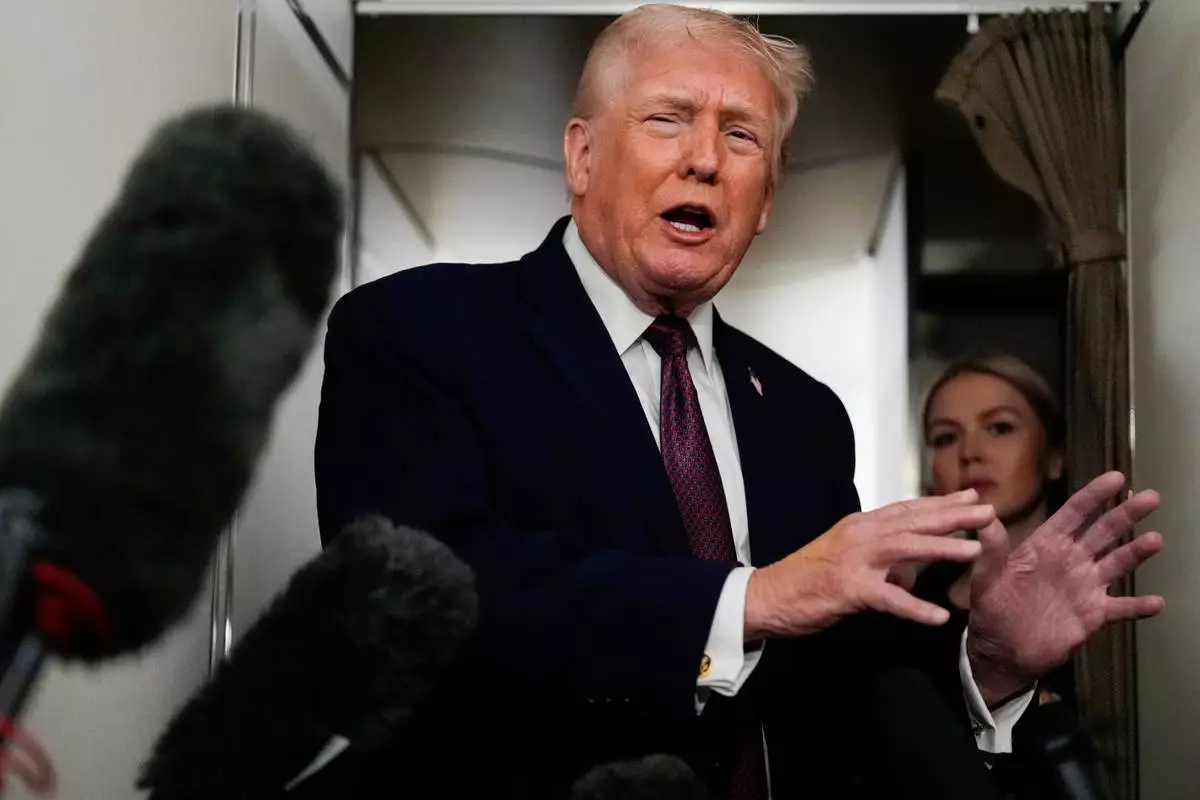
President Donald Trump speaks to reporters while in flight on Air Force One to Joint Base Andrews, Md., Sunday, Jan. 11, 2026. (AP Photo/Julia Demaree Nikhinson)
MADISON, Wis. (AP) — Wisconsin's Democratic Gov. Tony Evers on Tuesday called on the Republican-controlled Legislature to act on a broad array of his priorities in his final year in office, even if it means working for longer than they are scheduled to be in session.
Republicans are unlikely to follow Evers' call to action on many of the proposals he outlined in a letter, just a year after they rejected the same or similar ideas in his state budget. But Evers expressed optimism that bipartisan agreement is near on several issues, including protecting funding for SNAP, the country’s main food aid program, and combating water pollution caused by PFAS chemicals.
“We have a year left and it’s not all about me,” Evers, who opted against seeking a third term, told reporters on Monday. “All of the things that need to be addressed, many of them can be.”
Evers has served as the swing state's governor since 2019, helping Democrat Joe Biden narrowly win the state on the way to becoming president in 2020. President Donald Trump carried Wisconsin in 2024 and in 2016, both times by less than 1 percentage point.
Evers' term ends in a year, but he's focused on setting up his party to take back the legislative majority for the first time since they lost it in 2010.
Evers signed new district maps in 2024 that helped Democrats chip into Republican majorities in the Assembly and Senate. Democrats are also counting on anger toward Trump helping them in the midterm.
The Legislature is scheduled to be done with its session by mid-March, giving lawmakers more time to campaign for the fall election. The Assembly is planning to quit in mid-February. But Evers said Monday that there's still time to advance Democratic priorities.
“I think it’s bad politics to say we’re done in February, we’re done in March, and we’ll see you at the polls,” Evers said. “That doesn’t work. I don’t think it’s a good message. We have the opportunity to do some good things.”
Evers called for bipartisanship to tackle issues that have long been Democratic priorities, such as increasing public school funding, lowering health care costs and enacting gun control laws.
While many of his proposals are likely to be summarily rejected, Evers said Democrats and Republicans were close on reaching deals to release $125 million in funding to combat PFAS pollution. He also said both sides were close to an agreement that would put additional safeguards in place to ensure Wisconsin isn't penalized by the federal government for errors in who gets SNAP food assistance.
Evers called on lawmakers to spend $1.3 billion more on public schools in an effort to reduce property taxes, a month after homeowners across the state received higher tax bills. Republicans blame Evers because of a veto he issued that allows schools to increase spending limits for 400 years. But that is only one part of the complicated school aid formula. Evers and school officials have said funding from the state has not kept pace with expenses, forcing schools to ask voters to approve referendums for an increase in property taxes to make up the difference.
If schools aren't given more money, Evers said “we're in a world of hurt” because property taxes will only continue to increase.
Republican legislative leaders, in interviews with The Associated Press last month, did not express support for increasing general school aid funding.
“We have to have a bigger conversation about how we’re going to fund schools long term than just saying we’re gonna put more money to the same formula doing the same thing,” Assembly Speaker Robin Vos said.
Evers also urged the Legislature to make progress on his plan to close a 128-year-old prison in Green Bay as part of a larger overhaul of the correctional system. In October, the state building commission approved $15 million for planning. But once that is spent, absent further action, the work will stall, Evers said.
“We have to get this across the finish line,” he said.
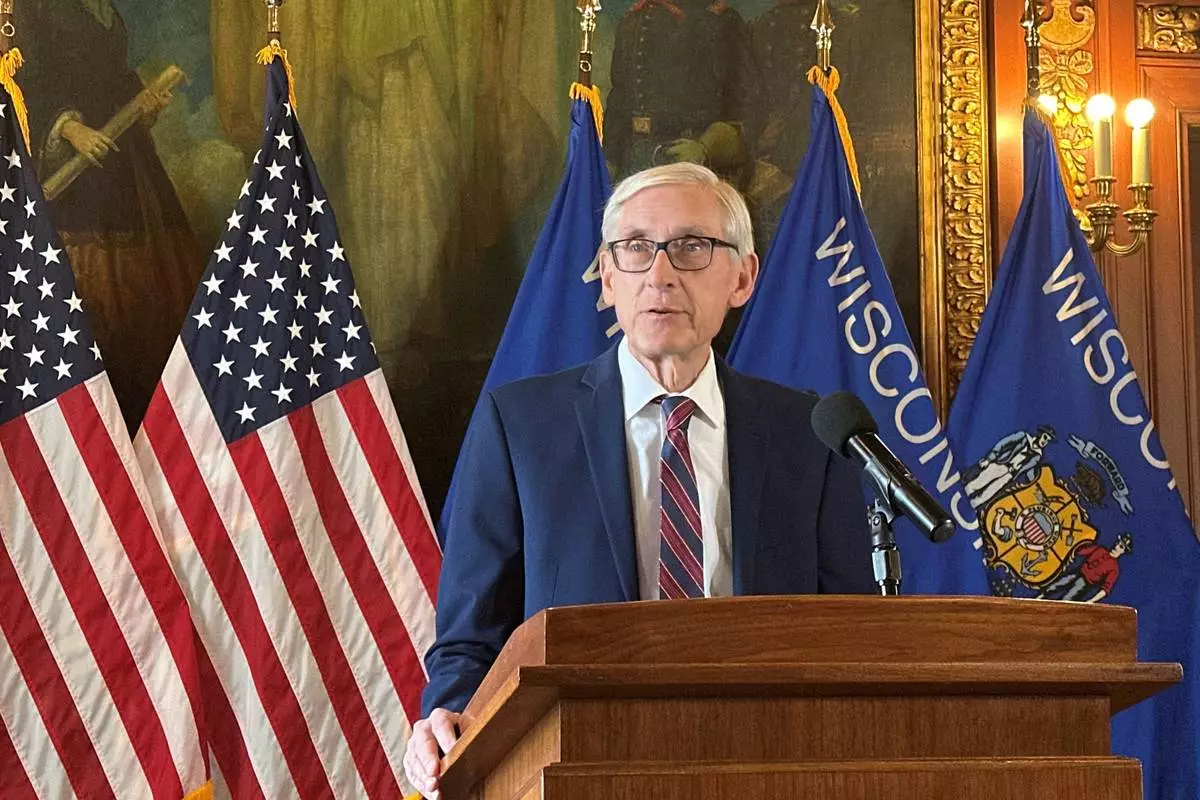
Wisconsin's Democratic Gov. Tony Evers discusses his call on the Republican-controlled Legislature to act on a broad array of his priorities in his final year in office on Monday, Jan. 12, 2026, in Madison, Wis. (AP Photo/Scott Bauer)
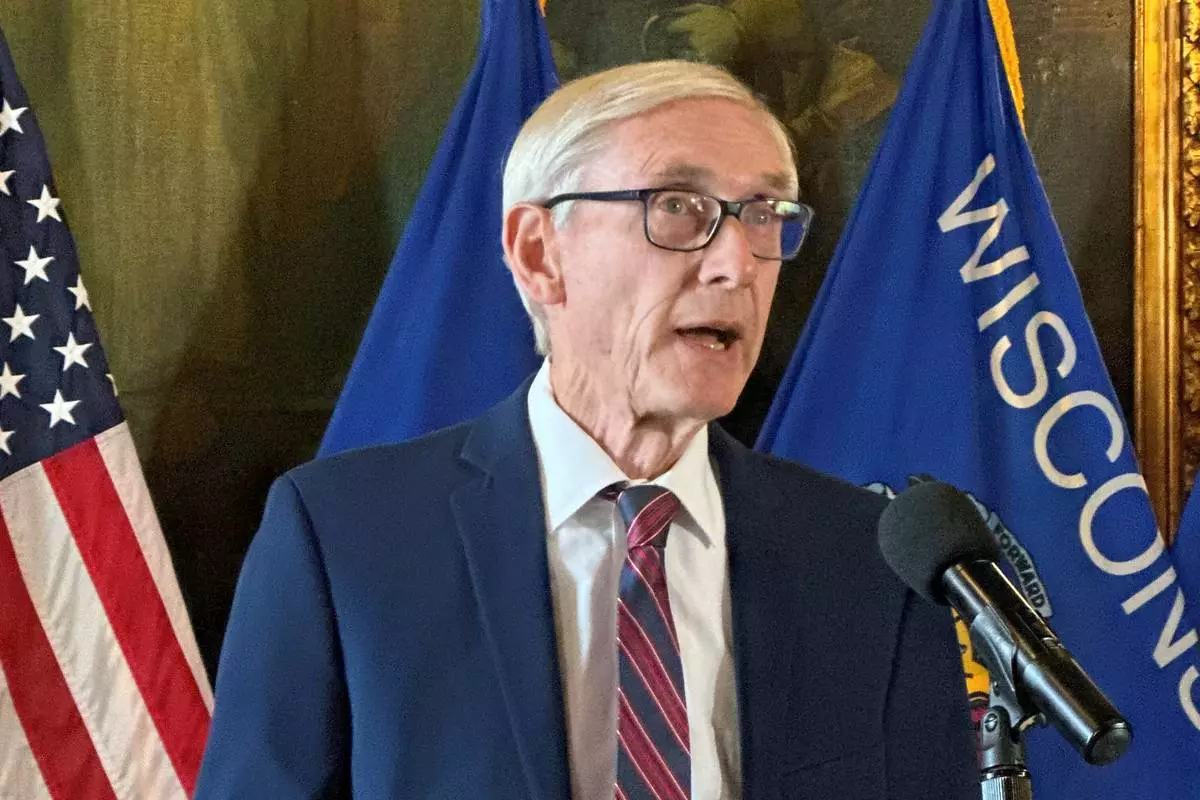
Wisconsin's Democratic Gov. Tony Evers discusses his call on the Republican-controlled Legislature to act on a broad array of his priorities in his final year in office on Monday, Jan. 12, 2026, in Madison, Wis. (AP Photo/Scott Bauer)