Skip to Content Facebook Feature Image

Syrian army and Kurdish forces exchange strikes east of Aleppo

News

Syrian army and Kurdish forces exchange strikes east of Aleppo
News

News

Syrian army and Kurdish forces exchange strikes east of Aleppo

2026-01-14 12:33 Last Updated At:12:40

ALEPPO, Syria (AP) — Syrian government forces and the Kurdish-led Syrian Democratic Forces exchanged fire Tuesday in a tense area of eastern Aleppo province, marking a possible escalation after days of clashes in the northern city.

No casualties were immediately reported, as an impasse continues in negotiations between the central government and the SDF over merging its thousands of fighters into the national army.

More Images
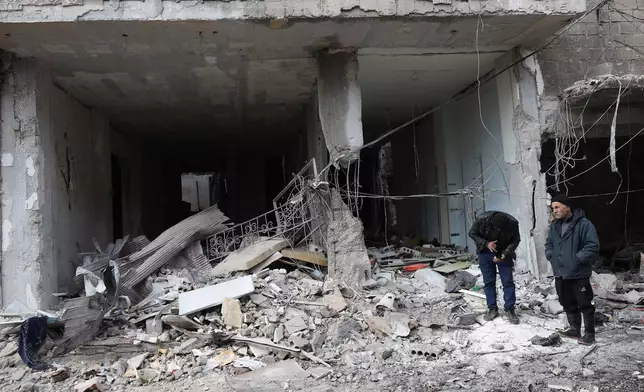
People stand in front of destroyed shops, in the Sheikh Maqsoud neighborhood after days of fighting between government forces and Kurdish fighters in the northern city of Aleppo, Syria, Tuesday, Jan. 13, 2026. (AP Photo/Omar Albam)
People stand in front of destroyed shops, in the Sheikh Maqsoud neighborhood after days of fighting between government forces and Kurdish fighters in the northern city of Aleppo, Syria, Tuesday, Jan. 13, 2026. (AP Photo/Omar Albam)
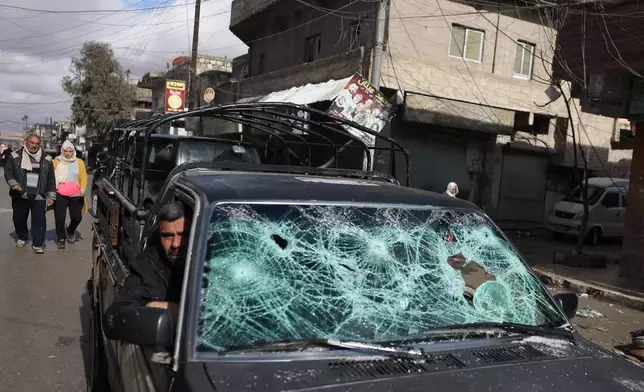
A man rides a damaged car, as displaced residents return to the Sheikh Maqsoud neighborhood after days of fighting between government forces and Kurdish fighters in the northern city of Aleppo, Syria, Tuesday, Jan. 13, 2026. (AP Photo/Omar Albam)

A man rides a damaged car, as displaced residents return to the Sheikh Maqsoud neighborhood after days of fighting between government forces and Kurdish fighters in the northern city of Aleppo, Syria, Tuesday, Jan. 13, 2026. (AP Photo/Omar Albam)

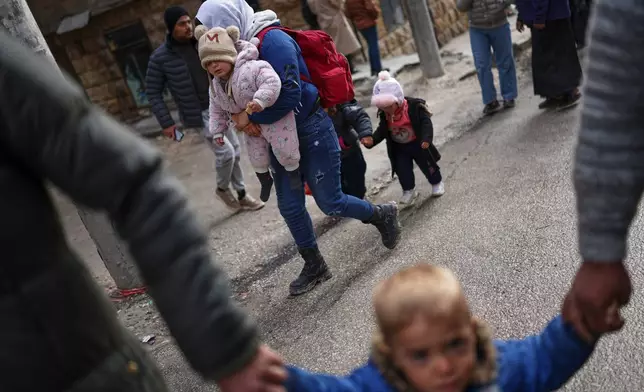
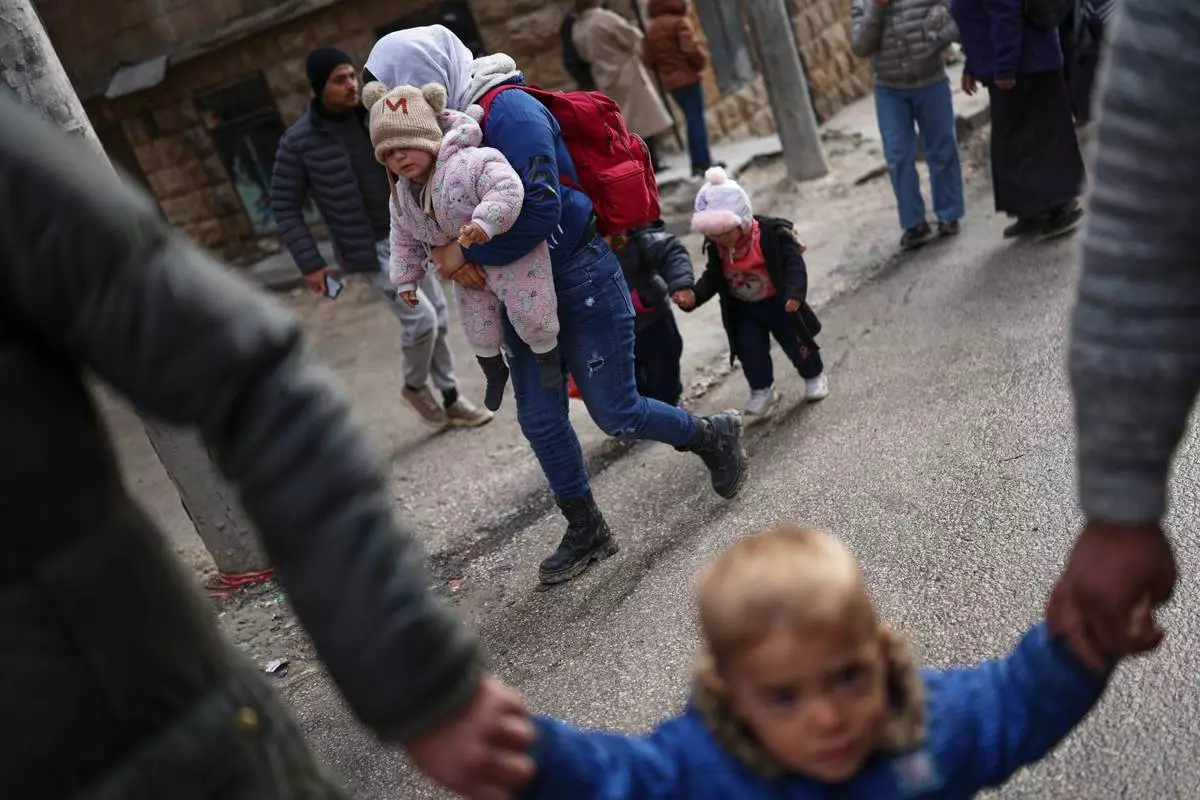
Displaced residents return to the Sheikh Maqsoud neighborhood after days of fighting between government forces and Kurdish fighters in the northern city of Aleppo, Syria, Tuesday, Jan. 13, 2026. (AP Photo/Ghaith Alsayed)
Displaced residents return to the Sheikh Maqsoud neighborhood after days of fighting between government forces and Kurdish fighters in the northern city of Aleppo, Syria, Tuesday, Jan. 13, 2026. (AP Photo/Ghaith Alsayed)
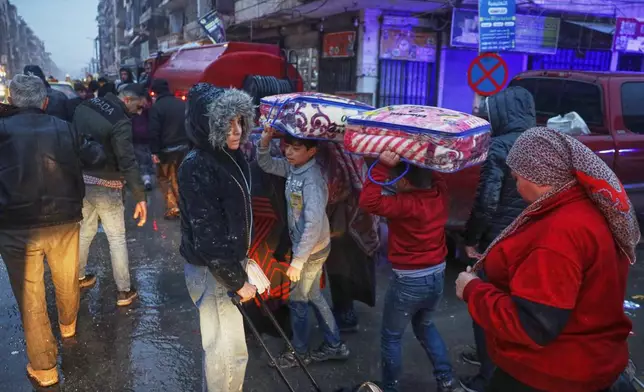
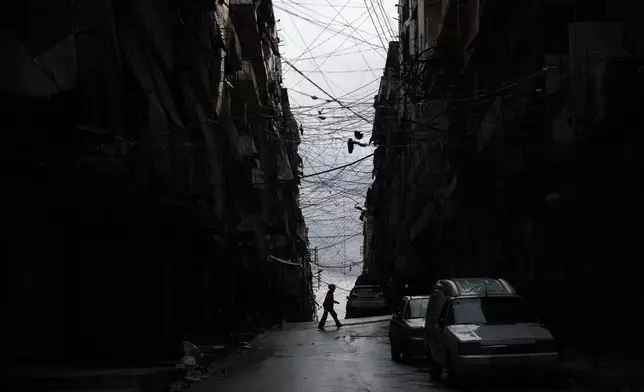
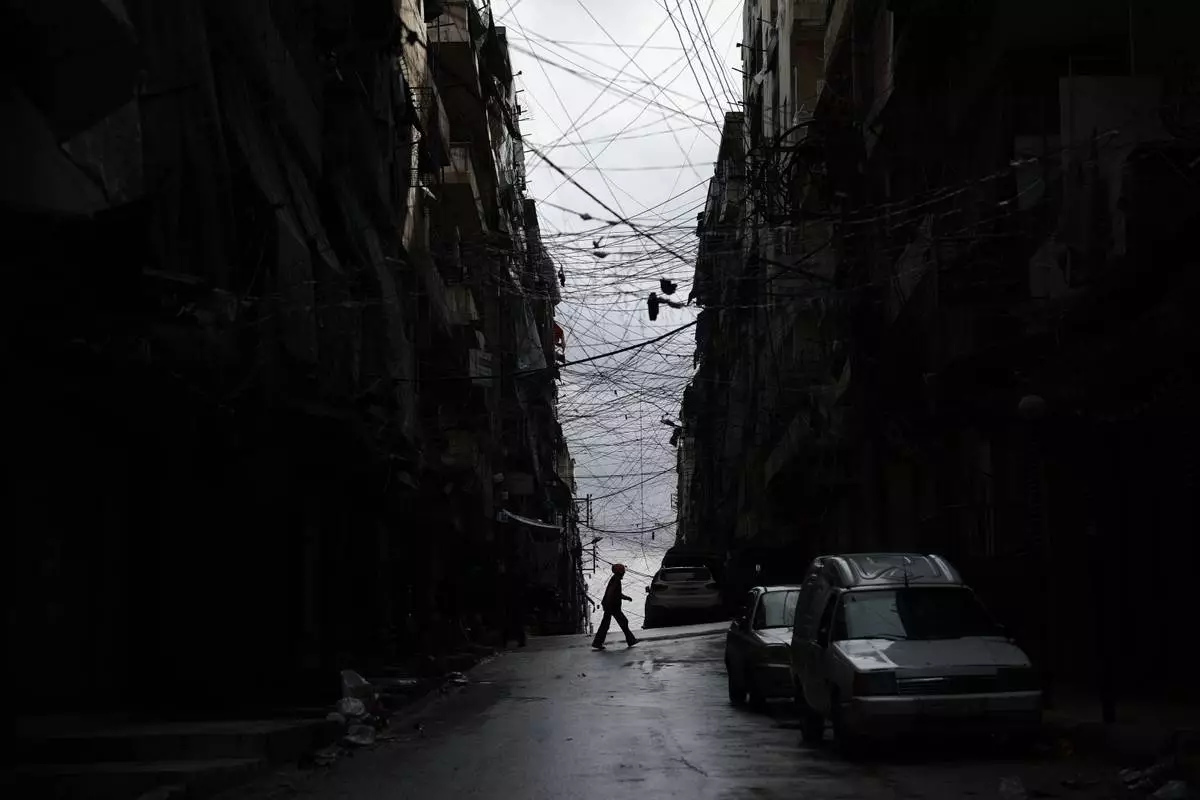
A man crosses a street in the predominantly Kurdish Sheikh Maqsoud neighborhood after days of fighting between government forces and Kurdish fighters in the northern city of Aleppo, Syria, Tuesday, Jan. 13, 2026. (AP Photo/Ghaith Alsayed)

A man crosses a street in the predominantly Kurdish Sheikh Maqsoud neighborhood after days of fighting between government forces and Kurdish fighters in the northern city of Aleppo, Syria, Tuesday, Jan. 13, 2026. (AP Photo/Ghaith Alsayed)

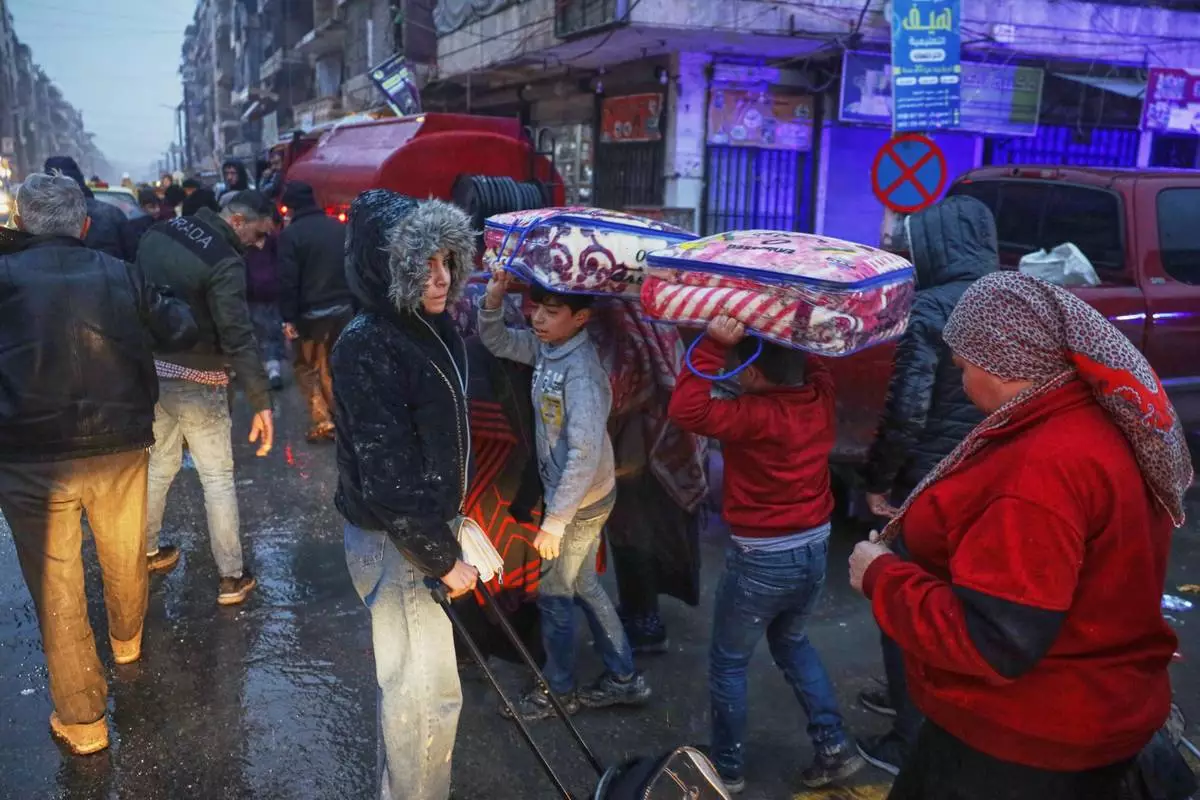
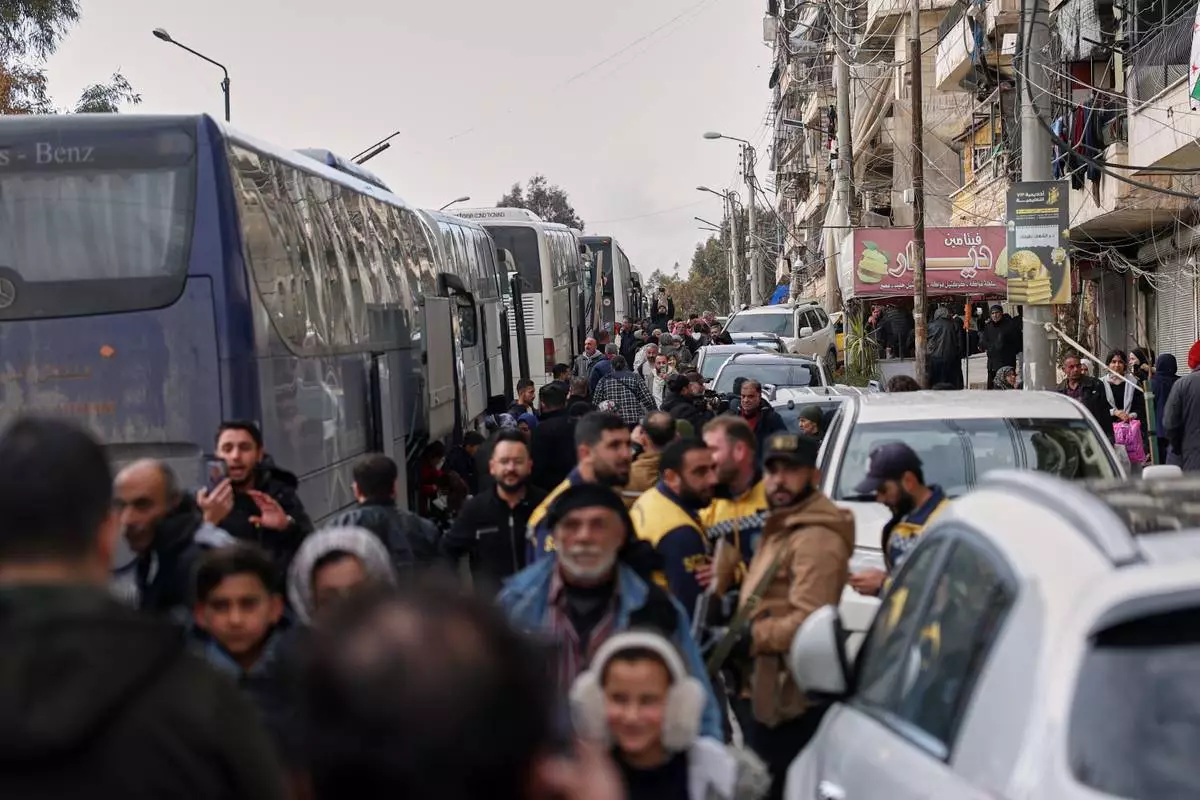
Displaced residents return to a the Achrafieh neighborhood after days of fighting between government forces and Kurdish fighters in the northern city of Aleppo, Syria, Monday, Jan. 12, 2026. (AP Photo/Omar Albam)
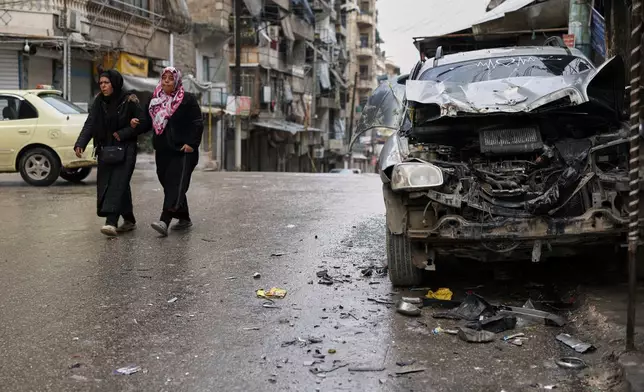
Displaced residents return to a the Achrafieh neighborhood after days of fighting between government forces and Kurdish fighters in the northern city of Aleppo, Syria, Monday, Jan. 12, 2026. (AP Photo/Omar Albam)

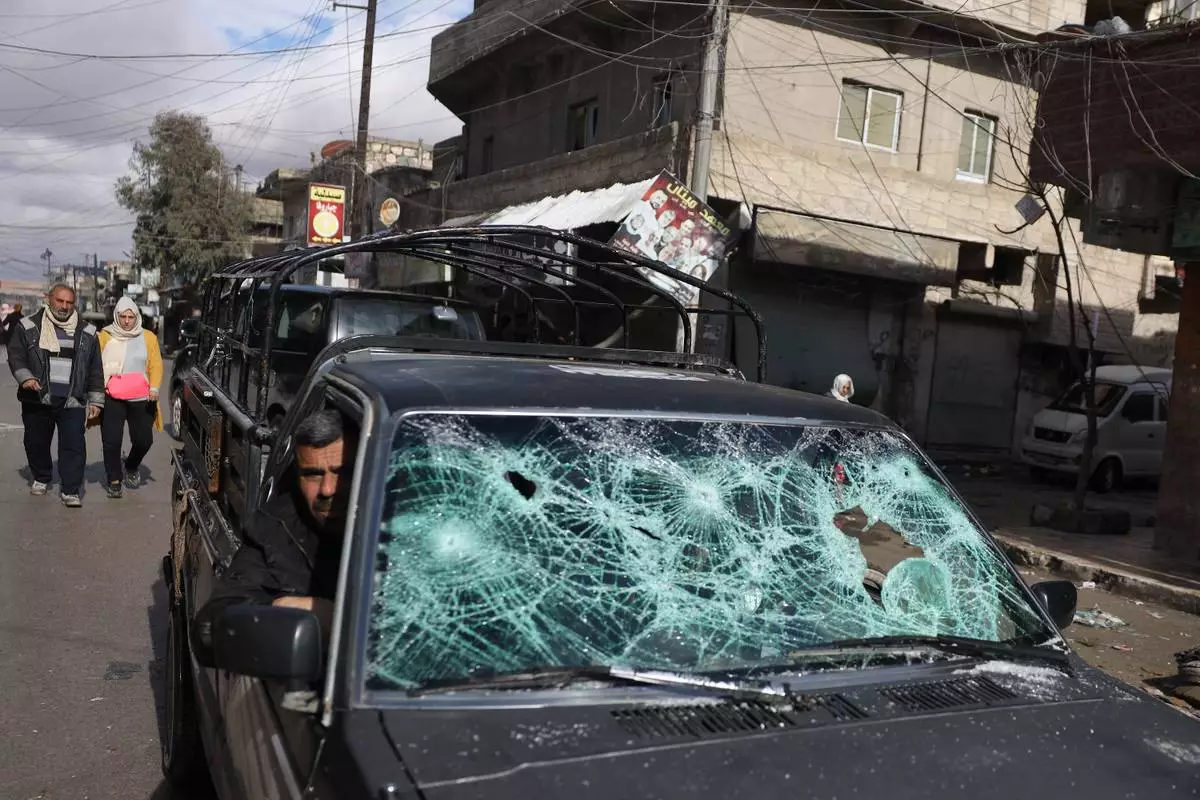
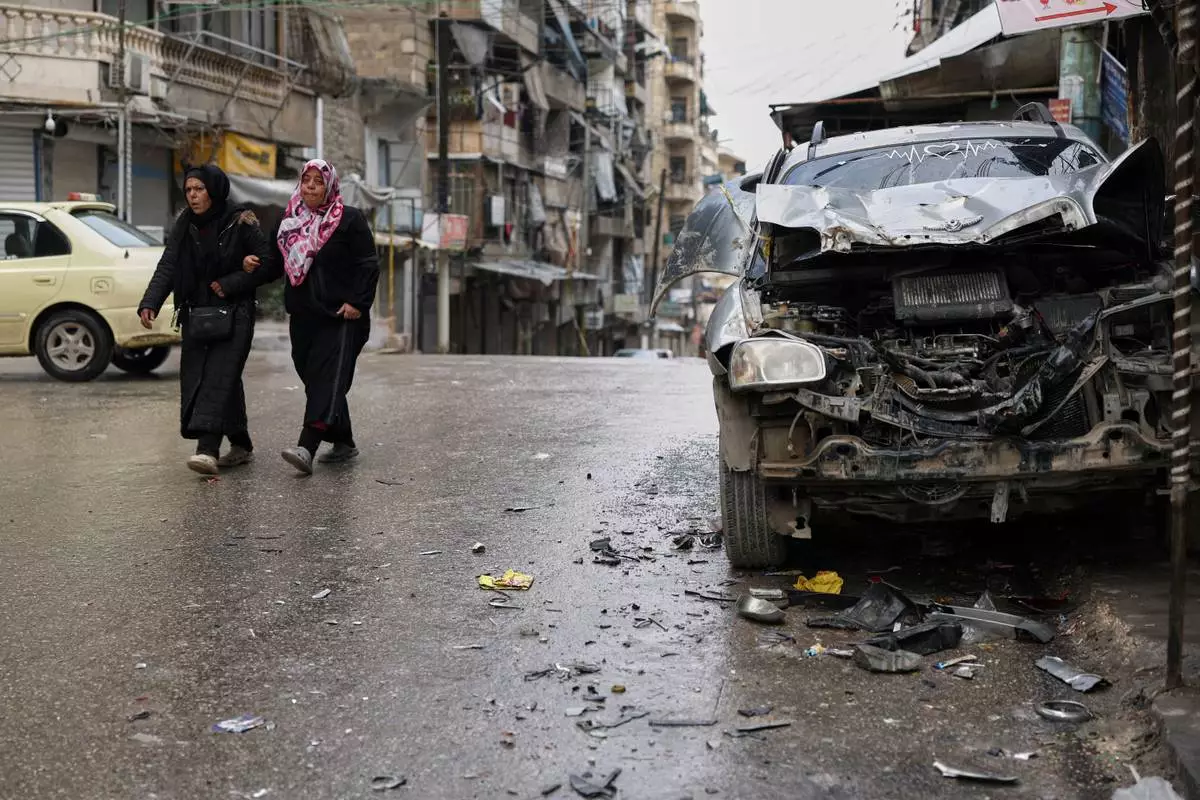
Women walk by a damaged car in the predominantly Kurdish Sheikh Maqsoud neighborhood after days of fighting between government forces and Kurdish fighters in the northern city of Aleppo, Syria, Tuesday, Jan. 13, 2026. (AP Photo/Ghaith Alsayed)
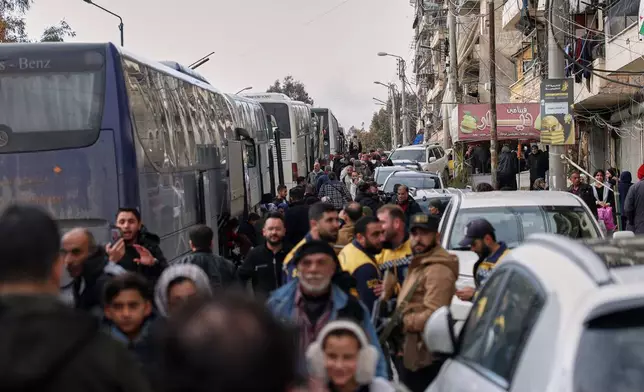
Women walk by a damaged car in the predominantly Kurdish Sheikh Maqsoud neighborhood after days of fighting between government forces and Kurdish fighters in the northern city of Aleppo, Syria, Tuesday, Jan. 13, 2026. (AP Photo/Ghaith Alsayed)
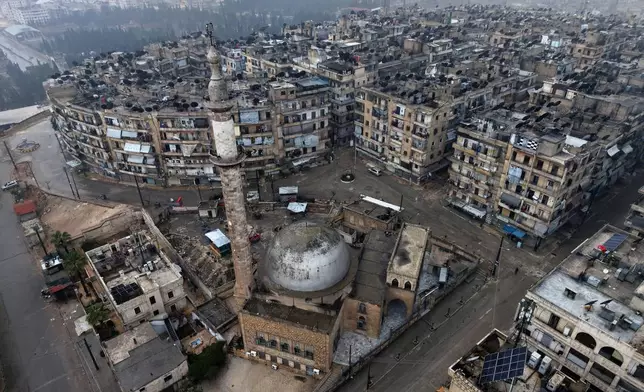
Displaced residents return to the Sheikh Maqsoud neighborhood after days of fighting between government forces and Kurdish fighters in the northern city of Aleppo, Syria, Tuesday, Jan. 13, 2026. (AP Photo/Ghaith Alsayed)

Displaced residents return to the Sheikh Maqsoud neighborhood after days of fighting between government forces and Kurdish fighters in the northern city of Aleppo, Syria, Tuesday, Jan. 13, 2026. (AP Photo/Ghaith Alsayed)

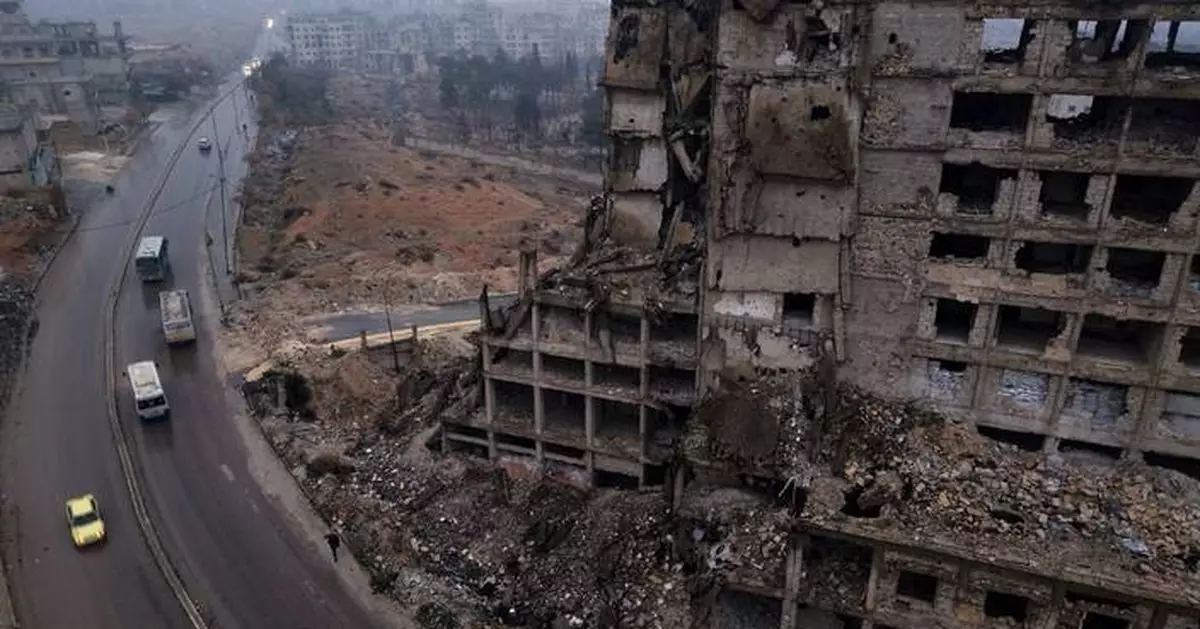
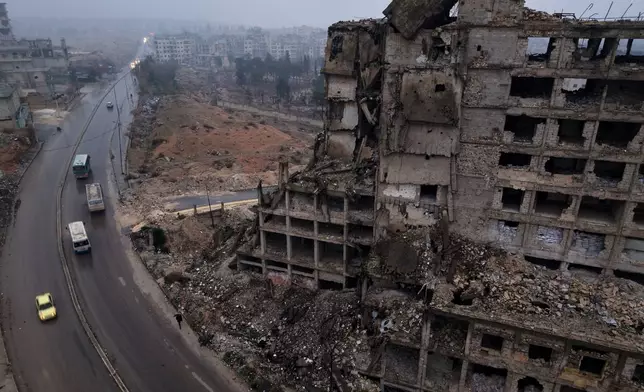
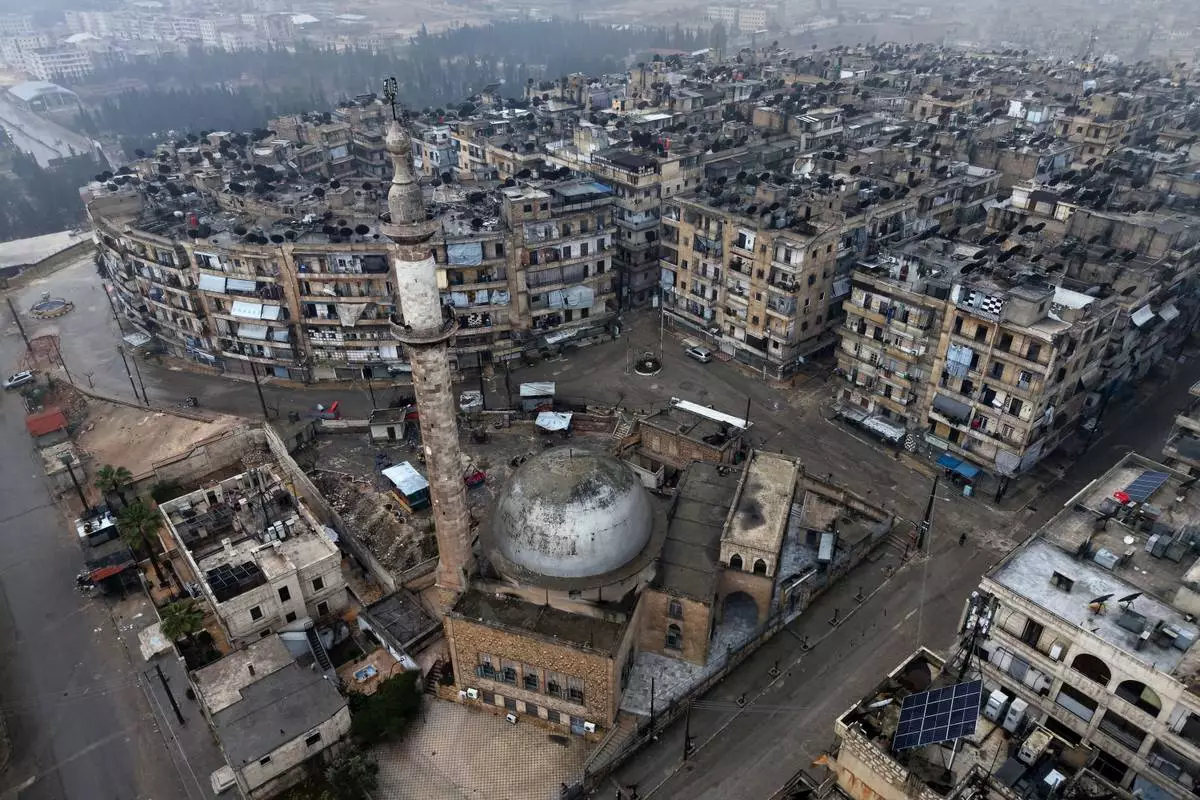
An aerial view shows the area in the predominantly Kurdish Sheikh Maqsoud neighborhood where clashes broke out Tuesday Jan. 6 between government forces and the Kurdish-led Syrian Democratic Forces in the northern city of Aleppo, Syria, Monday, Jan. 12, 2026. (AP Photo/Omar Albam)
An aerial view shows the area in the predominantly Kurdish Sheikh Maqsoud neighborhood where clashes broke out Tuesday Jan. 6 between government forces and the Kurdish-led Syrian Democratic Forces in the northern city of Aleppo, Syria, Monday, Jan. 12, 2026. (AP Photo/Omar Albam)

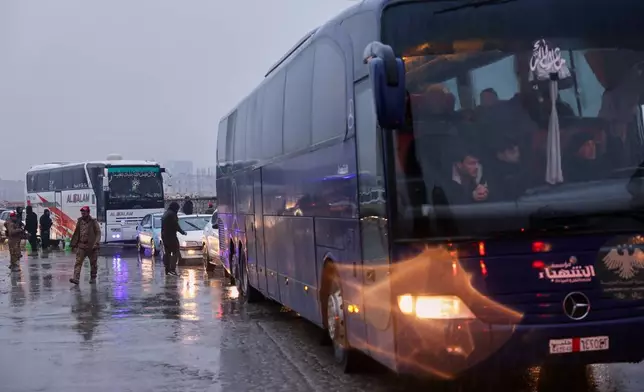
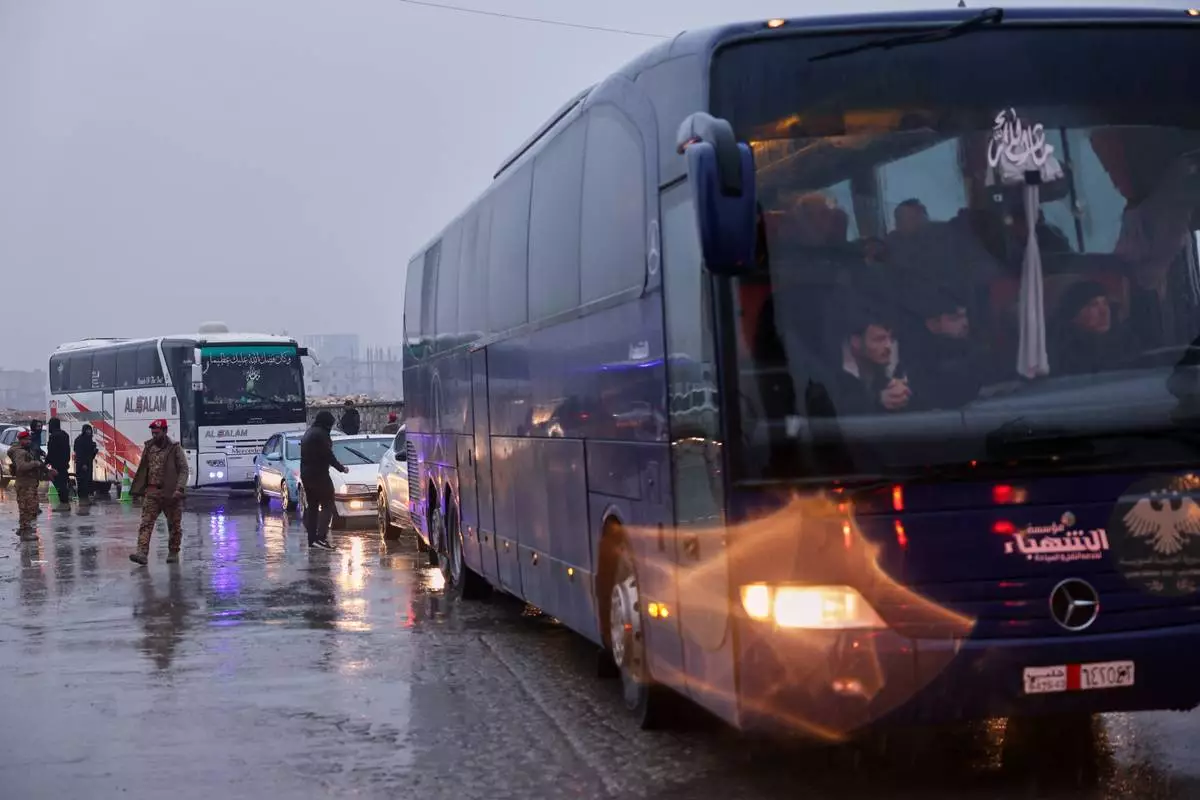
Buses carry displaced residents as they return to the Achrafieh neighborhood after days of fighting between government forces and Kurdish fighters in the northern city of Aleppo, Syria, Monday, Jan. 12, 2026. (AP Photo/Ghaith Alsayed)
Buses carry displaced residents as they return to the Achrafieh neighborhood after days of fighting between government forces and Kurdish fighters in the northern city of Aleppo, Syria, Monday, Jan. 12, 2026. (AP Photo/Ghaith Alsayed)

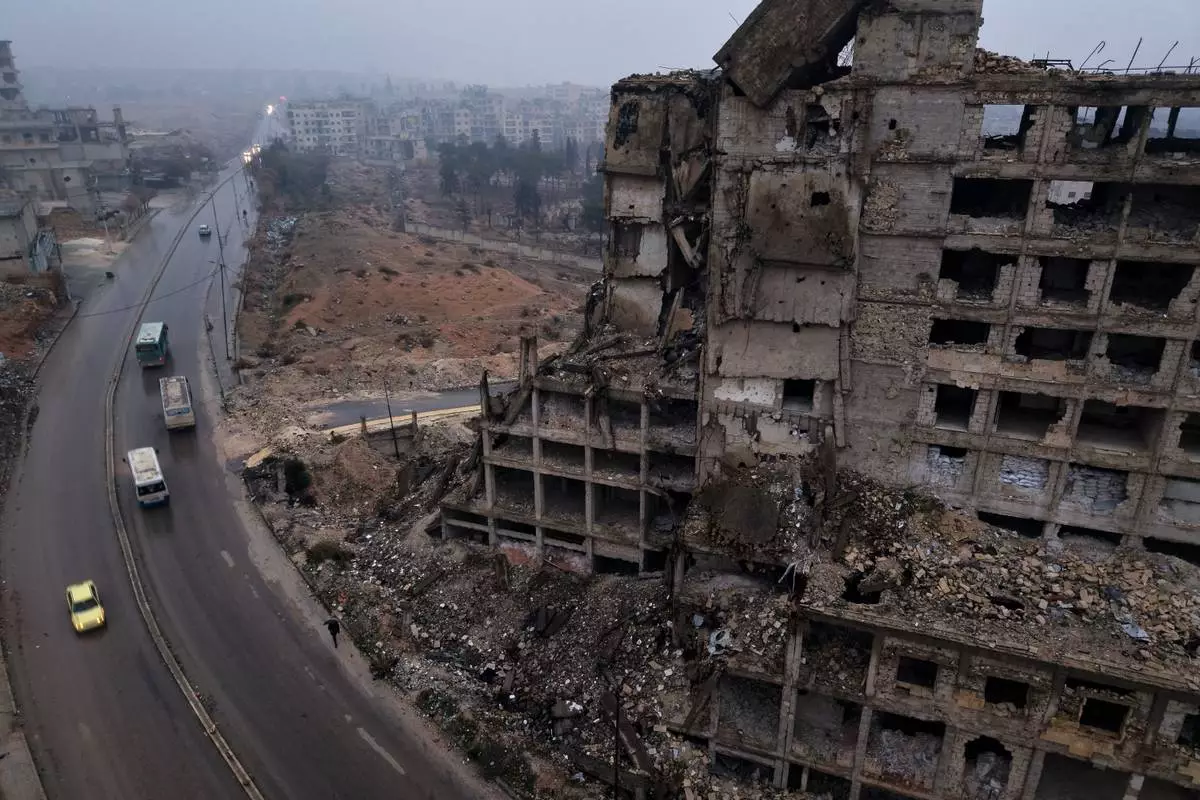
Buses carrying displaced residents drive past a building in ruins as they return to the Achrafieh neighborhood after days of fighting between government forces and Kurdish fighters in the northern city of Aleppo, Syria, Monday, Jan. 12, 2026. (AP Photo/Omar Albam)

Buses carrying displaced residents drive past a building in ruins as they return to the Achrafieh neighborhood after days of fighting between government forces and Kurdish fighters in the northern city of Aleppo, Syria, Monday, Jan. 12, 2026. (AP Photo/Omar Albam)

The Syrian army earlier declared an area east of Aleppo as a “closed military zone." Eastern Aleppo province has been a tense frontline dividing areas under the Syrian government and large swaths of northeastern Syria under the SDF.

In a statement, the SDF said government forces have started shelling Deir Hafer district. The group later said government troops launched exploding drones, artillery and rockets to a village south of Deir Hafer.

Syrian state television later said the SDF targeted the village of Homeima on the other side of the Deir Hafer frontline with exploding drones.

Several days of deadly clashes in Aleppo last week displaced tens of thousands of people. They ended over the weekend with the evacuation of Kurdish fighters from the contested neighborhood of Sheikh Maqsoud. Aleppo Governor Azzam Ghareeb said Damascus now has full control of Sheikh Maqsoud and Achrafieh, where clashes took place.

Syrian officials have accused the SDF of building up its forces near the towns of Maskana and Deir Hafer, about 60 kilometers (37 miles) east of Aleppo city. SANA, the state news agency, reported that the army had declared the area a closed military zone because of “continued mobilization” by the SDF, and accused the group of using the area as a launchpad for drone attacks in Aleppo city.

The army statement said the armed groups should withdraw east of the Euphrates River.

A drone hit the Aleppo governorate building on Saturday shortly after two Cabinet ministers and a local official held a news conference on the developments in the city.

The SDF have denied mobilizing in the area or being behind the attack.

The leadership in Damascus, under interim President Ahmad al-Sharaa, signed a deal in March with the SDF, which controls much of the northeast, for it to merge with the Syrian army by the end of 2025. There have been disagreements on how it would happen.

Some of the factions that make up the new Syrian army, which was formed after the fall of former President Bashar Assad in a rebel offensive in December 2024, were previously Turkey-backed insurgent groups that have a long history of clashing with Kurdish forces.

The SDF for years has been the main U.S. partner in Syria in fighting against the Islamic State group, but Turkey considers the SDF a terrorist organization because of its association with the Kurdistan Workers’ Party, or PKK, which has waged a long-running insurgency in Turkey. A peace process is now underway.

Despite the long-running U.S. support for the SDF, the Trump administration has also developed close ties with al-Sharaa’s government and has pushed the Kurds to implement the March deal.

The recent developments have left the SDF and the autonomous administration that runs northeastern Syria frustrated with Washington and accusing Damascus of not implementing its end of the deal.

“The American government needs to clarify its position of the Syrian government which is committing massacres,” the administration's foreign relations official, Elham Ahmad, told journalists Tuesday. She accused government forces of committing “horrific violations” and alleged that forces affiliated with IS and foreign fighters took part in the clashes.

Shams TV, a broadcaster based in Irbil — the seat of northern Iraq’s semi-autonomous Kurdish region — had been set to air an interview with al-Sharaa on Monday but later announced it had been postponed for “technical” reasons, without giving a new date for broadcast.

Associated Press journalist Kareem Chehayeb in Beirut contributed to this report.
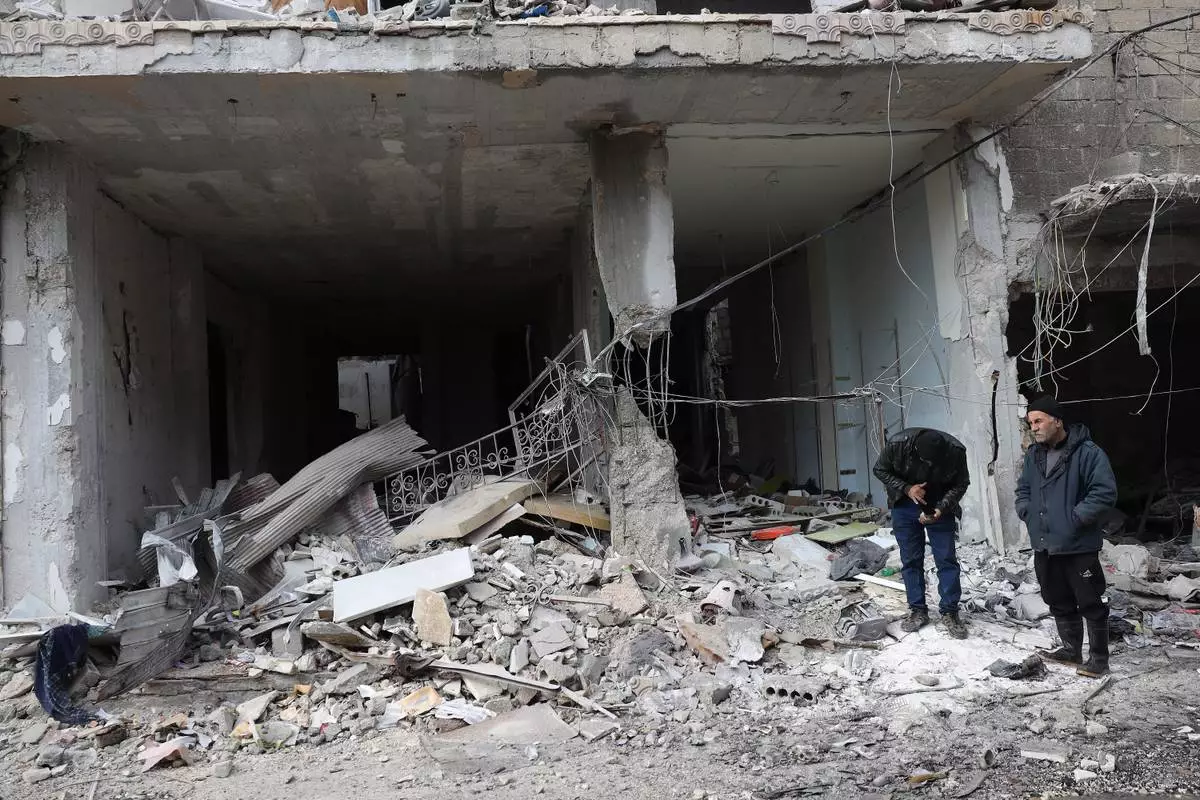
People stand in front of destroyed shops, in the Sheikh Maqsoud neighborhood after days of fighting between government forces and Kurdish fighters in the northern city of Aleppo, Syria, Tuesday, Jan. 13, 2026. (AP Photo/Omar Albam)
People stand in front of destroyed shops, in the Sheikh Maqsoud neighborhood after days of fighting between government forces and Kurdish fighters in the northern city of Aleppo, Syria, Tuesday, Jan. 13, 2026. (AP Photo/Omar Albam)
A man rides a damaged car, as displaced residents return to the Sheikh Maqsoud neighborhood after days of fighting between government forces and Kurdish fighters in the northern city of Aleppo, Syria, Tuesday, Jan. 13, 2026. (AP Photo/Omar Albam)

A man rides a damaged car, as displaced residents return to the Sheikh Maqsoud neighborhood after days of fighting between government forces and Kurdish fighters in the northern city of Aleppo, Syria, Tuesday, Jan. 13, 2026. (AP Photo/Omar Albam)

Displaced residents return to the Sheikh Maqsoud neighborhood after days of fighting between government forces and Kurdish fighters in the northern city of Aleppo, Syria, Tuesday, Jan. 13, 2026. (AP Photo/Ghaith Alsayed)
Displaced residents return to the Sheikh Maqsoud neighborhood after days of fighting between government forces and Kurdish fighters in the northern city of Aleppo, Syria, Tuesday, Jan. 13, 2026. (AP Photo/Ghaith Alsayed)
A man crosses a street in the predominantly Kurdish Sheikh Maqsoud neighborhood after days of fighting between government forces and Kurdish fighters in the northern city of Aleppo, Syria, Tuesday, Jan. 13, 2026. (AP Photo/Ghaith Alsayed)

A man crosses a street in the predominantly Kurdish Sheikh Maqsoud neighborhood after days of fighting between government forces and Kurdish fighters in the northern city of Aleppo, Syria, Tuesday, Jan. 13, 2026. (AP Photo/Ghaith Alsayed)

Displaced residents return to a the Achrafieh neighborhood after days of fighting between government forces and Kurdish fighters in the northern city of Aleppo, Syria, Monday, Jan. 12, 2026. (AP Photo/Omar Albam)
Displaced residents return to a the Achrafieh neighborhood after days of fighting between government forces and Kurdish fighters in the northern city of Aleppo, Syria, Monday, Jan. 12, 2026. (AP Photo/Omar Albam)

Women walk by a damaged car in the predominantly Kurdish Sheikh Maqsoud neighborhood after days of fighting between government forces and Kurdish fighters in the northern city of Aleppo, Syria, Tuesday, Jan. 13, 2026. (AP Photo/Ghaith Alsayed)
Women walk by a damaged car in the predominantly Kurdish Sheikh Maqsoud neighborhood after days of fighting between government forces and Kurdish fighters in the northern city of Aleppo, Syria, Tuesday, Jan. 13, 2026. (AP Photo/Ghaith Alsayed)
Displaced residents return to the Sheikh Maqsoud neighborhood after days of fighting between government forces and Kurdish fighters in the northern city of Aleppo, Syria, Tuesday, Jan. 13, 2026. (AP Photo/Ghaith Alsayed)

Displaced residents return to the Sheikh Maqsoud neighborhood after days of fighting between government forces and Kurdish fighters in the northern city of Aleppo, Syria, Tuesday, Jan. 13, 2026. (AP Photo/Ghaith Alsayed)

An aerial view shows the area in the predominantly Kurdish Sheikh Maqsoud neighborhood where clashes broke out Tuesday Jan. 6 between government forces and the Kurdish-led Syrian Democratic Forces in the northern city of Aleppo, Syria, Monday, Jan. 12, 2026. (AP Photo/Omar Albam)
An aerial view shows the area in the predominantly Kurdish Sheikh Maqsoud neighborhood where clashes broke out Tuesday Jan. 6 between government forces and the Kurdish-led Syrian Democratic Forces in the northern city of Aleppo, Syria, Monday, Jan. 12, 2026. (AP Photo/Omar Albam)

Buses carry displaced residents as they return to the Achrafieh neighborhood after days of fighting between government forces and Kurdish fighters in the northern city of Aleppo, Syria, Monday, Jan. 12, 2026. (AP Photo/Ghaith Alsayed)
Buses carry displaced residents as they return to the Achrafieh neighborhood after days of fighting between government forces and Kurdish fighters in the northern city of Aleppo, Syria, Monday, Jan. 12, 2026. (AP Photo/Ghaith Alsayed)

Buses carrying displaced residents drive past a building in ruins as they return to the Achrafieh neighborhood after days of fighting between government forces and Kurdish fighters in the northern city of Aleppo, Syria, Monday, Jan. 12, 2026. (AP Photo/Omar Albam)

Buses carrying displaced residents drive past a building in ruins as they return to the Achrafieh neighborhood after days of fighting between government forces and Kurdish fighters in the northern city of Aleppo, Syria, Monday, Jan. 12, 2026. (AP Photo/Omar Albam)
CAIRO (AP) — Iranians began to regain internet access on Wednesday after authorities ended a monthslong shutdown. But users said service was slow and spotty in some areas, with apps like YouTube and Instagram heavily restricted, as they were before the cutoff began during nationwide protests in January.

Authorities justified the outage as a military imperative after the United States and Israel attacked Iran on Feb. 28. Their decision to lift some restrictions this week came as negotiators appeared to be closing in on a more permanent truce. But many Iranians feared access could be cut off again at a moment's notice.

Internet tracking company Netblocks said Iran’s connectivity, which measures the ability of devices to connect to the internet, is at around 86% of capacity from before the cutoff. Internet analysis firm Kentik said internet traffic, which measures the amount of data transferred and is a good illustration of usage, was at around 40%.

Amir Rashidi, an Iranian cybersecurity analyst, said there were still widespread disruptions. “It's too early to say the shutdown is over,” he wrote on X.

Iran’s roughly 90 million people have been cut off from the internet for most of 2026, one of the world’s longest and strictest national shutdowns. Young people with online careers saw their incomes evaporate. Job losses and the closure of online businesses added to the war's steep economic costs.

The cutoff made it difficult for Iranian families to communicate through months of unrest and war. At some points, phone lines were also cut off, though they were later restored.

A woman living in Tehran said that for months she was barely able to speak to her sons living abroad. She couldn't believe authorities had restored access, saying she had assumed they would find some justification to prolong the outage.

A taxi driver said service was restored but weak. He expressed hope it would improve so he could use messaging apps with family and friends. Both spoke on condition of anonymity for security reasons.

Prices spiked during the shutdown, with residents in Tehran at times paying around $7.50 per gigabyte. Prices are back down to around $2.25 for 30 gigabytes, roughly where they were before the protests.

Even then, Iran tightly controlled access to popular social media sites, leading many to rely on virtual private networks, or VPNs. The cost of those workarounds soared during the shutdown, making them unaffordable for many as the economy was battered.

Businesses have started reappearing online, announcing their return with posts on sites like Instagram and Telegram.

A gamer and tech influencer in the central city of Isfahan said the shutdown had caused him to lose a lot of his audience on YouTube and Instagram, where he had spent years building up a large following.

“All my views and interactions are way down. I’ve been erased from the algorithm,” he said in a voice note sent by WhatsApp, adding that his internet connection was still slower than before the shutdown.

“The situation is such that many content producers have had their income reduced to zero, have moved on to other jobs, or have been forced to sell their equipment to survive,” he said. He spoke on condition of anonymity for fear of reprisal.

Iranian authorities first shut down the internet in January during mass anti-government protests that were eventually stamped out in a violent crackdown. Thousands of people were killed and tens of thousands detained.

That cutoff was just starting to ease when the government imposed a complete internet blackout after the start of the war, when U.S. and Israeli strikes killed Iran's supreme leader and other top officials.

The government faced criticism for the prolonged shutdown, which caused even more harm to an economy devastated by inflation, strikes on key industries and a U.S. blockade on Iranian ports.

The internet cutoff cost an estimated $30-40 million daily, with indirect losses likely twice that much, a member of Iran’s Chamber of Commerce, Afshin Kolahi, told a local newspaper last month. About 10 million people have jobs that depend on internet connectivity, according to Communications Minister Sattar Hashemi.

Iranians still had access to a national net, but that has a far narrower reach, and users complained of poor service and heavy censorship. Senior government officials are given SIM cards granting them access to the global internet. Under pressure, the government expanded access to the SIM cards to some professions during the shutdown.

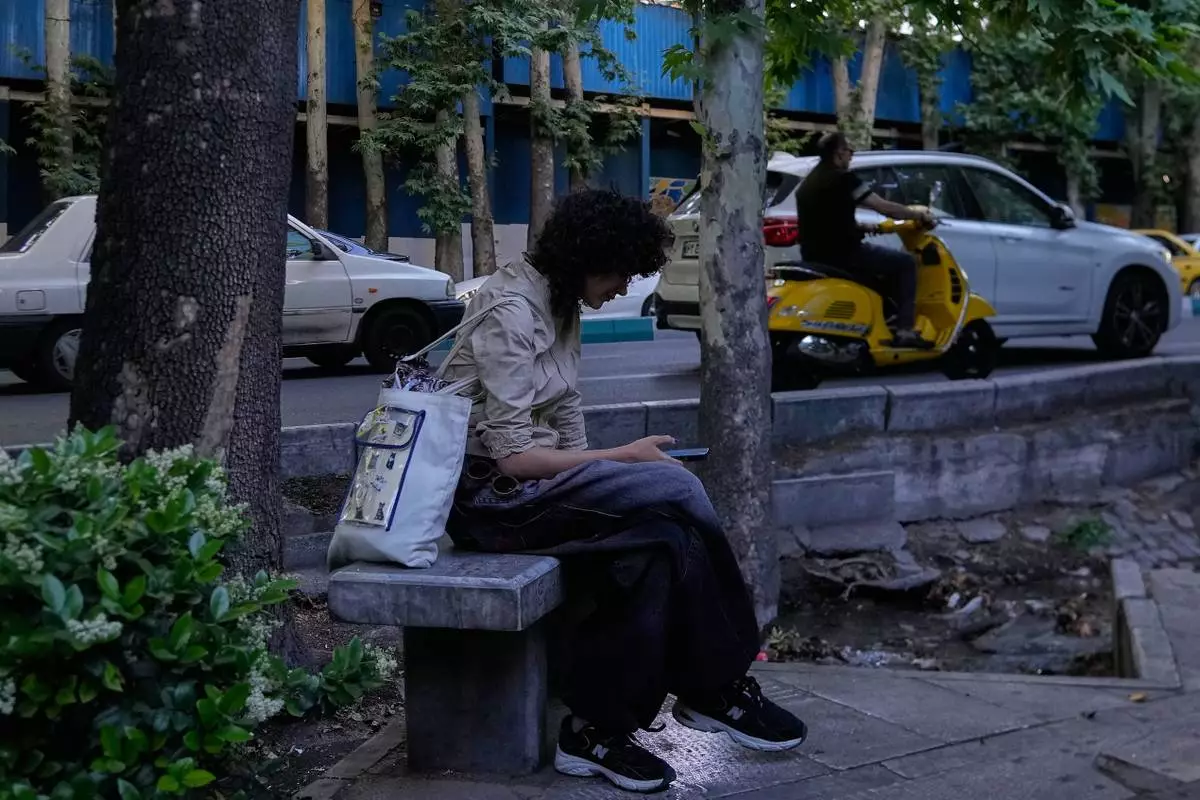
A woman checks her smartphone while sitting on a bench along a sidewalk in northern Tehran, Iran, Tuesday, May 26, 2026. (AP Photo/Vahid Salemi)

A woman checks her smartphone while sitting on a bench along a sidewalk in northern Tehran, Iran, Tuesday, May 26, 2026. (AP Photo/Vahid Salemi)

Recommended Articles