ALBUQUERQUE, N.M. (AP) — The U.S. Supreme Court has approved a settlement package designed to rein in groundwater pumping along one of North America’s longest rivers and ensure enough water reliably makes it from New Mexico to Texas, ending a long-running dispute over management of the Rio Grande.
In a brief order Tuesday, the court accepted the recommendation of a special master to move forward with agreements first proposed last year by New Mexico, Texas and Colorado.
The settlement calls for reducing groundwater pumping along the dwindling river and retiring water rights from irrigated farmland in southern New Mexico. The states held up the proposal as a promise to restore order to an elaborate system of storing and sharing water between two vast irrigation districts in southern New Mexico and western Texas.
Researchers have warned that unsustainable use of the Rio Grande — which originates in Colorado and stretches south into Mexico — threatens water security for millions of people who rely on the binational river basin.
Farmers in southern New Mexico increasingly have turned to groundwater to irrigate pecan orchards and chile crops as hotter, drier conditions have reduced river flows and storage over recent decades. That pumping is what prompted Texas to sue in 2013, claiming the practice was cutting into water deliveries.
While the Colorado River gets all the headlines, experts say the situation along the Rio Grande is just as dire. Stretches of the river as far north as Albuquerque are expected to go dry again this year, marking the third time in five years.
Officials with the New Mexico Department of Justice and the state engineer's office did not immediately answers emails Wednesday about the court's order. They have previously said the agreements will allow water conservation decisions to be made locally while avoiding a doomsday scenario of billion-dollar payouts on water shortfalls.
The settlement package provides for a detailed accounting system for sharing water with Texas. New Mexico could rely on credits and debits from year to year to navigate through drought and wet periods, though it could be responsible for additional water-sharing obligations if deliveries are deferred too long.
Under the settlement, New Mexico must reduce annual groundwater depletions by 18,200 acre-feet, or about 5.9 billion gallons (22.3 billion liters).
Officials expect to achieve most of the necessary reductions from buying water rights from willing sellers, meaning more than 14 square miles (36 square kilometers) of farmland would be retired.
Other details — and the price tag — still are being worked out, but top water managers have repeatedly told New Mexico lawmakers that it will take “an all hands on deck approach.”
“The problems that we face with water are problems we can’t face unless we work together,” Hannah Riseley-White, director of the Interstate Stream Commission, told a group of water experts during a meeting in March.
She mentioned a combination of long-term fallowing programs, water conservation and more efficient irrigation infrastructure.
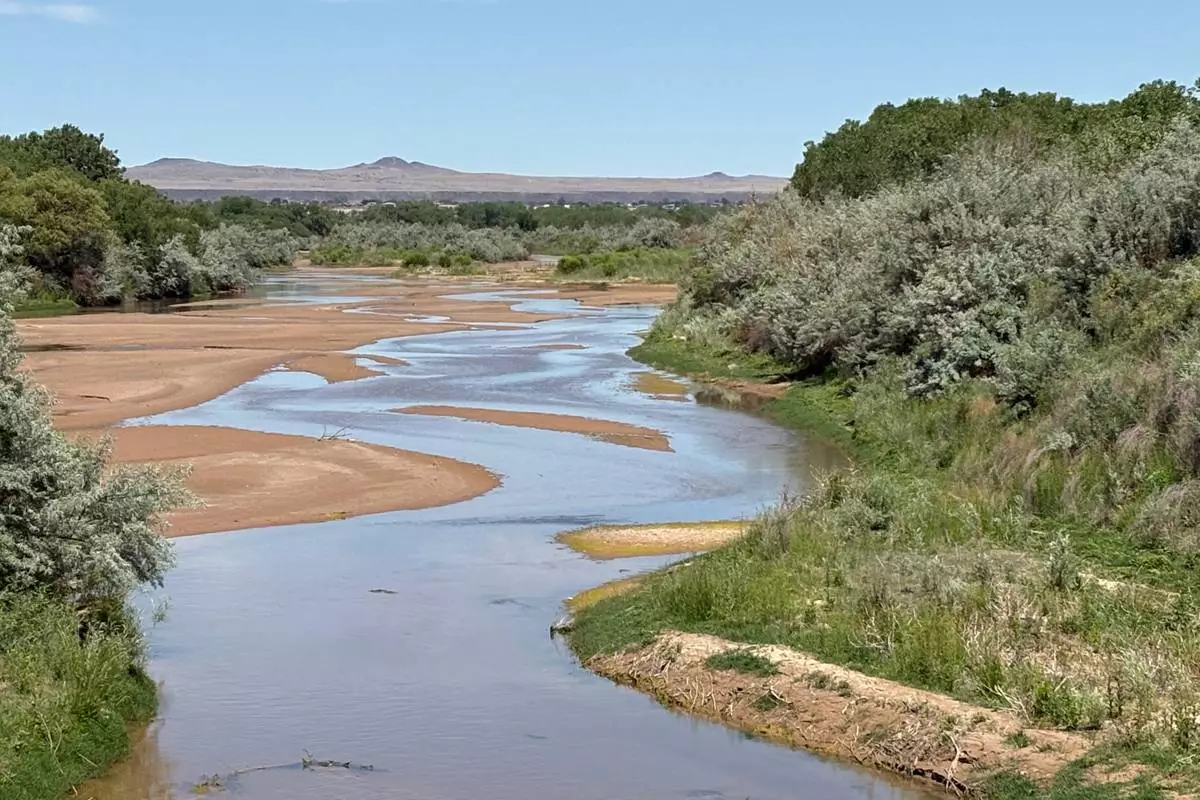
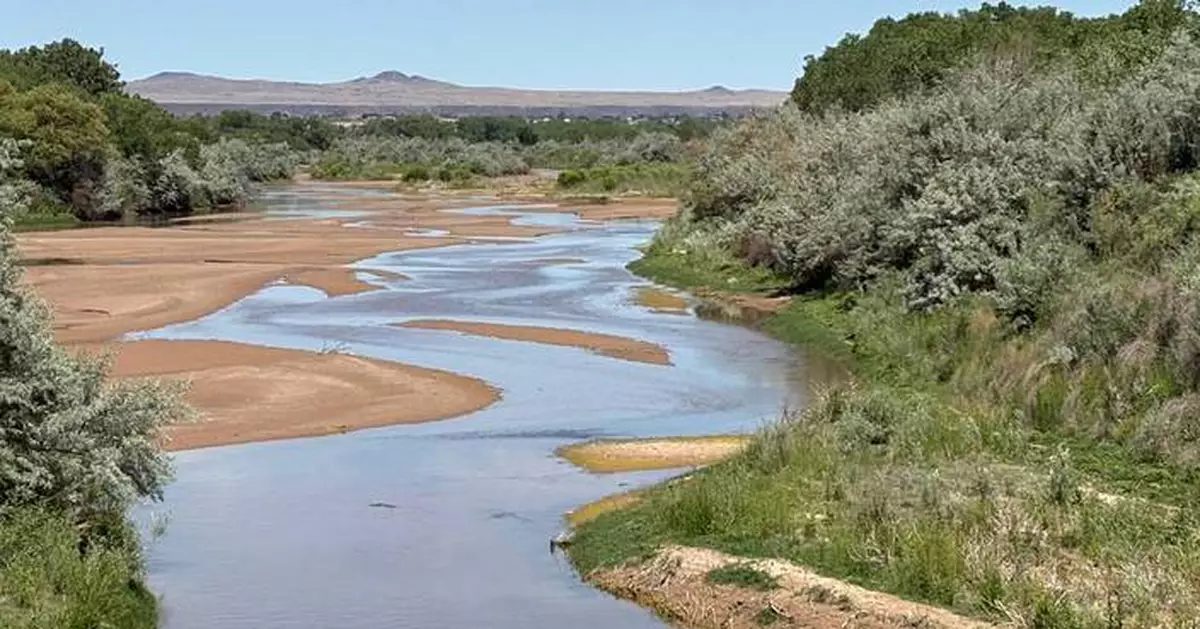
Sand bars develop along the Rio Grande as stretches of the river begin to dry in Albuquerque, N.M., on May 14, 2026. (AP Photo/Susan Montoya Bryan)
WASHINGTON (AP) — Alabama on Wednesday asked the Supreme Court to allow it to use a congressional map favoring Republicans in this year's elections, despite a lower court's ruling that the redistricting plan intentionally discriminates against Black people.
The state's Republican leadership filed an emergency appeal with the justices a day after a three-judge court refused to let the state use a map it adopted three years ago that has a majority Black population in just one of its seven congressional districts.
The judges instead required Alabama to continue using a court-ordered map that was put in place for the 2024 elections that includes two districts where Black residents comprise a majority or close to it.
Attorney General Steve Marshall told the court that the state did not intentionally discriminate against Black residents and should be allowed to hold elections this year under a map chosen by lawmakers, not judges.
The appeal is the latest development in the fallout from last month's Supreme Court ruling that struck down a Black-majority district in Louisiana and weakened the federal Voting Rights Act. That ruling has led Republicans in several Southern states, including Alabama, to take steps to reshape voting districts with large minority populations that have elected Democrats.
The redistricting frenzy is part of a broader push by President Donald Trump to try to hold on to Republicans’ slim House majority in the November elections.
The Alabama cases stretches back several years. The three-judge panel in 2023 ruled that a map drawn by Republican state lawmakers intentionally diluted the voting power of Black citizens. The court said the state, which is about 27% Black, should have two districts where Black voters are the majority or close to it. The court-selected map was used in 2024.
After the Supreme Court’s recent ruling in the Louisiana case, Alabama officials moved to implement the 2023 state-drawn map. The Supreme Court’s conservative majority agreed to lift the injunction that had blocked the map’s use and sent the case back to the three-judge panel for reconsideration in light of the Louisiana ruling.
In the meantime, voters cast ballots in Alabama’s May 19 primaries, and Republican Gov. Kay Ivey set new special primaries for Aug. 11 in four congressional districts affected by the map switch.
Upon further review, the judicial panel said it was standing behind its initial finding that there was “undisputed evidence” of intentional racial discrimination, a holding that was independent of and unaffected by the Supreme Court ruling on the Voting Rights Act.
It said the special congressional primaries should instead proceed under the previous court-approved districts.
The use of the court-ordered map led to the 2024 election of U.S. Rep. Shomari Figures, a Black Democrat. State Republicans are seeking to use a map that would give the GOP an opportunity to reclaim the south Alabama seat.
The state is asking for Supreme Court action by Monday as it makes preparations for the special vote in August.
This story has been corrected to show the Alabama primaries were May 19, not May 11.
Associated Press writer Kim Chandler contributed to this report from Montgomery, Ala.
Follow the AP’s coverage of the U.S. Supreme Court at https://apnews.com/hub/us-supreme-court.
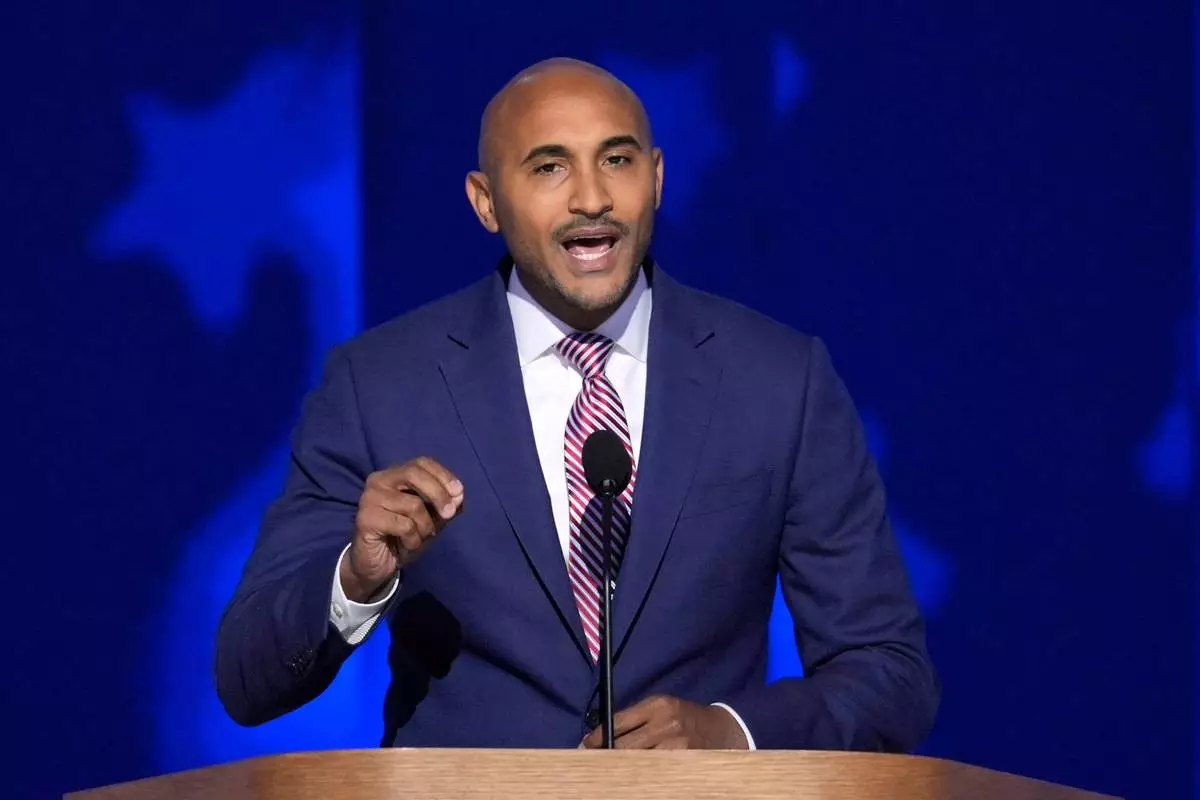
FILE - Shomari Figures, who is running for Alabama's 2nd Congressional District, speaks during the Democratic National Convention, Aug. 22, 2024, in Chicago. (AP Photo/J. Scott Applewhite, File)
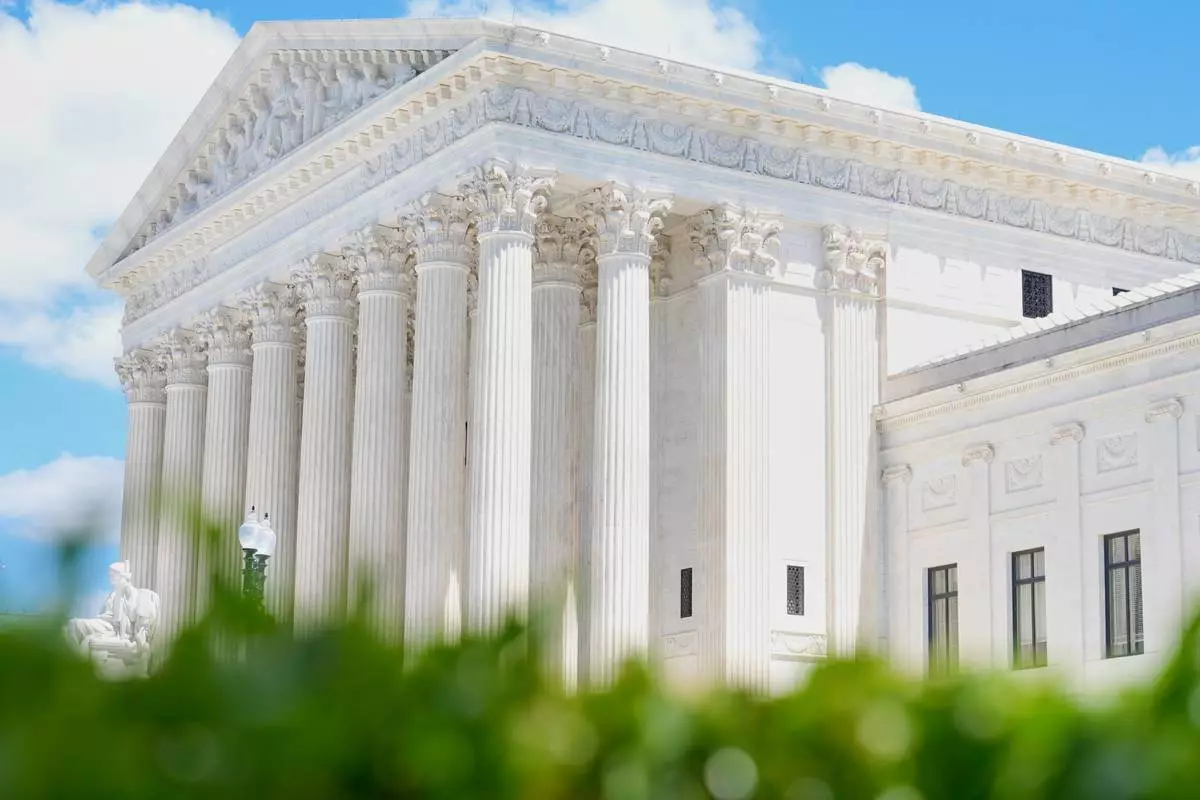
A statue titled the "Authority of Law" sits in front of the Supreme Court on Friday, May 15, 2026, in Washington. (AP Photo/Mariam Zuhaib)
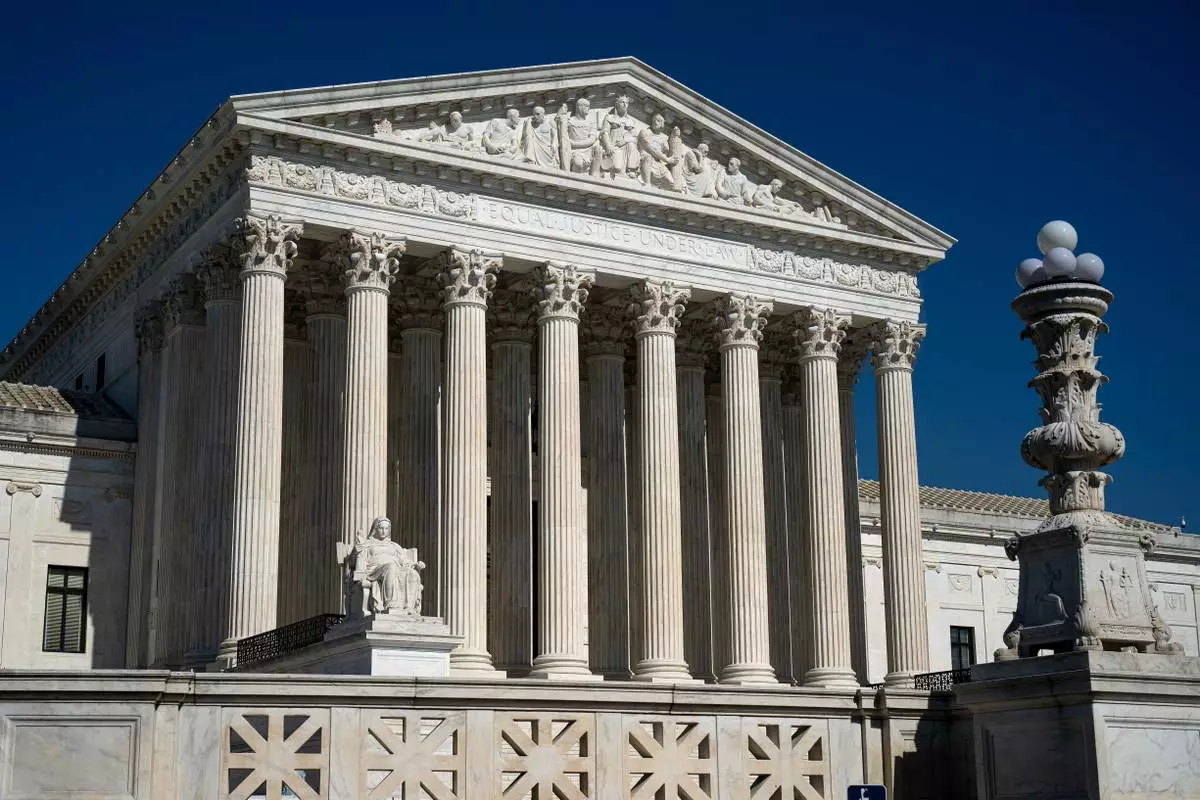
The Supreme Court is seen in Washington, Monday, May 18, 2026. (AP Photo/J. Scott Applewhite)