CAIRO (AP) — Iranians began to regain internet access on Wednesday after authorities ended a monthslong shutdown. But users said service was slow and spotty in some areas, with apps like YouTube and Instagram heavily restricted, as they were before the cutoff began during nationwide protests in January.
Authorities justified the outage as a military imperative after the United States and Israel attacked Iran on Feb. 28. Their decision to lift some restrictions this week came as negotiators appeared to be closing in on a more permanent truce. But many Iranians feared access could be cut off again at a moment's notice.
Internet tracking company Netblocks said Iran’s connectivity, which measures the ability of devices to connect to the internet, is at around 86% of capacity from before the cutoff. Internet analysis firm Kentik said internet traffic, which measures the amount of data transferred and is a good illustration of usage, was at around 40%.
Amir Rashidi, an Iranian cybersecurity analyst, said there were still widespread disruptions. “It's too early to say the shutdown is over,” he wrote on X.
Iran’s roughly 90 million people have been cut off from the internet for most of 2026, one of the world’s longest and strictest national shutdowns. Young people with online careers saw their incomes evaporate. Job losses and the closure of online businesses added to the war's steep economic costs.
The cutoff made it difficult for Iranian families to communicate through months of unrest and war. At some points, phone lines were also cut off, though they were later restored.
A woman living in Tehran said that for months she was barely able to speak to her sons living abroad. She couldn't believe authorities had restored access, saying she had assumed they would find some justification to prolong the outage.
A taxi driver said service was restored but weak. He expressed hope it would improve so he could use messaging apps with family and friends. Both spoke on condition of anonymity for security reasons.
Prices spiked during the shutdown, with residents in Tehran at times paying around $7.50 per gigabyte. Prices are back down to around $2.25 for 30 gigabytes, roughly where they were before the protests.
Even then, Iran tightly controlled access to popular social media sites, leading many to rely on virtual private networks, or VPNs. The cost of those workarounds soared during the shutdown, making them unaffordable for many as the economy was battered.
Businesses have started reappearing online, announcing their return with posts on sites like Instagram and Telegram.
A gamer and tech influencer in the central city of Isfahan said the shutdown had caused him to lose a lot of his audience on YouTube and Instagram, where he had spent years building up a large following.
“All my views and interactions are way down. I’ve been erased from the algorithm,” he said in a voice note sent by WhatsApp, adding that his internet connection was still slower than before the shutdown.
“The situation is such that many content producers have had their income reduced to zero, have moved on to other jobs, or have been forced to sell their equipment to survive,” he said. He spoke on condition of anonymity for fear of reprisal.
Iranian authorities first shut down the internet in January during mass anti-government protests that were eventually stamped out in a violent crackdown. Thousands of people were killed and tens of thousands detained.
That cutoff was just starting to ease when the government imposed a complete internet blackout after the start of the war, when U.S. and Israeli strikes killed Iran's supreme leader and other top officials.
The government faced criticism for the prolonged shutdown, which caused even more harm to an economy devastated by inflation, strikes on key industries and a U.S. blockade on Iranian ports.
The internet cutoff cost an estimated $30-40 million daily, with indirect losses likely twice that much, a member of Iran’s Chamber of Commerce, Afshin Kolahi, told a local newspaper last month. About 10 million people have jobs that depend on internet connectivity, according to Communications Minister Sattar Hashemi.
Iranians still had access to a national net, but that has a far narrower reach, and users complained of poor service and heavy censorship. Senior government officials are given SIM cards granting them access to the global internet. Under pressure, the government expanded access to the SIM cards to some professions during the shutdown.
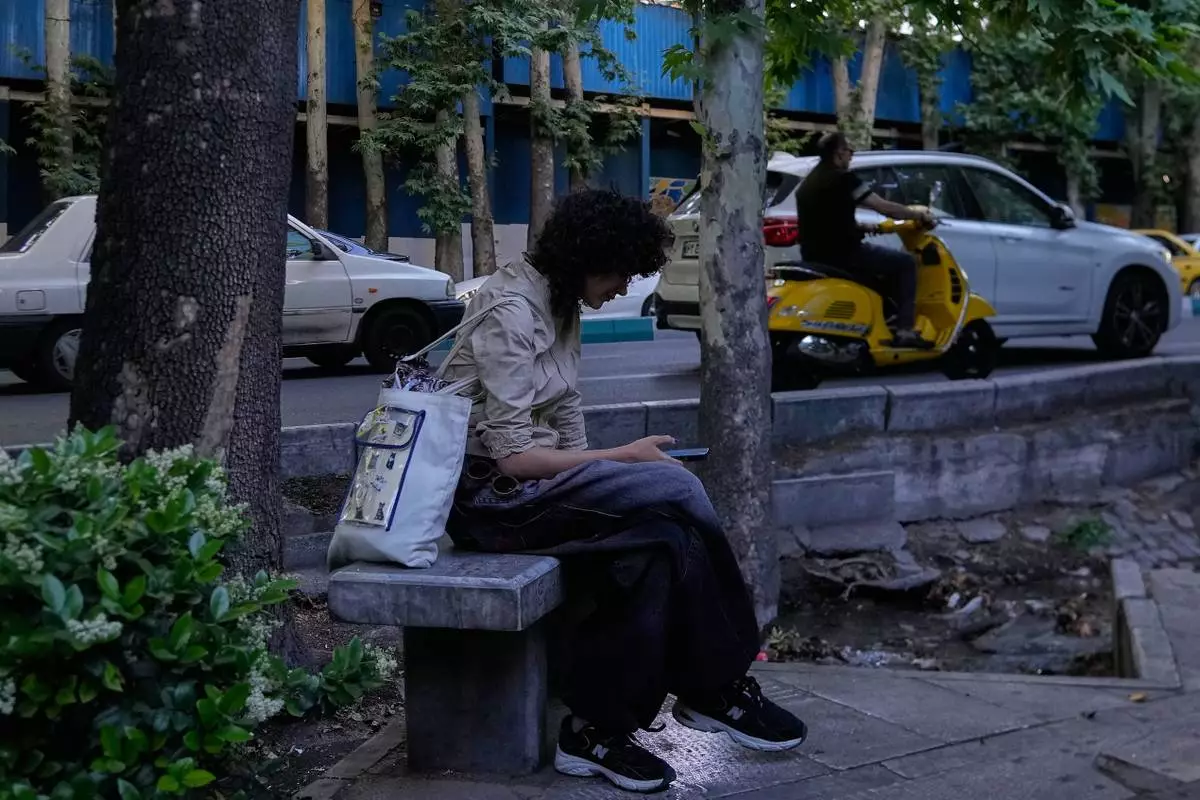
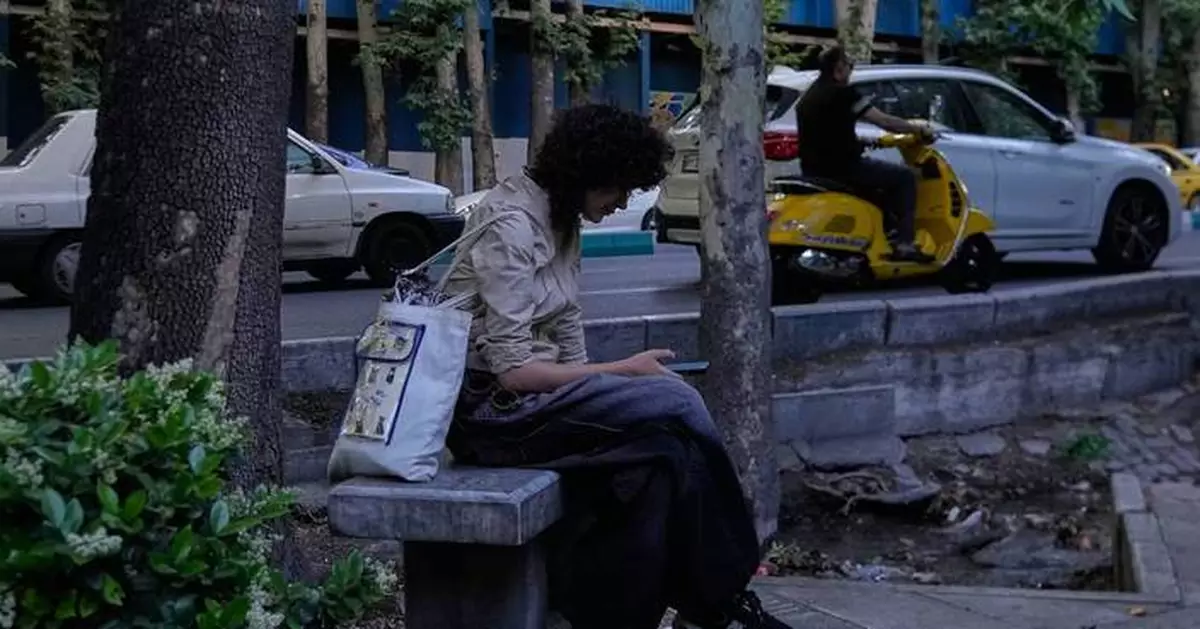
A woman checks her smartphone while sitting on a bench along a sidewalk in northern Tehran, Iran, Tuesday, May 26, 2026. (AP Photo/Vahid Salemi)
WASHINGTON (AP) — President Donald Trump asserted on Wednesday that Iran's “negotiating on fumes” and insisted November's midterm elections won't factor in shaping his approach to the nearly three-month-old conflict that's spurred unease across the global economy.
Speaking at the start of a Cabinet meeting at a precarious moment for talks aimed at ending the war, Trump expressed confidence that a deal is near. Over the weekend, he even declared that his administration and Tehran had “largely negotiated” a settlement, but the negotiations were still in flux.
The president is looking for a settlement that will reopen the Strait of Hormuz and provide him a credible argument that Iran’s nuclear capability has been diminished enough to declare victory, winding down a conflict that's been politically unpopular for Republicans.
But as things stand, Trump also risks finding that closure to his war of choice comes with an unsatisfactory ending.
The emerging deal puts off many critical issues to be resolved later and has already exposed the Republican president to fierce criticism — even from some of his own supporters — that Iran's hard-line leaders will emerge from the conflict battered but emboldened. It all comes to a head just as the midterm elections to determine control of Congress come into focus and as Republicans worry that rising costs and fuel prices are darkening the American electorate's mood.
But Trump on Wednesday dismissed the idea that the upcoming elections would carry any weight in shaping his Iran strategy.
“They thought they were gonna outwait me. You know, 'We’ll outwait him. He’s got the midterms,'” Trump said. “I don’t care about the midterms.”
Trump acknowledged there's still work to do, but he spoke with a measure of certainty that the two sides would get there.
“They want very much to make a deal,” Trump said. “So far, they haven’t gotten there. We’re not satisfied with it, but we will be — either that or we’ll have to just finish the job.”
Talks were further complicated after U.S. forces carried out what the Pentagon called “defensive” strikes on missile launch sites and minelaying boats in southern Iran on Monday. The U.S. said it acted with “restraint” in light of the weekslong ceasefire, while Iran decried the action as a sign of “bad faith and unreliability.”
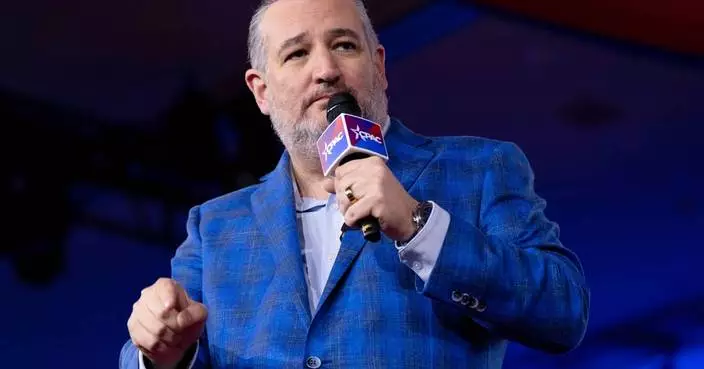
While Trump insists a deal is within reach, there appears to be daylight between the U.S. and Iran on several key issues. The president is also facing scrutiny from Republican allies, including Sens. Roger Wicker of Mississippi, Lindsey Graham of South Carolina and Ted Cruz of Texas, who have said the terms seem too favorable to Tehran.
They're balking at aspects of the deal that have emerged publicly that they say too closely resemble the nuclear agreement reached with Iran by Democratic President Barack Obama, which Trump scrapped during his first term.
Under the potential deal, Tehran would agree to give up its stockpile of highly enriched uranium — a key Trump demand — in return for sanctions relief. That's according to two regional officials and one senior Trump administration official, all of whom spoke on the condition of anonymity to discuss the sensitive negotiations.
One regional official, with direct knowledge of the negotiations, said how Iran would give up the uranium would be subject to further talks during a 60-day period. Some would likely be diluted, while the rest would be transferred to a third country, the official said.
Iran has 440.9 kilograms (972 pounds) of uranium that is enriched up to 60% purity, a short, technical step from weapons-grade levels of 90%, according to the International Atomic Energy Agency. Iran has not publicly committed to giving up its uranium.
Trump on Monday said in a Truth Social post that the uranium, which is believed to be buried under nuclear sites battered by U.S. airstrikes last year, would either be turned over to the U.S. or “destroyed in place or, at another acceptable location, with the Atomic Energy Commission, or its equivalent, being witness to this process and event.” The comment signals a softening of Trump's previous insistence that the U.S. take control of Iran's uranium stockpile.
Trump said that he “wouldn’t be comfortable” with either Russia or China taking Iran’s stockpile of highly enriched uranium. The two countries have the closest relations with Tehran, and nuclear analysts have said they could be a potential acceptable third party to the Iranian Republic to take possession of the enriched uranium as part of a potential deal.
Another key issue unresolved is whether the ceasefire will also cover Israel’s operations against Hezbollah, the Iranian-backed militant group in Lebanon. Iran has insisted that Lebanon must be covered by any ceasefire agreement negotiated with the United States.
The administration appears to leave some wiggle room on the Lebanon question. The emerging memorandum of understanding calls for a ceasefire between the U.S. and its allies against Iran and its proxies, such as Hezbollah, but also underscores Israel's right to act against imminent threats and in self-defense.
Prime Minister Benjamin Netanyahu on Tuesday announced that the Israeli military is “deepening its operation” in Lebanon. Overnight, Israel's military clashed with the Iran-backed militant Hezbollah group along a strategic river in southern Lebanon as Israeli troops pushed farther north.
Jonathan Conricus, a former spokesperson for the Israel Defense Forces, said Israel expects that Iran would quickly move to direct any sanctions relief to restore its military capability and boost proxy groups, including Hezbollah and Hamas in Gaza.
“We’re not done fighting, because the Iranian regime isn’t done,” said Conricus, who is a senior fellow with the Foundation for Defense of Democracies, a hawkish Washington think tank.
Trump on Monday said any agreement to end the Iran war should include a requirement for several additional countries, including Saudi Arabia, Qatar and Pakistan, to join the Abraham Accords, the U.S.-brokered agreements from Trump’s first term aimed at normalizing diplomatic and economic relations with Israel.
Trump’s optimism that the other Middle Eastern and majority Muslim countries could soon sign on to the accords might be overly ambitious.
For example, Saudi Arabia, the most significant power in the Arab world and long seen as the biggest prize for the normalization effort, has insisted that establishing a guaranteed path to a Palestinian state remains a precondition. It's something that Israel vehemently opposes.
Trump made the Abraham Accords push during a call with leaders of Mideast allies over the weekend.
Barbara Leaf, a retired U.S. ambassador to the United Arab Emirates and senior State Department official during President Joe Biden's Democratic administration, said officials from Gulf countries who were on the call told her that Trump's pitch was greeted by “stunned silence.” A person familiar with the call disputed that characterization and said that some regional allies responded positively to the president’s call to join the accords. The person spoke on the condition of anonymity about the private conversation.
Leaf, a distinguished diplomatic fellow at the Middle East Institute, said that Middle Eastern allies of the United States recognize that Iran will likely use any money from sanctions relief to bolster its military capabilities. Still, they have been supportive of Trump pursuing an end to the conflict.
“They see no other way out,” Leaf said of American allies in the region. “And they see no other way out because of many of these early mistakes that the president and the administration made in conducting the war.”
AP writers Matthew Lee, Michelle L. Price and Darlene Superville in Washington, Bill Barrow in Atlanta, Samy Magdy in Cairo and Melanie Lidman in Jerusalem contributed to this report.
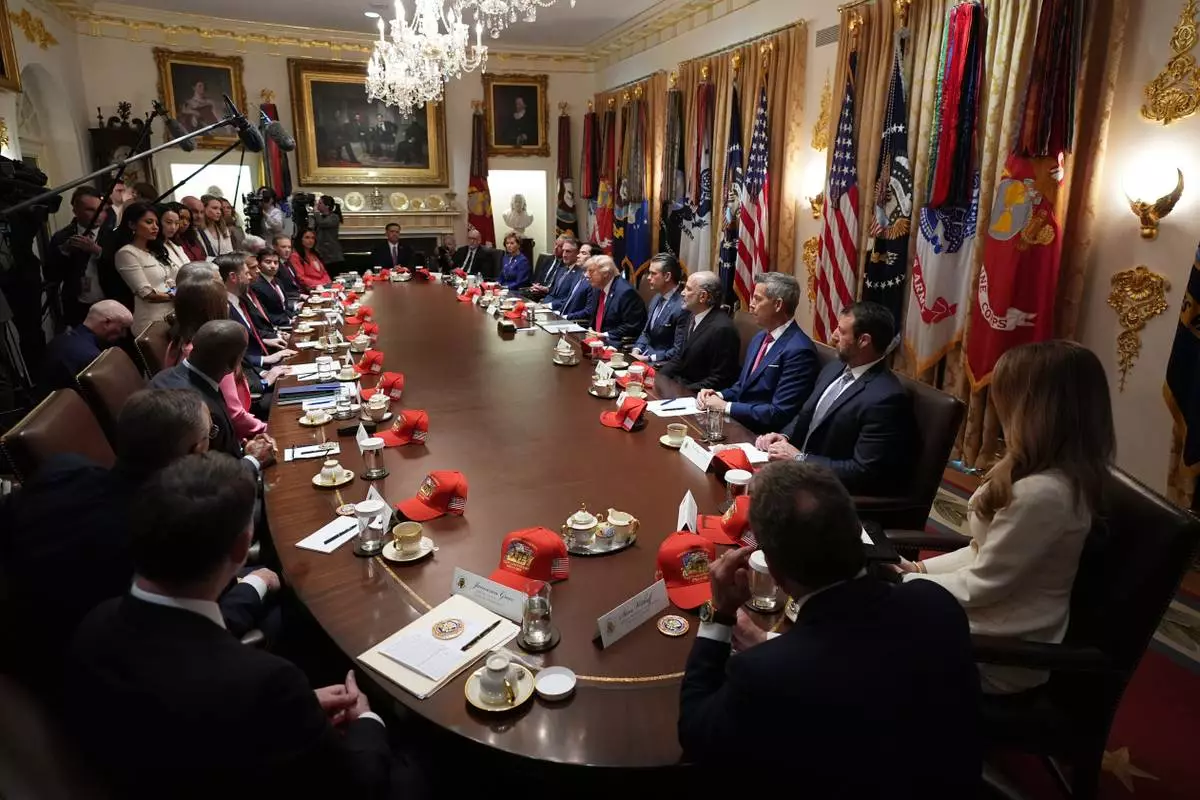
President Donald Trump, center right, attends a Cabinet meeting in the Cabinet Room, at the White House, Wednesday, May 27, 2026, in Washington. (AP Photo/Jacquelyn Martin)
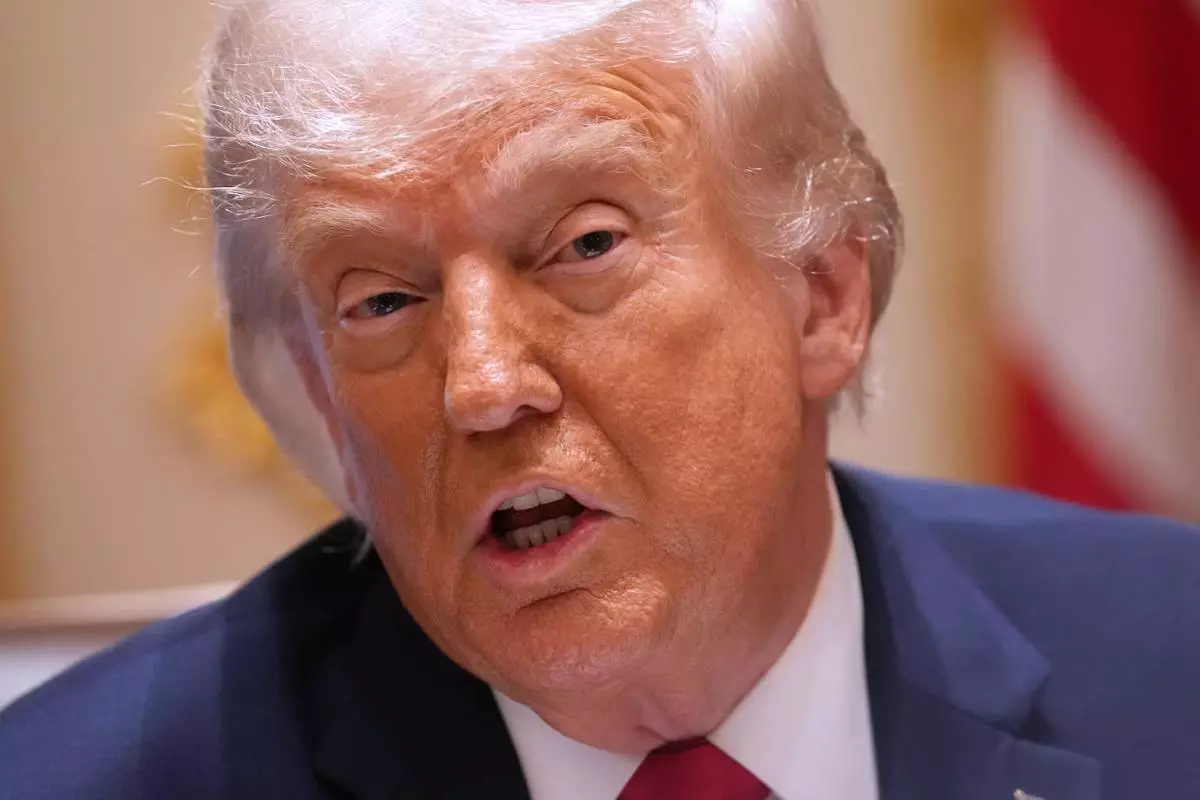
President Donald Trump speaks during a Cabinet meeting at the White House, Wednesday, May 27, 2026, in Washington. (AP Photo/Jacquelyn Martin)
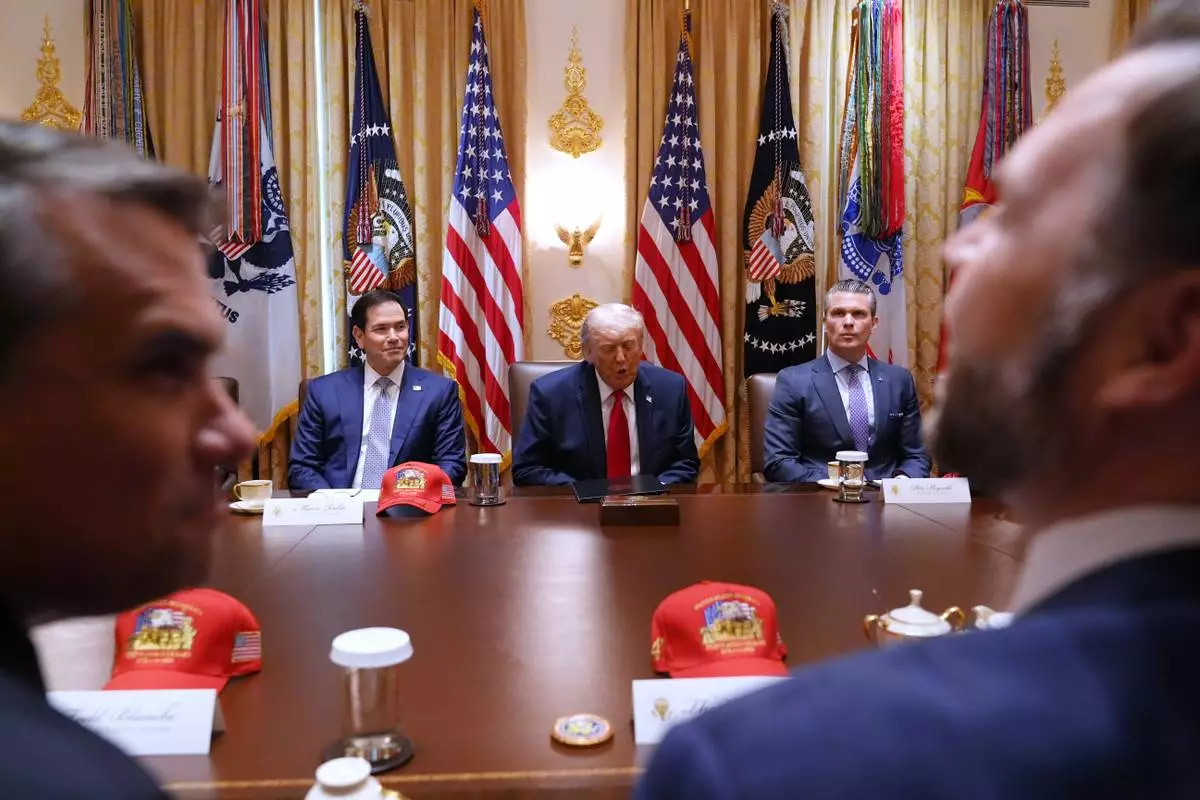
President Donald Trump, next to Secretary of State Marco Rubio, left, and Secretary of Defense, Pete Hegseth, right, speaks during a Cabinet meeting at the White House, Wednesday, May 27, 2026, in Washington, as Acting Attorney General Todd Blanche, front left, and Vice President JD Vance, front right, look on. (AP Photo/Jacquelyn Martin)
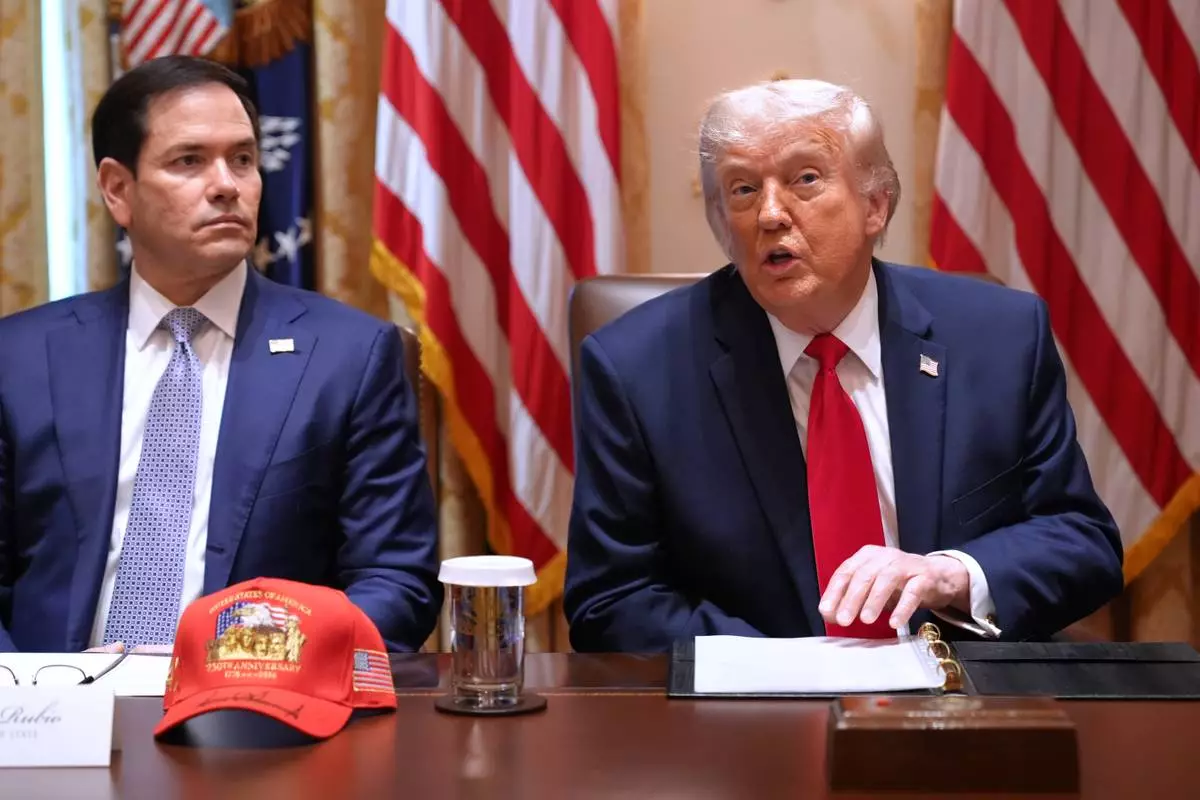
President Donald Trump, next to Secretary of State Marco Rubio, speaks during a Cabinet meeting at the White House, Wednesday, May 27, 2026, in Washington. (AP Photo/Jacquelyn Martin)
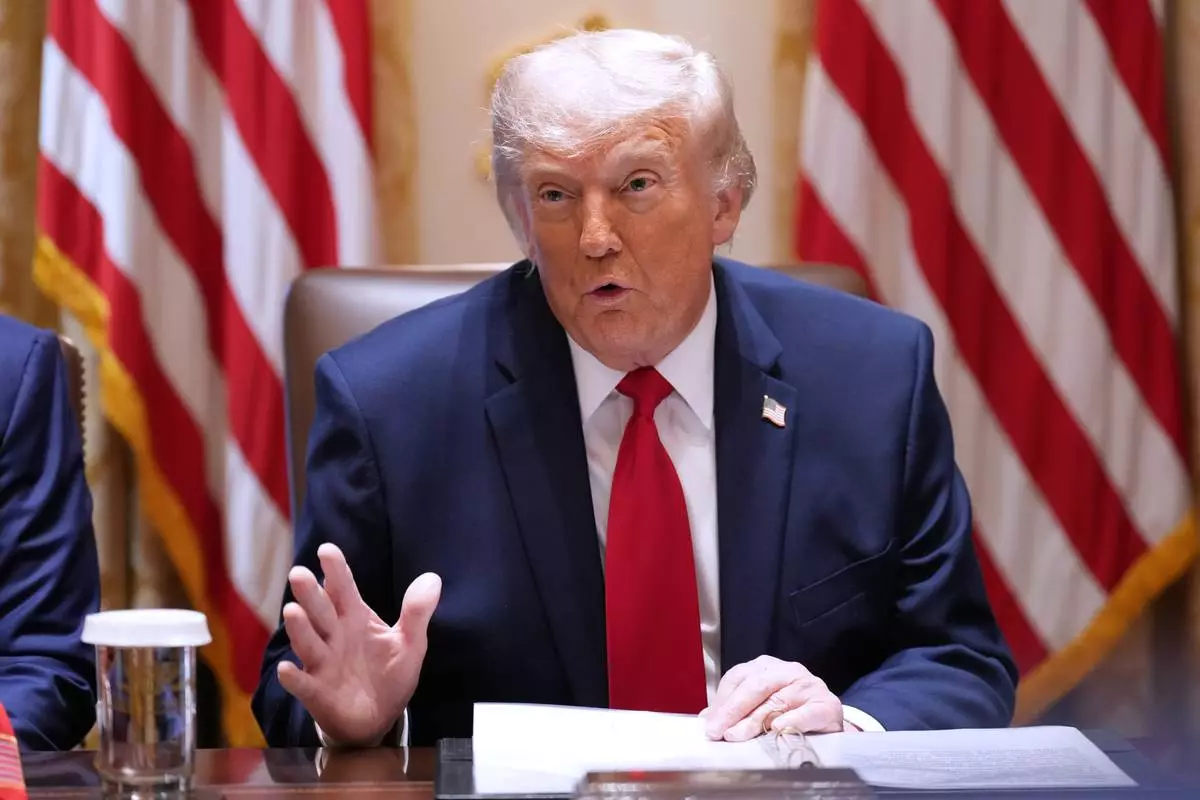
President Donald Trump speaks during a Cabinet meeting at the White House, Wednesday, May 27, 2026, in Washington. (AP Photo/Jacquelyn Martin)
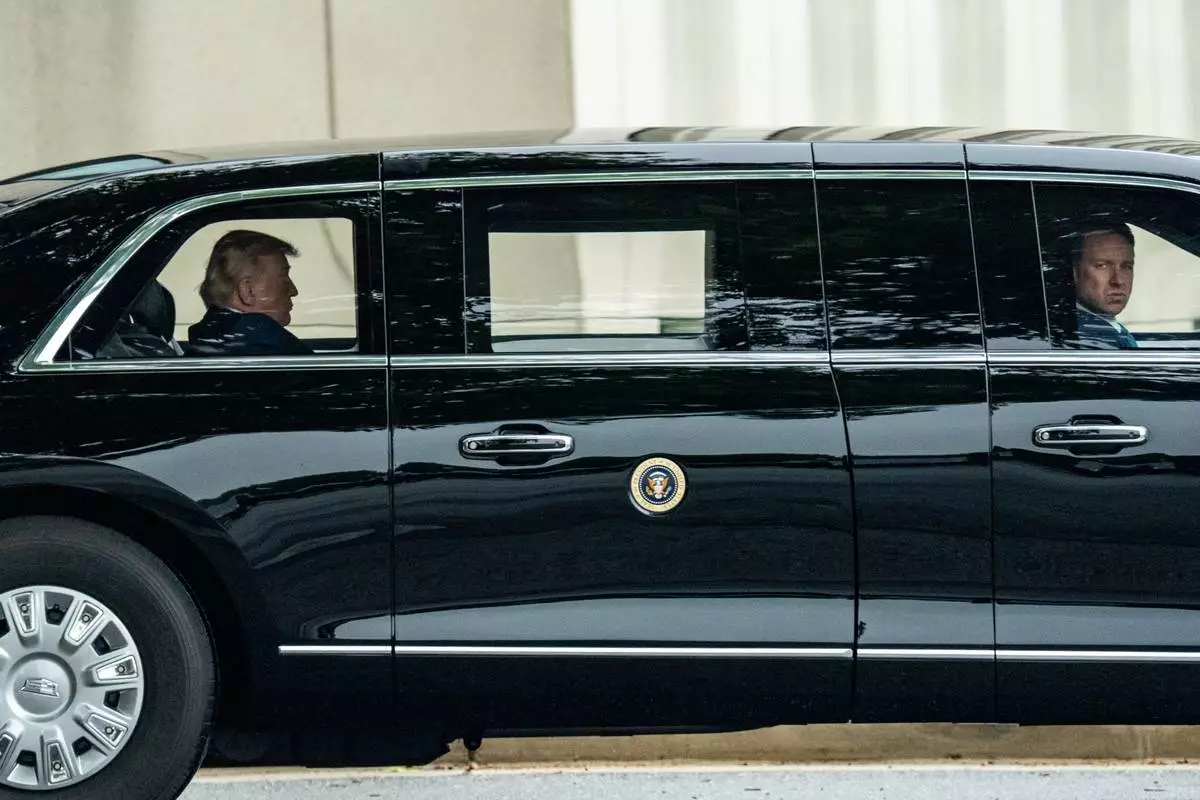
President Donald Trump departs Walter Reed National Military Medical Center, Tuesday, May 26, 2026, in Bethesda, Md. (AP Photo/Alex Brandon)