East China's Zhejiang Province has enhanced the efficiency of ship navigation on its rivers by implementing a smart system that streamlines the process for ships to pass through the locks.
With the smart system, shipowners can easily fill in the necessary information on a mobile phone platform, which allows them to complete all required declarations for the locks they plan to pass through in Zhejiang in advance.
Previously, ships had to apply for permission and wait every time before they can pass through each lock, which not only slowed down these ships but also disrupted the schedules of those following behind.
With the new smart system, the dynamic has shifted from ships waiting on locks to locks waiting for ships, effectively reducing navigation times.
"I used to have to wait five to seven days, but now I don't have to. Now my ship can pass through the next day. It is much more convenient, as I can apply on my mobile phone with just one submission," said Zhao Xiuli, a shipowner.
The smart system has also integrated port and lock dispatching, aligning lock passage times with terminal loading and unloading schedules, further improving logistics efficiency.
"The connection between locks, ports, docks and ships has not only improved the efficiency of our port operations, but also increased the speed of ships passing through the locks, significantly lowering logistics costs," said Ding Wuxiong, a staff member at the Port and Shipping Management Center of Zhejiang.
Over 300 ships pass through the locks in the Zhejiang section of the Beijing-Hangzhou Grand Canal each day, and the smart system, covering all 16 operating ship locks in the province, now facilitates 99 percent of ship journeys.
Thanks to this smart system, the average waiting time for ships to pass through the locks has been shortened by 80 percent, which has so far saved 300 million yuan (about 41.73 million U.S. dollars) of logistics costs for shipowners.
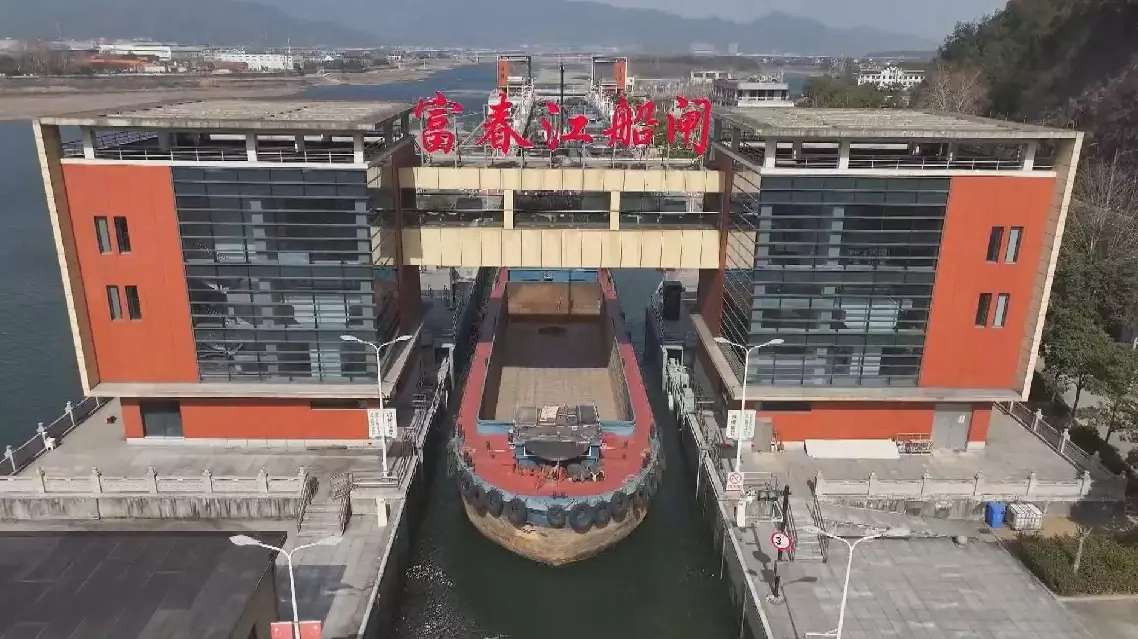
Zhejiang improves ship navigation efficiency with smart lock passage system
The Hong Kong Special Administrative Region (HKSAR) has "never been better" and is thriving under the National Security Law, with the legislation helping stabilize the city, according to Allen Zeman, chairman of the Lan Kwai Fong Group.
The High Court of the HKSAR on Monday sentenced former newspaper publisher Jimmy Lai to 20 years in prison, after considering his "serious and grave criminal conduct." Lai was found guilty on two charges of conspiring to collude with external forces and one charge of conspiracy to publish seditious materials. The court ruled that Lai was "the mastermind and driving force behind these conspiracies."
Zeman spoke to China Global Television Network (CGTN) after the sentencing.
He stressed that Hong Kong’s stability and prosperity have improved since the law's introduction.
"I say that those people don't know what they're talking about, because I can say what I want up to a point. It's the same as most countries, you know, but you can't collude with a foreign government against your country, wherever that is. The National Security Law, I've read so many of them, and I can tell you it's not done. It's not allowed. It's a crime," he said.
"In Hong Kong, [it's] the same thing, we get behind one leader. We all work together. And the people's lives have gotten better and better. Hong Kong right now is thriving. Hong Kong has never been better at the moment. The National Security Law really helped Hong Kong to stabilize," said Zeman.
On Hong Kong's future, Zeman said the city will remain a global marketplace and a vital connector between the Chinese mainland and the world. He pointed to Hong Kong’s low tax base and strong financial infrastructure as key advantages.
"People trust Hong Kong. It has a low tax base, free flow of capital in and out. In most countries, it's not exactly like that. You know, there's restrictions and all that. In Hong Kong, you can have the money come in and out, low tax of 15 percent, one of the lowest taxes in the world as well. And that kind of gives Hong Kong the stability. And most companies who want to go into China set up their head office in Hong Kong. We have all the top banks in Hong Kong. Last year and this year again, we've had about almost 300 conventions and exhibitions in the Hong Kong convention center and from countries all over the world. Everybody comes here now, because they see it's really the marketplace of the world. I've been here a long time. It's always been good, but it's never been as good as it is now," said Zeman.

Zeman defends National Security Law after Jimmy Lai sentenced to 20 years in Hong Kong

Zeman defends National Security Law after Jimmy Lai sentenced to 20 years in Hong Kong