Skip to Content Facebook Feature Image

Leading Appellate Advocate Jeff Oldham Joins Jackson Walker to Chair Appellate Section

News

Leading Appellate Advocate Jeff Oldham Joins Jackson Walker to Chair Appellate Section
News

News

Leading Appellate Advocate Jeff Oldham Joins Jackson Walker to Chair Appellate Section

2025-06-09 19:58 Last Updated At:20:21

AUSTIN, Texas--(BUSINESS WIRE)--Jun 9, 2025--

Jackson Walker is proud to announce that Jeff Oldham, one of Texas’s most accomplished appellate lawyers, has joined the firm as a partner in our Austin and Houston offices and as firmwide chair of our appellate practice.

This press release features multimedia. View the full release here: https://www.businesswire.com/news/home/20250609832055/en/

Jeff’s arrival further strengthens Jackson Walker’s appellate section, following the recent addition of former Texas Supreme Court Chief Justice Nathan L. Hecht and building on the leadership of Justice Jennifer Caughey, who chaired the firm’s appellate group from 2019 to 2025 before returning to the bench on Houston’s First Court of Appeals.

Jeff brings to Jackson Walker a record of achievement and leadership that places him among the very best in the field. He graduated first in his class from Northwestern University Pritzker School of Law, clerked for Chief Justice William H. Rehnquist on the United States Supreme Court, and has argued and won cases before the U.S. Supreme Court, the Supreme Court of Texas, and appellate courts nationwide. Jeff also served as General Counsel to Texas Governor Greg Abbott, where he managed high-profile litigation, provided strategic counsel on matters of statewide importance, and led a team of attorneys handling a wide variety of legal and policy issues.

“We are thrilled to welcome Jeff Oldham to Jackson Walker,” said Firmwide Managing Partner C. Wade Cooper. “Jeff’s credentials are second to none – he is recognized as one of the top appellate lawyers in Texas and the nation. His experience before the highest courts, his leadership in government, and his commitment to excellence will be invaluable to our clients and our firm. Jeff’s arrival, following the addition of Chief Justice Hecht, cements Jackson Walker’s position among the premier firms for appellate advocacy in Texas.”

W. Ross Forbes, Jr., chair of the Trial & Appellate Litigation section and partner, added, “Jeff’s reputation as a brilliant advocate and strategic thinker is well known throughout the legal community. He has handled some of the most significant appeals in recent years, and his insight will elevate our already outstanding appellate team. We are excited to have him join us as we continue to build on our tradition of excellence.”

On his decision to join the firm, Jeff said, “I’m very excited to join Jackson Walker and lead such a distinguished appellate group. The firm’s collaborative approach, its deep roots in Texas, and its excellence in appellate and trial advocacy make it the ideal place for this next chapter of my career. I look forward to contributing my experience to the firm and its clients, and to working alongside such a talented group of lawyers including leaders like Chief Justice Hecht.”

Jeff earned a B.S.B.A., summa cum laude, from the University of Tulsa, and his J.D., magna cum laude, Order of the Coif, from Northwestern University Pritzker School of Law.

Meet Jackson Walker

Since Jackson Walker’s founding in 1887, our attorneys have represented some of the most influential companies and business leaders in the world. Today, we remain firmly rooted in Texas while serving clients around the globe. With more than 500 attorneys, we are the largest firm in Texas and have been recognized by Law360 as a “Texas Powerhouse” and an “elite law firm” that regularly provides counsel to industry-leading clients. Jackson Walker’s trial group is one of the largest in the Southwest, comprising about 30% of the firm’s more than 500 attorneys. To learn more, visit the Trial & Appellate Litigation practice page.
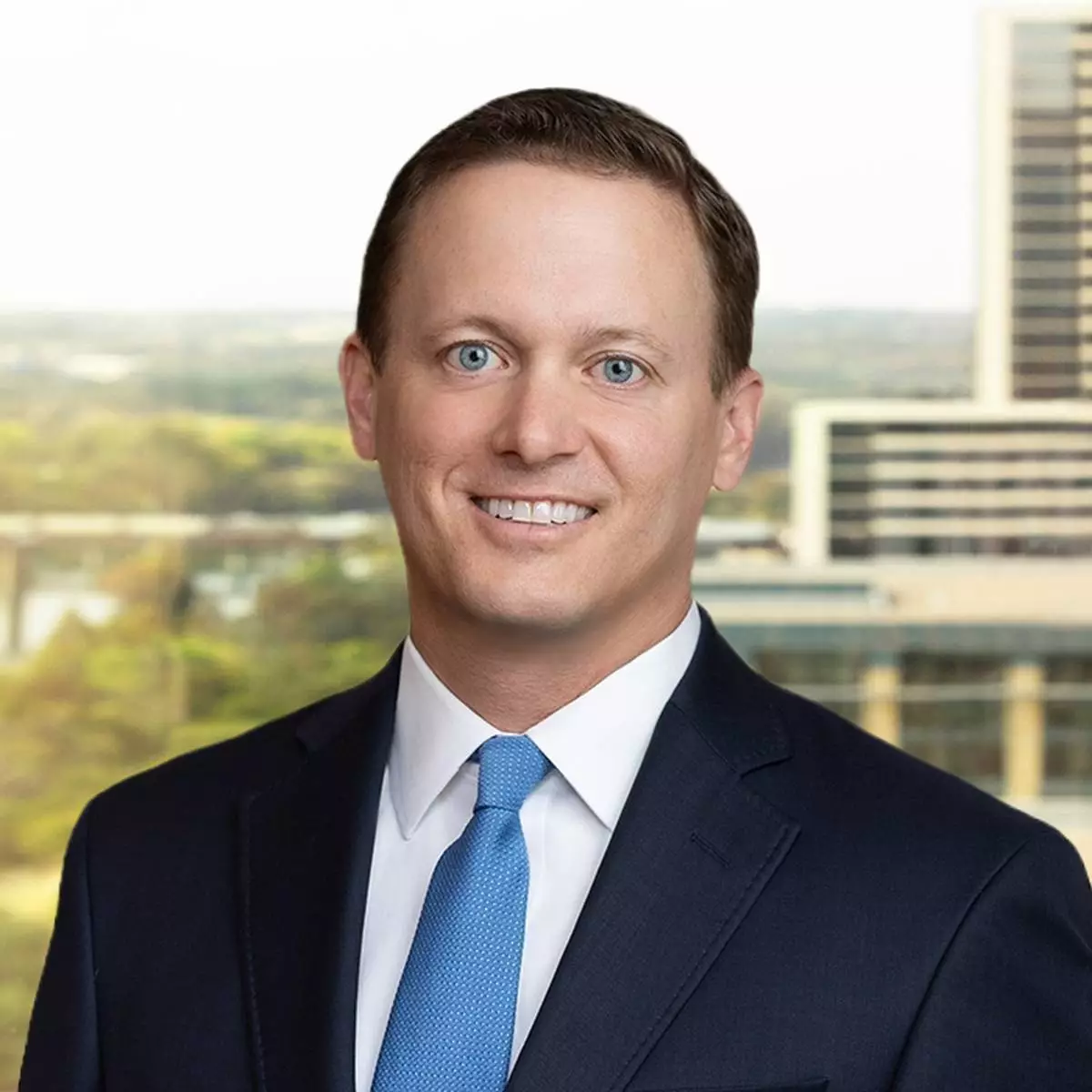
Jeff Oldham

Jeff Oldham

When President Donald Trump suspended the refugee program on day one of his current administration, thousands of people around the world who'd been so close to a new life in America found themselves abandoned.

As part of Trump's crackdown on legal and illegal migration, the Republican president has upended the decades-old refugee program that has served as a beacon for those fleeing war and persecution. In October, he resumed the program but set a historic low of refugee admissions at 7,500 — mostly white South Africans.

New restrictions were announced after an Afghan national became the suspect in the shooting of two National Guard members last week. The Trump administration also plans a review of refugees let in during the Democratic Biden administration. Trump's administration has cited economic and national security concerns for its policy changes.

About 600,000 people were being processed to come to the U.S. as refugees when the program was halted, according to the administration. Aside from dozens of white South Africans let in this year, only about 100 others have been admitted as a result of a lawsuit by advocates seeking to restore the refugee program, said Mevlüde Akay Alp, a lawyer arguing the case.

The Associated Press spoke to three families whose lives have been thrown into disarray because of the changing policies.

The Dawoods fled civil war in Syria and settled in northern Iraq. They hoped to find a new home that could provide better medical care for a daughter who had fallen from the fourth floor of the family’s apartment building.

After they were accepted as refugees to the U.S., son Ibrahim and his sister Ava relocated to Connecticut in November 2024. His parents and one of his brothers were scheduled to fly in January.

But just two days before they were to board their flight, mother Hayat Fatah fainted at a medical check and her departure was postponed. Mohammed, another sibling, didn't want to leave his parents behind.

Nearly a year later, he and his parents are still waiting.

In America, Ibrahim wakes up early to tutor people online before going to his job as a math teacher at a private school, and then he takes care of his sister when he gets home. He said his mother often cries when they talk because she wishes she were in America to help care for her daughter.

Chinese Christian Lu Taizhi fled to Thailand more than a decade ago, fearing persecution for his beliefs. He’s lived in legal limbo since, waiting to be resettled in the United States.

Lu said he has long admired the U.S. for what he calls its Christian character — a place where he feels he and his family “can seek freedom.”

Lu was born into a family branded as “hostile elements” by the Chinese Communist Party for its land ownership and ties to a competing political party. A teacher and poet, Lu grew interested in history banned by the Chinese state, penning tributes to the bloody 1989 Tiananmen crackdown on pro-democracy protests in Beijing.

In 2004, Lu was arrested after police found poems and essays he secretly published criticizing Chinese politics and the education system. After his release, Lu became a Christian and began preaching, drawing scrutiny from local authorities.

With Chinese leader Xi Jinping’s rise to power, controls tightened. When Beijing arrested hundreds of rights lawyers in 2015, Lu took his family and fled, settling in Thailand, where they applied for refugee status with the United Nations.

Eight years later, the U.N. notified Lu the U.S. had accepted his application. But after several delays, his most recent flight was canceled shortly after Trump’s inauguration. His application has been put on hold indefinitely.

Louis arrived in the United States as a refugee in September 2024. He left his wife and two children in East Africa, hoping they could soon be reunited in the U.S.

But that dream faded a few months later with Trump's return to the presidency.

Louis, who insisted on being identified only by his first name out of concern that speaking publicly could complicate his case, was told in January that a request he had made to bring his family to the U.S. had been frozen due to changes in refugee policies.

Now, the family members live thousands of miles apart without knowing when they will be reunited. His wife, Apolina, and the children, 2 and 3 years old, are in a refugee camp in Uganda. Louis is in Kentucky.

“I don’t want to lose her, and she does not want to lose me,” said Louis, who resettled in Kentucky with the help of the International Rescue Committee.

Louis and Apolina's families applied for refugee status after fleeing war in the Democratic Republic of Congo. Louis' application, initiated by his parents, was approved, Apolina's, made separately by her parents, was not.

Apolina thought that, as the wife of a refugee, it would take her no more than one year to reunite with her husband, who now works in an appliance factory and has already applied for permanent residency.

The separation hasn’t been easy for her and the children, who live in a tent in the refugee camp.

Santana reported from Washington, Kang from Beijing and Salomon from Miami. Associated Press writers Evelyne Musambi in Nairobi, Kenya, and Salar Salim in Irbil, Iraq, contributed to this report.

Lu Taizhi, a Chinese Christian who is waiting to be resettled in the United States, points to the webpage of the International Rescue Committee, which is under maintenance and not operational in Ban Wawee village, Chiang Rai Province, Thailand, Nov. 27, 2025. (AP Photo/ Tian Macleod Ji)

Lu Taizhi, a Chinese Christian who is waiting to be resettled in the United States, points to the webpage of the International Rescue Committee, which is under maintenance and not operational in Ban Wawee village, Chiang Rai Province, Thailand, Nov. 27, 2025. (AP Photo/ Tian Macleod Ji)

Syrian refugee Abdulilah Amin Dawoud, 73, poses for a picture at his home in Irbil, Iraq, Nov. 16, 2025. (AP Photo/Farid Abdulwahed)

Syrian refugee Abdulilah Amin Dawoud, 73, poses for a picture at his home in Irbil, Iraq, Nov. 16, 2025. (AP Photo/Farid Abdulwahed)

Syrian refugee Hayat Fatah, 65, cleans dishes at her home in Irbil, Iraq, Nov. 16, 2025. (AP Photo/Farid Abdulwahed)

Syrian refugee Hayat Fatah, 65, cleans dishes at her home in Irbil, Iraq, Nov. 16, 2025. (AP Photo/Farid Abdulwahed)

Syrian refugee Mohammed Dawood, 30, left, poses for a photo with his parents, Hayat Fatah, 65, center, and Abdulilah Amin Dawoud, 73, at their home in Irbil, Iraq, Nov. 16, 2025. (AP Photo/Farid Abdulwahed)

Syrian refugee Mohammed Dawood, 30, left, poses for a photo with his parents, Hayat Fatah, 65, center, and Abdulilah Amin Dawoud, 73, at their home in Irbil, Iraq, Nov. 16, 2025. (AP Photo/Farid Abdulwahed)

Recommended Articles