The Yangtze River Delta, one of China's most economically vibrant and innovative regions, has seen continuous two-way growth in foreign trade, bringing in diverse products through e-commerce platforms and selling high-quality domestic products to the world.
The Yangtze River Delta region, which takes up only four percent of China's landmass, contributes about 25 percent to the country's total GDP and one-third of its foreign trade and investment. Encompassing the provinces of Jiangsu, Zhejiang and Anhui and Shanghai Municipality, the region’s foreign trade volume accounts for over 30 percent of the national total.
The China (Hangzhou) Cross-border E-commerce Comprehensive Pilot Zone is the first of its kind in the country, witnessing growth in both cross-border e-commerce imports and exports.
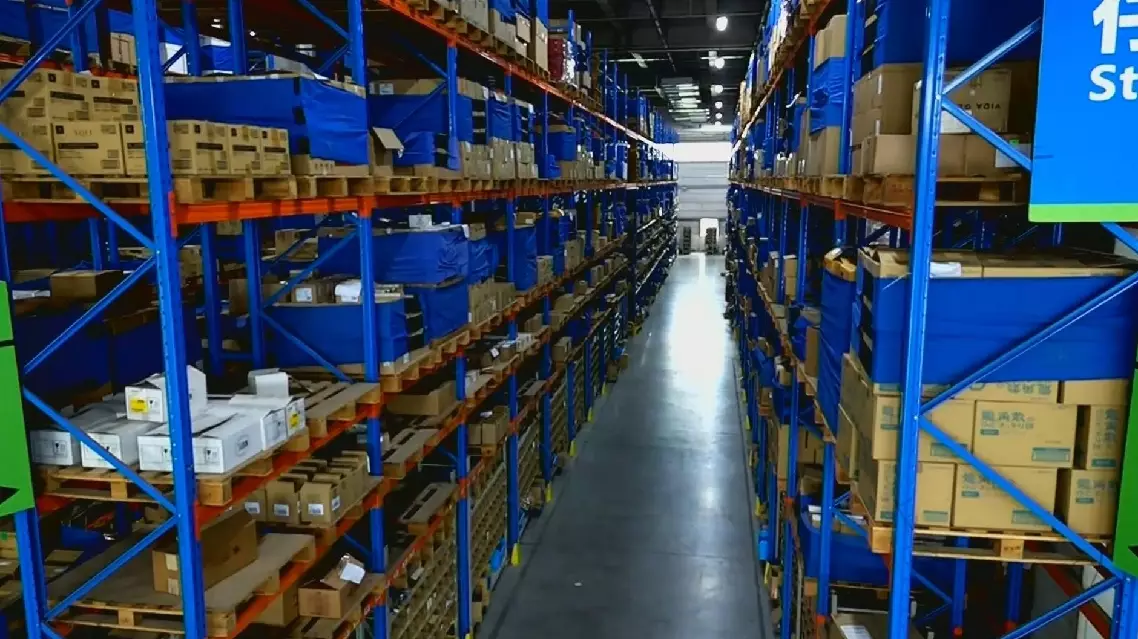
Over a decade since its establishment in March 2015, the zone has developed a complete ecosystem for cross-border e-commerce, gathering more than 2,000 cross-border service providers and bringing together goods from over 120 countries and regions around the world.
The zone's bonded warehouses have a system well-connected to the customs authorities, which enables a very quick and smooth clearance process. When consumers place orders for cross-border goods, the customs clearance information of these imported goods will be immediately pushed to the customs system. After logic comparisons by the system, the customs clearance procedure could be completed in seconds.
According to local customs authorities, the zone is expected to handle about three million orders of cross-border commodity shipments in one month from mid-May to mid-June.
Cross-border e-commerce not only offers domestic consumers with a wealth of choices to buy goods from the world, but also provides a good platform for domestic enterprises to go out. The Hangzhou pilot zone now has over 65,000 e-commerce sellers.
In the first four months of this year, the total value of imports and exports in the Yangtze River Delta region reached 5.29 trillion yuan (about 740.6 billion U.S. dollars), marking a historic high for the same period.
This impressive performance reflects not only the robust growth of new trade formats like cross-border e-commerce but also the strong development momentum of high-end equipment represented by ships and machine tools. This provides strong support for the Yangtze River Delta in accelerating the formation of new quality productive forces and enhancing the high-quality development of foreign trade.
Nearly 70 percent of China's machine tool exports are produced in the Yangtze River Delta region. Particularly, the export of high-end machine tools with high added value and high technological content has exceeded 100,000 units so far this year, contributing more than 50 percent to the total machine tool exports in the region.
In the Yangtze River Delta, foreign trade in traditional labor-intensive industries such as textiles and clothing, furniture and toys has also developed well. The exports of labor-intensive products produced in the region account for nearly half of the national total.
Labor-intensive products involve a large number of private enterprises, which are the one of the main drivers of China's foreign trade. Customs data show that private enterprises with export records in the Yangtze River Delta have contributed over 60 percent to the region's total.
Yangtze River Delta sees two-way boom in foreign trade