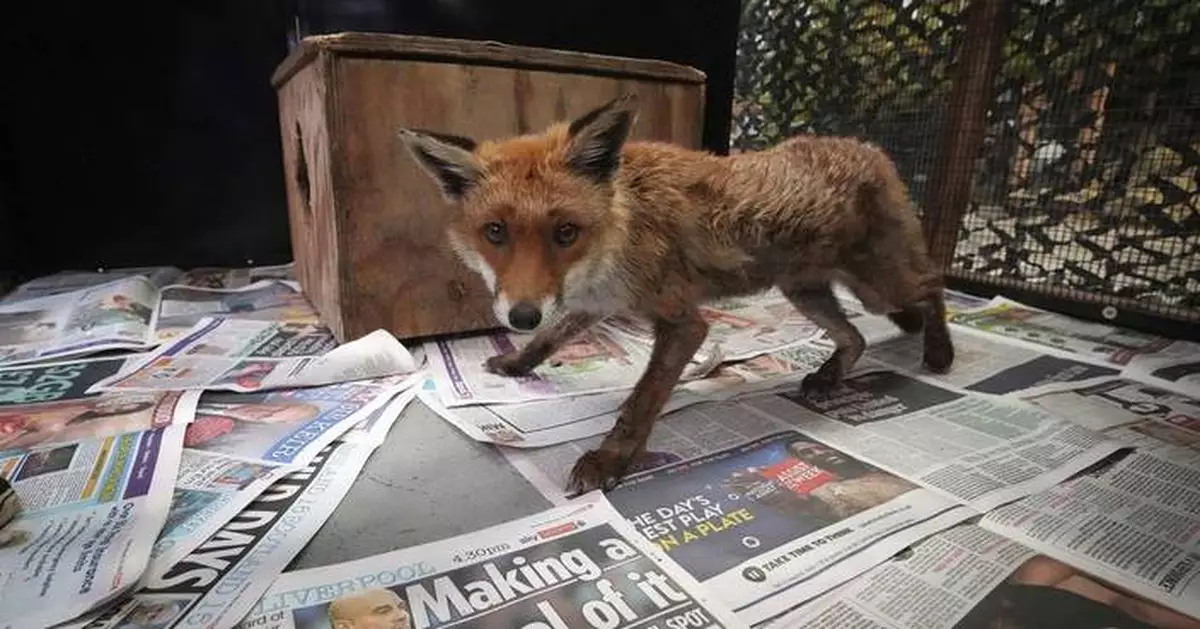
PADDOCK WOOD, England (AP) — The injured fox is cornered in a cage, teeth bared and snarling at the woman trying to help it.
Nicki Townsend is unfazed. Wearing only rubber gloves and an outfit suitable for a yoga class, she approaches with soothing words. “All right, baby," she coos as she deftly drapes a towel over his head, grabs him by the scruff of his neck, scoops up his wounded legs and moves him to a clean cage.
Click to Gallery
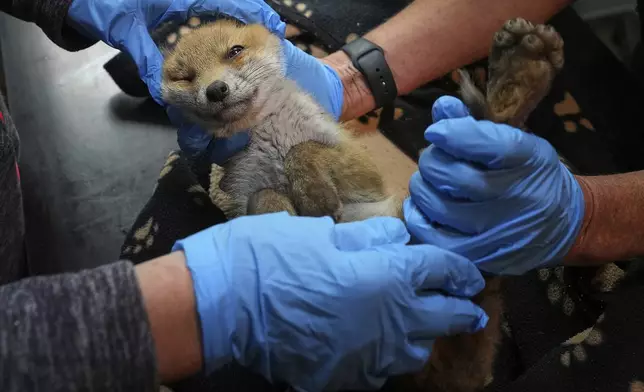
Volunteers examine a fox cub at the hospital run by The Fox Project after being rescued near Tonbridge, England, Thursday, May 22, 2025. (AP Photo/Frank Augstein)

Trevor Williams examines a fox that has been taken into hospital by The Fox Project near Tonbridge, England, Thursday, May 22, 2025.(AP Photo/Frank Augstein)
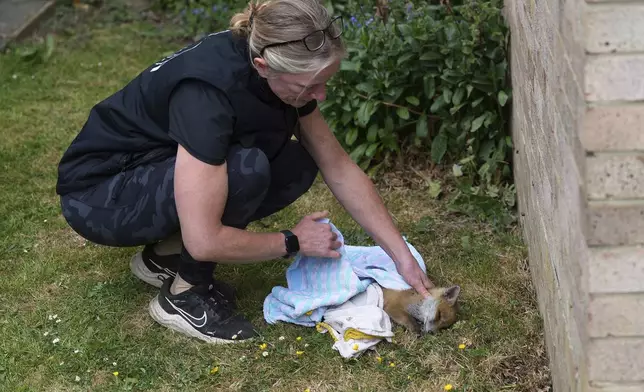
Nicki Townsend of The Fox Project looks after a fox cub that was found barely alive in a garden behind a block of flats in London, England, Thursday, May 22, 2025. (AP Photo/Frank Augstein)

A volunteer injects medicine with a syringe into the snout of a fox after being rescued at the hospital run by The Fox Project near Tonbridge, England, Thursday, May 22, 2025. (AP Photo/Frank Augstein)

A fox has a first look around in it's enclosure after being treated at the rescue hospital of The Fox Project near Tonbridge, England, Thursday, May 22, 2025. (AP Photo/Frank Augstein)
It’s not the way her day typically begins, but there’s nothing routine about rescuing foxes.
“You can never predict what you’re going to arrive at,” Townsend said.
While not as visible as phone boxes or double-decker buses, the red fox is a fixture in London, a city not known for its wildlife. But living on the streets, alleys and back gardens of a dense urban environment can be rough and when foxes need help, they have their own ambulance service — and Townsend may be on her way.
The foxes didn't invade London so much as adapt and expand their range inward as the city spread to their habitat in the 1930s and suburbs grew.
But people and the bushy-tailed member of the canine family have not always lived in harmony, and the species has admirers and adversaries.
For everyone enchanted seeing a fox trotting nonchalantly down their street at dusk or basking in a sunny backyard, there are plenty who see them as pests. They poop where they like, tear into garbage and the vixens in heat let out terrifying shrieks in the dead of winter when attracting a mate.
“It’s like Marmite with foxes,” Townsend said, referring to the food spread that is an acquired and divisive taste. “You either love them or hate them.”
The divide between the two camps led Trevor Williams to found what became The Fox Project nearly 35 years ago.
Once a bass player in the rock group Audience that opened for Led Zeppelin and Pink Floyd, Williams had been active in the campaign to stop fox hunting when he redirected his protection efforts to the city, where foxes were once routinely killed.
“Because of the myths that have occurred over the years, there’s still a lot of suspicion about what foxes might be,” Williams said. “You know, they’re going to bite the baby, they’re going to eat the cat, they’re going to run away with your husband.”
The project has since grown from providing information on deterring foxes to rescuing 1,400 a year, including 400 cubs, though only about half survive to be released.
There are estimated to be 15,000 foxes in London. The project covers a swath of south London and its leafy suburbs while other organizations not devoted solely to foxes handle other parts of the city.
While the omnivores survive on small animals, bugs and berries in the wild, they favor easily scavenged leftovers in the city and handouts that make them more dependent on humans.
Their main urban menaces are cars, getting snagged in soccer nets or getting stuck in tight spaces. In their effort to get free, they often get nasty abrasions that can become infected. Many also suffer from mange, a parasitic infestation that leads to all kinds of problems.
Townsend pilots her VW Caddy on city streets, highways and narrow lanes that roll through lush hills, responding to calls about injured or ill foxes or cubs that have lost their mothers.
She's seen a bit of everything since her first humbling call 2 1/2 years ago when the supposedly injured fox bolted.
“In my inexperience, I chased after him, which is comical because you’re never going to outrun a fox,” she said. “I just remember he ran very fast and I looked silly running after him.”
Despite many challenging situations — she once managed to rescue a fox that lost its footing atop a fence and ended upside down at eye level with its paw lodged between boards — she's only been bitten once.
Her van carries the distinctly musky scent of foxes. The odor becomes unpleasant when an anxious passenger in a litter of cubs relieves itself enroute to being delivered to a foster care pen where they will stay until being released in the wild.
“Feel free to open the window,” said Townsend, who is accustomed to the stench. “This is a stinky job."
On a recent day, she was dispatched to meet a heartbroken couple who found a cub with a puncture wound collapsed on their back lawn.
“We thought he was asleep at first, so we went to go and have a close look because we love them," Charlotte English said. “Then he just didn’t move, so we knew something was wrong.”
That cub had to be put to sleep, as did the adult Townsend transferred at the start of her shift.
Cubs that recover are socialized in packs of five until they mature and are then released in a rural location while the adults are freed in the neighborhoods where they were found.
Given a second chance, it's not clear how well the foxes fare, because they are rarely tracked. A 2016 study in the journal Applied Animal Behaviour Science found that rehabilitated foxes were more likely to behave as if they had been displaced when returned to their original territory. They were tracked wandering farther away, potentially exposing them to more traffic and greater stress.
“It is a gap in the knowledge and there’s an assumption that when you release them, they thrive and I think that that assumption needs to be challenged more,” said Bryony Tolhurst, a University of Brighton honorary research fellow and lead author of the study.
For Townsend, fox deaths are offset by the joy of seeing little ones venture into the unknown or an adult darting into a neighborhood it instantly recognizes.
“Sometimes they look back and people like to romanticize that they’re saying ‘thank you,'" she said. "They’re just making sure we’re not chasing after them.”
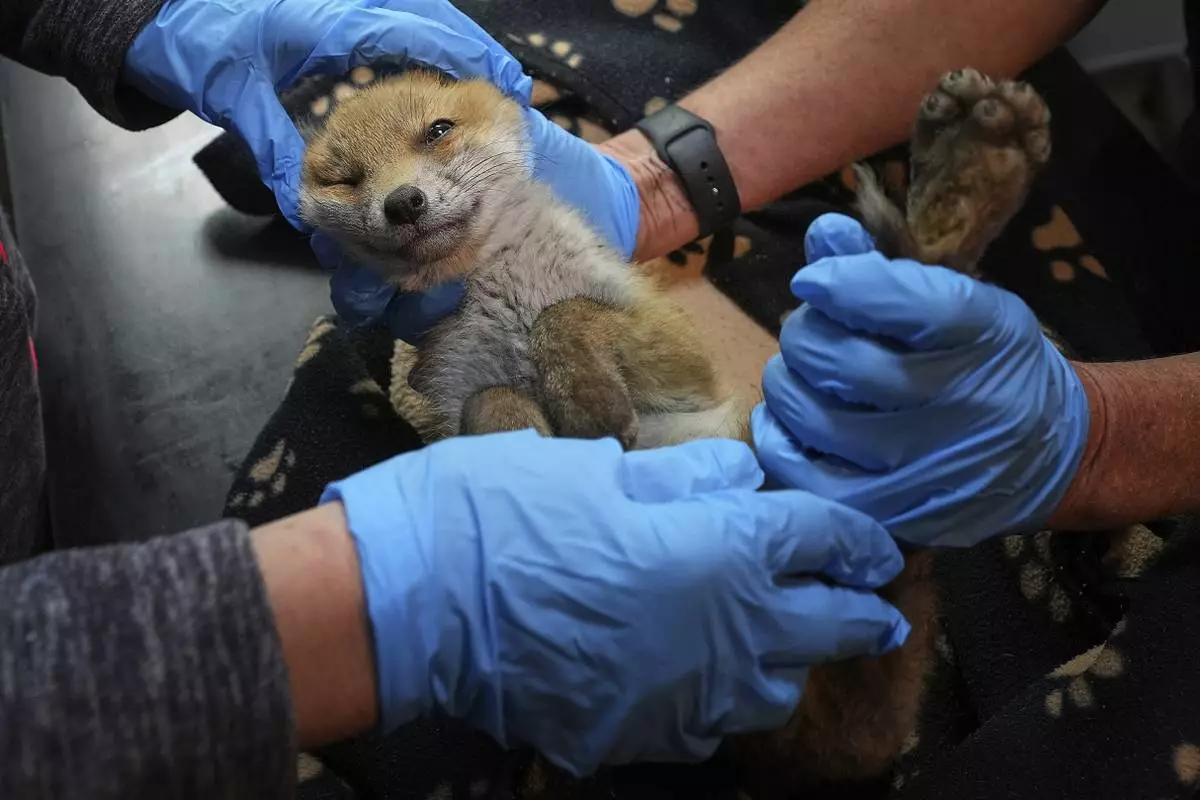
Volunteers examine a fox cub at the hospital run by The Fox Project after being rescued near Tonbridge, England, Thursday, May 22, 2025. (AP Photo/Frank Augstein)
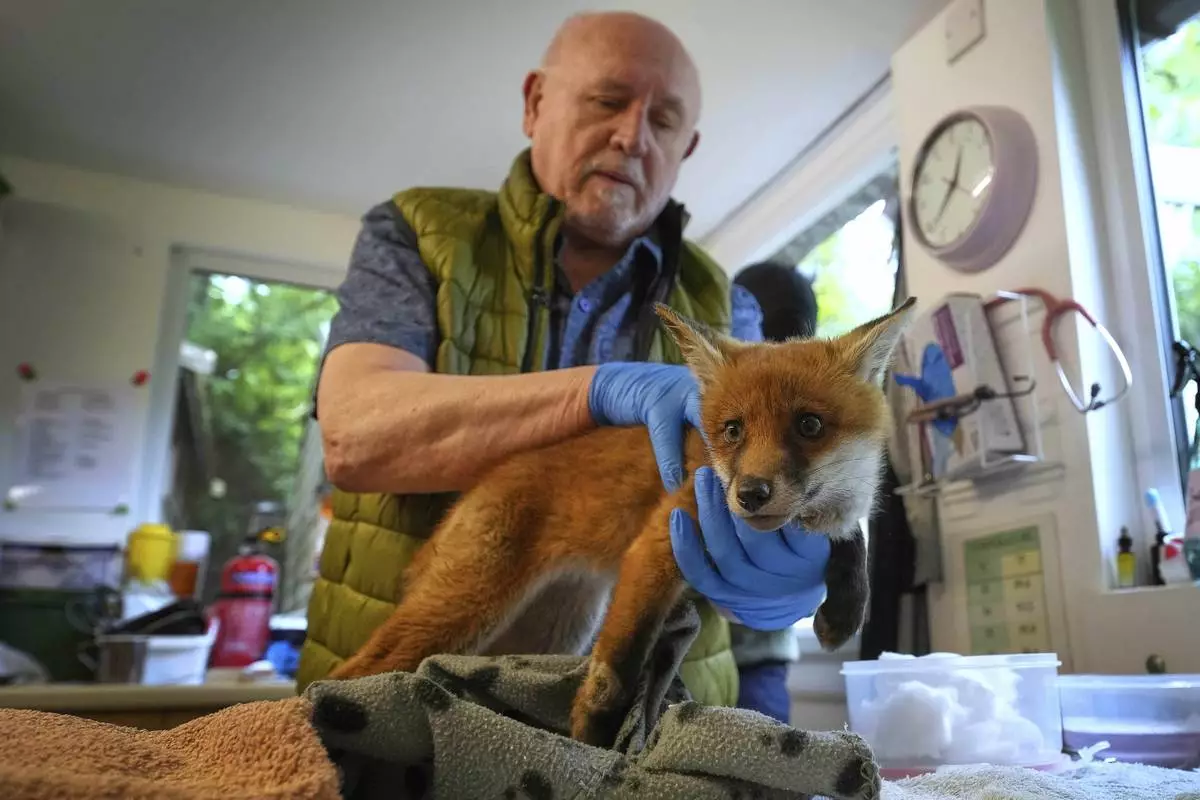
Trevor Williams examines a fox that has been taken into hospital by The Fox Project near Tonbridge, England, Thursday, May 22, 2025.(AP Photo/Frank Augstein)
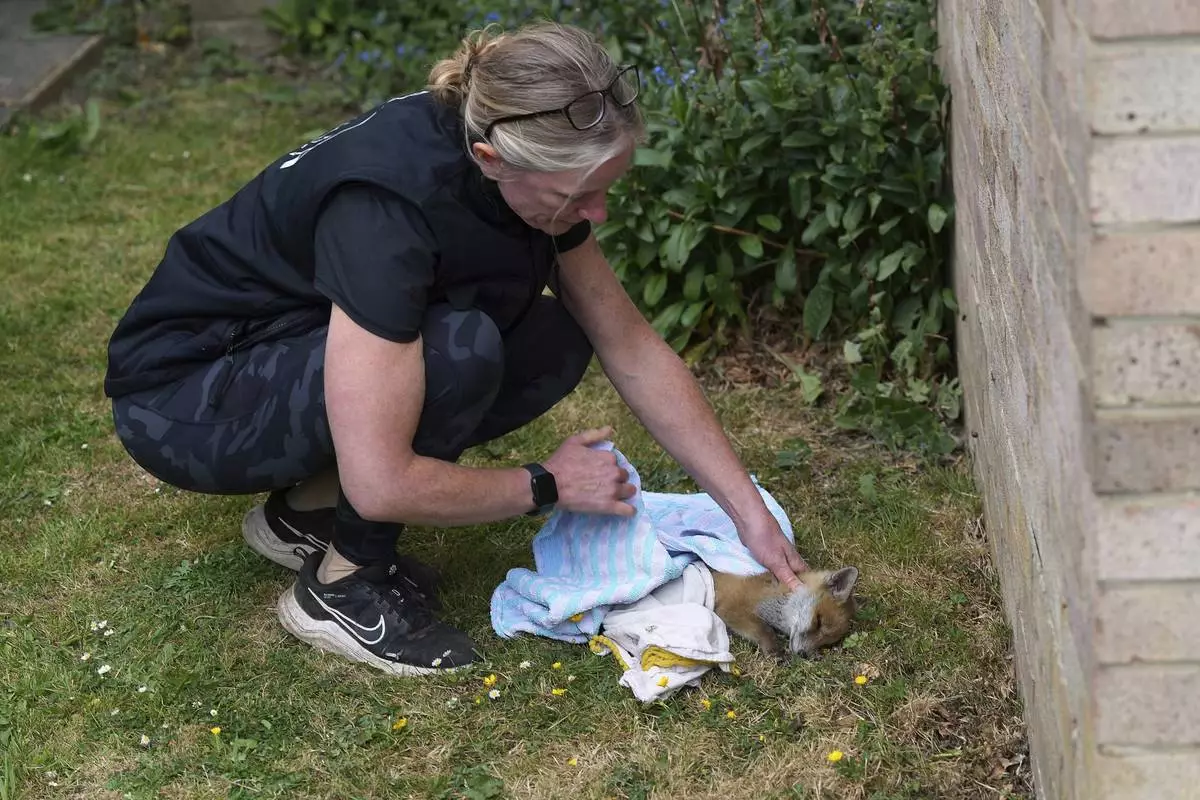
Nicki Townsend of The Fox Project looks after a fox cub that was found barely alive in a garden behind a block of flats in London, England, Thursday, May 22, 2025. (AP Photo/Frank Augstein)
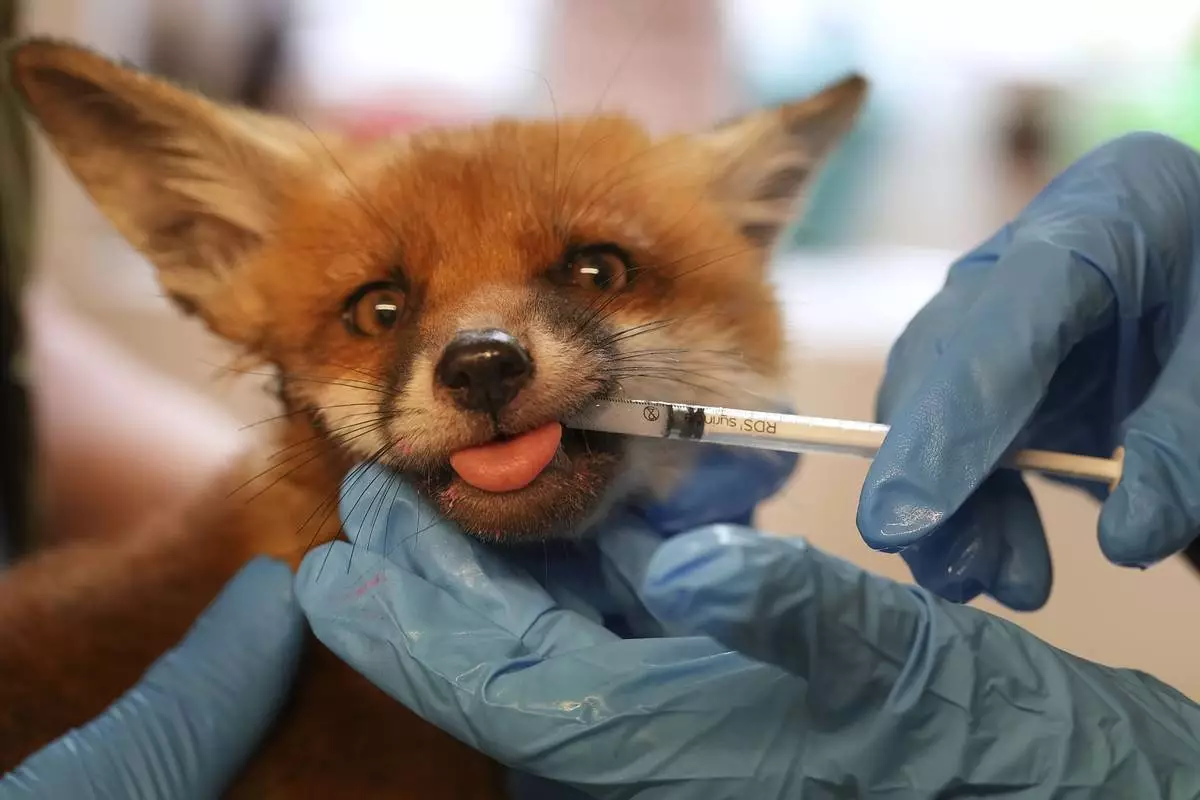
A volunteer injects medicine with a syringe into the snout of a fox after being rescued at the hospital run by The Fox Project near Tonbridge, England, Thursday, May 22, 2025. (AP Photo/Frank Augstein)
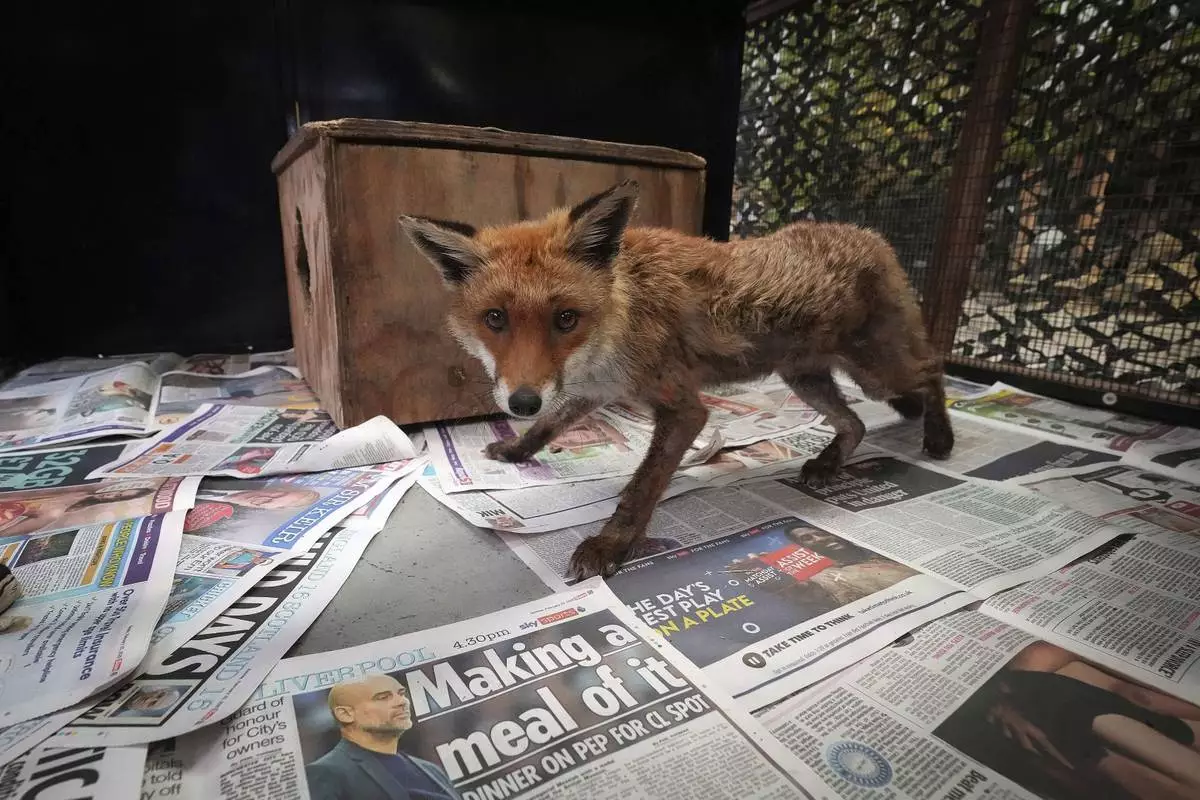
A fox has a first look around in it's enclosure after being treated at the rescue hospital of The Fox Project near Tonbridge, England, Thursday, May 22, 2025. (AP Photo/Frank Augstein)