SHANGHAI, June 10, 2025 /PRNewswire/ -- Queclink, a world-leading provider of IoT devices and solutions, today introduces the GL52RP, a compact LoRaWAN tracker built for asset monitoring, stolen vehicle recovery, and finance-related applications. With its long-range communication, extended battery life, and discreet design, the GL52RP is tailored for businesses looking to reduce operational overhead while improving visibility across assets.
As low-power wide-area (LPWA) technologies continue gaining ground in the IoT sector, LoRa has emerged as a preferred alternative to cellular networks in asset tracking. Its ability to maintain connectivity over long distances with minimal power use makes it well-suited for industries such as logistics, mobility, and security. With LoRaWAN infrastructure expanding globally, adoption is rising across both developed and emerging markets.
The GL52RP is especially relevant in regions like Brazil, where local regulations require strong anti-jamming performance. Thanks to LoRa's resilience in congested or low-signal areas, the device provides reliable communication even in environments where traditional cellular trackers may falter. Its compact design enables discreet mounting on vehicles, motorcycles, and movable assets, supporting both theft prevention and recovery.
"We're seeing growing demand in LATAM for tracking solutions that go beyond what cellular can offer. In Brazil, it is already a reality since long time," said Marcelo Orsi, Sales Director for the LATAM region at Queclink. "With LoRa-based communication, strong resistance to jamming, and long standby time, the GL52RP is purpose-built for local security and compliance needs."
In addition to its connectivity, the GL52RP features a high-sensitivity GNSS module and a built-in motion sensor for accurate location reporting and movement alerts. It's intelligent power management allows it to operate for several years in low-reporting modes, making it ideal for long-term, low-maintenance deployments. The device also supports various working modes—continuous, scheduled, and sleep—to give users more control over data use and energy consumption.
The launch of the GL52RP marks Queclink's continued investment in LPWA innovation, providing businesses with practical, future-ready solutions for asset protection. Certified in key global regions, including Anatel approval for Brazil, the GL52RP supports major LoRaWAN frequency bands, ensuring seamless deployment across Latin America, Europe, and North America.
The GL52RP is making its official debut at Exposec in São Paulo and also will be showcased at upcoming IoT events in the U.S. And Europe. Attendees can visit Booth D11 to see how this device is delivering long-term asset tracking with simplicity, endurance, and smart connectivity.
** The press release content is from PR Newswire. Bastille Post is not involved in its creation. **

Queclink Launches GL52RP: Compact LoRa Tracker Built for Long-Term Asset Security
ARMONK, N.Y., Dec. 29, 2025 /PRNewswire/ -- The following is the text of an email sent today to all IBM employees by Chairman and CEO Arvind Krishna:
IBMers,
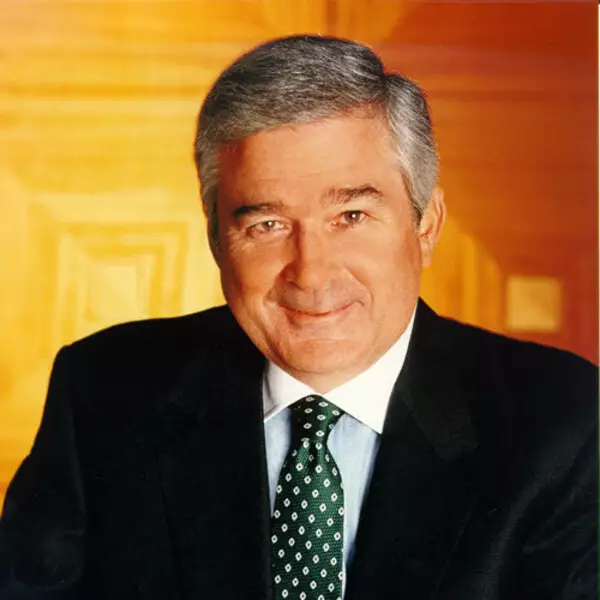
I am saddened to share that Lou Gerstner, IBM's Chairman and CEO from 1993 to 2002, passed away yesterday.
Lou arrived at IBM at a moment when the company's future was genuinely uncertain. The industry was changing rapidly, our business was under pressure, and there was serious debate about whether IBM should even remain whole. His leadership during that period reshaped the company. Not by looking backward, but by focusing relentlessly on what our clients would need next.
One of Lou's earliest signals as CEO has become part of IBM lore. Early on, he stopped a long internal presentation and said, simply, "Let's just talk." The message was clear: less inward focus, more real discussion, and much closer attention to customers. That mindset would define his tenure.
Lou believed one of IBM's central problems was that we had become optimized around our own processes, debates, and structures rather than around client outcomes. As he later put it, the company had lost sight of a basic truth of business: understanding the customer and delivering what the customer actually values.
That insight drove real change. Meetings became more direct. Decisions were grounded more in facts and client impact than in hierarchy or tradition. Innovation mattered if it could translate into something clients would come to rely on. Execution in the quarter and the year mattered, but always in service of longer-term relevance.
Lou made what may have been the most consequential decision in IBM's modern history: to keep IBM together. At the time, the company was organized into many separate businesses, each pursuing its own path. Lou understood that clients didn't want fragmented technology—they wanted integrated solutions. That conviction shaped IBM's evolution and reestablished our relevance for many of the world's largest enterprises.
Lou also understood that strategy alone would not be enough. He believed lasting change required a shift in culture—in how people behave when no one is watching. What mattered was what IBMers valued, how honestly they confronted reality, and how willing they were to challenge themselves and each other. Rather than discard IBM's long-standing values, he pushed the company to renew them to meet the demands of a very different era.
I have my own memory of Lou from the mid-1990s, at a small town hall with a few hundred people. What stood out was his intensity and focus. He had an ability to hold the short term and the long term in his head at the same time. He pushed hard on delivery, but he was equally focused on innovation: doing work that clients would remember, not just consume.
Lou stayed engaged with IBM long after his tenure ended. From my first days as CEO, he was generous with advice—but always careful in how he gave it. He would offer perspective, then say, "I've been gone a long time—I'm here if you need me." He listened closely to what others were saying about IBM and reflected it back candidly.
That neutral, experienced voice mattered to me, and I was fortunate to learn from Lou on a regular basis.
Lou was direct. He expected preparation. He challenged assumptions. But he was deeply committed to building a company that could adapt—culturally as much as strategically—without losing its core values.
Lou's impact extended well beyond IBM. Before joining the company, he had already built an extraordinary career—becoming one of the youngest partners at McKinsey & Company, later serving as president of American Express and CEO of RJR Nabisco. After IBM, he went on to chair The Carlyle Group and devoted significant time and resources to philanthropy, particularly in education and biomedical research. A native of Long Island, NY, Lou earned his undergraduate degree from Dartmouth and an MBA from Harvard, and he remained deeply devoted to his family throughout his life. Lou was preceded in death by his son Louis Gerstner III.
We will hold a celebration in the new year to reflect on Lou's legacy and what his leadership enabled at IBM.
My thoughts are with Lou's wife Robin, his daughter Elizabeth, his grandchildren and extended family, as well as his many friends, colleagues, and people around the world who were shaped by his leadership and his work.
Media Contact:
IBM Pressroom
ibmpress@us.ibm.com
** The press release content is from PR Newswire. Bastille Post is not involved in its creation. **

Remembering Lou Gerstner
Remembering Lou Gerstner