ARMONK, N.Y., Dec. 29, 2025 /PRNewswire/ -- The following is the text of an email sent today to all IBM employees by Chairman and CEO Arvind Krishna:
IBMers,
I am saddened to share that Lou Gerstner, IBM's Chairman and CEO from 1993 to 2002, passed away yesterday.
Lou arrived at IBM at a moment when the company's future was genuinely uncertain. The industry was changing rapidly, our business was under pressure, and there was serious debate about whether IBM should even remain whole. His leadership during that period reshaped the company. Not by looking backward, but by focusing relentlessly on what our clients would need next.
One of Lou's earliest signals as CEO has become part of IBM lore. Early on, he stopped a long internal presentation and said, simply, "Let's just talk." The message was clear: less inward focus, more real discussion, and much closer attention to customers. That mindset would define his tenure.
Lou believed one of IBM's central problems was that we had become optimized around our own processes, debates, and structures rather than around client outcomes. As he later put it, the company had lost sight of a basic truth of business: understanding the customer and delivering what the customer actually values.
That insight drove real change. Meetings became more direct. Decisions were grounded more in facts and client impact than in hierarchy or tradition. Innovation mattered if it could translate into something clients would come to rely on. Execution in the quarter and the year mattered, but always in service of longer-term relevance.
Lou made what may have been the most consequential decision in IBM's modern history: to keep IBM together. At the time, the company was organized into many separate businesses, each pursuing its own path. Lou understood that clients didn't want fragmented technology—they wanted integrated solutions. That conviction shaped IBM's evolution and reestablished our relevance for many of the world's largest enterprises.
Lou also understood that strategy alone would not be enough. He believed lasting change required a shift in culture—in how people behave when no one is watching. What mattered was what IBMers valued, how honestly they confronted reality, and how willing they were to challenge themselves and each other. Rather than discard IBM's long-standing values, he pushed the company to renew them to meet the demands of a very different era.
I have my own memory of Lou from the mid-1990s, at a small town hall with a few hundred people. What stood out was his intensity and focus. He had an ability to hold the short term and the long term in his head at the same time. He pushed hard on delivery, but he was equally focused on innovation: doing work that clients would remember, not just consume.
Lou stayed engaged with IBM long after his tenure ended. From my first days as CEO, he was generous with advice—but always careful in how he gave it. He would offer perspective, then say, "I've been gone a long time—I'm here if you need me." He listened closely to what others were saying about IBM and reflected it back candidly.
That neutral, experienced voice mattered to me, and I was fortunate to learn from Lou on a regular basis.
Lou was direct. He expected preparation. He challenged assumptions. But he was deeply committed to building a company that could adapt—culturally as much as strategically—without losing its core values.
Lou's impact extended well beyond IBM. Before joining the company, he had already built an extraordinary career—becoming one of the youngest partners at McKinsey & Company, later serving as president of American Express and CEO of RJR Nabisco. After IBM, he went on to chair The Carlyle Group and devoted significant time and resources to philanthropy, particularly in education and biomedical research. A native of Long Island, NY, Lou earned his undergraduate degree from Dartmouth and an MBA from Harvard, and he remained deeply devoted to his family throughout his life. Lou was preceded in death by his son Louis Gerstner III.
We will hold a celebration in the new year to reflect on Lou's legacy and what his leadership enabled at IBM.
My thoughts are with Lou's wife Robin, his daughter Elizabeth, his grandchildren and extended family, as well as his many friends, colleagues, and people around the world who were shaped by his leadership and his work.
Media Contact:
IBM Pressroom
ibmpress@us.ibm.com
** The press release content is from PR Newswire. Bastille Post is not involved in its creation. **
Remembering Lou Gerstner

Remembering Lou Gerstner
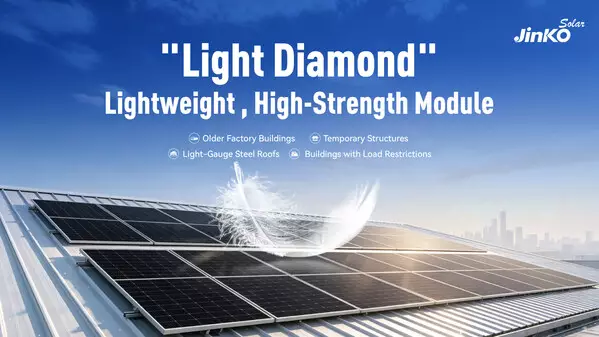
SHANGHAI, April 18, 2026 /PRNewswire/ -- JinkoSolar, the global leading PV and ESS supplier, has officially launched a lightweight module solution specifically designed for low-load-bearing roofs—the Jinko "Light Diamond" lightweight, high-strength module, based on its Tiger Neo 3.0 technology platform.
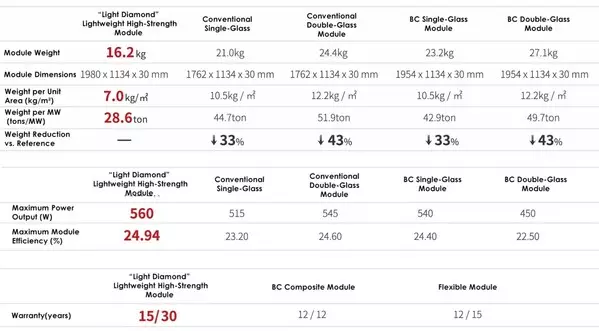
Module weight: 16.2 kg
Module dimensions: 1980 × 1134 × 30 mm
Weight density: 7 kg/m²— 40% weight reduction compared with conventional double-glass modules (12.2 kg/m²);
Maximum power: 560 W;
Maximum module efficiency: 24.94%
Applications: Suitable for older factory buildings, temporary structures, light-gauge steel roofs, power plant coal sheds, and buildings with load restrictions.
Five Key Advantages:
Advantage 1: Ultra-Lightweight with Guaranteed Strength
JinkoSolar's "Light Diamond" lightweight, high-strength modules weigh only 7 kg per square meter, representing a weight reduction of over 40% compared to conventional double-glass modules. The total module weight for a 1 MW project is only 28.6 tons, a reduction of approximately 20 tons compared to BC double-glass modules. This means that a large number of roofs that previously required reinforcement or were unsuitable for installation can now be directly fitted with solar panels without any structural modifications.
Advantage 2: 24.94% High Efficiency—Lightweight and High-Performance
A common flaw among most lightweight modules on the market is that they prioritize weight reduction at the expense of power generation efficiency. JinkoSolar's "Light Diamond" lightweight, high-strength modules break this trade-off.
JinkoSolar's "Light Diamond" lightweight, high-strength modules deliver a maximum power output of 560 watts and an ultra-high efficiency of 24.94%, whereas flexible modules or BC composite modules only reach 450 to 460 watts—a single-module power increase of over 100 watts. This means a higher-capacity solar power plant can be installed on the same roof area. More importantly, the higher power output directly leads to optimized system costs: fewer modules are required, reducing Balance of System (BOS) costs for mounting structures, cables, combiner boxes, and other components; installation time is shortened, lowering labor costs; and overall BOS costs are further reduced by 3% to 5% compared to conventional lightweight solutions.
This is not a lightweight module born of compromise, but a high-efficiency module that takes performance to the next level.
Advantage 3: Reduced Weight Without Compromising Quality—Backed by a 30-Year Power Warranty
The key concern with lightweight modules is whether their reduced weight compromises reliability. JinkoSolar's "Light Diamond" lightweight, high-strength modules address this concern with technology and data.
In terms of structural reinforcement, the modules utilize 1.6mm lightweight glass to reduce weight while maintaining light transmittance; the frame features reinforced channel design with increased thickness, enhancing overall mechanical strength; and the encapsulation process uses reinforced adhesive film, significantly improving sealing performance, resistance to humidity and heat, and resistance to micro-cracks.
In terms of load certification, the maximum front-side load capacity is 3,600 Pa—equivalent to withstanding 3.6 meters of snow accumulation—and the module can withstand impacts from 25mm hailstones without damage. The maximum back-side load capacity is 2,400 Pa, equivalent to withstanding Category 12 winds. In the face of extreme weather, it provides a robust safety barrier.
In terms of long-term reliability metrics, the temperature coefficient is -0.26%/°C, resulting in lower power generation losses at high temperatures; the power output warranty spans 30 years, which is 12–15 years longer than that of flexible or composite modules; first-year degradation does not exceed 1%, with annual degradation of 0.35%, both of which outperform industry averages.
Advantage 4: Save Money, Time, and Effort
The lightweight design of JinkoSolar's "Light Diamond" lightweight, high-strength modules not only reduces physical weight but also systematically optimizes total lifecycle costs.
Compared to conventional module reinforcement solutions, JinkoSolar's "Light Diamond" lightweight, high-strength modules save approximately 0.5 yuan per watt in reinforcement costs, equivalent to a savings of about 500,000 yuan per MW. The construction period is reduced from over 40 days to 8–10 days—a 75% reduction. There is no need to halt production, thereby avoiding operational losses, and the approval process is simplified, eliminating the need for structural modification approvals.
Taking a 1 MW project as an example, the savings on reinforcement costs amount to approximately 500,000 yuan, the construction period is shortened by more than 30 days, and the avoided production downtime losses—which can reach hundreds of thousands of yuan depending on the company's scale—significantly boost the project's internal rate of return (IRR) and markedly shorten the payback period. For retrofit projects involving older factory buildings, the greatest advantage of Jinko's "Light Diamond" lightweight, high-strength modules is that installation can proceed without halting production; companies can maintain normal operations while the solar power plant is installed on the roof simultaneously, ensuring both objectives are met.
Advantage 5: Strong Demand, a Blue Ocean Market
According to industry statistics, China has over 6 billion square meters of existing commercial and industrial rooftop space, with load-restricted roofs accounting for more than 30% of this total—representing a potential market of nearly 2 billion square meters. Based on an installation density of 100 watts per square meter and a system cost of 1.5 yuan per watt, the theoretical installation capacity exceeds 200 GW, with a market size surpassing 300 billion yuan.
The renovation of old factory buildings, the upgrading of cultural and creative parks, and distributed solar systems on light-gauge steel roofs—these scenarios that were previously unsuitable for installation are now becoming a new blue ocean for PV growth. Whoever can be the first to deliver truly reliable products will be able to capture this market.
Application Scenarios
1) Renovation of Old Industrial Buildings: This is the primary application scenario. Industrial buildings constructed in the last century, as well as power plant coal sheds, carports, and simple rural supermarkets, often have limited roof load-bearing capacity and structurally deteriorated roofs that cannot safely support additional weight. Jinko's "Light Diamond" lightweight, high-strength modules can be installed without structural reinforcement and do not disrupt production during renovation, making them the preferred solution for the green retrofitting of old industrial buildings.
2) Cultural and Creative Parks and Commercial Complexes: With insufficient roof load-bearing capacity, the need to maintain operations, and aesthetic requirements, Jinko's "Light Diamond" lightweight, high-strength modules—which are lightweight, efficient, and reliable—are a perfect fit for these scenarios.
3) Light-Gauge Steel Roofs and Color-Coated Steel Sheet Roofs: Light-gauge steel roofs, commonly used in modern industrial facilities, inherently lack sufficient load-bearing capacity. Jinko's "Light Diamond" lightweight, high-strength modules, weighing just 7 kg per square meter, enable the installation of solar panels on these roofs.
4) Special buildings with load restrictions: Such as space frame structures, arched roofs, and agricultural greenhouses, Jinko's "Light Diamond" lightweight, high-strength modules can easily adapt to these structures.
** This press release is distributed by PR Newswire through automated distribution system, for which the client assumes full responsibility. **
JinkoSolar Officially Launches "Light Diamond" Lightweight, High-Strength Module
JinkoSolar Officially Launches "Light Diamond" Lightweight, High-Strength Module