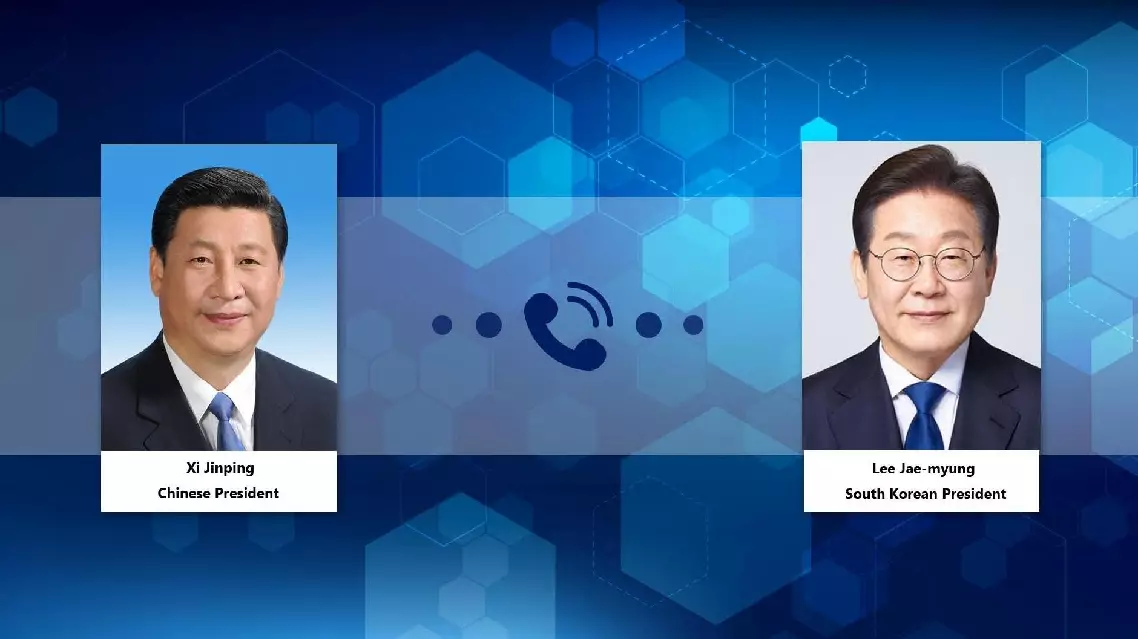
Chinese President Xi Jinping said Tuesday that China and South Korea should lift their strategic cooperative partnership to a higher level, so as to deliver more benefits to the two peoples and bring greater certainty to the turbulent regional and international landscapes.
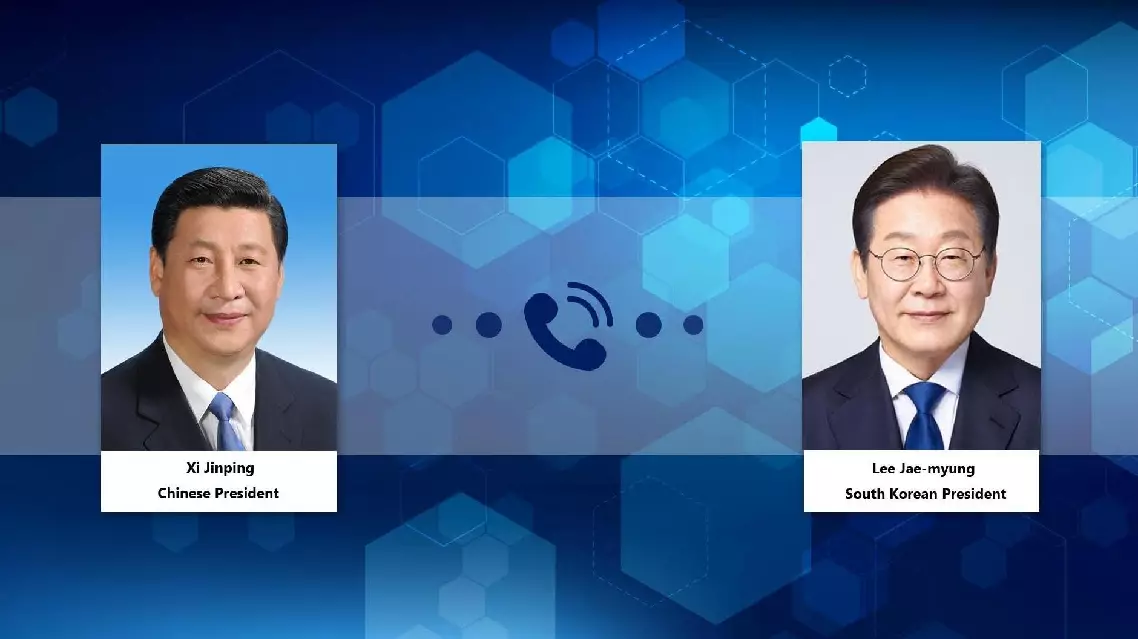
Xi made the statement during a telephone conversation with the newly elected South Korean President Lee Jae-myung.
Click to Gallery
Xi urges China, S. Korea to lift strategic cooperative partnership to higher level
Xi urges China, S. Korea to lift strategic cooperative partnership to higher level
Xi urges China, S. Korea to lift strategic cooperative partnership to higher level
Xi urges China, S. Korea to lift strategic cooperative partnership to higher level
Extending congratulations once again to Lee on his election as South Korean president, Xi said that China and South Korea are close neighbors that cannot be moved away from each other.
Over the past 33 years since the establishment of diplomatic ties, the two countries have transcended differences in ideology and social systems, and actively advanced exchanges and cooperation across various fields, thus contributing to each other's success and achieving common development, he said.
A sound, stable and ever-deepening China-South Korea relationship, Xi said, conforms to the trend of the times, serves the fundamental interests of the two peoples, and contributes to regional and global peace, stability, development and prosperity.
China and South Korea should stay committed to the original aspiration of the establishment of diplomatic ties between the two countries, uphold good-neighborliness and friendship, and strive for mutual benefit and win-win outcomes, Xi said.
The two sides, he said, should enhance exchanges at various levels and across various areas to increase strategic mutual trust, strengthen bilateral cooperation and multilateral coordination to jointly safeguard multilateralism and free trade, and ensure stable and smooth global and regional industrial and supply chains.
China and South Korea should deepen people-to-people and cultural exchanges to enhance mutual understanding and cement public support, so as to plant the seeds of China-South Korea friendship deep in the hearts of the two peoples, Xi said.
The two countries should respect each other's core interests and major concerns and keep bilateral relations on the right track to ensure sound and steady growth of China-South Korea relations, he added.
Lee, for his part, said he agrees with Xi's remarks, stressing the close geographical proximity, longstanding exchanges, and close economic, trade, and cultural connections between South Korea and China.
While expressing admiration for China's impressive development achievements under Xi's outstanding leadership, Lee said that he attaches great importance to South Korea-China relations, and is ready to work with China to deepen their good-neighborly and friendly relations, enhance mutual goodwill between the two peoples and achieve more results in bilateral cooperation.
Xi urges China, S. Korea to lift strategic cooperative partnership to higher level
Xi urges China, S. Korea to lift strategic cooperative partnership to higher level
Xi urges China, S. Korea to lift strategic cooperative partnership to higher level
Xi urges China, S. Korea to lift strategic cooperative partnership to higher level