AMSTERDAM--(BUSINESS WIRE)--Jun 10, 2025--
XTransfer, the world’s leading and China’s No.1 B2B cross-border trade payment platform, and BNP Paribas, the European Union’s leading bank, have signed a landmark Memorandum of Understanding (MOU) to roll out comprehensive cross-border financial services during Money20/20 Europe in Amsterdam. This collaboration aims to reduce the cost and processing time of cross-border payments for XTransfer's clients, particularly benefiting global traders with significant markets in the Eurozone.
This press release features multimedia. View the full release here: https://www.businesswire.com/news/home/20250609902012/en/
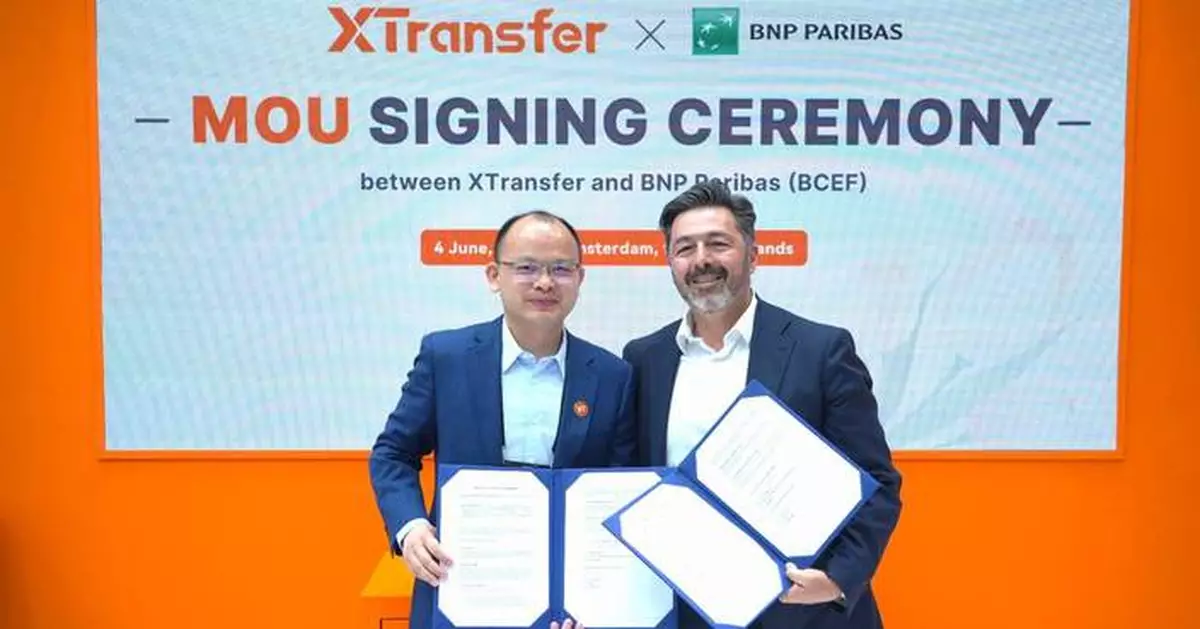
The signing ceremony was held at Money20/20 Europe, with senior representatives from both companies in attendance. The MOU was signed by Bill Deng, Founder and CEO of XTransfer, and Bruno Mellado, Global Head of Payments and Receivables at BNP Paribas, marking a significant milestone in their strategic partnership.
China and the EU are each other's major trading partners. In terms of bilateral trade, according to China's customs, the total import and export of goods between China and the EU in 2024 was US$785.8 billion, representing a 0.4% year-over-year increase. The EU is China's third-largest export destination and second-largest import source, while China remains the EU's largest import source and third-largest export destination.
The partnership between XTransfer and BNP Paribas is set to simplify cross-border payment solutions for European SMEs engaged in international trade. By leveraging BNP Paribas’ extensive network across Europe, XTransfer will empower its Chinese clients to collect funds in Euros seamlessly, while assisting European SMEs in making direct payments in Euros to reduce foreign exchange complexities and enhance transactional efficiency. This partnership is expected to expand further, with plans to introduce even more currency options in the near future.
Bill Deng, Founder and CEO of XTransfer, said, “It is a great honour to join hands with BNP Paribas. This MOU reflects our mutual ambition to empower SMEs with enhanced cross-border financial solutions. As we continue to grow our European footprint, partnerships like this are instrumental in building robust, compliant, and innovative financial infrastructure for international trade.”
Bruno Mellado, Global Head of Payments and Receivables at BNP Paribas, added, “By combining BNP Paribas' extensive European network with XTransfer's expertise in B2B cross-border trade payments, we aim to simplify international trade transactions, reduce costs, and enhance the global competitiveness of our clients. This partnership marks a significant step forward in our mission to provide innovative and efficient financial solutions for businesses operating in the global market.”
The partnership is designed to facilitate seamless trade between SMEs in China and European countries, at the same time streamlining foreign trade transactions between European businesses and their global partners. By simplifying cross-border payments and reducing transactional complexities, this collaboration will lower the costs associated with global trade and significantly enhance the global competitiveness of European SMEs.
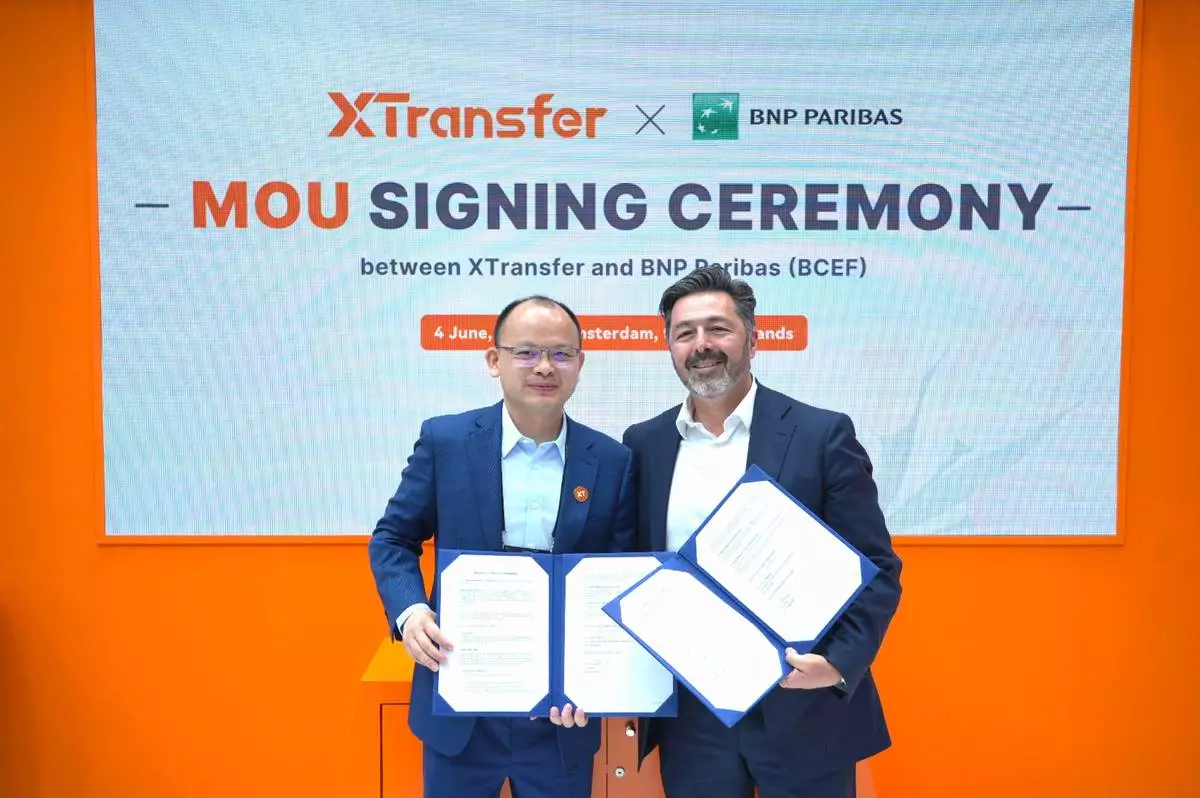
Bill Deng, Founder and CEO of XTransfer (Left), and Bruno Mellado, Global Head of Payments and Receivables at BNP Paribas (Right), at the ceremony.
PARIS (AP) — After letting another big lead slip with an error-strewn performance at the French Open, top-ranked Aryna Sabalenka felt like getting as far away from the courts as possible.
“Just want to quit tennis right now,” Sabalenka said after wasting a lead of a set and two breaks in a 3-6, 7-5, 6-0 loss to Diana Shnaider in the quarterfinals on Wednesday. “We’ll see in few days. Hopefully I’ll get back on track mentally.”
Sabalenka's wait for a first French Open title continues despite the four-time major winner leading 4-1 in the second set and being two points from victory while serving for the match at 5-4. What followed was a complete collapse as she lost 12 of the last 13 games against a player appearing in her first Grand Slam quarterfinal, looking increasingly frustrated and forlorn in the windy conditions.
Just like her loss to Coco Gauff in last year's final, when she also won the first set before becoming undone with a slew of unforced errors, this one will take some time to get over.
“You know those rooms where you just go in and you smash everything,” Sabalenka said. “Probably I will spend a whole day tomorrow over there destroying stuff. Maybe it will help, maybe not.”
Shnaider next faces Maja Chwalinska, who extended her remarkable Roland Garros run by beating No. 22-seeded Anna Kalinskaya 7-6 (3), 6-3.
In the men’s quarterfinals, 10th-seeded Flavio Cobolli beat No. 4 Felix Auger-Aliassime 4-6, 6-4, 6-4, 6-4 to ensure there will be an Italian finalist. Cobolli will face one of two fellow Italians, Matteo Berrettini or Matteo Arnaldi — who were playing later — in the semifinals.
The strong Italian showing comes despite top-ranked Jannik Sinner getting stunned in the second round.
Second-seeded Alexander Zverev and No. 26 Jakub Mensik will meet in the other semifinal.
Sabalenka stood still and screamed loudly after losing a point to fall 0-30 down in the sixth game of the decider and, although she saved two match points at 0-40 down, she lost when she sent a shot into the net.
“I just think it’s combination of everything,” Sabalenka lamented. “You overthink, then you make easy mistakes, then you miss opportunities.”
Her struggles were reminiscent of the match against Gauff, when she remonstrated loudly, shouting to herself and glaring at her team box.
“I just have to sit back and openly think about what’s going on in my head in those tough moments,” Sabalenka said, recalling that match. “Because I’m quite an experienced player. I have been through so many things, and I overcome so many things.”
Sabalenka had already looked agitated when serving for the first set but still looked in control as she served for the match in the second, holding a 30-15 lead.
“Of course I saw some moments of her frustration,” Shnaider said. “I know Aryna, that she’s a very emotional person."
Shnaider, who was already on her best run at a major, broke Sabelenka before taking complete control.
“Well, honestly I am speechless. Super happy,” Shnaider said. “I feel like I was trying to focus point by point. Not thinking about the score. She is the world No. 1, so I just trying to do my best. I just had to fight for every point.”
Sabalenka looked increasingly frustrated as the third set wore on, and when she missed a volley at the net in the fourth game of the decider she crouched and rested her head on her racket.
It was another big upset in a tournament where defending champion Gauff (third round) and four-time winner Iga Swiatek (fourth round) already tumbled out.
Defending men’s champion Jannik Sinner served for the match in a second round defeat, and 24-time major winner Novak Djokovic wasted a two-set lead in a third round loss.
That opened things up for lesser-known players. According to Opta, this is the first major without a former champion in either the men’s and women’s semifinals since the French Open in 1977.
The unseeded Chwalinska came through three qualifying rounds to become only the second Polish woman to reach the semifinals at Roland Garros, along with Swiatek.
Chwalinska said British player Emma Raducanu’s run to the 2021 U.S. Open title as an 18-year-old qualifier had inspired her.
“It was such an impressive run, you know,” Chwalinska recalled. “Also, she was so young.”
When Kalinskaya’s big forehand from the back of the court went out, the 24-year-old Chwalinska had her biggest win, having never been beyond the second round at any major before this tournament.
Chwalinska’s total prize money heading into Roland Garros was $864,030 and reaching the last four here earns her 750,000 euros (about $872,000).
The roof was open on Court Philippe-Chatrier and there was a lot of wind.
“I don’t know why would they keep the roof open when it was crazy windy,” Sabalenka said. “It was very dirty tennis. I don’t know how people could actually just sit there and watch me play.”
Kalinskaya also struggled.
AP tennis: https://apnews.com/hub/tennis
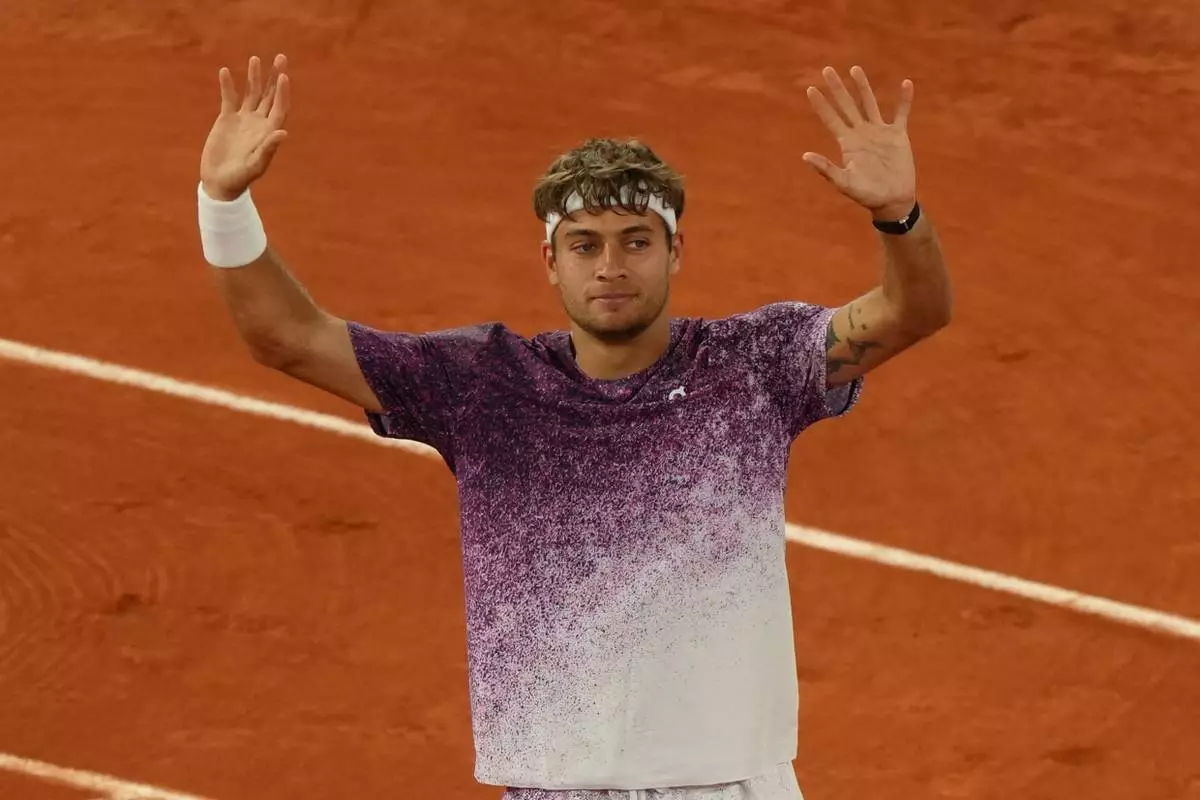
Italy's Flavio Cobolli reacts after winning the quarterfinal tennis match against Canada's Felix Auger-Aliassime at the French Open in Paris, Wednesday, June 3, 2026. (AP Photo/Aurelien Morissard)
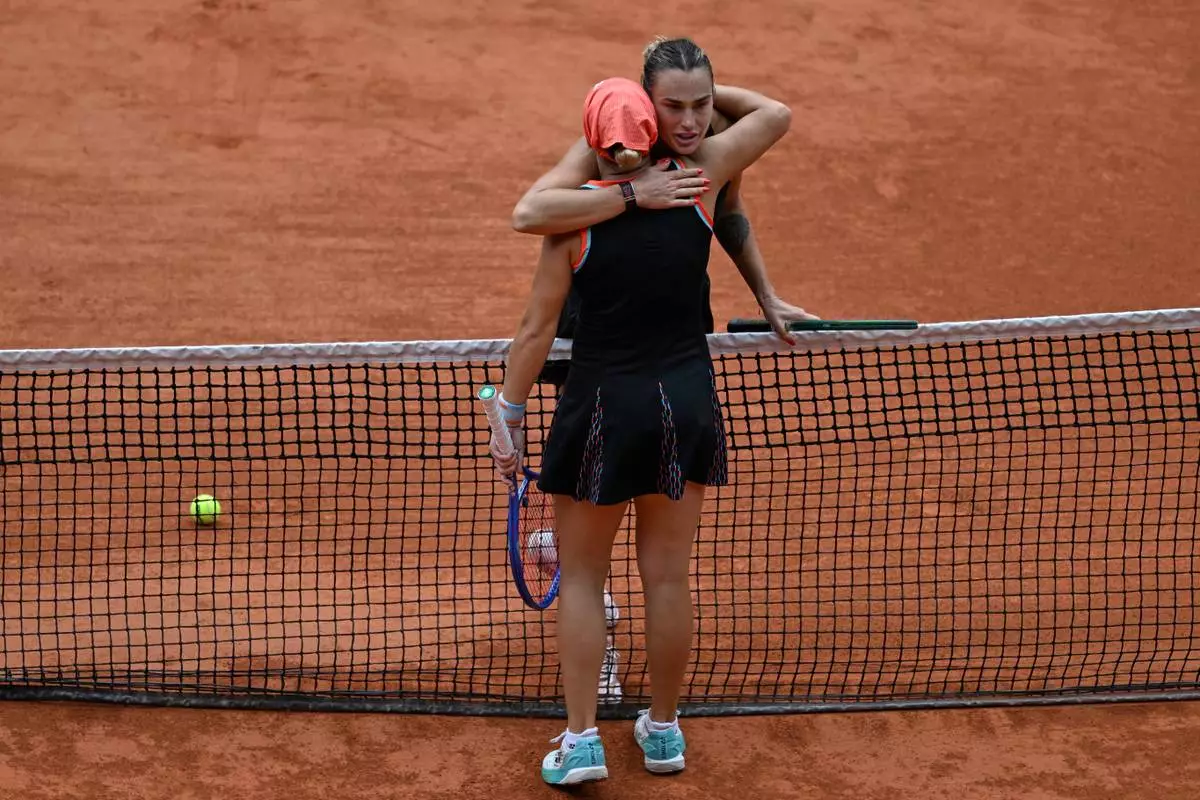
Aryna Sabalenka of Belarus hugs Russia's Diana Shnaider after the quarterfinal tennis match at the French Open in Paris, Wednesday, June 3, 2026. (AP Photo/Emma Da Silva)
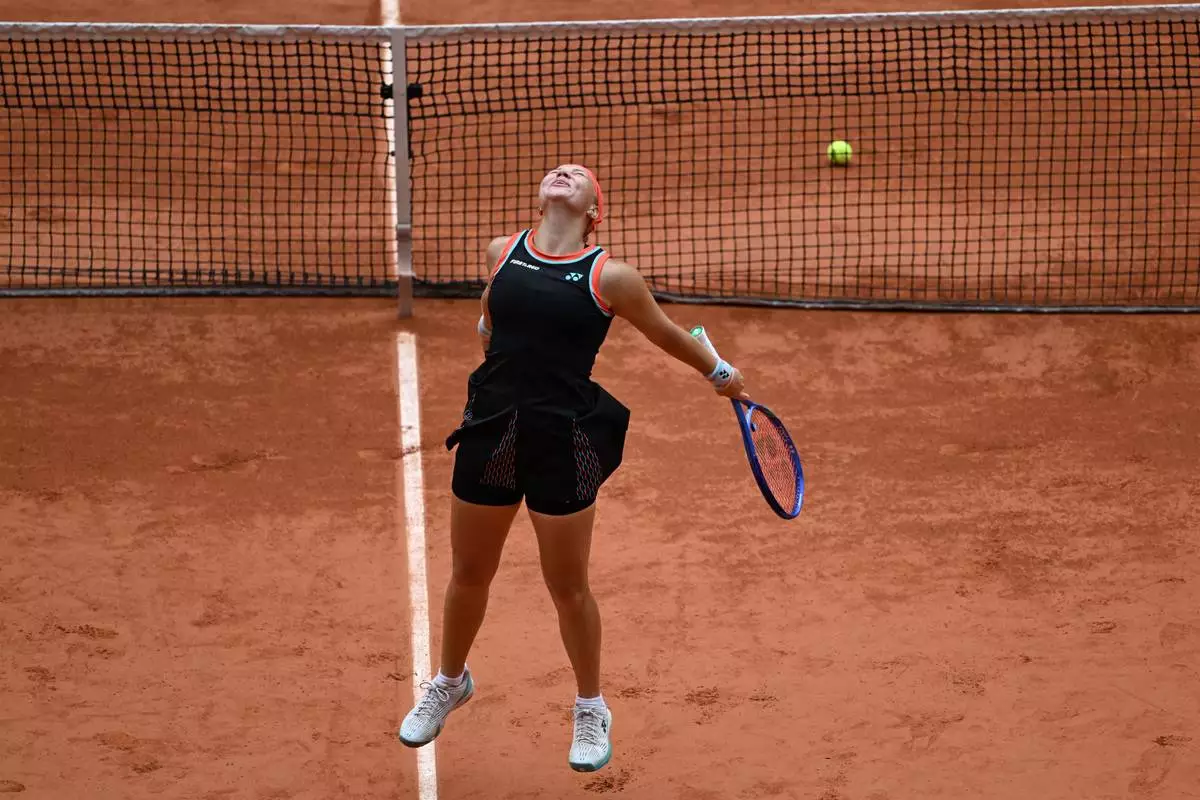
Russia's Diana Shnaider reacts after winning the quarterfinal tennis match against Aryna Sabalenka of Belarus at the French Open in Paris, Wednesday, June 3, 2026. (AP Photo/Emma Da Silva)
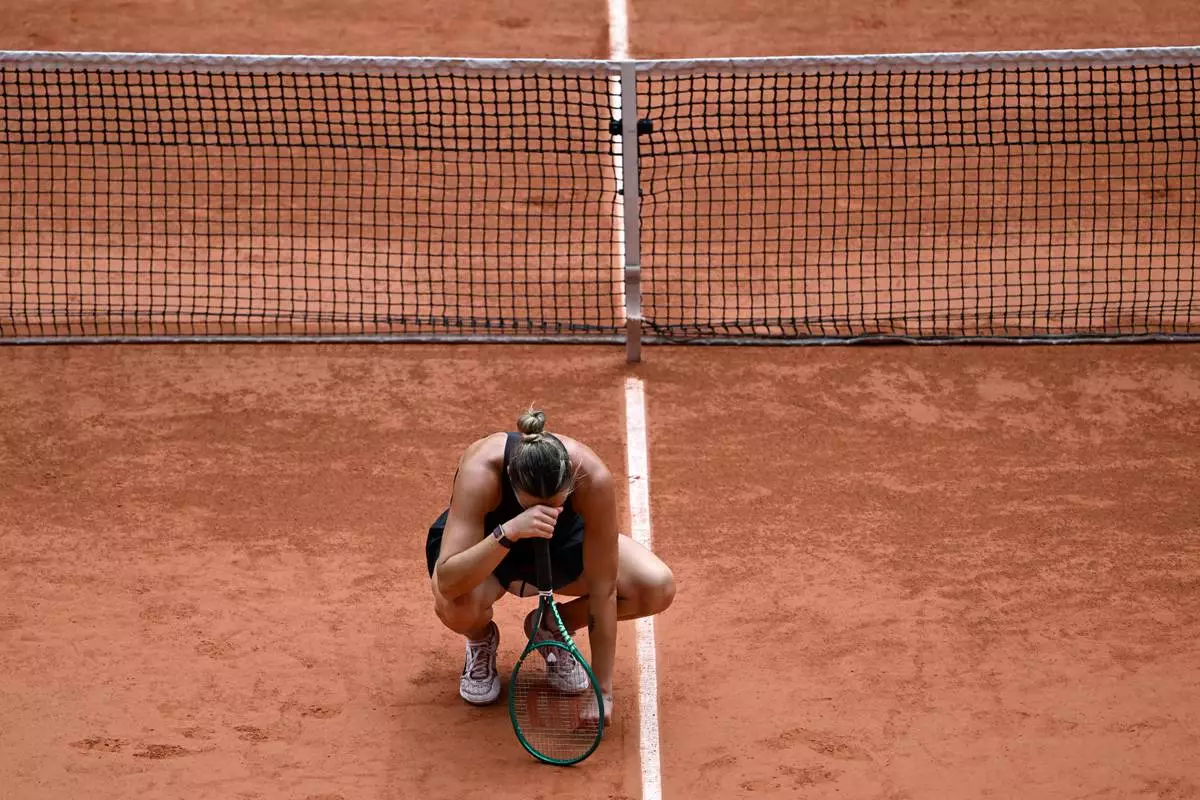
Aryna Sabalenka of Belarus reacts after losing the quarterfinal tennis match against Russia's Diana Shnaider at the French Open in Paris, Wednesday, June 3, 2026. (AP Photo/Emma Da Silva)
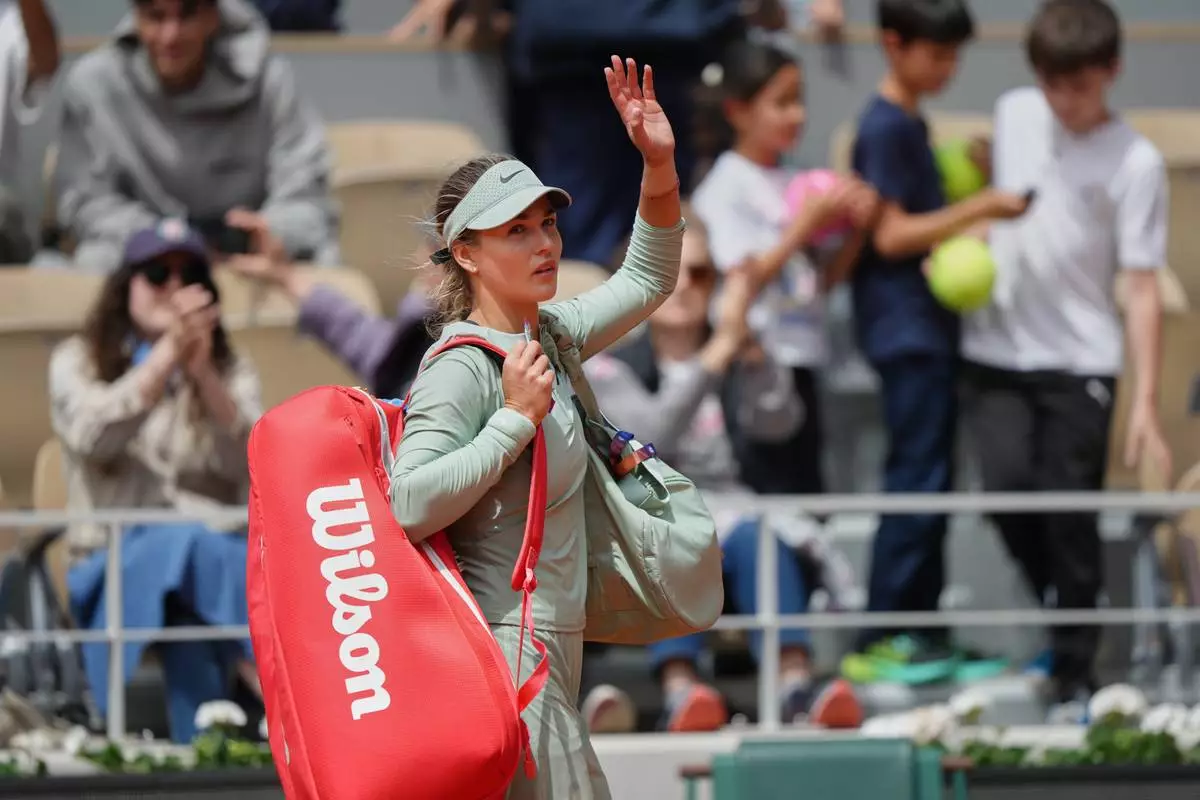
Russia's Anna Kalinskaya walks off the court after the quarterfinal tennis match against Poland's Maja Chwalinska at the French Open in Paris, Wednesday, June 3, 2026. (AP Photo/Aurelien Morissard)
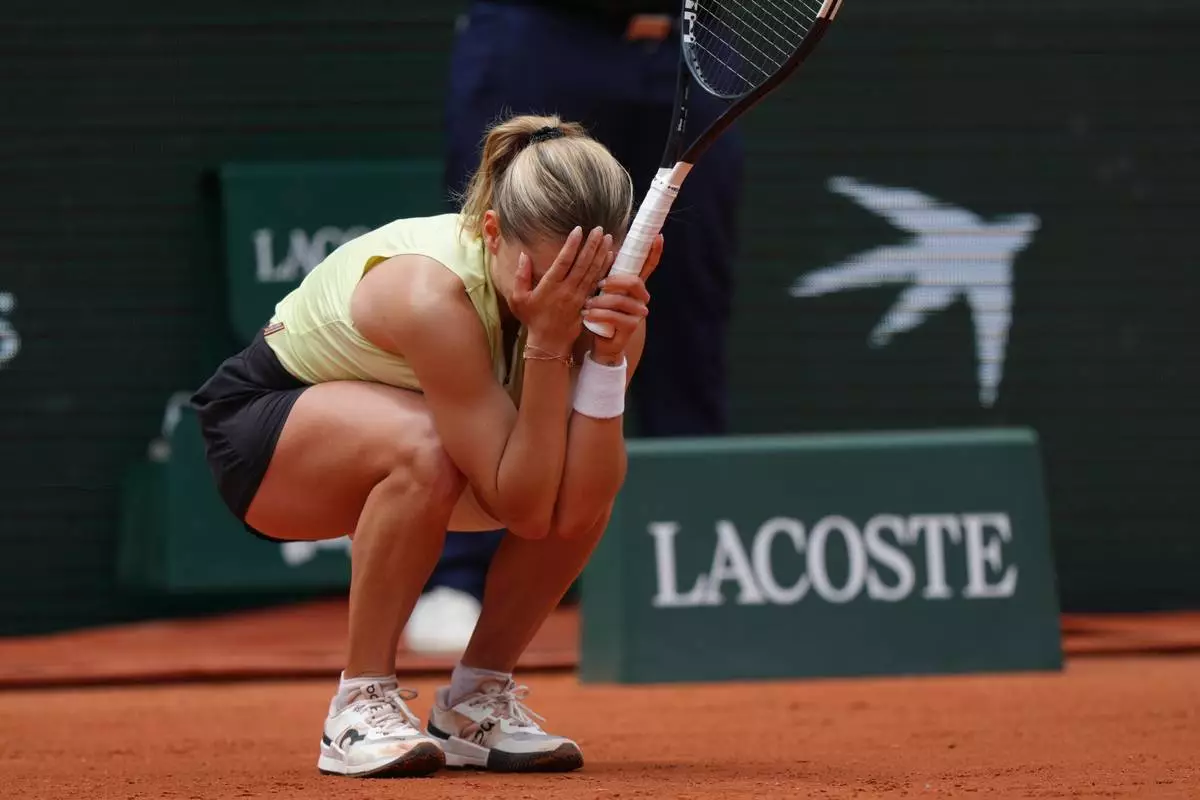
Poland's Maja Chwalinska reacts after winning the quarterfinal tennis match against Russia's Anna Kalinskaya at the French Open in Paris, Wednesday, June 3, 2026. (AP Photo/Aurelien Morissard)
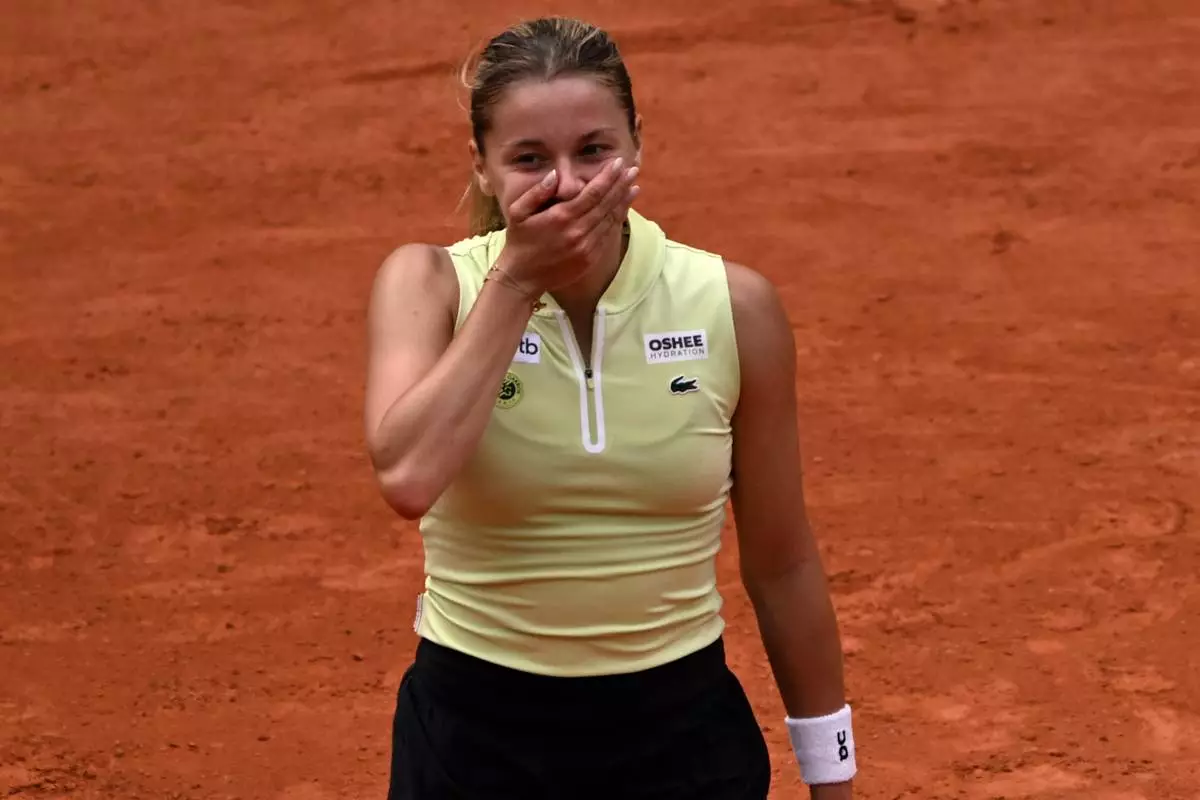
Poland's Maja Chwalinska reacts after winning the quarterfinal tennis match against Russia's Anna Kalinskaya at the French Open in Paris, Wednesday, June 3, 2026. (AP Photo/Emma Da Silva)