Skip to Content Facebook Feature Image

Growing purchase scale in China expected to drive up wheat price

China

China

China

Growing purchase scale in China expected to drive up wheat price

2025-06-10 17:25 Last Updated At:18:27

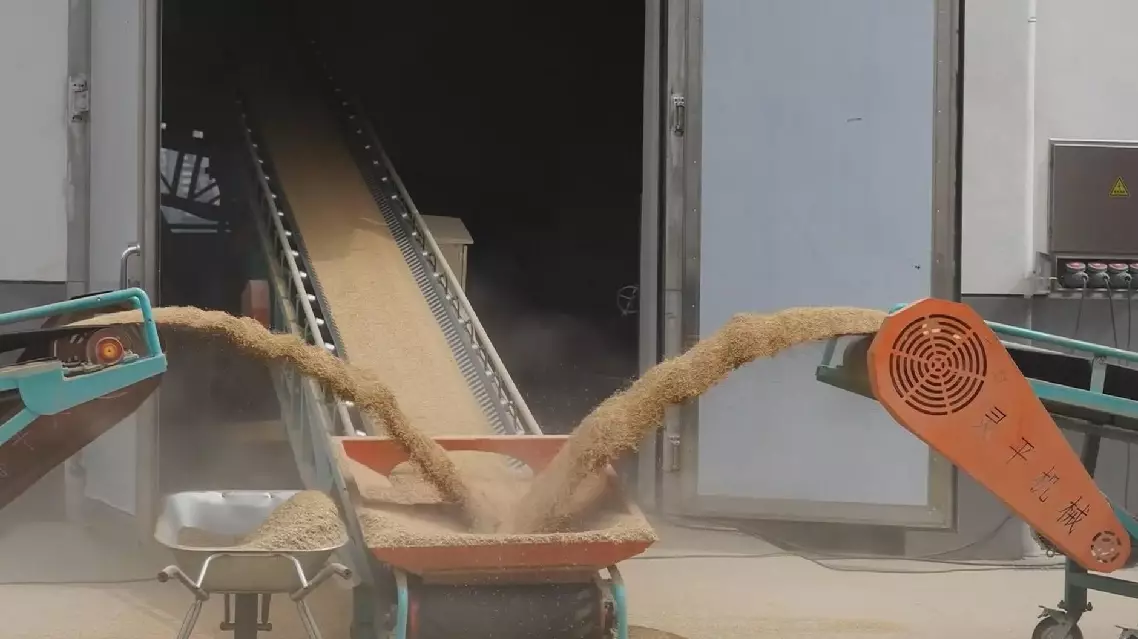
The increasing scale of purchase for wheat in China this year is expected to drive up market prices, according to an expert.

"From the perspective of demand, the largest consumption of wheat is for staple food, or flour milling, so the consumption of flour milling is also increasing. [As of now,] the operating rate of small and medium-sized flour processing plants is nearly 33 percent, the best level in the past three years," said Han Yijun, director of the National Wheat Industry Technology System Industrial Economic Research Office.

Generally speaking, wheat is consumed in three ways: flour milling consumption, industrial consumption and feed consumption. In terms of flour milling, wheat is produced into flour and then processed into foods such as cakes and bread.

Feed consumption is used for feed breeding, and industrial consumption is mainly used for brewing alcohol and making condiments, Han explained.

Summer grain, primarily wheat, accounts for about one quarter of the annual grain production.

"The harvest of summer grain, including its price trend, actually plays a fundamental role in the price trend of grain throughout the year. The new wheat that just came to the market has seen a steady upward trend in price, setting a good start for the grain price trend throughout the year," said Han.

Over 40 percent of winter wheat crops have been harvested in major wheat growing regions across China so far, faster than the same period of last year, according to farming monitoring data released by the Ministry of Agriculture and Rural Affairs and data of satellite remote sensing by the National Satellite Meteorological Center.
Growing purchase scale in China expected to drive up wheat price

Growing purchase scale in China expected to drive up wheat price
Thailand has temporarily closed more than 1,000 schools in border areas following a new round of armed clashes between Thai and Cambodian troops along their shared border.

The Thai Ministry of Education ordered the suspension of classes on Friday in seven provinces bordering Cambodia, affecting a total of 1,060 schools, to ensure the safety of students and teachers.

Buriram Province is among the areas most affected by the renewed fighting, with more than 100 schools shut down. At local shelters, displaced residents, including children and teenagers, have sought refuge as fighting continues.

One girl said she had stayed in the shelter for 11-12 days already. "I moved here because of the clashes between Thailand and Cambodia," she said, adding that she could hear very loud gunfire at her home.

She said school won't be open until the clashes end, and she misses her classmates very much.

A teenage boy in the shelter expressed the same emotions.

"It's been 13 days since I moved here. I heard gunfires at home and I was so scared that I moved to the shelter. I want to return to school to study and see my friends," he said.

A displaced woman recalled her time in a shelter when border clashes between the two countries broke out earlier this year.

"I stayed in the shelter for a week when the last clashes broke out. This time I don't know how long I need to stay here before I can return home," she said.

Border clashes between the two sides reignited on Dec 7, less than two months after the two sides signed a joint peace declaration, with both sides trading the blame for instigating the attacks.

Thailand closes over 1,000 schools near border amid armed clashes with Cambodia

Thailand closes over 1,000 schools near border amid armed clashes with Cambodia

Recommended Articles