The Shanghai Futures Exchange pioneered China's recycled materials derivatives market Tuesday with the debut of cast aluminum alloy futures and options for trading, a strategic move to help manufacturers hedge costs in the world's largest aluminum recycling sector.
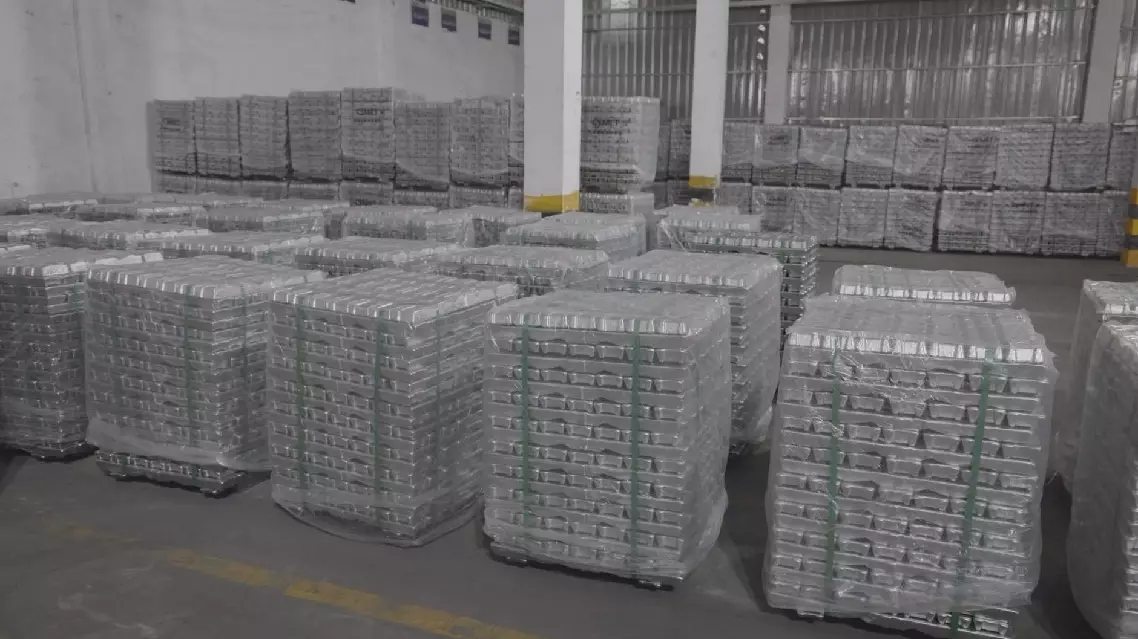
A visit to the production area of a new materials enterprise in Shanghai shows how recycled waste aluminum is used to produce cast aluminum alloys.
Cheng Shuai, chief of a new materials enterprise in Shanghai, said they used wasted materials "such as the scrap aluminum from cars that have reached the end of their service life, used aluminum cans, or some pots, pans and bowls that have been scrapped after use".
"Scrap aluminum from cars that have reached the end of their service life; use aluminum cans or some pots, pans, and bowls that have been scrapped after use."
Aluminum alloys have been widely used in automobiles and mechanical equipment due to their low density, high strength, good corrosion resistance, and excellent castability of cast aluminum alloys.
The Shanghai company derives 80 percent of its business from the automotive industry. The biggest challenge faced in production is the procurement of scrap aluminum. The price of scrap aluminum is related to pure aluminum, but there will be a time lag in the price fluctuations of the two.
"For instance, if the price of one ton of pure aluminum rises by 100 yuan (about 14 U.S. dollars) today, it might take two or three days for the price of one ton of scrap aluminum to increase by 50 yuan. This has caused great uncertainty in our production and operation," said Cheng.
Cheng said listing aluminum alloy futures and options will bring two benefits to enterprises. First, companies can lock in costs in advance through futures, reducing the fluctuation range of raw material costs from 20 percent up or down to within 5 percent up or down, making production costs more stable. Second, it standardizes quality. Previously, the recycling standards for scrap aluminum varied, with price differences reaching up to 2,000 yuan per ton. Now, with a unified standard, it reassures buyers and sellers.
"With the futures tool, I can achieve full production at the factory based on futures orders. Even if there are no orders from clients, I can do price protection on futures," said Cheng.
Economists commented that the listing of cast aluminum alloy futures helps stabilize the production costs of enterprises and reduces the risks of production and operation.
Shanghai's listing of cast aluminum alloy futures stabilizes production costs, reduces risks