MANAUS, Brazil (AP) — Months before hosting the U.N.'s first climate talks held in the Amazon, Brazil is fast-tracking a series of controversial decisions that undercut President Luiz Inácio Lula da Silva’s lofty environmental rhetoric and show widening divisions within his cabinet.
The country's federal environmental agency approved plans for offshore drilling near the mouth of the Amazon and rock blasting along another river in the rainforest, while Congress is moving to make it harder to recognize Indigenous land and easier to build infrastructure in the rainforest.
Click to Gallery
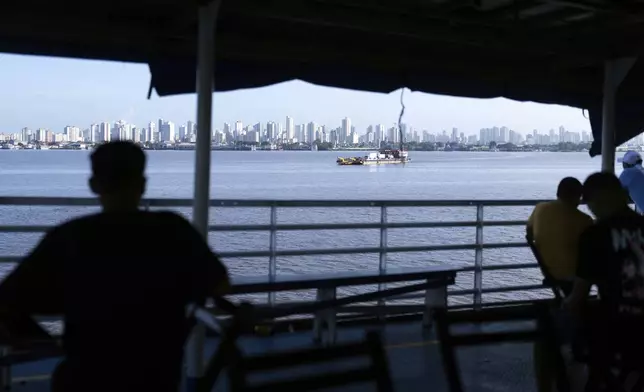
FILE - People look out at the coast of Belem, Brazil, as a boat nears shore, March 23, 2025. (AP Photo/Jorge Saenz, File)
FILE - A boy kicks a soccer ball near signage for the COP30 U.N. Climate Conference in Belem, Brazil, March 23, 2025. (AP Photo/Jorge Saenz, File)
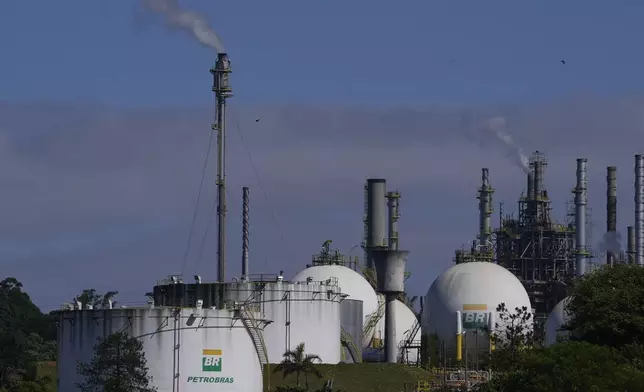
FILE - Capuava oil refinery owned by Petrobras sits in Maui, on the outskirts of Sao Paulo, Brazil, Nov. 6, 2023. (AP Photo/Andre Penner, File)
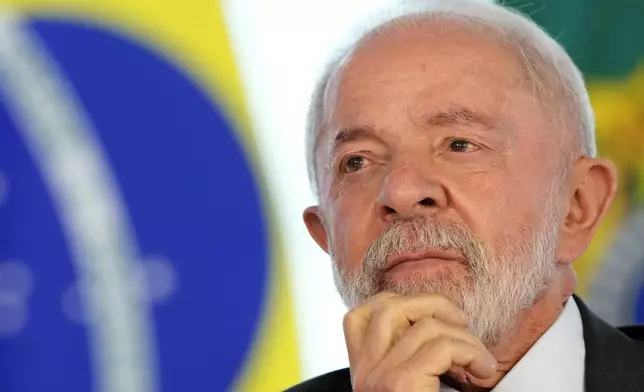
FILE - Brazil's President Luiz Inacio Lula da Silva attends a decree-signing ceremony marking Environment Day at the Planalto Palace in Brasilia, Brazil, June 3, 2025. (AP Photo/Eraldo Peres, File)
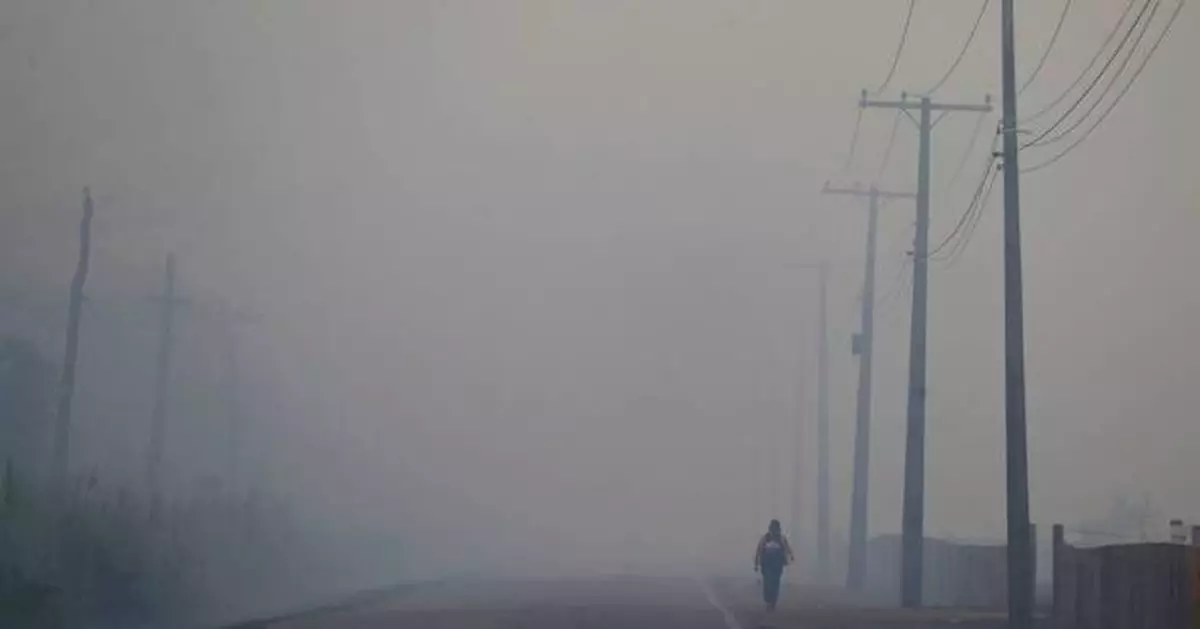
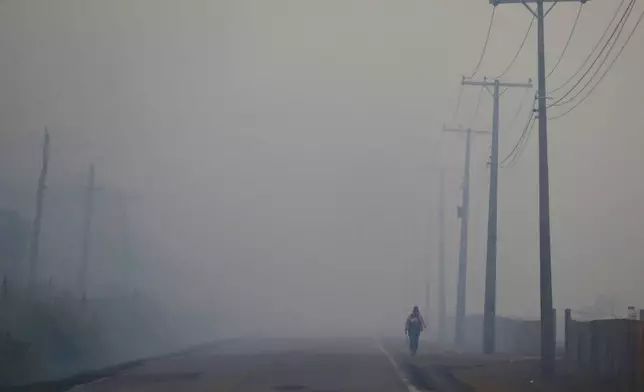
FILE - A person walks on the BR-319 highway through smoke from a forest fire that reaches Careiro Castanho in Brazil's Amazonas state, Sept. 6, 2023. (AP Photo/Edmar Barros, File)
These efforts would be controversial in normal times. But on the eve of the COP30 climate summit, environmental advocates say they're undermining Lula's claims to be an environmental defender whose administration has made headway in slowing deforestation in the Amazon.
“What will Brazil show up with at COP30 in November?" asked Cleberson Zavaski, president of the National Association of Environmental Public Servants. "Will it be, once again, a list of commitments that contradict what the country itself is putting on the table today — such as expanding the highway network and oil exploitation?”
Protecting the environment was a central part of Lula’s presidential campaign in 2022, when he ran against President Jair Bolsonaro, who presided over increasing deforestation and illegal activities in the Amazon, such as gold mining and land-grabbing.
But when Brazil's environmental protection agency rejected the bid of Petrobras, the country's state-run oil company, to conduct exploratory drilling in an about 160 kilometers (99 miles) off Brazil’s Amazonian coast, Lula supported the company's appeal and in February criticized the agency for taking too long, saying it “seems like it’s working against the government.”
On May 19, the Brazilian Institute of the Environment and Renewable Natural Resources or IBAMA, approved an emergency plan to allow the drilling.
A week later, IBAMA approved a rock-blasting operation along 40 km (25 miles) of the Tocantins River to enable year-round navigation, despite criticism from local grassroots organizations. The river, which cuts through the Amazon rainforest, is set to become a critical waterway to ship soybeans, mainly to China.
The Federal Prosecutor’s Office said the authorization was illegal because it failed to address issues highlighted during the environmental study, and filed a lawsuit seeking to have it overturned.
Since taking office in 2023, Lula has argued that Brazil can both further its development while protecting the environment.
“France, the U.K., Norway and the U.S. also produce oil. And Brazil has the cleanest energy mix in the world: 90% of our electricity comes from renewables,” Lula said in an interview to French newspaper Le Monde published last week.
Brazil gets most of its own electricity from hydropower and other green energies, while its oil exports, a major source of income for the country, are on the rise.
Emails to the president’s chief of staff seeking comment were not answered.
On May 21, the Senate approved sweeping legislation that weakens federal agencies’ environmental licensing powers. Among other measures, the bill streamlines review for projects deemed priorities by the federal government, reducing the approval process from three bureaucratic steps to one and imposing a one-year deadline for review.
It also elimates reviews for upgrades to existing highways, which could clear the way for to pave the whole of BR-319, a highway that runs about 900 kilometers (560 miles) through the western part of the Amazon. Environmentalists argue that the paving will lead to mass clearing of a pristine area of rainforest.
The bill is opposed by Lula’s Workers’ Party, but it's expected to pass the lower chamber of Congress.
Lula could veto all or parts of the bill, but according to press reports he is expected to support of the bulk of the changes with only minor adjustments. Lula has said he has no position on the environmental bill.
Meanwhile, Congress has also approved rules that make it harder demarcate Indigenous lands and is moving forward with legislation to weaken licensing rules that, among other impacts. The bill is opposed by Lula's Workers' Party, but according to several press reports Lula will support of the bulk of the changes and will only negotiate minor adjustments.
“It’s the perfect combo to wipe out environmental protections and Indigenous land demarcations in the country, accelerate the tipping point of the world’s largest tropical forest and set off a carbon bomb against the global climate,” Climate Observatory, a network of 133 environmental, civil society and academic groups, said in a statement.
Former U.S. Interior Bruce Babbitt, who sits on the board of the nonprofit Amazon Conservation, said in a statement that the bill “will lead to massive destruction of the Amazon rainforest. It should be opposed by all Brazilians and friends of Brazil in the international community.”
The licensing bill has also deepened internal divisions within Brazil's government.
Environment Minister Marina Silva said the law will end one of Brazil's crucial mechanisms of environmental protection, but she appears increasingly sidelined in the administration.
Local media have reported that Lula's Chief of Staff Rui Costa promised the bill's sponsor that Lula would not oppose changes to licensing rules, and Minister of Transportation Renan Filho said in a social media post that the bill is “excellent” news that will get the highway project moving.
At a press conference last week, Lula praised Silva, calling her “loyal” and adding that it's normal to have friction between the environmental and other ministries of government.
But many see echoes of Lula's previous administration, during which Silva resigned from the same post after being marginalized by the rising influence of agribusiness.
João Paulo Capobianco, executive secretary of the environment ministry, reiterated her criticism of the bill in a speech last week, calling it a “real risk of setback.” He added that Silva is working with Lula’s cabinet toward “a point of convergence between those who seek efficiency — and deserve a response — and the need to preserve the system without dismantling environmental licensing.”
The Associated Press’ climate and environmental coverage receives financial support from multiple private foundations. AP is solely responsible for all content. Find AP’s standards for working with philanthropies, a list of supporters and funded coverage areas at AP.org.
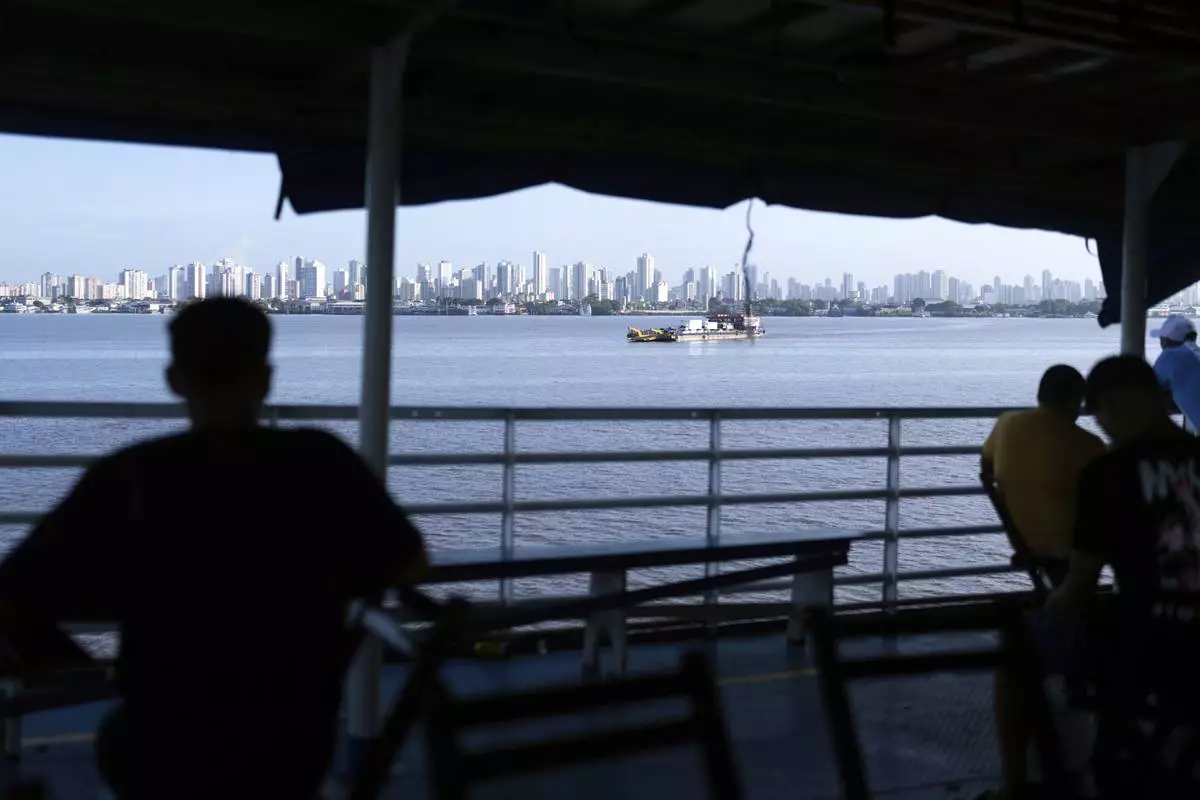
FILE - People look out at the coast of Belem, Brazil, as a boat nears shore, March 23, 2025. (AP Photo/Jorge Saenz, File)

FILE - A boy kicks a soccer ball near signage for the COP30 U.N. Climate Conference in Belem, Brazil, March 23, 2025. (AP Photo/Jorge Saenz, File)
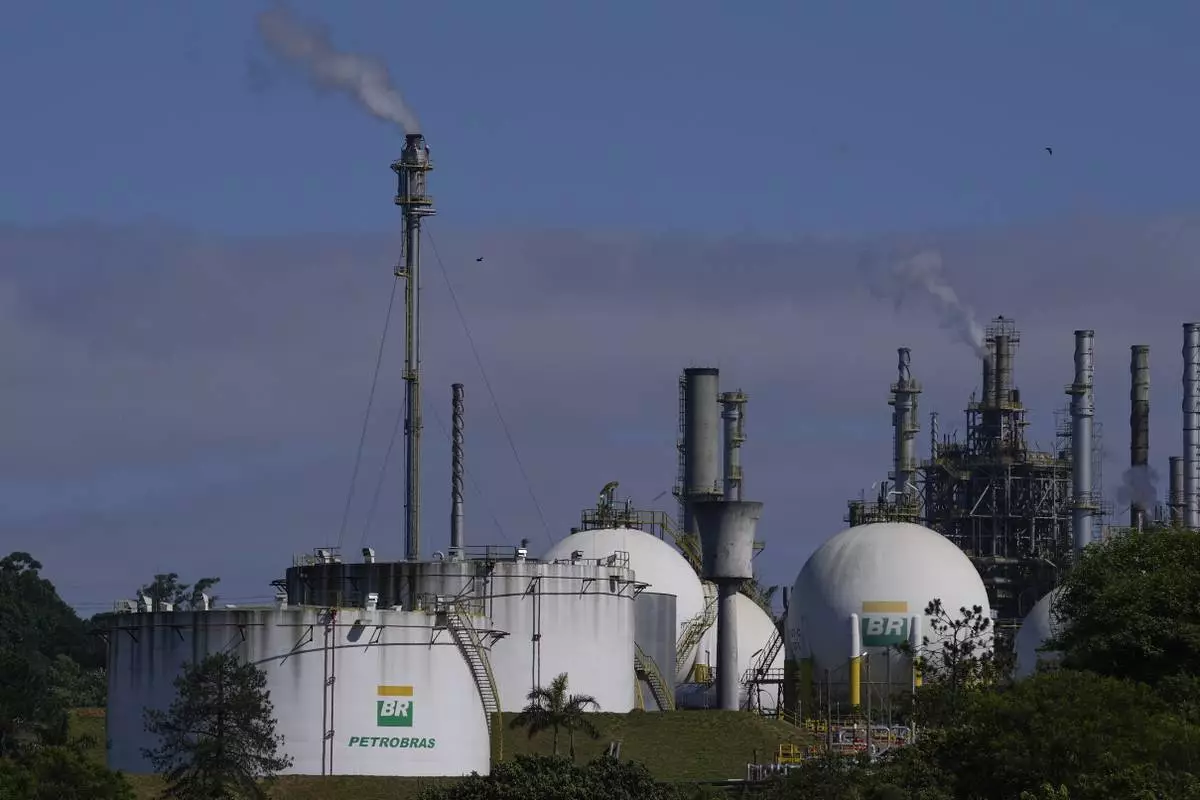
FILE - Capuava oil refinery owned by Petrobras sits in Maui, on the outskirts of Sao Paulo, Brazil, Nov. 6, 2023. (AP Photo/Andre Penner, File)
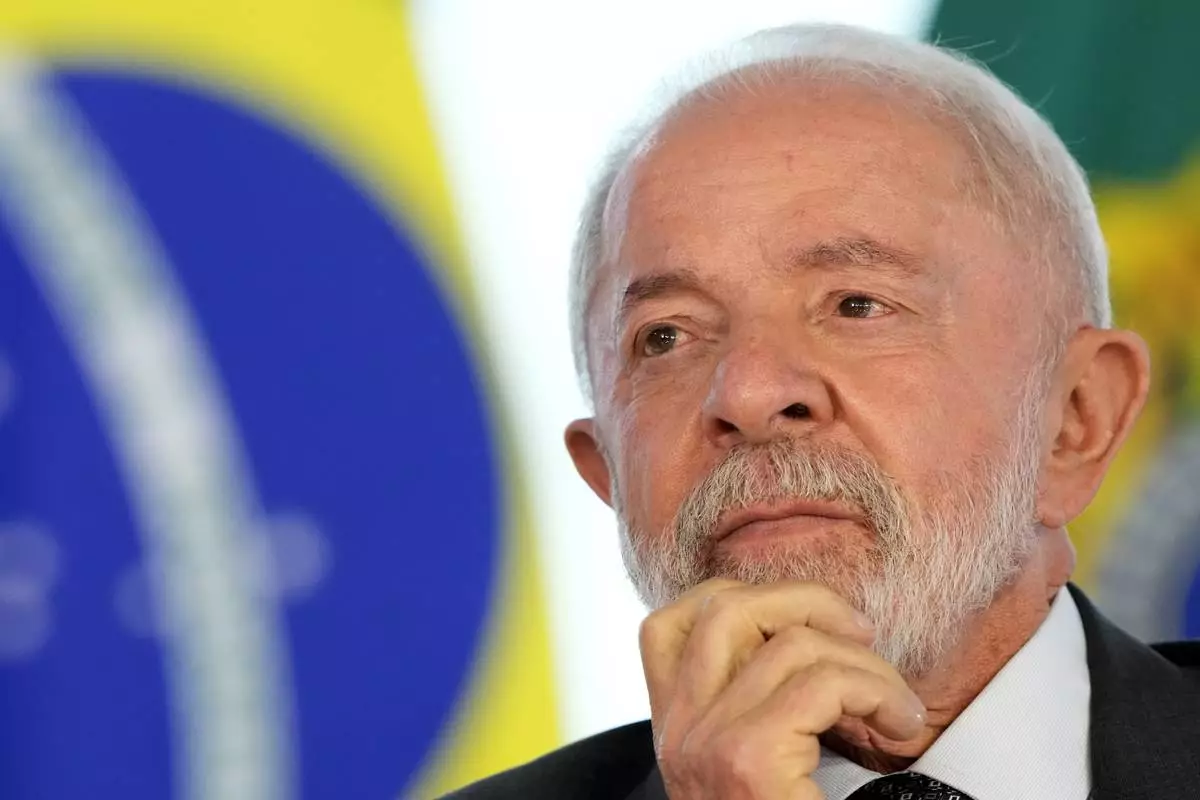
FILE - Brazil's President Luiz Inacio Lula da Silva attends a decree-signing ceremony marking Environment Day at the Planalto Palace in Brasilia, Brazil, June 3, 2025. (AP Photo/Eraldo Peres, File)
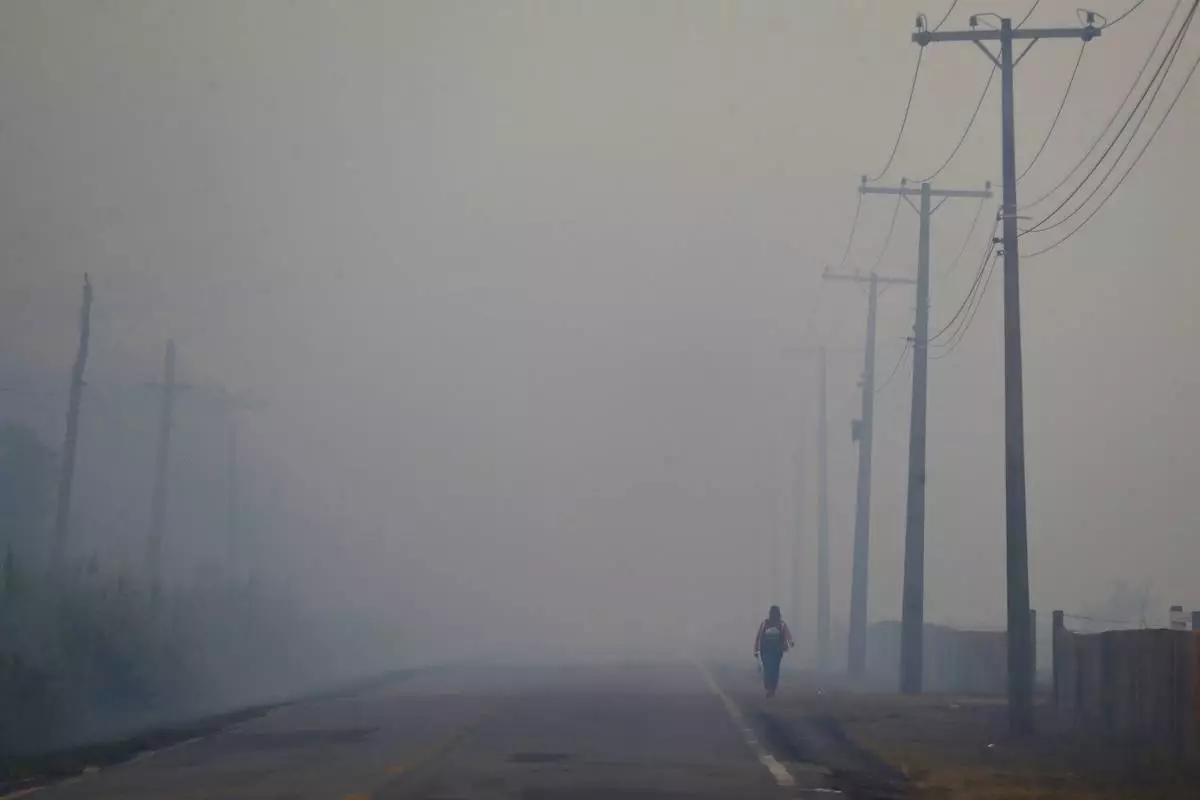
FILE - A person walks on the BR-319 highway through smoke from a forest fire that reaches Careiro Castanho in Brazil's Amazonas state, Sept. 6, 2023. (AP Photo/Edmar Barros, File)
WASHINGTON (AP) — The Trump administration's criminal investigation of Federal Reserve Chair Jerome Powell appeared on Monday to be emboldening defenders of the U.S. central bank, who pushed back against President Donald Trump’s efforts to exert more control over the Fed.
The backlash reflected the overarching stakes in determining the balance of power within the federal government and the path of the U.S. economy at a time of uncertainty about inflation and a slowing job market. This has created a sense among some Republican lawmakers and leading economists that the Trump administration had overstepped the Fed's independence by sending subpoenas.
The criminal investigation — a first for a sitting Fed chair — sparked an unusually robust response from Powell and a full-throated defense from three former Fed chairs, a group of top economic officials and even Republican senators tasked with voting on Trump's eventual pick to replace Powell as Fed chair when his term expires in May.
White House press secretary Karoline Leavitt told reporters that Trump did not direct his Justice Department to investigate Powell, who has proven to be a foil for Trump by insisting on setting the Fed's benchmark interest rates based on the data instead of the president's wishes.
“One thing for sure, the president’s made it quite clear, is Jerome Powell is bad at his job,” Leavitt said. “As for whether or not Jerome Powell is a criminal, that’s an answer the Department of Justice is going to have to find out.”
The investigation demonstrates the lengths the Trump administration is willing to go to try to assert control over the Fed, an independent agency that the president believes should follow his claims that inflationary pressures have faded enough for drastic rate cuts to occur. Trump has repeatedly used investigations — which might or might not lead to an actual indictment — to attack his political rivals.
The risks go far beyond Washington infighting to whether people can find work or afford their groceries. If the Fed errs in setting rates, inflation could surge or job losses could mount. Trump maintains that an economic boom is occurring and rates should be cut to pump more money into the economy, while Powell has taken a more cautious approach in the wake of Trump's tariffs.
Several Republican senators have condemned the Department of Justice's subpoenas of the Fed, which Powell revealed Sunday and characterized as “pretexts” to pressure him to sharply cut interest rates. Powell also said the Justice Department has threatened criminal indictments over his June testimony to Congress about the cost and design elements of a $2.5 billion building renovation that includes the Fed's headquarters.
“After speaking with Chair Powell this morning, it’s clear the administration’s investigation is nothing more than an attempt at coercion,” said Sen. Lisa Murkowski, R-Alaska, on Monday.
Jeanine Pirro, U.S. attorney for the District of Columbia, said on social media that the Fed “ignored” her office’s outreach to discuss the renovation cost overruns, “necessitating the use of legal process — which is not a threat.”
“The word ‘indictment’ has come out of Mr. Powell’s mouth, no one else’s,” Pirro posted on X, although the subpoenas and the White House’s own statement about determining Powell's criminality would suggest the risk of an indictment.
A bipartisan group of former Fed chairs and top economists on Monday called the Trump administration's investigation “an unprecedented attempt to use prosecutorial attacks" to undermine the Fed's independence, stressing that central banks controlled by political leaders tend to produce higher inflation and lower growth.
“I think this is ham-handed, counter-productive, and going to set back the president’s cause,” said Jason Furman, an economist at Harvard and former top adviser to President Barack Obama. The investigation could also unify the Fed’s interest-rate setting committee in support of Powell, and means “the next Fed chair will be under more pressure to prove their independence.”
The subpoenas apply to Powell's statements before a congressional committee about the renovation of Fed buildings, including its marble-clad headquarters in Washington, D.C. They come at an unusual moment when Trump was teasing the likelihood of announcing his nominee this month to succeed Powell as the Fed chair and could possibly be self-defeating for the nomination process.
While Powell's term as chair ends in four months, he has a separate term as a Fed governor until January 2028, meaning that he could remain on the board. If Powell stays on the board, Trump could be blocked from appointing an outside candidate of his choice to be the chair.
Powell quickly found a growing number of defenders among Republicans in the Senate, who will have the choice of whether to confirm Trump's planned pick for Fed chair.
Sen. Thom Tillis, a North Carolina Republican and member of the Senate Banking panel, said late Sunday that he would oppose any of the Trump administration’s Fed nominees until the investigation is "resolved."
“If there were any remaining doubt whether advisers within the Trump Administration are actively pushing to end the independence of the Federal Reserve, there should now be none,” Tillis said.
Sen. Dave McCormick, R-Penn, said the Fed may have wasted public dollars with its renovation, but he said, “I do not think Chairman Powell is guilty of criminal activity.”
Senate Majority Leader John Thune offered a brief but stern response Monday about the tariffs as he arrived at the U.S. Capitol, suggesting that the administration needed “serious” evidence of wrongdoing to take such a significant step.
“I haven’t seen the case or whatever the allegations or charges are, but I would say they better, they better be real and they better be serious,” said Thune, a Republican representing South Dakota.
If Powell stays on the board after his term as chair ends, the Trump administration would be deprived of the chance to fill another seat that would give the administration a majority on the seven-member board. That majority could then enact significant reforms at the Fed and even block the appointment of presidents at the Fed's 12 regional banks.
“They could do a lot of reorganizing and reforms” without having to pass new legislation, said Mark Spindel, chief investment officer at Potomac River Capital and author of a book on Fed independence. “That seat is very valuable.”
Powell has declined at several press conferences to answer questions about his plans to stay or leave the board.
Scott Alvarez, former general counsel at the Fed, says the investigation is intended to intimidate Powell from staying on the board. The probe is occurring now “to say to Chair Powell, ’We’ll use every mechanism that the administration has to make your life miserable unless you leave the Board in May,'" Alvarez said.
Asked on Monday by reporters if Powell planned to remain a Fed governor, Kevin Hassett, director of the White House National Economic Council and a leading candidate to become Fed chair, said he was unaware of Powell’s plans.
“I’ve not talked to Jay about that,” Hassett said.
A bipartisan group of former Fed chairs and top economists said in their Monday letter that the administration’s legal actions and the possible loss of Fed independence could hurt the broader economy.
“This is how monetary policy is made in emerging markets with weak institutions, with highly negative consequences for inflation and the functioning of their economies more broadly,” the statement said.
The statement was signed by former Fed chairs Ben Bernanke, Janet Yellen, and Alan Greenspan, as well as former Treasury Secretaries Henry Paulson and Robert Rubin.
Still, Trump's pressure campaign had been building for some time, with him relentlessly criticizing and belittling Powell.
He even appeared to preview the shocking news of the subpoenas at a Dec. 29 news conference by saying he would bring a lawsuit against Powell over the renovation costs.
“He’s just a very incompetent man,” Trump said. “But we’re going to probably bring a lawsuit against him.”
__
AP writers Lisa Mascaro and Joey Cappelletti contributed to this report.
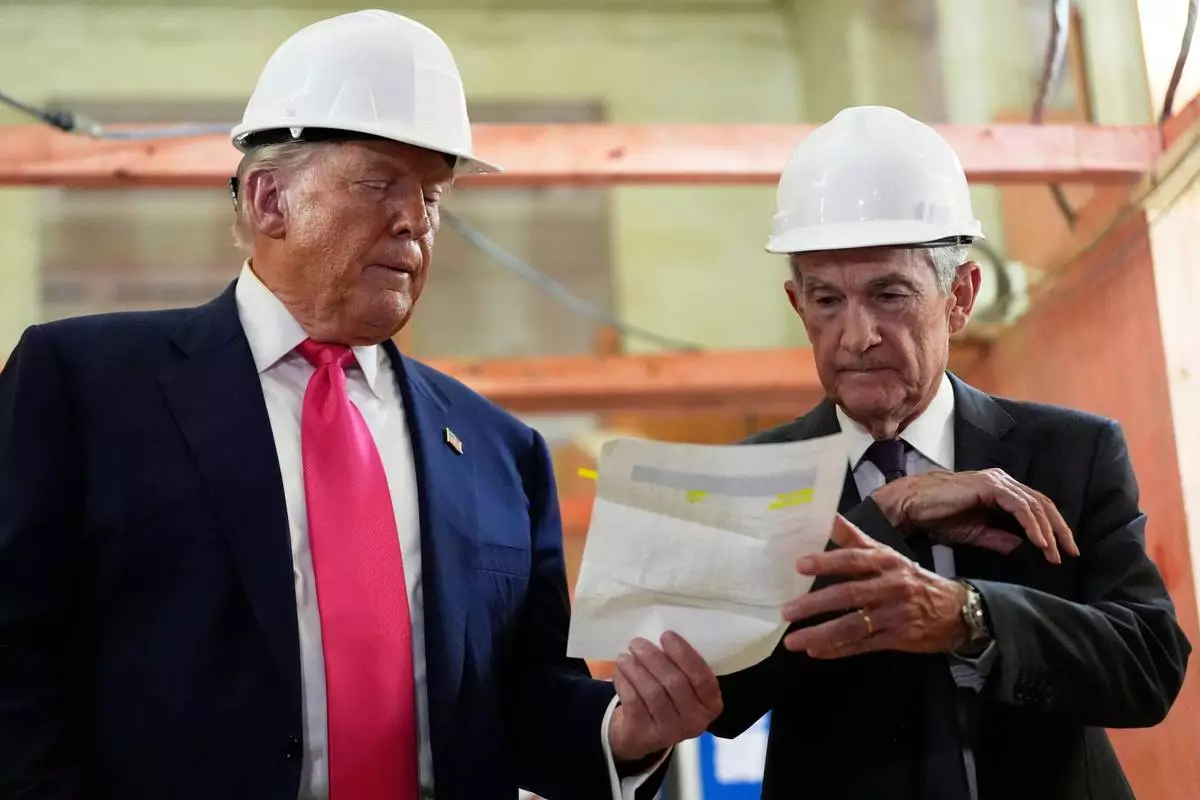
FILE - Federal Reserve Chairman Jerome Powell, right, and President Donald Trump look over a document of cost figures during a visit to the Federal Reserve, July 24, 2025, in Washington. (AP Photo/Julia Demaree Nikhinson, File)