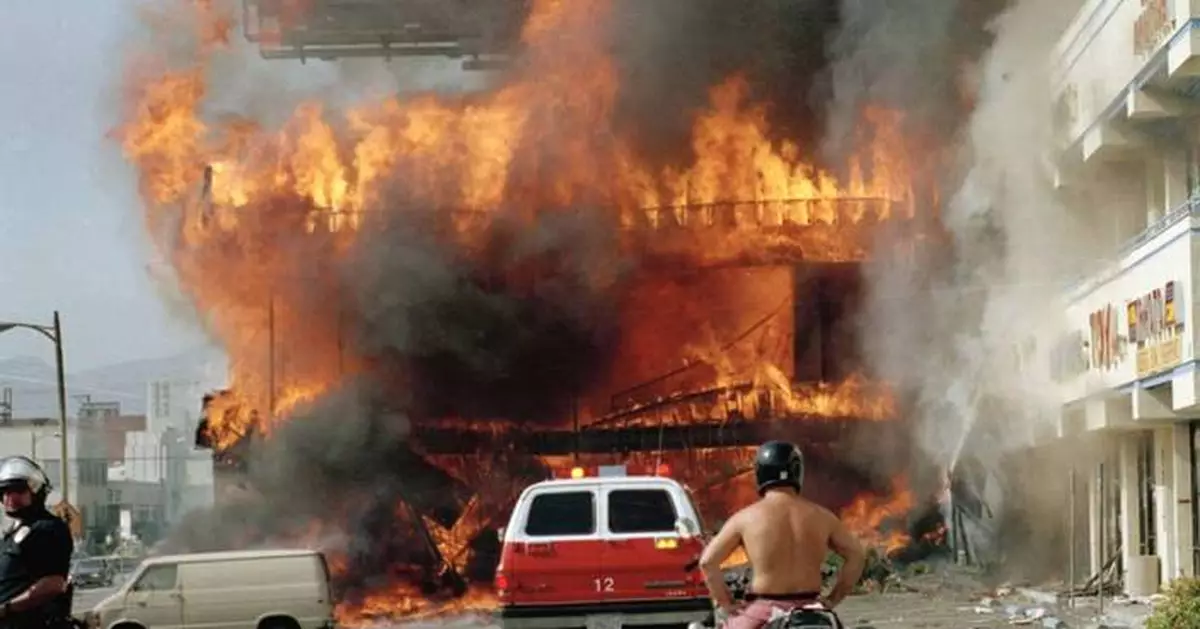
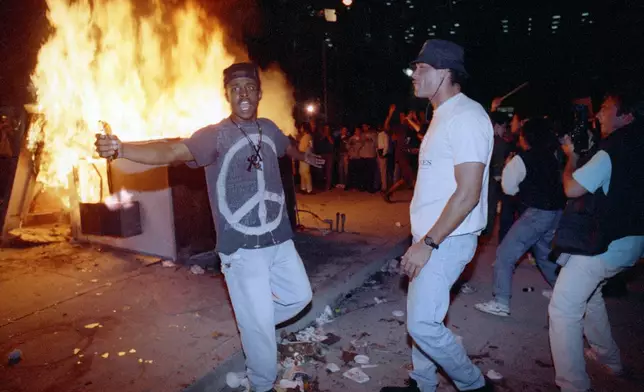
The images of cars set ablaze, protesters tossing rocks at police and officers firing nonlethal rounds and tear gas at protesters hearkens back to the last time a president sent the National Guard to respond to violence on Los Angeles streets.
But the unrest during several days of protests over immigration enforcement is far different in scale from the 1992 riots that followed the acquittal of white police officers who were videotaped beating Black motorist Rodney King.
Click to Gallery
FILE - In this April 29, 1992 file photo, demonstrators protest the verdict in the Rodney King beating case in front of the Los Angeles Police Department headquarters in Los Angeles. (AP Photo/Nick Ut, File)
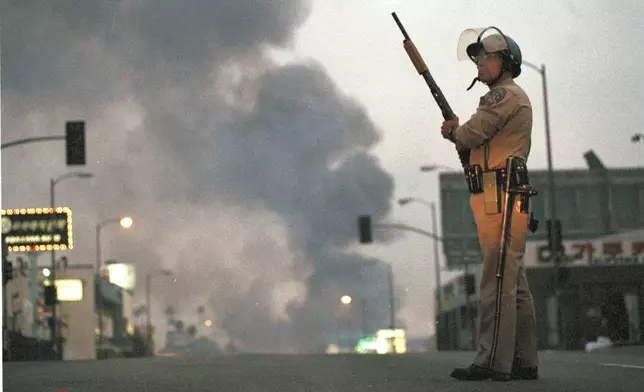
FILE - A California Highway Patrol officer stands guard at Ninth Street and Vermont Avenue in Los Angeles as smoke rises from a fire further down the street, April 30, 1992. (AP Photo/David Longstreath, file)
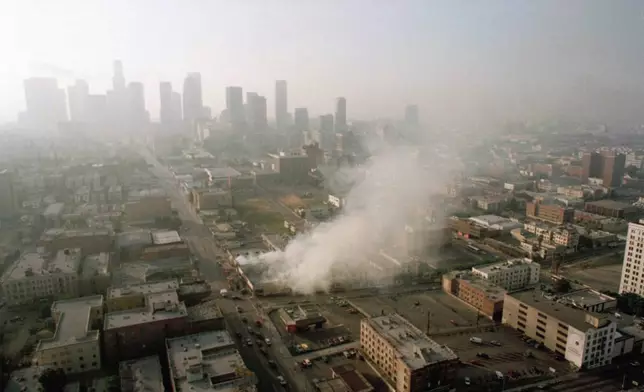
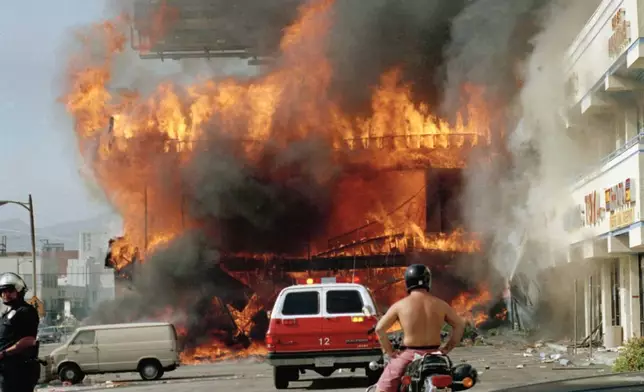
FILE - In this April 30, 1992 file photo, smoke rises from a shopping center burned by rioters in Los Angeles after four police officers had been acquitted of the 1991 beating of motorist Rodney King. (AP Photo/Paul Sakuma, File)
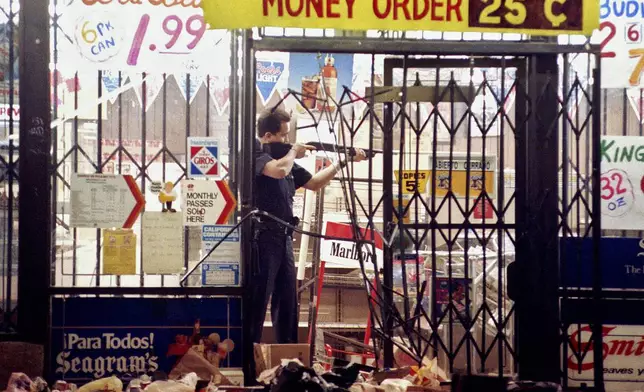
FILE - In this April 30, 1992 file photo, a Los Angeles police officer takes aim at a looter in a market at Alvarado and Beverly Boulevard in Los Angeles during the second night of rioting in the city. (AP Photo/John Gaps III, File)
FILE - A Korean shopping mall burns in Los Angeles, April 30, 1992 on the second day of rioting in the city following the acquittal of four police officers for the 1991 beating of motorist Rodney King. (AP Photo/Nick Ut, file)
President George H.W. Bush used the Insurrection Act to call in the National Guard after requests from Mayor Tom Bradley and Gov. Pete Wilson. After the current protests began Friday over Immigration and Customs Enforcement raids, President Donald Trump ordered the deployment of 4,100 National Guard troops and 700 Marines despite strident opposition from Mayor Karen Bass and Gov. Gavin Newsom.
Trump cited a legal provision to mobilize federal service members when there is “a rebellion or danger of a rebellion against the authority of the Government of the United States.” California Attorney General Rob Bonta filed a lawsuit Monday saying Trump had overstepped his authority. On Tuesday, Newsom filed an emergency motion in federal court to block the troops from assisting with immigration raids in Los Angeles.
Unlike the 1992 riots, protests have mainly been peaceful and been confined to a roughly five-block stretch of downtown LA, a tiny patch in the sprawling city of nearly 4 million people. No one has died. There's been vandalism and some cars set on fire but no homes or buildings have burned.
More than 100 people have been arrested over the past several days of protests. The vast majority of arrests were for failing to disperse, while a few others were for assault with a deadly weapon, looting, vandalism and attempted murder for tossing a Molotov cocktail.
Several officers have had minor injuries and protesters and some journalists have been struck by some of the more than 600 rubber bullets and other “less-lethal” munitions fired by police.
Outrage over the verdicts on April 29, 1992 led to nearly a week of widespread violence that was one of the deadliest riots in American history. Hundreds of businesses were looted. Entire blocks of homes and stores were torched. More than 60 people died in shootings and other violence, mostly in South Los Angeles, an area with a heavily Black population at the time.
The 1992 uprising took many by surprise, including the Los Angeles Police Department, but the King verdict was a catalyst for racial tensions that had been building in the city for years.
In addition to frustration with their treatment by police, some directed their anger at Korean merchants who owned many of the local stores. Black residents felt the owners treated them more like shoplifters than shoppers. As looting and fires spread toward Koreatown, some merchants protected their stores with shotguns and rifles.
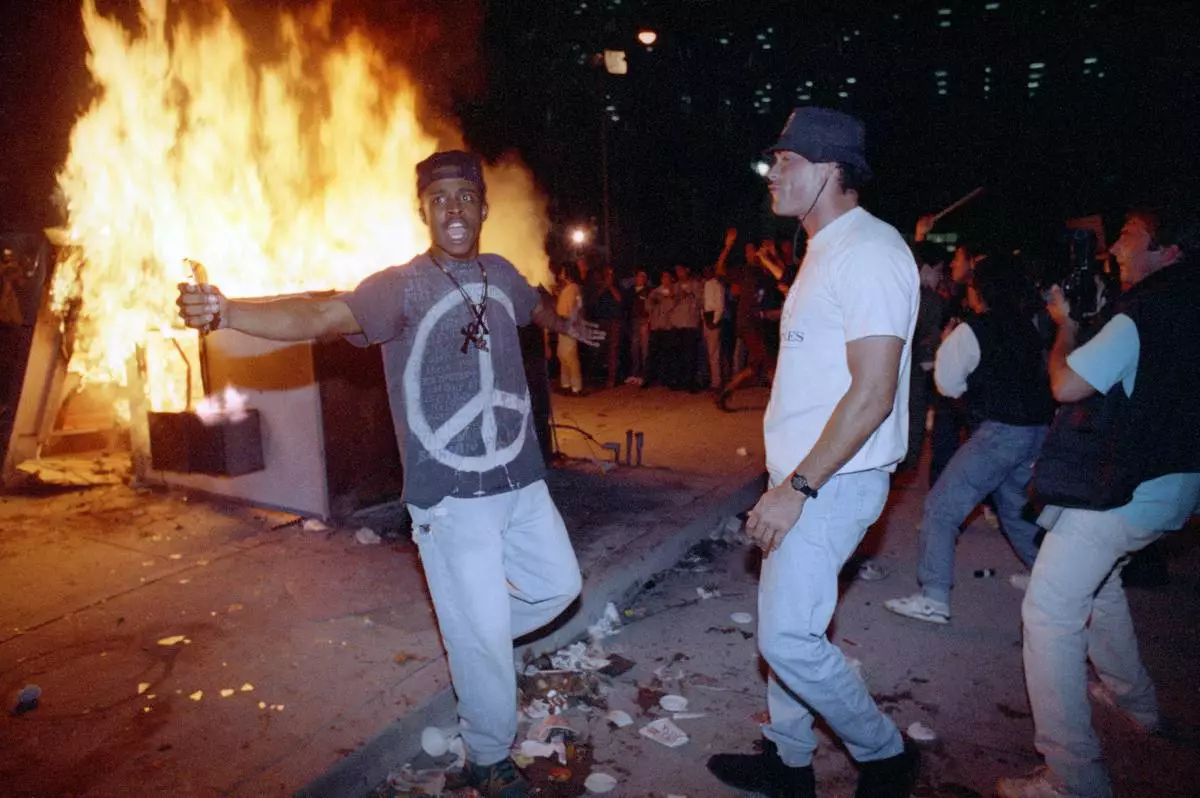
FILE - In this April 29, 1992 file photo, demonstrators protest the verdict in the Rodney King beating case in front of the Los Angeles Police Department headquarters in Los Angeles. (AP Photo/Nick Ut, File)
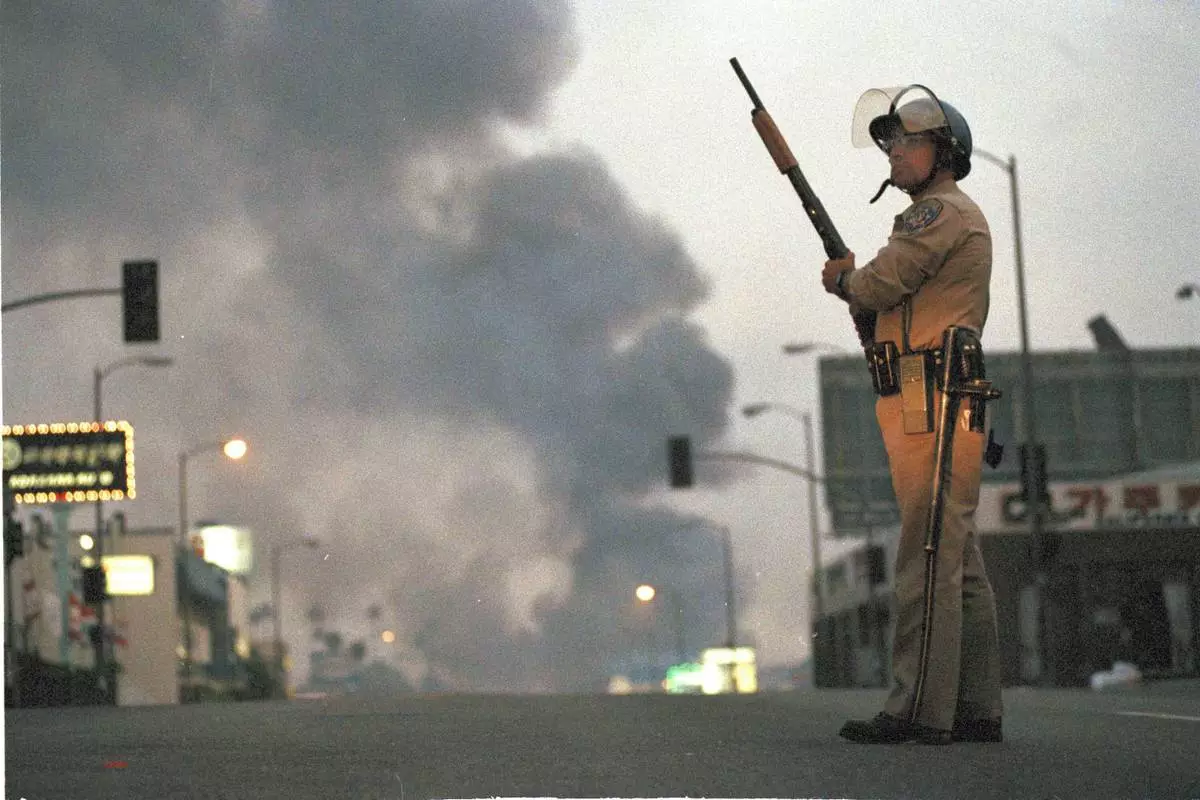
FILE - A California Highway Patrol officer stands guard at Ninth Street and Vermont Avenue in Los Angeles as smoke rises from a fire further down the street, April 30, 1992. (AP Photo/David Longstreath, file)
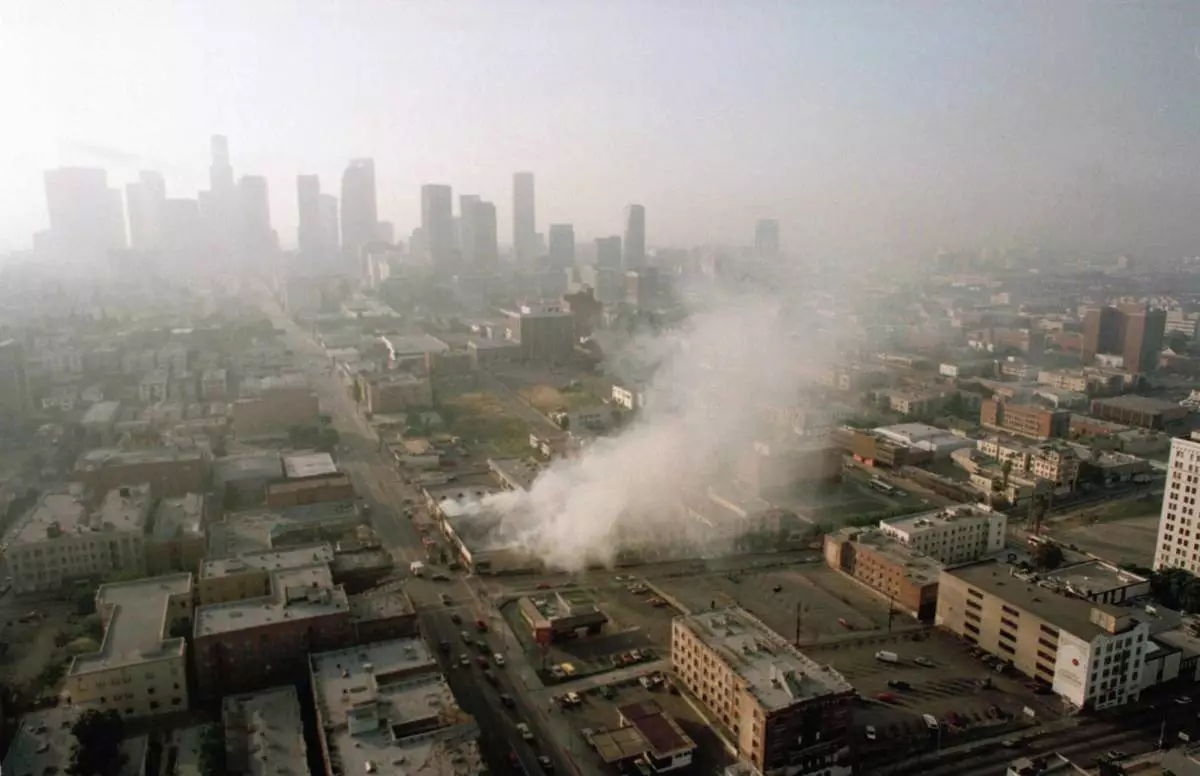
FILE - In this April 30, 1992 file photo, smoke rises from a shopping center burned by rioters in Los Angeles after four police officers had been acquitted of the 1991 beating of motorist Rodney King. (AP Photo/Paul Sakuma, File)
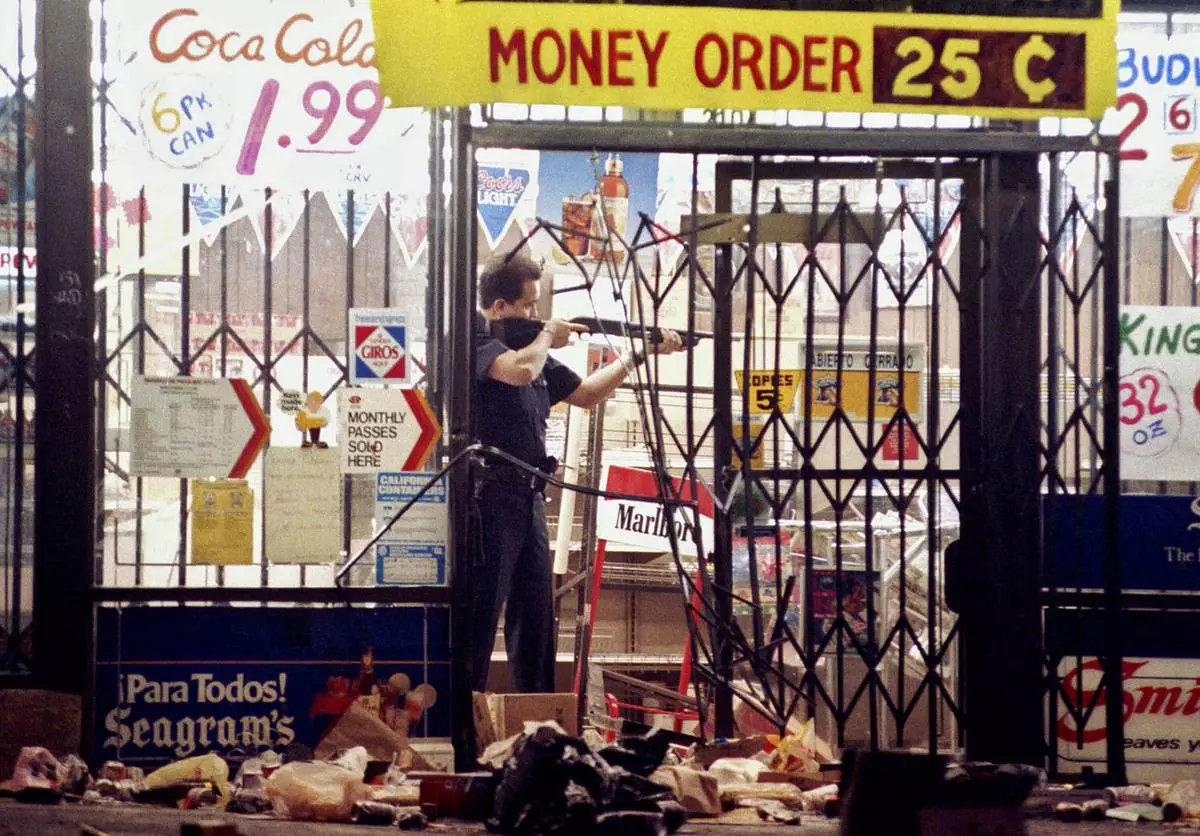
FILE - In this April 30, 1992 file photo, a Los Angeles police officer takes aim at a looter in a market at Alvarado and Beverly Boulevard in Los Angeles during the second night of rioting in the city. (AP Photo/John Gaps III, File)
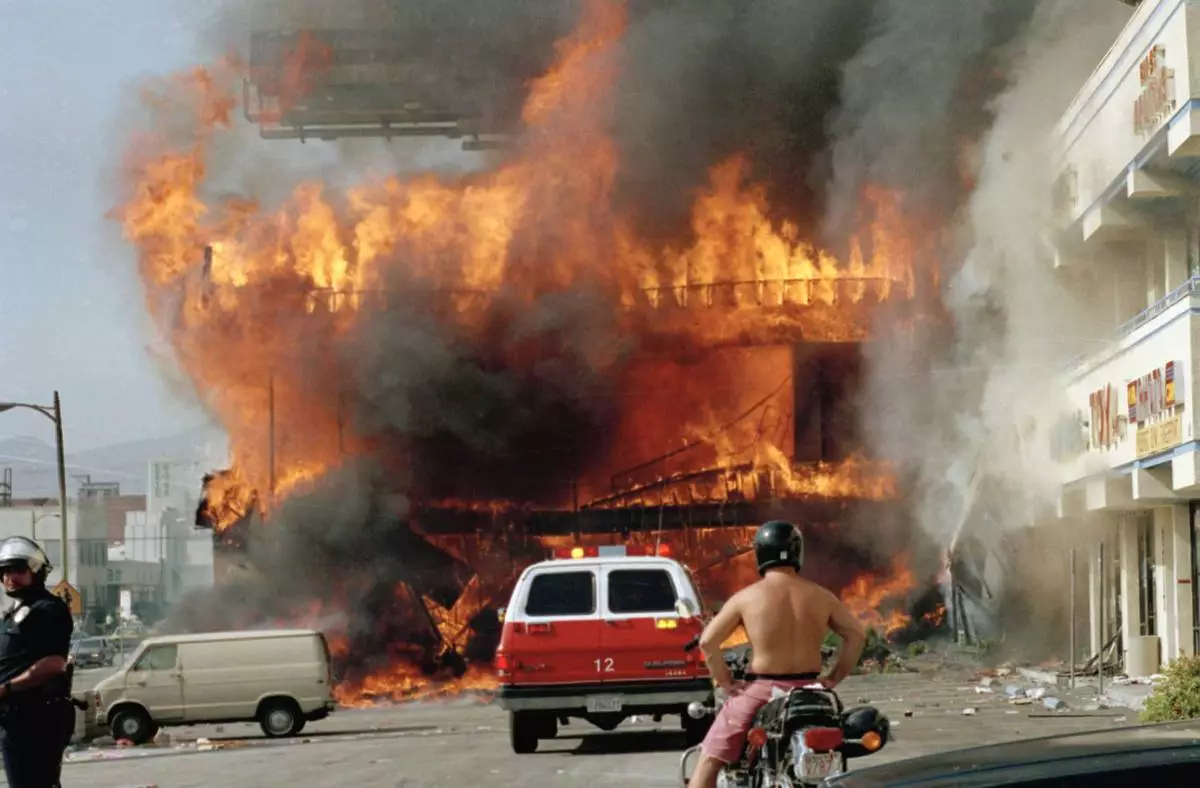
FILE - A Korean shopping mall burns in Los Angeles, April 30, 1992 on the second day of rioting in the city following the acquittal of four police officers for the 1991 beating of motorist Rodney King. (AP Photo/Nick Ut, file)
JUNEAU, Alaska (AP) — Alaska U.S. Senate candidate Dan Sullivan acknowledges that sharing a name and party affiliation with the incumbent Republican gives him “an instant megaphone" in the crowded primary race. But Sullivan said his campaign isn't a sham or something Democrats put him up to doing.
He said friends for years have jokingly referred to him as senator and asked if he has ever thought about running. He said he’s been considering it for more than a decade.
“This is my choice,” Sullivan, who lives in the small fishing community of Petersburg, said in a telephone interview Monday.
Last week, Sen. Dan Sullivan accused the challenger Sullivan of “trying to trick” voters to help his main rival in the race, Democratic former U.S. Rep. Mary Peltola. The senator suggested the other Sullivan's entrance in the August primary was part of a coordinated effort by Democrats and Peltola's campaign to confuse voters, an accusation they deny. He threatened litigation to get to the bottom of it.
The issue is of national concern to Republicans because they are seeking to hold onto their majority in the U.S. Senate in what is expected to be a difficult midterm election year for the party in power. Sullivan, the challenger, dismissed claims that his candidacy is a merely a ruse to undermine the senator's reelection chances.
He said he has had no contact with Peltola's campaign — “zero, none, zilch” — and said “no” when asked if anyone from the state Democratic Party or any national Democratic operatives had contacted him to run.
A Peltola spokesperson, Harry Child, has said the campaign “has no involvement with either Sullivan campaign.” The executive director of the Alaska Democratic Party, Jenny-Marie Stryker, said her organization “is in no way affiliated with either Dan Sullivan.” A Democratic Senatorial Campaign Committee spokesperson, Monica Robinson, replied “no” when asked if the group had been involved in urging the challenger Sullivan to run.
Sullivan called sharing a name with the Alaska's incumbent U.S. senator “a matter of fate” and said he had done nothing wrong.
“I have every right to run for whatever office I'm qualified for, and I’m qualified for this office,” the challenger said, adding: “I think I’m doing what most Americans would think would be a patriotic thing to do when you’re unsatisfied with the status quo. You stand up and say, I’m going to fight for things I believe that are going to make my community better.”
Ballots in prior years in Alaska have not identified the incumbent, but the Alaska Division of Elections’ current candidate list online does. It also distinguishes the candidates using a middle initial — Dan S. Sullivan for the senator and Dan J. Sullivan for the challenger.
Alaska has open primaries in which the top four vote-getters, regardless of party, advance to the ranked choice general election in November. Sen. Sullivan's campaign worries having two Dan Sullivans on the ballot could confuse voters.
Sen. Sullivan's campaign, in a statement Monday, said, “Alaskans deserve a fair and honest election — not political games meant to manipulate the ballot and benefit Democrats.”
The challenger said he was registered with the limited government-leaning Alaskan Independence Party for decades, until the party's dissolution late last year. Election officials had said voters registered with the party could change their affiliation but if they did not, they'd be shown as “undeclared.” Sullivan said he then was listed as undeclared until filing to run for office, when he registered as Republican.
He said he was motivated in part by his late father, whom he described as a “true, compassionate, conservative Republican.” He said if he had to label himself, it would be “a pragmatic Republican centrist” — similar to Alaska's senior U.S. senator, Lisa Murkowski, but “with touches of a Rand Paul Republican in there.”
He said he grew up in the Chicago area but was drawn to Alaska and put down roots nearly 50 years ago in Petersburg. The fishing community of about 3,400 in southeast Alaska's Tongass National Forest is known as “Little Norway” for its many residents with Scandinavian roots. He worked for the U.S. Forest Service before changing careers and becoming a teacher. He has since retired.
Like most communities in Alaska, Petersburg isn't connected to the state's main road system and is accessible only by air or water. Juneau, the nearest city, is about 45 minutes away by plane.
Petersburg sits on Mitkof Island, which is distinguished by mountains, thick stands of forest and boggy areas called muskeg. Sea lions hauled up on buoys and humpback whales and orcas are common sights off its shores.
Sullivan, who will turn 69 this weekend, passed on an interview request last Friday, he said, because the king salmon were running and he wanted to fish.
As far as his run for office, the challenger said he plans to do some fundraising and hopes to campaign in the state's larger cities, including Anchorage and Juneau, but he so far has no firm plans to do so and is working on the details.
He finds the current dustup over his Senate run — and the incumbent's reaction — a bit surprising.
“I guess my thought would be, ‘Dude, why don’t you just run your campaign?’ If you’ve got a strong record, run on your record. People will love you for it and you’ll be swept back into office,” he said Monday. “Why would he be concerned that a guy out of Petersburg is this huge threat?”
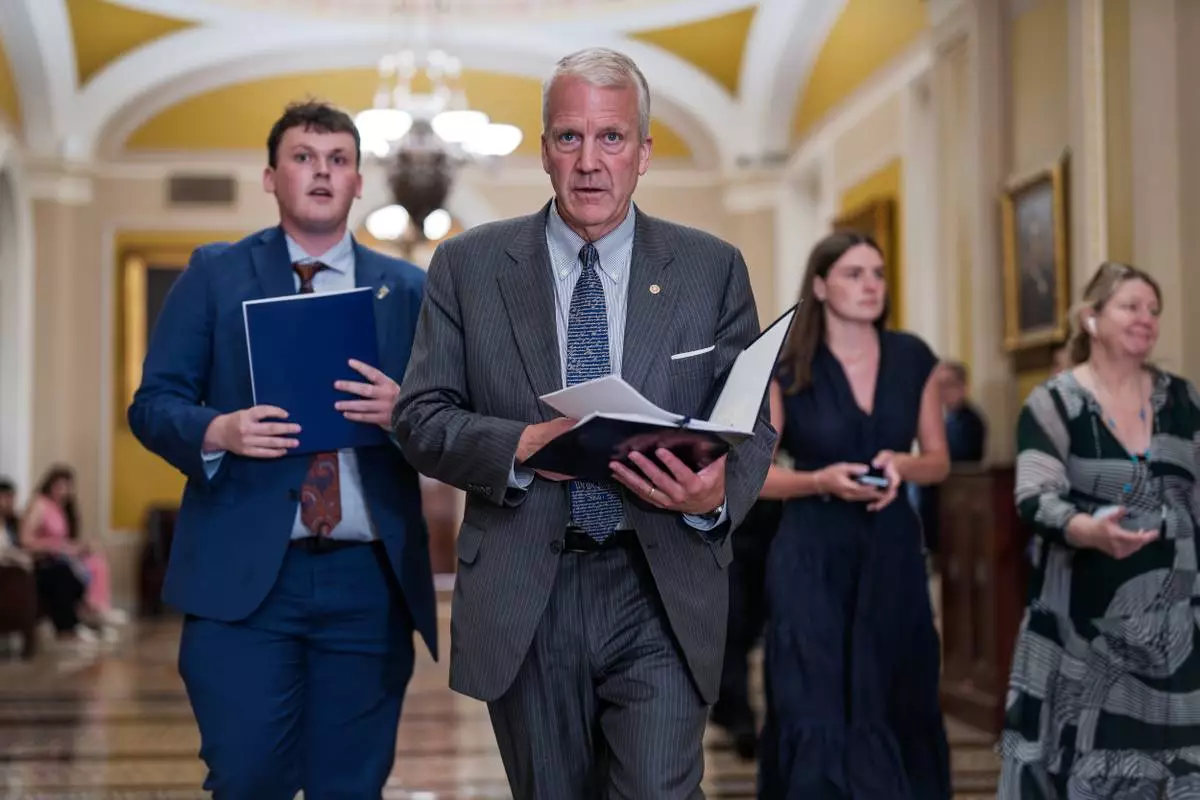
Sen. Dan Sullivan, R-Alaska, heads to a closed-door meeting with fellow Republicans, at the Capitol in Washington, Tuesday, June 2, 2026. (AP Photo/J. Scott Applewhite)