SAN FRANCISCO (AP) — Homeless people who reject three offers of shelter will be eligible for arrest on trespassing after the San Jose City Council voted Tuesday for a policy change they hope will encourage unhoused people to trade in their tents on sidewalks for beds indoors.
The vote was 9-2 in favor of adding a “responsibility to shelter” provision to the city's encampment code of conduct, which also includes expectations that homeless people will not pitch tents near schools and playgrounds or block public rights of way.
The proposal by San Jose Mayor Matt Mahon is eye-opening because it comes from a liberal city headed by a Democrat in the left-leaning San Francisco Bay Area. It is among the stricter anti-encampment deterrents proposed by elected officials since the Supreme Court in 2023 made it easier to ban homeless people from camping on public property.
It is also another sign of just how frustrated people have become with squalid tents lining sidewalks and riverbanks, and erratic behavior of those using drugs or in psychiatric distress in a state with an estimated 187,000 people in need of housing. California has roughly a quarter of all homeless people in the country.
Mahan says most people do accept offers of shelter. But he wants to make clear to the small percentage of people who refuse, that as the city builds more shelter and interim housing, they have a responsibility to move indoors.
“I think we need a cultural change, a culture of accountability for everyone involved,” said Mahan in an interview before the vote. “I don’t want to use the criminal justice system to make vulnerable people’s lives harder. I want to use it as a last resort.”
California Gov. Gavin Newsom, a Democrat and former mayor of San Francisco, has repeatedly urged cities to ban encampments. Arrests for illegal lodging have soared in San Francisco, and its current mayor, Daniel Lurie, has reiterated that it is not appropriate for people to live outdoors.
Advocates for homeless people say cracking down on encampments is traumatizing and even counterproductive. Forcing a person to clear out sets them back in their search for stability as they could lose important documents needed to apply for work and housing, they said.
“Pushing people with mental health needs or drug addiction into incarceration — without any crime committed — is both inhumane and ineffective,” said Otto Lee, president of the Santa Clara County Board of Supervisors, in a written statement emailed Monday to The Associated Press.
Lee and other county leaders are opposed to the mayor's proposal. They say they need more housing, beds and services, and not punishment.
Pamela Campos, one of the City Council members who voted against the proposal, said she supports the idea of enhanced outreach but not the onus placed on homeless people.
“We are placing a huge amount of burden on an individual and framing it as a choice when the real culprit is a system that pushes people experiencing poverty into homelessness,” she said at the meeting.
The “responsibility to shelter” proposal does not mandate an arrest after three rejected offers.
Mahan said in consultation with the city attorney’s office and police that it made more sense to give front-line outreach workers and police officers discretion to decide when to escalate or prioritize a situation. The city will set up a new six-officer quality of life unit within the police department.
“We don’t want to overly tie their hands and tell them this is the only way to do it,” the mayor said.
People who repeatedly violate the city's encampment code of conduct could be sent to a recovery center for detox or petitioned for court-mandated treatment for psychiatric or substance use disorder care, Mahan said.
San Jose has nearly 1,400 shelter spots and hopes to add another 800 by the end of the year. Officials are aware they do not have enough beds, and Mahan said that people will not be punished if beds are unavailable or the only options are unsuitable.
City Council member David Cohen voted in favor, but he hopes residents who have packed City Hall meetings clamoring for relief won't think this will serve as a panacea for the city's ongoing struggles with homeless encampments.
“I’m hoping we’ll see some incremental improvement, but the reality is that the work we’re doing will take years," he said. “People need to be prepared for the fact that it will take years, and that we don’t send a signal that we’ve just done something magical.”
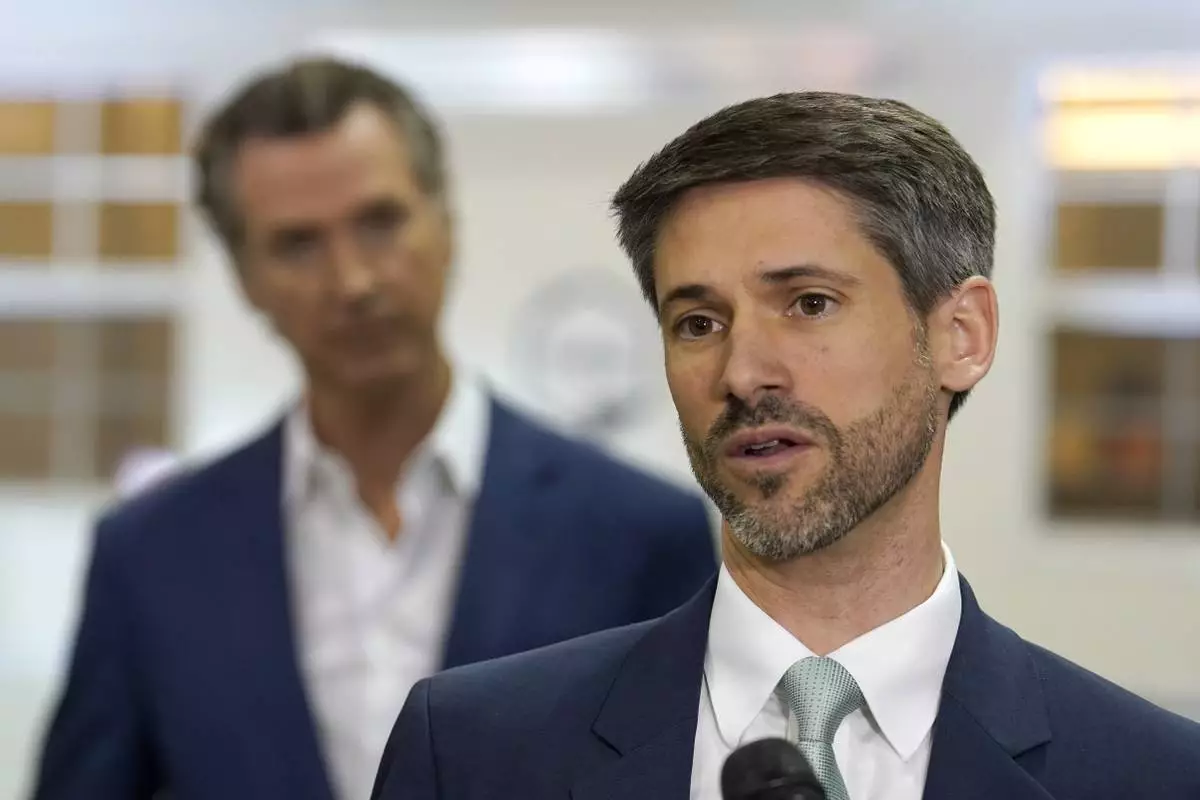
FILE - San Jose Mayor Matt Mahan, right, discusses California Gov. Gavin Newsom's, left, proposal to build 1,200 small homes across the state to reduce homelessness, during the first of a four-day tour of the state in Sacramento Calif., Thursday, March 16, 2023. (AP Photo/Rich Pedroncelli, File)