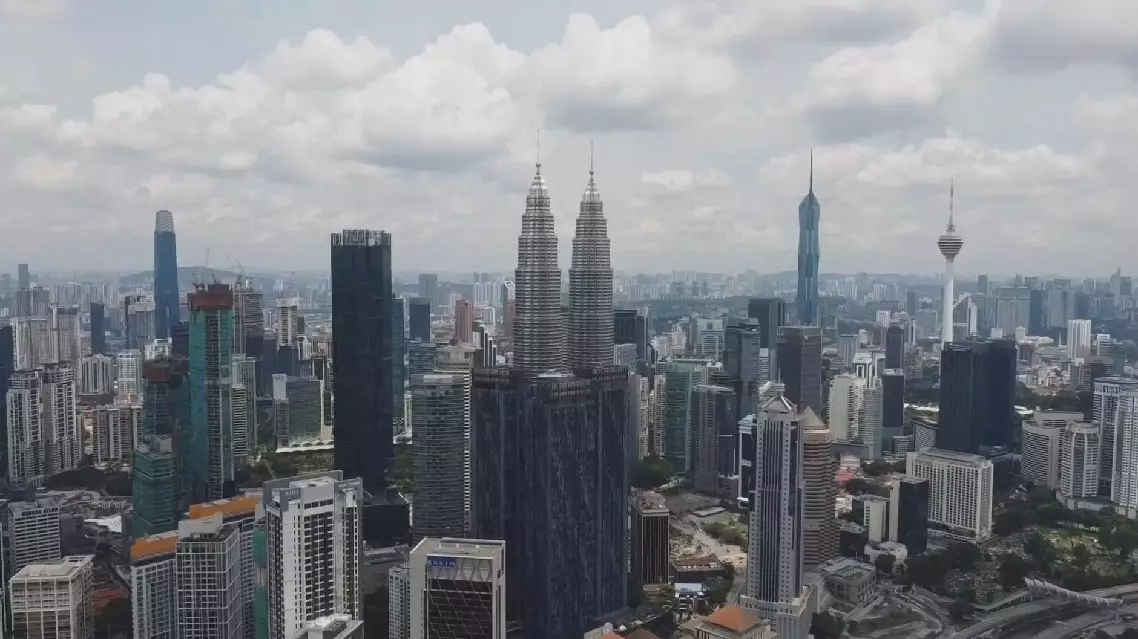
The International Day for Dialogue Among Civilizations is a crucial initiative to promote intercultural understanding, according to Malaysian think tank head Danial Rahman, who said that enhanced China-Malaysia cultural and educational cooperation would yield mutual benefits for both nations.
Last year, with the unanimous support of all member states, the 78th session of the United Nations General Assembly adopted the resolution initiated by China and other 82 countries, which declared June 10 the International Day for Dialogue Among Civilizations.
In an interview with China Global Television Network (CGTN), Rahman, the CEO of the Malaysian think-tank Asian Strategy and Leadership Institute, said the day was especially significant in the prevailing global climate where studying conflict is more common than studying cooperation.
"I think it's really timely and really important. What we see around the world more commonly are departments of war studies in places of learning, and people want to study the causes of war. But it's very rare that we find the study of peace and how do you build dialogue and how do you build civilizations. And that is why this International Day for Dialogue among Civilizations is really important. I take cognizant of the fact that it was mooted within the United Nations in 2023 and last year the resolution was passed by, of course, China with the support of 80 nations, which also shows that there's strong support and a strong recognition of the importance of dialogue," he said.
Rahman pointed to centuries-old cultural connections between China and Malaysia, with contemporary ties flourishing through tourism and education.
"So what we see is that there are a lot of mutualities between Malaysia from a cultural, from an expressive perspective. Now there's also something very interesting that's coming up. Last year Malaysia received about 3.7 million tourists from China, and next year in 2026 will be 'Visit Malaysia Year,'" said Rahman.
He stressed that youth exchanges will remain a vital driving force for bilateral relations.
"An area very passionate for me is education. I believe that there are about 33,000, over 30,000, students from China who are currently studying in Malaysia. I think fundamentally we also have to see that one of the greatest strengths between Malaysia and China are our youth population. We have a lot of young people who are very eager to go out there and learn about the world, and I think this is an area which China and Malaysia can definitely continue to strengthen our ties," Rahman said.
China, Malaysia to benefit from strengthened cultural, youth exchanges: Malaysian think tank chief