Remember 23andMe? The company that gave customers saliva-based DNA testing kits to learn about their ancestry?
Founded in 2006, the company also conducted health research and drug development. But it struggled to find a profitable business model and eventually filed for Chapter 11 bankruptcy protection back in March, raising concerns about the safety of customer data.
Well, 27 states and the District of Columbia on Monday filed a lawsuit in bankruptcy court seeking to block the sale of the company's archive of genetic data without customer consent. The lawsuit comes as a biotechnology company seeks court’s approval to buy the struggling firm.
If you were a customer of 23andMe, you're probably wondering what is going on with your data. It turns out you do have options if you want to protect your genetic self.
23andMe filed for Chapter 11 bankruptcy protection back in March. Anne Wojcicki, who co-founded the company nearly two decades ago and served as its CEO stepped down. The San Francisco-based company said that it would look to sell “substantially all of its assets” through a court-approved reorganization plan.
Wojcicki intends to bid on 23andMe as the company pursues a sale through the bankruptcy process. In a statement on social media, Wojcicki said that she resigned as CEO to be “in the best position” as an independent bidder.
23andMe said that filing for Chapter 11 bankruptcy protection helps facilitate a sale of the company, meaning that it’s seeking new ownership. The company said it wants to pull back on its real estate footprint and has asked the court to reject lease contracts in San Francisco and Sunnyvale, California, and elsewhere to help cut costs. But the company plans to keep operating during the process.
In a post about the Chapter 11 process, 23andMe said its users’ privacy and data are important considerations in any transaction and that any buyer will be required to comply with applicable laws when it comes to how it treats customer data.
But experts note that laws have limits. For one, the U.S. has no federal privacy law and only about 20 states do.
There are also security concerns. For instance, the turmoil of bankruptcy and related job cuts could leave fewer employees to protect customers’ data against hackers. It wouldn’t be the first time — a 2023 data breach exposed the genetic data of nearly 7 million customers at 23andMe, which later agreed to pay $30 million in cash to settle a class-action lawsuit accusing the company of failing to protect customers whose personal information was exposed.
Experts note that DNA data is particularly sensitive — and thus valuable.
“At a fundamental biological level, this is you and only you,” said David Choffnes, a computer science professor at Northeastern University and executive director of its Cybersecurity and Privacy Institute. “If you have an email address that gets compromised, you can find another email provider and start using a new email address. And you’re pretty much able to move on with your life without problem. And you just can’t do that with your genetic code.”
23andMe says it does not share information with health insurance companies, employers or public databases without users’ consent and with law enforcement only if required by a valid legal process, such as a subpoena. Choffnes said while that’s good, it’s a fairly narrow set of categories.
“There’s still other things that they are allowed to do with that data, including, as they mentioned, provide cross context, behavioral or targeted advertising,” he said. “So, you know, in a sense, even if they aren’t sending your personal data to an advertiser, there’s a long line of research that identifies how third parties can re-identify you from de-identified data by looking for patterns in it. And so if they’re targeting you with advertisements, for example, based on some information that they have about your genetic data, there’s probably a way that other parties could piece together other information they have access to.”
California Attorney General Rob Bonta issued an urgent consumer alert before 23andMe filed for bankruptcy — noting the company’s financial distress and reminding people they have the right to have their data deleted.
If you have a 23andMe account, you can delete your data by logging in and going to “settings” and scrolling to a section called “23andMe Data” at the bottom of the page. Then, click “View,” download it if you want a copy then go to the “Delete Data” section and click “Permanently Delete Data.” 23andMe will email you to confirm and you will need to follow the link in the email to confirm your deletion request.
If you previously asked 23andMe to store your saliva sample and DNA, you can also ask that it be destroyed by going to your account settings and clicking on “Preferences.” And you can withdraw consent from third-party researchers to use your genetic data and sample under “Research and Product Consents.”
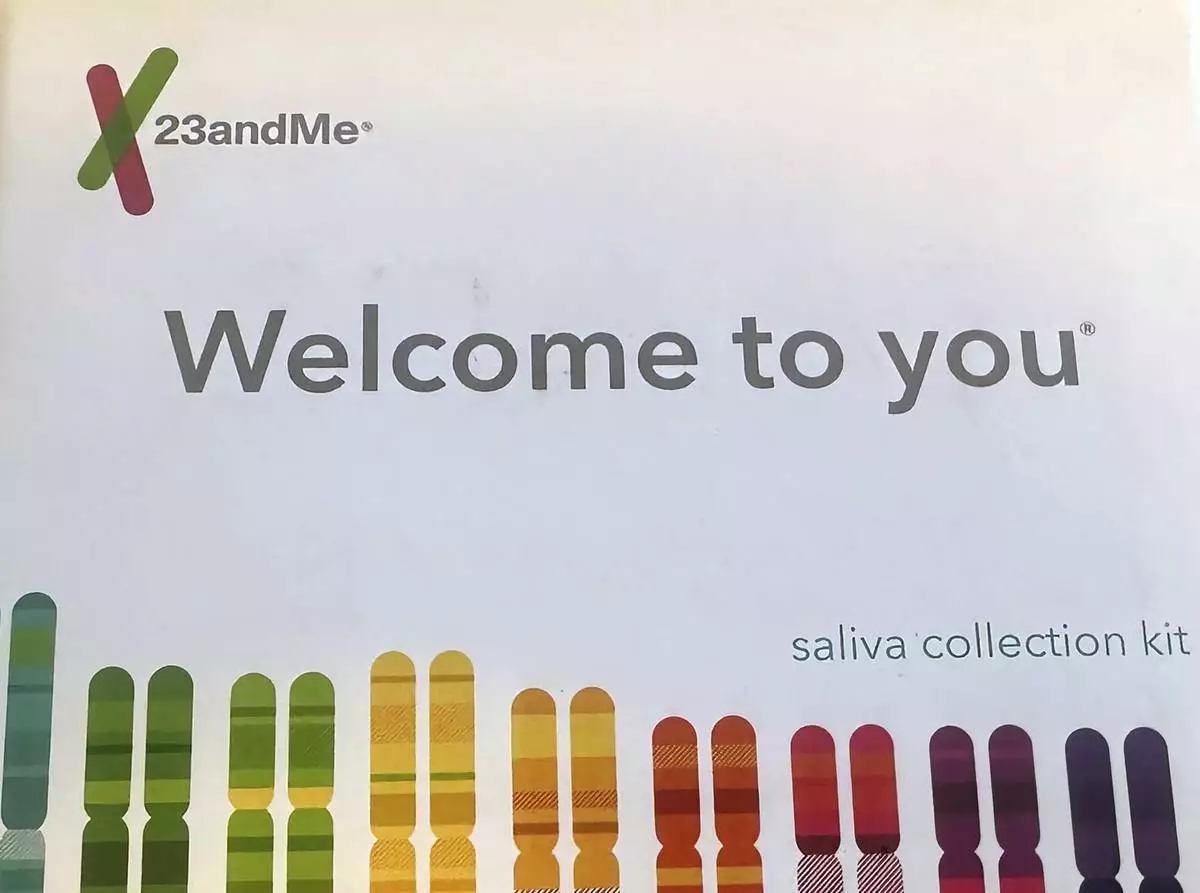
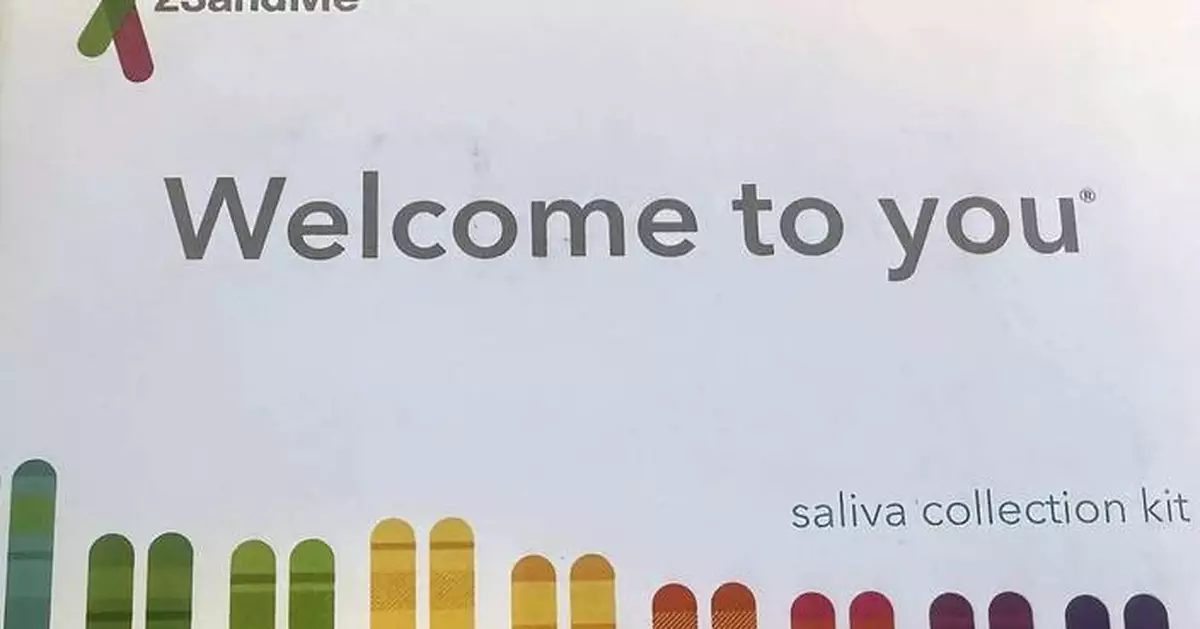
FILE - A 23andMe saliva collection kit is shown on March 25, 2025, in Oakland, Calif. (AP Photo/Barbara Ortutay, File)
SYDNEY (AP) — A child is one of at least 16 people killed in an attack in Australia at one of the world’s most famous beaches, officials said Monday.
Hundreds of people had gathered at Bondi Beach in Sydney for an event to celebrate the first day of Hanukkah, when gunmen opened fire.
At least 16 people are dead and 38 others injured in a terrorist attack authorities say was designed to target the Jewish community.
New South Wales Health Minister Ryan Park said the death toll had risen from 12 to 16 overnight, including a 12-year-old child.
Three other children are being treated in hospital, he said.
THIS IS A BREAKING NEWS UPDATE. AP’s earlier story follows below.
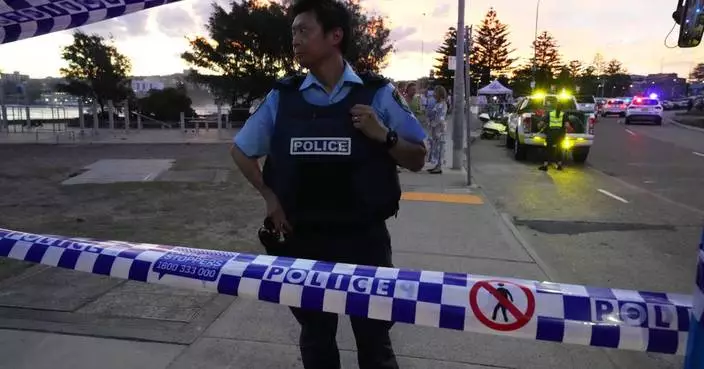
SYDNEY (AP) — Two gunmen attacked a Hanukkah celebration on Sydney's Bondi Beach on Sunday, killing at least 11 people in what Australian Prime Minister Anthony Albanese called an act of antisemitic terrorism that struck at the heart of the nation.
The massacre at one of Australia’s most popular beaches followed a wave of antisemitic attacks that have roiled the country over the past year, although the authorities didn’t suggest those and Sunday’s shooting were connected. It is the deadliest shooting in almost three decades in a country with strict gun control laws.
One gunman was fatally shot by police and the second was arrested and in critical condition, authorities said. Police said one gunman was known to security services, but there was no specific threat.
At least 29 people were confirmed wounded, including two police officers, said Mal Lanyon, police commissioner for New South Wales state, where Sydney is located.
Police said officers were examining a number of suspicious items, including improvised explosive devices found in one of the suspect’s car.
“This attack was designed to target Sydney's Jewish community,” New South Wales Premier Chris Minns said.
The violence erupted at the end of a summer day when thousands had flocked to Bondi Beach, including hundreds gathered for the Chanukah by the Sea event celebrating the start of the eight-day Hanukkah festival.
Chabad, an Orthodox Jewish movement that runs outreach around the world and sponsors public events during major Jewish holidays, identified one of the dead as Rabbi Eli Schlanger, assistant rabbi at Chabad of Bondi and an organizer of the event.
Israel’s Foreign Ministry confirmed the death of an Israeli citizen, but gave no further details.
Police said emergency services were called to Campbell Parade in Bondi about 6:45 p.m. responding to reports of shots being fired. Video filmed by onlookers showed people in bathing suits running from the water as shots rang out. Separate footage showed two men in black shirts firing with long guns from a footbridge leading to the beach, as sirens wailed and people cried out in the background.
One dramatic clip broadcast on Australian television showed a man appearing to tackle and disarm one of the gunmen, before pointing the man’s weapon at him, then setting the gun on the ground.
Minns called the man, named by relatives to Australian media as fruit shop owner Ahmed al Ahmed, a “genuine hero.”
Arsen Ostrovsky, a lawyer attending the Hanukkah ceremony with his wife and daughters, was grazed in the head by a bullet. Ostrovsky said he moved from Israel to Australia two weeks ago to work for a Jewish advocacy group.
“What I saw today was pure evil, just an absolute bloodbath. Bodies strewn everywhere,” he told The Associated Press in an email from the hospital. “It was like reliving Oct. 7 all over."
"I never thought would be possible here in Australia."
Lachlan Moran, 32, from Melbourne, told the AP he was waiting for his family when he heard shots. He dropped the beer he was carrying and ran.
"I sprinted as quickly as I could," Moran said. He said he heard shooting off and on for about five minutes. “Everyone just dropped all their possessions and everything and were running and people were crying and it was just horrible."
Albanese told reporters in the capital, Canberra, that he was “devastated” by the massacre.
“This is a targeted attack on Jewish Australians on the first day of Hanukkah, which should be a day of joy, a celebration of faith. An act of evil, antisemitism, terrorism that has struck the heart of our nation,” Albanese said.
He vowed the violence would be met with “a moment of national unity where Australians across the board will embrace their fellow Australians of Jewish faith.”
King Charles III said he and Queen Camilla were “appalled and saddened by the most dreadful antisemitic terrorist attack.” United Nations Secretary-General António Guterres said on X he was horrified, and his “heart is with the Jewish community worldwide.”
U.S. Secretary of State Marco Rubio said in a post on X: “The United States strongly condemns the terrorist attack in Australia targeting a Jewish celebration. Antisemitism has no place in this world.”
Police in cities around the world, including London, said they would step up security at Jewish sites.
Australia, a country of 28 million people, is home to about 117,000 Jews, according to official figures. Antisemitic incidents, including assaults, vandalism, threats and intimidation, surged more than threefold in the country during the year after Hamas attacked Israel on Oct. 7, 2023, and Israel launched a war on Hamas in Gaza in response, the government's Special Envoy to Combat Antisemitism Jillian Segal reported in July.
Last year, the country was rocked by antisemitic attacks in Sydney and Melbourne. Synagogues and cars were torched, businesses and homes graffitied and Jews attacked in those cities, where 85% of the nation’s Jewish population lives.
Albanese in August blamed Iran for two of the attacks and cut diplomatic ties to Tehran.
Pastor Matt Graham was conducting a service at Bondi Anglican Church when panicked people began entering for shelter. He said antisemitism has been brewing in Sydney’s eastern suburbs including Bondi, where the Jewish community is centered.
"I’m surrounded by antisemitic graffiti constantly. I think for our community in the east (of Sydney), and as a Christian, I just want to declare I stand with the people of Israel,” Graham told the Australian Broadcasting Corp.
Israel urged Australia's government to address crimes targeting Jews. Prime Minister Benjamin Netanyahu said he warned Australia’s leaders months ago about the dangers of failing to take action against antisemitism. He claimed Australia's decision — in line with scores of other countries — to recognize a Palestinian state “pours fuel on the antisemitic fire.”
“Your government did nothing to stop the spread of antisemitism in Australia ... and the result is the horrific attacks on Jews we saw today,” Netanyahu said.
Mass shootings in Australia are extremely rare. A 1996 massacre in the Tasmanian town of Port Arthur, where a lone gunman killed 35 people, prompted the government to drastically tighten gun laws, making it much more difficult to acquire firearms.
Significant mass shootings this century included two murder-suicides with death tolls of five people in 2014 and seven in 2018, in which gunmen killed their own families and themselves.
In 2022, six people were killed in a shootout between police and Christian extremists at a rural property in Queensland state.
McGuirk reported from Melbourne, Australia, and Graham-McLay from Wellington, New Zealand. Associated Press writer Melanie Lidman in Tel Aviv, Israel, and Mustakim Hasnath in London contributed to this report.
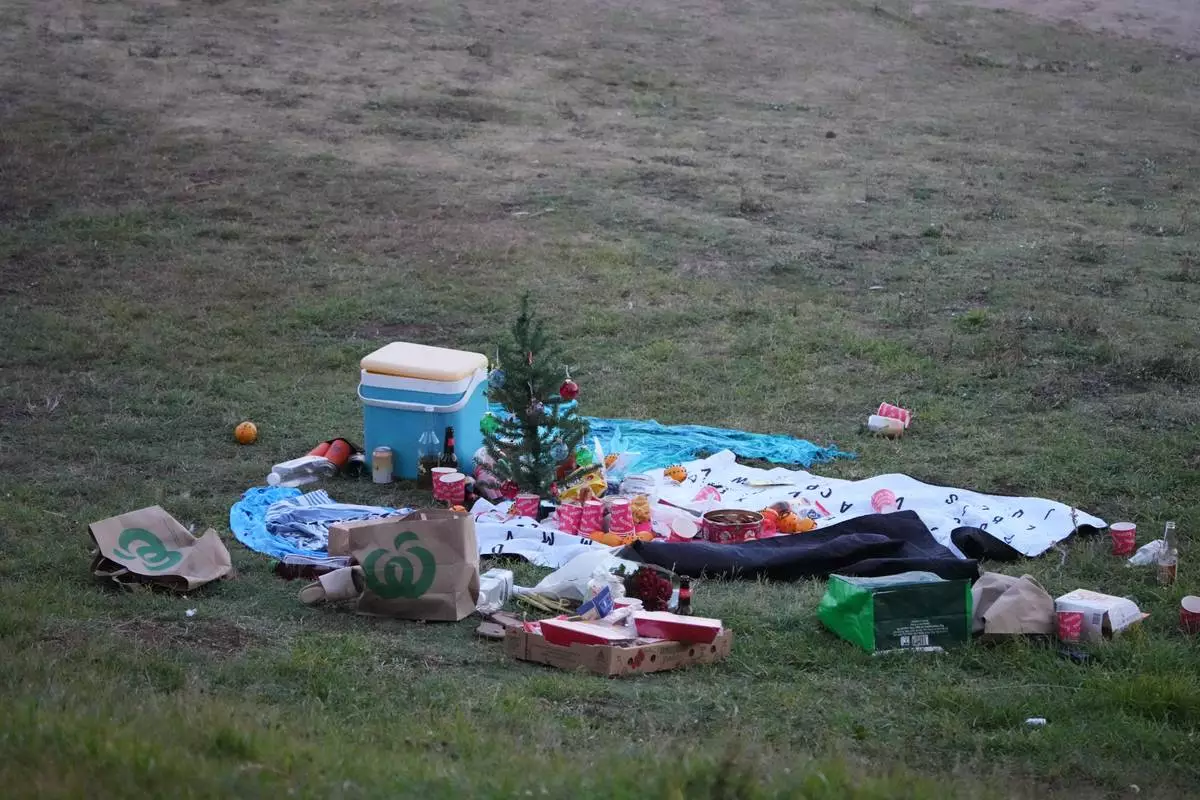
A small Christmas tree is at the center of an abandoned holiday picnic at Bondi Beach after a reported shooting in Sydney, Sunday, Dec. 14, 2025. (AP Photo/Mark Baker)
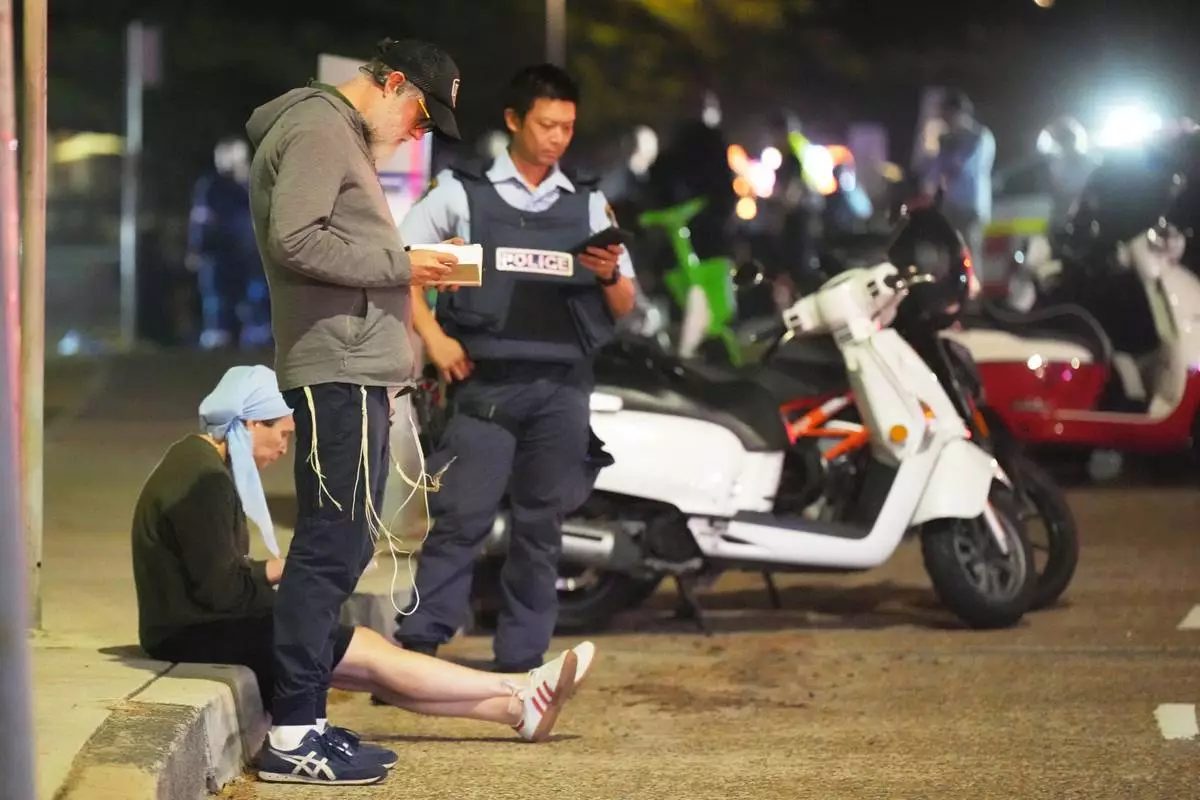
Bystanders stay where police cordon off an area at Bondi Beach after a reported shooting in Sydney, Sunday, Dec. 14, 2025. (AP Photo/Mark Baker)
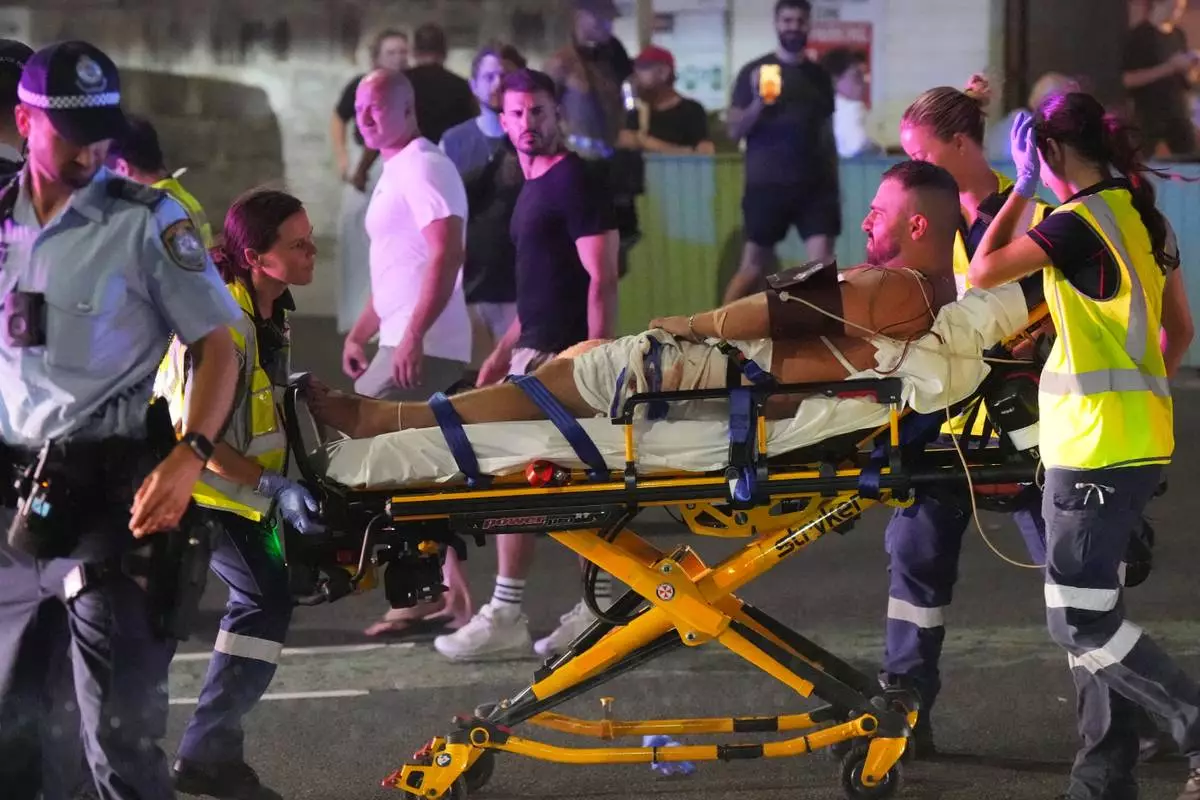
Emergency workers transport a person on a stretcher after a reported shooting at Bondi Beach in Sydney, Sunday, Dec. 14, 2025. (AP Photo/Mark Baker)
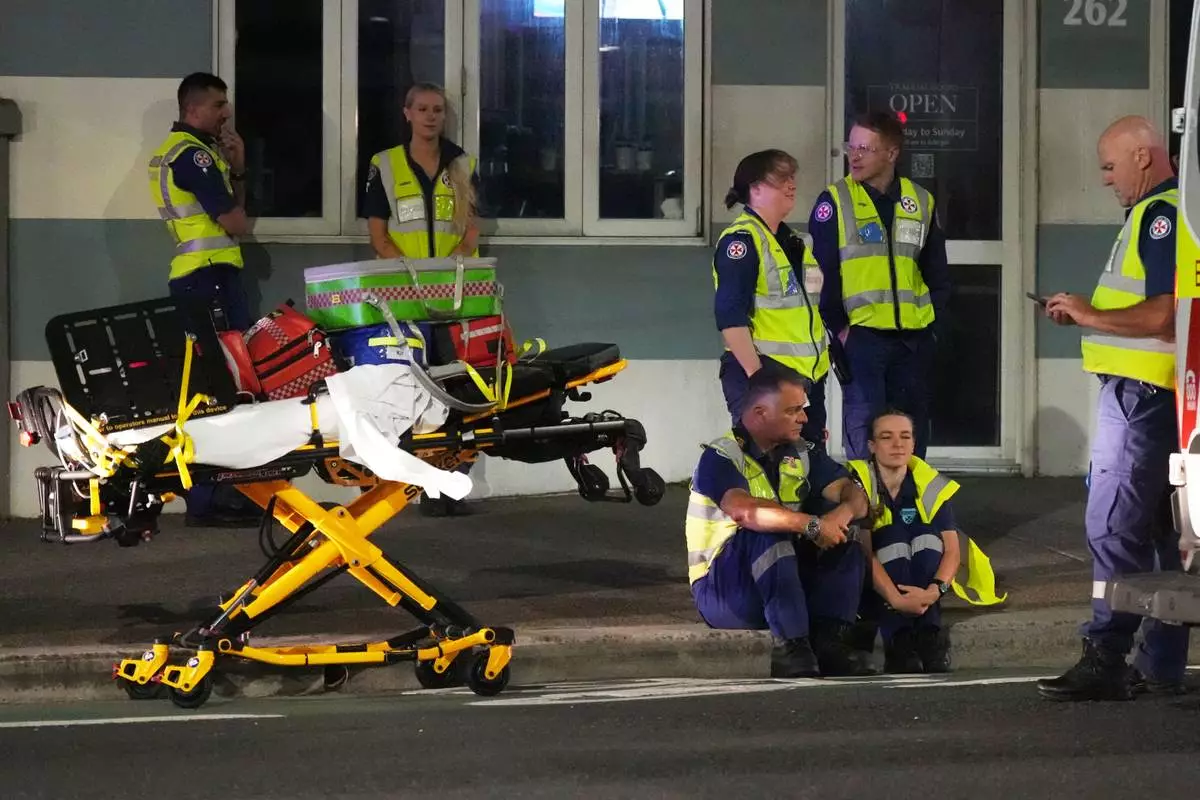
Emergency workers standby at Bondi Beach after a reported shooting in Sydney, Sunday, Dec. 14, 2025. (AP Photo/Mark Baker)
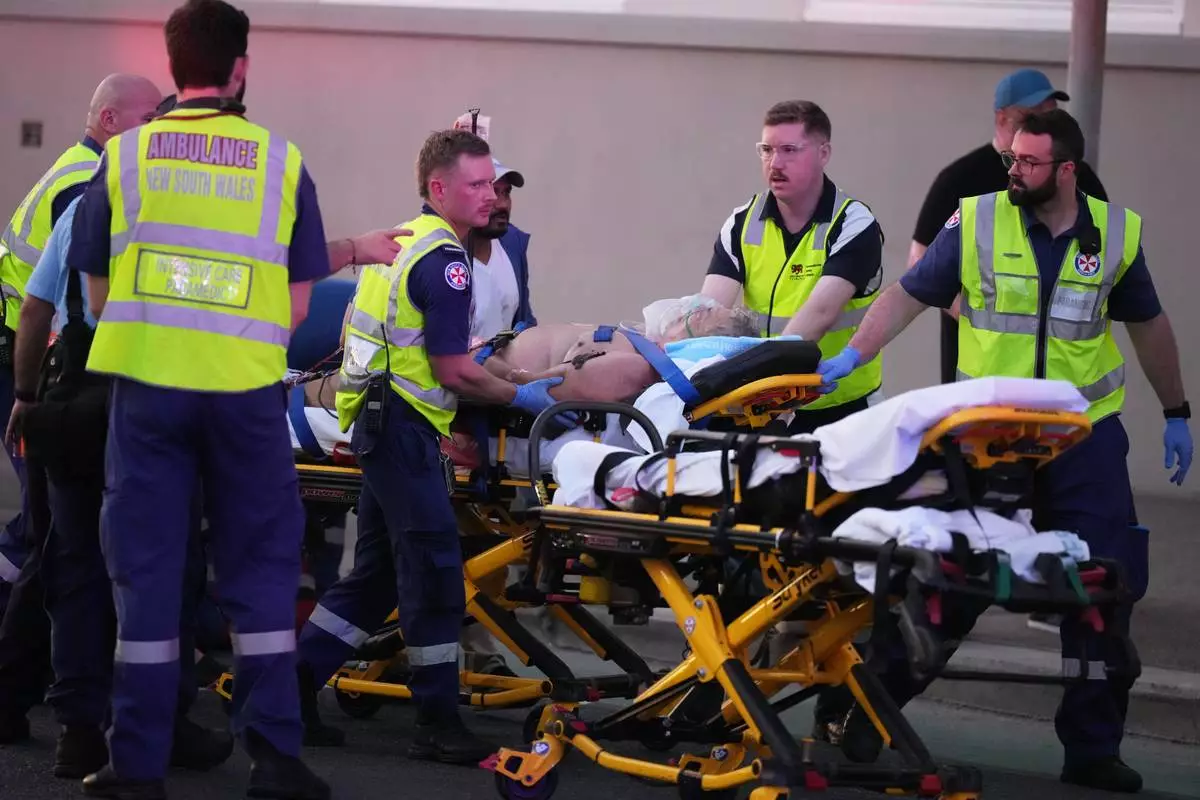
Emergency workers transport a person on a stretcher after a reported shooting at Bondi Beach in Sydney, Sunday, Dec. 14, 2025. (AP Photo/Mark Baker)
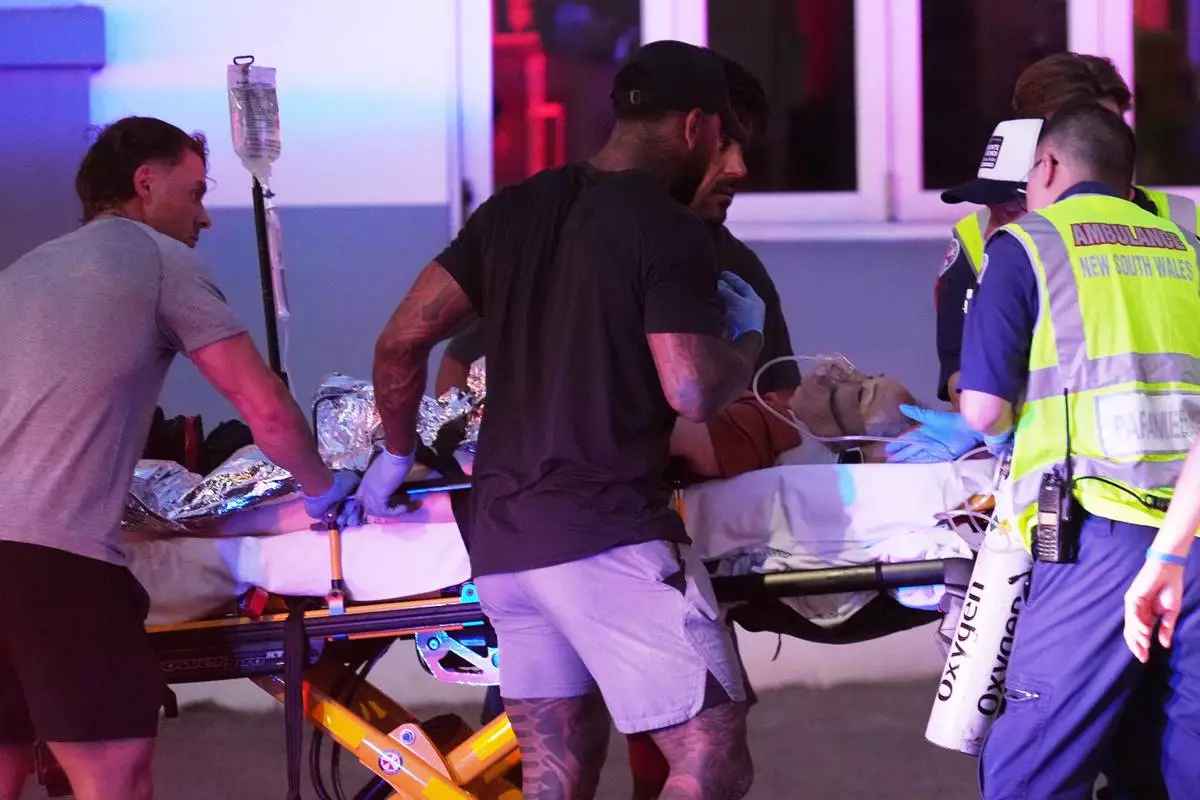
Emergency workers transport a person on a stretcher after a reported shooting at Bondi Beach in Sydney, Sunday, Dec. 14, 2025. (AP Photo/Mark Baker)
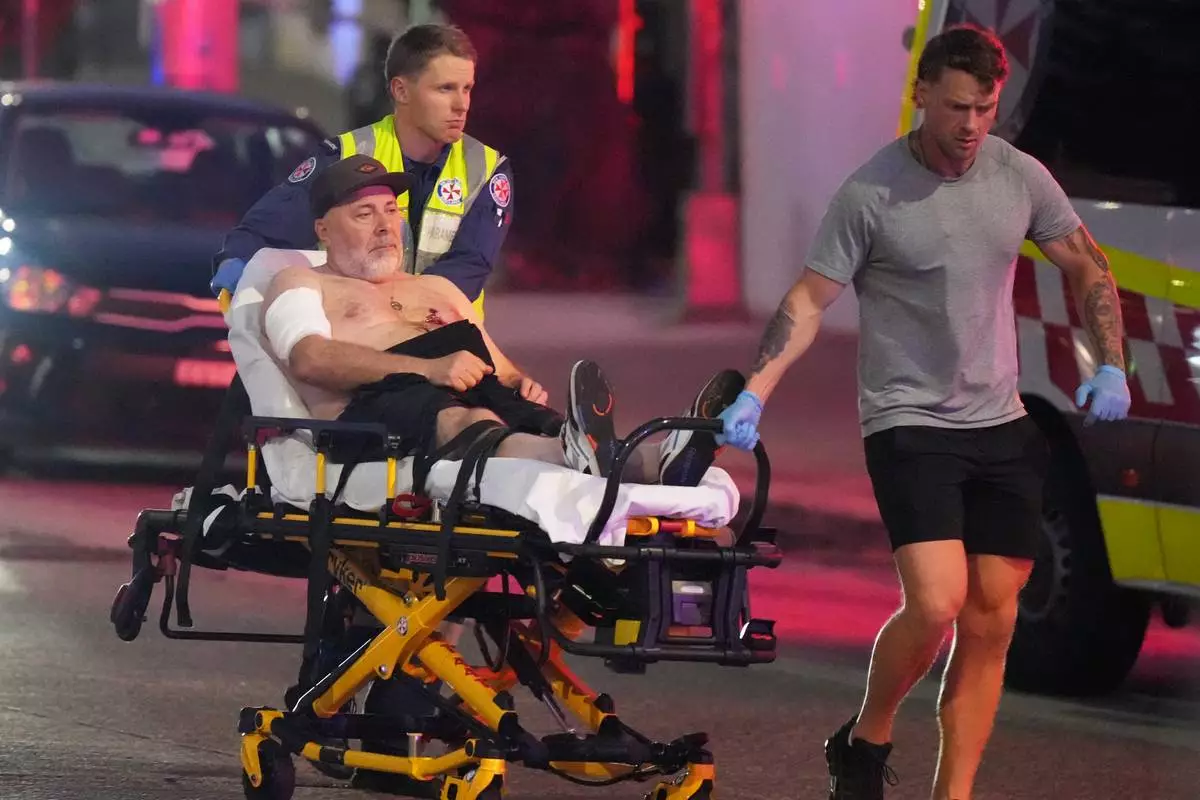
Emergency workers transport a person on a stretcher after a reported shooting at Bondi Beach in Sydney, Sunday, Dec. 14, 2025. (AP Photo/Mark Baker)
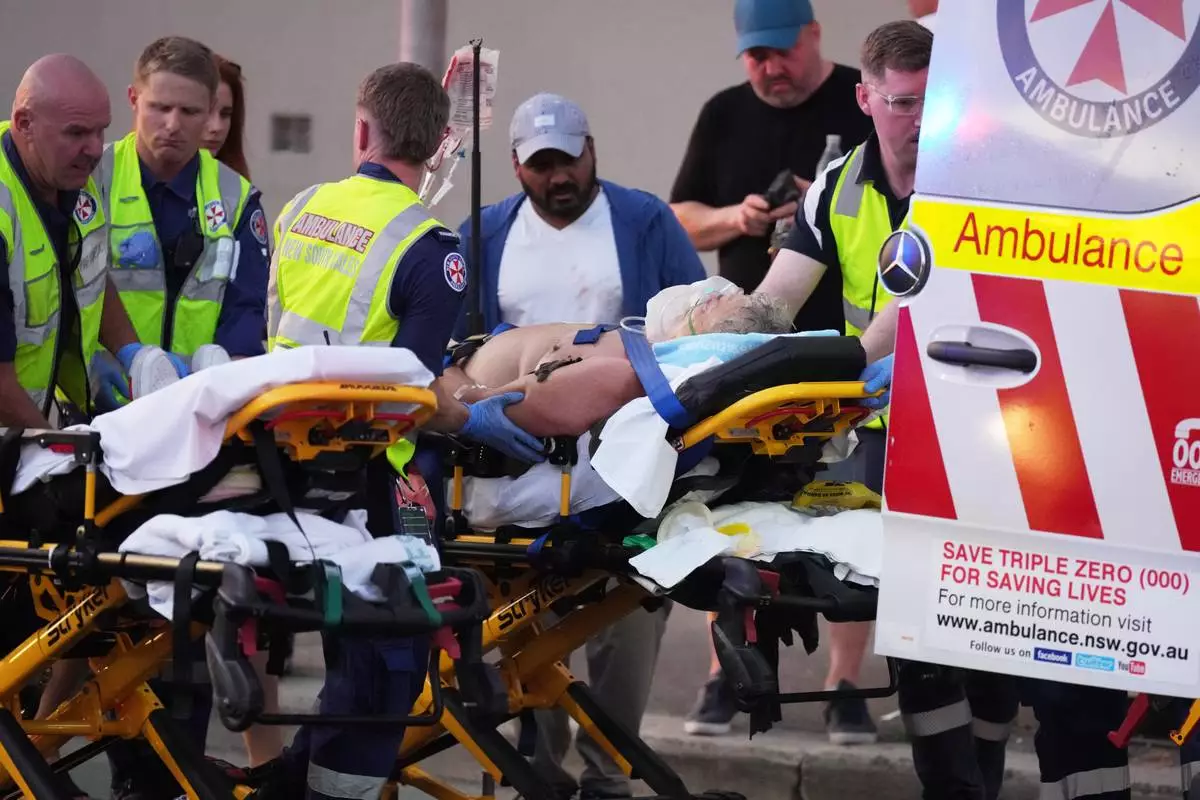
Emergency workers transport a person on a stretcher after a reported shooting at Bondi Beach in Sydney, Sunday, Dec. 14, 2025. (AP Photo/Mark Baker)
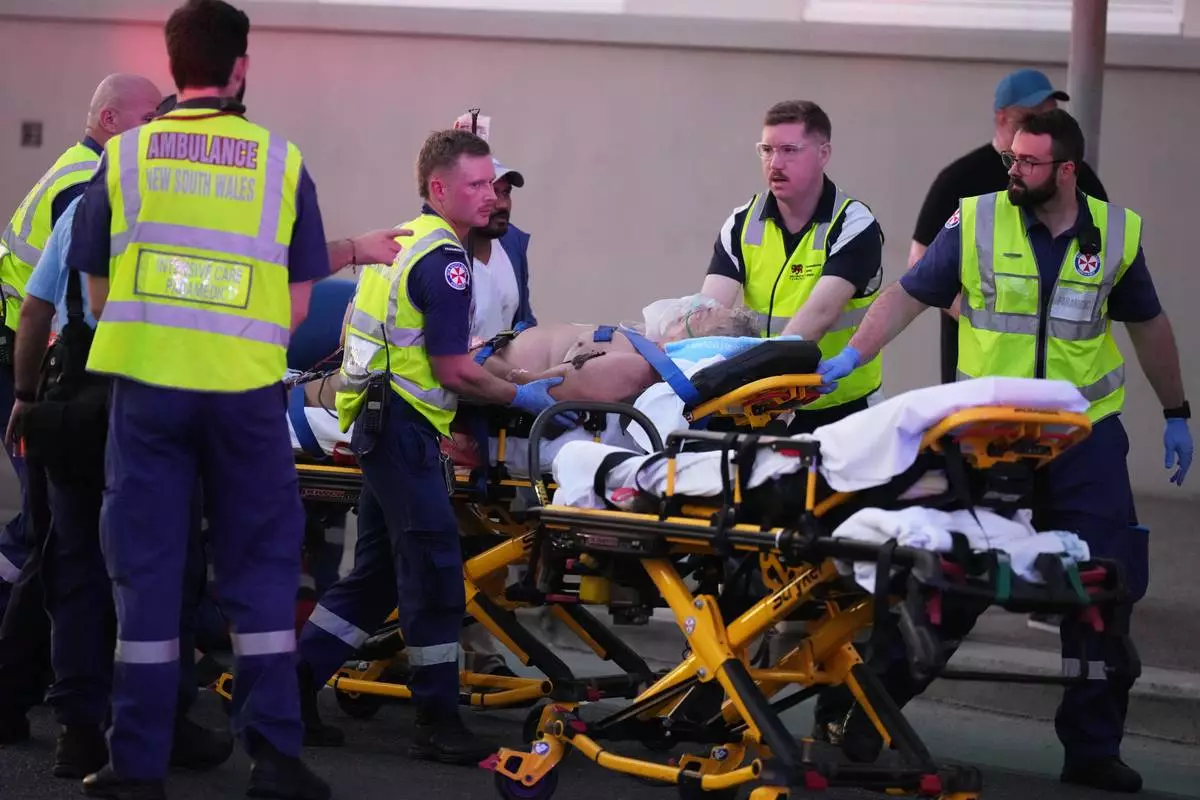
Emergency workers transport a person on a stretcher after a reported shooting at Bondi Beach in Sydney, Sunday, Dec. 14, 2025. (AP Photo/Mark Baker)
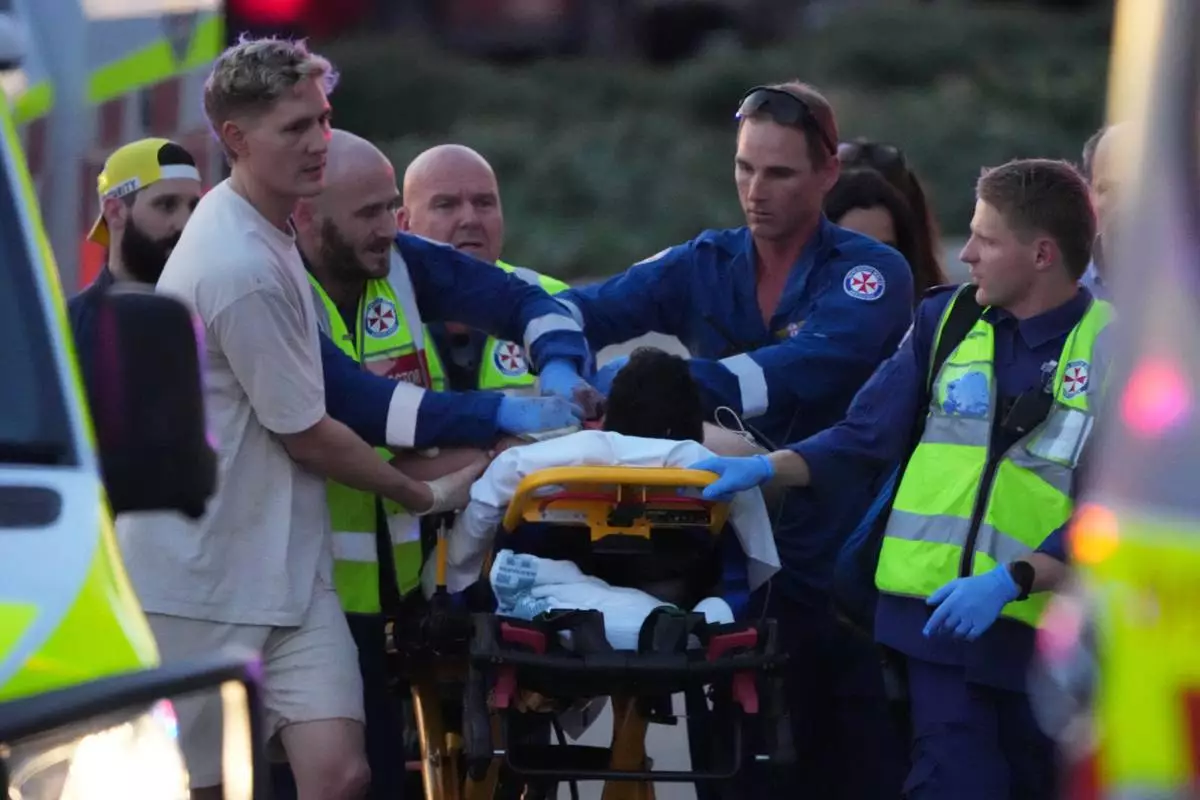
Emergency workers transport a person on a stretcher after a reported shooting at Bondi Beach, in Sydney, Sunday, Dec. 14, 2025. (AP Photo/Mark Baker)