BILLINGS, Mont. (AP) — Lawyers for President Donald Trump's administration say he has the authority to abolish national monuments meant to protect historical and archaeological sites across broad landscapes, including two in California created by his predecessor at the request of Native American tribes.
A Justice Department legal opinion released Tuesday disavowed a 1938 determination that monuments created by previous presidents under the Antiquities Act can't be revoked. The department said presidents can cancel monument designations if protections aren't warranted.
The finding comes as the Interior Department under Trump weighs changes to monuments across the nation as part of the administration's push to expand U.S. energy production.
Sen. Martin Heinrich of New Mexico, the ranking Democrat on the Senate Natural Resources Committee, said that at Trump's order, “his Justice Department is attempting to clear a path to erase national monuments."
Trump in his first term reduced the size of Bears Ears and Grand Staircase Escalante National Monuments in Utah, calling them a “massive land grab." He also lifted fishing restrictions within a sprawling marine monument off the New England Coast.
Former President Joe Biden reversed the moves and restored the monuments.
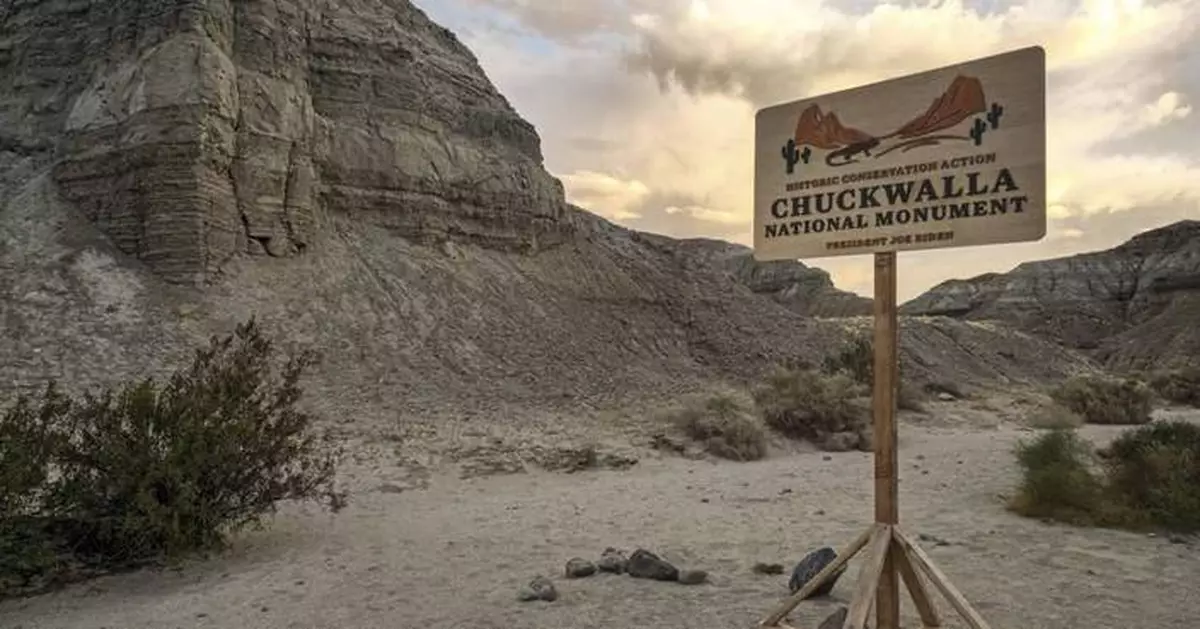
The two monuments singled out in the newly released Justice Department opinion were designated by Biden in his final days in office: Chuckwalla National Monument, in Southern California near Joshua Tree National Park, and Sáttítla Highlands National Monument, in Northern California.
The Democrat's declarations for the monuments barred oil and natural gas drilling and mining on the 624,000-acre (2,400-square-kilometer) Chuckwalla site, and the roughly 225,000 acres (800 square kilometers) Sáttítla Highlands site near the California-Oregon border.
Chuckwalla has natural wonders including the Painted Canyon of Mecca Hills and Alligator Rock, and is home to rare species of plants and animals like the desert bighorn sheep and the Chuckwalla lizard. The Sáttítla Highlands include the ancestral homelands of the Pit River Tribe and Modoc Peoples.
All but three presidents have used the 1906 Antiquities Act to protect unique landscapes and cultural resources. About half the national parks in the U.S. were first designated as monuments.
But critics of monument designations under Biden and Obama say the protective boundaries were stretched too far, hindering mining for critical minerals.
Deputy Assistant Attorney General Lanora Pettit wrote in the Trump administration opinion that Biden's protections of Chuckwalla and the Sattítla Highlands were part of the Democrat's attempts to create for himself an environmental legacy that includes more places to hike, bike, camp or hunt.
"Such activities are entirely expected in a park, but they are wholly unrelated to (if not outright incompatible with) the protection of scientific or historical monuments," Pettit wrote.
Trump in April lifted commercial fishing prohibitions within an expansive marine monument in the Pacific Ocean created under former President Barack Obama.
Environmental groups said Tuesday's Justice Department opinion doesn't give him the authority to shrink monuments at will.
“Americans overwhelmingly support our public lands and oppose seeing them dismantled or destroyed,” said Axie Navas with The Wilderness Society.
Biden established 10 new monuments, among them the site of a 1908 race riot in Springfield, Illinois, and another on a sacred Native American site near the Grand Canyon.
Since 1912, presidents have issued more than a dozen proclamations that diminished monuments, according to a National Park Service database.
Dwight Eisenhower was most active in undoing the proclamations of his predecessors as he diminished six monuments, including Arches in Utah, Great Sand Dunes in Colorado and Glacier Bay in Alaska, which have all since become national parks.
Trump's moves to shrink the Utah monuments in his first term were challenged by environmental groups that said protections for the sites safeguard water supplies and wildlife while preserving cultural sites.
The reductions were reversed by Biden before the case was resolved, and it remains pending.
President Theodore Roosevelt signed the Antiquities Act after lobbying by educators and scientists who wanted to protect sites from artifact looting and haphazard collecting by individuals. It was the first law in the U.S. to establish legal protections for cultural and natural resources of historic or scientific interest on federal lands.
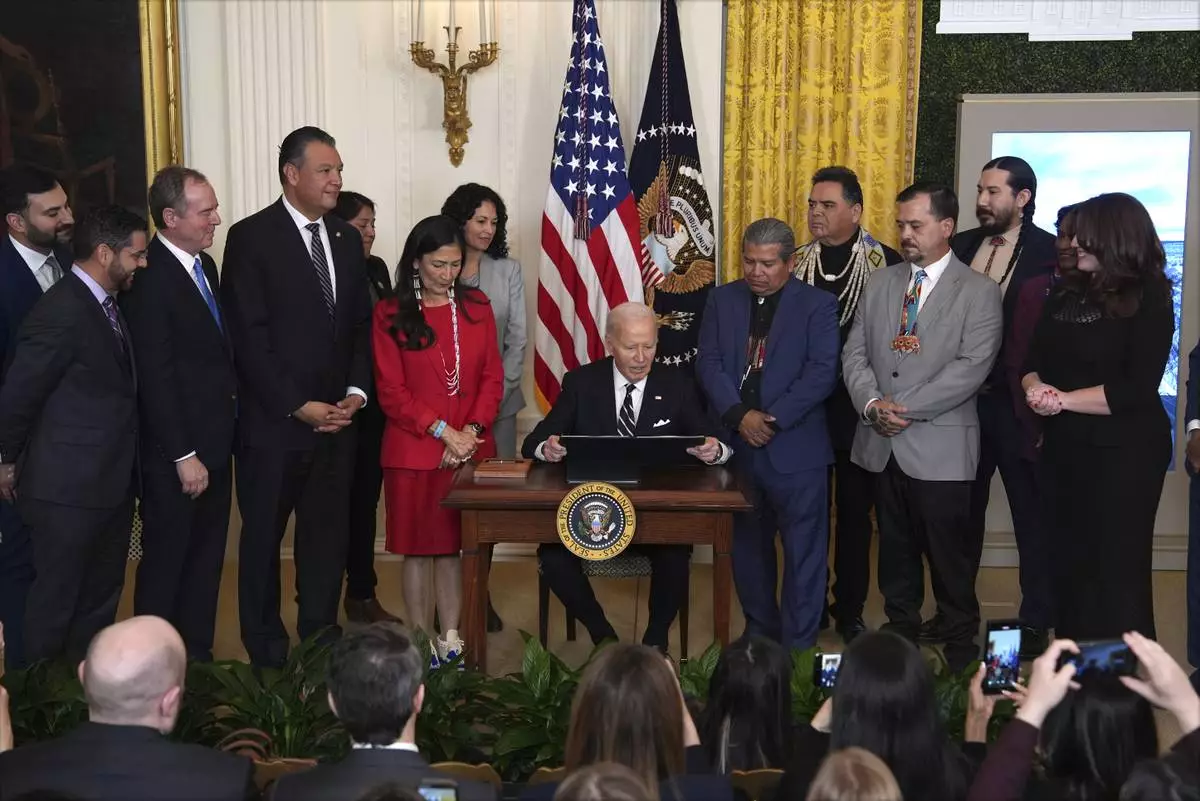
FILE - President Joe Biden signs a proclamation to establish the Chuckwalla National Monument and the Sáttítla Highlands National Monument during an event in the East Room of the White House, Jan. 14, 2025, in Washington. (AP Photo/Evan Vucci, File)
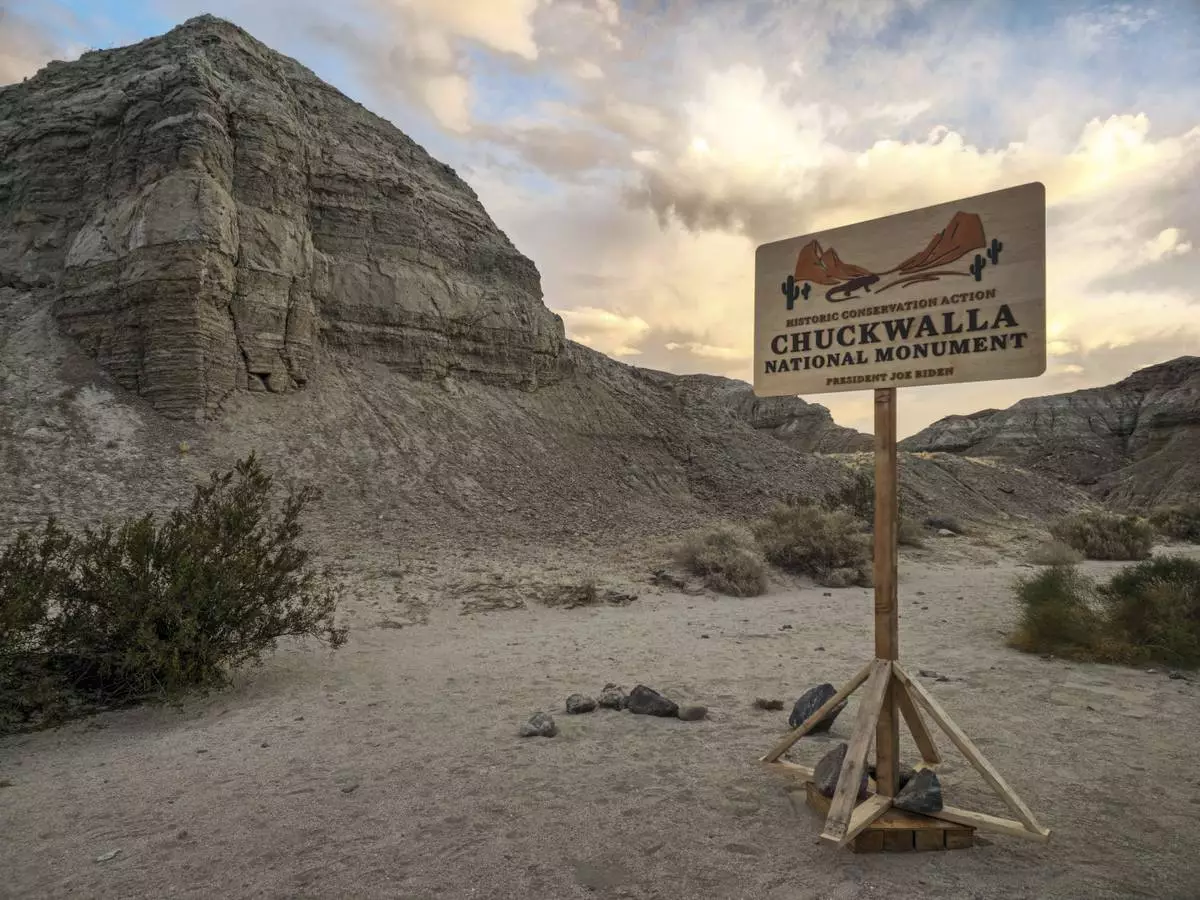
FILE - A sign is set up ahead of President Joe Biden's visit to the Chuckwalla National Monument, Jan. 7, 2025, to the Coachella Valley, Calif. (AP Photo/Damian Dovarganes, File)
The NFL set a record for fewest punts per game in 2025, and wild-card weekend was filled with fourth-down fun and folly as punters were mostly spectators, especially Chicago's Tory Taylor, who never stepped off the sideline in the Bears' come-from-behind win over the Green Bay Packers.
In all, teams converted 15 of 29 fourth down attempts on wild-card weekend, when there were only 41 punts, nine of them Monday night in the Houston Texans' 30-6 rout of Aaron Rodgers and the Pittsburgh Steelers.
Bears first-year coach Ben Johnson was particularly aggressive, going for it a half-dozen times on fourth down Saturday night, including two backfires in the first half that led to a pair of Green Bay touchdowns and put the Bears in a 21-3 halftime hole.
Caleb Williams was intercepted on fourth-and-6 from the Packers 40-yard line, leading to Jordan Love's 18-yard touchdown throw, and Williams threw incomplete on fourth-and-5 from his own 32. That one led to Love's TD throw on fourth-and-goal from the Bears 2 that gave Green Bay an 18-point halftime cushion.
The Packers couldn't capitalize on another turnover on downs by Chicago just before halftime because Brandon McManus missed a 55-yard field goal on the final play after Williams threw incomplete deep on fourth-and-4 from the Green Bay 37.
When Prime Video's sideline reporter Kaylee Hartung asked the Bears' coach about his aggressive approach and going for it on fourth down multiple times on his own side of the field, Johnson replied, “Yeah, we want to maximize our possessions and we want to go for fourth-down plays."
Her follow-up was about how to slow down Green Bay's efficient offense.
“That's a big reason why we're being aggressive on offense, so that we can extend our drives and score points ourselves,” Johnson said. “It's a really good offense we're going against.”
Although the Bears would convert just twice on their six fourth downs — Green Bay was 3 for 3 on fourth down — that strategy paid off in the end. Williams threw a 27-yard pass to Rome Odunze to the Packers' 30-yard line, which led to the TD that pulled Chicago to 27-24 with 4:21 remaining.
Johnson said the game plan featured an aggressive fourth-down mentality, and "I think where it gets misconstrued is, there’s a lack of confidence in your defense when you do that. I think the opposite, I think it’s because I have confidence in our defense and their ability to stop teams in the red zone."
“I’m never going to apologize for being aggressive or doing things that might be a little unorthodox,” Johnson added, "if it’s what we deem is best for us to win a ballgame.”
Johnson was the Lions' offensive coordinator when Detroit blew a 17-point halftime lead and lost the NFC championship to San Francisco 34-31 after the 2023 season. In that game, Lions coach Dan Campbell went for it on fourth down twice in field-goal range but came up short, later saying he'd do it again if he could.
Those failures didn't curtail the Lions' aggressive fourth-down philosophy, one that Johnson took to Chicago when he was hired by the Bears a year ago.
He had plenty of company over the weekend as a trend from the regular season continued. There were just 3.55 punts per game per team this season and that figure fell in the first round of the playoffs with teams averaging just 3.41 punts per game.
The Panthers and Rams got the fun going Saturday when early fourth-down failures led to touchdowns by each team.
Trevor Lawrence thought he had the first down when the Jaguars went for it on fourth-and-2 from the Buffalo 9 only to see the review reveal his shin had hit the ground shy of the first-down marker, a fourth-down faux pas that proved pivotal in Jacksonville's 27-24 loss to the Bills.
The Bills twice went for it on fourth-and-1 deep in Jaguars territory. Josh Allen had a four-yard keeper on the first one and was carried nine yards on an astonishing tush push to the 1 that also led to a Buffalo touchdown.
The 49ers didn't attempt a single fourth-down conversion in their 23-19 win at Philadelphia, where the Eagles were 3-for-5 on fourth down.
The Patriots converted their only fourth-down try, on fourth-and-4 from the Chargers' 30, which led to a field goal. When the Chargers took a delay after failing to induce an offsides call and then punted from midfield, NBC analyst Cris Collinsworth said, “I think Jim Harbaugh's been watching the games this weekend.”
And when Steelers coach Mike Tomlin chose to take the three points with a 32-yard field goal try rather that chancing it on fourth-and-3 from the Houston 14 Monday night, ESPN analyst Troy Aikman commented: “We're in a time as we all know when a lot of offenses would be going for it. ... But points are going to be (at) a premium. You've got two defenses that are capable of dominating their opponent. Get 'em when you can.”
Well, points certainly were at a premium for Pittsburgh, which hung in there most of the night before the Texans' 23-0 fourth-quarter blitz in what might have been Rodgers' farewell game.
If so, Rodgers' final pass was a pick-6 by safety Calen Bullock, whose 50-yard interception return for a touchdown came on ... you guessed it, fourth down.
AP NFL: https://apnews.com/hub/NFL
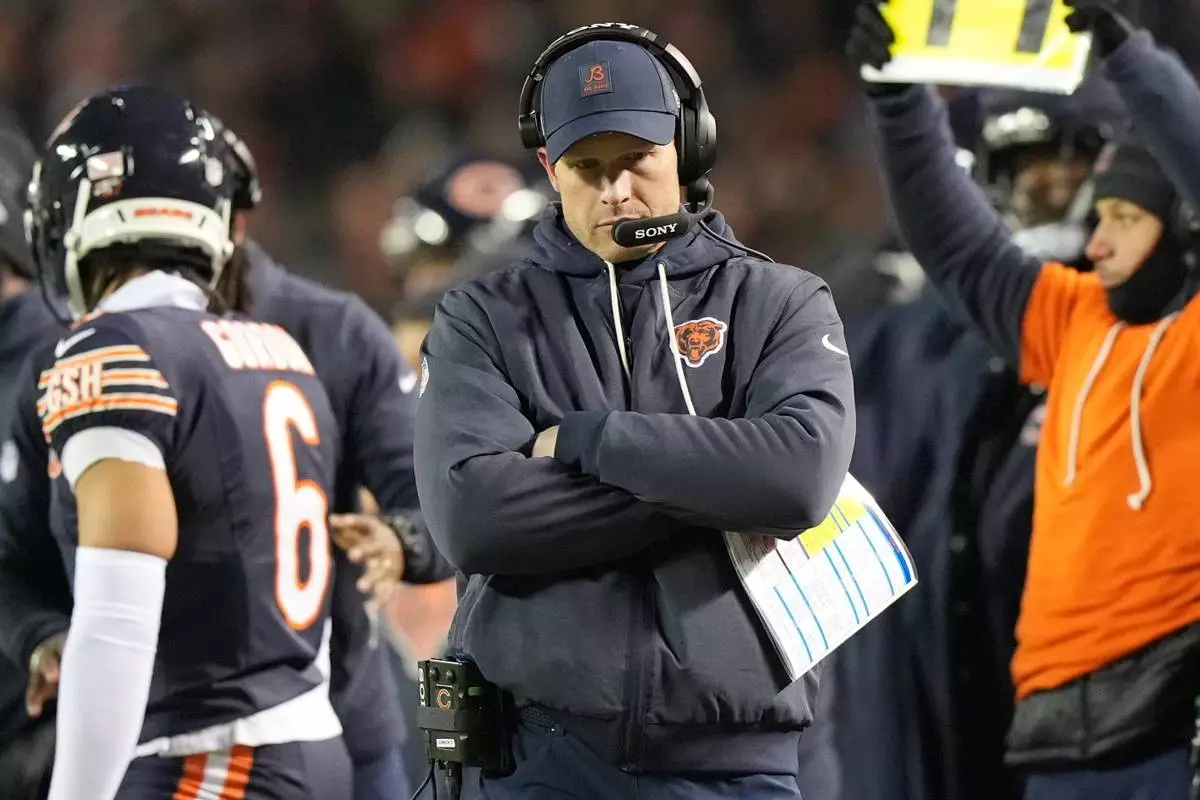
Chicago Bears head coach Ben Johnson reacts during the first half of an NFL wild-card playoff football game against the Green Bay Packers Saturday, Jan. 10, 2026, in Chicago. (AP Photo/Nam Huh)