PARIS & CAMBRIDGE, England--(BUSINESS WIRE)--Jun 11, 2025--
Orange Business and Toshiba Europe have partnered to launch the first quantum-safe networking service in Paris, France. Orange Quantum Defender uses Toshiba’s Quantum Safe Networking technology, which combines Quantum Key Distribution (QKD) with Post Quantum Cryptography (PQC) for defence in depth. The service is now commercially available in the greater Paris area.
This press release features multimedia. View the full release here: https://www.businesswire.com/news/home/20250610183579/en/
The quantum-safe network offers the ultimate protection for sensitive data against future quantum computing attacks. A leading French financial services company has already connected multiple sites to the network, accessing high-speed, resilient quantum-safe infrastructure to secure its critical financial data.
The continued development of quantum technologies puts sensitive data under threat like never before, as quantum computers are set to render current public key encryption methods insecure. Organisations and enterprises within highly trust-sensitive industries, such as financial services, the public sector, critical infrastructure, and healthcare, are under particular threat from “store now, decrypt later” attacks. This is where sensitive data is collected today and stored by bad actors for decryption when quantum computers become available. To respond to this threat, organisations must take action to fortify their communications now to ensure they remain secure well into the future.
Orange Quantum Defender is provided over the existing Orange commercial fibre network in Paris using Toshiba’s QKD technology. A defence-in-depth principle combines hardware-based QKD and software-based PQC technologies to both protect sensitive data and ensure future data secrecy. The combination of QKD and PQC means organisations can benefit from a multi-layered security approach, providing the most secure network possible.
"We are thrilled to launch Orange Quantum Defender – a first-of-its kind service in France. This is a significant step in the Orange multi-layer quantum-safe networking strategy, as we help our enterprise customers respond to the growing and evolving security threats from quantum computing. Built on the robust technology by Toshiba, we are not just protecting sensitive data today; we are prepared and ready to partner with our customers for a secure and resilient future," said Aliette Mousnier-Lompré, CEO, Orange Business.
The quantum safe network follows years of collaboration between Orange and Toshiba in validating QKD for commercial applications. Previous joint tests showed that Toshiba’s QKD technology could successfully scale across long distances at high secret key rates while co-existing with conventional data signals. Not only did this show that QKD could be used by businesses to protect their data in real-life situations today, but that it could easily be deployed on existing fibre networks, lowering barriers to adoption. The new network marks a fundamental step not only in protecting highly sensitive commercial data but also supports France’s national quantum strategy.
“The quantum age isn’t just some fringe concept anymore, and large organisations are on the frontline when it comes to the dangers posed by powerful quantum computers,” commented Hiroshi Tsukino, Corporate Vice President of Toshiba Corporation, and Vice President of ICT Solutions Division at Toshiba Digital Solutions. “We have been collaborating with Orange for several years to validate QKD technology performance across existing fibre networks, and I’m excited to now jointly launch the first commercial solution that can deliver a quantum-safe future for organisations in Paris.”
About Orange Business
Orange Business, the enterprise division of the Orange Group, is a leading network and digital integrator, supporting customers to create positive impact and digital business. The combined strength of its next-generation connectivity, cloud, and cybersecurity expertise, platforms, and partners provides the foundation for enterprises around the world. With 30,000 employees across 65 countries, Orange Business enables its customers’ transformations by orchestrating end-to-end secured digital infrastructure and focusing on the employee, customer, and operational experience. More than 30,000 B-to-B customers put their trust in Orange Business globally.
Orange is one of the world’s leading telecommunications operators with revenues of 40.3 billion euros in 2024 and 291 million customers worldwide at 31 December 2024. In February 2023, the Group presented its strategic plan "Lead the Future", built on a new business model and guided by responsibility and efficiency. "Lead the Future" capitalizes on network excellence to reinforce Orange's leadership in service quality.
Orange is listed on the Euronext Paris (ORA). For more information: www.orange-business.com or follow us on LinkedIn and on X: @orangebusiness
Orange and any other Orange product or service names included in this material are trademarks of Orange or Orange Brand Services Limited.
About Toshiba
In 2025, the Toshiba Group celebrates its 150th anniversary. As the company looks ahead, it is enhancing its management structure, streamlining operations, and investing in forward-looking businesses to build foundations for new growth.
This will allow it to continue to support advances toward a sustainable future with products and services developed by its wide range of businesses in the energy, infrastructure, and electronic devices domains.
Guided by its corporate philosophy, “Committed to People, Committed to the Future.,” Toshiba brings industry-leading capabilities in green transformation (GX) and digital transformation (DX) to solutions for companies addressing the many challenges faced by modern society. By leveraging the power of data derived from its constantly evolving products and solutions, the Group is determined to help to achieve carbon neutrality and a circular economy.
In fiscal year 2024, Toshiba Group recorded annual sales of 3.5 trillion yen and employed 95,000 people worldwide. For more information, visit our website or follow us on LinkedIn.

A Quantum-safe network offering the ultimate protection for sensitive data against future threats (Photo credit: Orange Business Services)
HELSINGBORG, Sweden (AP) — NATO allies and defense officials expressed bewilderment Friday at U.S. President Donald Trump’s announcement that he would send 5,000 U.S. troops to Poland just weeks after ordering the same number of forces pulled out of Europe.
The apparent change of mind came after weeks of statements from Trump and his administration about reducing — not increasing — the U.S. military footprint in Europe. Trump's initial order set off a flurry of action among military commanders and left allies already doubtful about America's commitment to Europe's security to ponder what forces they might have to backfill on NATO's eastern flank with Russia and Ukraine.
Earlier this month, the Trump administration said it was reducing levels in Europe by about 5,000 troops, and U.S. officials confirmed about 4,000 service members were no longer rotating into Poland from Germany. The dispatch to Germany of U.S. personnel trained to fire long-range missiles was also halted.
But in a post on Truth Social on Thursday, Trump said he would now send "an additional 5,000 Troops to Poland,” citing his strong ties with Polish President Karol Nawrocki, whom Trump endorsed in elections last year.
“It is confusing indeed, and not always easy to navigate,” Swedish Foreign Minister Maria Malmer Stenergard told reporters Friday at a meeting she was hosting of her NATO counterparts, including U.S. Secretary of State Marco Rubio.
Ministers from the Netherlands and Norway were sanguine about Trump’s latest move, as was Latvian Foreign Minister Baiba Braže, who said allies knew the U.S. troop “posture was being reconsidered, and now there is no change of posture. For now.”
U.S. defense officials also expressed confusion. “We just spent the better part of two weeks reacting to the first announcement. We don’t know what this means either,” said one of two officials who spoke on condition of anonymity to discuss sensitive military matters.
But Rubio said Washington’s allies understand that changes in the U.S. troop presence in Europe will come as the Trump administration reevaluates its force needs. “I think there’s a broad recognition that there are going to be eventually less U.S. troops in Europe than there has historically been for a variety of reasons,” he said.
The latest surprise came despite a U.S. pledge to coordinate troop deployments, including one from NATO’s top military officer, U.S. Lt. Gen. Alex Grynkewich, on Wednesday.
Trump's initial announcement that he would withdraw troops came as he fumed over remarks by German Chancellor Friedrich Merz, who said that the U.S. was being “humiliated” by the Iranian leadership and criticized what he called a lack of strategy in that war.
Trump told reporters that the U.S. would be cutting even more than 5,000 and also announced new tariffs on European cars. Germany is the continent’s biggest auto producer.
Rubio insisted that Trump’s decision “is not a punitive thing. It’s just something that’s ongoing.”
About 80,000 U.S. troops are stationed in Europe. The Pentagon is required to keep at least 76,000 troops and major equipment on the continent unless NATO allies are consulted and there is a determination that such a withdrawal is in U.S. interests.
The withdrawal of 5,000 troops might drop numbers below that limit.
But Trump's latest post suggests that troop numbers in Europe would not change. Polish Foreign Minister Radek Sikorski welcomed the decision to send more forces to his country, saying it ensures that “the presence of American troops in Poland will be maintained more or less at previous levels.”
NATO Secretary-General Mark Rutte also welcomed the move. On Thursday, before Trump took to Truth Social again, Rutte had underlined that it was important for Europe to take care of its own security. “We have a process in place. This is normal business,” he told reporters.
At NATO headquarters in Brussels, meanwhile, U.S. officials briefed the allies on the Pentagon's aims for its commitments to the NATO Force Model, which involves contingency planning for Europe’s defense in the event of serious security concerns. It was widely expected that a further reduction of U.S. forces would be coming.
Asked whether any cuts were announced, Rutte said: “I’m afraid it’s much more complicated than that.” He said the procedure “is highly classified” and declined to give details.
Rubio played down concerns about a shift in U.S. force levels in Europe, saying: "Every country has to constantly reevaluate what their needs are, what their commitments are around the world, and how to properly structure that.”
Cook reported from Brussels. Associated Press writer Emma Burrows in London contributed.
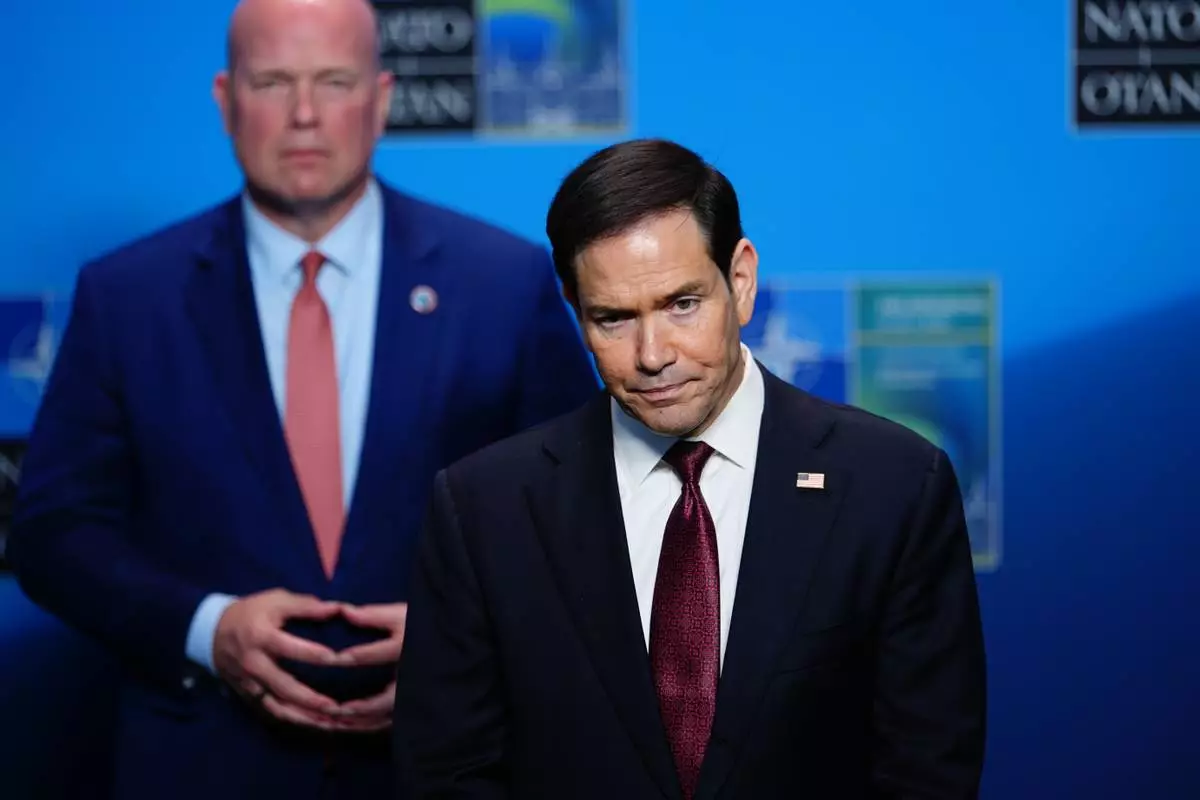
United States Secretary of State Marco Rubio speaks with journalists during a meeting of NATO foreign ministers in Helsingborg, Sweden, Friday, May 22, 2026. (AP Photo/Julia Demaree Nikhinson, Pool)
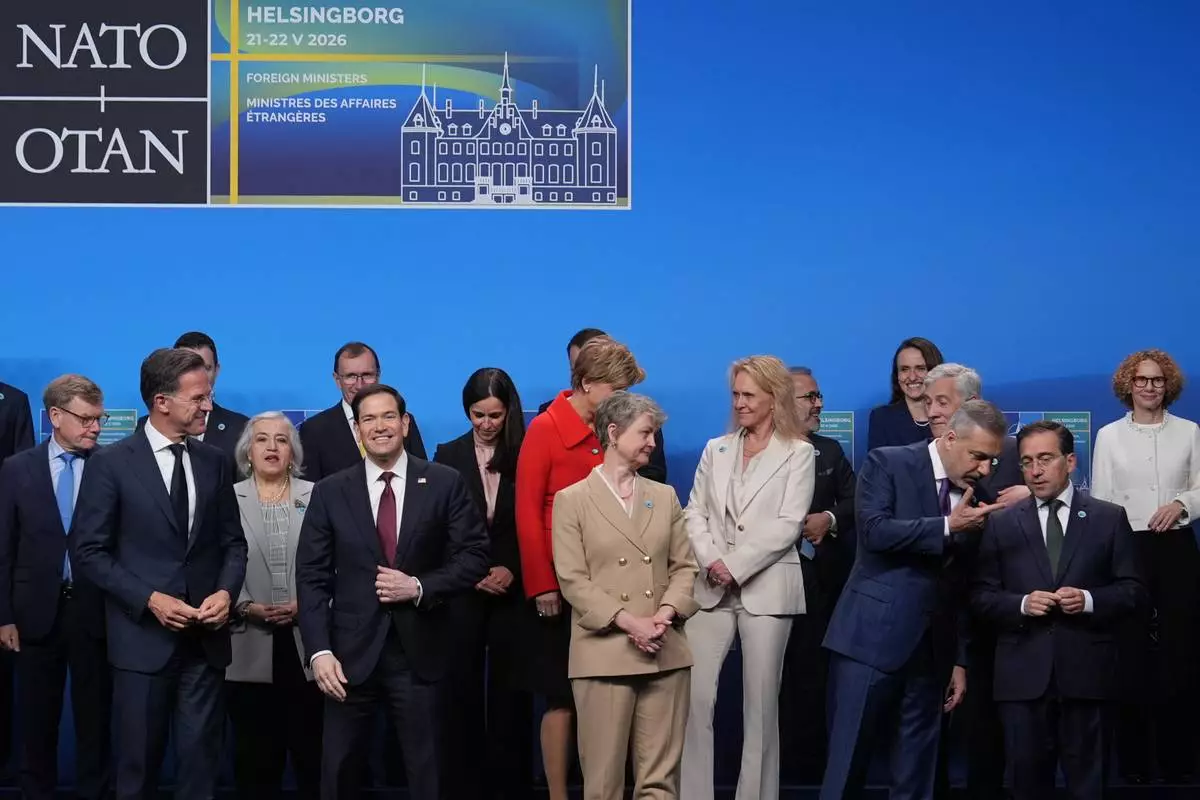
United States Secretary of State Marco Rubio, front second left, and NATO Secretary General Mark Rutte, front left, speak with each other during a group photo at a meeting of NATO foreign ministers in Helsingborg, Sweden, Friday, May 22, 2026. (AP Photo/Julia Demaree Nikhinson, Pool)
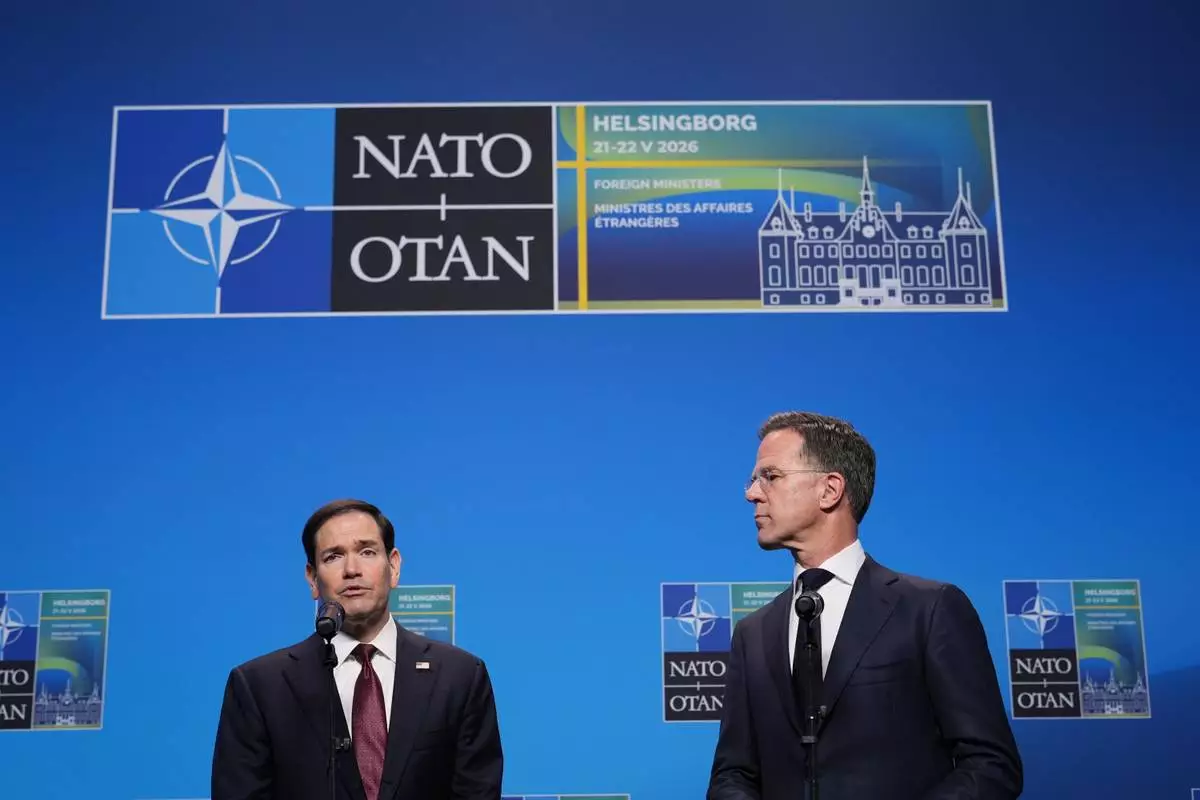
United States Secretary of State Marco Rubio, left, and NATO Secretary General Mark Rutte look at each other as they deliver a statement during a meeting of NATO foreign ministers in Helsingborg, Sweden, Friday, May 22, 2026. (AP Photo/Julia Demaree Nikhinson, Pool)
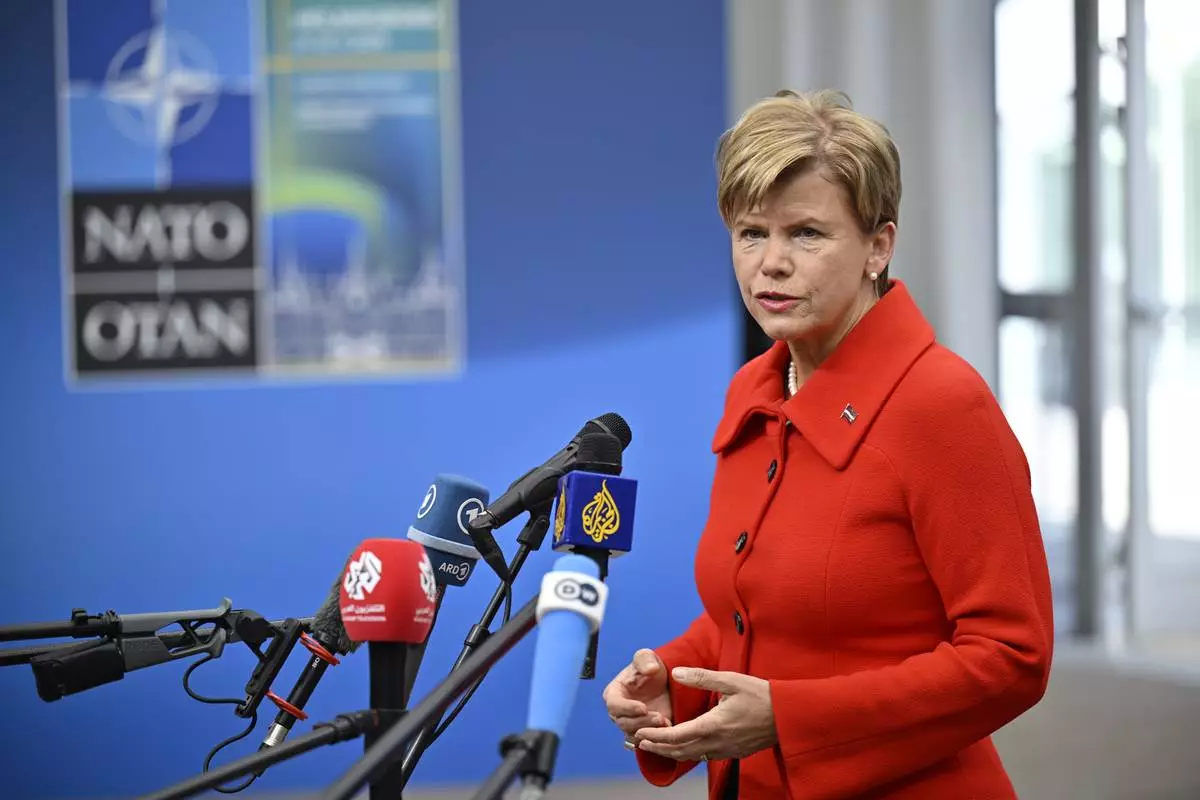
Latvian Foreign Minister Baiba Braže speaks at the doorstep of the NATO foreign ministers' meeting at Sea U in Helsingborg, Sweden, Friday, May 22, 2026. (Johan Nilsson/TT News Agency via AP)
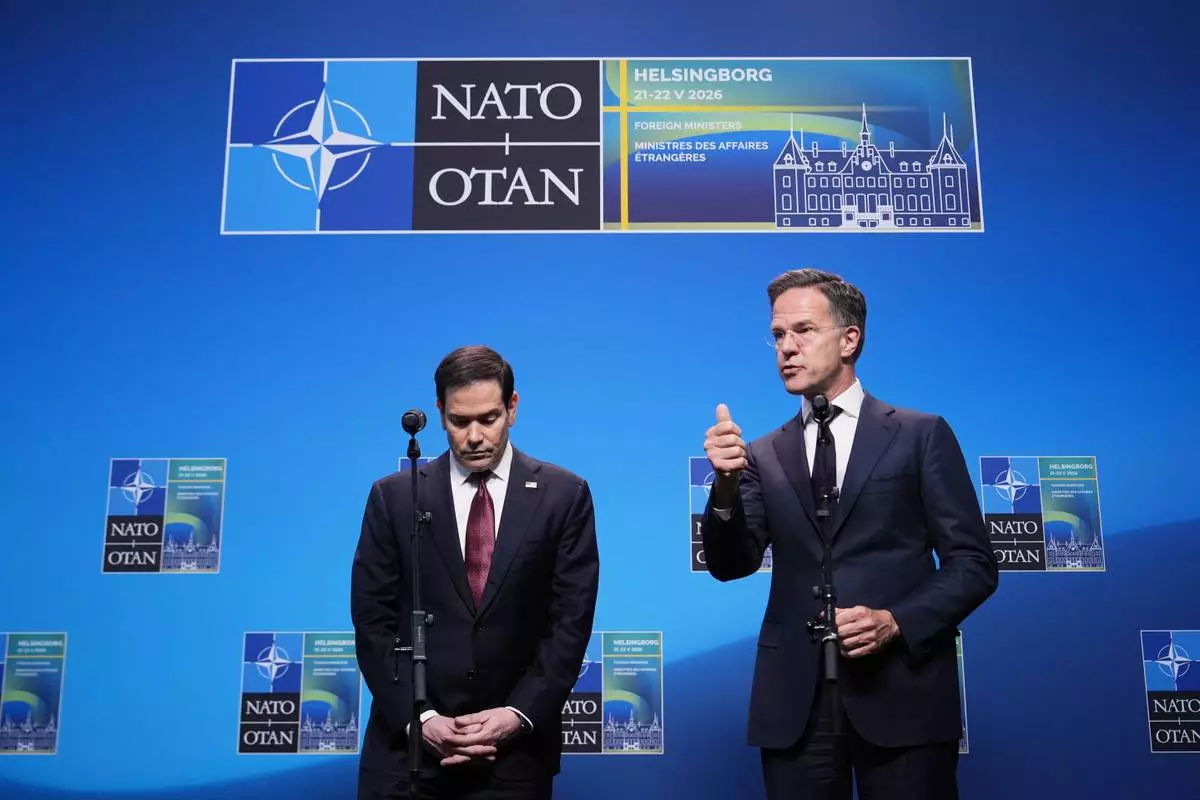
United States Secretary of State Marco Rubio, left, and NATO Secretary General Mark Rutte deliver a statement during a meeting of NATO foreign ministers in Helsingborg, Sweden, Friday, May 22, 2026. (AP Photo/Julia Demaree Nikhinson, Pool)
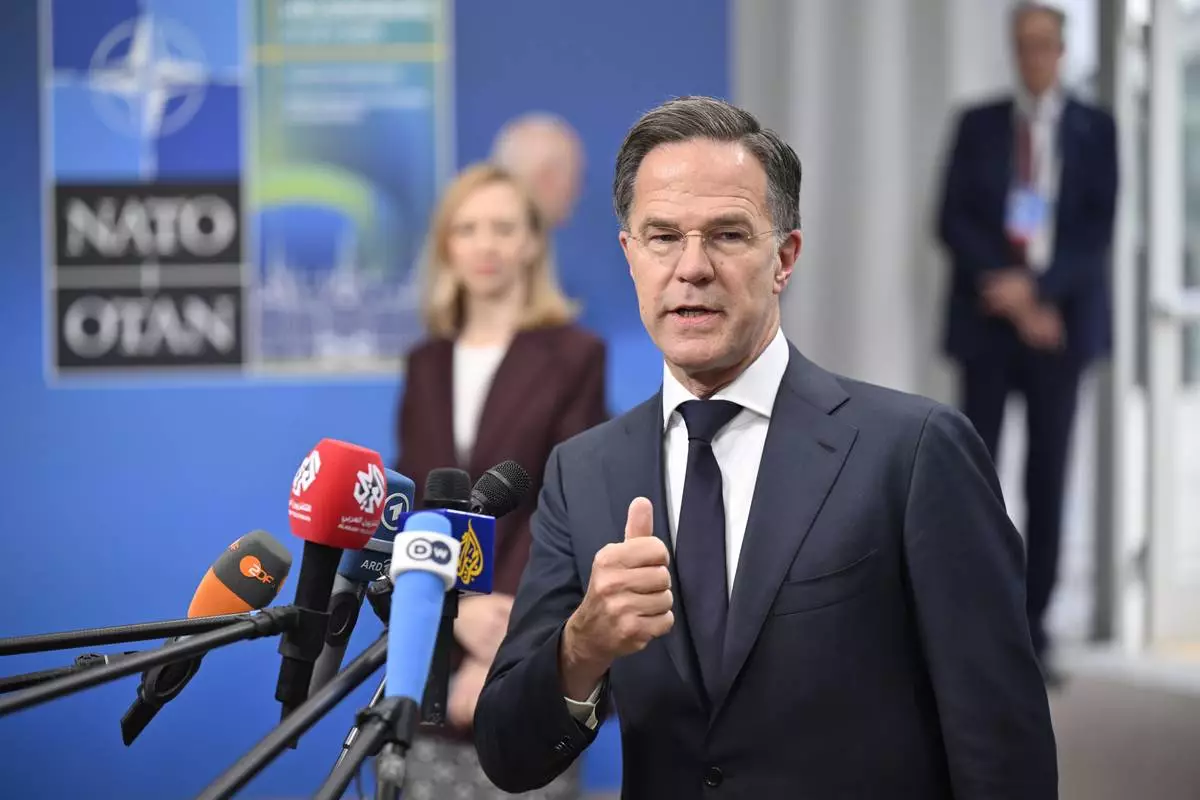
NATO Secretary General Mark Rutte speaks to media at the NATO Foreign Ministers' meeting in Helsingborg, Sweden, Friday, May 22, 2026. (Johan Nilsson/TT News Agency via AP)
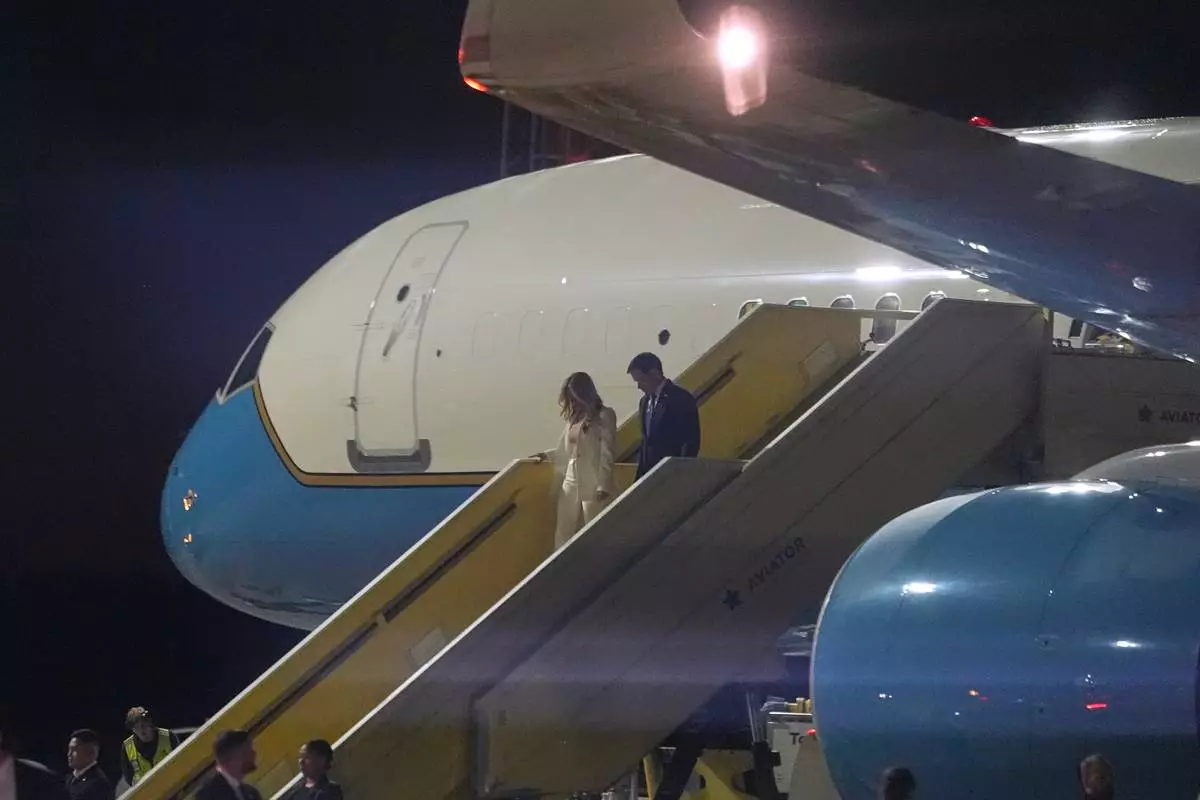
Secretary of State Marco Rubio arrives with his wife Jeanette at Malmo Airport, Friday, May 22, 2026, in Malmo-Sturup, Sweden, ahead of a NATO foreign ministers meeting. (AP Photo/Julia Demaree Nikhinson, Pool)
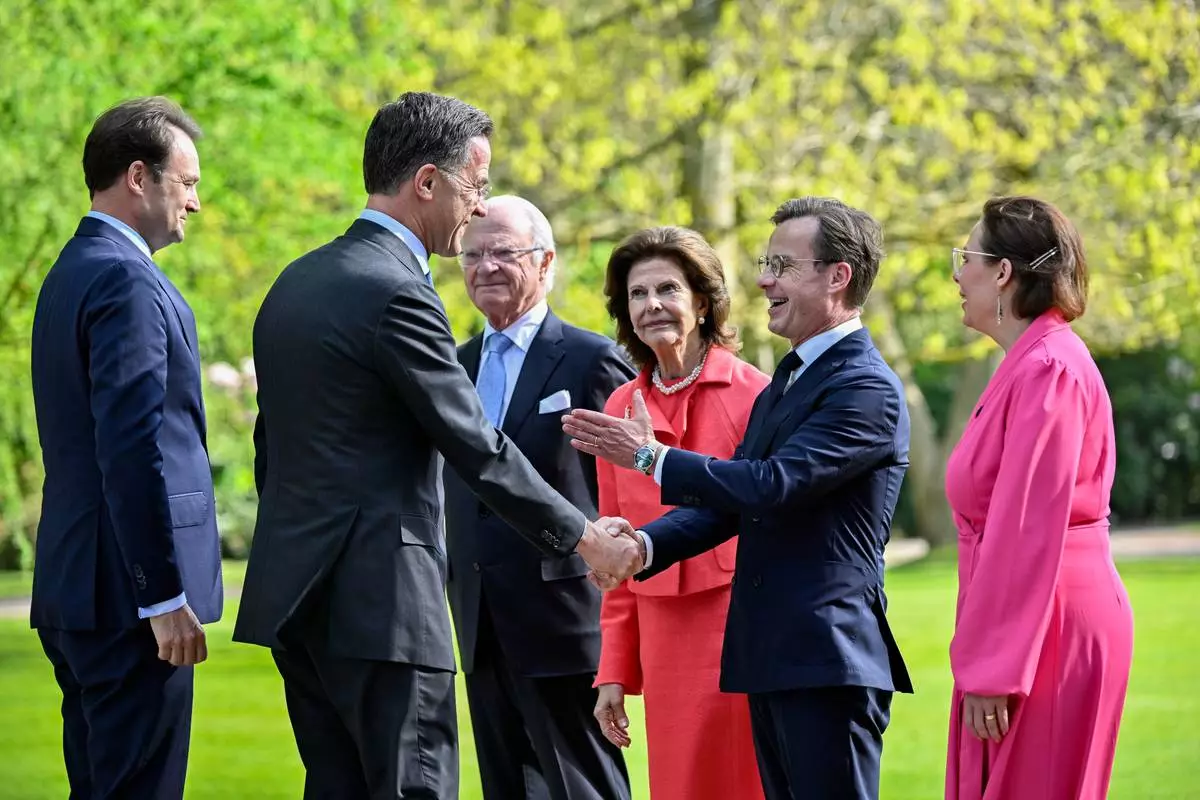
NATO Secretary General Mark Rutte, second from left, shakes hands with Prime Minister of Sweden Ulf Kristersson, as he is greeted by King Carl Gustaf of Sweden, Queen Silvia of Sweden and Minister for Foreign Affairs of Sweden Maria Malmer Stenergard, right, before a dinner at Sofiero Castle in Helsingborg, Sweden, Thursday May 21 2026. (Johan Nilsson/TT News Agency via AP)
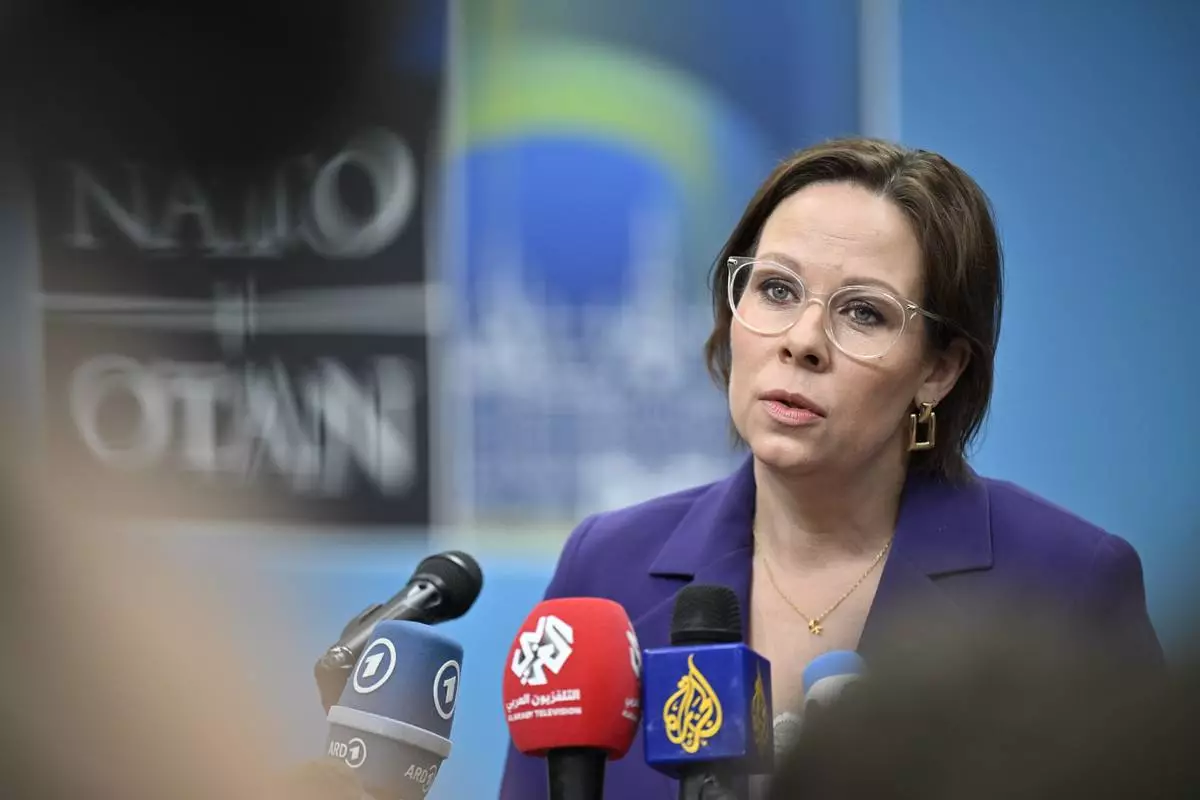
Swedish Foreign Minister Maria Malmer Stenergard speaks to media at the NATO Foreign Ministers' meeting in Helsingborg, Sweden, Friday, May 22, 2026. (Johan Nilsson/TT News Agency via AP)