NEW YORK (AP) — The musical world lost a giant with news Wednesday that Brian Wilson, the Beach Boys’ visionary and fragile leader, had died. He was 82.
Attempting to distill Wilson's talent and influence in a few short songs is an impossibility; even just focusing on a few select cuts from The Beach Boys' 1966 album “Pet Sounds," routinely regarded as one of the greatest albums of all time, would feel shortsighted. (Lest we forget, there is no Beatles' “Sgt. Pepper’s Lonely Hearts Club” without it, and countless other classics past and present.) Instead, to celebrate Wilson's life and legacy, we've decided to identify just a few songs that made the man, from the fiercely familiar to a few unexpected selections.
Read on and then listen to all of the tracks on our Spotify playlist.
The song of the summer in 1963 — heck, the song of any summer, ever — “Surfin' USA” at least partially introduced the group that would forever become synonymous with an image of eternal California bliss, where the sun always shines, the waves are always pristine, and paradise is a place on Earth. It's hard to imagine the beach existing before these wake-up riffs, the guitars that sparked a surf rock movement and then some. (Though it is important to mention that the song borrows heavily from Chuck Berry’s “Sweet Little Sixteen.") It's hard to think that surf music was once mostly just instrumental — even when Wilson and his cousin, fellow Beach Boy Mike Love, hastily wrote up their first single, “Surfin,’” a minor hit released in 1961.
Think of it as a response to The Ronettes' “Be My Baby.” The hot-rod hit “Don't Worry Baby” is the cheery B-side to “I Get Around," and has one of the most transformative key shifts in pop music history, from the man's perspective in the verse to the woman's response in the chorus. Brilliant!
Headphones on, stereo up. The Beach Boys' “California Girls” sounds massive. It is no doubt the result of Wilson's love and admiration for Phil Spector’s “Wall of Sound," which lead to the song's use of guitar, horns, percussion and organ as its overture. The song is a sunshine-y good time — and would later inspire Katy Perry's “California Gurls,” among countless others. But most importantly, the song establishes the band — and Wilson's own — larger-than-life aspirations, where pop music could be both avant-garde and built of earworms.
Wilson's voice is the first one heard on the Beach Boys' unimpeachable “Pet Sounds.” “Wouldn’t it be nice if we were older? / Then we wouldn’t have to wait so long,” he sweetly sings on the album's opener. “And wouldn’t it be nice to live together / In the kind of world where we belong?” Optimism and innocence are the name of the game, and the listener is the winner.
If Wilson must be known for one thing, let it be his inimitable sense of harmony, perfected across his craft and completely unignorable on “God Only Knows,” a masterclass in vocals, love, emotional depth, harpsichord and the intersection of all such forces.
“God Only Knows” is also one of Paul McCartney's favorite songs of all time, one known to bring him to tears.
What kind of vibrations? Good, good, GOOD vibrations. And at a cost. As the story goes, one of the Beach Boys’ best-known hits — and, arguably, one of the most immediately recognizable songs in rock ’n’ roll history — was recorded over seven months, in four different studios, reportedly costing up to $75,000. And it is an absolute masterpiece of theremin, cello, harmonica and so much more. Pop music has never been so ambitious — and successful.
“Heroes and Villains” might be one of the most complex songs in the Beach Boys' discography, and with good reason. It is the opener of “Smile,” what Wilson called a “teenage symphony to God,” a whimsical cycle of songs on nature and American folklore written with lyricist Van Dyke Parks. It was delayed, then canceled, then rerecorded and issued in September 1967 on “Smiley Smile,” dismissed by Carl Wilson as a “bunt instead of a grand slam.” In moments, “Heroes and Villains” is psychedelic, in others, it embodies an otherworldly barbershop quartet. It is off-kilter and clever, as Wilson's band so often proved to be.
The late '60s are an undercelebrated time in Wilson's creative oeuvre — no doubt an effect of his declining mental health — but there are many rich songs to dig into. Particularly, the soulful, R&B, Motown-esque harmonies of “Darlin'.”
As the story goes, “Don't Let Her Know She's an Angel” was originally record for his 1991 unreleased album “Sweet Insanity,” but did not officially appear until it was rerecorded for his 2004 album “Gettin’ in Over My Head.” The song features a bunch of programming, synths and percussion, which might strike Beach Boys fans as odd. But trust us, it works here.
This pick might come as a surprise for many fans. “Isn't It Time” is a cut from “That’s Why God Made the Radio," the album the legendary group put out to celebrate their 50th anniversary and left a lot to be desired. But within its filler, this song is undoubtedly catchy, with its ukulele and handclap percussion.
AP National Writer Hillel Italie contributed to this report.
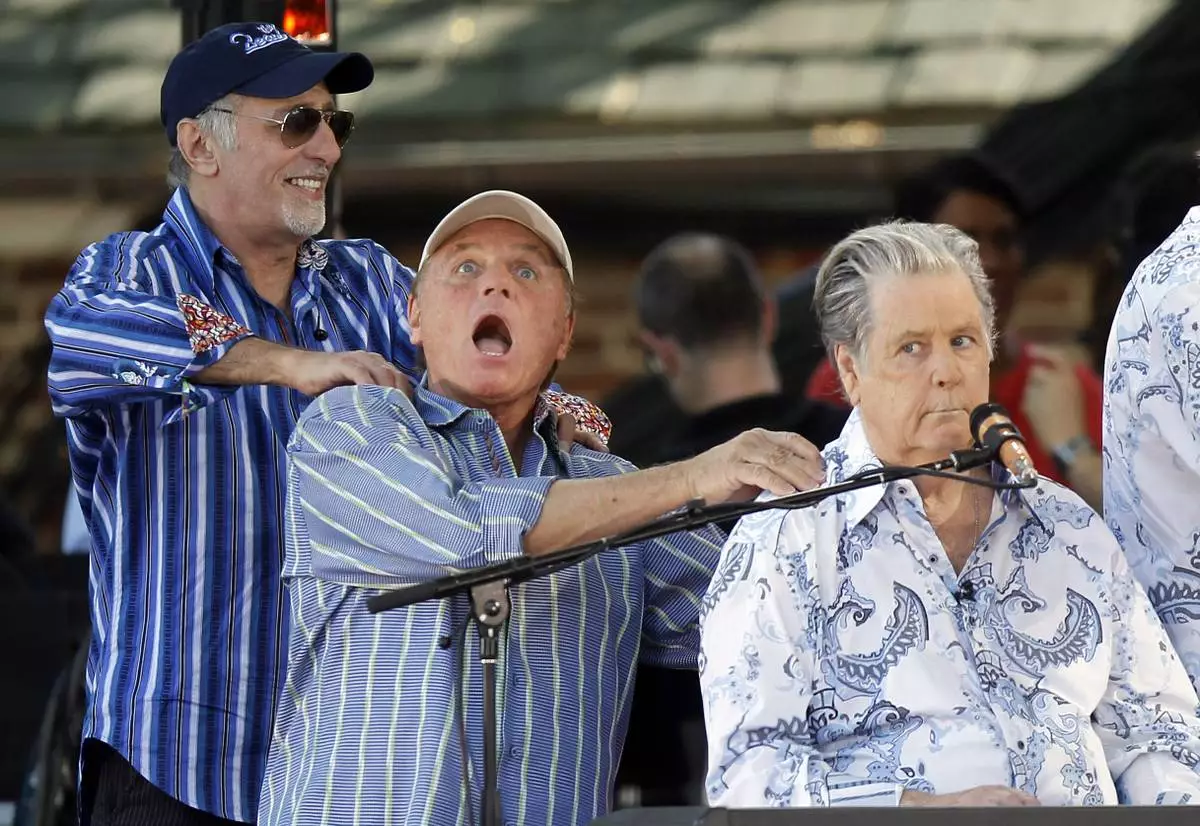
FILE - Original members of The Beach Boys, from left, David Marks, Bruce Johnston and Brian Wilson appear onstage during ABC's "Good Morning America" summer concert series, June 15, 2012, in New York. (Photo by Jason DeCrow/Invision/AP, File)
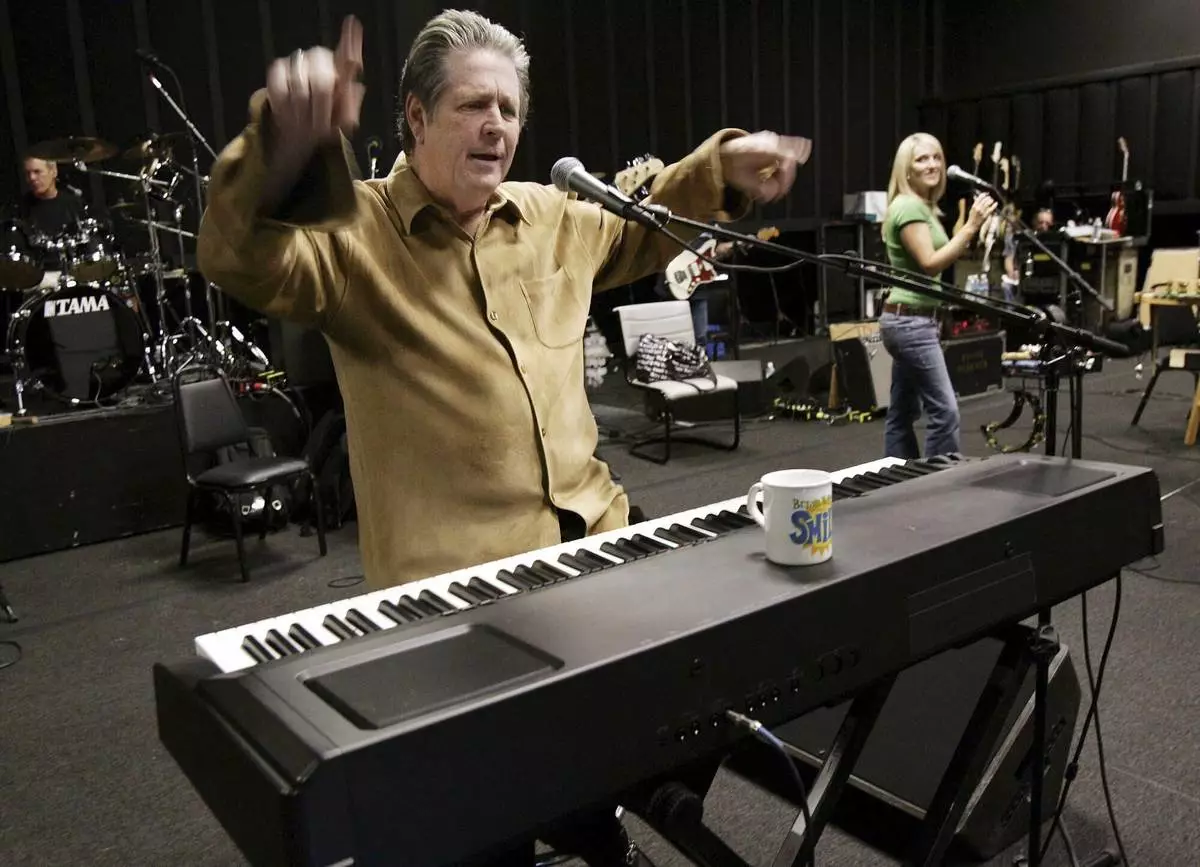
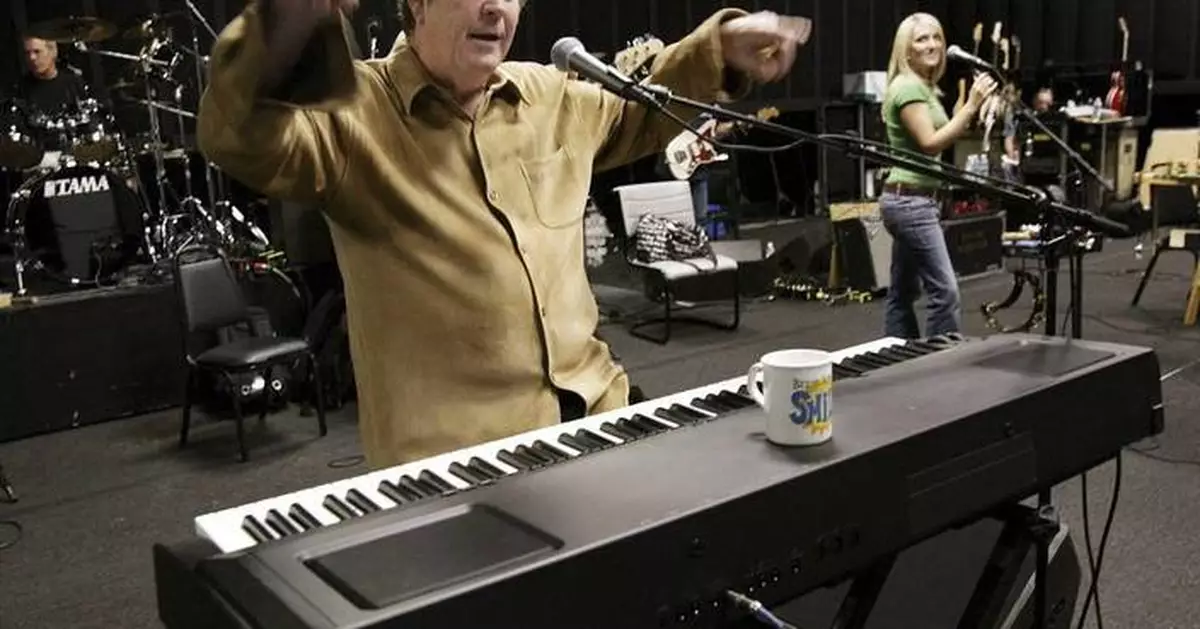
FILE - Brain Wilson, leader of The Beach Boys, performs the song "Heroes and Villains" during a rehearsal at a sound stage in Burbank, Calif., Sept. 22, 2004. (AP Photo/Kevork Djansezian, File)
MADRID (AP) — Venezuelans living in Spain are watching the events unfold back home with a mix of awe, joy and fear.
Some 600,000 Venezuelans live in Spain, home to the largest population anywhere outside the Americas. Many fled political persecution and violence but also the country’s collapsing economy.
A majority live in the capital, Madrid, working in hospitals, restaurants, cafes, nursing homes and elsewhere. While some Venezuelan migrants have established deep roots and lives in the Iberian nation, others have just arrived.
Here is what three of them had to say about the future of Venezuela since U.S. forces deposed Nicolás Maduro.
David Vallenilla woke up to text messages from a cousin on Jan. 3 informing him “that they invaded Venezuela.” The 65-year-old from Caracas lives alone in a tidy apartment in the south of Madrid with two Daschunds and a handful of birds. He was in disbelief.
“In that moment, I wanted certainty,” Vallenilla said, “certainty about what they were telling me.”
In June 2017, Vallenilla’s son, a 22-year-old nursing student in Caracas named David José, was shot point-blank by a Venezuelan soldier after taking part in a protest near a military air base in the capital. He later died from his injuries. Video footage of the incident was widely publicized, turning his son’s death into an emblematic case of the Maduro government’s repression against protesters that year.
After demanding answers for his son’s death, Vallenilla, too, started receiving threats and decided two years later to move to Spain with the help of a nongovernmental organization.
On the day of Maduro’s capture, Vallenilla said his phone was flooded with messages about his son.
“Many told me, ‘Now David will be resting in peace. David must be happy in heaven,’” he said. “But don't think it was easy: I spent the whole day crying.”
Vallenilla is watching the events in Venezuela unfold with skepticism but also hope. He fears more violence, but says he has hope the Trump administration can effect the change that Venezuelans like his son tried to obtain through elections, popular protests and international institutions.
“Nothing will bring back my son. But the fact that some justice has begun to be served for those responsible helps me see a light at the end of the tunnel. Besides, I also hope for a free Venezuela.”
Journalist Carleth Morales first came to Madrid a quarter-century ago when Hugo Chávez was reelected as Venezuela's president in 2000 under a new constitution.
The 54-year-old wanted to study and return home, taking a break of sorts in Madrid as she sensed a political and economic environment that was growing more and more challenging.
“I left with the intention of getting more qualified, of studying, and of returning because I understood that the country was going through a process of adaptation between what we had known before and, well, Chávez and his new policies," Morales said. "But I had no idea that we were going to reach the point we did.”
In 2015, Morales founded an organization of Venezuelan journalists in Spain, which today has hundreds of members.
The morning U.S. forces captured Maduro, Morales said she woke up to a barrage of missed calls from friends and family in Venezuela.
“Of course, we hope to recover a democratic country, a free country, a country where human rights are respected,” Morales said. “But it’s difficult to think that as a Venezuelan when we’ve lived through so many things and suffered so much.”
Morales sees it as unlikely that she would return home, having spent more than two decades in Spain, but she said she hopes her daughters can one day view Venezuela as a viable option.
“I once heard a colleague say, ‘I work for Venezuela so that my children will see it as a life opportunity.’ And I adopted that phrase as my own. So perhaps in a few years it won’t be me who enjoys a democratic Venezuela, but my daughters.”
For two weeks, Verónica Noya has waited for her phone to ring with the news that her husband and brother have been freed.
Noya’s husband, Venezuelan army Capt. Antonio Sequea, was imprisoned in 2020 after having taken part in a military incursion to oust Maduro. She said he remains in solitary confinement in the El Rodeo prison in Caracas. For 20 months, Noya has been unable to communicate with him or her brother, who was also arrested for taking part in the same plot.
“That’s when my nightmare began,” Noya said.
Venezuelan authorities have said hundreds of political prisoners have been released since Maduro's capture, while rights groups have said the real number is a fraction of that. Noya has waited in agony to hear anything about her four relatives, including her husband's mother, who remain imprisoned.
Meanwhile, she has struggled with what to tell her children when they ask about their father's whereabouts. They left Venezuela scrambling and decided to come to Spain because family roots in the country meant that Noya already had a Spanish passport.
Still, she hopes to return to her country.
“I’m Venezuelan above all else,” Noya said. “And I dream of seeing a newly democratic country."
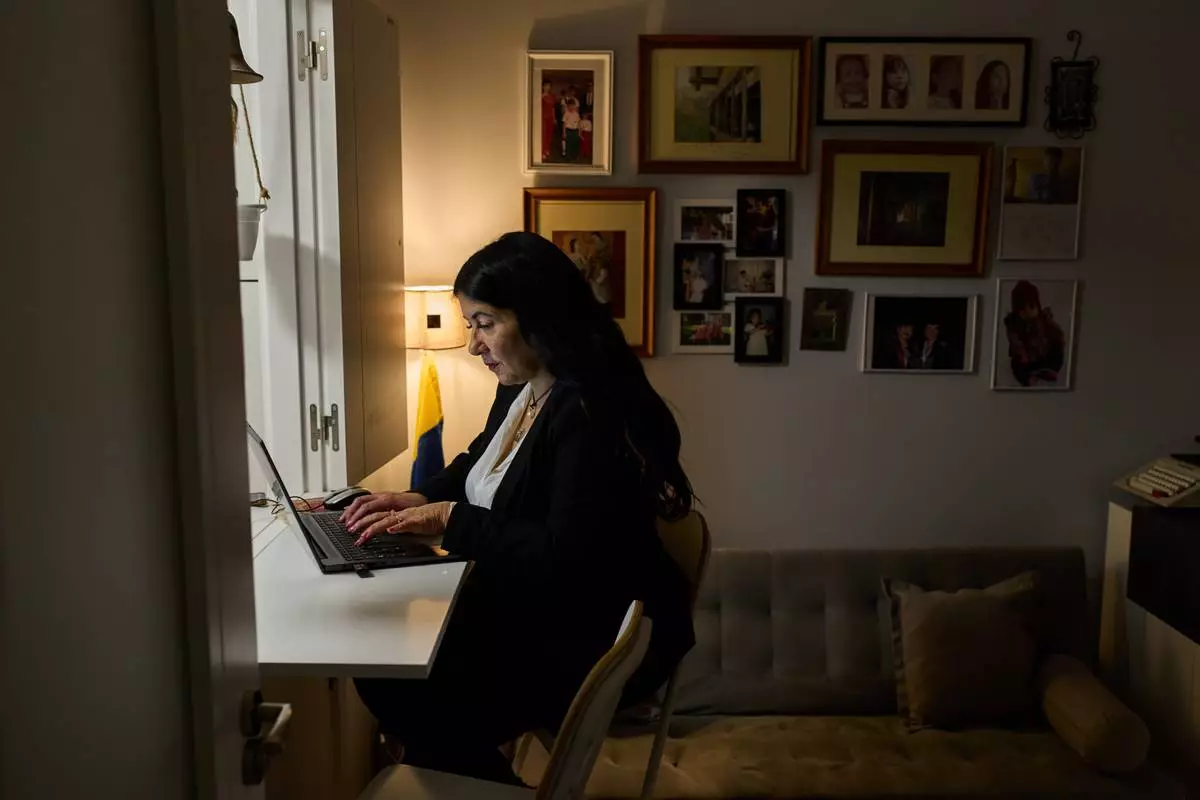
Venezuelan journalist Caleth Morales works in her apartment's kitchen in Madrid, Wednesday, Jan. 14, 2026. (AP Photo/Bernat Armangue)
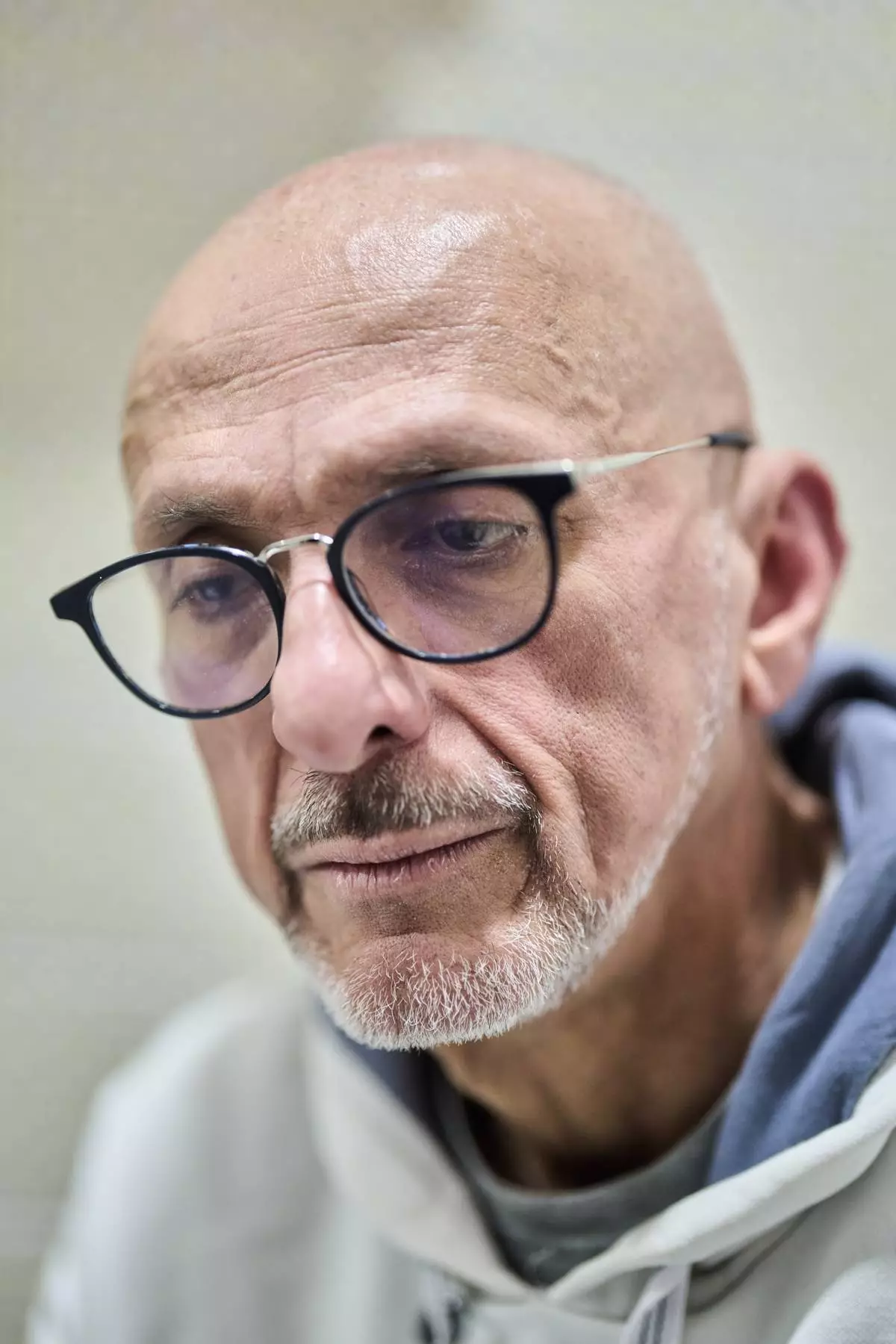
David Vallenilla, father of the late David José Vallenilla Luis, sits in his apartment's kitchen in Madrid, Tuesday, Jan. 13, 2026. (AP Photo/Bernat Armangue)
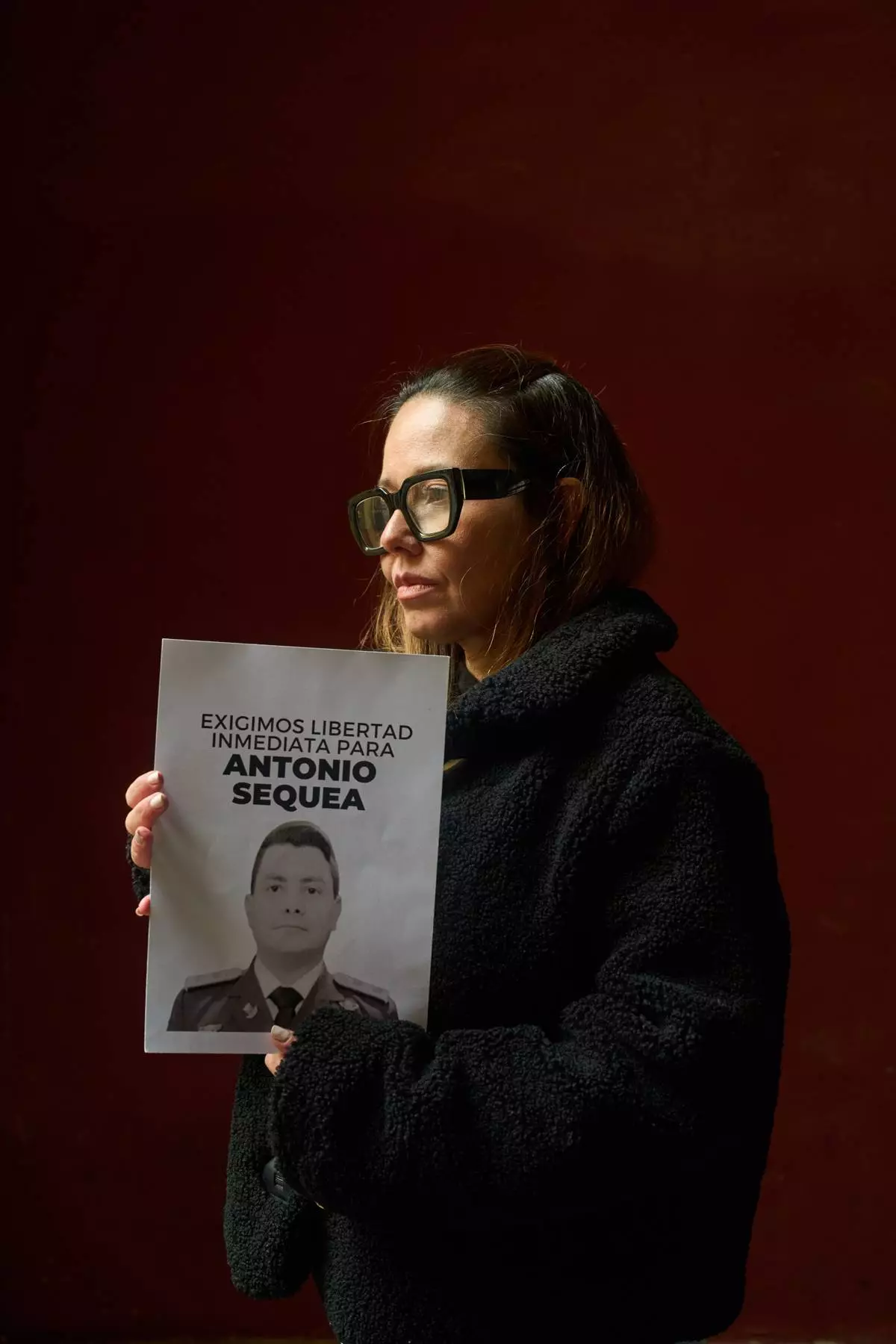
Veronica Noya holds a picture of her husband Antonio Sequea in Madrid, Thursday, Jan. 15, 2026. (AP Photo/Bernat Armangue)
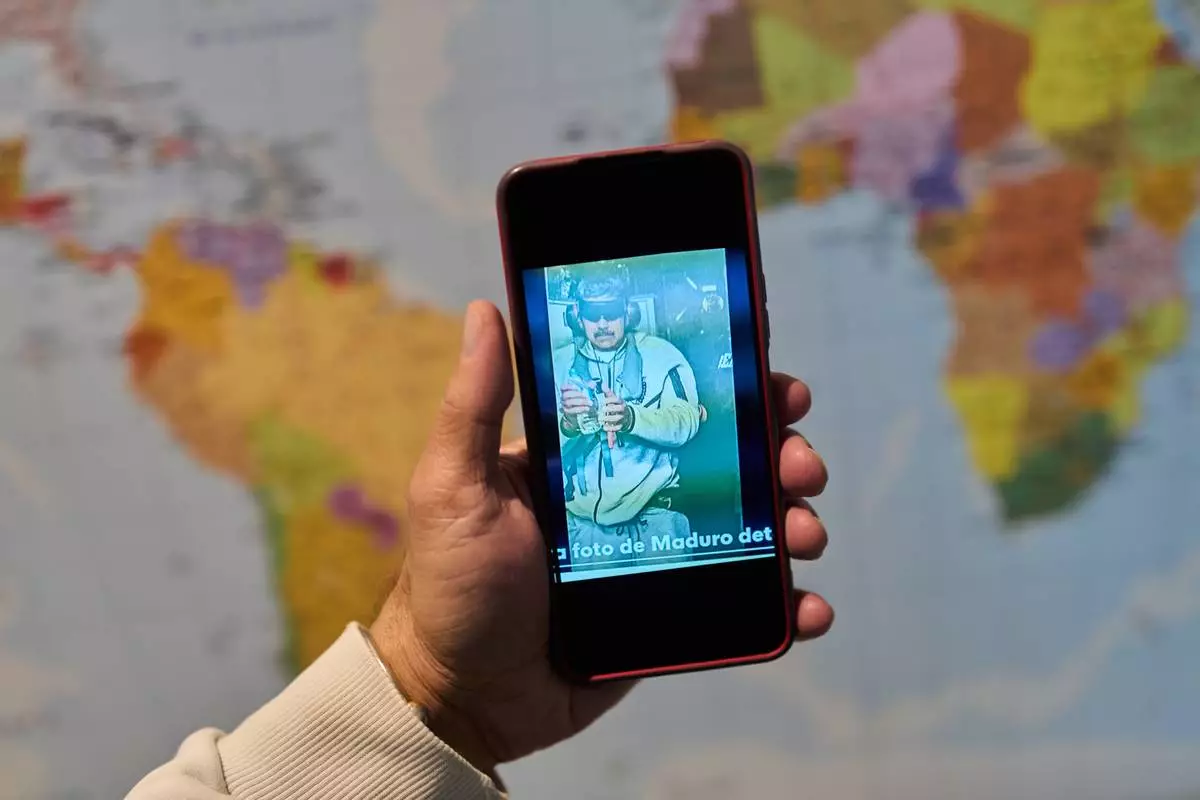
David Vallenilla holds a picture of deposed President Nicolas Maduro, blindfolded and handcuffed, during an interview with The Associated Press at his home in Madrid, Tuesday, Jan. 13, 2026. (AP Photo/Bernat Armangue)
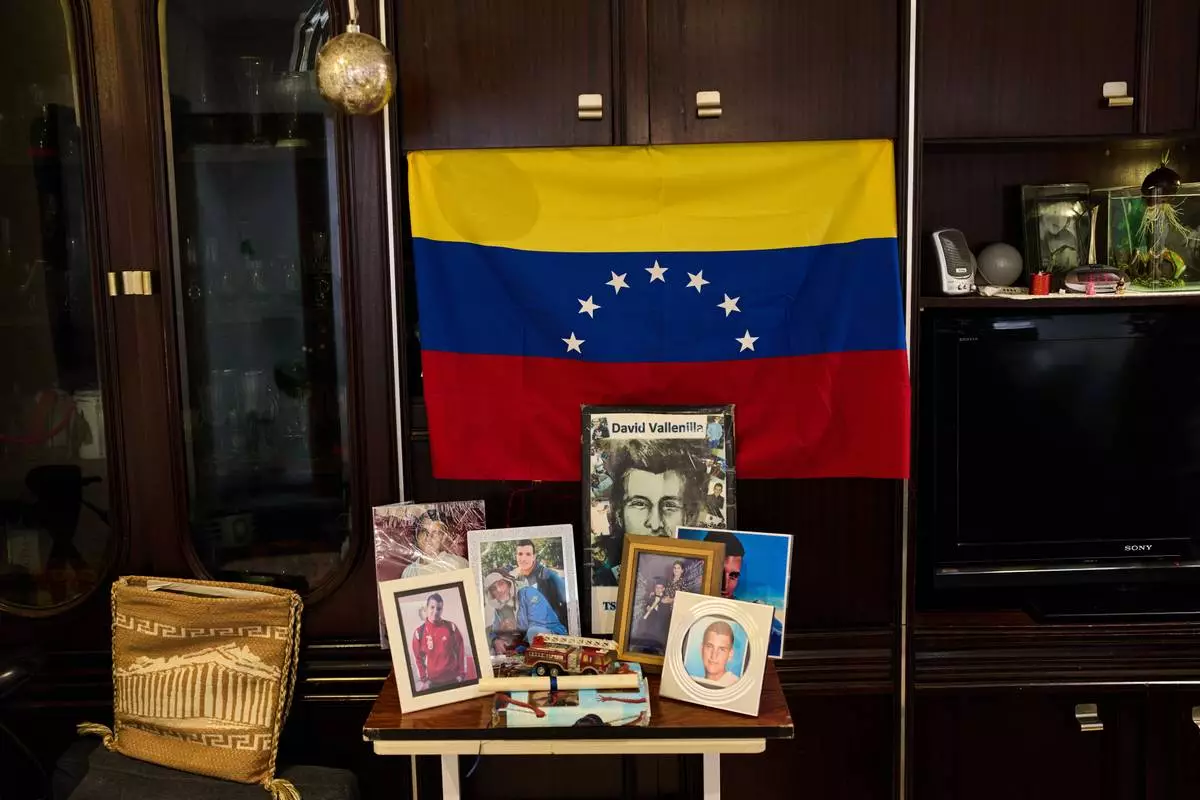
Pictures of the late David José Vallenilla Luis are placed in the living room of his father, David José Vallenilla, in Madrid, Tuesday, Jan. 13, 2026. (AP Photo/Bernat Armangue)