The southern Chinese city of Shenzhen is set to deepen coordinated reforms across key sectors, including the economy, education, science and technology, and talent, according to a press briefing held by the State Council Information Office on Thursday.
Officials from the National Development and Reform Commission (NDRC), the country's top economic planner, and the Shenzhen municipal government elaborated on a set of guidelines issued Tuesday by the general offices of the Communist Party of China Central Committee and the State Council.
The guidelines introduce a new batch of reform measures to dismantle institutional barriers in education, sci-tech, and talent development. They call for closer integration of innovation, industrial, capital, and talent chains while exploring new models and platforms for cooperation within the Guangdong-Hong Kong-Macao Greater Bay Area (GBA), to shape Shenzhen into a globally oriented, innovation-driven city.
"The guidelines support joint efforts between universities and enterprises to train well-rounded engineering talent, and promote deeper integration of vocational training with the upgrading of advanced manufacturing clusters. The guidelines also allow eligible GBA-based firms, which have already been registered on the Chinese mainland and already listed on the Stock Exchange of Hong Kong, to list on the Shenzhen Stock Exchange," said Li Chunlin, deputy director of the NDRC.
The guidelines also roll out several measures to explore future-looking outcomes in emerging areas such as artificial intelligence and the low-altitude economy.
"[Shenzhen] will explore new reform paths in areas like AI-assisted medical devices and low-altitude airspace management. The city will also push forward full-scenario, full-domain, round-the-clock AI applications across industries, while expanding low-altitude economy scenarios in logistics, sightseeing, emergency response, agricultural services, and so on," said Qin Weizhong, mayor of Shenzhen.
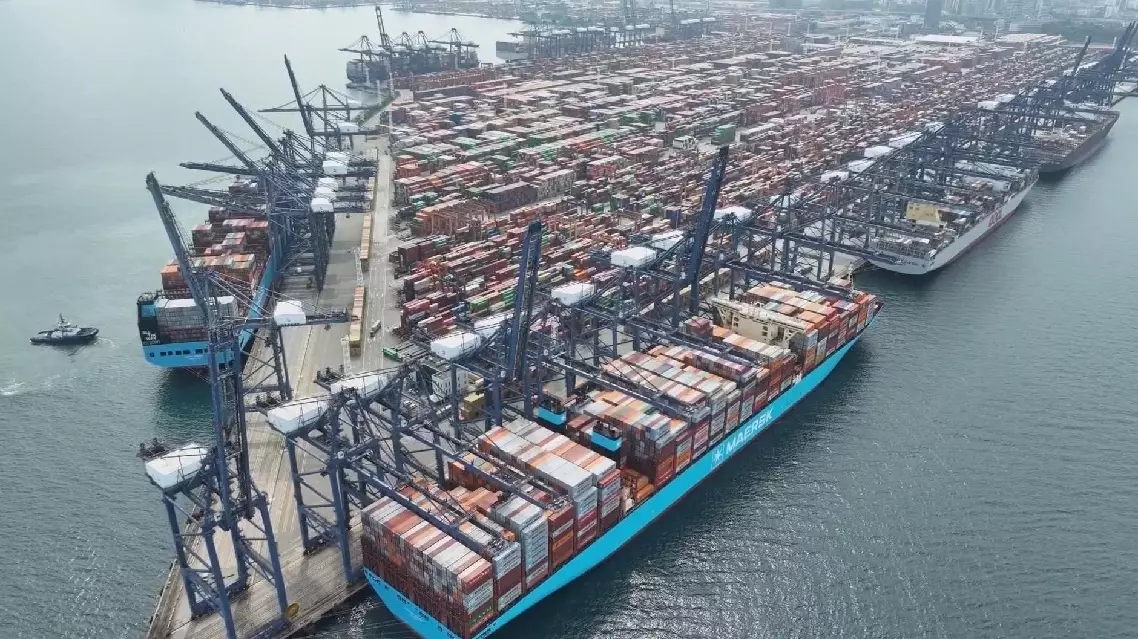
Shenzhen is one of China's earliest special economic zones, spearheading the country's reform and opening-up policy over the last 47 years. It has transformed from a paddy rice border town into an influential metropolis and global technology hub.
Shenzhen to drive coordinated reform in economy, education, sci-tech, talent
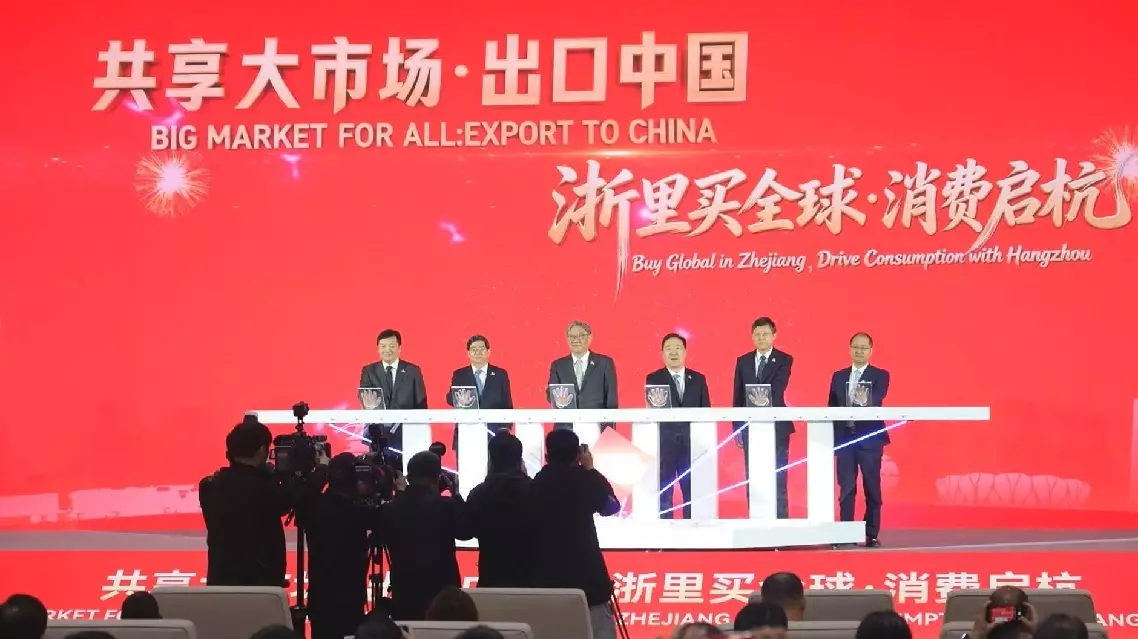
China launched the second event of its 2026 "Big Market for All: Export to China" campaign in Hangzhou City of east China's Zhejiang on Sunday, as part of the country's broader push to expand imports and tap the purchasing power of its vast consumer market.
The three-day event, co-hosted by China's Ministry of Commerce and the People's Government of Zhejiang Province, is bringing together global brands, importers and consumers under one roof.
Minister of Commerce Wang Wentao attended the launch ceremony of the event and delivered an address.
More than 1,000 imported products are on display, from food and consumer goods to advanced industrial components.
The campaign aims to turn China's massive market into a gateway for global products, according to officials.
"The event highlights China's determination to independently expand unilateral and self-reliant opening-up. It is also China's active response to the needs of its global trading partners and our practical step to work together with them to grow the pie of international trade," said Xiao Lu, deputy director of the Department of Foreign Trade at the Ministry of Commerce.
Nearly 100 import-focused companies are taking part, showcasing products and exploring opportunities in China's fast-growing consumer market.
"We have selected popular product choices favored by Chinese tourists who have visited Egypt," said Cao Kezhen, chief representative for China at the CHIMENA (China-India-Middle East-North Africa) Business Council.
Starting from May 1, 2026, China will fully implement zero-tariff treatment for 53 African countries that have established diplomatic relations with China, so many Egyptian businesses are eager to explore the Chinese market, Cao said.
New technologies are also helping bring overseas products closer to Chinese consumers.
"In recent years, China has introduced a range of policies to encourage imports. These measures allow Chinese consumers to buy quality products from around the world at competitive prices through cross-border e-commerce. Going forward, we plan to shift more focus onto the development of a digital supply chain from the traditional supply chain, customs declaration and inspection, logistics, warehousing and distribution," said Shan Li, chairman of High Store Tech, a supply chain service provider for global brands.
Sunday's event followed the inaugural gathering, which took place under the same theme in the national capital Beijing in February.
China launches event in Hangzhou to expand imports, boost consumption