INSIDE A TEXAS HAILSTORM (AP) — Wind roared against the SUV's windows as its tires sloshed through water dumped onto the road by the downpour. A horizon-wide funnel cloud loomed out the window, several miles away. Then came the loud metallic pings on the roof. First one, then another. Then it was too fast to count and too loud to hear much of anything else.
Hailstones were pelting down, and the car was driving toward them.
Click to Gallery

Storm clouds form during a Project ICECHIP operation Friday, June 6, 2025, in Morton, Texas. (AP Photo/Carolyn Kaster)

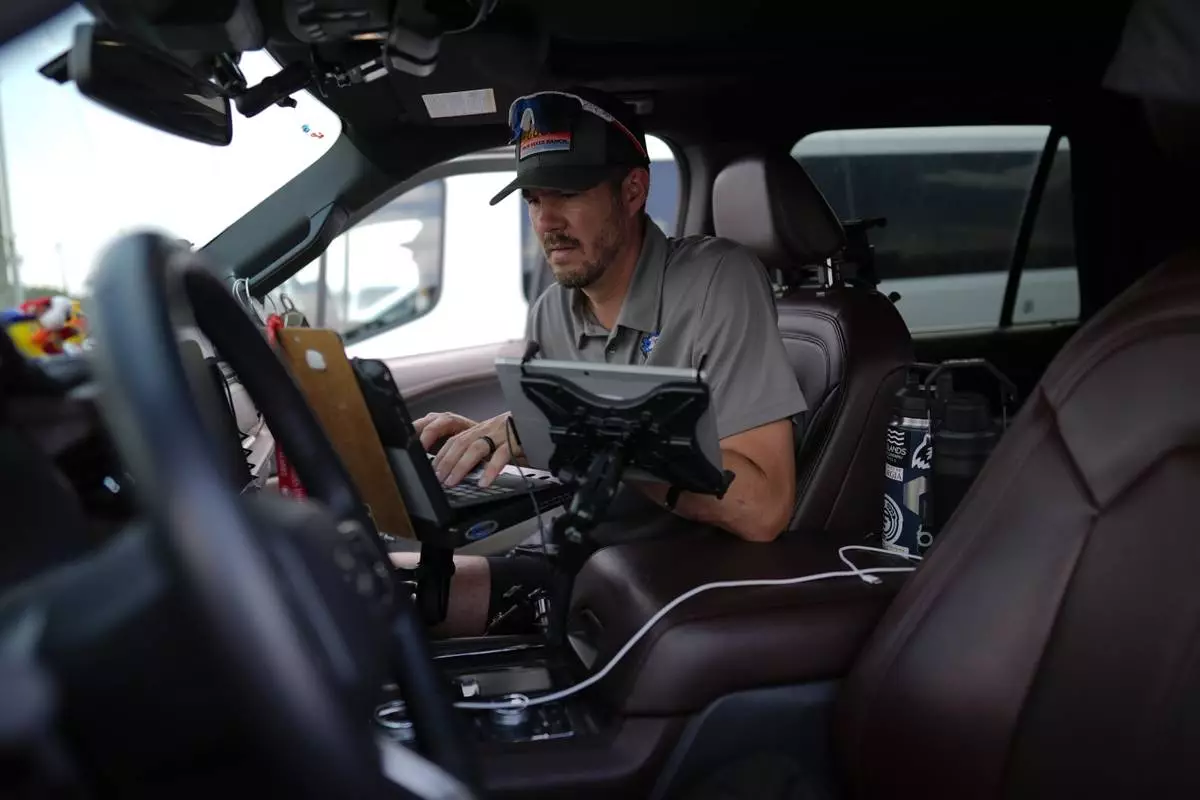
Victor Gensini, Northern Illinois University meteorology professor and a lead scientist of Project ICECHIP, works on a laptop in the command vehicle as members of Project ICECHIP stage at a Valero gas station Thursday, June 5, 2025, in Brownfield, Texas. (AP Photo/Carolyn Kaster)

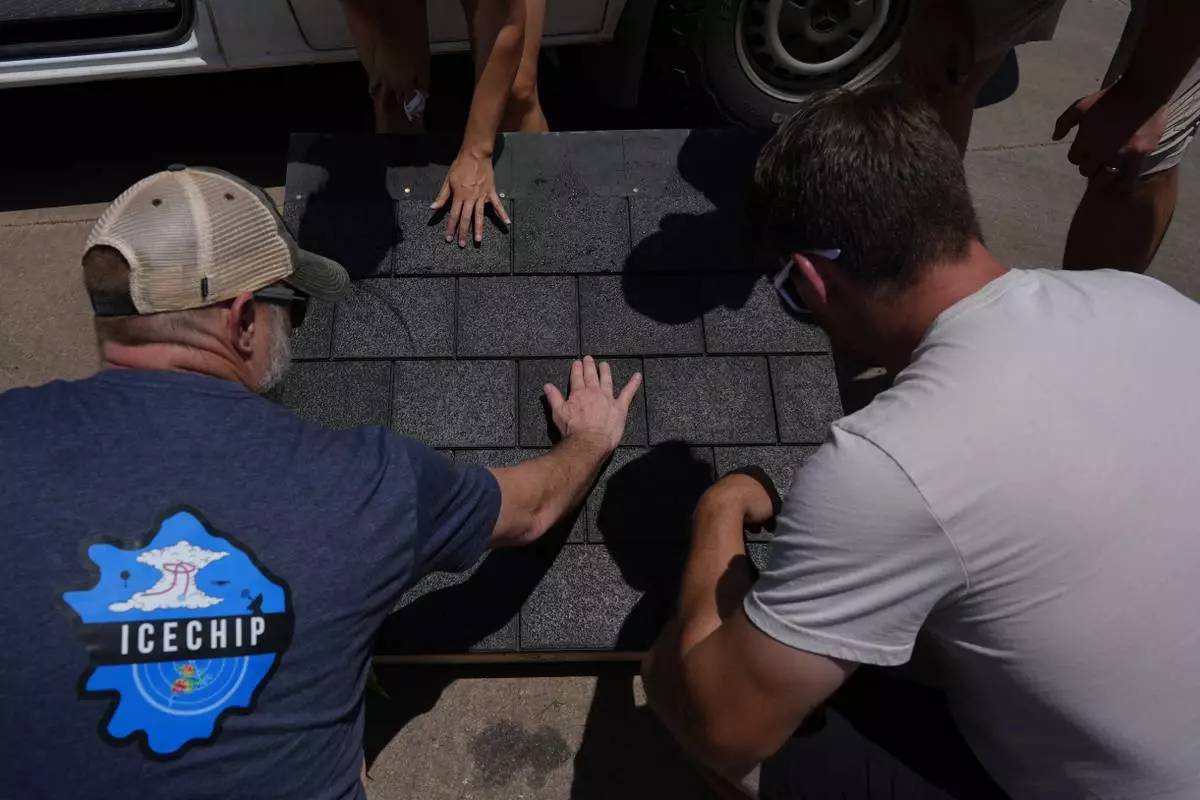
Members of Project ICECHIP inspect shingles for hail damage during an operation Friday, June 6, 2025, in Morton, Texas. (AP Photo/Carolyn Kaster)

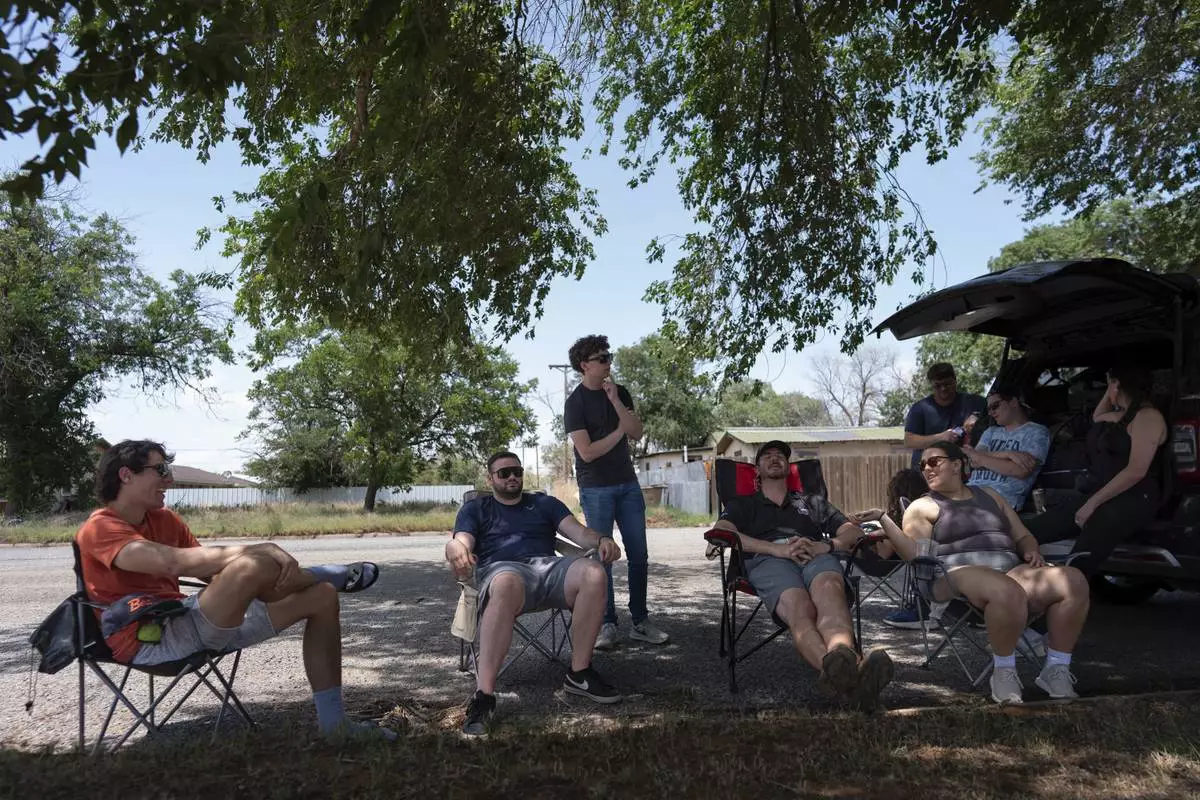
Project ICECHIP members, from left, Ethan Mok, Logan Bundy, Nathan Sonntag, Victor Gensini and Katie Wargowsky sit in chairs next to the command vehicle waiting for storms to develop Friday, June 6, 2025, in Morton, Texas. (AP Photo/Carolyn Kaster)
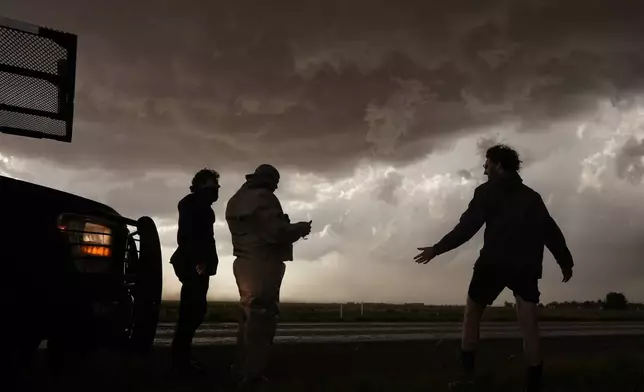
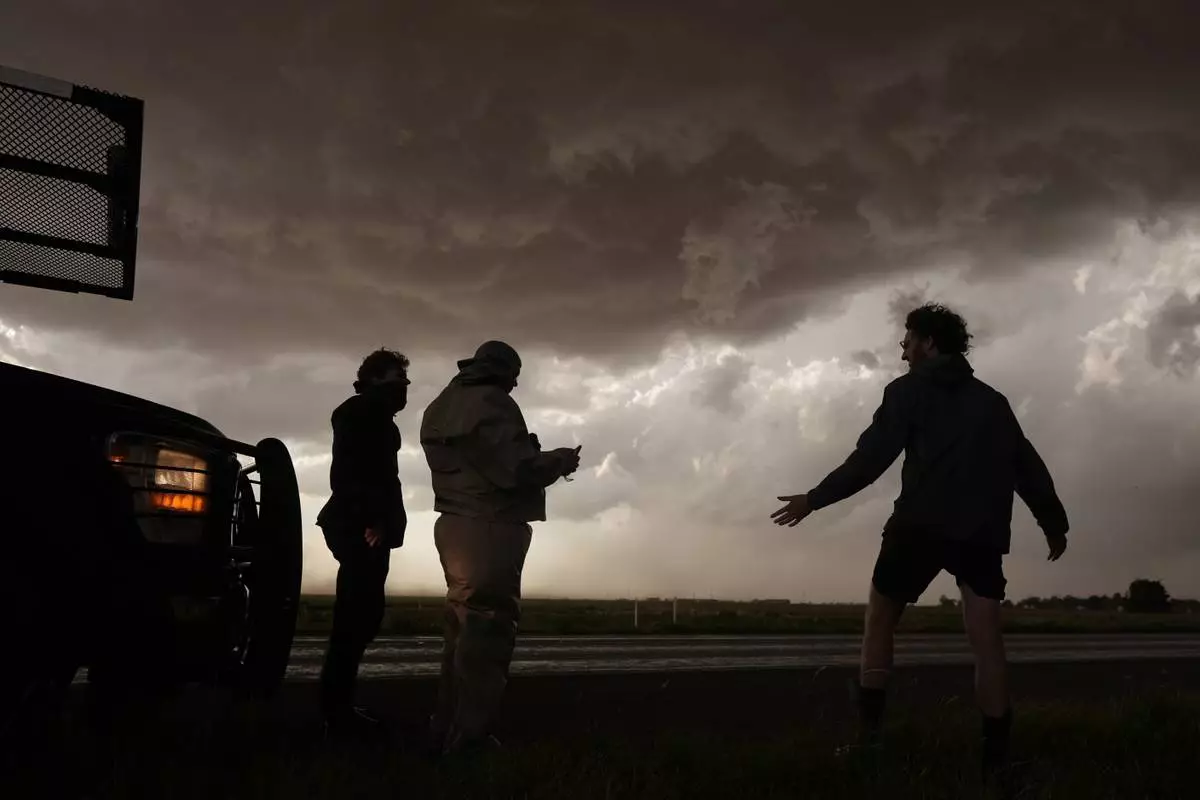
Joey Toniolo, from left, Tim Marshall and Tony Illenden stand next to Northern Illinois University's Husky Hail Hunter as storm clouds gather during a Project ICECHIP operation Friday, June 6, 2025, in Meadow, Texas. (AP Photo/Carolyn Kaster)

Northern Illinois University's Husky Hail Hunter is silhouetted near Lubbock, Texas, Friday, June 6, 2025, during a Project ICECHIP operation. (AP Photo/Carolyn Kaster)

A weather balloon soars in the sky that was released by members of Project ICECHIP's black team to collect data Friday, June 6, 2025, in Morton, Texas. (AP Photo/Carolyn Kaster)
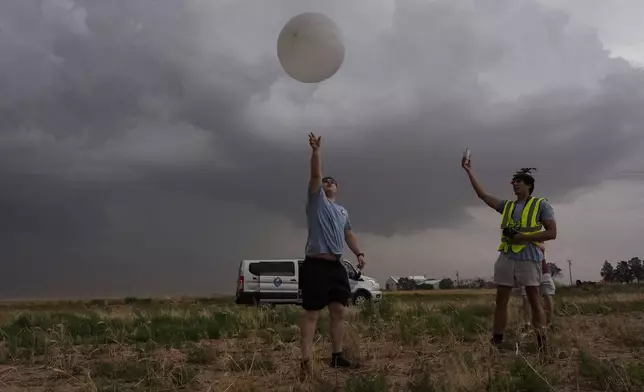
Red team and Project ICECHIP members Wyatt Ficek, left, and Ethan Mok, right, release a latex weather balloon with an attached instrument called a windsond into the inflow region of a storm to collect data during a Project ICECHIP operation Thursday, June 5, 2025, near Morton, Texas. (AP Photo/Carolyn Kaster)
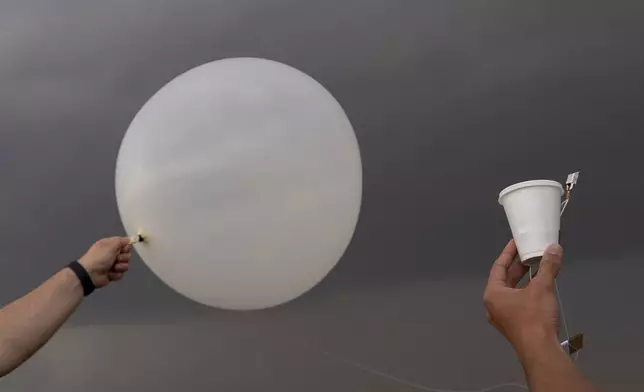
Red team and Project ICECHIP members Wyatt Ficek, left, and Ethan Mok, right, release a latex weather balloon with an attached instrument called a windsond into the inflow region of a storm to collect data during a Project ICECHIP operation Thursday, June 5, 2025, near Morton, Texas. (AP Photo/Carolyn Kaster)
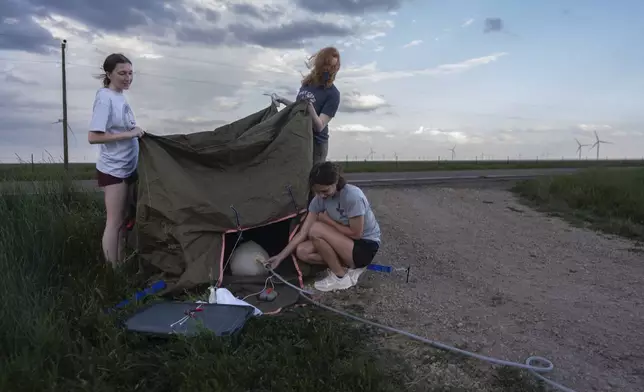
Project ICECHIP members from Northern Illinois University on the black team including Evelynn Mantia, left, and Olivena Carlisle, lower right, inflate a weather balloon with a radiosonde attached to collect data Wednesday, June 4, 2025, in Tucumcari, N.M. (AP Photo/Carolyn Kaster)
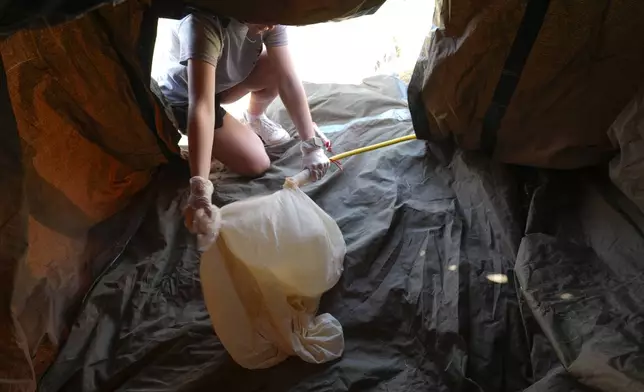
Project ICECHIP member and Central Michigan University student Jeanette Cavin inflates a weather balloon in a protective shelter to launch a radiosonde to collect data Wednesday, June 4, 2025, in Tucumcari, N.M. (AP Photo/Carolyn Kaster)
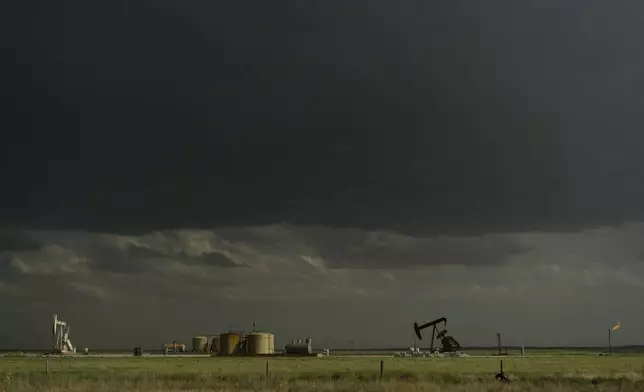
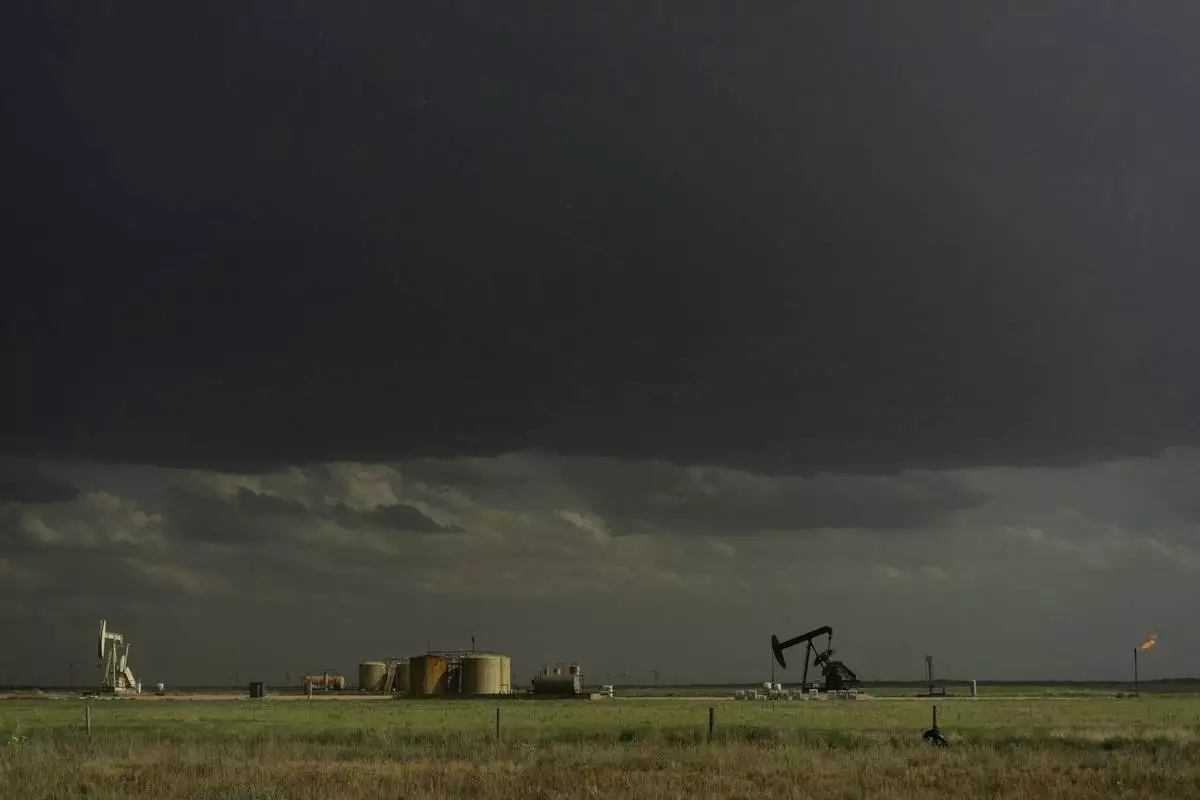
Pumpjacks operate during a Project ICECHIP operation Friday, June 6, 2025, near Levelland, Texas. (AP Photo/Carolyn Kaster)
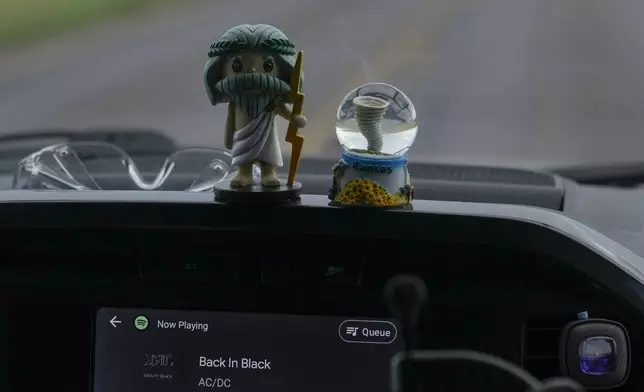
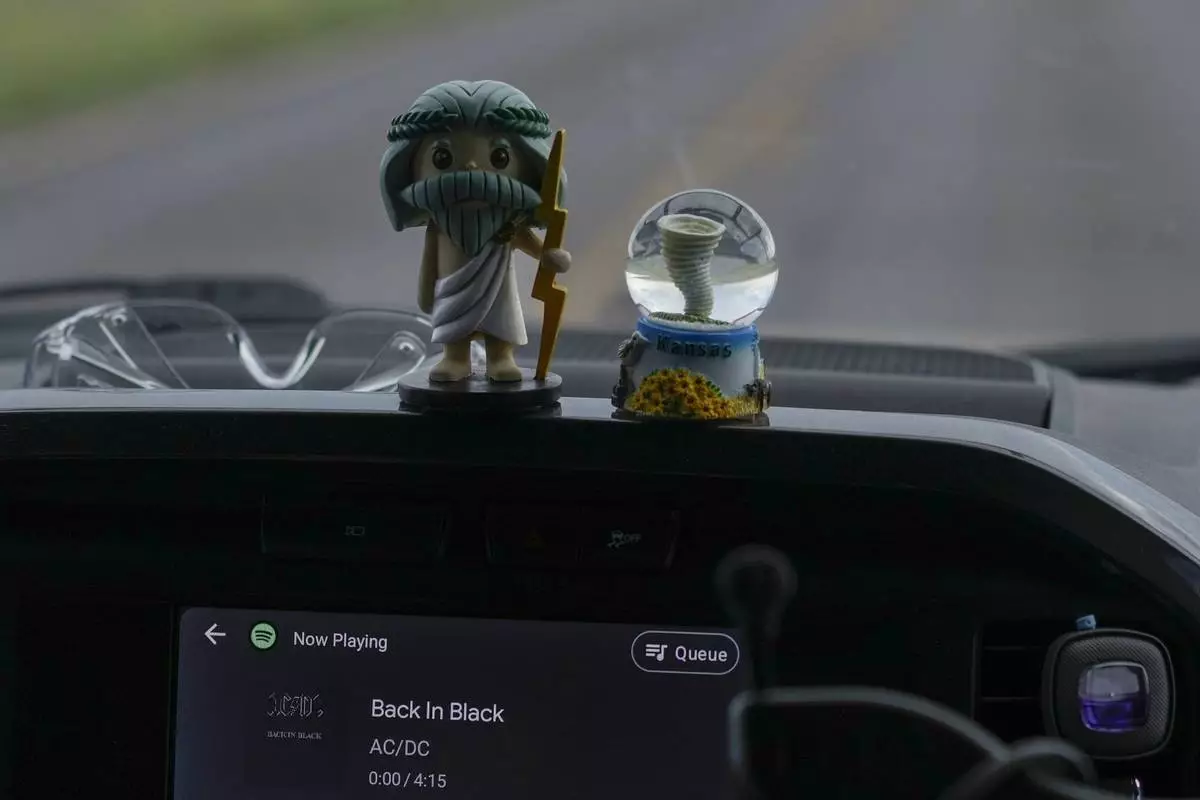
Dashboard mascots Zeus, left, and Tor, right, sit in a car as AC/DC's “Back in Black” plays on the stereo in Northern Illinois University's Husky Hail Hunter vehicle, as they drive into a storm during a Project ICECHIP operation, Friday, June 6, 2025, near Levelland, Texas. (AP Photo/Carolyn Kaster)

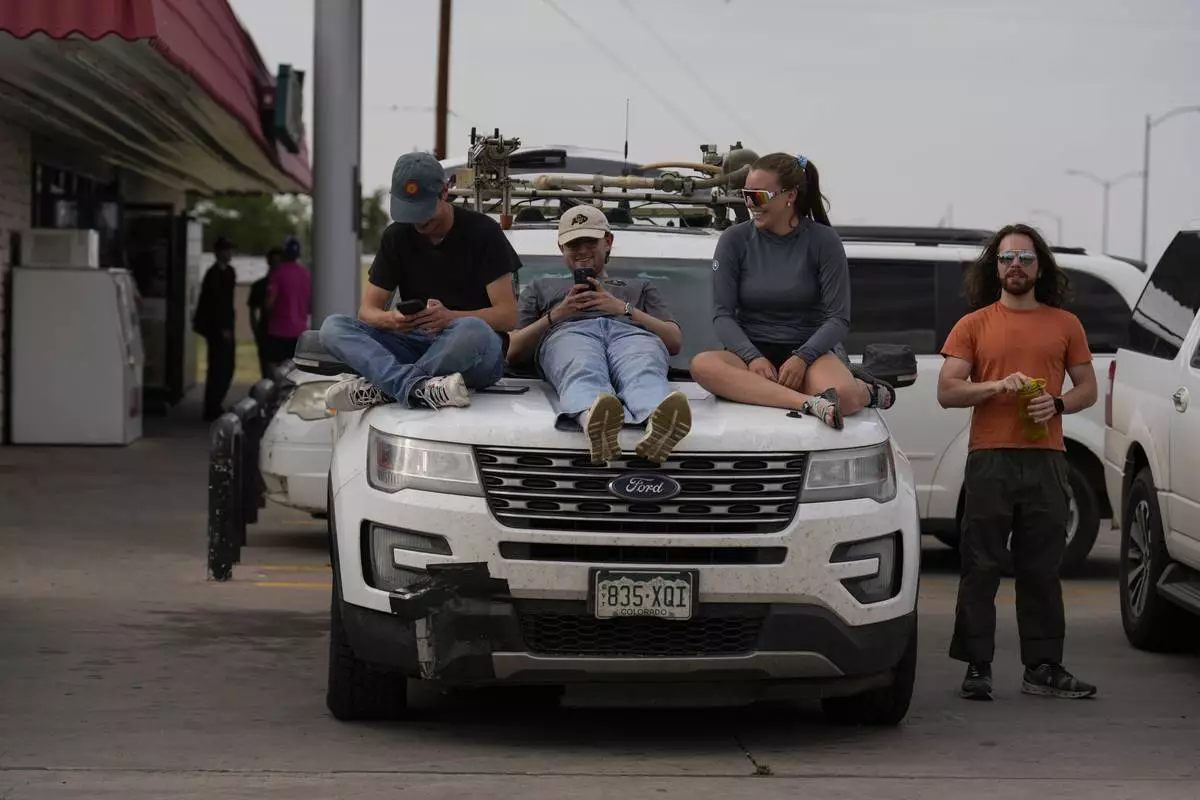
Integrated Remote & In-Situ Sensing (IRISS) lab out of the University of Colorado Boulder and Project ICECHIP members, from left, Céu Gomez-Faulk, Ryan Downey, Madison Ritsch and Andrew Mord sit atop what they call "Tracker One" in the Allsup's Convenience Store parking lot waiting for a storm, Wednesday, June 4, 2025, in Tucumcari, N.M. (AP Photo/Carolyn Kaster)
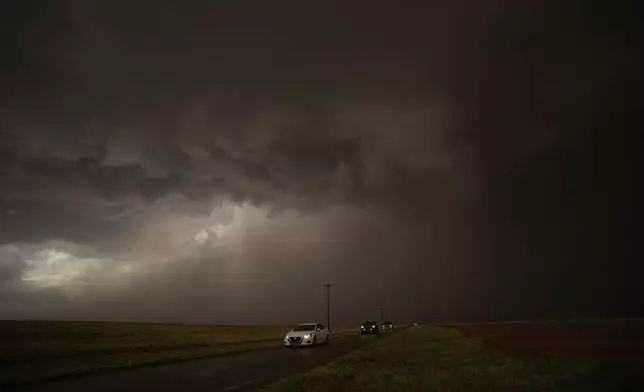
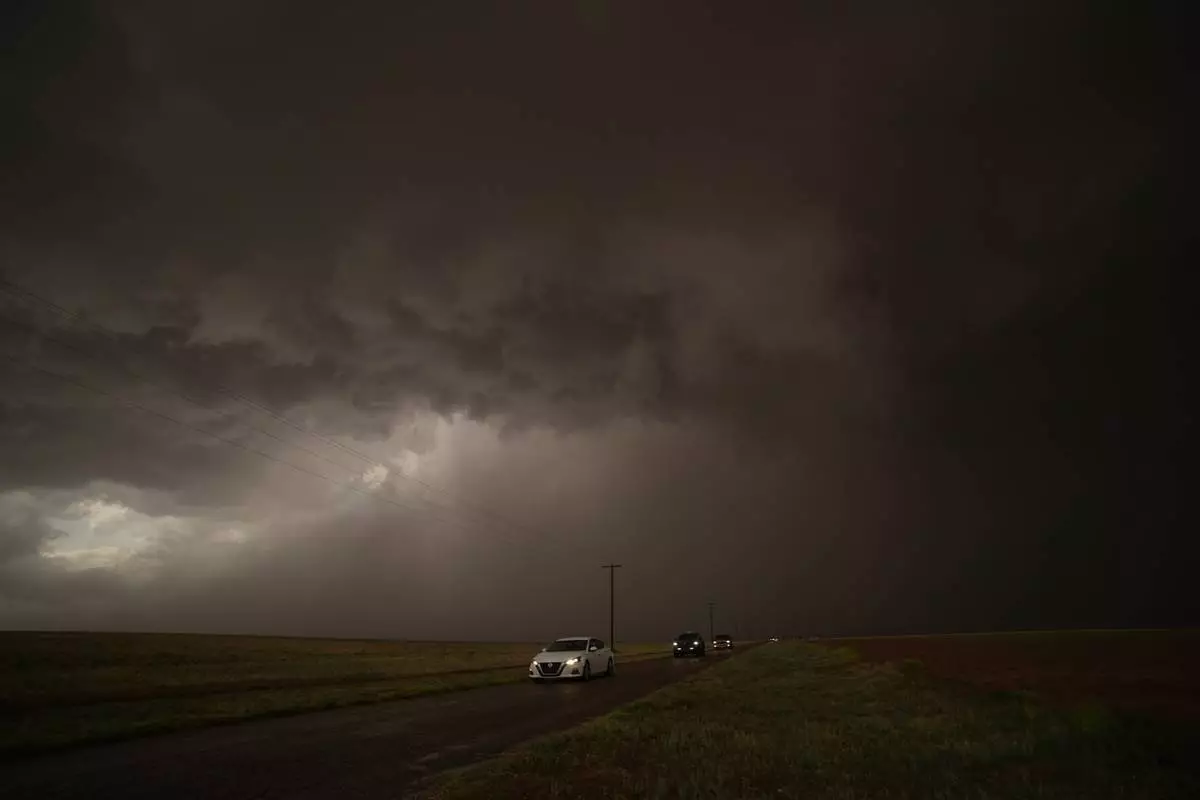
Cars dive away from a storm during a Project ICECHIP operation Thursday, June 5, 2025, in Morton, Texas. (AP Photo/Carolyn Kaster)
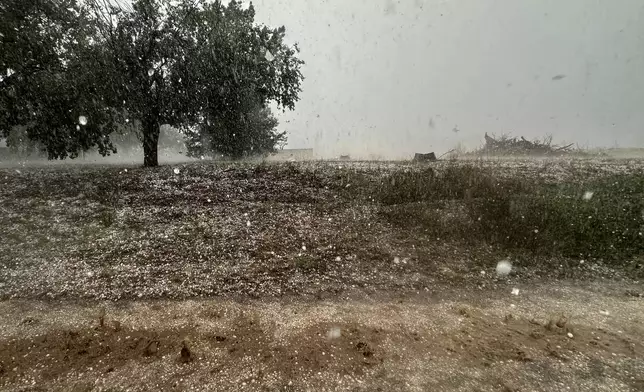
A hailstorm is visible from Northern Illinois University's Husky Hail Hunter vehicle during a Project ICECHIP operation Friday, June 6, 2025, in Levelland, Texas. (AP Photo/Carolyn Kaster)
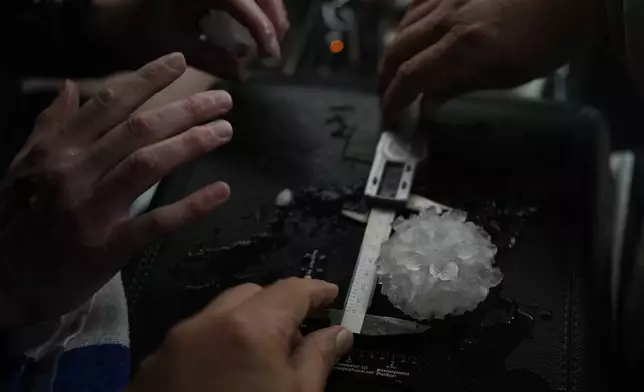
Tony Illenden, left, and Tim Marshall measure a large hail shaped like a rose between the front seats of Northern Illinois University's Husky Hail Hunter vehicle during a Project ICECHIP operation Friday, June 6, 2025, in Morton, Texas. (AP Photo/Carolyn Kaster)
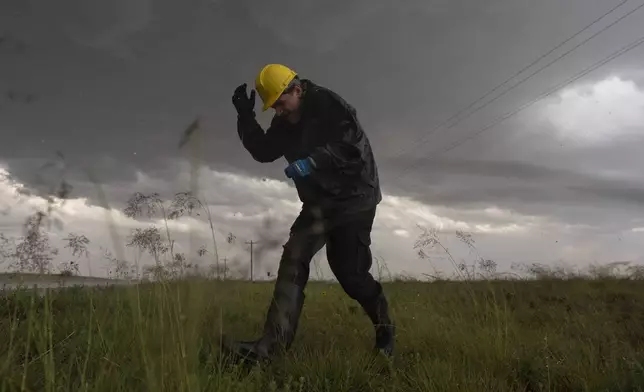
Joey Toniolo ducks from falling hail as he moves back to Northern Illinois University's Husky Hail Hunter vehicle during a Project ICECHIP operation Friday, June 6, 2025, in Morton, Texas. (AP Photo/Carolyn Kaster)
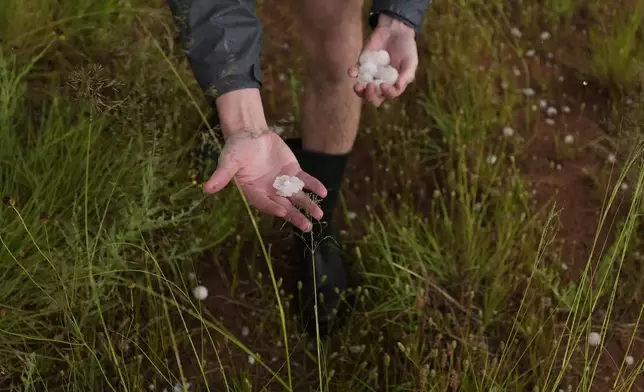
Tony Illenden, a member of Northern Illinois University's Husky Hail Hunter team, picks up hail during a Project ICECHIP operation Friday, June 6, 2025, near Morton, Texas. (AP Photo/Carolyn Kaster)
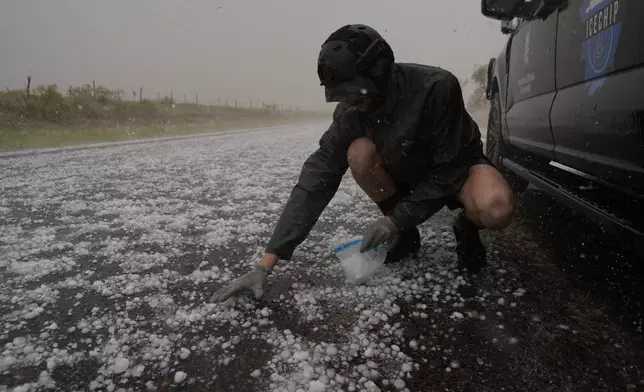
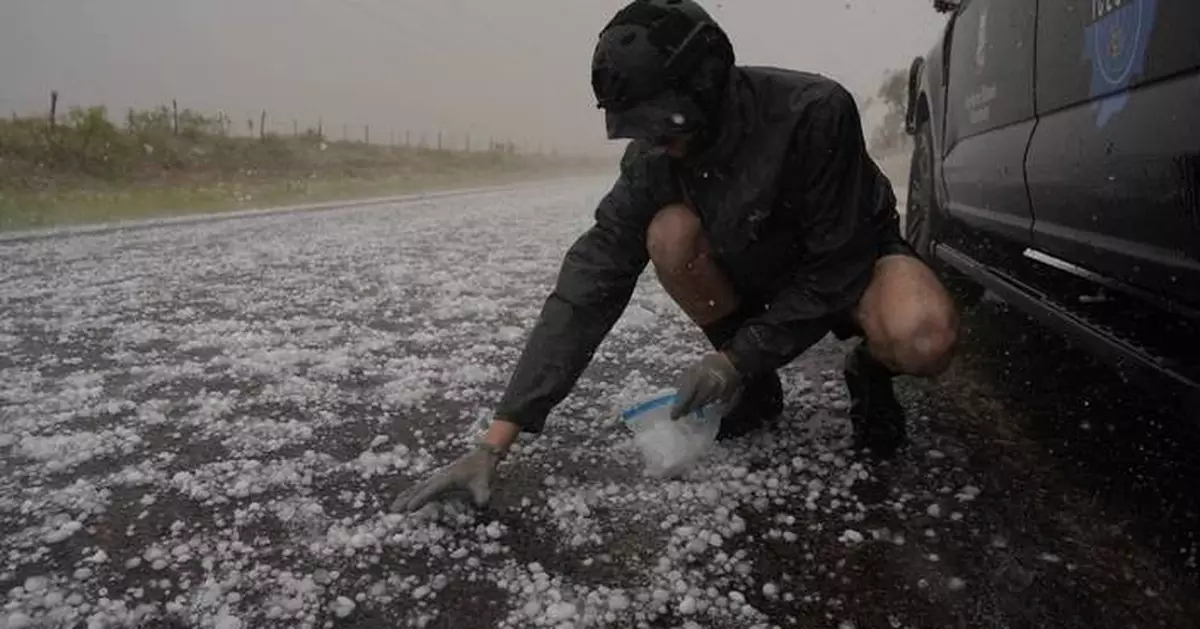
Tony Illenden crouches in a helmet and gloves outside Northern Illinois University's Husky Hail Hunter vehicle to scoop hail into a bag during a storm while on a Project ICECHIP operation Friday, June 6, 2025, in Levelland, Texas. (AP Photo/Carolyn Kaster)
“How big are they?” meteorology professor Kelly Lombardo asked from the passenger seat.
“Probably no more than a nickel or dime, but they’re just flowing at 50 mph,” said fellow researcher Matthew Kumjian as he steered through the flooded road.
Lombardo and Kumjian are part of a team of about 60 researchers chasing hail across the Great Plains to better forecast an underappreciated hazard that causes about $10 billion a year in damage in the U.S. The researchers brought along three Associated Press journalists to observe the first-of-its kind project called ICECHIP, including trips into the heart of the storms in fortified vehicles like the one driven by Kumjian.
The payoff is data that could improve hail forecasts. Knowing what’s going on inside a storm is crucial to knowing what’s going to happen to people in its path, meteorologists said.
“We have a really tough time forecasting hail size,” said Northern Illinois University meteorology professor Victor Gensini, one of the project leaders. “All scientific experiments start with data gathering, and without that data we don’t know what we’re missing. And so that’s what this project is all about.”
On this afternoon, Lombardo and Kumjian, Penn State University professors who are married to each other, were negotiating rapid weather changes while collecting their data.
Minutes before the hail started, the couple were launching three-foot wide weather balloons designed to give scientists a glimpse of what’s happening in the leading edge of the storm. A tornado in the distance was slowly getting closer.
Soon cell phones blared tornado alarms, and a nearby town’s storm sirens roared to life. The couple jumped in the car and drove into a part of the storm where they could collect hail after it fell, the same stretch of flooded road where they encountered the 50 mph winds. A wind-meter protruding from the black SUV’s front captured data that was displayed on Lombardo's laptop.
“This is up there in terms of severity of winds and intensity of precipitation,” Kumjian told an AP reporter after finding a safe place to pull over.
Elsewhere in the storm, Joshua Soderholm of the Australian Bureau of Meteorology launched weather balloons carrying devices built to mimic golf ball-sized hail and outfitted with microphones and special sensors. One flew up 8.9 miles at 163 mph.
“It’s free floating. It does whatever the storm wants it to do,” Soderholm said. “This is the only way you could actually get a measurement of what a hail storm might be doing.’’
Researchers also deploy special funnels that capture pristine hail, crushers that measure how strong the ice balls are and other high-tech machinery, including radar and drones.
The teams also use a variety of gear and practices to stay coordinated and safe. At morning briefings, they review forecasts to plan the safest way to reach the storms producing the most hail. At their destination, teams set up at varying distances to the storms, with three fortified vehicles driving into the heart of the weather. Each vehicle has radar screens in the front seats showing brilliant reds, oranges and yellows of the storm they chase.
Gensini is in a command vehicle that tracks and deploys the teams based on weather in real time. At times he has to rein in some enthusiastic chasers. So Northern Illinois meteorology student Katie Wargowsky radios a team deep inside a storm to find safety. Twice.
The 21-year-old Wargowsky described how becoming a storm chaser began as an effort to overcome weather anxiety so intense she would dry heave while taking shelter in her family’s basement. But confronting her fear helped her develop a deep curiosity that led her to chase tornadoes with her father.
“You get a rush of adrenaline,” she said. “You really start to notice the little things around you, and your head just feels kind of light. Your natural survival instincts tell you, you need to take shelter, and you need hide from it. But you just know that it’s about to be some good research, and you are changing the world one storm at a time.”
The three fortified vehicles are equipped with special metal mesh to protect their windshields. But it's not foolproof. The SUV driven by the Penn State researchers lost its windshield in May to sideways-blowing hail that flew under the mesh just 15 minutes into their first storm chase.
Another one of the fortified vehicles, called the Husky Hail Hunter, was pelted by three-and-half-inch hail during a trip into a storm with an AP photographer aboard.
“We’re getting some new dents,” said Tony Illenden, the Northern Illinois student at the wheel. “This is insane.”
When he stepped out to collect a hailstone — wearing a helmet to protect his head — one slammed into his right hand, causing it to swell in what Gensini called the first hail injury of the season. A few days later Illenden, said his hand felt fine.
For the storm chasers, the payoff isn't just the data. It's also the natural beauty. Illenden’s team, for example, collected a three-inch (81 millimeter) hailstone that looked like a rose. That same night a double rainbow emerged.
After the storm passed, several vans descended on a Walmart parking lot to crush hailstones with special machines that measured how much force was needed to shatter them.
“In hailstones we have layers. So we start off with an embryo, and then you’ve got different growth layers,” said Central Michigan University scientist John Allen.
Since May 18, while logging more than 5,700 miles, the team has collected, measured, crushed, weighed and sliced hailstones as big as 5.5 inches, about the size of a DVD.
The study funded in part by $11 million from the National Science Foundation, which took eight years to plan, is already paying off even before researchers have had a chance to thoroughly review the data, scientists said. Gensini said one early data trend he’s noticing is that “the largest hail that we found is not where we thought it would be in terms of the Doppler radar.″ And that’s an issue because Doppler radar is the only tool forecasters have been using across the country to say where the big dangerous stones should be falling, he said.
Given the federal cuts to science, particularly related to the climate, Gensini said this is likely the first and last time a hail project like this can be done, at least for several years.
Scientists from the insurance industry, which is helping fund the study, are testing new types of roof shingles that so far seem to resist hail better, said Ian Giammanco, a meteorologist at the Insurance Institute For Business and Home Safety.
"One of our goals is to replicate all of this back at our lab so we can really understand how durable our roofing materials are to all the different flavors of hail,” he said.
The Associated Press’ climate and environmental coverage receives financial support from multiple private foundations. AP is solely responsible for all content. Find AP’s standards for working with philanthropies, a list of supporters and funded coverage areas at AP.org.
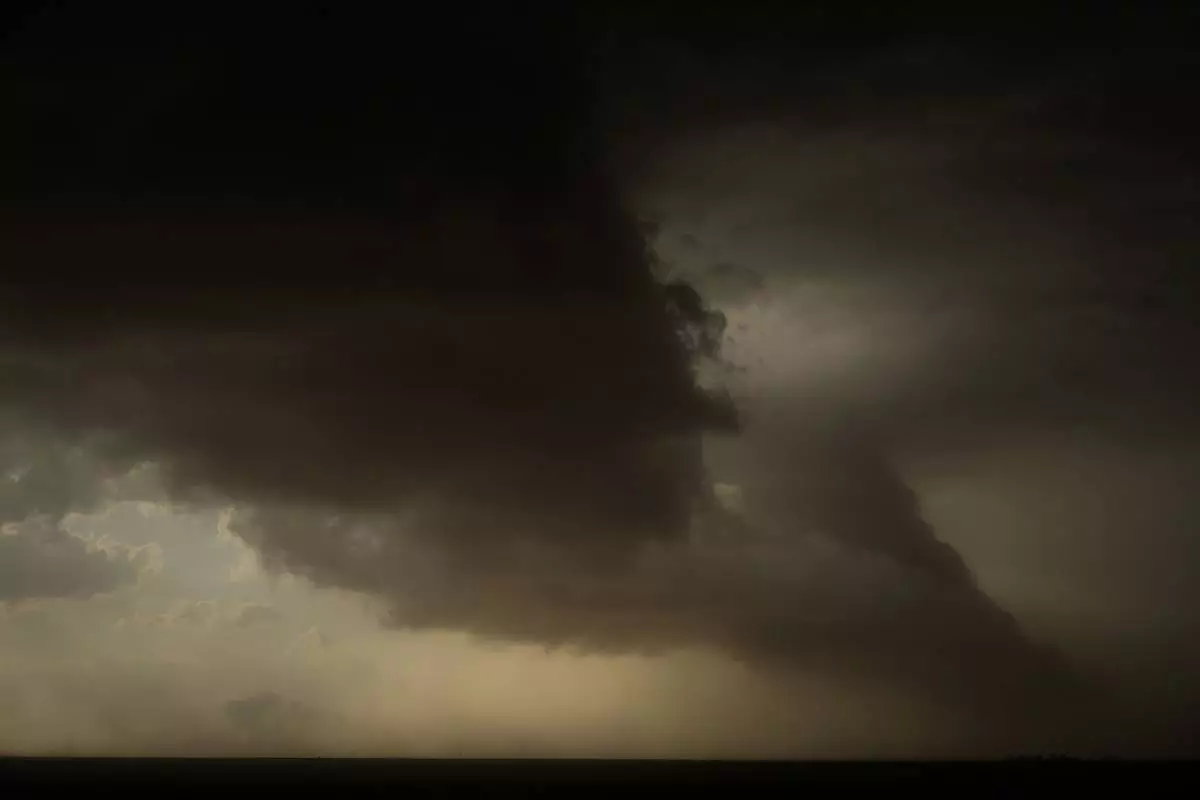
Storm clouds form during a Project ICECHIP operation Friday, June 6, 2025, in Morton, Texas. (AP Photo/Carolyn Kaster)
Victor Gensini, Northern Illinois University meteorology professor and a lead scientist of Project ICECHIP, works on a laptop in the command vehicle as members of Project ICECHIP stage at a Valero gas station Thursday, June 5, 2025, in Brownfield, Texas. (AP Photo/Carolyn Kaster)
Members of Project ICECHIP inspect shingles for hail damage during an operation Friday, June 6, 2025, in Morton, Texas. (AP Photo/Carolyn Kaster)
Project ICECHIP members, from left, Ethan Mok, Logan Bundy, Nathan Sonntag, Victor Gensini and Katie Wargowsky sit in chairs next to the command vehicle waiting for storms to develop Friday, June 6, 2025, in Morton, Texas. (AP Photo/Carolyn Kaster)
Joey Toniolo, from left, Tim Marshall and Tony Illenden stand next to Northern Illinois University's Husky Hail Hunter as storm clouds gather during a Project ICECHIP operation Friday, June 6, 2025, in Meadow, Texas. (AP Photo/Carolyn Kaster)
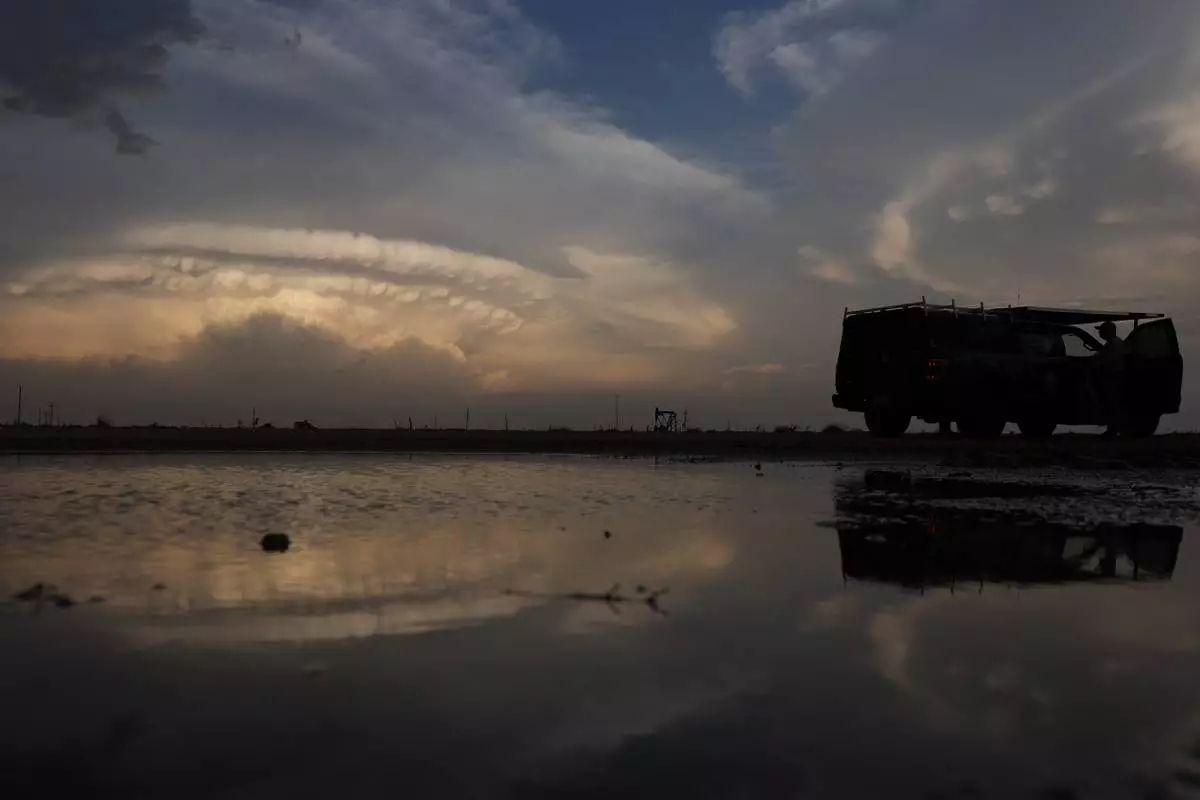
Northern Illinois University's Husky Hail Hunter is silhouetted near Lubbock, Texas, Friday, June 6, 2025, during a Project ICECHIP operation. (AP Photo/Carolyn Kaster)
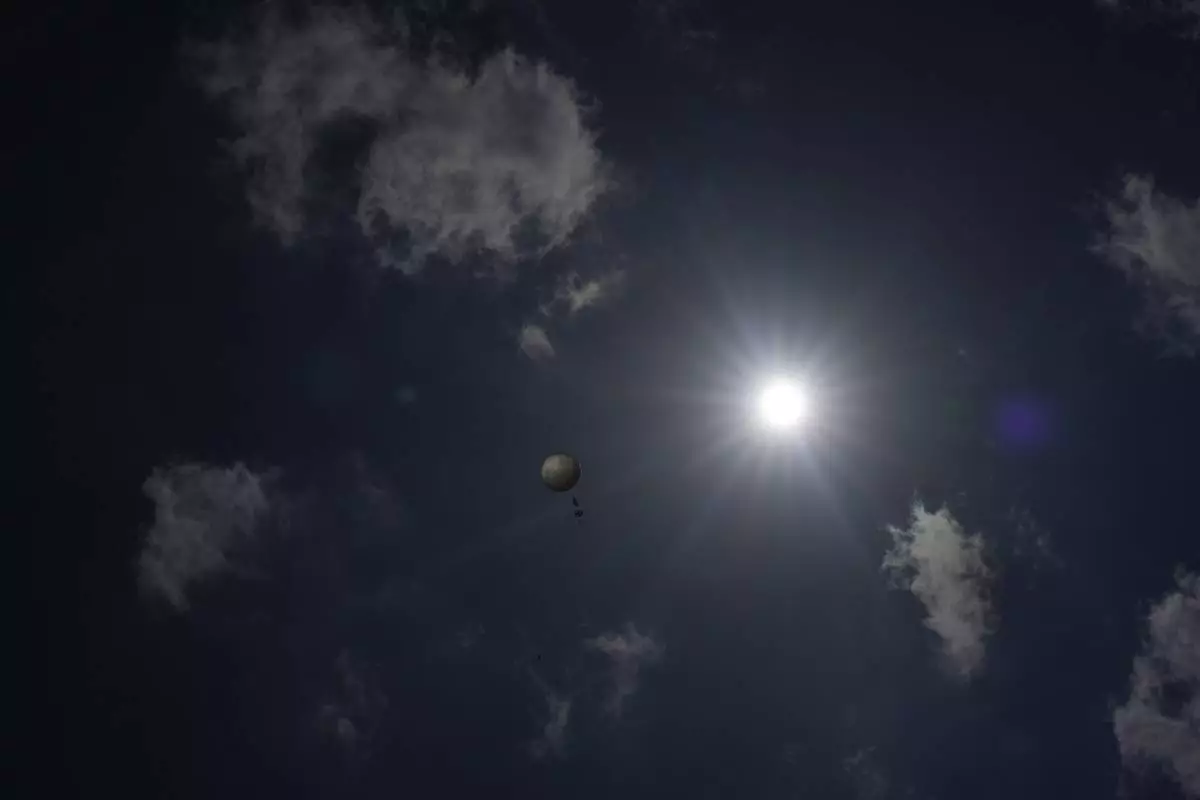
A weather balloon soars in the sky that was released by members of Project ICECHIP's black team to collect data Friday, June 6, 2025, in Morton, Texas. (AP Photo/Carolyn Kaster)
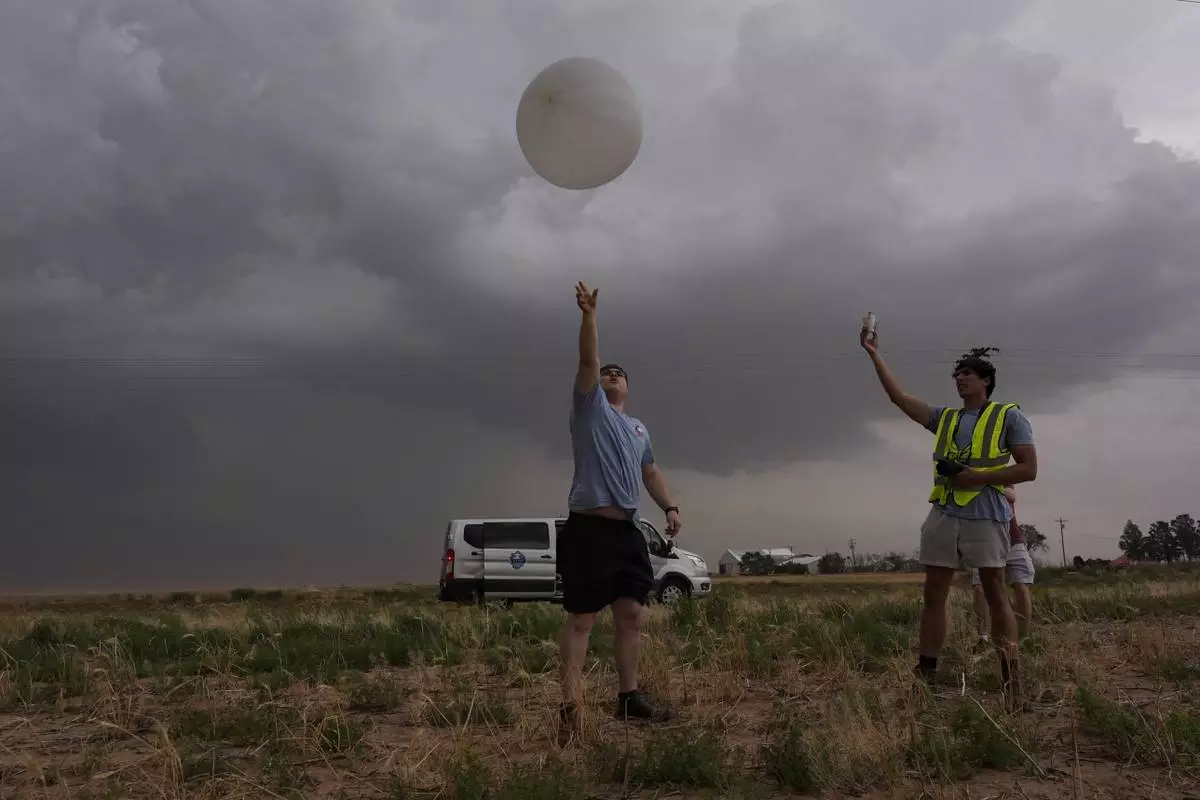
Red team and Project ICECHIP members Wyatt Ficek, left, and Ethan Mok, right, release a latex weather balloon with an attached instrument called a windsond into the inflow region of a storm to collect data during a Project ICECHIP operation Thursday, June 5, 2025, near Morton, Texas. (AP Photo/Carolyn Kaster)
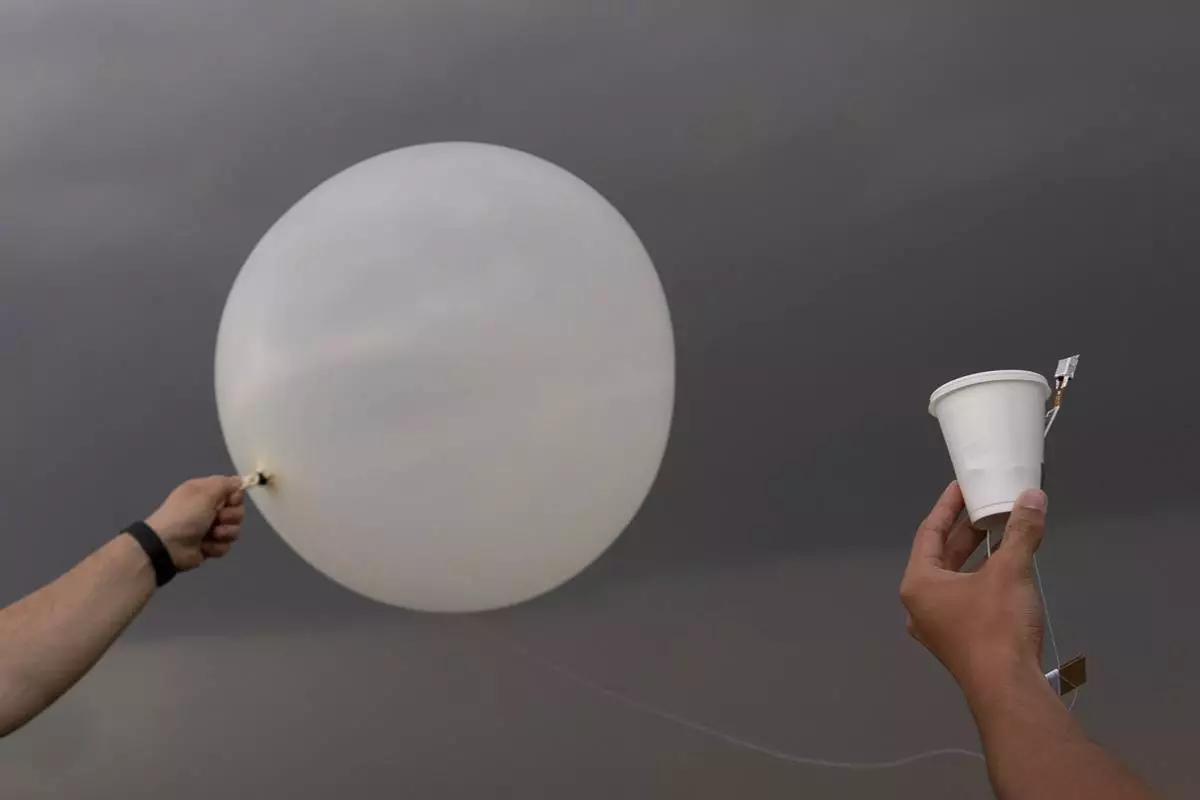
Red team and Project ICECHIP members Wyatt Ficek, left, and Ethan Mok, right, release a latex weather balloon with an attached instrument called a windsond into the inflow region of a storm to collect data during a Project ICECHIP operation Thursday, June 5, 2025, near Morton, Texas. (AP Photo/Carolyn Kaster)

Project ICECHIP members from Northern Illinois University on the black team including Evelynn Mantia, left, and Olivena Carlisle, lower right, inflate a weather balloon with a radiosonde attached to collect data Wednesday, June 4, 2025, in Tucumcari, N.M. (AP Photo/Carolyn Kaster)

Project ICECHIP member and Central Michigan University student Jeanette Cavin inflates a weather balloon in a protective shelter to launch a radiosonde to collect data Wednesday, June 4, 2025, in Tucumcari, N.M. (AP Photo/Carolyn Kaster)
Pumpjacks operate during a Project ICECHIP operation Friday, June 6, 2025, near Levelland, Texas. (AP Photo/Carolyn Kaster)
Dashboard mascots Zeus, left, and Tor, right, sit in a car as AC/DC's “Back in Black” plays on the stereo in Northern Illinois University's Husky Hail Hunter vehicle, as they drive into a storm during a Project ICECHIP operation, Friday, June 6, 2025, near Levelland, Texas. (AP Photo/Carolyn Kaster)
Integrated Remote & In-Situ Sensing (IRISS) lab out of the University of Colorado Boulder and Project ICECHIP members, from left, Céu Gomez-Faulk, Ryan Downey, Madison Ritsch and Andrew Mord sit atop what they call "Tracker One" in the Allsup's Convenience Store parking lot waiting for a storm, Wednesday, June 4, 2025, in Tucumcari, N.M. (AP Photo/Carolyn Kaster)
Cars dive away from a storm during a Project ICECHIP operation Thursday, June 5, 2025, in Morton, Texas. (AP Photo/Carolyn Kaster)
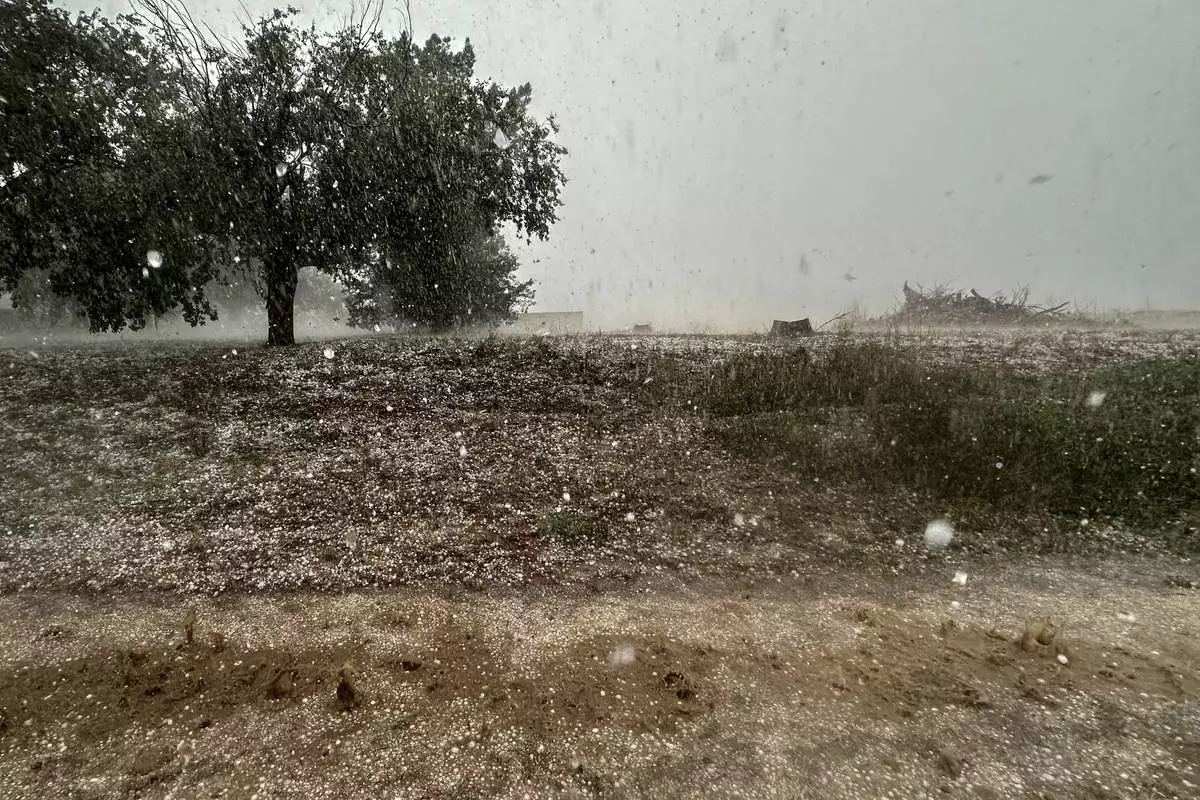
A hailstorm is visible from Northern Illinois University's Husky Hail Hunter vehicle during a Project ICECHIP operation Friday, June 6, 2025, in Levelland, Texas. (AP Photo/Carolyn Kaster)
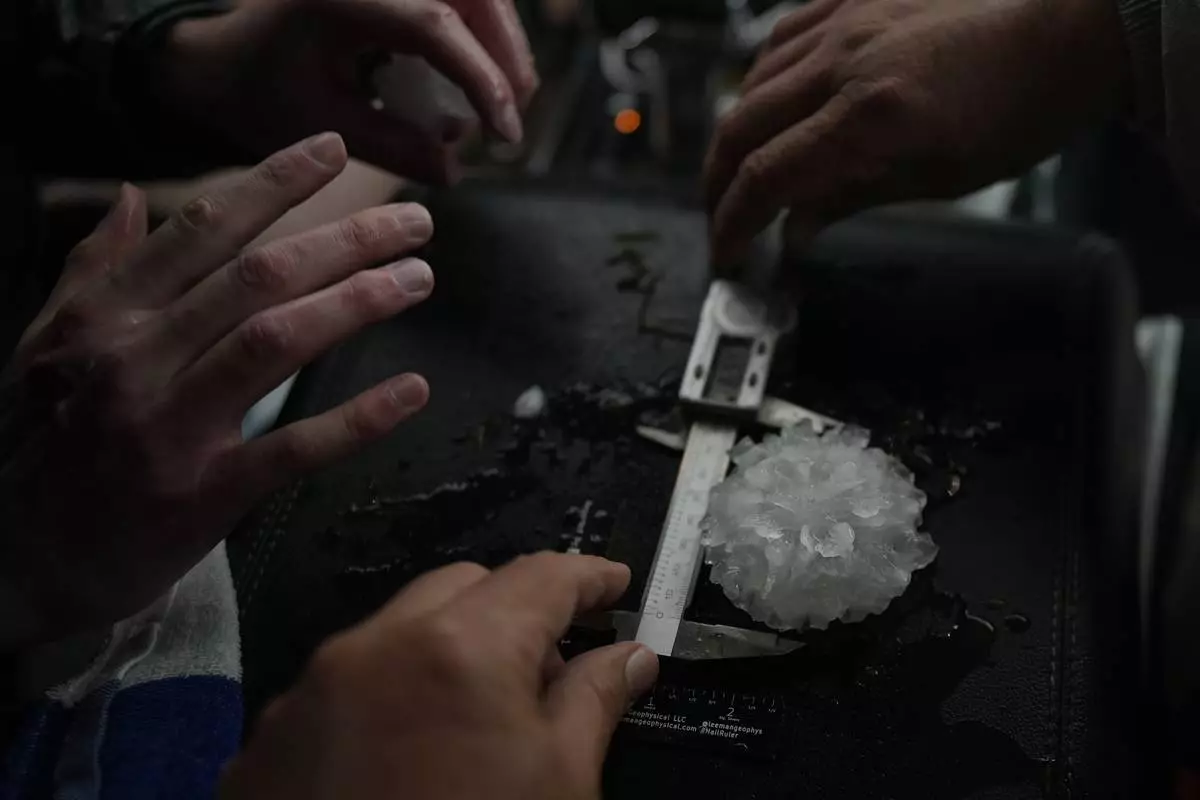
Tony Illenden, left, and Tim Marshall measure a large hail shaped like a rose between the front seats of Northern Illinois University's Husky Hail Hunter vehicle during a Project ICECHIP operation Friday, June 6, 2025, in Morton, Texas. (AP Photo/Carolyn Kaster)
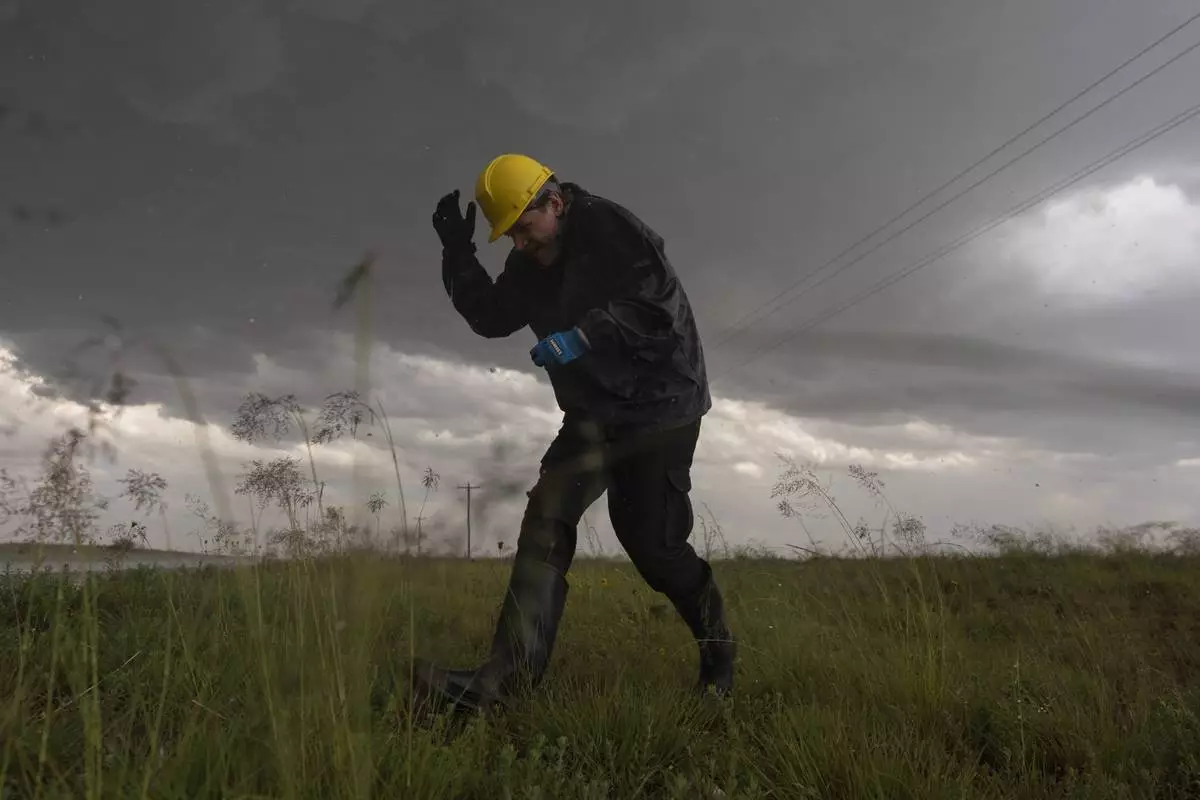
Joey Toniolo ducks from falling hail as he moves back to Northern Illinois University's Husky Hail Hunter vehicle during a Project ICECHIP operation Friday, June 6, 2025, in Morton, Texas. (AP Photo/Carolyn Kaster)

Tony Illenden, a member of Northern Illinois University's Husky Hail Hunter team, picks up hail during a Project ICECHIP operation Friday, June 6, 2025, near Morton, Texas. (AP Photo/Carolyn Kaster)
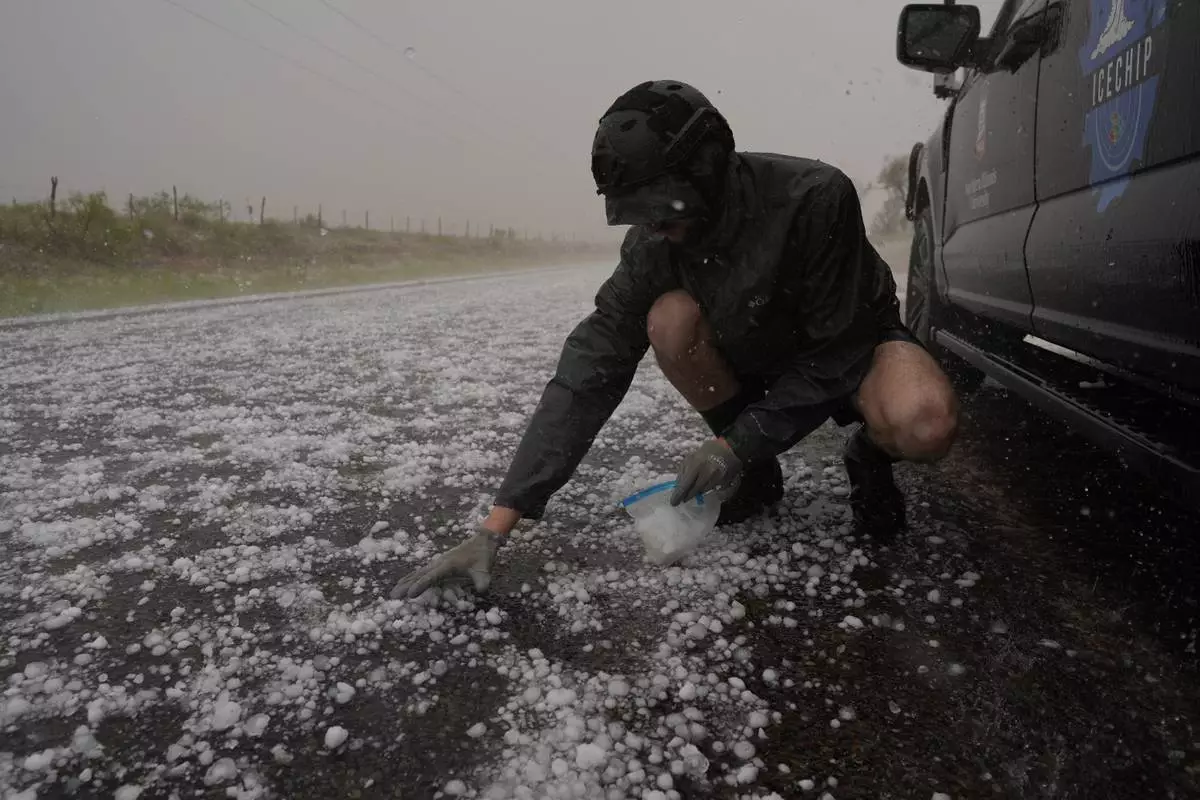
Tony Illenden crouches in a helmet and gloves outside Northern Illinois University's Husky Hail Hunter vehicle to scoop hail into a bag during a storm while on a Project ICECHIP operation Friday, June 6, 2025, in Levelland, Texas. (AP Photo/Carolyn Kaster)