China's mechanical and industrial equipment exports to Africa have seen rapid growth in the first five months of the year, boosted by the strong demand for infrastructure development across African nations, showcasing reciprocal and complementary bilateral trade benefits.
Africa has remained China's largest market for goods related to overseas engineering contracts since 2022. In the first five months of this year alone, China exported 12.59 billion yuan (about 1.75 billion U.S. dollars) worth of products to Africa through such contracts, marking a 46.5 percent increase from the previous year.
Exports of ships and marine engineering equipment, construction machinery, and motors and generators to Africa grew by 41.6 percent, 58.5 percent, and 51.1 percent, respectively, over the same period, official data showed.
They are key in advancing African infrastructure and economic development and promoting people's well-being.
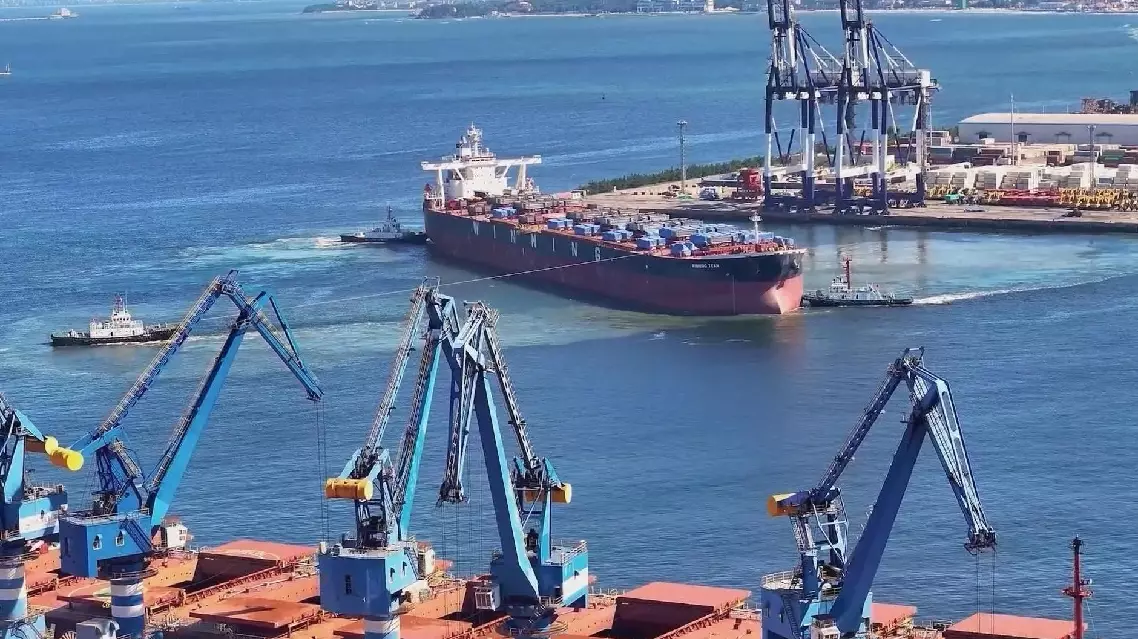
Corresponding to the statistics, Yantai Port in east China's Shandong Province has seen nearly 2.5 million tonnes of export via the China-Africa shipping routes from January to May, marking an 83.7 percent year-on-year increase. Among the massive exports, two vessels carrying Chinese machinery and equipment depart on average for the continent each week.
"China-Africa shipping routes precisely target the need for the economic development of African countries, building a transportation network covering over 20 countries and regions in Africa, including Guinea, Tanzania, South Africa, and Namibia. The network has fully covered all maritime countries in the African continent," said Li Jun, deputy director of the Production Dispatch Center of Yantai Port.
Since the China-Africa routes of Yantai Port started services in 2015, the cargo volumes have been increasing, with exports covering over 200 types of goods, ranging from wind power equipment and construction materials to industrial vehicles.
"Targeting the surging demand of customs clearance for exports, customs authorities have introduced innovative measures such as categorized supervision, pre-clearance sorting, and centralized inspections. As a result, the customs clearance time for an entire shipload has been reduced from five to six days to two to three days," said Yu Jianbo, deputy director of the Yantai Customs Port Office.
China has maintained its position as the largest trading partner of Africa for 16 consecutive years. Last year, the bilateral trade volume exceeded 2 trillion yuan (about 278 billion U.S. dollars) for the first time.
Chinese machinery, equipment export to Africa expands, with reciprocal complementary benefits