WASHINGTON (AP) — The CIA released nearly 1,500 pages of previously classified documents relating to New York Sen. Robert F. Kennedy and his 1968 assassination on Thursday, detailing the spy agency's work to investigate his killing as well as previously unknown contacts between him and the agency.
Kennedy met with the CIA following a 1955 tour of the Soviet Union, relaying his observations to the spy agency as a voluntary informant, the documents show.
The newly available material comprises 54 documents, including memos about the agency's work to investigate whether RFK's killer had any foreign ties, as well as the response to his killing by foreign powers. The records also included documents about the assassinations of President John F. Kennedy and Martin Luther King Jr., as well as the attempted assassination of Alabama Gov. George Wallace in 1972.
One internal CIA memo detailed how the agency unsuccessfully sought to poison Cuban leader Fidel Castro in 1960 and 1961. It worked with a “high-ranking” Mafia figure in Las Vegas who “controlled all of the ice-making machines on the Strip.”
Another internal CIA memo from December 1973 reported on a conference at Georgetown University for a group promoting assassination conspiracy theories. One speaker was “long-winded and technical.”
“Beards and long hair prevailed,” the memo said, a reminder of the clean-shaven, crew-cut norm for government employees at the time.
President Donald Trump had ordered the release of documents relating to the assassinations of RFK, President John F. Kennedy and Martin Luther King Jr. More than 10,000 pages of records pertaining to RFK's assassination were released in April. The records released Thursday also included documents about the JFK and King killings, some produced after RFK's death and dealing with conspiracy theories.
“Today’s release delivers on President Trump’s commitment to maximum transparency, enabling the CIA to shine light on information that serves the public interest,” CIA Director John Ratcliffe said in a statement. “I am proud to share our work on this incredibly important topic with the American people.”
Kennedy, a Democrat, was fatally shot on June 5, 1968, at the Ambassador Hotel in Los Angeles moments after giving a speech celebrating his victory in California’s presidential primary. His assassin, Sirhan Sirhan, was convicted of first-degree murder and is serving life in prison. One document released Thursday, a CIA memo to the White House the day after the assassination, showed that its first search of its records turned up no information about Sirhan.
Kennedy's contacts with the CIA following his visit to the Soviet Union reflected the tensions of the time, and the high value put on personal observations of Americans who traveled to Russia and other former Soviet regions. Prominent elected officials and business leaders visiting the USSR were often asked to share their observations following their return.
The documents show that RFK was a voluntary informant. In a statement Thursday, the CIA showed the meetings reflected RFK's “patriotic commitment” to serving his country.
Many of his observations reflected granular observations about daily life.
“On 29 Aug 55, while in Novosibirsk, USSR, a friend and I visited a State machine factory. The factory has 3,500 employees, of whom one third are women. The wage scale is between 840 and 2,500 rubles,” Kennedy told the CIA interviewer, according to the documents. "The Director of the plant whose name I do not recall was frosty, although the engineer was friendly."
The CIA used artificial intelligence to scan its library for documents related to RFK's assassination that could be declassified. The search turned up many documents that had little to do with his killing, such as the records of RFK's meeting with the CIA.
Kennedy's son, U.S. Health and Human Services Secretary Robert F. Kennedy Jr., said he was gratified to see the documents' release.
“Lifting the veil on the RFK papers is a necessary step toward restoring trust in American government,” Kennedy said.
The documents released Thursday included a September 1975 memo from then-CIA Director William Colby to staff, discussing allegations of CIA involvement in JFK's assassination in Dallas on Nov. 22, 1963, that “have crept up every so often." Colby asserted that JFK assassin Lee Harvey Oswald had no contact with the agency.
Colby said five pre-assassination CIA records did reference Oswald but “Oswald's name had no particular meaning before that fateful event.” For an October 1975 interview with CBS White House correspondent Dan Rather, Colby had talking points that included denying CIA involvement in attempts to test whether New York City's subway system was vulnerable to “biological warfare agents.”
__
Hanna reported from Topeka, Kansas.
The documents can be found online at cia.gov and archives.gov/rfk.
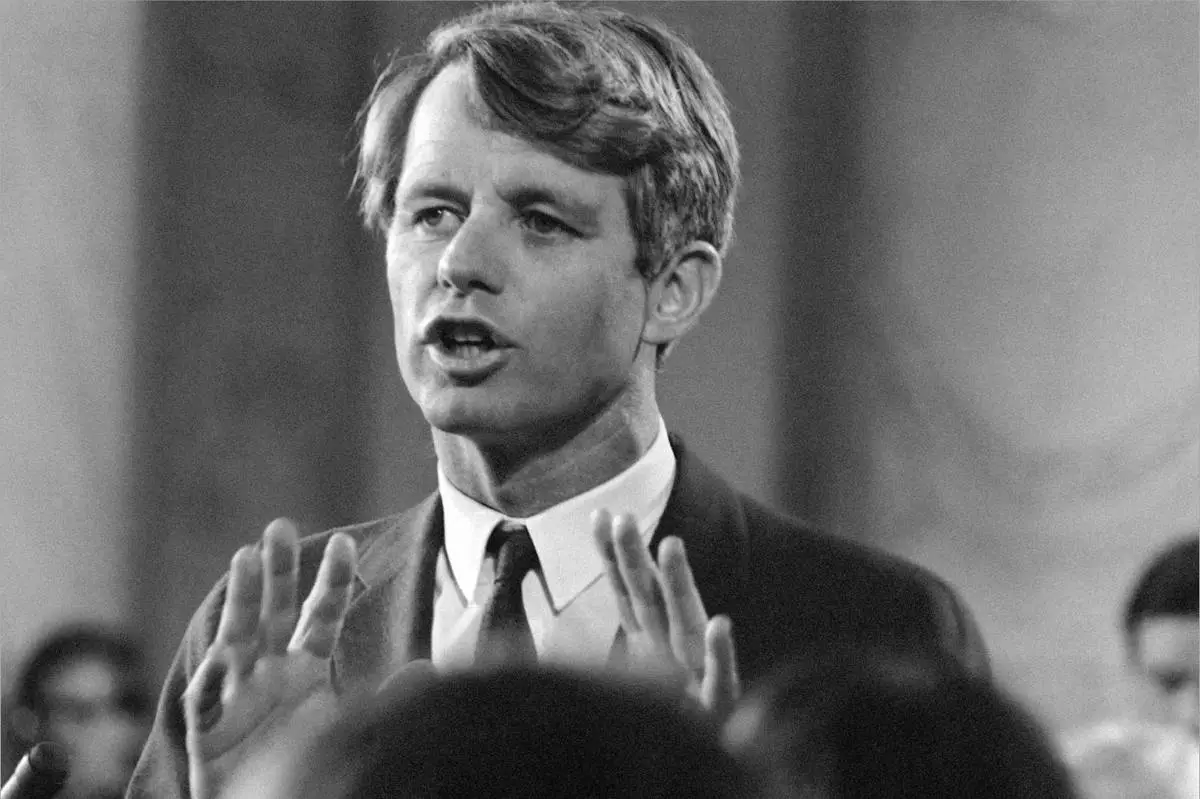
FILE - Sen. Robert F. Kennedy, D-N.Y., speaks in Washington, March 16, 1968, as he announces he will run for president. (AP Photo)
PITTSBURGH (AP) — Lamar Jackson thought it was over. That the Baltimore Ravens' unwieldy season would end up in a familiar spot: the playoffs.
Then, rookie kicker Tyler Loop's potential game-winning field goal from 44 yards out drifted a little right. And then a little further right. And then a little further right still.
By the time it fluttered well wide of the goalposts, the playoffs were gone. So was Jackson's certainty after a 26-24 loss to Pittsburgh on Sunday night sent the Ravens into what could be a turbulent offseason.
“I'm definitely stunned, man,” Jackson said. “I thought we had it in the bag. ... I don't know what else we can do.”
Jackson, who never really seemed fully healthy during his eighth season as he battled one thing after another, did his part. The two-time NFL MVP passed for 238 yards and three touchdowns, including two long connections with Zay Flowers in the fourth quarter that put the Ravens (8-9) in front.
It just wasn't enough. Baltimore's defense, which played most of the second half without star safety Kyle Hamilton after Hamilton entered the concussion protocol, wilted against 42-year-old Steelers quarterback Aaron Rodgers.
Rodgers passed for a season-high 294 yards, including a 26-yard flip to a wide-open Calvin Austin with 55 seconds to go after a defender slipped, symbolic of a season in which Baltimore's defense only occasionally found its form.
Still, the Ravens had a chance when Jackson found Isaiah Likely for a 28-yard gain on fourth down from midfield. A couple of snaps later, the 24-year-old Loop walked on to try to lift Baltimore to its third straight division title.
Instead, the rookie said he “mishit” it. Whatever it was, it never threatened to sneak between the goalposts.
“It’s disappointing,” Loop said.
Loop was talking about the game. He might as well have been talking about his team's season.
The Ravens began 1-5 as Jackson dealt with injuries and the defense struggled to get stops. Baltimore found a way to briefly tie the Steelers for first in late November, only to then split its next four games, including a home loss to Pittsburgh.
Still, when Jackson and the Ravens walked onto the Acrisure Stadium turf on Sunday night in the 272nd and final game of the NFL regular season, Baltimore was confident. The Ravens drilled Pittsburgh in the opening round of the playoffs a year ago behind the ever-churning legs of running back Derrick Henry.
When Henry ripped off a gain of 40-plus yards on the game's first offensive snap, it looked like it was going to be more of the same. While Henry did rush for 126 yards and joined Hall of Famer Barry Sanders as the only running backs in NFL history to have five 1,500-yard seasons, he was less effective in the second half.
Even that first run was telling of what night it was going to be, as an illegal block by wide receiver Zay Flowers cost Baltimore some field position. The Ravens ended up scoring on the drive anyway, thanks to a 38-yard fourth-down flip from Jackson to a wide-open Devontez Walker, but it started a pattern that was hard to shake as several steps forward were met with one step back on a night the Ravens finished with nine penalties for 78 yards.
“We were having a lot of penalties, which kept stopping drives," Jackson said. “But I'm proud of my guys because we kept overcoming. We kept overcoming adversity and situations like this. Divisional games (can) be like that sometimes.”
Particularly when the Steelers are on the other side of the line of scrimmage. Pittsburgh has won 10 of the last 13 meetings. And while a handful of them have been in late-season matchups with the Ravens already assured of reaching the playoffs, the reality is the Steelers have been able to regularly do something that most others have not: found a way to beat Jackson.
“It comes down to situations like this,” Jackson said. “Two-point conversion one year. Field goal another year. And again this year. Just got to find a way to get that win here.”
And figure out who is going to be around to help get it.
Head coach John Harbaugh's 18th season in Baltimore ended with the Ravens missing the playoffs for just the second time in eight years. Jackson turns 29 this week and is still one of the most electric players in the league.
Yet Harbaugh and Jackson have yet to find a way to have that breakthrough season that Harbaugh enjoyed with Joe Flacco in 2013 when the Ravens won the Super Bowl.
There was hope when the season began that the roadblocks that have long been in the franchise's way — Kansas City and Patrick Mahomes chief among them — would be gone.
While the Ravens did get their way in a sense — the Chiefs will watch the playoffs from afar for the first time in a decade after a nightmarish season of their own — it never all came together.
Jackson declined to endorse Harbaugh returning for a 19th season, saying the loss was still too fresh to zoom out on what it might mean for the franchise going forward.
Harbaugh, for his part, certainly seems up for running it back in the fall.
“I love these guys,” he said afterward. “I love these guys.”
AP NFL: https://apnews.com/hub/nfl
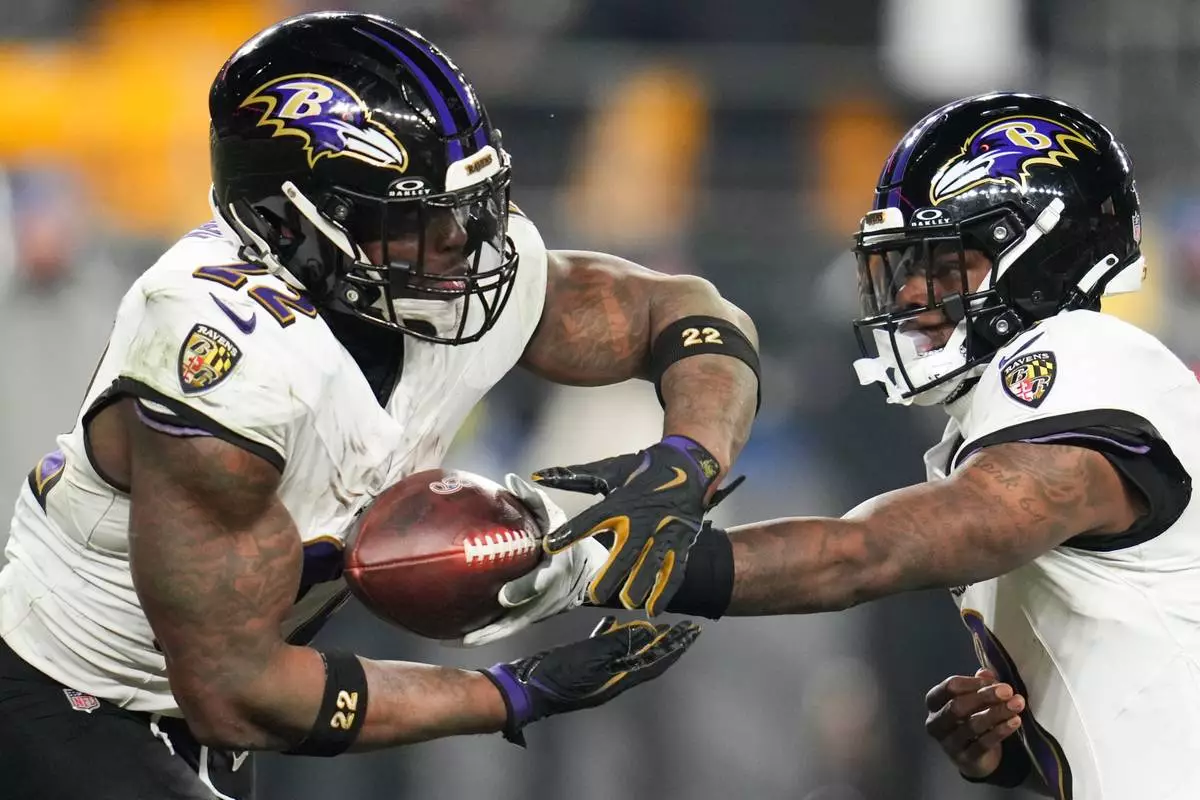
Baltimore Ravens quarterback Lamar Jackson, right, hands the ball off to running back Derrick Henry (22) during the first half of an NFL football game against the Pittsburgh Steelers, Sunday, Jan. 4, 2026, in Pittsburgh. (AP Photo/Gene J. Puskar)
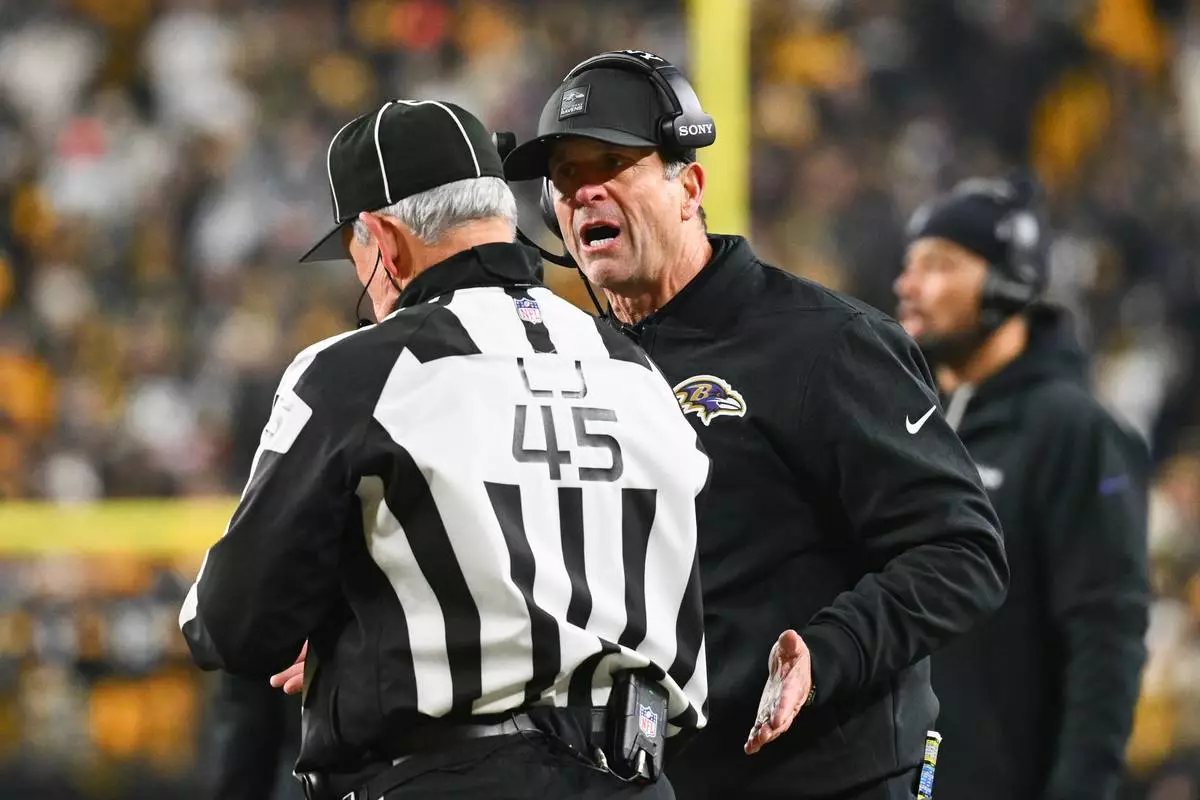
Baltimore Ravens head coach John Harbaugh talks with an offical during the second half of an NFL football game against the Pittsburgh Steelers, Sunday, Jan. 4, 2026, in Pittsburgh. (AP Photo/Justin Berl)
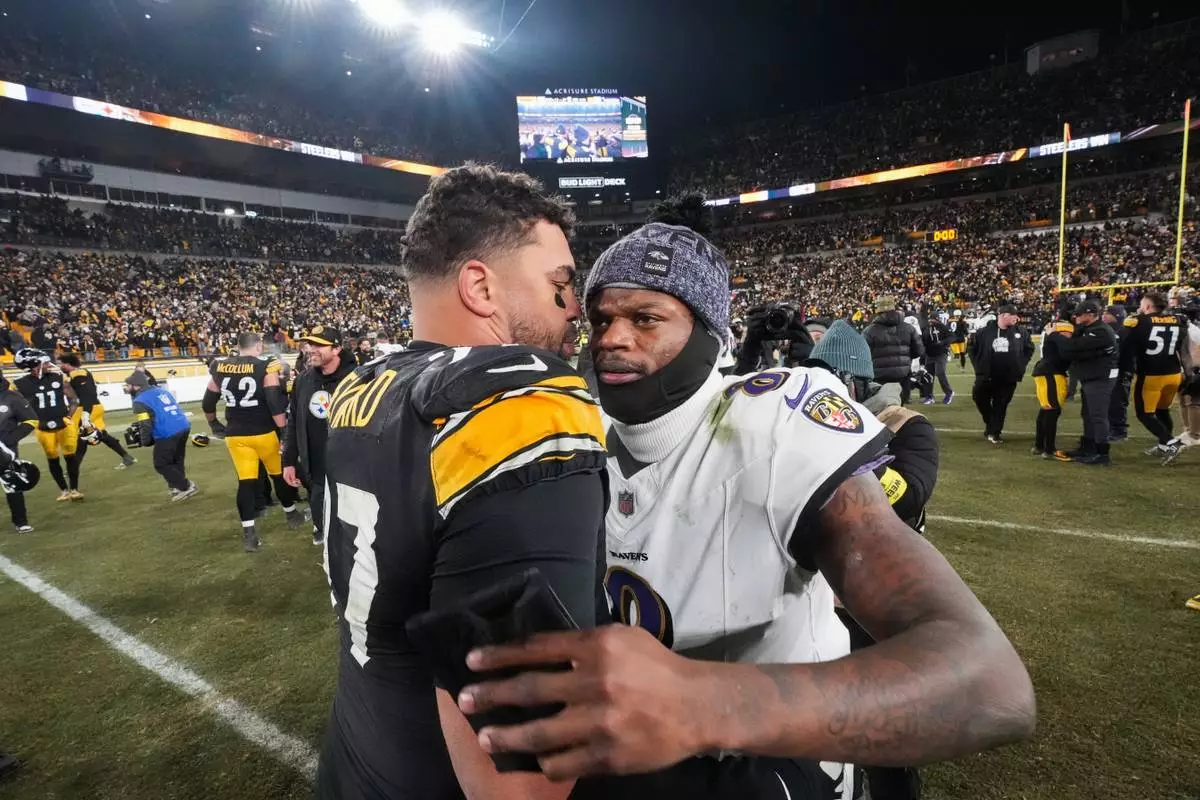
Pittsburgh Steelers defensive tackle Cameron Heyward, left, greets Baltimore Ravens quarterback Lamar Jackson (8) after an NFL football game Sunday, Jan. 4, 2026, in Pittsburgh. (AP Photo/Gene J. Puskar)
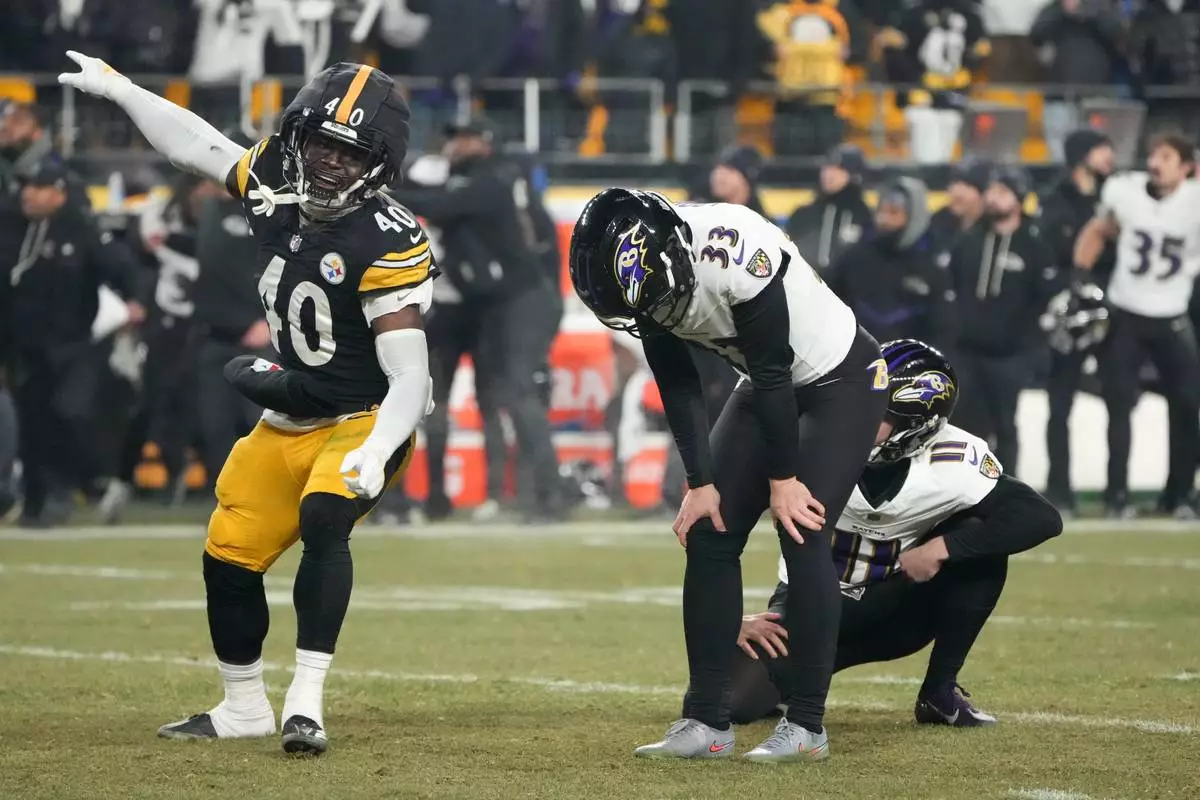
Pittsburgh Steelers safety Jabrill Peppers (40) reacts after Baltimore Ravens kicker Tyler Loop (33) missed a field goal attempt in the second half of an NFL football game against the Pittsburgh Steelers, Sunday, Jan. 4, 2026, in Pittsburgh. (AP Photo/Gene J. Puskar)