WASHINGTON (AP) — The latest effort by Congress to regulate college sports generated predictable partisan outrage on Thursday, with Democrats saying Republican-led draft legislation would claw back freedoms won by athletes through years of litigation against the NCAA.
Three House committees are considering legislation that would create a national standard for name, image and likeness payments to athletes and protect the NCAA against future lawsuits. Last week, a federal judge approved a $2.8 billion settlement that will lead to schools paying athletes directly, and NCAA President Charlie Baker said now that his organization is implementing those major changes, Congress needs to step in and stabilize college sports.
Baker said he supports the draft legislation that was the subject of Thursday's hearing by a House Energy and Commerce subcommittee, but there was little indication that any bill advanced by the House would generate enough Democratic support to surpass the 60-vote threshold in the Senate.
“I’m deeply disappointed for the second year in a row, Republicans on this committee are advancing a partisan college sports bill that protects the power brokers of college athletics at the expense of the athletes themselves,” said Rep. Lori Trahan, D-Mass.
Trahan noted that if the NCAA or conferences establish unfair rules, athletes can challenge them in court, with the settlement of the House v. NCAA antitrust case the latest example of athletes winning rights that they had been denied historically.
“This bill rewrites that process to guarantee the people in power always win, and the athletes who fuel this multibillion-dollar industry always lose,” said Trahan, who played volleyball at Georgetown.
The NCAA argues that it needs a limited antitrust exemption in order to set its own rules and preserve a college sports system that provides billions of dollars in scholarships and helps train future U.S. Olympians. Several athletes are suing the NCAA over its rule that athletes are only eligible to play four seasons in a five-year period, and on Tuesday, a group of female athletes filed an appeal of the House settlement, saying it discriminated against women in violation of federal law.
On the Senate side, a bipartisan group including Republican Ted Cruz of Texas has been negotiating a college sports reform bill for months, but those talks are moving more slowly than Cruz had hoped at the beginning of this Congress.
The draft bill in the House would create a national standard for NIL, overriding the state laws that critics say have led to a chaotic recruiting environment. That, too, was criticized by Democrats and by their key witness at the hearing, Ramogi Huma, executive director of the National College Players Association.
Huma argued that the NCAA wants to get rid of booster-funded NIL collectives that another witness, Southeastern Conference associate commissioner William King, characterized as “fake NIL” or “pay for play.”
Instead, Huma said the collectives are examples of the free market at work, noting that before players won NIL rights through a court case, boosters could only donate to athletic departments.
Tom McMillen, a former Democratic congressman who played in the NBA after an All-America basketball career at Maryland, took a dim view of the bill's prospects.
“I think they’re trying to come up with something and pull in some Democrats. I just don’t know if that’s going to succeed or not,” said McMillen, who for several years led an association of Division I athletic directors. “There's a real philosophical divide, so that's the hard part. It's hard to bridge. And there's a zillion other issues.”
The subcommittee chairman, Rep. Gus Bilirakis, R-Fla., said the draft legislation already had some bipartisan support and he was open to changes that would get more Democrats on board.
“I will consider some of the suggestions, the legitimate suggestions that were made,” Bilirakis said, “and I will be happy to talk to lawmakers that truly want to get a big bill across the finish line.”
AP college sports: https://apnews.com/hub/college-sports
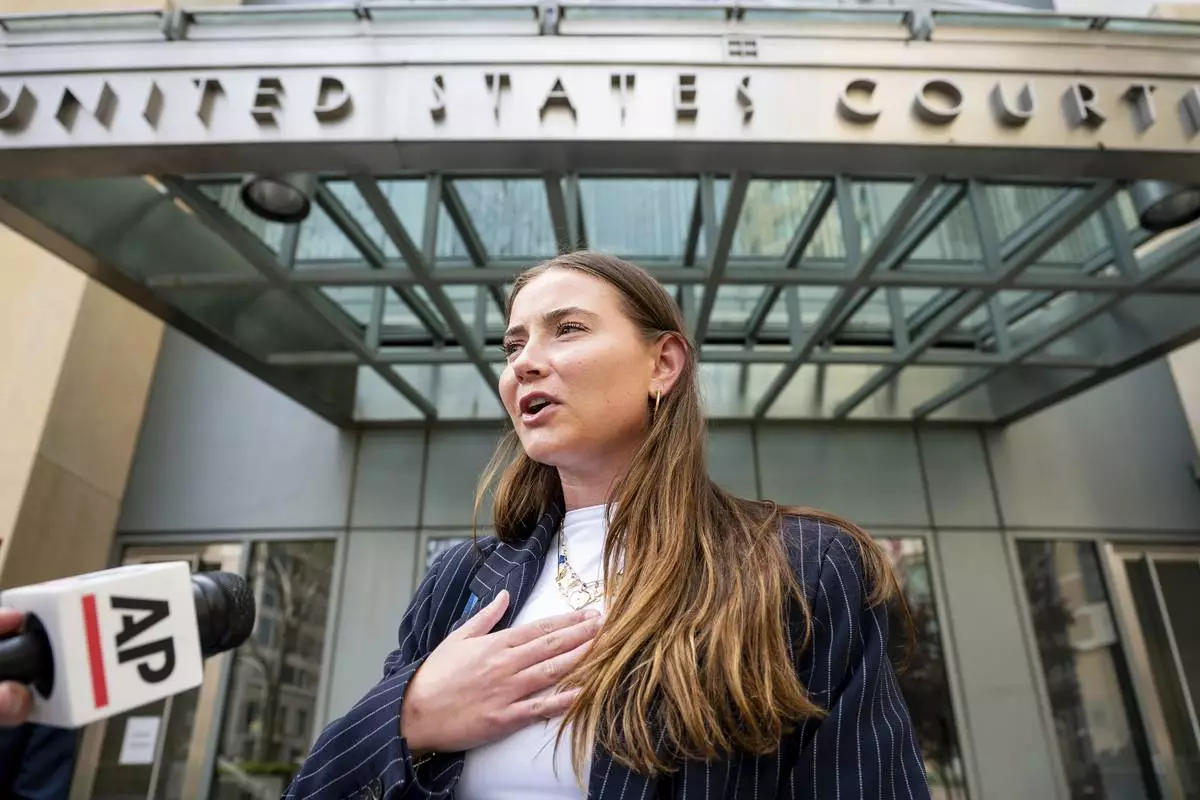
FILE - College soccer player Lexi Drumm leaves federal court during a hearing for a landmark $2.8 billion settlement impacting NCAA college athletics on Monday, April 7, 2025, in Oakland, Calif. (AP Photo/Noah Berger, FIle)
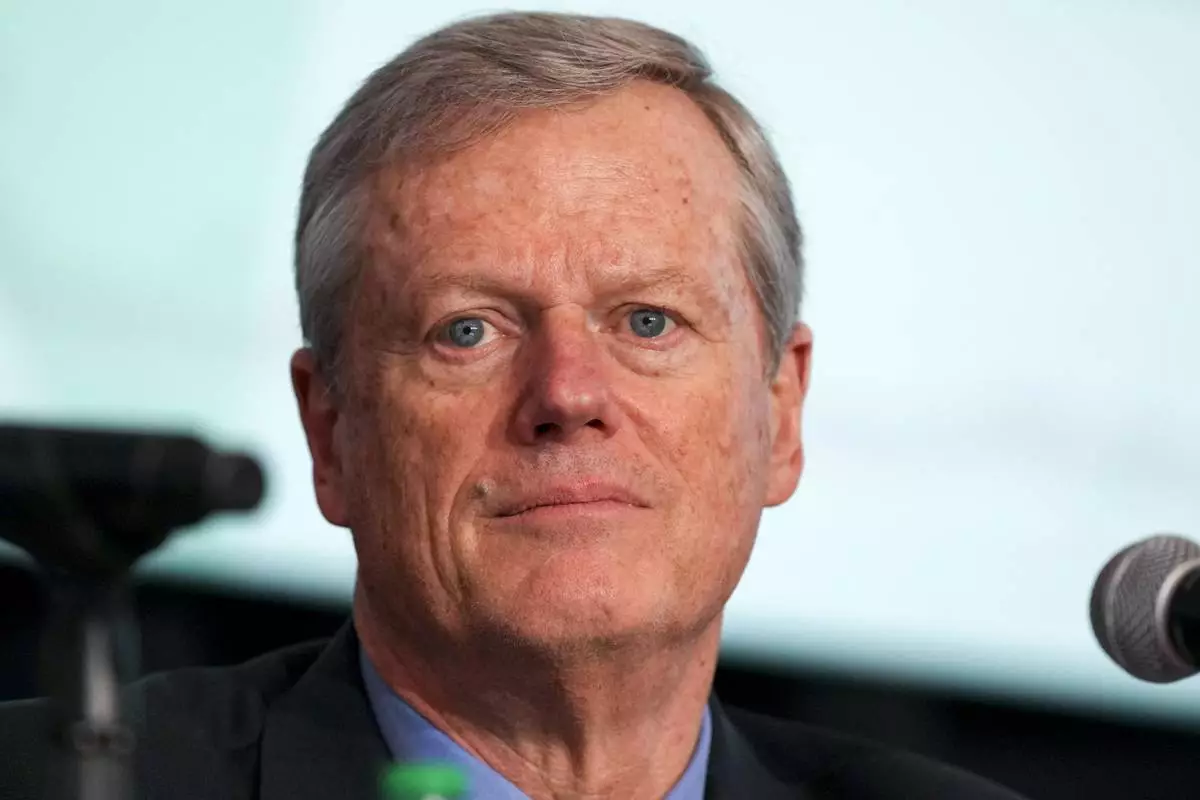
FILE - NCAA President Charlie Baker attends the organization's annual convention in Nashville, Tenn., on Wednesday, Jan. 15, 2025 (AP Photo/George Walker IV, File)