Skip to Content Facebook Feature Image

Israeli strikes kill Iran's Revolutionary Guard leader, Gen. Hossein Salami

News

Israeli strikes kill Iran's Revolutionary Guard leader, Gen. Hossein Salami
News

News

Israeli strikes kill Iran's Revolutionary Guard leader, Gen. Hossein Salami

2025-06-13 20:57 Last Updated At:21:01

TEL AVIV, Israel (AP) — Iranian state television confirmed the head of the paramilitary Revolutionary Guard was killed in Israel's strikes Friday morning.

Gen. Hossein Salami was the chief of one of the country's most powerful centers, and his death was a tough blow to Iran's embattled leadership, which has had a series of setbacks in the past 20 months of Middle Eastern war and unrest.

Salami rose to power six years ago and had a history of threatening the U.S. and Israel.

Here's a closer look.

Iran’s Revolutionary Guard was created after its 1979 Islamic Revolution. Since it was established, it's evolved from a paramilitary, domestic security force to a transnational force that has come to the aid of Tehran’s allies in the Mideast, from Syria and Lebanon to Iraq.

It operates in parallel to the country's existing armed forces and controls Iran’s arsenal of ballistic missiles, which it has used to attack Israel twice during the Israel-Hamas war in the Gaza Strip.

Salami, 65, was appointed as head of the guard in 2019 by the country's supreme leader, Ayatollah Ali Khamenei.

The appointment followed U.S. President Donald Trump's decision during his first term to withdraw the U.S. from the international nuclear deal with Iran and restore crippling sanctions. It also followed Trump's designation of the Guard as a terrorist organization.

Salami joined the guard at the outbreak of the bloody 1980s Iran-Iraq war. He later rose to head its air forces and was serving as a deputy commander in the guard when he was appointed.

Like other guard leaders, Salami routinely delivered speeches with harsh rhetoric towards Israel. In a 2016 speech he said there was “fertile ground” for the “annihilation, the wiping out, and the collapse of the Zionist regime”.

He also threatened the United States.

After the U.S. killed the powerful head of the guard's Quds Force, Qassem Soleimani, in a drone strike outside Baghdad's airport in 2020, Salami threatened to retaliate against American and Israeli commanders. The Quds, or Jerusalem, Force is an elite wing of the Guard that oversees foreign operations.

Five days later, Iran launched ballistic missiles at two bases in Iraq housing American troops, causing injuries but no fatalities among soldiers there.

After Soleimani was killed, Salami said that both the U.S. and Israel should know that “if they threaten our commanders, none of their commanders will find a safe place” to live.

Israel and Iran have run a shadow war for years, but last year the two attacked each other directly.

When an Israeli strike killed seven guard members, including two Iranian generals at an Iranian diplomatic compound in Syria, Salami vowed to retaliate.

Weeks later, Salami ordered an operation that launched more than 300 drones, ballistic missiles and cruise missiles in an unprecedented revenge mission that pushed the Middle East closer to a regionwide war.

Israel said that 99% were intercepted with several ballistic missiles reaching Israeli territory, causing minor damage to an air base.

In October Israel pounded Iran with a series of airstrikes in response to missile attacks into Israel from Iran earlier in the month.

Israel's military said it targeted “missile manufacturing facilities used to produce the missiles that Iran fired at the state of Israel over the last year.” Israel also weakened the country's air defenses, which helped clear the way for Friday's attacks.
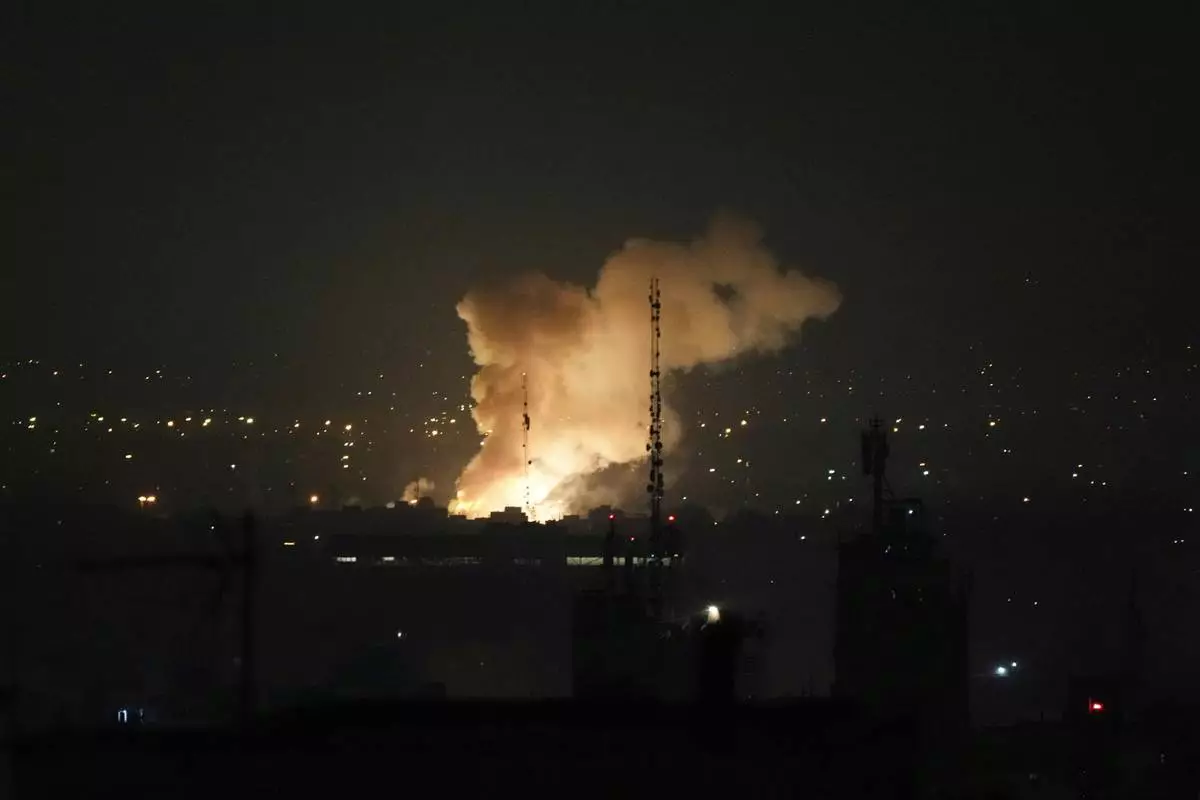
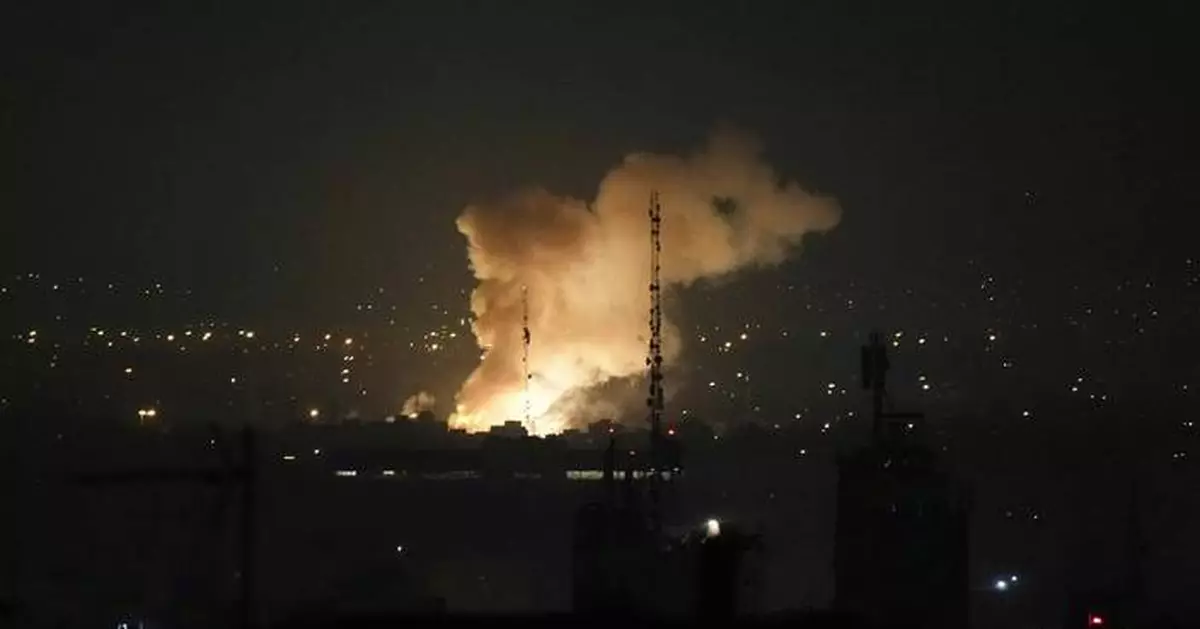
Smoke rises up after an explosion in Tehran, Iran, Friday, June 13, 2025. (AP Photo/Vahid Salemi)
Smoke rises up after an explosion in Tehran, Iran, Friday, June 13, 2025. (AP Photo/Vahid Salemi)
KAMPALA, Uganda (AP) — Police in Uganda on Saturday denied reports that the main opposition candidate in this week's tense election had been arrested, terming the reports as “deceitful and inciteful.” They urged citizens to remain peaceful as the country awaits the results in the presidential vote.

Uganda held a general election on Thursday amid an internet shutdown that has been in place for four days, with the military heavily deployed across the country and pockets of violence erupting as people protested parliamentary election results in various parts of the country.

President Yoweri Museveni, 81, is seeking a seventh term in office and is leading in the provisional results with more than 70% support. His main challenger, musician-turned-politician Kyagulanyi Ssentamu, better known as Bobi Wine, is currently holding 20% of the vote. Wine dismissed the announced results as “fake,” and asked his supporters to ignore them.

Police on Saturday said that Wine was “not under arrest,” as claimed by his National Unity Platform party. Police spokesperson Kituuma Rusoke said Wine was free to leave his house, but there was “controlled access” for others trying to go into the property, to prevent people from using the premises to incite violence.

“It should not surprise you when we have a pickup or two near the residence of Kyagulanyi,” Rusoke said.

Ugandan electoral officials are set to announce the final presidential results on Saturday, as constitutionally required. The chairperson of the national electoral commission said Friday that everything was on course to announce the final result by the end of the day Saturday.

The voting was marred by delays due to the late delivery of materials to polling stations after opening time and the failure of some biometric machines.

President Museveni said he agreed with the electoral commission’s plan to revert to paper voter registration records, but Wine alleged fraud, claiming that there was “massive ballot stuffing” and that his party’s polling agents were abducted to give an unfair advantage to the ruling party.

The security forces were a constant presence throughout the election campaign, and Wine said authorities followed him and harassed his supporters, using tear gas against them. He campaigned in a flak jacket and helmet due to his security fears.

Wine wrote Thursday on X that he was unable to leave his house, and on Friday his party wrote that he had been arrested and taken away in an army helicopter.

Uganda has not witnessed a peaceful transfer of presidential power since independence from British colonial rule six decades ago.

Veteran opposition figure Kizza Besigye, a four-time presidential candidate, remains in prison after he was charged with treason in February 2025.

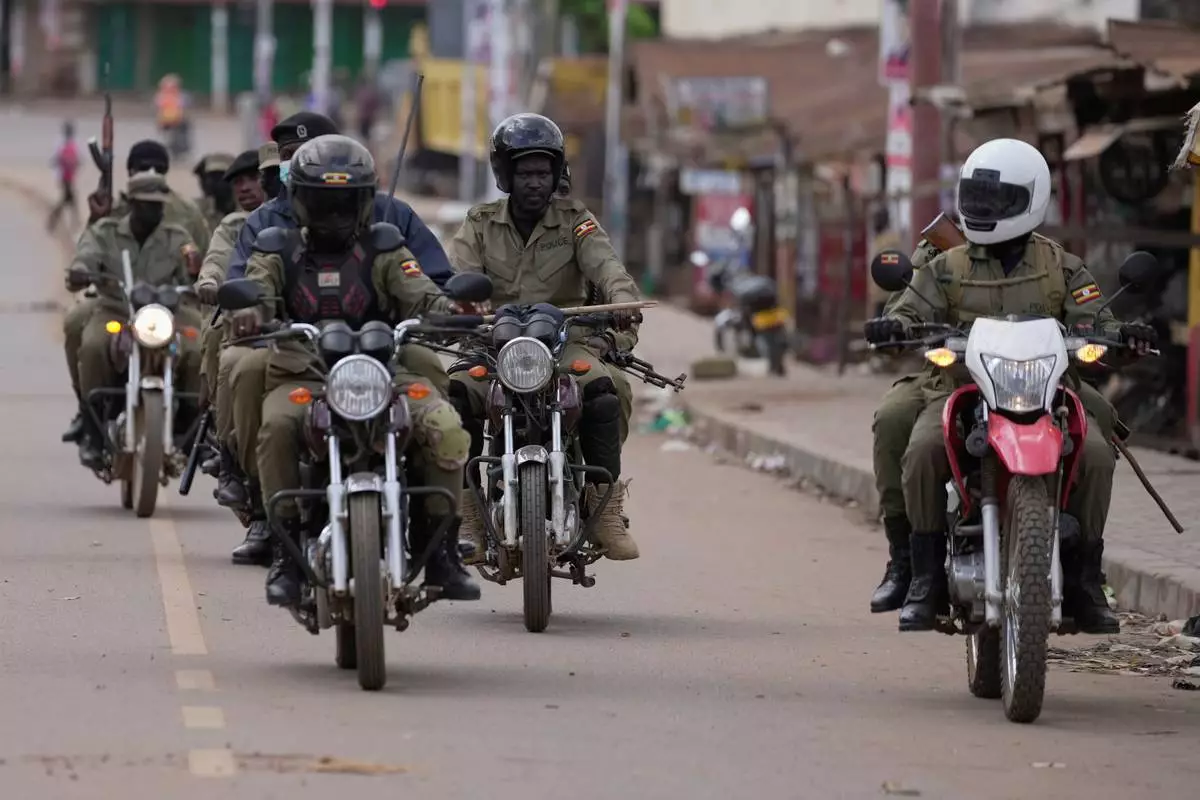
Uganda's security forces patrol a street during protests following the announcement of the preliminary results in Kampala, Uganda, Friday, Jan. 16, 2026. (AP Photo/Brian Inganga)

Uganda's security forces patrol a street during protests following the announcement of the preliminary results in Kampala, Uganda, Friday, Jan. 16, 2026. (AP Photo/Brian Inganga)

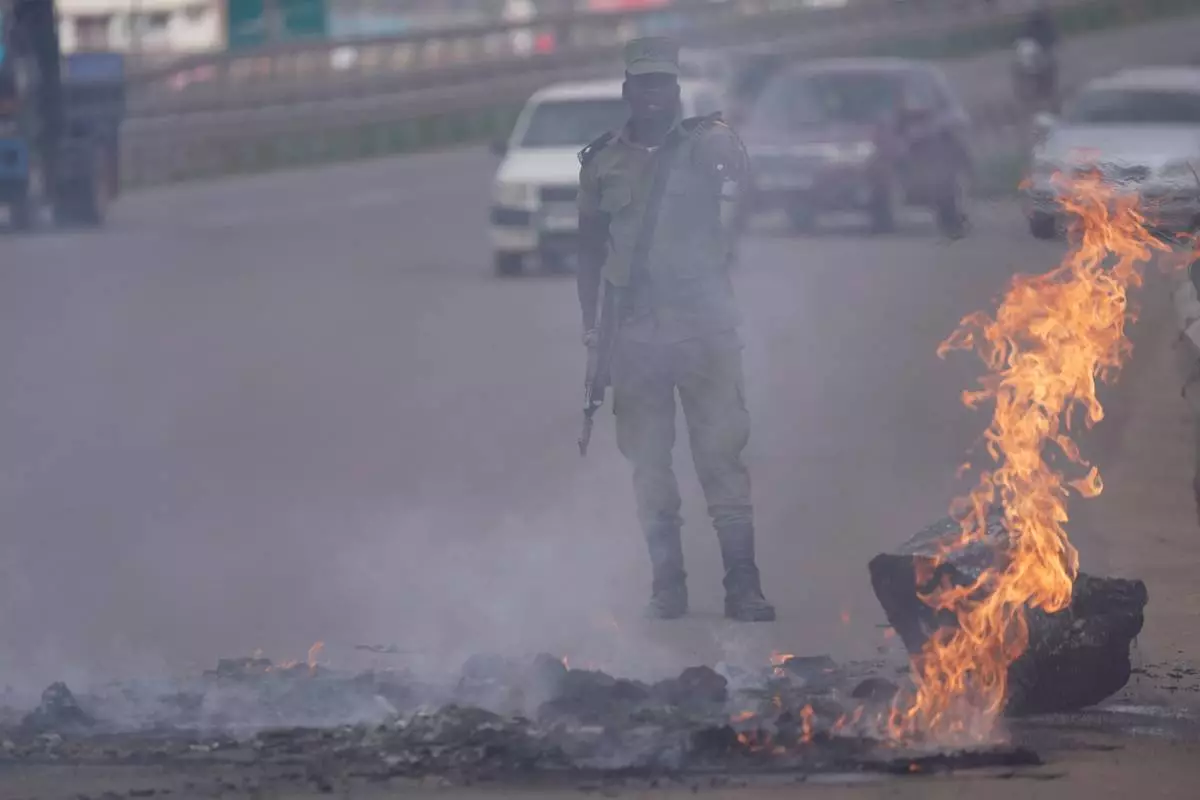
A Ugandan police officer makes a gesture behind a burning fire amid protests following the announcement of the preliminary results in Kampala, Uganda, Friday, Jan. 16, 2026. (AP Photo/Brian Inganga)

A Ugandan police officer makes a gesture behind a burning fire amid protests following the announcement of the preliminary results in Kampala, Uganda, Friday, Jan. 16, 2026. (AP Photo/Brian Inganga)

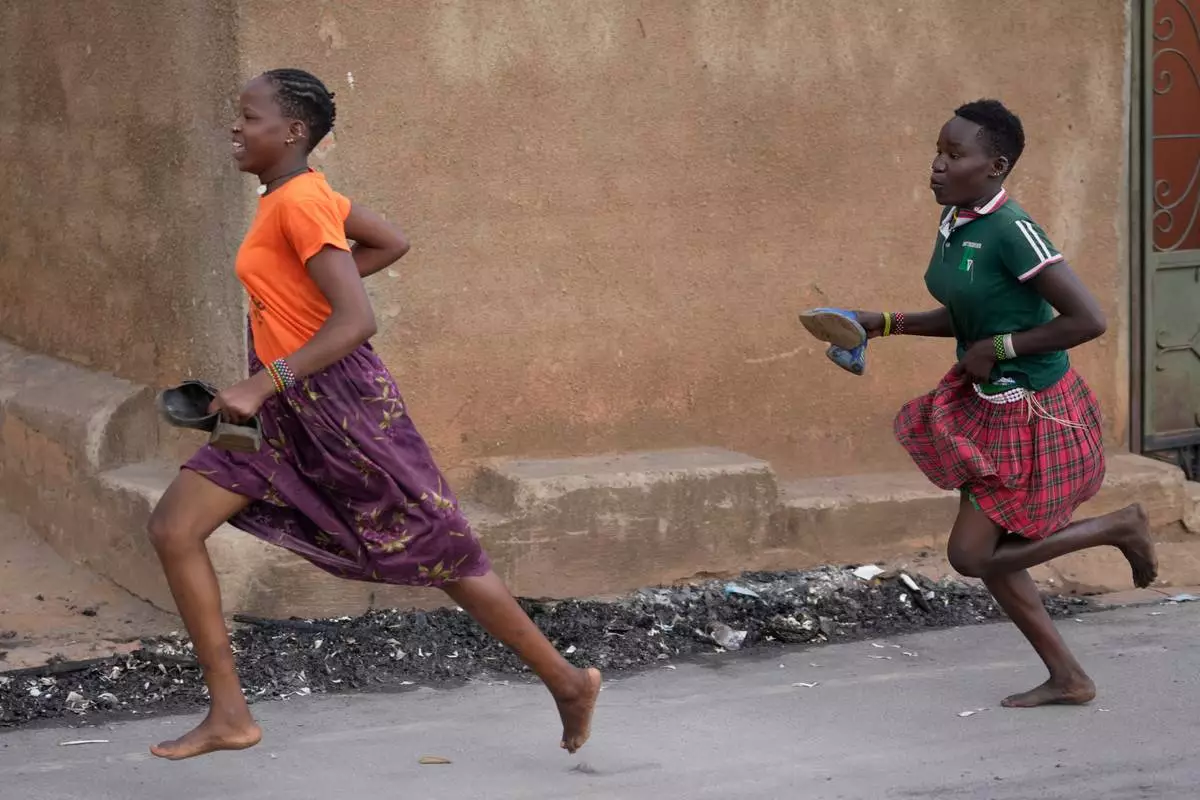
Girls run during protests following the preliminary results in Kampala, Uganda, Friday, Jan. 16, 2026. (AP Photo/Brian Inganga)

Girls run during protests following the preliminary results in Kampala, Uganda, Friday, Jan. 16, 2026. (AP Photo/Brian Inganga)

Recommended Articles