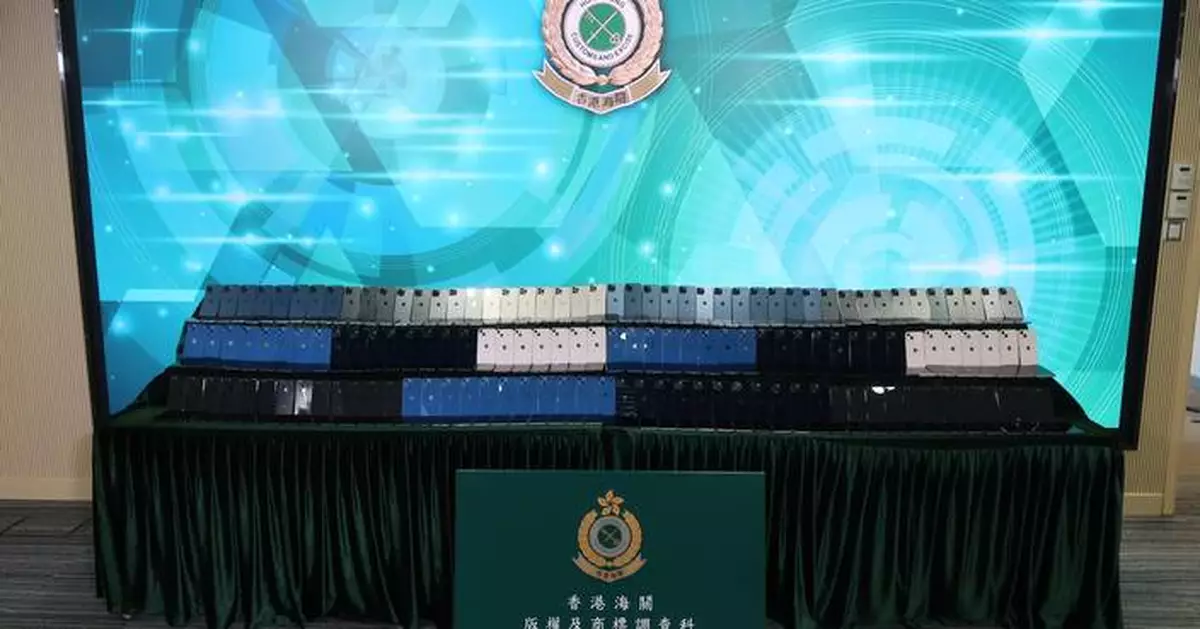
Hong Kong Customs detects case of non-registered precious metals and stones dealer carrying out specified transactions
Hong Kong Customs yesterday (June 12) detected a case involving a local partnership that conducted ruby and sapphire transactions valued at over HK$120,000, without registration under the Dealers in Precious Metals and Stones Regulatory Regime. A partner was arrested.
The investigation is ongoing. The arrested person has been released on bail pending further investigation.
According to the Anti-Money Laundering and Counter-Terrorist Financing Ordinance (Cap. 615), the Regime came into effect on April 1, 2023. Any person who is seeking to carry on a business of dealing in precious metals and stones in Hong Kong and engage in any transaction(s) (whether making or receiving a payment) with a total value at or above HK$120,000 in Hong Kong is required to register with the Commissioner of Customs and Excise. Any dealer, other than a registrant, who claims to be a registrant, claims to be authorised to carry out, or carries out any cash or non-cash transaction(s) with a total value at or above HK$120,000 is liable to a maximum fine of HK$100,000 and imprisonment for six months upon conviction.
Customs reminds dealers in precious metals and stones that they must obtain the relevant registration before they can carry out any cash or non-cash transaction(s) with a total value at or above HK$120,000.
For the forms, procedures and guidelines to submit applications for registration, please visit the website for Dealers in Precious Metals and Stones Registration System (www.drs.customs.gov.hk) or Customs' webpage (www.customs.gov.hk/en/service-enforcement-information/anti-money-laundering/supervision-of-dealers-in-precious-metals-and-ston/index.html).
Members of the public may report any suspected transactions involving precious metals and stones with a total value at or above HK$120,000 conducted without the required registration to Customs' 24-hour hotline 182 8080 or its dedicated crime-reporting email account (crimereport@customs.gov.hk) or online form (eform.cefs.gov.hk/form/ced002).
Summer influenza season nears its end and winter influenza season yet to begin Public must remain vigilant despite influenza activity declines
The Centre for Health Protection (CHP) of the Department of Health today (January 3) reminded the public that seasonal influenza activity has gradually declined over the past two weeks to near baseline levels. This indicated that the summer influenza season, which began in early September last year, might conclude within the next one to two weeks. Nevertheless, the CHP urged the public to remain vigilant and maintain good personal and environmental hygiene at all times. Those who have not yet received seasonal influenza vaccination (SIV), particularly high-risk groups such as pregnant women, the elderly, children and those with underlying illnesses, should receive SIV promptly to reduce the risk of severe illness and death from infection.
Latest surveillance data
-----------------------------
"Hong Kong entered the summer influenza season in early September last year. The seasonal influenza activity peaked in mid-to-late October last year and has since been gradually declining. The latest surveillance data shows that the percentage of respiratory specimens tested positive for seasonal influenza viruses last week (December 21 to 27, 2025) decreased to 4.97 per cent from 7.81 per cent and 6.17 per cent in the previous two weeks (the baseline level is 4.94 per cent). The influenza admission rate in public hospitals was 0.28 cases per 10 000 population (lower than the 0.49 and 0.37 cases per 10 000 population recorded in the previous two weeks, with the baseline level of 0.27 cases per 10 000 population). Regarding outbreaks of influenza-like illness in schools, the number rose sharply from 15 outbreaks in the first week of the new school year last September to 170 outbreaks in mid-October, before gradually declining to 43 outbreaks in mid-November. After a slight rebound to 71 outbreaks in early December last year, the number has steadily decreased over the past few weeks, falling from over 30 outbreaks per week to just four outbreaks last week. The CHP will continue to closely monitor local surveillance data. Should relevant indicators persistently fall below the baseline levels, the CHP will assess next week whether this summer influenza season has concluded," the Controller of the CHP, Dr Edwin Tsui, said.
The predominant virus circulating during this seasonal influenza season is influenza A (H3) virus strain. As in the past, severe or death cases associated with seasonal influenza primarily affect the elderly and children. As of January 1, this summer influenza season has recorded 25 severe paediatric influenza cases, including three fatal cases. The affected children aged between six months to 17 years old. Among them, 20 cases (80 per cent) had not received SIV (including one case who received the 2025/26 SIV only four days before onset of illness. As it generally takes two weeks for the body to develop sufficient protection after vaccination, the case was not protected by the vaccine. Therefore, it is not counted as vaccinated). During the same period, 502 severe influenza cases were recorded among adults, including 339 deaths. Among adult fatalities with available clinical data, over 80 per cent had underlying illnesses.
"Although the summer influenza season shows signs of ending and the winter influenza season has not yet begun, influenza activity may rise again as the weather gradually turns colder in the first quarter of this year. It cannot be ruled out that the circulating virus strains may change. Therefore, I once again urge all individuals aged six months or older, except those with known contraindications, who have not yet received SIV to act promptly. Although there are some antigenic differences between the currently circulating influenza A (H3) virus strain and the virus strain contained in the vaccine, SIV can still offer protection against the variant strain of subclade K, as well as the influenza A (H1) and influenza B strains included in the vaccine. Those who contracted influenza during the summer influenza season should still receive the 2025/26 SIV, if they have not yet done so, to guard against other circulating virus strains that may emerge during the forthcoming winter influenza season," Dr Tsui added.
2025/26 SIV Programmes
------------------------------
Getting vaccinated against influenza is one of the most effective ways to prevent influenza and its complications. It also reduces the risk of serious illness or death from infection. With the concerted efforts of all sectors of the community (including the medical sector, schools, parents and residential care homes), as of December 28, 2025, over 1.89 million doses of influenza vaccine were administered under various SIV programmes in the year 2025/26, representing an increase of approximately 4.7 per cent compared with the same period in the previous influenza vaccination season. Regarding schools, to boost SIV rates, enrolment for the SIV School Outreach Programme has started earlier since the beginning of June last year. The CHP has also introduced enhancement measures, allowing all schools to choose either the live attenuated influenza vaccines (i.e. nasal LAIV) and the "hybrid mode", which allows schools to choose both the injectable inactivated influenza vaccines and the nasal LAIV during the same or different outreach vaccination activities. Vaccination rates among schoolchildren in different age groups are two per cent to nine per cent higher compared to the same period last year.
"The SIV coverage rate for children aged six months to under two years remains relatively low at about 22 per cent. Although this represents approximate five per cent point increase compared to the same period last year, it is still lower than that of other age groups. Through the Primary Healthcare Commission, the CHP has urged family doctors to assist in encouraging parents to give consent for their children to receive SIV. The Government has opened all 29 of the DH's Maternal and Child Health Centres (MCHCs) for all children aged six months to under two years to receive the vaccine; as well as the District Health Centres and District Health Centre Expresses and their service outlets under the Primary Healthcare Commission in the 18 districts, and 74 Family Medicine Clinics and 38 public hospitals of the Hospital Authority to provide more choices for the public. For the list of vaccination venues, please refer to the CHP'sVaccination Schemespage. Parents of eligible children may book an appointment for their children to receive vaccination at designated MCHCs via theonline booking system," Dr Tsui said.
He reminded the members of the public to maintain good personal, hand and environmental hygiene. Furthermore, high-risk persons should receive COVID-19 booster doses at appropriate times to lower the risks of serious illness and death. Public with respiratory symptoms, even if the symptoms are mild, should wear a surgical mask and seek medical advice promptly to lower the risk of spreading the disease to high-risk persons.
Members of the public may refer to the CHP'sCOVID-19 & Flu Express,Seasonal Influenza Webpage,COVID-19 Vaccination Programme Webpage, adVaccination Schemes Webpage, for the latest information.
Source: AI-found images