SACRAMENTO, Calif. (AP) — California lawmakers on Friday approved a budget proposal to freeze enrollment in a state-funded health care program for immigrants without legal status to help close a $12 billion deficit.
Their plan is a scaled-back version of a proposal Democratic Gov. Gavin Newsom introduced in May. California, with the largest state budget in the country, is facing a deficit for the third year in a row. This year's budget shortfall has forced Democratic leaders to start cutting back on several liberal policy priorities, including to the landmark health care expansion for low-income adult immigrants without legal status.
The vote comes as tensions escalate in Los Angeles over President Donald Trump's immigration crackdown across Southern California. As protesters took to the streets and, at times, clashed with law enforcement in dayslong demonstrations, Trump said protests had turned violent and activated more than 4,000 National Guard members and 700 Marines over the objections of city and state leaders. The demonstrations have largely been peaceful. California has sued the federal government to stop the deployment.
The decision to freeze Medicaid enrollment highlights Democratic state leaders’ struggle to protect progressive priorities against budget challenges. Illinois and Minnesota, also led by Democratic governors, are on track to end health care access to low-income adults without legal status after facing budget shortfalls this year.
It is not the state’s final spending plan. Newsom and legislative leaders are still negotiating solutions before the start of the new fiscal year on July 1. Lawmakers must pass a balanced budget by Sunday or else they would forfeit their salaries. Democratic state leaders are also bracing for potential federal cuts to health care programs and other broad economic uncertainty such as federal tariff policies that could force them to make even deeper cuts.
Republican lawmakers say the Legislature's budget doesn't do enough to rein in costs ahead of future deficits. The caucus unsuccessfully pushed for a proposal Friday that would have eliminated funding for the health care programs for low-income people without legal status, among other things.
“It's a difficult budget because of the unsustainable spending that the governor and the legislative Democrats have been doing over many years now,” Republican Assemblymember James Gallagher said Friday after the vote.
The state has more than 1.6 million people without legal status enrolled in its health care program this fiscal year, according to the budget.
Under Newsom’s plan, low-income adults without legal status would no longer be eligible to apply for Medi-Cal, the state’s Medicaid program, starting in 2026. Those who are already enrolled wouldn't be kicked off their plans but would have to start paying a $100 monthly premium in 2027. The state would save $5.4 billion by fiscal year 2028-2029, state officials estimated.
Lawmakers mostly agreed on the plan to halt enrollment for adults without legal status, but their proposal also includes a provision to allow people to reenroll within six months if they lose coverage for missing payment. The monthly premium would also lower by roughly a third to $30 and would only apply to adults between 19 and 59 under the Legislature's plan starting in July 2027. The proposal would save roughly $3.8 billion by fiscal year 2027-2028.
The proposals would likely result in people losing coverage because they can't afford the premiums and send more people into emergency rooms, advocates said.
“This is no way to respond to concerns about the health and safety of communities that power our economy and contribute billions in state taxes,” said Masih Fouladi, Executive Director of the California Immigrant Policy Center.
California was among one of the first states to extend free health care benefits to all low-income adults regardless of their immigration status, an ambitious plan touted by Newsom to help the nation’s most populous state inch closer to a goal of universal health care. But the cost ran billions more than the administration had anticipated and is projected to keep growing.
California provides free health care to more than a third of its 39 million people.
Several Democrats said the Medicaid enrollment freeze does not align with California values. The plan would create a two-tier health care system, they said.
“If we move forward with freezing Medi-Cal enrollment and charging premiums to our immigrant population, we are no better than the Trump administration,” Assemblymember Sade Elhawary said prior to the vote. "The federal administration targeted immigrant communities with force, and we are targeting them through this budget by basically cutting off their access to health care."
Democratic state Sen. Akilah Weber Pierson defended the budget proposal, saying that the plan is not cutting benefits to people who are already enrolled as Legislature also avoided more devastating cuts in social services. Lawmakers rejected the governor's plan to cut funding for a program providing in-home domestic and personal care services for some low-income residents and Californians with disabilities. They also rejected a proposal that would have cut Planned Parenthood's budget by a third.
“No one who is currently covered will lose their health care coverage," she said.
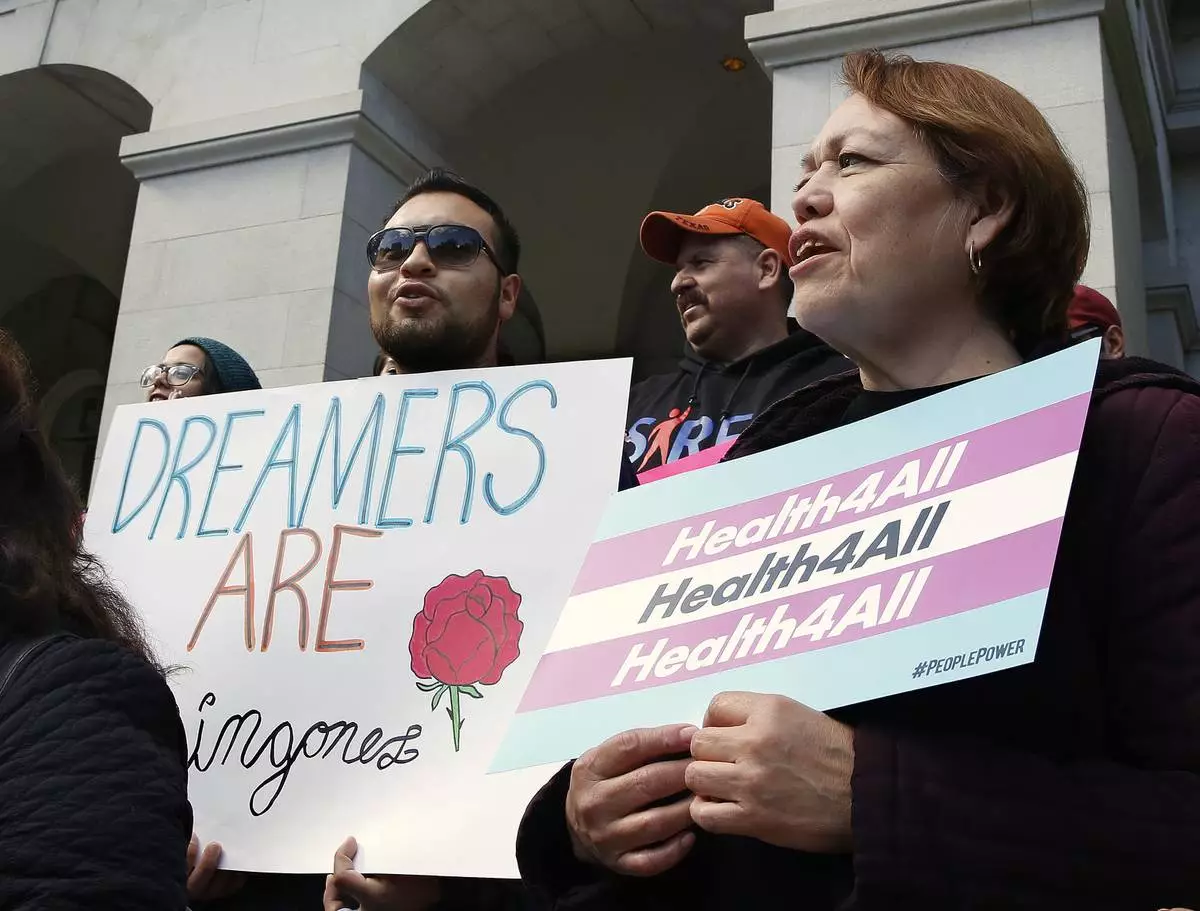
FILE - Supporters of proposals to expand California's government-funded health care benefits to undocumented immigrants gather at the Capitol for the Immigrants Day of Action, on May 20, 2019, in Sacramento, Calif. (AP Photo/Rich Pedroncelli, File)