Skip to Content Facebook Feature Image

In his own words: Stephen Miller's arguments for White House actions in US cities and abroad

News

In his own words: Stephen Miller's arguments for White House actions in US cities and abroad
News

News

In his own words: Stephen Miller's arguments for White House actions in US cities and abroad

2026-01-15 08:38 Last Updated At:08:40

WASHINGTON (AP) — More than a year before an American military operation deposed Nicolás Maduro, a senior aide to President Donald Trump argued that the Venezuelan leader had been dispatching gang members into the United States.

"If you’re a dictator of a poor country with a high crime rate, wouldn’t you send your criminals to our open border?” Stephen Miller told reporters in the closing stretch of Trump's 2024 comeback campaign.

Miller now serves as the White House chief of staff for policy, where he plays a prominent role in promoting Trump's policy agenda. His bombastic style and zero-sum worldview have made him a lightning rod within the administration. Critics argue that Miller’s rhetoric about foreign nations and immigrants echoes racist and imperialist ideas that have undergirded military actions by the U.S. and other nations for centuries.

A joint statement from the governments of Spain and five Latin American countries following the Venezuela operation called for countries in the region to engage in “mutual respect, the peaceful settlement of disputes, and nonintervention,” while Sen. Bernie Sanders, I-Vt., called the administration's Venezuela policy “old-fashioned imperialism.”

“Advocating for policies that put American citizens first isn’t racist. Anyone who says so is either intentionally lying or just plain stupid,” said White House spokesperson Abigail Jackson.

Here's a look at how Miller laid the rhetorical groundwork for this month's attack on Venezuela and what his comments say about the administration's broader worldview.

Shortly after the U.S. operation that captured Maduro, Miller wrote on social media: “Not long after World War II the West dissolved its empires and colonies and began sending colossal sums of taxpayer-funded aid to these former territories (despite have already made them far wealthier and more successful). The West opened its borders, a kind of reverse colonization, providing welfare and thus remittances, while extending to these newcomers and their families not only the full franchise but preferential legal and financial treatment over the native citizenry. The neoliberal experiment, at its core, has been a long self-punishment of the places and peoples that built the modern world."

Two weeks before Maduro's arrest, Miller in December echoed arguments by Trump that the Venezuelan oil industry was stolen from American oil companies:

“American sweat, ingenuity and toil created the oil industry in Venezuela. Its tyrannical expropriation was the largest recorded theft of American wealth and property. These pillaged assets were then used to fund terrorism and flood our streets with killers, mercenaries and drugs,” Miller wrote on social media.

Miller in January claimed to reporters that U.S. military power had ensured compliance from the Caracas government.

“We have an oil embargo in Venezuela for them to do any kind of commerce. They need our permission. We have our massive fleet or armada still present there. This is an active and ongoing U.S. government military operation, and so, of course, we set the terms and conditions," Miller said.

He added: “Our conversations are that we are very much getting full, complete and total cooperation from the government of Venezuela, and as a result of that cooperation, the people of Venezuela are going to become richer than they ever have before. And of course, the United States is going to benefit from this massively in terms of economic, security and military cooperation, counter-narcotics, counterterrorism and every other dimension of our security."

During a wide-ranging January interview with CNN’s Jake Tapper, Miller repeatedly argued for the primacy of American power and criticized the international order the U.S. once led.

“You can talk all you want about international niceties and everything else. But we live in a world, in the real world, Jake, that is governed by strength, that is governed by force, that is governed by power. These are the iron laws of the world," said Miller.

Miller also dismissed concerns that Trump's vows to take Greenland from Denmark, a fellow member of the NATO military alliance, may trigger a military conflict with Europe.

“Nobody’s going to fight the United States militarily over the future of Greenland," said Miller.

In the same interview, Miller said it would be “absurd and preposterous” and “not even a serious question” to propose the administration support Venezuelan opposition leader María Corina Machado's bid to lead the country because the military would not back her.

Tapper then asked whether the South American country should hold elections.

Miller replied: “The United States is using its military to secure our interests unapologetically in our hemisphere. We’re a superpower, and under President Trump, we are going to conduct ourselves as a superpower. It is absurd that we would allow a nation in our own backyard to become the supplier of resources to our adversaries, but not to us, to hoard weapons from our adversaries, to be able to be positioned as an asset against the United States, rather than on behalf of the United States.”

The anchor pressed Miller on whether sovereign countries had the right to conduct their own affairs.

Miller explained the administration’s stance: “The Monroe Doctrine and the Trump Doctrine is all about securing the national interest of America. For years, we sent our soldiers to die in deserts in the Middle East to try to build them parliaments, to try to build them democracies, to try to give them more oil, try to give them more resources. The future of the free world, Jake, depends on America being able to assert ourselves and our interests without apology." He called for an end to "This whole period that happened after World War II, where the West began apologizing and groveling and engaging in these massive reparations schemes.”

He also defended the administration's operation and echoed his past claims that Maduro had sent criminals into the U.S.: “We’re not going to let tinpot communist dictators send rapists into our country, send drugs into our country, send weapons into our country."

Miller has returned to promoting the administration's stance on domestic issues like immigration and partisan politics.

On Tuesday, following nationwide protests after an Immigration and Customs Enforcement officer shot and killed a woman in Minnesota, Miller wrote on social media: “Americans voting overwhelmingly for mass deportation. Congress passed laws requiring it and then passed new legislation to fully fund it. The response of the Democrat Party and its activists has been to support and orchestrate violent resistance against federal law enforcement.”

He later added in a separate post, “In case it isn’t clear by now, if Democrats won they would have made every city into Mogadishu or Kabul or Port-au-Prince."

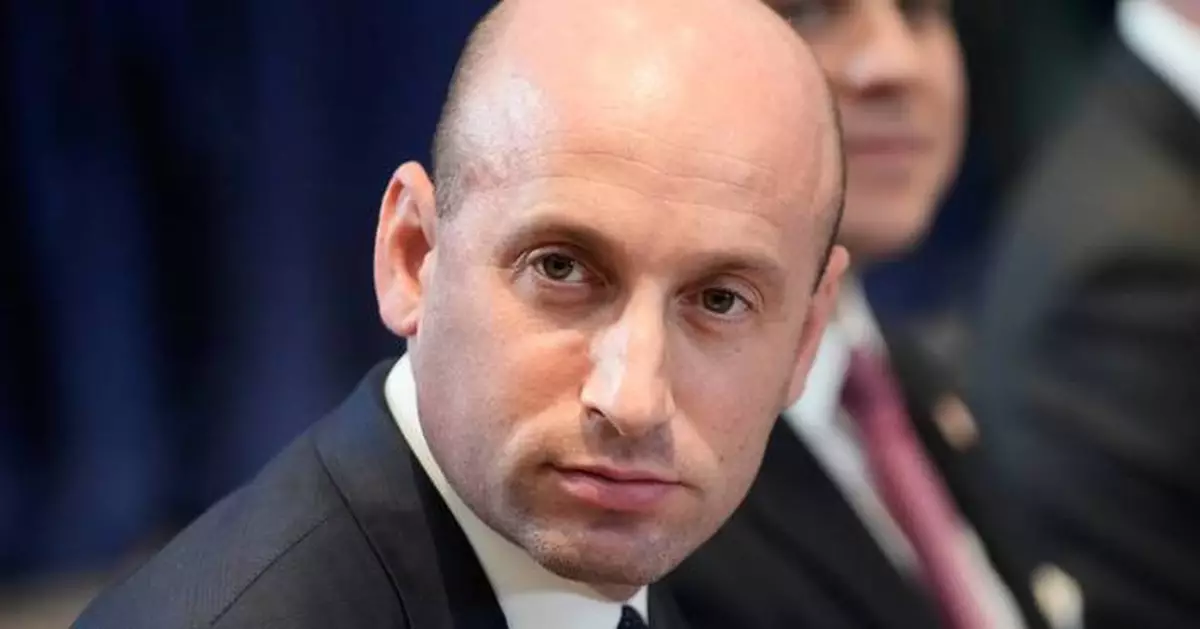
FILE - United States Homeland Security Advisor Stephen Miller reacts on the sidelines of the ASEAN Summit in Kuala Lumpur, Malaysia, Sunday, Oct. 26, 2025. (AP Photo/Mark Schiefelbein), File)
FILE - United States Homeland Security Advisor Stephen Miller reacts on the sidelines of the ASEAN Summit in Kuala Lumpur, Malaysia, Sunday, Oct. 26, 2025. (AP Photo/Mark Schiefelbein), File)
INDIANAPOLIS (AP) — Tarris Reed Jr. sat at his locker Thursday, fielding questions about his run as the interior-scoring, rebound-snagging force in UConn's latest Final Four push.

Yet he wasn't the main attraction.

That's because across the room, an even bigger gaggle of reporters waited for freshman guard Braylon Mullins — the Indiana kid who hit an all-timer of a shot to send the Huskies back to the sport's biggest stage — to return for his own round of interviews.

“Guards are the ones that hit the big shots,” Reed said Thursday when asked about big men getting their due, adding with a grin: “We just do our job, we do the dirty work — and we're used to doing it our whole life so we have fun doing it.”

Maybe so, but there's no minimalizing the impact of size this week in Indianapolis. Not with the Final Four boasting its biggest quartet of teams going back roughly two decades, starting with guys such as Reed, Michigan's Aday Mara, Arizona's Koa Peat and Illinois' 7-foot Ivisic twins as anchors to lineups with size radiating all the way out to the perimeter.

The average height of the Final Four teams is nearly 79.1 inches, or roughly 6 feet 6, according to KenPom’s analytics site. That edges last year’s average of nearly 78.3 inches for the biggest of any Final Four going back to the start of KenPom’s data in 2007.

Illinois (28-8) is Division I's tallest team with an average roster height of nearly 6-7 (80 inches), while Arizona (36-2) is seventh at nearly 6-6 (79 inches). Michigan (35-3) and UConn (33-5) are in the top 30 nationally with nearly identical averages slightly behind the Wildcats.

Consider it a sign of the premium each team put on building a roster to overwhelm teams inside, on the glass and with game-altering length spanning the gaps between.

That kind of size, strength and wingspan creates trouble cascading through the matchups. ACC Network analyst Luke Hancock said teams are also thriving by finding power forwards and centers capable of stepping outside to stretch defenses further and create space, eliminating the ability for a defense to simply collapse on a lone big man.

“Guards still win in March,” said Hancock, the most outstanding player of the 2013 Final Four in Louisville’s later-vacated title run. "But I think these guys have become almost like a necessary component. If you want to win championships, you need a big 4 and a monster 5.”

And it's manifesting in several ways as March Madness reaches its final act.

The Illini have had the best defensive tournament efficiency of the Final Four teams while dominating the glass to complete those stops. Their roster includes an influx of European talent, including Tomislav (7-1) and Zvonimir Ivisic (7-2), as well as 6-9 forward David Mirkovic from Montenegro.

The Illini also brings 6-9, 235-pound graduate Ben Humrichous off the bench, while the outlier in the big lineup is 6-2 senior guard Kylan Boswell as a strong backcourt defender.

The South Region champion has allowed .976 points per possession in the NCAA Tournament to lead the remaining four teams. Throw in the fact that Illinois is outrebounding opponents by 16.3 per game, and it's been a perfectly timed boost to an already elite offense with those forwards and centers capable of hitting from behind the arc, too.

"Playing in the summer, you could tell it’s a little bit harder to do some things just because you’ve got Z at the rim, who’s 7-foot-2 and a great shot blocker," 6-6 forward Jake Davis said. “You got Tommy down there. So anybody you’re going up against in practice is super tall. ... We’ve just got a bunch of length everywhere. And you could tell early on that we could cause problems for other teams.”

The Illini will be tested against Reed, a 6-foot-11, 265-pound senior whose scoring (21.8) and rebounding (13.5) averages in the tournament are the best of any player still standing.

That included opening the tournament with a video game-type stat line of 31 points and 27 rebounds against Furman, making him the first player with 30-plus points and 25-plus rebounds in an NCAA Tournament game since Houston’s Elvin Hayes did it twice in 1968.

He’s coming off a 26-point showing in the comeback from 19 down to stun Duke in the Elite Eight.

“He’s a monster,” said UConn senior Alex Karaban, who was part of the Huskies’ 2023 and 2024 title winners. “He’s been so dominant. He’s really playing like the most dominant player in college basketball right now.”

When it comes to the No. 1 seeds, the Wolverines have hummed with 90-plus points in four tournament wins. The Wildcats have been right behind in offensive efficiency despite being shooting fewer 3-pointers than just about every other Division I team all season.

Their meeting Saturday matches strengths.

Michigan has used the 7-3, 255-pound Mara to protect the paint, flanked by a pair of versatile 6-9 forwards in Associated Press first-team All-American Yaxel Lendeborg (240 pounds) and Morez Johnson Jr. (250).

“Our size definitely makes it tougher for smaller guards,” Lendeborg said. “Because we’re so versatile ... we can switch and guard point guards, make their life a little harder. And you know, we’re all strong bodies too. So we try to wear down teams.

“And then, toward the end of the game, that’s when we usually make our runs when we need it.”

Michigan will be tested against the Wildcats with 7-2 center Motiejus Krivas (10.4 points, 8.2 rebounds) and Peat, a 6-8, 235-pound freshman considered a strong NBA prospect.

“If you don't have the big to defend other bigs, you can't compete at this level in my opinion,” Hancock said.

“How do you make it so you're really tough to guard and you have an advantage? It’s the 4-men in this Final Four who are just so talented and the diversity of their skill sets — they can do so many things. That is the ultimate to me.”

AP March Madness bracket: https://apnews.com/hub/ncaa-mens-bracket and coverage: https://apnews.com/hub/march-madness

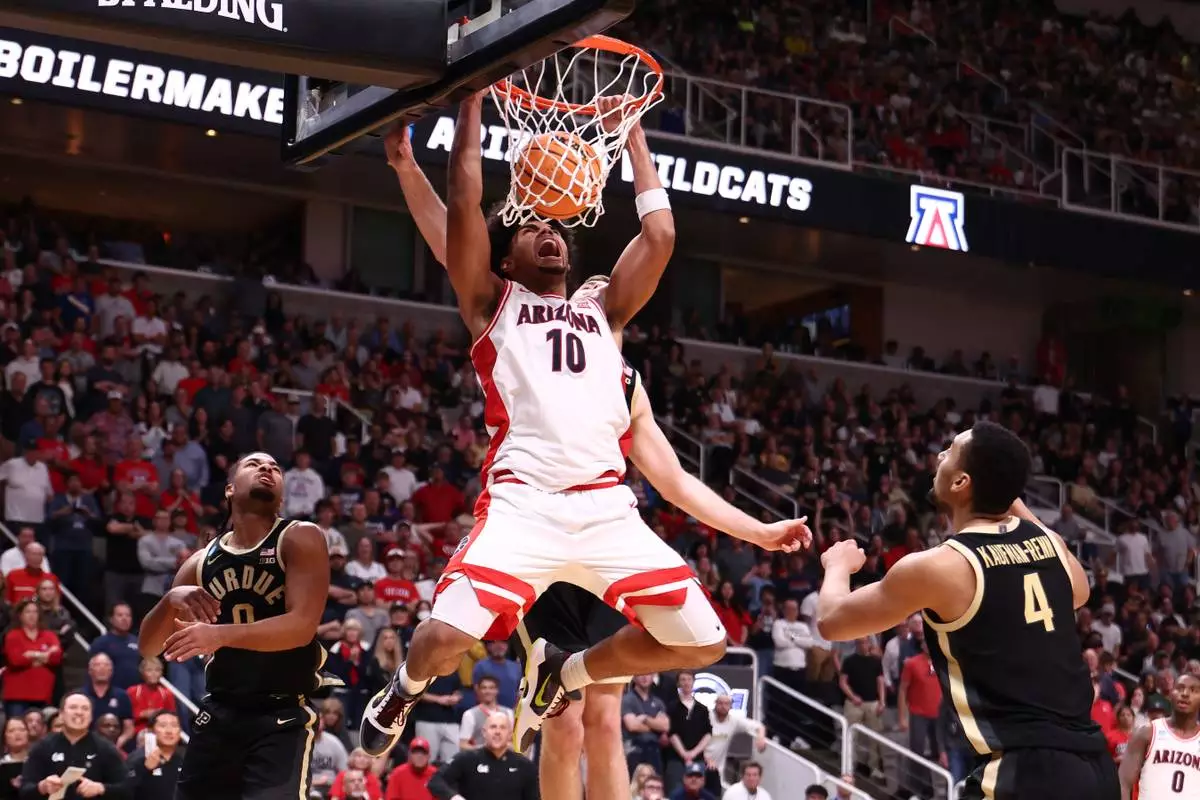
Arizona forward Koa Peat (10) dunks during the second half in the Elite Eight of the NCAA college basketball tournament against Purdue, Saturday, March 28, 2026, in San Jose, Calif. (AP Photo/Kelley L Cox)

Arizona forward Koa Peat (10) dunks during the second half in the Elite Eight of the NCAA college basketball tournament against Purdue, Saturday, March 28, 2026, in San Jose, Calif. (AP Photo/Kelley L Cox)

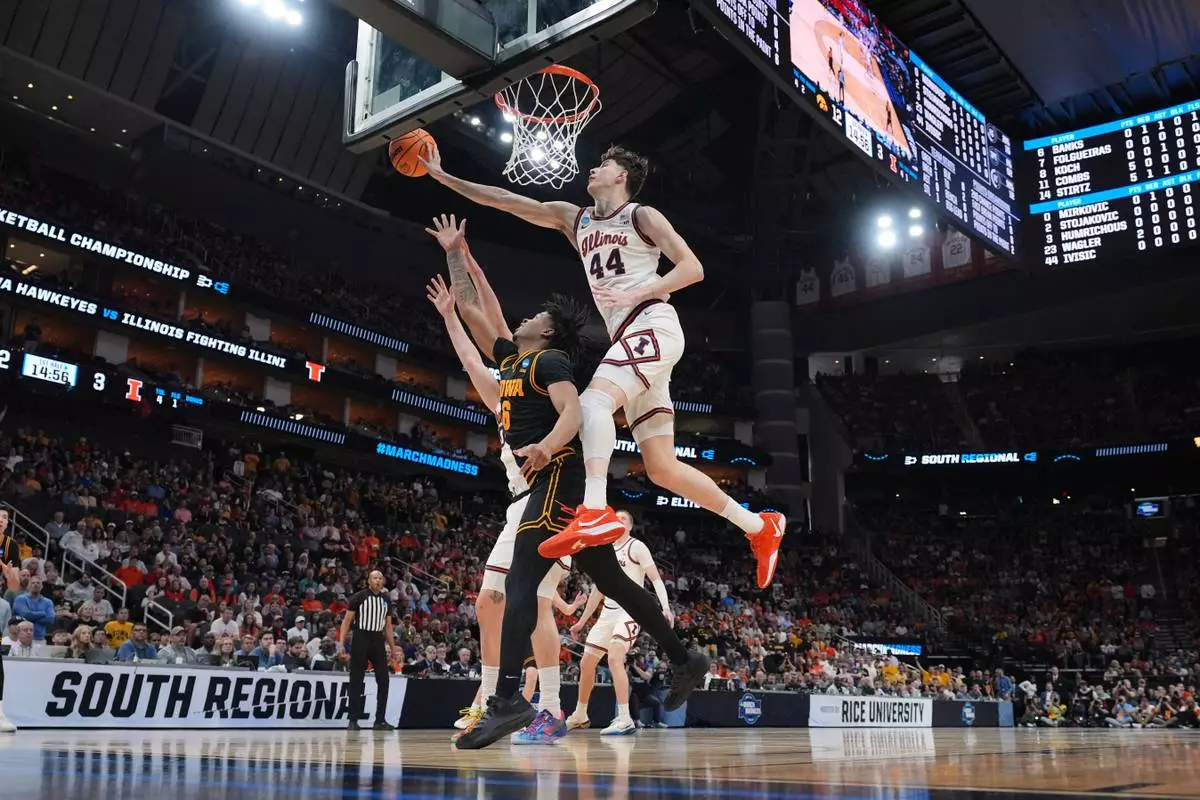
Iowa's Tavion Banks (6) has his shot blocked by Illinois' Zvonimir Ivisic (44) during the first half of an Elite Eight game in the NCAA college basketball tournament Saturday, March 28, 2026, in Houston. (AP Photo/Eric Gay)

Iowa's Tavion Banks (6) has his shot blocked by Illinois' Zvonimir Ivisic (44) during the first half of an Elite Eight game in the NCAA college basketball tournament Saturday, March 28, 2026, in Houston. (AP Photo/Eric Gay)

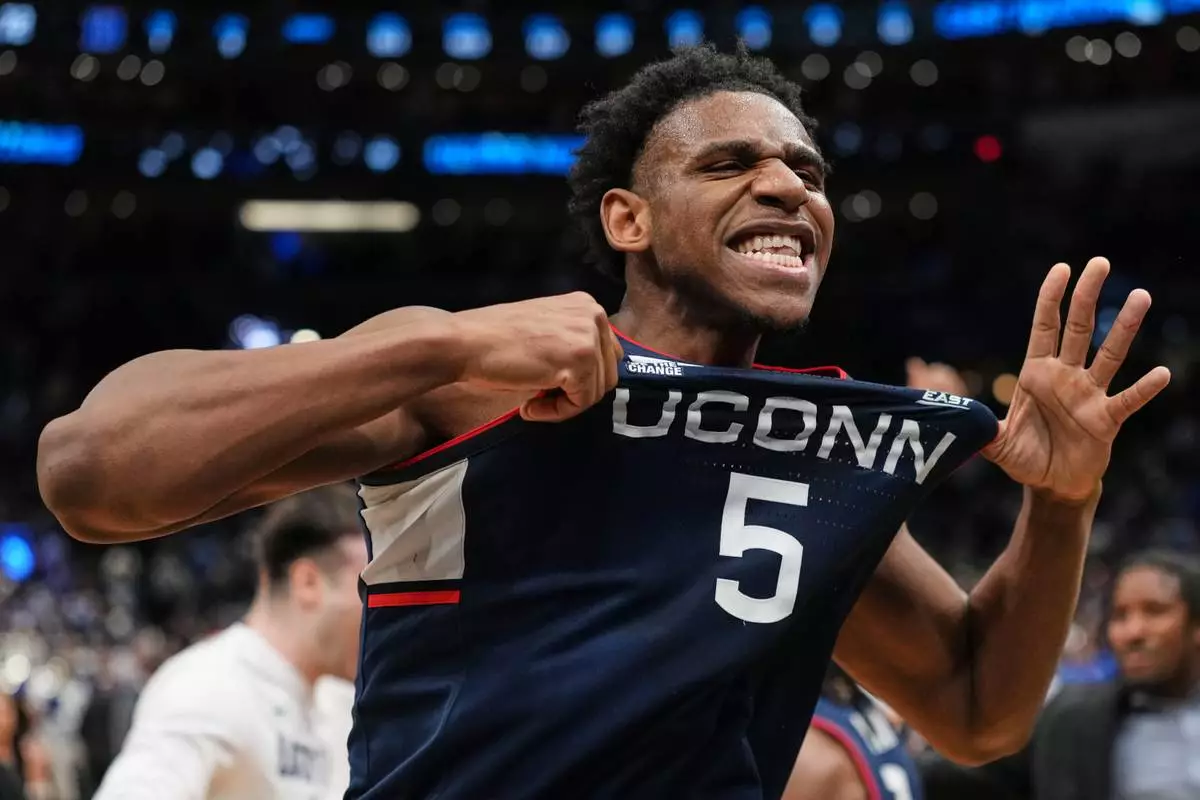
UConn forward Tarris Reed Jr. (5) reacts after the team's win against Duke in the Elite Eight of the NCAA college basketball tournament, Sunday, March 29, 2026, in Washington. (AP Photo/Abbie Parr)

UConn forward Tarris Reed Jr. (5) reacts after the team's win against Duke in the Elite Eight of the NCAA college basketball tournament, Sunday, March 29, 2026, in Washington. (AP Photo/Abbie Parr)

Recommended Articles