BRUSSELS (AP) — Less than two weeks before a NATO summit, Sweden and the Netherlands said Friday that they intend to increase defense spending to 5% of their gross domestic product, in line with U.S. President Donald Trump’s demands.
Trump and his NATO counterparts meet for a summit in the Netherlands on June 24-25, where they’re due to agree a new defense spending target. He insists that Europe must look after its own security, while Washington focuses on China and its own borders.
Swedish Prime Minister Ulf Kristersson said that “Sweden will reach a new NATO spending target to 5% of GDP, where at least 3.5% of GDP will be allocated towards core defense requirements to fulfill NATO’s new capability targets."
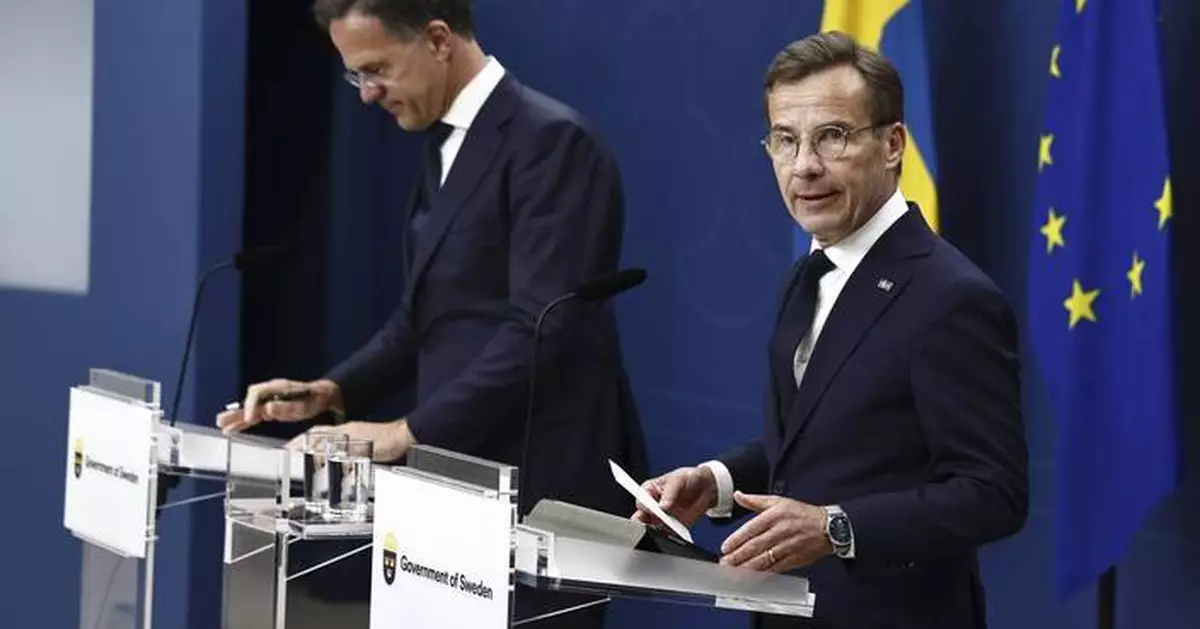
“We are in a specific geographical situation where we need to meet the future threats from Russia,” Kristersson told reporters in Stockholm, standing alongside NATO Secretary-General Mark Rutte.
After Russia launched its full-scale invasion of Ukraine on Feb. 24, 2022, NATO's 32 allies agreed to spend at least 2% of GDP on their military budgets. But NATO’s new plans for defending Europe and North America against a Russian attack require investment of at least 3%.
The aim now is to raise the bar to 3.5% for core defense spending on tanks, warplanes, air defense, missiles and hiring extra troops. A further 1.5% would be spent on things like roads, bridges, ports and airfields so armies can deploy more quickly, as well as preparing societies for possible attack.
According to the most recent NATO figures, Sweden was estimated to have spent 2.25% of its GDP on defense last year. The Netherlands spent 2.06%, among 22 of the 32 allies who reached NATO’s old benchmark.
The Dutch caretaker government announced on Friday that it would increase spending on defense to 3.5% of GDP in an effort to meet the 5% goal. It’s not clear where the approximately 18 billion euros ($20 billion) will come from.
Dutch Defense Minister Ruben Brekelmans called the decision “historic” and told reporters after a Cabinet meeting that he hoped other NATO countries would also increase their spending.
“My expectation is that this will happen,” he said.
Poland and the Baltic countries — Estonia, Latvia and Lithuania — have already publicly committed to 5%, and Rutte said last week that most allies were ready to endorse the goal.
A big question still to be answered is what time frame countries will get to reach the new spending goals. A target date of 2032 was initially floated, but Rutte has said that Russia could be ready to launch an attack on NATO territory by 2030.
The United States insists that a near-term deadline must be set. But Italian Foreign Minister Antonio Tajani said on Thursday that his country would get to 5%,. but would require a decade to do so.
Molly Quell reported from The Hague, Netherlands.

Italy's Foreign Minister Antonio Tajani, left, and Mark Rutte, NATO Secretary General, prior to the "Weimar Plus" Ministerial meeting dedicated to Ukraine and European security in Rome, Italy, Thursday, June 12, 2025. (Mauro Scrobogna/LaPresse via AP)
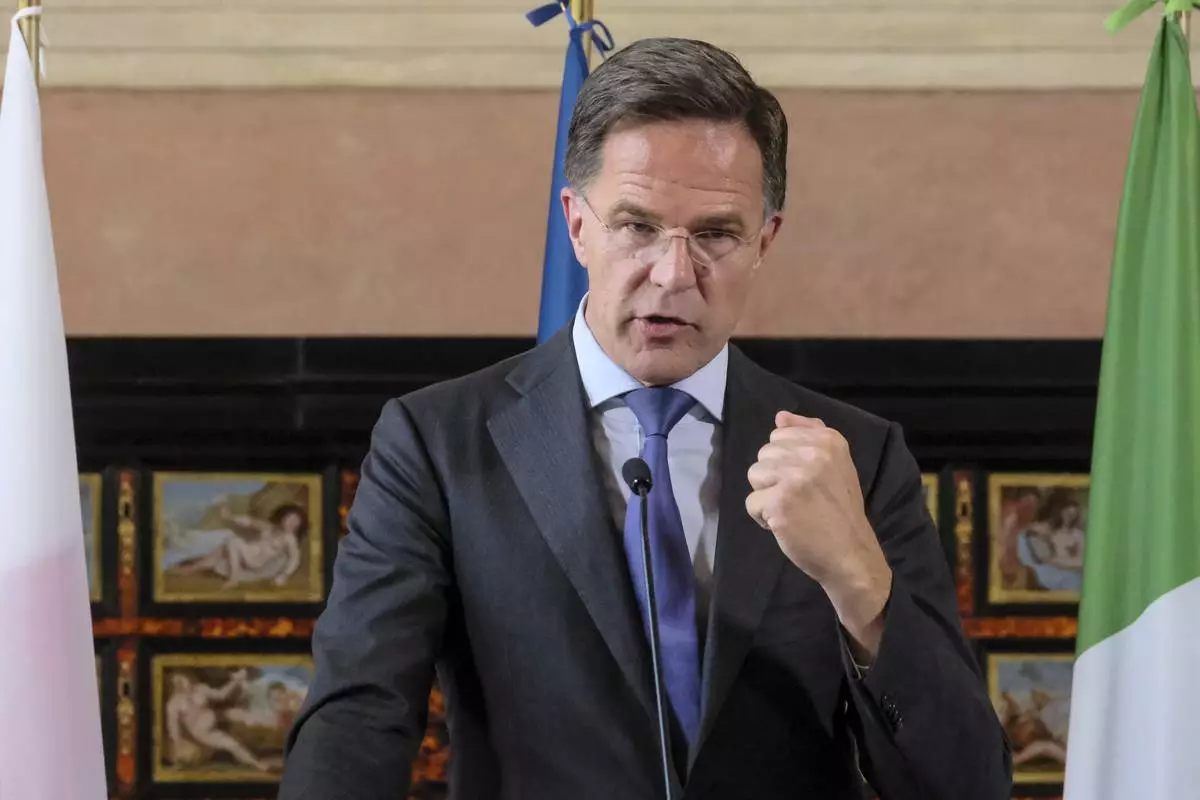
NATO Secretary General Mark Rutte attends the "Weimar Plus" Ministerial meeting in Rome, Thursday, June 12 2025. (Mauro Scrobogna/LaPresse via AP)
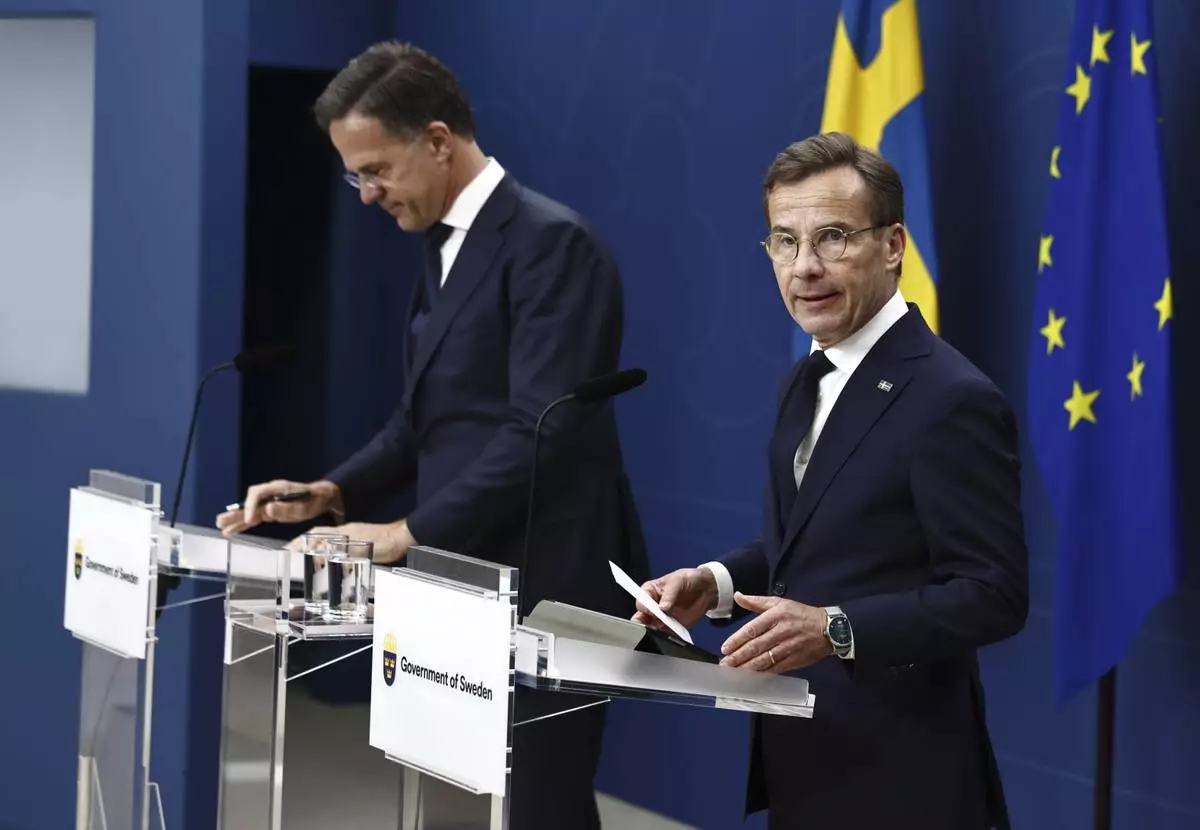
Swedish Prime Minister Ulf Kristersson, right, and NATO Secretary General Mark Rutte hold a joint press conference in Stockholm, Sweden, Friday June 13, 2025. (Stefan Jerrevång/TT News Agency via AP)
LOS ANGELES (AP) — Nadia Comaneci, Apolo Ohno, Bart Conner and Cullen Jones were among the more than 300 Olympic and Paralympic athletes who gathered Tuesday under the peristyle at the Los Angeles Memorial Coliseum, where the Summer Games will open in 2028.
In an effort to promote Wednesday's registration launch for tickets to the Los Angeles Games, the athletes representing 28 different Olympics dating to 1960 joined Janet Evans in a short countdown to the lighting of the Olympic Cauldron against a clear blue winter sky.
“LA is committed to delivering an athlete-centered games and that can only happen if athletes are actually at the center of our planning,” said Evans, the Olympic champion swimmer who is chief athlete officer for the LA28 organizing committee.
The get-together felt like a homecoming to Ohno, the most decorated U.S. Winter Olympian ever with eight short track speedskating medals.
“I walked in and I literally saw like 50 of my friends that I'd grown up in the Olympic training center with for many years,” he said. "I haven't seen some of these people for 10 years or more."
The athletes met with LA28 officials beforehand, with several offering suggestions on how to improve the athlete experience.
“We have the athlete voice in the areas that really need to be heard,” said Jones, the retired swimmer who joined the U.S. Olympic and Paralympic Committee last summer as associate director of athlete marketing. “I'm really excited to see what LA28 looks like.”
Conner noted that with the majority of venues already built in Los Angeles and Oklahoma City, which will host softball and canoe slalom, organizers can focus on the competitors. The three-time Olympic gymnast capped his career at the 1984 Los Angeles Games.
“The athletes know that they're the center of every decision,” he said. “It's not just like, let's call the athletes and see what they think about it. The athletes are already in all the board meetings. I understood today that there's more athletes involved in leadership here in the Olympic organizing committee than there are at the IOC.”
Nearby, Comaneci twirled for photographers under the peristyle. The Romanian gymnast became a teenage superstar at the 1976 Montreal Games, where she earned the first perfect 10.0 mark in Olympic history. She and Conner will mark their 30th wedding anniversary in April.
Registration opens at 10 a.m. EST on Wednesday at Tickets.LA28.org. It's the first step for a chance to secure a time slot to buy tickets starting in April. After registering, fans will be randomly assigned time slots to buy tickets throughout future ticket releases.
Individual tickets, hospitality packages including tickets and packages involving travel and accommodations will also go on sale later this year.
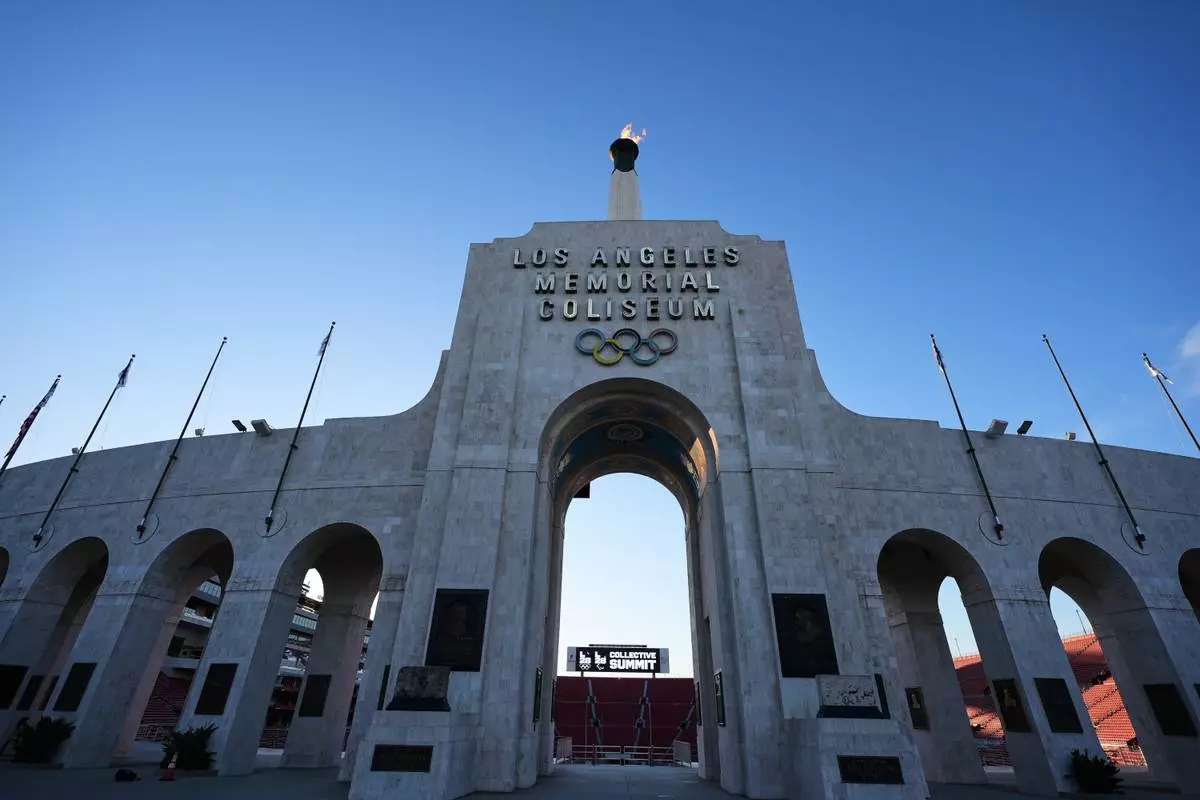
The Olympic cauldron is lit at the Los Angeles Memorial Coliseum ahead of the launch for ticket registration to the 2028 Summer Olympic Games Tuesday, Jan. 13, 2026, in Los Angeles. (AP Photo/Damian Dovarganes)
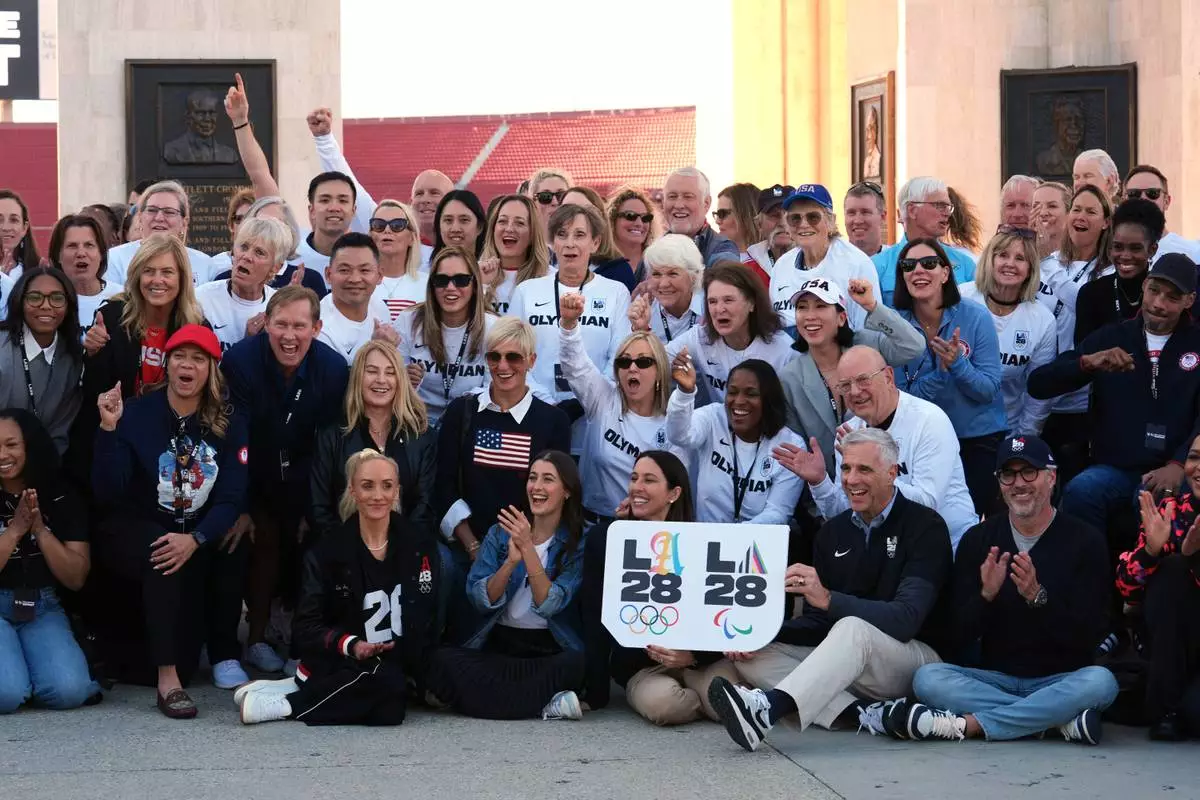
Former Olympians gather for a group photo at the Los Angeles Memorial Coliseum ahead of the launch for ticket registration to the 2028 Summer Olympic Games Tuesday, Jan. 13, 2026, in Los Angeles. (AP Photo/Damian Dovarganes)
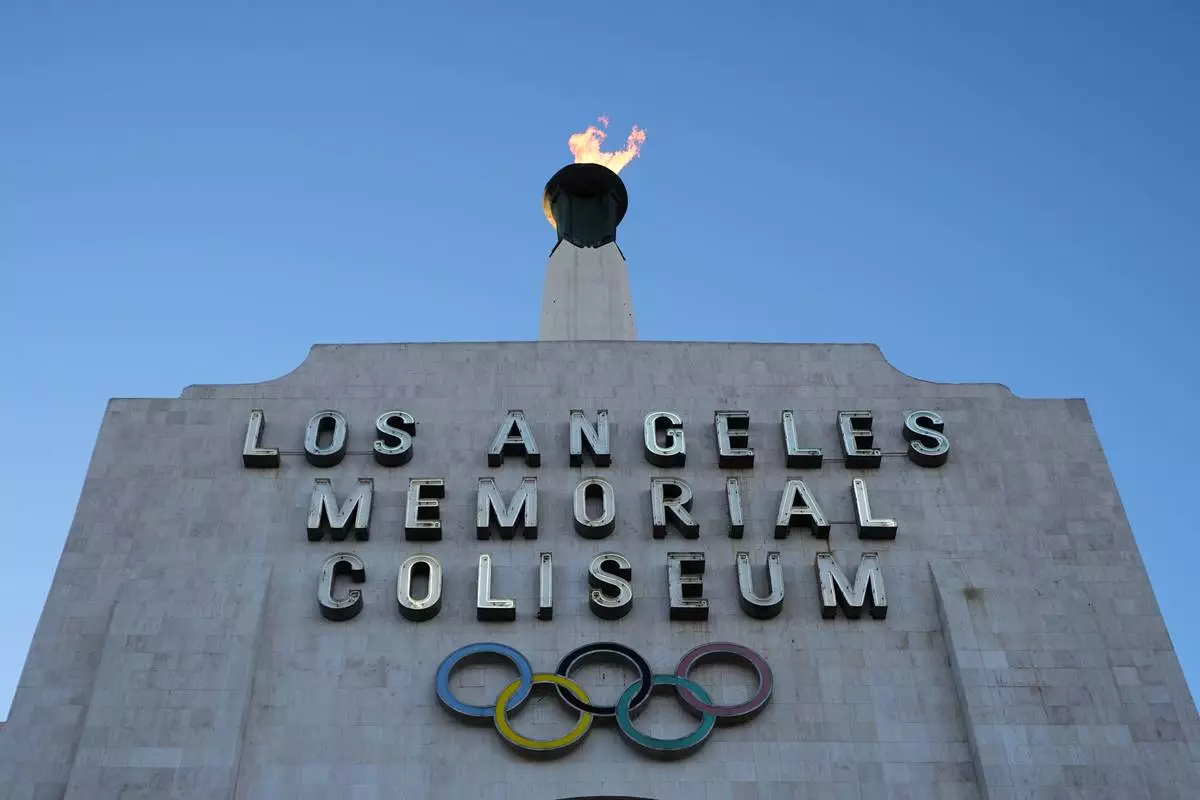
The Olympic cauldron is lit at the Los Angeles Memorial Coliseum ahead of the launch for ticket registration to the 2028 Summer Olympic Games Tuesday, Jan. 13, 2026, in Los Angeles. (AP Photo/Damian Dovarganes)
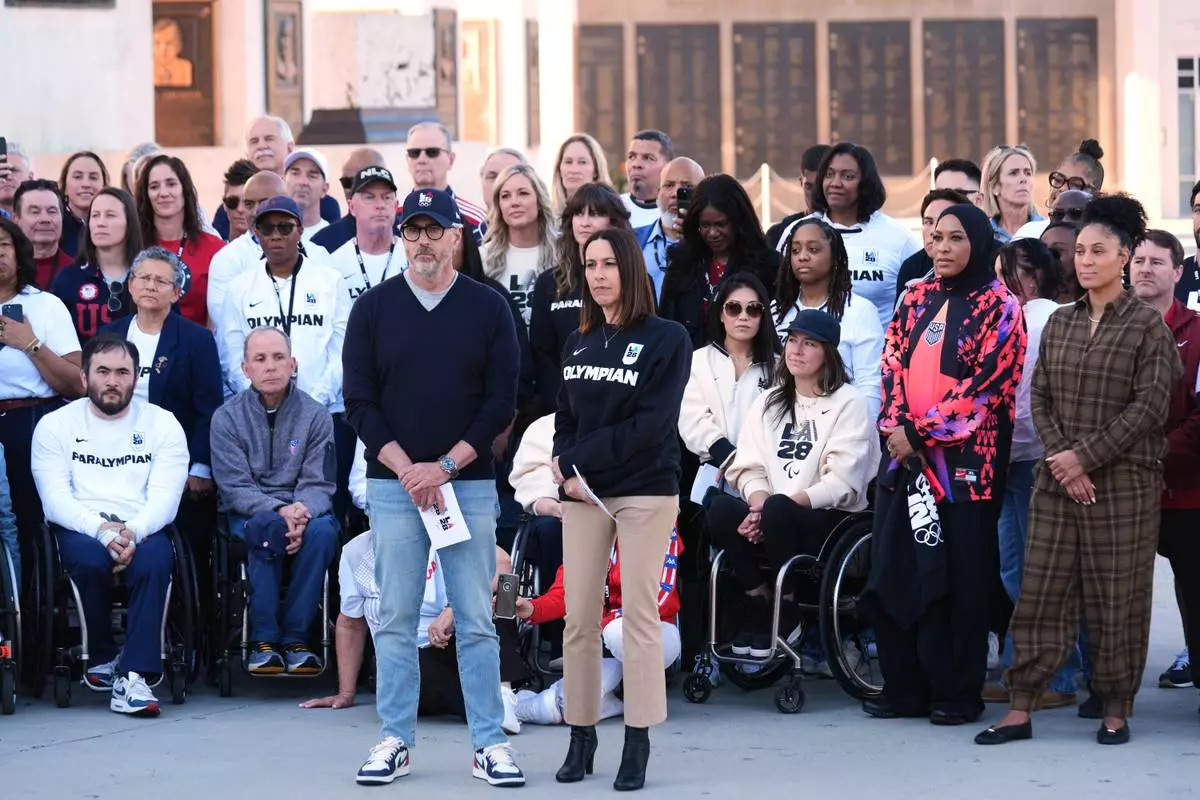
Former Olympian Jane Evans, LA28 Chief Athlete Officer, center right, stands next to Casey Wasserman, LA28 Chairperson and President, at the Los Angeles Memorial Coliseum ahead of the launch for ticket registration to the 2028 Summer Olympic Games Tuesday, Jan. 13, 2026, in Los Angeles. (AP Photo/Damian Dovarganes)
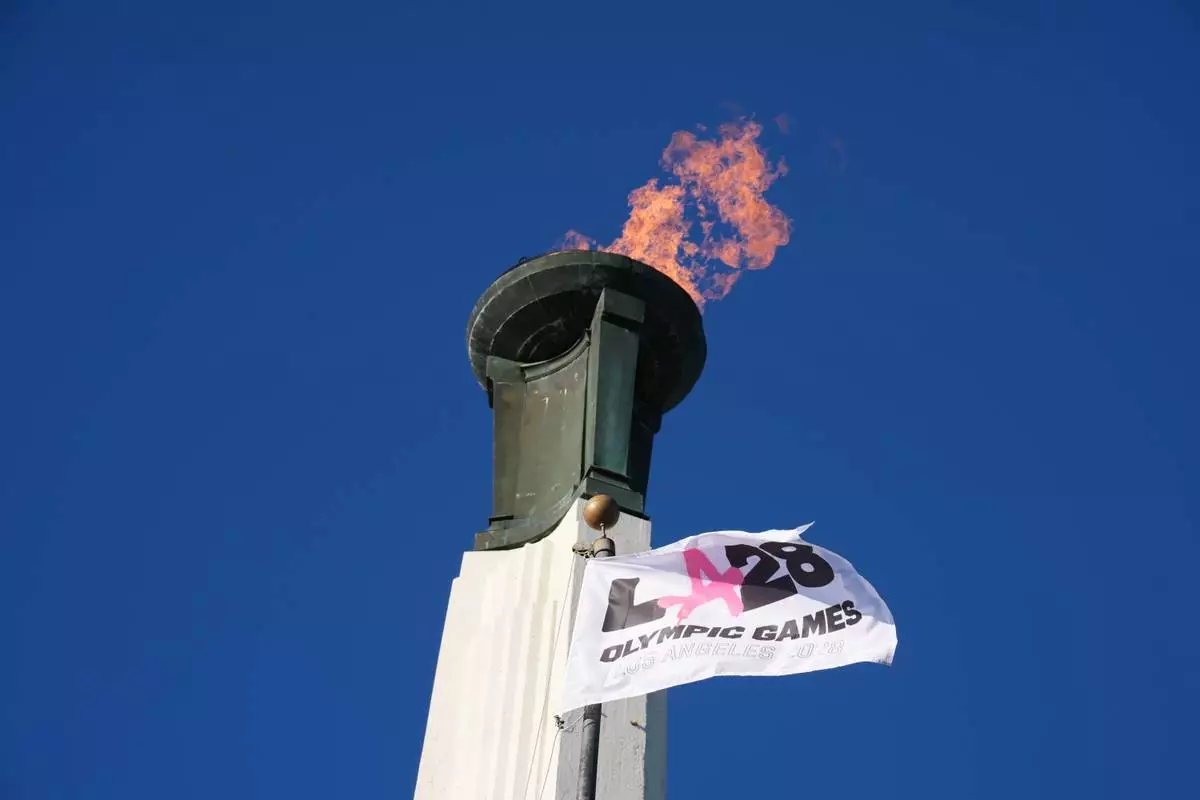
The Olympic cauldron is lit at the Los Angeles Memorial Coliseum ahead of the launch for ticket registration to the 2028 Summer Olympic Games Tuesday, Jan. 13, 2026, in Los Angeles. (AP Photo/Damian Dovarganes)