NAIROBI, Kenya (AP) — Kenyan authorities on Friday arrested a senior police officer responsible for the cell where a blogger died, leading to widespread protests in the capital, Nairobi, that left dozens injured.
Samson Talam, the officer commanding the central police station in Nairobi was arrested on Friday, and the Independent Policing Oversight Authority said that CCTV at the police station had been tampered with and its disks formatted a day after the blogger died inside the cell.
Click to Gallery
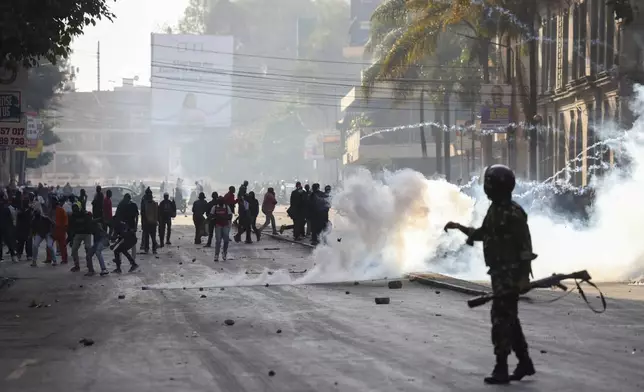
Riot police uses tear gas Thursday June 12, 2025 to disperse demonstrators during a protest over the death of blogger Albert Ojwang in police custody Nairobi, Kenya. (AP Photo/Andrew Kasuku)
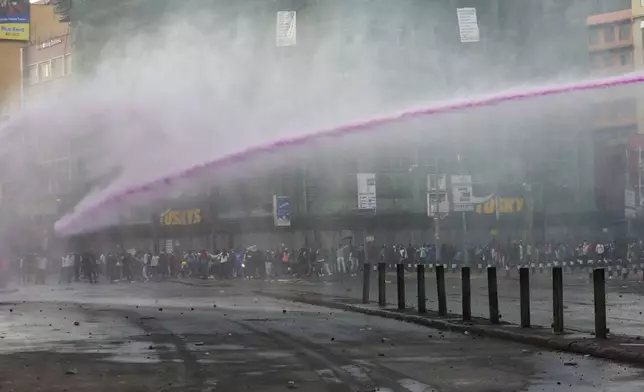
Riot police use water canons to disperse demonstrators during a protest over the death of blogger Albert Ojwang in police custody Thursday June 12, 2025, Nairobi, Kenya. (AP Photo/Andrew Kasuku)
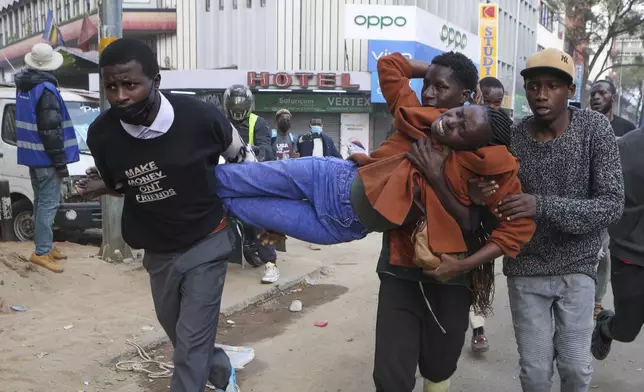
A woman overwhelmed by tear gas is carried away during a protest over the death of blogger Albert Ojwang in police custody, Thursday June 12, 2025, Nairobi, Kenya. (AP Photo/Andrew Kasuku)
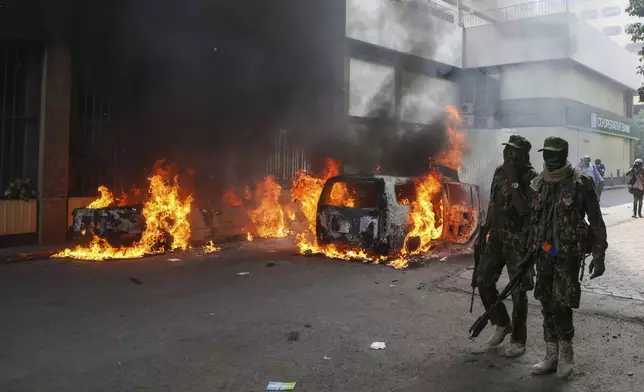
Riot police officers walk past cars set on fire during a protest over the death in police custody of blogger Albert Ojwang, in Nairoby, Kenya, Thursday, June 12, 2025. (AP Photo/Andrew Kasuku)
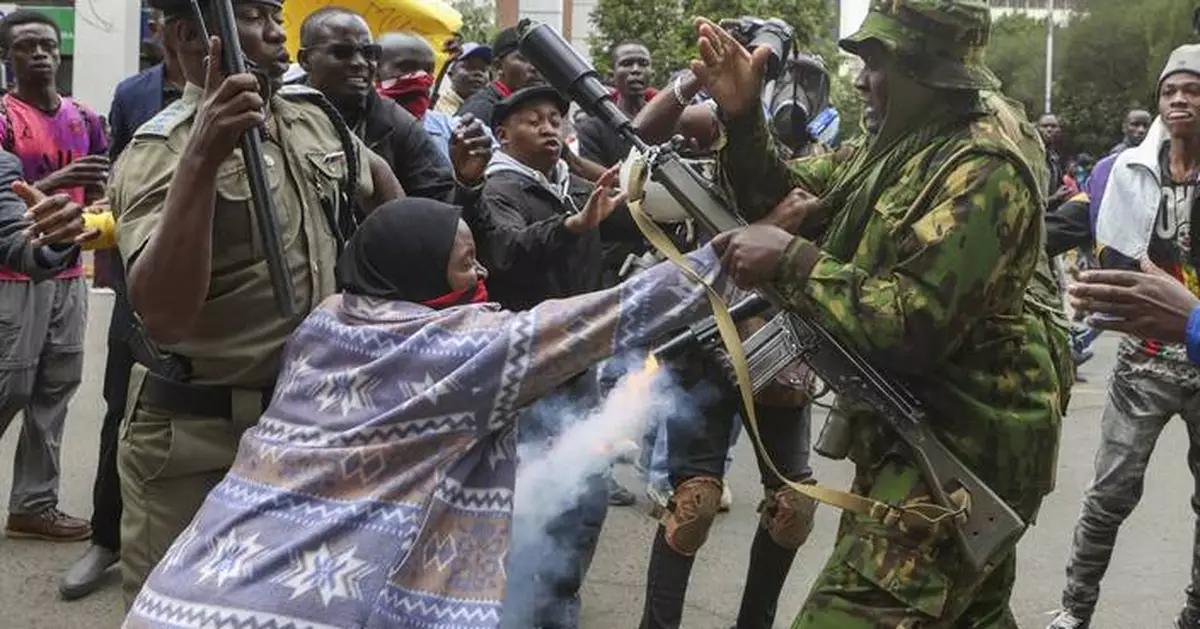
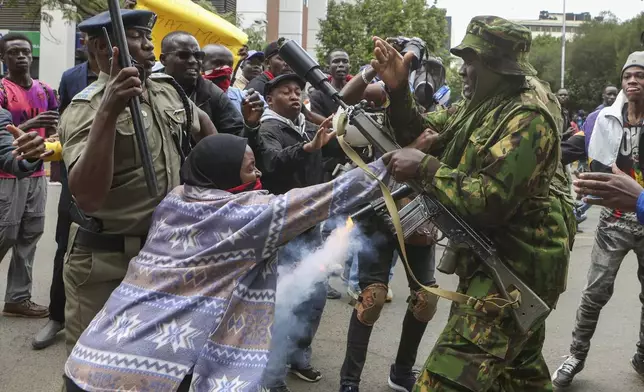
A protester scuffles with the police during a protest over the death in police custody of blogger Albert Ojwang, in Nairobi, Kenya, Thursday, June 12, 2025. (AP Photo/Andrew Kasuku)
Albert Ojwang, 31, was arrested on June 6 in western Kenya and driven 400 kilometers (248 miles) to Nairobi for what police said was publishing “false information” about a top police official on social media. He died two days later at the police cell and police said he hit his head against the wall. A pathologist’s report refuted the police account, stating that the deceased had “head injury, neck compression and other injuries spread all over the body that are pointing towards assault.”
The arrest comes a day after the detention of another officer from the central police station. James Mukhwana was arrested Thursday in connection with the blogger's death. He appeared in court Friday, where detectives requested for more time for their investigation.
Ojwang’s death led to protests on Thursday that turned violent as police clashed with protesters injuring several and leading a trail of property destruction.
President William Ruto on Friday said his government would “protect citizens from rogue police officers” and he called for investigations into Ojwang’s death.
Kenya has a history of police brutality and Ruto had vowed to end brutality and extrajudicial killings.
The blogger’s death comes almost a year after several activists and protesters were killed and abducted by Kenyan police during finance bill protests. The rallies led to calls for the removal of Ruto, who has been criticized for what some say is his authoritarian streak.
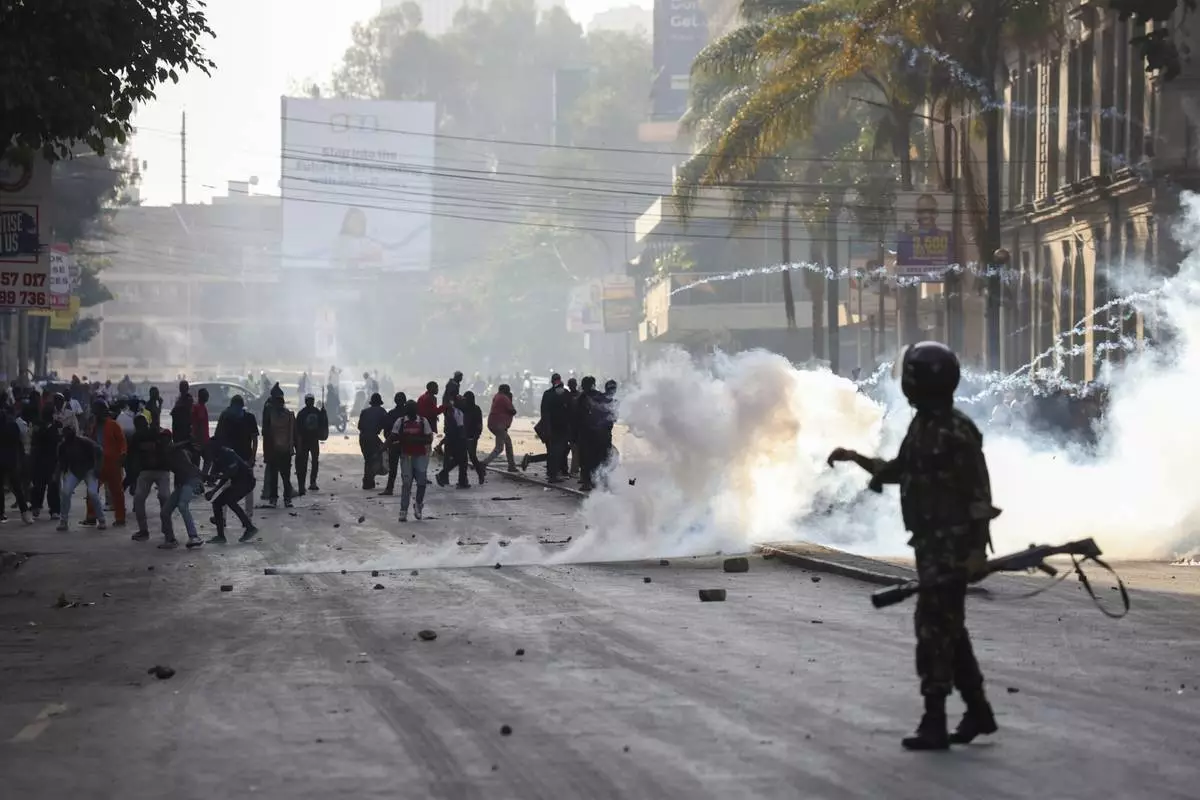
Riot police uses tear gas Thursday June 12, 2025 to disperse demonstrators during a protest over the death of blogger Albert Ojwang in police custody Nairobi, Kenya. (AP Photo/Andrew Kasuku)
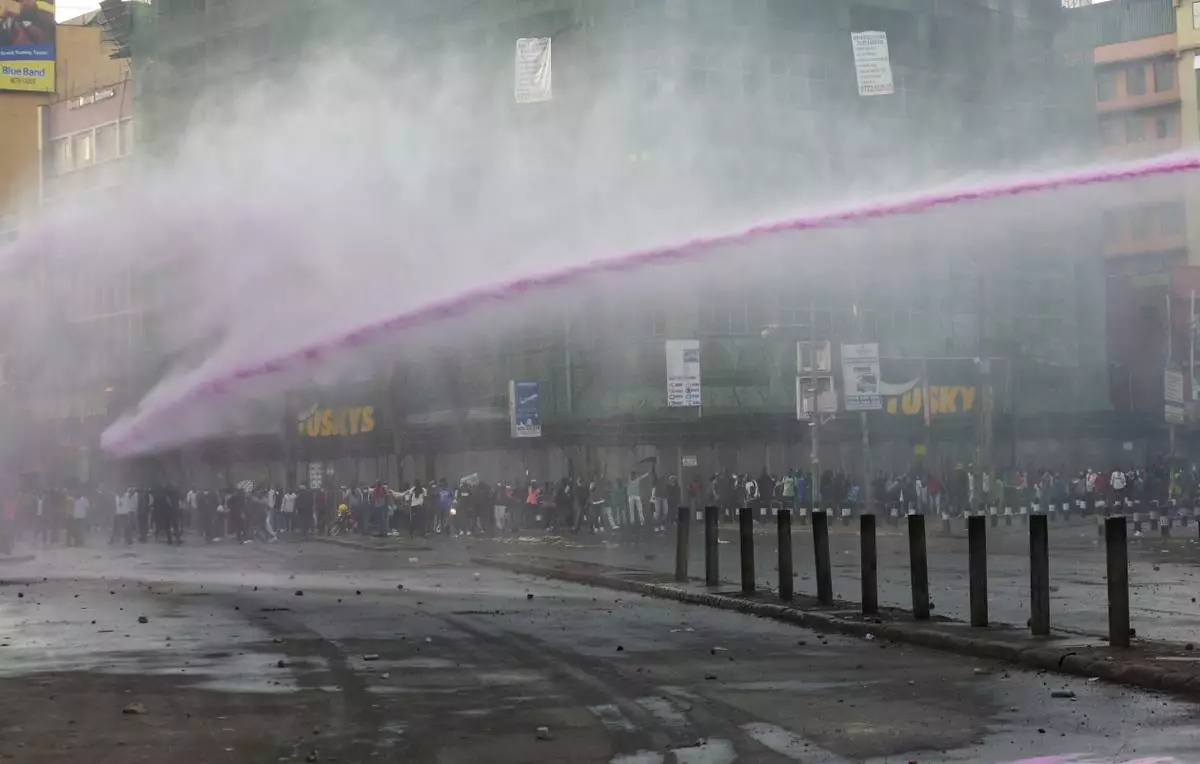
Riot police use water canons to disperse demonstrators during a protest over the death of blogger Albert Ojwang in police custody Thursday June 12, 2025, Nairobi, Kenya. (AP Photo/Andrew Kasuku)
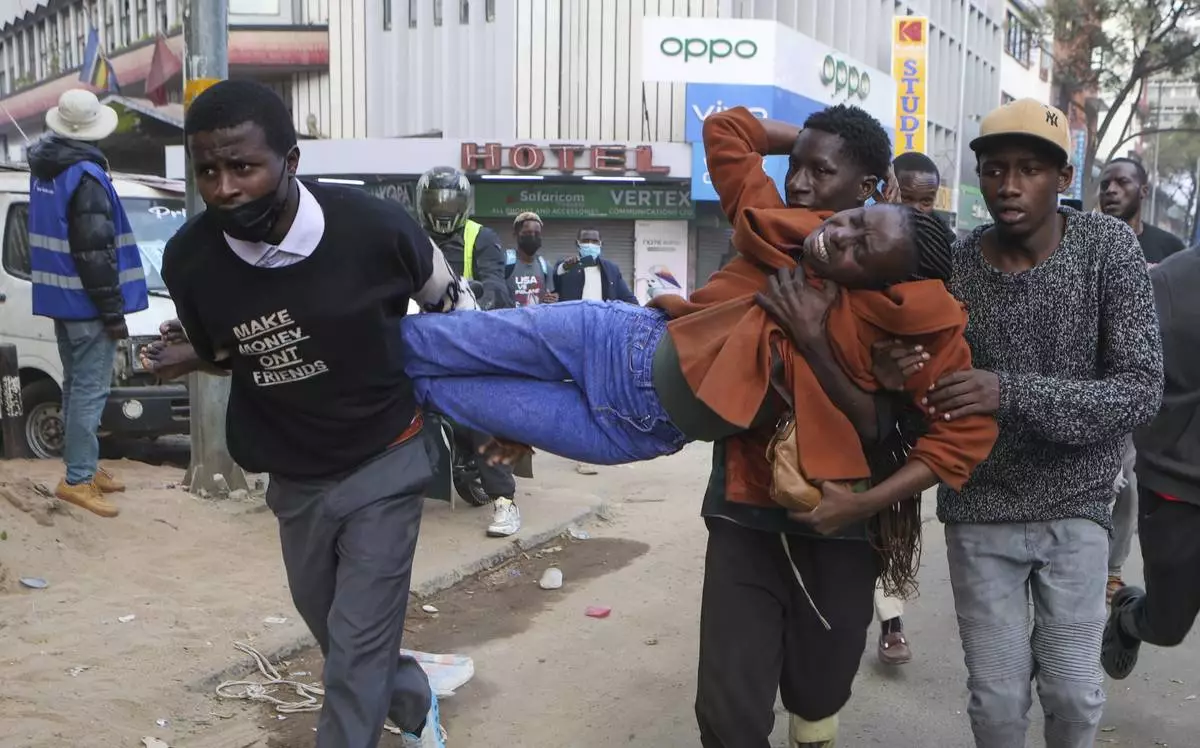
A woman overwhelmed by tear gas is carried away during a protest over the death of blogger Albert Ojwang in police custody, Thursday June 12, 2025, Nairobi, Kenya. (AP Photo/Andrew Kasuku)
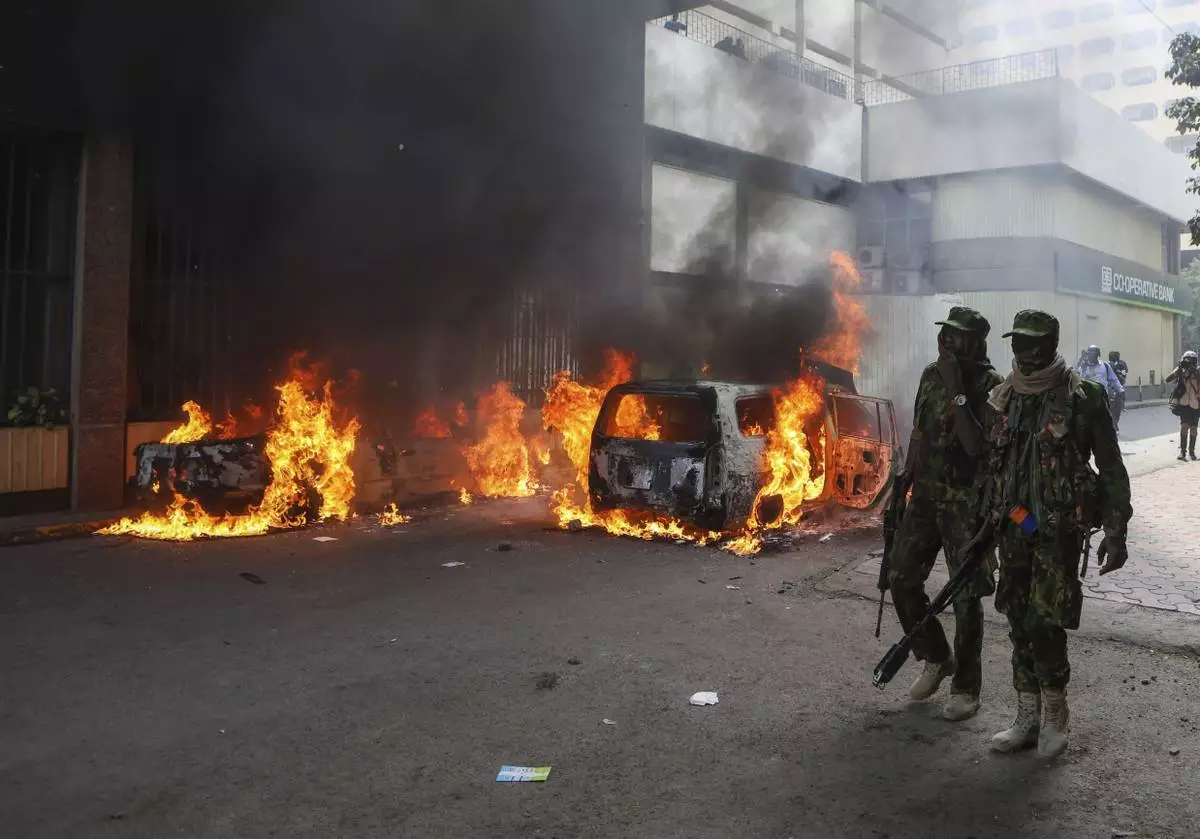
Riot police officers walk past cars set on fire during a protest over the death in police custody of blogger Albert Ojwang, in Nairoby, Kenya, Thursday, June 12, 2025. (AP Photo/Andrew Kasuku)
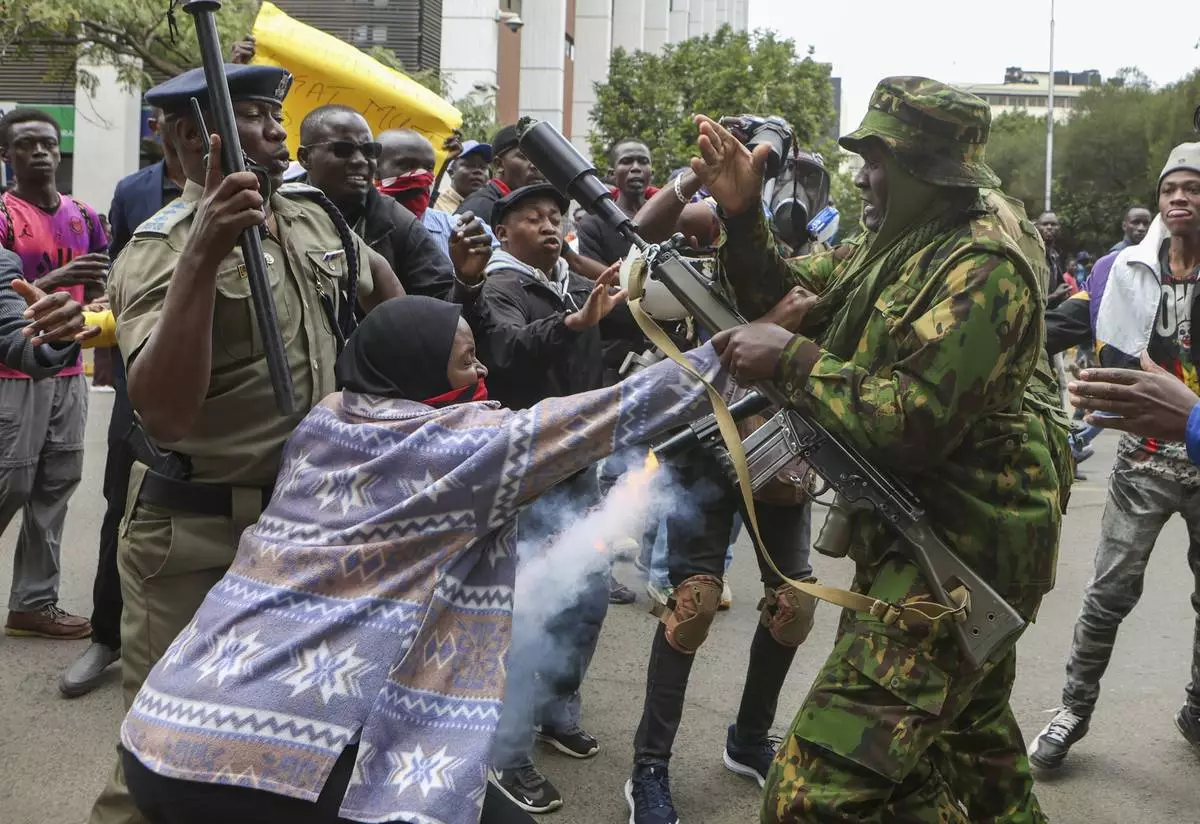
A protester scuffles with the police during a protest over the death in police custody of blogger Albert Ojwang, in Nairobi, Kenya, Thursday, June 12, 2025. (AP Photo/Andrew Kasuku)
BERLIN (AP) — The eight European countries targeted by U.S. President Donald Trump for a 10% tariff for opposing American control of Greenland blasted the move Sunday, warning that the American leader's threats “undermine transatlantic relations and risk a dangerous downward spiral.”
In an unusual and very strong joint statement coming from major U.S. allies, Denmark, Norway, Sweden, France, Germany, the United Kingdom, the Netherlands and Finland on Sunday said troops sent to Greenland for the Danish military training exercise “Arctic Endurance” pose “no threat to anyone.”
Trump's Saturday announcement sets up a potentially dangerous test of U.S. partnerships in Europe. The Republican president appeared to indicate that he was using the tariffs as leverage to force talks over the status of Greenland, a semiautonomous territory of NATO ally Denmark that he regards as critical to U.S. national security.
“We stand in full solidarity with the Kingdom of Denmark and the people of Greenland," the group said. “Building on the process begun last week, we stand ready to engage in a dialogue based on the principles of sovereignty and territorial integrity that we stand firmly behind. Tariff threats undermine transatlantic relations and risk a dangerous downward spiral.”
There are immediate questions about how the White House could try to implement the tariffs because the EU is a single economic zone in terms of trading. It was unclear, too, how Trump could act under U.S. law, though he could cite emergency economic powers that are currently subject to a U.S. Supreme Court challenge.
European Union foreign policy chief Kaja Kallas said China and Russia will benefit from the divisions between the U.S. and Europe. She added in a post on social media: “If Greenland’s security is at risk, we can address this inside NATO. Tariffs risk making Europe and the United States poorer and undermine our shared prosperity."
Trump's move was also panned domestically.
U.S. Sen. Mark Kelly, a former U.S. Navy pilot and Democrat who represents Arizona, posted that Trump’s threatened tariffs on U.S. allies would make Americans “pay more to try to get territory we don’t need.”
“Troops from European countries are arriving in Greenland to defend the territory from us. Let that sink in,” he wrote on social media. “The damage this President is doing to our reputation and our relationships is growing, making us less safe. If something doesn’t change we will be on our own with adversaries and enemies in every direction.”
Six of the countries targeted are part of the 27-member EU, which operates as a single economic zone in terms of trading. It was not immediately clear if Trump's tariffs would impact the entire bloc. EU envoys scheduled emergency talks for Sunday evening to determine a potential response.
The tariff announcement even drew blowback from Trump's populist allies in Europe.
Italy’s right-wing premier, Giorgia Meloni, considered one of Trump’s closest allies on the continent, said Sunday she had spoken to him about the tariffs, which she described as “a mistake.”
The deployment to Greenland of small numbers of troops by some European countries was misunderstood by Washington, Meloni told reporters. She said the deployment was not a move against the U.S. but aimed to provide security against “other actors” that she didn’t name.
French President Emmanuel Macron wrote on social media that “no intimidation or threats will influence us, whether in Ukraine, Greenland or anywhere else in the world when we are faced with such situations." He added that "tariff threats are unacceptable and have no place in this context.”
Jordan Bardella, president of Marine Le Pen’s far-right National Rally party in France and also a European Parliament lawmaker, posted that the EU should suspend last year’s tariff deal with the U.S., describing Trump’s threats as “commercial blackmail.”
Trump also achieved the rare feat of uniting Britain’s main political parties — including the hard-right Reform UK party — all of whom criticized the tariff threat.
“We don’t always agree with the U.S. government and in this case we certainly don’t. These tariffs will hurt us,” Reform UK leader Nigel Farage, a longtime champion and ally of Trump, wrote on social media. He stopped short of criticizing Trump's designs on Greenland.
Meanwhile, U.K. Prime Minister Keir Starmer, who leads the center-left Labour Party, said the tariffs announcement was “completely wrong” and his government would “be pursuing this directly with the U.S. administration.”
The foreign ministers of Denmark and Norway are also expected to address the crisis Sunday in Oslo during a news conference.
__
Leicester reported from Paris and Cook from Brussels. Associated Press writers Jill Lawless in London, Barry Hatton in Lisbon, Portugal, Aamer Madhani in Washington and Josh Boak in West Palm Beach, Florida, contributed to this report.
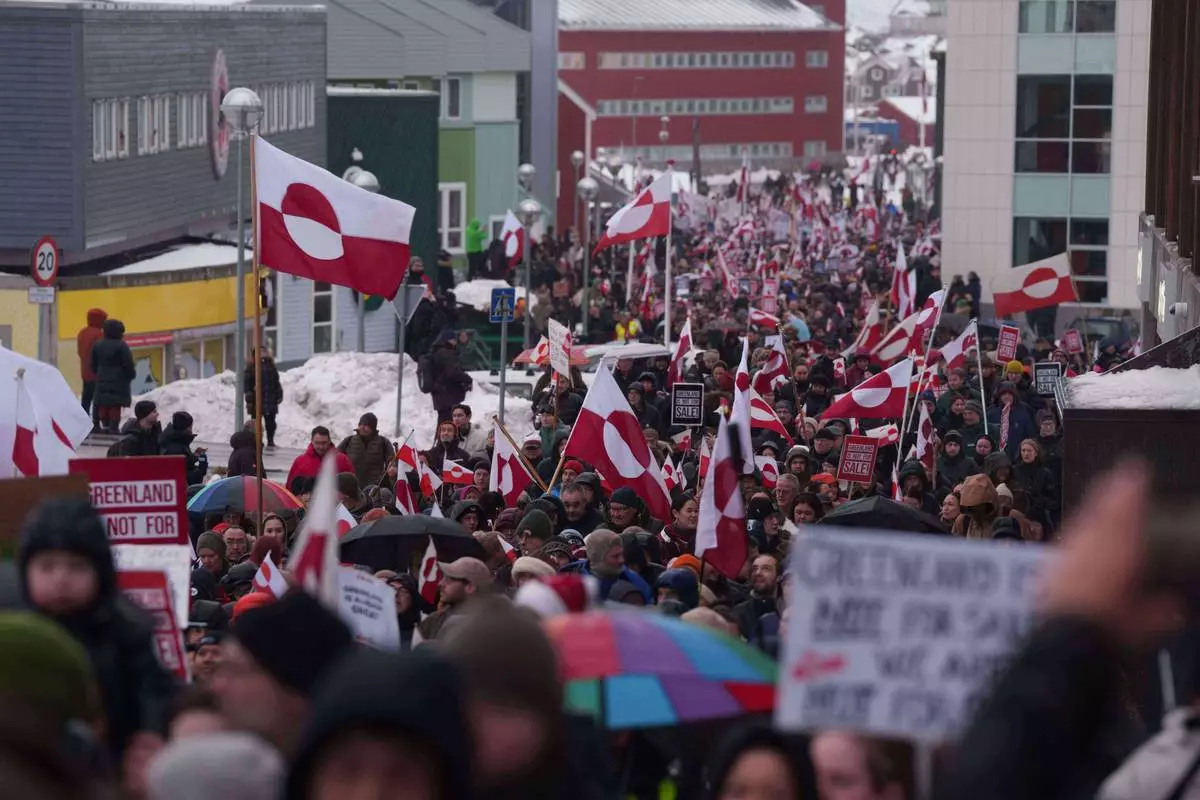
A crowd walks to the US consulate to protest against Trump's policy towards Greenland in Nuuk, Greenland, Saturday, Jan. 17, 2026. (AP Photo/Evgeniy Maloletka)
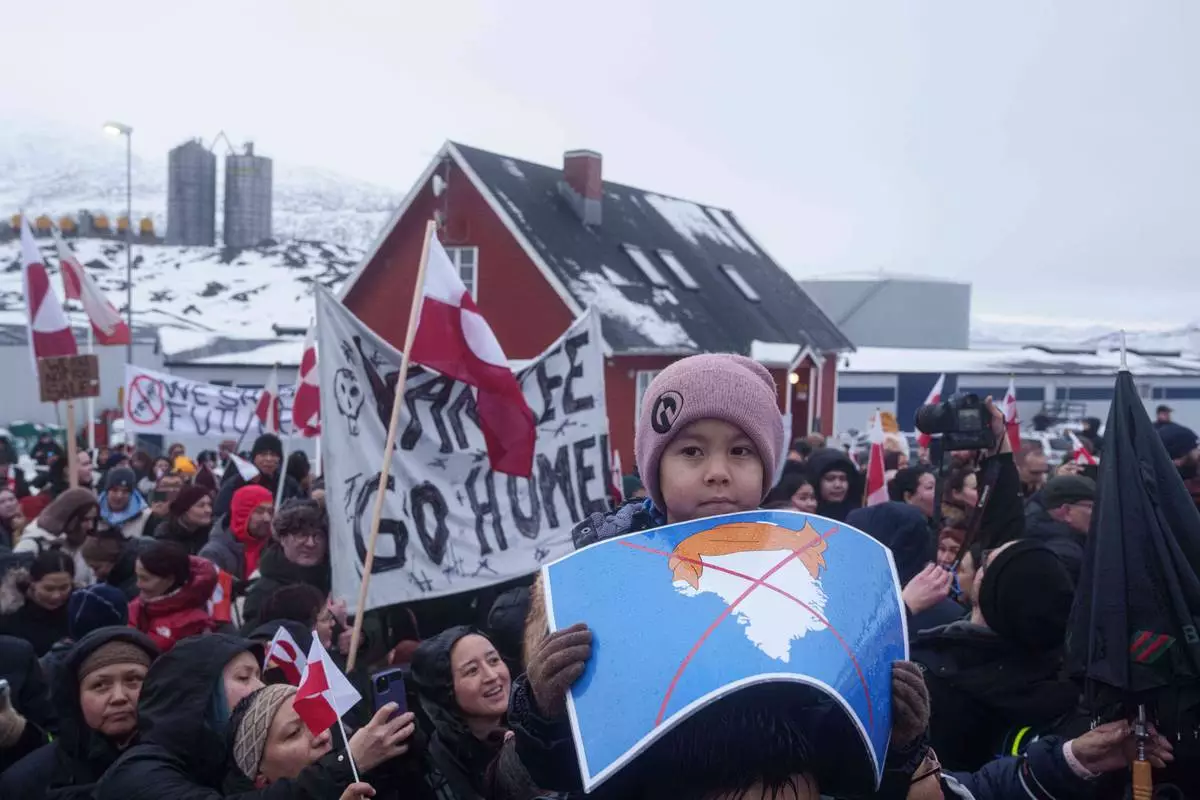
A boy holds a crossed out map of Greenland topped by a hairpiece symbolizing U.S. President Donald Trump, during a protest against Trump's policy towards Greenland in front of the US consulate in Nuuk, Greenland, Saturday, Jan. 17, 2026. (AP Photo/Evgeniy Maloletka)
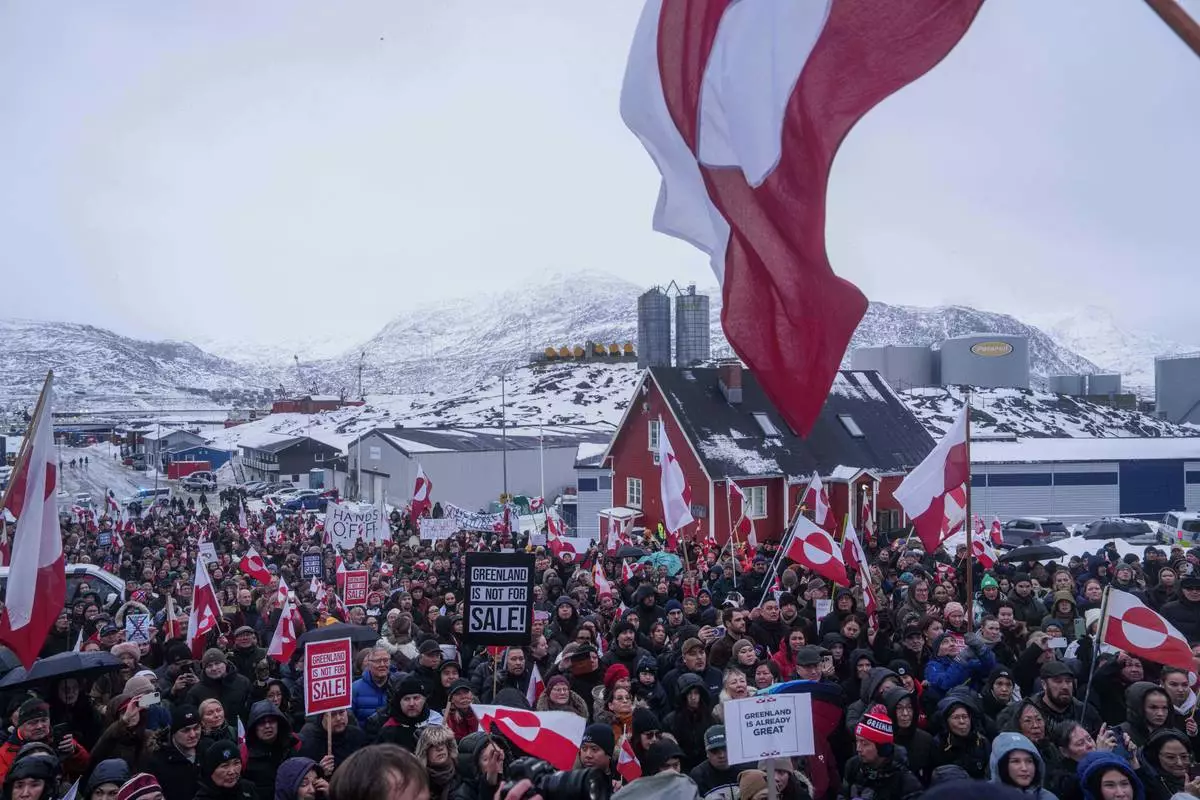
People protest against Trump's policy towards Greenland in front of the US consulate in Nuuk, Greenland, Saturday, Jan. 17, 2026. (AP Photo/Evgeniy Maloletka)